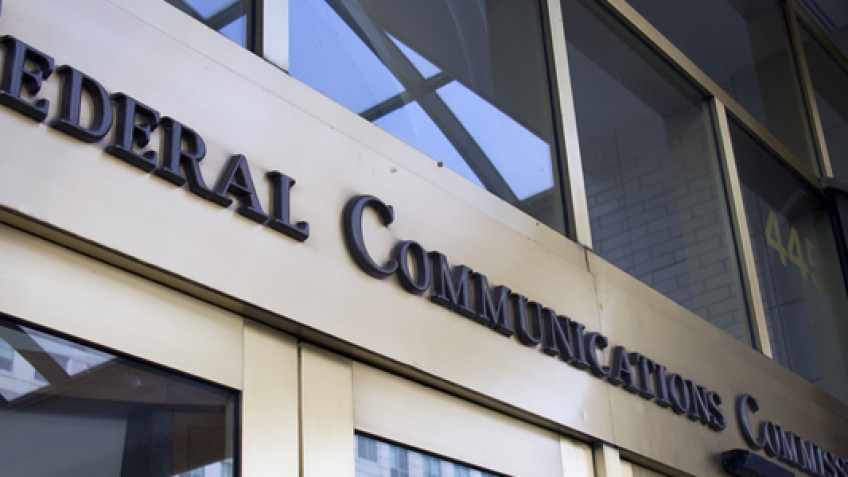
Constitution Day at the FCC
Note from the Editor: The Federalist Society takes no positions on particular legal and public policy matters. Any expressions of opinion are those of the author. We welcome responses to the views presented here. To join the debate, please email us at [email protected].
Check out Randy May of the Free State Foundation's thoughts on the FCC and Constitution Day:
Constitution Day officially is September 17, 2016. This year marks 229 years since the signing of the Constitution on September 17, 1787, in Philadelphia.
Not many people celebrate Constitution Day, but I've always thought it worthy of commemoration. It's an opportunity to take a moment - or maybe more than a moment - to think about the Constitution's meaning and its relevance to today's issues.
Over the years, I've written often about the ways the FCC's actions implicate constitutional strictures and constitutional values. Because the FCC regulates media, communications, information services, and now the Internet, it is not surprising that many of the agency's actions implicate the First Amendment's free speech guarantee.
While many of the FCC's actions present a target-rich environment, today I want to focus on just one current proceeding that implicates several different constitutional provisions - and that appears to run up against constitutional constraints.
Read the full article.

Indiana University School of Law
Professor Geyh's teaching and scholarship focus on the operation of state and federal courts in relation to the political branches of government and the legal profession. He is the author of "When Courts and Congress Collide: The Struggle for Control of America's Judicial System" (University of Michigan Press 2006), coauthor of "Judicial Conduct and Ethics" (Fourth ed., Lexis Law Publishing 2007) (With Alfini, Lubet and Shaman), and "Disqualification: An Analysis Under Federal Law (2d ed. Federal Judicial Center, forthcoming 2010). His work on judicial independence, accountability, administration and ethics has appeared in over 40 books, articles, book chapters and reports.
Geyh currently chairs the editorial committee for the journalJudicature, and is Director of the ABA Judicial Disqualification Project and has previously served as Reporter to four ABA Commissions (the Joint Commission to Evaluate the Model Code of Judicial Conduct, the Commission on the 21st Century Judiciary, the Commission on the Public Financing of Judicial Campaigns, and the Commission on the Separation of Powers and Judicial Independence). He has likewise served on the Board of Directors of the Justice at Stake Campaign; as Reporter to the Constitution Project Task Force on the Distinction Between Intimidation and Legitimate Criticism of Judges; as Director of the American Judicature Society's Center for Judicial Independence; as Consultant to the Parliamentary Development Project on Judicial Independence and Administration for the Supreme Rada of Ukraine; as assistant special counsel to the Pennsylvania House of Representatives on the impeachment and removal of Pennsylvania Supreme Court Justice Rolf Larsen; as Consultant to the National Commission on Judicial Discipline & Removal; and as legislative liaison to the Federal Courts Study Committee. He is a member of the American Law Institute.
A recipient of the Leon Wallace Teaching Award and a two-time recipient of the IU Trustees' Teaching Award, Geyh teaches courses on civil procedure, legal ethics, federal courts, and the relationship between courts and legislatures.
Following graduation from University of Wisconsin Law School, he clerked for Judge Thomas A. Clark of the U.S. Court of Appeals for the Eleventh Circuit. He then worked as an associate at Covington & Burling in Washington, D.C., and served as counsel to the U.S. House of Representatives Committee on the Judiciary. Professor Geyh began his teaching career in 1991 at the Widener University School of Law and joined the law faculty at Indiana in 1998.
Assistant Director, Practice Groups, The Federalist Society