Facts of the Case
This was a litigation which grew out of certain disturbances in what is known as the "Third or Walnut Street Presbyterian Church," of Louisville, Kentucky, and which resulted in a division of its members into two distinct bodies, each claiming the exclusive use of the property held and owned by that local church. The case was thus: The Presbyterian Church in the United States is a voluntary religious organization, which has been in existence for more than three-quarters of a century. It has a written Confession of Faith, Form of Government, Book of Discipline, and Directory for Worship. The government of the church is exercised by and through an ascending series of "judicatories," known as Church Sessions, Presbyteries, Synods, and a General Assembly.
Conclusions
-
9. In the class of cases in which property has been acquired in the same way by a society which constitutes a subordinate part of a general religious organization with established tribunals for ecclesiastical government, these tribunals must decide all questions of faith, discipline, rule, custom, or ecclesiastical government. 10. In such cases where the right of property in the civil court is dependent on the question of doctrine, discipline, ecclesiastical law, rule, or custom, or church government, and that has been decided by the highest tribunal within the organization to which it has been carried, the civil court will accept that decision as conclusive, and be governed by it in its application to the case before it.

Current Issues in Church Autonomy Doctrine: Categorical Immunity, Collateral Order Doctrine, and Neutral Principles of Law
The United States Supreme Court first acknowledged what would become the church autonomy doctrine, also...
Current Issues in Church Autonomy Doctrine: Categorical Immunity, Collateral Order Doctrine, and Neutral Principles of Law
The United States Supreme Court first acknowledged what would become the church autonomy doctrine, also...
Oral Arguments in Texas Supreme Court on Church Autonomy Doctrine
Recently, the Texas Supreme Court heard oral argument in Southern Methodist University v. South Central...
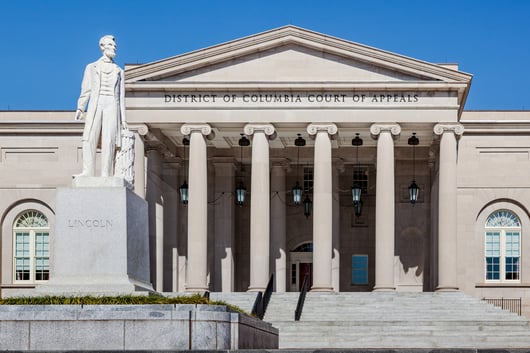
DC Court of Appeals Holds That Judicial Intervention Is Inappropriate In a Religious Schism
The District of Columbia Court of Appeals recently declined to intervene in a religious dispute...
An Extended Essay on Church Autonomy
Federalist Society Review, Volume 22
The doctrine of church autonomy[1] is distinct from the two more familiar lines of cases...
After Espinoza, What’s Left of the Establishment Clause?
Federalist Society Review, Volume 21
Note from the Editor: The Federalist Society takes no positions on particular legal and public...
The Ministerial Exception After Hosanna-Tabor: Firmly Founded, Increasingly Refined
Federalist Society Review, Volume 20
Note from the Editor: The Federalist Society takes no positions on particular legal and public...
Religious Exemptions and Third-Party Harms
Federalist Society Review, Volume 17, Issue 3
Note from the Editor: This article discusses the effect that third-party harms should have on religious...

A Religious Organization's Autonomy in Matters of Self-Governance: Hosanna-Tabor and the First Amendment
Engage Volume 13, Issue 1, March 2012
In the second week of January, the U.S. Supreme Court handed down its unanimous decision...