Facts of the Case
On July 23, 2007, Xavier Alvarez, a member of the Three Valleys Water District Board of Directors, attended a joint meeting with the Walnut Valley Water District Board of Directors at the Board's headquarters. Mr. Alvarez was invited to speak about his background, and he stated, "I'm a retired marine of 25 years. I retired in the year 2001. Back in 1987, I was awarded the Congressional Medal of Honor." In fact, Mr. Alvarez had not received the Congressional Medal of Honor, nor any other military medal or decoration. He had also had never served in the United States Armed Forces.
The Stolen Valor Act of 2005 makes it a crime to falsely claim receipt of military decorations or medals. On September 26, 2007, Mr. Alvarez was charged in the Central District of California with two counts of falsely representing that he had been awarded the Congressional Medal of Honor in violation the Stolen Valor Act of 2005. Mr. Alvarez moved to dismiss on the grounds that the statute violated his first amendment right to free speech. The district court denied Alvarez's motion to dismiss. The respondent thereafter pleaded guilty, but reserved his right to appeal.
Alvarez appealed to the U.S. Court of Appeals for the Ninth Circuit, and the court reversed and remanded the lower court's decision. It reasoned that the Supreme Court had never held that the government may prohibit speech simply because it is knowingly false and that some knowingly false speech could have affirmative constitutional value. The court of appeals denied the government's request for rehearing. Thereafter, the government appealed the court of appeals' decision.
Questions
Does 18 U.S.C. 704(b), the Stolen Valor Act, violate the Free Speech Clause of the First Amendment?
Conclusions
-
Yes. Justice Anthony M. Kennedy, writing for a 6-3 majority, affirmed the Court of Appeals. Content-based restrictions on speech are subject to strict scrutiny and are almost always invalid, except in rare and extreme circumstances. While categories of speech, such as defamation and true threats, present a grave and imminent threat, false statements alone do not present such a threat. Congress drafted the Stolen Valor Act too broadly, attempting to limit speech that could cause no harm. Criminal punishment for such speech is improper.
Justice Stephen G. Breyer concurred, concluding that false statements of fact should be subject to intermediate scrutiny. However, as drafted, the Stolen Valor Act violates intermediate scrutiny because it applies to situations that are unlikely to cause harm. Justice Elena Kagan joined in the concurrence.
Justice Samuel A. Alito dissented. Congress could not draft the Stolen Valor Act more narrowly, while still preventing the substantial harm caused by false statements concerning military decoration. Justice Antonin Scalia and Justice Clarence Thomas joined in the dissent.

Texas Court Confronts Misleading Political Communications and the First Amendment
Can states prohibit “misleading” political communications? Not if the First Amendment has anything to say...

Liar, Liar: False Statements and the Freedom of Speech
What can the government do to counter "disinformation" or other statements that it believes to...
Liar, Liar: False Statements and the Freedom of Speech
What can the government do to counter "disinformation" or other statements that it believes to...
Revisiting New York Times v. Sullivan
Free Speech & Election Law Practice Group Teleforum
On April 21, 2021, the Federalist Society's Free Speech & Election Law Practice Group hosted...
Ricky Vaughn's Prosecution and the First Amendment
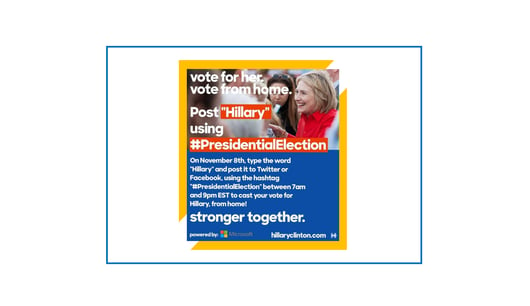
The DOJ has charged Douglas Mackey, aka Ricky Vaughn, with conspiracy “to injure, oppress, threaten, or...
Courthouse Steps Decision Teleforum: Kelly v. United States
Bridget Anne Kelly and William Baroni were convicted of wire fraud, federal program fraud and conspiracy for orchestrating...

ALDF v. Wasden: The Ninth Circuit and Idaho’s “Ag-Gag” Law
Environmental Law & Property Rights Teleforum
Early this year, a Ninth Circuit panel issued a split decision in an Idaho case...
Free Speech Absolutism: Have We Gone Too Far?
2018 Annual Western Chapters Conference
No clause in the Constitution draws more judicial encomia to liberty than the Free Speech...
The First Amendment and Commercial/Economic Speech
2018 Annual Western Chapters Conference
Although the First Amendment makes no distinction between types of speech, courts have consistently offered...
Banquet Keynote Address by Richard Epstein
2017 National Student Symposium
Professor Richard Epstein delivered the keynote address titled "A common lawyer looks at the constitutional...
Litigation: Ten Years of the Roberts Court
2015 National Lawyers Convention
It has been ten years since John Roberts was appointed as the 17th Chief Justice...
Is “False” Political Speech Protected? - Susan B. Anthony List v. Driehaus - Podcast
Criminal Law & Procedure and Free Speech & Election Law Practice Groups Podcast
On Tuesday, April 22, 2014, the Supreme Court heard oral arguments in Susan B. Anthony...
Showcase Panel I: Textualism and the Bill of Rights
2013 National Lawyers Convention
The new textualism has had a big impact on interpretation of the Bill of Rights....
Fifth Annual Rosenkranz Debate and Luncheon
2012 National Lawyers Convention
RESOLVED: Natural Law Should Inform Constitutional Law The Fourth Annual Rosenkranz Debate was held on...
Stolen Valor? United States v. Alvarez - Podcast
Free Speech & Election Law Practice Group Podcast
The U.S. Supreme Court decided the case United States v. Alvarez during its most recent...
United States v. Alvarez - Post-Decision SCOTUScast
SCOTUScast 07-09-12 featuring Eugene Volokh
On June 28, 2012 the Supreme Court announced its decision in United States v. Alvarez. The...
2012 Annual Supreme Court Round Up
Washington, DC Lawyers Chapter
On July 6, 2012, former U.S. Solicitor General Theodore Olson delivered the Annual Supreme Court Round Up...
United States v. Alvarez - Post-Argument SCOTUScast
SCOTUScast 03-07-12 featuring Aaron Street
On February 22, 2012, the Supreme Court heard oral argument in United States v. Alvarez....
Supreme Court Preview: What Is in Store for October Term 2011?
October 3rd marks the first day of the 2011 Supreme Court term. This term the...
The War on Terrorism: Law Enforcement or National Security?
George Terwilliger*Theodore Cooperstein**Shawn Gunnarson***Daniel Blumenthal****Robert Parker***** The horrific events of September 11th were immediately labeled...
Humberto Alvarez-Machain v. United States: The Ninth Circuit Panel Decision of September 11
On September 11, 2001, as most of the nation watched on in horror at the...
Ambulance Chasing for Justice: How Private Lawsuits for Civil Damages Can Help Combat International Terror
On January 21, 2002, the North Idaho College announced the donation of a tract of...
The Emerging Interplay Between Law Enforcement and Intelligence Gathering
International & National Security Law Practice Group Newsletter - Volume 1, Issue 3, Fall 1997
The Intelligence Authorization Act of 1996 amended the National Security Act of 1947 to permit...


ALDF v. Wasden: The Ninth Circuit and Idaho’s “Ag-Gag” Law
Environmental Law & Property Rights Teleforum
Teleforum