Facts of the Case
The saga continues in the long-running inheritance dispute over the estate of a deceased Texas billionare. J. Howard Marshall's will left nearly all his money to his son, E. Pierce Marshall, and nothing to (now deceased wife) Anna Nicole Smith, aka Vickie Lynn Marshall. The younger Marshall died in 2006 and Smith died of a drug overdose in 2007. Smith had previously fought the will, claiming that her husband promised to leave her more than $300 million. Howard K. Stern, Smith's former attorney and boyfriend, has continued the legal battle on behalf of Smith's estate. But the U.S. Court of Appeals for the Ninth Circuit ruled that Marshall was mentally fit and under no undue pressure when he wrote a will leaving nearly all of his $1.6 billion estate to his son and nothing to Smith.
The Supreme Court will revisit the estate battle four years after the justices sent the case back to lower courts for further review. In the earlier case, the court only addressed whether or not federal courts can rule on Smith's claims.
Questions
When a creditor files a claim in bankruptcy court, the debtor is sometimes required to file any counterclaim she may have or lose the right to assert that claim later or in another court. Can a bankruptcy judge conclusively resolve such compulsory counterclaims?
Conclusions
-
Conclusion: No. The Supreme Court affirmed the lower court order in an opinion by Chief Justice John Roberts. "Although the Bankruptcy Court had the statutory authority to enter judgment on Vickie's counterclaim, it lacked the constitutional authority to do so," the chief justice wrote. Meanwhile, Justice Stephen Breyer dissented, joined by Justices Ruth Bader Ginsburg, Sonia Sotomayor and Elena Kagan. The majority "fails to follow the analysis that this Court more recently has held applicable to the evaluation of claims of a kind before us here, namely, claims that a congressional delegation of adjudicatory authority violates separation-of-powers principles derived from Article III," Breyer wrote.
The Labor Law Enigma: Article III, Judicial Power, and the National Labor Relations Board
Federalist Society Review, Volume 24
Axon Enterprises v. FTC[1] wasn’t supposed to be about labor law. In fact, it wasn’t...
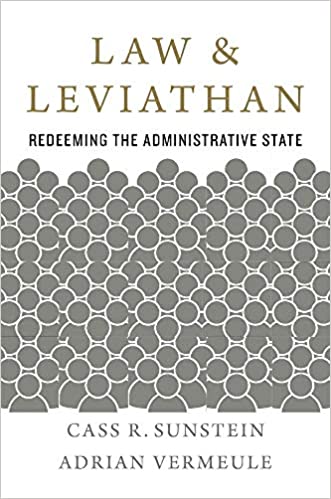
Bureaucracy With Bumper Guards: Better Than It Rules?
Federalist Society Review, Volume 22
A review of Law & Leviathan: Redeeming the Administrative State, by Cass Sunstein & Adrian...

The Supreme Court Tackles Patent Reform: Inter Partes Review Under the AIA Undermines the Structural Protections Offered by Article III Courts
Federalist Society Review, Volume 19
Note from the Editor: This article criticizes Justice Clarence Thomas’ opinion in Oil States. It...
The Supreme Court Tackles Patent Reform: Why the Supreme Court Should End Inter Partes Review in Oil States
Federalist Society Review, Volume 18
Note from the Editor: This article argues that the Supreme Court should find unconstitutional the...
The Supreme Court Tackles Patent Reform
Why the Supreme Court in Oil States Should End Inter Partes Review Under the AIA
Click here to download a PDF version of this blog post. Oil States Energy Services,...
Wellness International Network v. Sharif - Post-Decision SCOTUScast
SCOTUScast 6-22-15 featuring Thomas Plank.
On May 26, 2015, the Supreme Court delivered its opinion in Wellness International Network, Limited v. Sharif....
Executive Benefits Insurance Agency v. Arkison - Post-Decision SCOTUScast
SCOTUScast 6-19-14 featuring Thomas Plank
On June 9, 2014, the Supreme Court issued its decision in Executive Benefits Insurance Agency...
Stern v. Marshall - Post-Argument SCOTUScast
SCOTUScast 01-24-11 featuring Todd J. Zywicki
On January 18, 2011, the Supreme Court heard oral argument in Stern v. Marshall. When...