Facts of the Case
Both Pennsylvania and Rhode Island adopted statutes that provided for the state to pay for aspects of non-secular, non-public education. The Pennsylvania statute was passed in 1968 and provided funding for non-public elementary and secondary school teachers’ salaries, textbooks, and instructional materials for secular subjects. Rhode Island’s statute was passed in 1969 and provided state financial support for non-public elementary schools in the form of supplementing 15% of teachers’ annual salaries.
The appellants in the Pennsylvania case represented citizens and taxpayers in Pennsylvania who believed that the statute violated the separation of church and state described in the First Amendment. Appellant Lemon also had a child in Pennsylvania public school. The district court granted the state officials’ motion to dismiss the case. In the Rhode Island case, the appellees were citizens and tax payers of Rhode Island who sued to have the statute in question declared unconstitutional by arguing that it violated the Establishment Clause of the First Amendment. The district court found in favor of the appellees and held that the statute violated the First Amendment.
Questions
Do statutes that provide state funding for non-public, non-secular schools violate the Establishment Clause of the First Amendment?
Conclusions
-
Yes. Chief Justice Warren E. Burger delivered the opinion for the 8-0 majority as to the Pennsylvania statute and 8-1 as to the Rhode Island statute. The Court held that a statute must pass a three-pronged test in order to avoid violating the Establishment Clause. The statute must have a secular legislative purpose, its principal or primary effect must be one that neither promotes nor inhibits religion, and it must not foster “excessive government entanglement with religion.” The Court held that both the state statutes in question had secular legislative purposes because they reflected the desire of the states to ensure minimum secular education requirements were being met in the non-public schools. The Court did not reach a holding regarding the second prong of the test, but it did find that the statutes constituted an excessive government entanglement with religion. In the Rhode Island program, the amount of oversight of teachers and curricula required to ensure that there is no unnecessary injection of religion into secular topics would require the government to become excessively involved in the nuances of religious education. The same danger holds true for the Pennsylvania statute, which additionally provides state funding directly to a church-related organization. Government financial involvement in such institutions inevitably leads to “an intimate and continuing relationship” between church and state. The Court also noted the potential political implications of public funding, as there is a risk of religious issues becoming politically divisive.
In his concurring opinion, Justice William O. Douglas wrote that the intrusion of the government into the running of non-public schools through grants and other funding creates the entanglement that the Establishment Clause prohibits. He also argued that non-secular schools are so thoroughly governed by religious ideologies that any amount of public funding supports those doctrines, which the Framers of the Constitution dictated the government must not do. Justice Hugo L. Black joined in the concurrence, and Justice Thurgood Marshall joined in the parts relating to case numbers 569 and 570. Justice William J. Brennan, Jr. wrote a separate concurrence in which he argued that the danger was not only that religion would infiltrate the government, but also that the government would push secularization onto religious creeds. An analysis of the statutes in question shows that they impermissible involve the government in “essentially religious activities,” which the Establishment Clause is meant to prevent. In his opinion concurring in part and dissenting in part, Justice Byron R. White wrote that the majority opinion goes too far and, in restricting the use of state funds in non-secular schools, creates an obstacle to the use of public funds for secular education. He argued that there was no proof that religion would invade secular education or that the government oversight of the use of public funds would be so extensive as to constitute entanglement.
Justice Thurgood Marshall did not participate in the discussion or decision of case number 89.
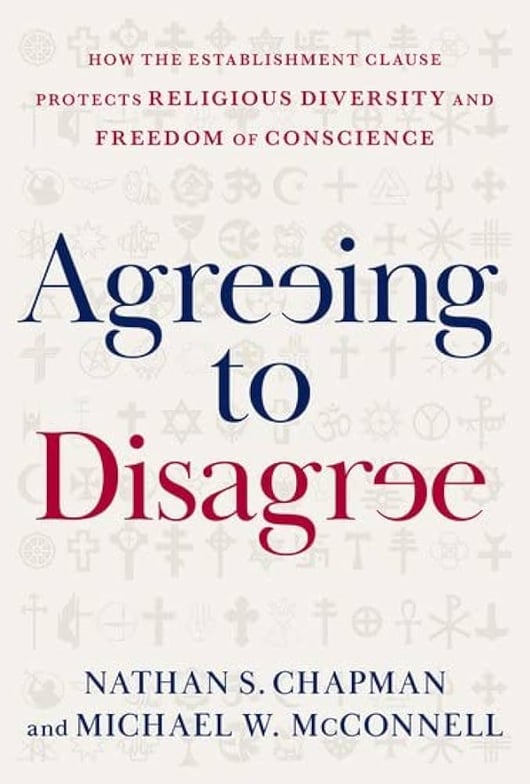
Establishing an Agreement to Disagree About Church and State
Federalist Society Review, Volume 24
A review of Nathan Chapman & Michael McConnell, Agreeing to Disagree: How the Establishment Clause...

Groff v. DeJoy: The Death of the “De Minimis” Test Breathes Life Back into Religious Accommodation
Federalist Society Review, Volume 24
In a unanimous decision last June, the Supreme Court in Groff v. DeJoy heightened the...
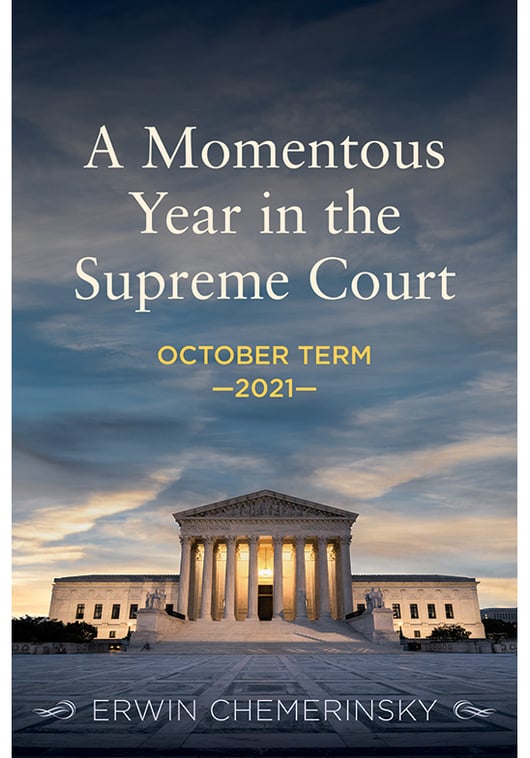
Originalism Carries On
Federalist Society Review, Volume 24
A review of Erwin Chemerinsky, A Momentous Year in the Supreme Court: October Term 2021...

A Cord of Three Strands: How Kennedy v. Bremerton School District Changed Free Exercise, Establishment, and Free Speech Clause Doctrine
Federalist Society Review, Volume 24
In 2015, Bremerton High School football coach Joseph Kennedy lost his job for kneeling at...
An Extended Essay on Church Autonomy
Federalist Society Review, Volume 22
The doctrine of church autonomy[1] is distinct from the two more familiar lines of cases...

Religious Schools, Collective Bargaining, & the Constitutional Legacy of NLRB v. Catholic Bishop
Federalist Society Review, Volume 22
It would be difficult to find a corner of American labor law more anomalous than...
We Are Free for a Reason
Federalist Society Review, Volume 22
A review of Free to Believe: The Battle Over Religious Liberty in America, by Luke...

States have been violating religious schools’ First Amendment rights for decades. The Supreme Court may be about to stop them.
The Supreme Court rarely goes out of its way to make sweeping pronouncements. The Justices...
After Espinoza, What’s Left of the Establishment Clause?
Federalist Society Review, Volume 21
Note from the Editor: The Federalist Society takes no positions on particular legal and public...
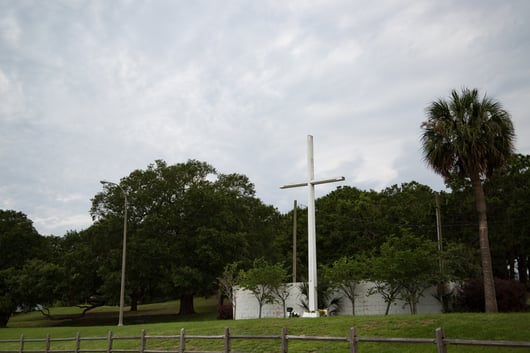
Lemon is Dead
“Lemon is dead,” quoth the court, and there was much rejoicing. Happily, the glad tidings...
Credentials Not Required: Why an Employee’s Significant Religious Functions Should Suffice to Trigger the Ministerial Exception
Federalist Society Review, Volume 20
Note from the Editor: The Federalist Society takes no positions on particular legal and public...
The Future of the Establishment Clause in the Roberts Court
NLC Convention Panel: Religious Liberties Practice Group
Next Thursday’s Establishment Clause Panel at the Federalist Society National Lawyer’s Convention will be both...
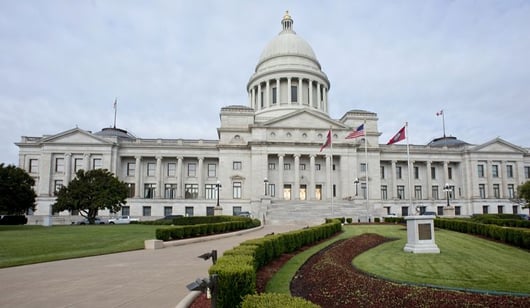
Exploring American Legion: What Shelving Lemon Could Mean for Monuments Litigation
In 2015, the Arkansas legislature authorized placement of a privately-donated Ten Commandments monument on the...

The American Legion v. American Humanist Association - Post-Decision Podcast
SCOTUScast featuring Christopher DiPompeo
On June 20, 2019, the Supreme Court decided The American Legion v. American Humanist Association,...

Courthouse Steps Decision Teleforum: The American Legion v. American Humanist Association
For decades, the law surrounding the constitutionality of monuments and memorials has been in disarray,...

Can a New Establishment Clause Jurisprudence Succeed in Protecting Religious Minorities Where Lemon Has Failed?
Federalist Society Review, Volume 20
Note from the Editor: The Federalist Society takes no positions on particular legal and public...

The Bladensburg WWI Memorial Cross
Government Expression of Religious Content and the Establishment Clause
On February 27, 2019, the Supreme Court of the United States heard oral argument in...
Interesting Establishment Clause Case in the Eleventh Circuit - Kondrat'Yev v. City of Pensacola
In May, the Eleventh Circuit will hear argument in Kondrat'Yev v. City of Pensacola (No....
In Whose Name We Pray: Restoring the Establishment Clause in Town of Greece v. Galloway
Engage Volume 14, Issue 3 October 2013
Note from the Editor: This article is a discussion about the Establishment Clause issue in...
Who Said That?: A Simple Question That May Change the Way Courts View Legislative Prayer
Engage Volume 14, Issue 1 February 2013
Related Opinions & Briefs: • Petition for Writ of Certiorari, Town of Greece v. Galloway:...