Facts of the Case
In 2003, Congress passed and the President signed the Partial-Birth Abortion Ban Act. The controversial concept of partial-birth abortion is defined in the Act as any abortion in which the death of the fetus occurs when "the entire fetal head [...] or [...] any part of the fetal trunk past the navel is outside the body of the mother." Dr. Leroy Carhart and other physicians who perform late-term abortions sued to stop the Act from going into effect. The plaintiffs argued that the Act could apply to a more common abortion procedure known as "D&E" ("dilation and evacuation"), as well as to the less common "intact D&E," sometimes called D&X ("dilation and extraction"). With this application the Act would ban most late-term abortions and thus be an unconstitutional "undue burden" on the right to an abortion, as defined by the Supreme Court in Planned Parenthood v. Casey. The plaintiffs also argued that the Act's lack of an exception for abortions necessary to protect the health of the mother rendered it unconstitutional under the Supreme Court's decision in Stenberg v. Carhart, regardless of Congress's finding in the Act that partial-birth abortions are never medically necessary.
A federal District Court agreed and ruled the Act unconstitutional on both grounds. The government appealed to the Court of Appeals for the Eighth Circuit. The government argued that the Act only bans a narrow category of abortion procedures, and that a health exception is not required when Congress determines that a banned abortion procedure is never necessary for the health of the mother. The Eighth Circuit disagreed and upheld the District Court, ruling that a health exception is required for all bans on abortion procedures when "substantial medical authority" supports the necessity of the procedure. The Circuit Court ruled that the ongoing disagreement among medical experts over the necessity of intact D&E abortions was sufficient to establish that the Act was unconstitutional without a health exception. The Circuit Court did not reach the question of whether the Act was so broad as to qualify as an unconstitutional "undue burden."
Questions
Is the Partial-Birth Abortion Ban Act of 2003 an unconstitutional violation of personal liberty protected by the Fifth Amendment because the Act lacks an exception for partial-birth abortions necessary to protect the health of the mother?
Conclusions
-
No. The Court ruled by a 5-4 vote that Congress's ban on partial-birth abortion was not unconstitutionally vague and did not impose an undue burden on the right to an abortion. Justice Anthony Kennedy wrote the opinion for the majority. The Court held that, under the most reasonable interpretation, the Act applies only to the intact D&E method (also known as "partial-birth abortion") and not to the more common D&E procedure. The Act's application was limited by provisions that restrict enforcement to cases where the physician intends to perform an intact D&E and delivers the still-living fetus past specific "anatomical landmarks." Because the majority found that the Act applies only to a specific method of abortion, it held that the ban was not unconstitutionally vague, overbroad, or an undue burden on the decision to obtain an abortion. The Court also held that Congress, after finding intact D&E never to be medically necessary, could validly omit a health exception from the ban, even when "some part of the medical community" considers the procedure necessary. To require the exception whenever "medical uncertainty" exists would be "too exacting a standard to impose on the legislative power [...] to regulate the medical profession." The Court left open the possibility that an as-applied challenge could be brought against the Act if it were ever applied in a situation in which an intact D&E was necessary to preserve a woman's health. Justice Ginsburg's dissent disputed the majority's claim that the opinion was consistent with the Casey and Stenberg precedents and said "The Court's hostility to the right Roe and Casey secured is not concealed."
Learn more about the Supreme Court and abortion law in Body Politic, a nonpartisan Oyez resource.
A Federal Gestational Age Abortion Ban is the Wrong (and Unconstitutional) Hill for the Pro-Life Movement to Die On
In Dobbs v. Jackson Women’s Health Organization, decided in June 2022, the Supreme Court overruled...

Courthouse Steps Pre-Argument Webinar: Dobbs v. Jackson Women's Health Organization
A Federalist Society Webinar
On December 1, 2021, the U.S. Supreme Court will hear Dobbs v. Jackson Women's Health Organization,...
Courthouse Steps Decision Teleforum: June Medical Services LLC v. Russo
On June 29, 2020, the Supreme Court issued its first major abortion decision on the...

Courthouse Steps Oral Argument: June Medical Services v. Russo
This teleforum addresses the March 4, 2020, Supreme Court oral argument in consolidated cases June...

Courthouse Steps: Masterpiece Cakeshop v. Colorado CRC
Religious Liberties Practice Group Teleforum
On December 5th, The Supreme Court will hear oral arguments in Masterpiece Cakeshop v. Colorado...
Religious Liberty vs. Nondiscrimination: Reconcilable or Intractable? - Podcast
Civil Rights Practice Group Podcast
Recent legal developments ranging from Supreme Court decisions to administrative actions have raised significant issues...
Whole Woman's Health v. Hellerstedt - Post-Decision SCOTUScast
SCOTUScast 7-12-16 featuring Roger Severino
On June 27, 2016, the Supreme Court decided Whole Woman's Health v. Hellerstedt. Whole Woman’s...
Supreme Court Concludes 2015 Term - Podcast
Practice Groups Podcast
On June 27, 2016, the United States Supreme Court concluded its October 2015 term by...
Whole Woman's Health v. Hellerstedt: Will the Court Ban the Texas Abortion Statute? - Podcast
Litigation and Religious Liberties Practice Groups Podcast
This week the Supreme Court will hear arguments in Whole Woman’s Health v. Hellerstedt, also...
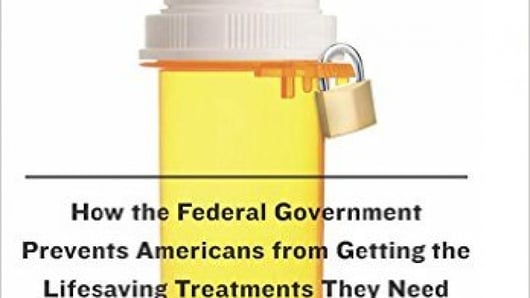
Book Review: The Right to Try
Engage, Volume 17, Issue 1
Note from the Editor: This book review discusses the controversial concept of the constitutional “right...
Abuse of Discretion: The Inside Story of Roe v. Wade - Podcast
Religious Liberties Practice Group Podcast
Based on 20 years of research, including an examination of the papers of eight of...
Closing Panel: The Electorate and the Courts
2013 National Lawyers Convention
The Federalist Society's Practice Groups presented this panel on "The Electorate and the Courts" on...
Supreme Court Preview: What Is in Store for October Term 2013?
Co-sponsored by the Practice Groups and the Faculty Division
October 7th will mark the first day of the 2013 Supreme Court term. Thus far,...
Debate on Fisher and Shelby County - Podcast
Civil Rights Practice Group, American Constitution Society, and National Constitution Center Podcast
The Federalist Society co-sponsored a Teleforum call with the National Constitution Center and the American...
Judicial Selection in Nebraska
White Paper
The Federalist Society for Law and Public Policy Studies is an organization of 40,000 lawyers,...
Judicial Selection in Nebraska
White Paper
The Federalist Society for Law and Public Policy Studies is an organization of 40,000 lawyers,...
Debate: The Constitutionality of the Affordable Care Act
2012 National Student Symposium
This debate will focus on the constitutionality of the Affordable Care Act. While specific attention...
The Unbearable Wrongness of Roe v. Wade
Fordham Student Chapter
The following audio and video were recorded on March 5, 2009. This event was co-sponsored with the Catholic...
Showcase Panel I: Judicial Selection: Federal and State
2008 National Lawyers Convention
Is the process we use for selecting judges broken at both the federal and the...
The Role of Religion in Public Debate
2007 National Lawyers Convention
The Federalist Society's Religious Liberties Practice Group presented this panel discussion at the 2007 Annual...
SCOTUS term
Online Debate
On June 28, 2007, the Supreme Court handed down its last decisions of the Spring...

Gonzales v. Carhart: Its Aftermath and Implications for Abortion Regulation and Jurisprudence
Religous Liberties Practice Group, The American Constitution Society, and The Pew Forum on Religion & Public Life
On April 18, 2007, the Supreme Court ruled that the Federal Partial-Birth Abortion Ban Act...
Partial-Birth Abortion Ban Act
Online Debate
On April 18, 2007, the Supreme Court upheld the constitutionality of the Partial-Birth Abortion Ban...
SCOTUScast 4-20-07 featuring John Eastman and Erwin Chemerinsky
Gonzales v. Carhart et al. and Gonzales v. Planned Parenthood Federation of America, Inc., et al.
On Wednesday, April 18, 2007, the United States Supreme Court issued its decision in a...
Abortion and the Courts
Online Debate
The Supreme Court has upheld the constitutionality of the Partial-Birth Abortion Ban Act, passed by...
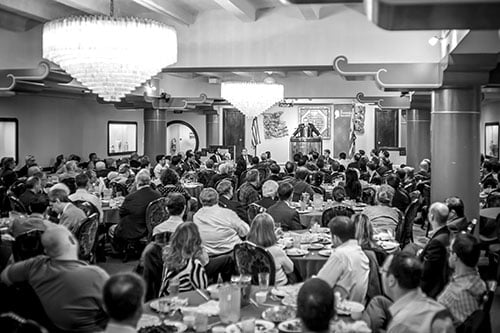

Gonzales v. Carhart: Its Aftermath and Implications for Abortion Regulation and Jurisprudence
Religous Liberties Practice Group, The American Constitution Society, and The Pew Forum on Religion & Public Life
The National Press Club529 14th Street, N.W.
Washington, DC 20045