Facts of the Case
Richard Ceballos, an employee of the Los Angeles District Attorney's office, found that a sheriff misrepresented facts in a search warrant affidavit. Ceballos notified the attorneys prosecuting the case stemming from that arrest and all agreed that the affidavit was questionable, but the D.A.'s office refused to dismiss the case. Ceballos then told the defense he believed the affidavit contained false statements, and defense counsel subpoenaed him to testify. Seeking damages in federal district court, Ceballos alleged that D.A.s in the office retaliated against him for his cooperation with the defense, which he argued was protected by the First Amendment. The district court ruled that the district attorneys were protected by qualified immunity, but the Ninth Circuit reversed and ruled for Ceballos, holding that qualified immunity was not available to the defendants because Ceballos had been engaged in speech that addressed matters of public concern and was thus protected by the First Amendment.
Questions
Should a public employee's purely job-related speech, expressed strictly pursuant to the duties of employment, be protected by the First Amendment simply because it touched on a matter of public concern, or must the speech also be engaged in "as a citizen?"
Conclusions
-
In a 5-to-4 decision authored by Justice Anthony Kennedy, the Supreme Court held that speech by a public official is only protected if it is engaged in as a private citizen, not if it is expressed as part of the official's public duties. Ceballos's employers were justified in taking action against him based on his testimony and cooperation with the defense, therefore, because it happened as part of his official duties. "The fact that his duties sometimes required him to speak or write," Justice Kennedy wrote, "does not mean his supervisors were prohibited from evaluating his performance." Justices Stevens, Souter, Ginsburg and Breyer dissented.
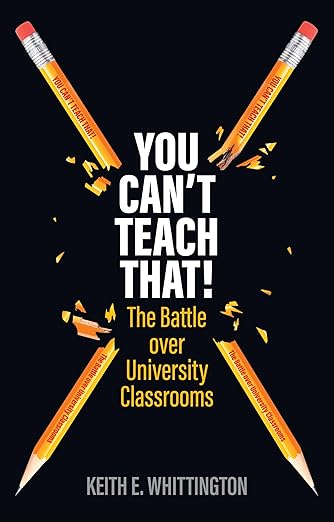
Who Controls What College Professors Teach?
A review of You Can’t Teach That! The Battle Over University Classrooms, by Keith E....
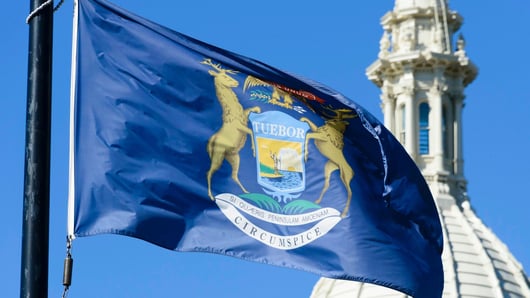
Michigan Supreme Court Enacts Preferred Pronoun Rule for State Judiciary
The debate about pronouns and gender identity has come to the judicial system. Courts are...

A Cord of Three Strands: How Kennedy v. Bremerton School District Changed Free Exercise, Establishment, and Free Speech Clause Doctrine
Federalist Society Review, Volume 24
In 2015, Bremerton High School football coach Joseph Kennedy lost his job for kneeling at...

SCOTUS Preview: Kennedy v. Bremerton School District
This week, the Supreme Court set oral argument for a case centering on the First...

Academic Freedom and Public Employee Speech in Florida
The University of Florida sparked an ongoing First Amendment controversy by trying to prevent three...
An Academic Freedom Exception to Government Control of Employee Speech
Federalist Society Review, Volume 22
Public employee speech cases often arise as Section 1983 actions in which a public employee...

Government Speech: From Courtesy to Coercion?
Can a college student demand that a professor address them using “preferred personal pronouns”? Do...
Minnesota Voters Alliance v. Mansky Strikes Down a Vague Ban on Speech in Polling Places, But Future Bans May Be Upheld
Federalist Society Review, Volume 19
Note from the Editor: This article discusses the Supreme Court’s opinion in Minnesota Voters Alliance...