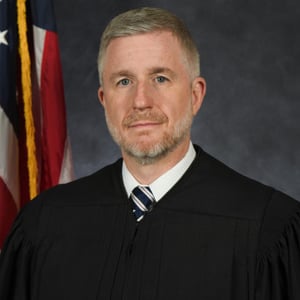
Facts of the Case
Knudsen alleged that he had been hurt while working for Benson, and he sought compensation under the Longshoremen's and Harbor Workers' Compensation Act. Crowell, a deputy commissioner of the U.S. Employees' Compensation Commission, issued an award to Knudsen. Benson sought to enjoin the enforcement of the award on the grounds that Knudsen had not been working for him when he was hurt. A federal court agreed that there was no employment relationship and issued an order restraining the award after it reviewed the law and the facts de novo. When Crowell sought certiorari at the Supreme Court, Benson contended that the Compensation Act had infringed on his constitutional rights of due process and a jury trial by giving judicial authority to Crowell as a deputy commissioner. He also argued that the Compensation Act violated Article III, while Crowell argued that the court should not have disturbed the award to Knudsen or engaged in a de novo review of the facts of the claim.
The Labor Law Enigma: Article III, Judicial Power, and the National Labor Relations Board
Federalist Society Review, Volume 24
Axon Enterprises v. FTC[1] wasn’t supposed to be about labor law. In fact, it wasn’t...
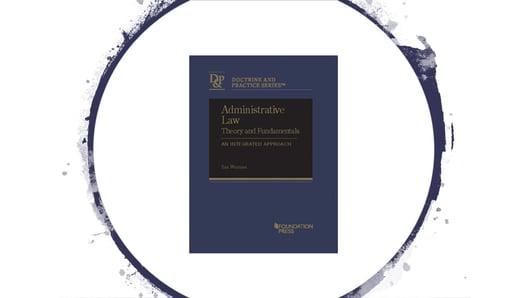
Talks with Authors: Administrative Law Theory and Fundamentals: An Integrated Approach
Few fields are more in need of fresh thinking than administrative law. The author of Administrative Law...

Courthouse Steps Oral Argument Webinar: United States v. Arthrex Inc.
The U.S. Supreme Court will hear oral argument in United States v. Arthrex Inc. on March...
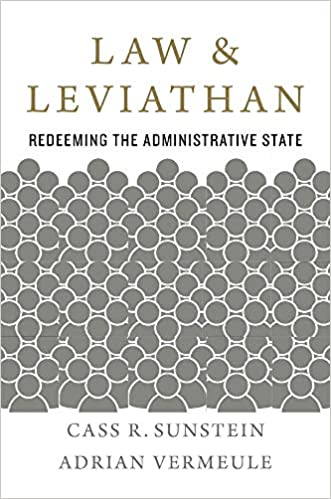
Bureaucracy With Bumper Guards: Better Than It Rules?
Federalist Society Review, Volume 22
A review of Law & Leviathan: Redeeming the Administrative State, by Cass Sunstein & Adrian...
Panel One: The Future of Administrative Law After Kisor
Third Circuit Chapters Conference
On October 24, 2019, The Federalist Society held its annual Third Circuit Chapters Conference. This...

Rulemaking by Adjudication: Who Am I to Judge?
2018 National Lawyers Convention
When Congress delegates to a federal agency the responsibility for implementing, administering, and enforcing a...
Can Americans Reconcile Our Constitutional System With an Expansive Administrative State?
Federalist Society Review, Volume 19
A review of: Bureaucracy in America: The Administrative State’s Challenge to Constitutional Government, by Joseph...

The Supreme Court Tackles Patent Reform: Inter Partes Review Under the AIA Undermines the Structural Protections Offered by Article III Courts
Federalist Society Review, Volume 19
Note from the Editor: This article criticizes Justice Clarence Thomas’ opinion in Oil States. It...

Why Scalia Was Wrong About Chevron
Not since the New Deal era has the scope and reach of the modern administrative...
Intellectual Property: The Role of Congress and Executive Agencies in 21st Century IP Regimes
2015 National Lawyers Convention
The Constitution specifically vests power in Congress to grant authors and inventors exclusive rights in...
Luncheon Panel: The Incentives behind Congressional Delegation
Third Annual Executive Branch Review Conference
In administrative law the focus has primarily been on how to constrain executive discretion. It...

The America Invents Act May Be Constitutionally Infirm if It Repeals the Bar Against Patenting After Secret Commercial Use
Engage Volume 13, Issue 3 October 2012
Note from the Editor: This paper analyzes the constitutionality of the new conditions for patentability...