

Sterling Professor of Law and Political Science, Yale Law School
Akhil Reed Amar is Sterling Professor of Law and Political Science at Yale University, where he teaches constitutional law in both Yale College and Yale Law School. After graduating from Yale College, summa cum laude, in 1980 and from Yale Law School in 1984, and clerking for Judge (later Justice) Stephen Breyer, Amar joined the Yale faculty in 1985 at the age of 26. He is Yale’s only living professor to have won the University’s unofficial triple crown — the Sterling Chair for scholarship, the DeVane Medal for teaching, and the Lamar Award for alumni service.
Amar’s work has won awards from both the American Bar Association and the Federalist Society, and he has been cited by Supreme Court justices across the spectrum in more than 50 cases — tops among scholars under age 70. According to both Fred Shapiro’s landmark 2021 study of lifetime scholarly citations and Heinonline’s most recent tabulation of lifetime law-review citations, Amar is America’s second most-cited legal scholar still under age 70. He is a member of the American Academy of Arts and Sciences and has written widely for popular publications, including The New York Times, The Washington Post, The Wall Street Journal, Time, and The Atlantic. He was an informal consultant to the popular TV show The West Wing and his scholarship has been showcased on many broadcasts, including The Colbert Report, Morning Joe, AC360, Velshi, Fox News @ Night with Shannon Bream, Fareed Zakaria GPS, Erin Burnett Outfront, and Constitution USA with Peter Sagal.
He is the author of more than a hundred law review articles and several books, including The Bill of Rights (1998 — winner of the Yale University Press Governors’ Award), America’s Constitution (2005 — winner of the ABA’s Silver Gavel Award), America’s Unwritten Constitution (2012 — named one of the year’s 100 best nonfiction books by The Washington Post), and The Constitution Today (2016 — named one of the year’s top ten nonfiction books by Time magazine). The first volume of his ambitious trilogy on American constitutional history from the Founding to the present, The Words That Made Us: America’s Constitutional Conversation, 1760-1840, came out in May 2021. The second volume, Born Equal: Remaking America’s Constitution, 1840-1920, will be published in September 2025 and is already available for pre-order. All together, his nonfiction books have won two starred reviews from Publishers Weekly and three starred reviews from Kirkus—tops, it is believed, among legal scholars under age 70. Together with Vikram David Amar (YLS ’88), he has a bi-weekly column on the Supreme Court on the distinguished website SCOTUSblog. Along with Andy Lipka, he co-hosts a popular and free weekly podcast, Amarica’s Constitution, whose listeners are eligible for CLE credit in most American jurisdictions. A wide assortment of his articles and op-eds and video links to many of his public lectures and free online courses may be found at akhilamar.com.

Anne Fleming Research Professor and Professor of Law, Georgetown University Law Center; Faculty Director, Georgetown Center for the Constitution
Stephanie Barclay is a Professor of Law at Georgetown Law School, and the Faculty Director of the Georgetown Center for the Constitution. Her research focuses on the role our different democratic institutions play in protecting minority rights, particularly at the intersection of free speech and religious exercise. Barclay‘s work is published or is forthcoming in leading journals such as the Harvard Law Review, the Chicago Law Review, the University of Pennsylvania Law Review, and the Yale Law Journal Forum. One of her articles was also selected for the 2020 Stanford/Harvard/Yale Junior Faculty Forum. Her work has been featured in many media outlets, including The New York Times, The Wall Street Journal, The Washington Post, USA Today, Bloomberg BNA, The Hill, and Law 360. And her work has also been cited by the U.S. Supreme Court.
Prior to joining Georgetown, Barclay was twice voted Professor of the Year. Barclay has also litigated constitutional cases at both the trial and appellate level, including before the U.S. Supreme Court. Barclay served as a law clerk to Judge N. Randy Smith on the U.S. Court of Appeals for the Ninth Circuit, and to Justice Neil M. Gorsuch of the U.S. Supreme Court.
Barclay is a Faculty Affiliate at the Constitutional Law Center at Stanford Law School; and she is a Nootbaar Fellow at the Nootbaar Institute on Law, Religion, and Ethics at Pepperdine University. She currently serves as the Chair for the AALS Law and Religion Section and as a Member of the Executive Committee for the AALS Constitutional Law Section. She graduated summa cum laude from BYU Law School, where she was elected to the Order of the Coif. She is completing a Ph.D. in Law at Oxford University as a Clarendon Scholar and a Tang Scholar.
Deputy General Counsel, Office of Texas Governor Greg Abbott
Trevor serves as General Counsel to Governor Greg Abbott. In that role he provides strategic counseling to the State’s Chief Executive Officer on a range of issues under both state and federal law, including litigation involving the Governor.
Before returning to Texas, Trevor worked in private practice in the Washington, D.C. area. At Clement & Murphy, he focused on complex litigation in federal and state courts—from deposing key witnesses before trial to briefing legal issues on appeal—in disputes that presented constitutional law, regulatory, products liability, and contracts issues.
Trevor has also spent years in government service. He previously served as an Assistant Attorney General for the State of Texas, where he represented clients before every level of the United States and Texas judiciaries in a range of areas spanning election law, state sovereign immunity, federal preemption, criminal procedure, and the Establishment Clause. And he has clerked for federal judges on the Fifth Circuit, the Sixth Circuit, and the Supreme Court of the United States.
For several years, Trevor taught as an adjunct professor a 2-credit course on the writ of habeas corpus, with course material covering the Suspension Clause, wartime detention, immigration, and post-conviction review.
President and Co-Founder, America First Legal Foundation
Gene Hamilton is the President of America First Legal, which he co-founded, and where he was previously the Executive Director, Executive Vice President, and General Counsel. He most recently served as Deputy White House Counsel to President Donald Trump. Earlier in his career, Gene served as Counselor to Attorney General at the U.S. Department of Justice and as Senior Counselor to the Secretary of Homeland Security. He also served as General Counsel on the Senate Judiciary Committee and held several roles at the Department of Homeland Security, including with U.S. Immigration Enforcement, U.S. Customs and Border Protection and the Office of the General Counsel. He holds a B.A. from the University of Georgia and a J.D. from Washington and Lee University School of Law.
Editor in Chief, Texas Review of Law & Politics, The University of Texas School of Law
Jordan Lamb is a third-year law student at the University of Texas School of Law and the Editor in Chief of the Texas Review of Law & Politics. She previously served as President of the Texas Law Federalist Society.
Justice, Texas Supreme Court
James P. Sullivan was appointed to the Texas Supreme Court by Governor Greg Abbott on January 7, 2025, after serving as his General Counsel. He is the proud husband of Alithea and father of Conan. Growing up in Austin, Judge Sully was an extra in the movie "Dazed & Confused." He was a highly unrecruited walk-on at Rice University, until an injury turned him into a debater. Once in law school, he met his wife, Alithea, on the Harvard Law Review. After graduating, he clerked on the D.C. Circuit for Judge Thomas B. Griffith. He also worked under then-Attorney General Abbott in the Office of the Solicitor General, in addition to stints as an adjunct professor at George Mason University and an appellate litigator in private practice.
Anne Fleming Research Professor and Professor of Law, Georgetown University Law Center; Faculty Director, Georgetown Center for the Constitution
Stephanie Barclay is a Professor of Law at Georgetown Law School, and the Faculty Director of the Georgetown Center for the Constitution. Her research focuses on the role our different democratic institutions play in protecting minority rights, particularly at the intersection of free speech and religious exercise. Barclay‘s work is published or is forthcoming in leading journals such as the Harvard Law Review, the Chicago Law Review, the University of Pennsylvania Law Review, and the Yale Law Journal Forum. One of her articles was also selected for the 2020 Stanford/Harvard/Yale Junior Faculty Forum. Her work has been featured in many media outlets, including The New York Times, The Wall Street Journal, The Washington Post, USA Today, Bloomberg BNA, The Hill, and Law 360. And her work has also been cited by the U.S. Supreme Court.
Prior to joining Georgetown, Barclay was twice voted Professor of the Year. Barclay has also litigated constitutional cases at both the trial and appellate level, including before the U.S. Supreme Court. Barclay served as a law clerk to Judge N. Randy Smith on the U.S. Court of Appeals for the Ninth Circuit, and to Justice Neil M. Gorsuch of the U.S. Supreme Court.
Barclay is a Faculty Affiliate at the Constitutional Law Center at Stanford Law School; and she is a Nootbaar Fellow at the Nootbaar Institute on Law, Religion, and Ethics at Pepperdine University. She currently serves as the Chair for the AALS Law and Religion Section and as a Member of the Executive Committee for the AALS Constitutional Law Section. She graduated summa cum laude from BYU Law School, where she was elected to the Order of the Coif. She is completing a Ph.D. in Law at Oxford University as a Clarendon Scholar and a Tang Scholar.
Vice President for Legal Strategy, Stand Together
Casey Mattox is Vice President for Legal Strategy at Stand Together and Senior Advisor at
Americans for Prosperity. In these roles he advocates for and creates strategies and
partnerships to ensure a constitutionally limited government that protects the civil liberties of all
Americans. Prior to joining Stand Together and AFP Casey’s legal career focused on defending
the First Amendment rights of students, faculty, healthcare workers and religious organizations.
Casey has a J.D. from Boston College School of Law and an undergraduate degree from the
University of Virginia. You can find him on Twitter at @CaseyMattox_ and on LinkedIn at
@Casey-Mattox-ST.
Anne Fleming Research Professor and Professor of Law, Georgetown University Law Center; Faculty Director, Georgetown Center for the Constitution
Stephanie Barclay is a Professor of Law at Georgetown Law School, and the Faculty Director of the Georgetown Center for the Constitution. Her research focuses on the role our different democratic institutions play in protecting minority rights, particularly at the intersection of free speech and religious exercise. Barclay‘s work is published or is forthcoming in leading journals such as the Harvard Law Review, the Chicago Law Review, the University of Pennsylvania Law Review, and the Yale Law Journal Forum. One of her articles was also selected for the 2020 Stanford/Harvard/Yale Junior Faculty Forum. Her work has been featured in many media outlets, including The New York Times, The Wall Street Journal, The Washington Post, USA Today, Bloomberg BNA, The Hill, and Law 360. And her work has also been cited by the U.S. Supreme Court.
Prior to joining Georgetown, Barclay was twice voted Professor of the Year. Barclay has also litigated constitutional cases at both the trial and appellate level, including before the U.S. Supreme Court. Barclay served as a law clerk to Judge N. Randy Smith on the U.S. Court of Appeals for the Ninth Circuit, and to Justice Neil M. Gorsuch of the U.S. Supreme Court.
Barclay is a Faculty Affiliate at the Constitutional Law Center at Stanford Law School; and she is a Nootbaar Fellow at the Nootbaar Institute on Law, Religion, and Ethics at Pepperdine University. She currently serves as the Chair for the AALS Law and Religion Section and as a Member of the Executive Committee for the AALS Constitutional Law Section. She graduated summa cum laude from BYU Law School, where she was elected to the Order of the Coif. She is completing a Ph.D. in Law at Oxford University as a Clarendon Scholar and a Tang Scholar.
William Cranch Research Professor of Law, The George Washington University Law School
Bradford R. Clark teaches and writes in the areas of civil procedure, constitutional structure, federal courts, and foreign relations. His scholarship has appeared in leading journals including California Law Review, Columbia Law Review, Harvard Law Review, Texas Law Review, University of Chicago Law Review, University of Pennsylvania Law Review, and Virginia Law Review. His book, The Law of Nations and the United States Constitution (co-authored with Anthony J. Bellia Jr.), was published in 2017 by Oxford University Press. Professor Clark has been a visiting professor at Harvard Law School and the University of Michigan Law School. Professor Clark also served as a special master appointed by the Supreme Court to make recommendations in an original action between states, Alabama, et al. v. North Carolina, Orig. No. 132.
Before joining the law school faculty, Professor Clark spent several years practicing law in the Washington, D.C. office of Gibson, Dunn & Crutcher, where he specialized in trial and appellate litigation. Previously, he served as an attorney adviser in the Department of Justice’s Office of Legal Counsel, where he provided legal advice to the president, the attorney general, and the heads of executive departments. Professor Clark also served as a law clerk to The Honorable Robert H. Bork of the U.S. Court of Appeals for the D.C. Circuit and to The Honorable Antonin Scalia of the Supreme Court of the United States.

James Madison Distinguished Professor of Law and Class of 1941 Research Professor of Law, University of Virginia School of Law
Professor John C. Harrison is the James Madison Distinguished Professor of Law and Class of 1941 Research Professor of Law at the University of Virginia School of Law. He joined the faculty at University of Virginia in 1993 as an associate professor of law after a distinguished career with the U.S. Department of Justice. His teaching subjects include constitutional history, federal courts, remedies, corporations, civil procedure, legislation and property. In 2008 he was on leave from the Law School to serve as counselor on international law in the Office of the Legal Adviser at the U.S. Department of State.
A 1977 graduate of the University of Virginia, Harrison earned his law degree in 1980 at Yale, where he served as editor of the Yale Law Journal and editor and articles editor of the Yale Studies in World Public Order. He was an associate at Patton Boggs & Blow in Washington, D.C., and clerked for Judge Robert Bork on the U.S. Court of Appeals for the District of Columbia Circuit. He worked with the Department of Justice from 1983-93, serving in numerous capacities, including deputy assistant attorney general in the Office of Legal Counsel (1990-93).
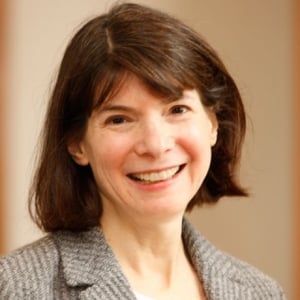
William Minor Lile Professor of Law, University of Virginia
Ann Woolhandler joined the resident faculty of the Law School in January 2002, after spending the spring of 2001 as a visiting professor at Virginia. Formerly a professor of law at Tulane University, she is an expert on the federal court system and civil procedure. She has been a visiting professor at Harvard and Boston University, and on the faculty of the University of Cincinnati.
Anne Fleming Research Professor and Professor of Law, Georgetown University Law Center; Faculty Director, Georgetown Center for the Constitution
Stephanie Barclay is a Professor of Law at Georgetown Law School, and the Faculty Director of the Georgetown Center for the Constitution. Her research focuses on the role our different democratic institutions play in protecting minority rights, particularly at the intersection of free speech and religious exercise. Barclay‘s work is published or is forthcoming in leading journals such as the Harvard Law Review, the Chicago Law Review, the University of Pennsylvania Law Review, and the Yale Law Journal Forum. One of her articles was also selected for the 2020 Stanford/Harvard/Yale Junior Faculty Forum. Her work has been featured in many media outlets, including The New York Times, The Wall Street Journal, The Washington Post, USA Today, Bloomberg BNA, The Hill, and Law 360. And her work has also been cited by the U.S. Supreme Court.
Prior to joining Georgetown, Barclay was twice voted Professor of the Year. Barclay has also litigated constitutional cases at both the trial and appellate level, including before the U.S. Supreme Court. Barclay served as a law clerk to Judge N. Randy Smith on the U.S. Court of Appeals for the Ninth Circuit, and to Justice Neil M. Gorsuch of the U.S. Supreme Court.
Barclay is a Faculty Affiliate at the Constitutional Law Center at Stanford Law School; and she is a Nootbaar Fellow at the Nootbaar Institute on Law, Religion, and Ethics at Pepperdine University. She currently serves as the Chair for the AALS Law and Religion Section and as a Member of the Executive Committee for the AALS Constitutional Law Section. She graduated summa cum laude from BYU Law School, where she was elected to the Order of the Coif. She is completing a Ph.D. in Law at Oxford University as a Clarendon Scholar and a Tang Scholar.
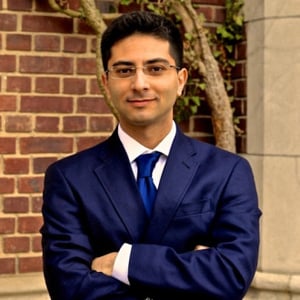
Associate Professor of Law, University of Notre Dame Law School
Sherif Girgis joined Notre Dame Law School in 2021. Prior to joining Notre Dame Law, Sherif practiced law at Jones Day in Washington, D.C., where he focused on appellate and complex civil litigation. Before that, Girgis served as a law clerk to Justice Samuel Alito, Jr., of the U.S. Supreme Court and Judge Thomas B. Griffith of the U.S. Court of Appeals for the D.C. Circuit. Now completing his Ph.D. in philosophy at Princeton, Girgis earned his J.D. at Yale Law School, where he served as an editor of the Yale Law Journal and won the Felix S. Cohen Prize for best paper in legal philosophy. Before law school, he earned a master's degree (B.Phil.) in philosophy from the University of Oxford as a Rhodes Scholar, and his bachelor's degree in philosophy from Princeton, Phi Beta Kappa and summa cum laude. Girgis is coauthor of What Is Marriage? Man and Woman: A Defense, cited in a dissent in United States v. Windsor, and Debating Religious Liberty and Discrimination, released by Oxford University Press in 2017. His work at the intersection of philosophy and law--including criminal law, constitutional liberties, and jurisprudence--has appeared in academic and popular venues including the Yale Law Journal, the Virginia Law Review, the University of Pennsylvania Law Review, the Harvard Journal of Law and Public Policy, the American Journal of Jurisprudence, the Cambridge Companion to Philosophy of Law, The New York Times, and The Wall Street Journal.
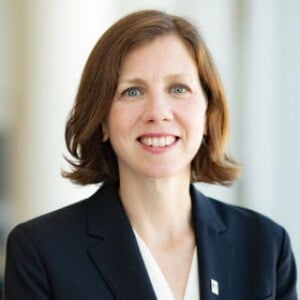
Kean Family Dean & Peter J. Liacouras Professor of Law, Temple University Beasley School of Law
Rachel Rebouché is the Kean Family Dean of Temple University Beasley School of Law and the Peter J. Liacouras Professor of Law. Prior to her appointment as Dean, she was the Associate Dean for Research, a position she held from 2017 to 2021. She is also a Faculty Fellow at Temple’s Center for Public Health Law Research.
Dean Rebouché is a leading scholar in reproductive health law and family law. She is an author of Governance Feminism: An Introduction and an editor of Governance Feminism: Notes from the Field. She is also the editor of Feminist Judgments: Family Law Opinions Rewritten, published by Cambridge University Press, and an author of the sixth edition of the casebook, Family Law. In addition, she will join the fifth edition of the casebook, Contracts: Law in Action and recently co-edited a collection of essays for Law & Contemporary Problems on the pandemic’s effects on contract law.
Dean Rebouché has served as a co-investigator on two grant-funded research projects related to reproductive health, one housed at the Emory University Rollins School of Public Health and another funded by the World Health Organization. Her recent research also includes articles in law reviews and in peer-reviewed journals on abortion law, relational contracts, gestational surrogacy, prenatal genetic testing and genetic counseling, collaborative divorce, parental involvement laws, and international reproductive rights.
Dean Rebouché received a J.D. from Harvard Law School, an LL.M. from Queen’s University, Belfast, and a B.A. from Trinity University. Prior to law school, she worked as a researcher for the Northern Ireland Human Rights Commission and the Human Rights Centre at Queen’s University, Belfast. After law school, Dean Rebouché clerked for Justice Kate O’Regan on the Constitutional Court of South Africa and practiced law in Washington, D.C., where she served as an associate director of adolescent health programs at the National Partnership for Women & Families (formerly, the Women’s Legal Defense Fund) and as a Women’s Law and Public Policy Fellow at the National Women’s Law Center.

Antonin Scalia Professor of Law, Harvard Law School
Stephen E. Sachs is the Antonin Scalia Professor of Law at Harvard Law School, where he teaches civil procedure, conflict of laws, and seminars on constitutional law. His research focuses on the law and theory of constitutional interpretation, the jurisdiction of state and federal courts, the history of procedure and private law, and the role of the general common law in the U.S. legal system.
Sachs has authored numerous articles, essays, and book chapters. He is an elected member of the American Law Institute, an adviser to the ALI’s project on the Restatement of the Law (Third), Conflict of Laws, a former member of the Judicial Conference’s Advisory Committee on Appellate Rules, and a founding member of the Academic Freedom Alliance.
In 2020, Sachs received the Federalist Society’s Joseph Story Award, which recognizes a young academic who has demonstrated excellence in legal scholarship, a commitment to teaching, a concern for students, and who has made a significant public impact in a manner that advances the rule of law in a free society.
Sachs previously taught at Duke University School of Law and as a visiting professor at the University of Chicago Law School. Before entering academia, he practiced in the Washington, D.C., litigation group of Mayer Brown LLP, and he clerked for Chief Justice John G. Roberts Jr. as well as for Judge Stephen F. Williams of the U.S. Court of Appeals for the D.C. Circuit.
Sachs received his J.D. from Yale Law School, where he was executive editor of the Yale Law Journal and served both as executive editor and articles editor of the Yale Law & Policy Review. A Rhodes Scholar, he graduated from Oxford University with a first-class BA (Hons) degree in philosophy, politics, and economics. He received his A.B. degree summa cum laude in history from Harvard University, earning the Sophia Freund Prize.
Sachs is a licensed attorney in Massachusetts and the District of Columbia, and he is authorized to practice before the D.C. Circuit, the Second Circuit, the Seventh Circuit, and the Supreme Court of the United States.
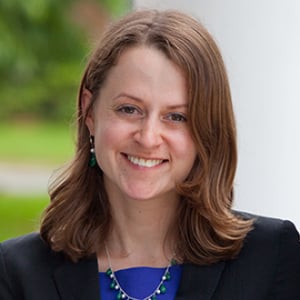
Stearns Weaver Miller Professor, Florida State University College of Law
Mary Ziegler is the Stearns Weaver Miller Professor at Florida State University College of Law. She specializes in the legal history of reproduction, the family, sexuality, and the Constitution. In the spring of 2022, she is visiting at Harvard Law School.
Her most recent book, Abortion and the Law in America: A Legal History, Roe v. Wade to the Present, was published by Cambridge University Press in 2020, and received positive reviews in outlets from the Washington Post to the Christian Science Monitor. Her new book, Dollars for Life: The Antiabortion Movement and the Fall of the Republican Establishment, will be published by Yale University Press in the summer of 2022. She also has a forthcoming book with Routledge, Reproduction and the Constitution.
Ziegler's first book, After Roe: The Lost History of the Abortion Debate, was published by Harvard University Press in 2015 and won the 2014 Harvard University Press Thomas J. Wilson Memorial Prize for best first manuscript published by the press in any discipline. Her second book, Beyond Abortion: Roe v. Wade and the Fight for Privacy, was published by Harvard University Press in 2018.
Her law review articles have appeared in leading journals, and she has served as a commentator for or been quoted in leading mass media outlets, including The Atlantic, CNN, Fox News, NBC, MSNBC, the New Republic, Newsweek, The New Yorker, The New York Times, NPR, PBS, Politico, Time, and The Washington Post. She has chaired committees for major legal history organizations, including the American Society for Legal History, the American Association of Law Schools Legal History Section and the American Bar Association’s Committee on Historic Commemorations. She is currently a member of the board of directors of the American Society for Legal History. She has also received recognition for her work in the classroom, including the 2016 Florida State University Teaching Award and the 2015 Transformation Through Teaching Award.
Anne Fleming Research Professor and Professor of Law, Georgetown University Law Center; Faculty Director, Georgetown Center for the Constitution
Stephanie Barclay is a Professor of Law at Georgetown Law School, and the Faculty Director of the Georgetown Center for the Constitution. Her research focuses on the role our different democratic institutions play in protecting minority rights, particularly at the intersection of free speech and religious exercise. Barclay‘s work is published or is forthcoming in leading journals such as the Harvard Law Review, the Chicago Law Review, the University of Pennsylvania Law Review, and the Yale Law Journal Forum. One of her articles was also selected for the 2020 Stanford/Harvard/Yale Junior Faculty Forum. Her work has been featured in many media outlets, including The New York Times, The Wall Street Journal, The Washington Post, USA Today, Bloomberg BNA, The Hill, and Law 360. And her work has also been cited by the U.S. Supreme Court.
Prior to joining Georgetown, Barclay was twice voted Professor of the Year. Barclay has also litigated constitutional cases at both the trial and appellate level, including before the U.S. Supreme Court. Barclay served as a law clerk to Judge N. Randy Smith on the U.S. Court of Appeals for the Ninth Circuit, and to Justice Neil M. Gorsuch of the U.S. Supreme Court.
Barclay is a Faculty Affiliate at the Constitutional Law Center at Stanford Law School; and she is a Nootbaar Fellow at the Nootbaar Institute on Law, Religion, and Ethics at Pepperdine University. She currently serves as the Chair for the AALS Law and Religion Section and as a Member of the Executive Committee for the AALS Constitutional Law Section. She graduated summa cum laude from BYU Law School, where she was elected to the Order of the Coif. She is completing a Ph.D. in Law at Oxford University as a Clarendon Scholar and a Tang Scholar.
Associate Professor of Law, University of Notre Dame Law School
Sherif Girgis joined Notre Dame Law School in 2021. Prior to joining Notre Dame Law, Sherif practiced law at Jones Day in Washington, D.C., where he focused on appellate and complex civil litigation. Before that, Girgis served as a law clerk to Justice Samuel Alito, Jr., of the U.S. Supreme Court and Judge Thomas B. Griffith of the U.S. Court of Appeals for the D.C. Circuit. Now completing his Ph.D. in philosophy at Princeton, Girgis earned his J.D. at Yale Law School, where he served as an editor of the Yale Law Journal and won the Felix S. Cohen Prize for best paper in legal philosophy. Before law school, he earned a master's degree (B.Phil.) in philosophy from the University of Oxford as a Rhodes Scholar, and his bachelor's degree in philosophy from Princeton, Phi Beta Kappa and summa cum laude. Girgis is coauthor of What Is Marriage? Man and Woman: A Defense, cited in a dissent in United States v. Windsor, and Debating Religious Liberty and Discrimination, released by Oxford University Press in 2017. His work at the intersection of philosophy and law--including criminal law, constitutional liberties, and jurisprudence--has appeared in academic and popular venues including the Yale Law Journal, the Virginia Law Review, the University of Pennsylvania Law Review, the Harvard Journal of Law and Public Policy, the American Journal of Jurisprudence, the Cambridge Companion to Philosophy of Law, The New York Times, and The Wall Street Journal.
Kean Family Dean & Peter J. Liacouras Professor of Law, Temple University Beasley School of Law
Rachel Rebouché is the Kean Family Dean of Temple University Beasley School of Law and the Peter J. Liacouras Professor of Law. Prior to her appointment as Dean, she was the Associate Dean for Research, a position she held from 2017 to 2021. She is also a Faculty Fellow at Temple’s Center for Public Health Law Research.
Dean Rebouché is a leading scholar in reproductive health law and family law. She is an author of Governance Feminism: An Introduction and an editor of Governance Feminism: Notes from the Field. She is also the editor of Feminist Judgments: Family Law Opinions Rewritten, published by Cambridge University Press, and an author of the sixth edition of the casebook, Family Law. In addition, she will join the fifth edition of the casebook, Contracts: Law in Action and recently co-edited a collection of essays for Law & Contemporary Problems on the pandemic’s effects on contract law.
Dean Rebouché has served as a co-investigator on two grant-funded research projects related to reproductive health, one housed at the Emory University Rollins School of Public Health and another funded by the World Health Organization. Her recent research also includes articles in law reviews and in peer-reviewed journals on abortion law, relational contracts, gestational surrogacy, prenatal genetic testing and genetic counseling, collaborative divorce, parental involvement laws, and international reproductive rights.
Dean Rebouché received a J.D. from Harvard Law School, an LL.M. from Queen’s University, Belfast, and a B.A. from Trinity University. Prior to law school, she worked as a researcher for the Northern Ireland Human Rights Commission and the Human Rights Centre at Queen’s University, Belfast. After law school, Dean Rebouché clerked for Justice Kate O’Regan on the Constitutional Court of South Africa and practiced law in Washington, D.C., where she served as an associate director of adolescent health programs at the National Partnership for Women & Families (formerly, the Women’s Legal Defense Fund) and as a Women’s Law and Public Policy Fellow at the National Women’s Law Center.
Antonin Scalia Professor of Law, Harvard Law School
Stephen E. Sachs is the Antonin Scalia Professor of Law at Harvard Law School, where he teaches civil procedure, conflict of laws, and seminars on constitutional law. His research focuses on the law and theory of constitutional interpretation, the jurisdiction of state and federal courts, the history of procedure and private law, and the role of the general common law in the U.S. legal system.
Sachs has authored numerous articles, essays, and book chapters. He is an elected member of the American Law Institute, an adviser to the ALI’s project on the Restatement of the Law (Third), Conflict of Laws, a former member of the Judicial Conference’s Advisory Committee on Appellate Rules, and a founding member of the Academic Freedom Alliance.
In 2020, Sachs received the Federalist Society’s Joseph Story Award, which recognizes a young academic who has demonstrated excellence in legal scholarship, a commitment to teaching, a concern for students, and who has made a significant public impact in a manner that advances the rule of law in a free society.
Sachs previously taught at Duke University School of Law and as a visiting professor at the University of Chicago Law School. Before entering academia, he practiced in the Washington, D.C., litigation group of Mayer Brown LLP, and he clerked for Chief Justice John G. Roberts Jr. as well as for Judge Stephen F. Williams of the U.S. Court of Appeals for the D.C. Circuit.
Sachs received his J.D. from Yale Law School, where he was executive editor of the Yale Law Journal and served both as executive editor and articles editor of the Yale Law & Policy Review. A Rhodes Scholar, he graduated from Oxford University with a first-class BA (Hons) degree in philosophy, politics, and economics. He received his A.B. degree summa cum laude in history from Harvard University, earning the Sophia Freund Prize.
Sachs is a licensed attorney in Massachusetts and the District of Columbia, and he is authorized to practice before the D.C. Circuit, the Second Circuit, the Seventh Circuit, and the Supreme Court of the United States.
Stearns Weaver Miller Professor, Florida State University College of Law
Mary Ziegler is the Stearns Weaver Miller Professor at Florida State University College of Law. She specializes in the legal history of reproduction, the family, sexuality, and the Constitution. In the spring of 2022, she is visiting at Harvard Law School.
Her most recent book, Abortion and the Law in America: A Legal History, Roe v. Wade to the Present, was published by Cambridge University Press in 2020, and received positive reviews in outlets from the Washington Post to the Christian Science Monitor. Her new book, Dollars for Life: The Antiabortion Movement and the Fall of the Republican Establishment, will be published by Yale University Press in the summer of 2022. She also has a forthcoming book with Routledge, Reproduction and the Constitution.
Ziegler's first book, After Roe: The Lost History of the Abortion Debate, was published by Harvard University Press in 2015 and won the 2014 Harvard University Press Thomas J. Wilson Memorial Prize for best first manuscript published by the press in any discipline. Her second book, Beyond Abortion: Roe v. Wade and the Fight for Privacy, was published by Harvard University Press in 2018.
Her law review articles have appeared in leading journals, and she has served as a commentator for or been quoted in leading mass media outlets, including The Atlantic, CNN, Fox News, NBC, MSNBC, the New Republic, Newsweek, The New Yorker, The New York Times, NPR, PBS, Politico, Time, and The Washington Post. She has chaired committees for major legal history organizations, including the American Society for Legal History, the American Association of Law Schools Legal History Section and the American Bar Association’s Committee on Historic Commemorations. She is currently a member of the board of directors of the American Society for Legal History. She has also received recognition for her work in the classroom, including the 2016 Florida State University Teaching Award and the 2015 Transformation Through Teaching Award.
Anne Fleming Research Professor and Professor of Law, Georgetown University Law Center; Faculty Director, Georgetown Center for the Constitution
Stephanie Barclay is a Professor of Law at Georgetown Law School, and the Faculty Director of the Georgetown Center for the Constitution. Her research focuses on the role our different democratic institutions play in protecting minority rights, particularly at the intersection of free speech and religious exercise. Barclay‘s work is published or is forthcoming in leading journals such as the Harvard Law Review, the Chicago Law Review, the University of Pennsylvania Law Review, and the Yale Law Journal Forum. One of her articles was also selected for the 2020 Stanford/Harvard/Yale Junior Faculty Forum. Her work has been featured in many media outlets, including The New York Times, The Wall Street Journal, The Washington Post, USA Today, Bloomberg BNA, The Hill, and Law 360. And her work has also been cited by the U.S. Supreme Court.
Prior to joining Georgetown, Barclay was twice voted Professor of the Year. Barclay has also litigated constitutional cases at both the trial and appellate level, including before the U.S. Supreme Court. Barclay served as a law clerk to Judge N. Randy Smith on the U.S. Court of Appeals for the Ninth Circuit, and to Justice Neil M. Gorsuch of the U.S. Supreme Court.
Barclay is a Faculty Affiliate at the Constitutional Law Center at Stanford Law School; and she is a Nootbaar Fellow at the Nootbaar Institute on Law, Religion, and Ethics at Pepperdine University. She currently serves as the Chair for the AALS Law and Religion Section and as a Member of the Executive Committee for the AALS Constitutional Law Section. She graduated summa cum laude from BYU Law School, where she was elected to the Order of the Coif. She is completing a Ph.D. in Law at Oxford University as a Clarendon Scholar and a Tang Scholar.

William Rand Kenan, Jr. Distinguished Professor of Law, University of North Carolina School of Law
William (Bill) Marshall joined the Carolina Law faculty in 2001 and serves as the William R. Kenan Jr. Distinguished Professor of Law. His teaching and research interests include the first amendment, presidential power, election law, federal jurisdiction, federal judicial selection, civil procedure, and media law. Marshall is the author of numerous book chapters, articles, and essays on free speech, separation of powers, the Establishment Clause, and the Free Exercise Clause. His work has appeared in the Harvard Law Review, the Yale Law Journal, the Supreme Court Review, and the University of Chicago Law Review, among others.
Marshall received his law degree from the University of Chicago and his undergraduate degree from the University of Pennsylvania. Marshall was Deputy Counsel to the President and Deputy Assistant to the President during the Clinton Administration and also served as the Solicitor General for the State of Ohio. He has taught at the Northwestern, Boston University, Vanderbilt, Ohio State, DePaul, Case Western Reserve, William and Mary, and the University Connecticut law schools. Prior to beginning his teaching career, Marshall was a Special Assistant Attorney General for the State of Minnesota.
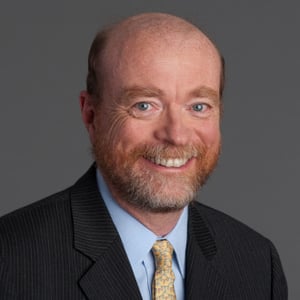
Executive Vice President and Dean of the Law Center; Paul Regis Dean Leadership Chair; Professor of Law, Georgetown University Law Center
William M. Treanor is the Executive Vice President of Georgetown University, Dean of the Law Center, and Paul Regis Dean Leadership Chair. Treanor joined Georgetown in 2010 and was reappointed to serve a third term as Dean and Executive Vice President on July 1, 2020.
Under Treanor’s leadership, Georgetown Law has hired 75 new faculty members; tripled the number of experiential offerings for students in its clinical, externship, and practicum programs; transformed its law and technology offerings into a world class program with 19 full-time faculty experts and over 80 courses in this area; and experienced its most successful era of fundraising, culminating in nearly $67 million in giving in the last fiscal year.
Treanor has also advanced Georgetown Law’s commitment to affordability and access. During his tenure, Georgetown has more than doubled financial aid; raised nearly $25 million dollars for the Law Center’s scholarship program for exceptional students with significant financial need; and launched the RISE program, which provides academic support for students from historically underrepresented groups. The Law Center also created the Early Outreach Initiative, which brings the Law Center’s dean of admissions, current law students, and alumni together to encourage students in underserved high schools to consider pursuing careers as lawyers.
In keeping with Georgetown Law’s motto, “Law is but the means; justice is the end,” Treanor has focused on increasing opportunities for students to pursue careers in public interest law. He is proud that nearly 1 in 4 graduates move straight into public service jobs – a ratio higher than any other top law school in America. The Law Center supports post-graduate fellowships that have enabled more than 400 graduates to work in public interest jobs, and, in combination with the law firms ArentFox Schiff and DLA Piper, it has launched the D.C. Affordable Law Firm, a “low bono” law firm where recent Georgetown Law graduates provide legal representation to people of limited means.
The National Jurist magazine has named Treanor one of the most influential people in legal education five times. He is a member of the Morristown (N.J.) High School Hall of Fame. In 2020, he was elected into the American Academy of Arts & Sciences for law and education. Most recently, he was selected for the inaugural Honorable Robert A. Katzmann Award for Academic Excellence by the Burton Awards.
Treanor’s areas of academic expertise include constitutional law, property law, criminal law, intellectual property, and legal history. At Georgetown Law, he has taught a first-year legal justice seminar, an upper-level course on the drafting of the U.S. Constitution, and leadership courses. His writings have principally been in the area of constitutional history, and he has been recognized as one of the 10 most-cited legal history scholars in the United States by the University of Chicago Law School’s Brian Leiter. His early work largely focused on the history of constitutional protections of private property. His article “The Original Understanding of the Takings Clause and the Political Process,” 95 Colum. L. Rev. 782 (1995), was recognized by the Land Use Professors Blog as the most cited land use article of the past 30 years. Treanor’s article, “Judicial Review before Marbury” was cited in the Moore v. Harper (2023) majority opinion written by Chief Justice Roberts. His recent article, “The Case of the Dishonest Scrivener: Gouverneur Morris and the Creation of the Federalist Constitution,” examined the changes that Gouverneur Morris and the Committee of Style made in preparing the Constitution’s final draft. W.W. Norton will publish his upcoming book, Fathers of the Constitution: Triumph, Tragedy, and the Creation of the American Republic.
Before coming to Georgetown, Treanor was Dean and Paul Fuller Professor of Law at Fordham Law School. He also served in a variety of positions in the government, including Deputy Assistant Attorney General in the Office of Legal Counsel, U.S. Department of Justice; Associate Counsel, Office of Independent Counsel during the Iran/Contra investigation. He was law clerk to the Honorable James L. Oakes, U.S. Court of Appeals for the Second Circuit. Treanor has a Ph.D. in history from Harvard University, a J.D. from Yale Law School, and a B.A., summa cum laude, from Yale College.
Anne Fleming Research Professor and Professor of Law, Georgetown University Law Center; Faculty Director, Georgetown Center for the Constitution
Stephanie Barclay is a Professor of Law at Georgetown Law School, and the Faculty Director of the Georgetown Center for the Constitution. Her research focuses on the role our different democratic institutions play in protecting minority rights, particularly at the intersection of free speech and religious exercise. Barclay‘s work is published or is forthcoming in leading journals such as the Harvard Law Review, the Chicago Law Review, the University of Pennsylvania Law Review, and the Yale Law Journal Forum. One of her articles was also selected for the 2020 Stanford/Harvard/Yale Junior Faculty Forum. Her work has been featured in many media outlets, including The New York Times, The Wall Street Journal, The Washington Post, USA Today, Bloomberg BNA, The Hill, and Law 360. And her work has also been cited by the U.S. Supreme Court.
Prior to joining Georgetown, Barclay was twice voted Professor of the Year. Barclay has also litigated constitutional cases at both the trial and appellate level, including before the U.S. Supreme Court. Barclay served as a law clerk to Judge N. Randy Smith on the U.S. Court of Appeals for the Ninth Circuit, and to Justice Neil M. Gorsuch of the U.S. Supreme Court.
Barclay is a Faculty Affiliate at the Constitutional Law Center at Stanford Law School; and she is a Nootbaar Fellow at the Nootbaar Institute on Law, Religion, and Ethics at Pepperdine University. She currently serves as the Chair for the AALS Law and Religion Section and as a Member of the Executive Committee for the AALS Constitutional Law Section. She graduated summa cum laude from BYU Law School, where she was elected to the Order of the Coif. She is completing a Ph.D. in Law at Oxford University as a Clarendon Scholar and a Tang Scholar.
Professor of History, Southern Methodist University
Kate Carté (Ph.D., history, University of Wisconsin; B.A., Haverford College) is a Professor of History at Southern Methodist University, specializing in early American and Atlantic history. She is the author of Religion and the American Revolution: An Imperial History (UNC Press for the Omohundro Institute, 2021) and Religion and Profit: Moravians in Early America (Philadelphia: University of Pennsylvania Press, 2009, paper 2011), which was awarded the 2010 Dale W. Brown Award for Outstanding Scholarship in Anabaptist and Pietist Studies. Her articles have appeared in the William and Mary Quarterly, Church History, and Early American Studies, as well as a variety of edited collections. Carté has been a Charles A. Ryskamp Fellow of the American Council of Learned Societies, an affiliate fellow of the Center for the Study of Religion at Princeton University, a Franklin Fellow of the American Philosophical Society, and a Barra Postdoctoral Fellow at the McNeil Center for Early American Studies.
Senior Counsel, Alliance Defending Freedom's Appellate Advocacy Team
Chris Schandevel serves as senior counsel on Alliance Defending Freedom’s Appellate Advocacy Team. In that role, he represents ADF clients of all stripes at the appellate level, preserving lower-court victories and seeking to overturn unjust results.
Among other clients, he has represented a faith-based pregnancy resource center and adoption agency, a Christian photographer, a college student and conservative student group, a former Planned Parenthood clinic manager, female track-and-field athletes, and a high-school French teacher. Schandevel also was on the team of attorneys who successfully represented the Thomas More Law Center in the U.S. Supreme Court. And he regularly represents clients in friend-of-the-court briefs filed in state and federal appellate courts and in the U.S. Supreme Court.
Before joining ADF, Schandevel served as an assistant attorney general in the Criminal Appeals Section at the Office of the Attorney General of Virginia. During his five years in that office, Schandevel briefed and argued 14 appeals in the Supreme Court of Virginia and more than 60 appeals in the Court of Appeals of Virginia. Before his time at the Virginia attorney general’s office, Schandevel clerked for the Honorable Stephen R. McCullough on the Court of Appeals of Virginia.
Schandevel earned his J.D. from the University of Virginia School of Law in 2012. During law school, he founded a student organization called Advocates for Life at Virginia Law. He also completed ADF’s Blackstone Legal Fellowship and was commissioned as a Blackstone Fellow in 2010 after an internship with ADF’s Center for Life. Schandevel earned his B.A. in Social Work from Harding University in 2009.
A member of the state bar of Virginia, Schandevel is admitted to practice before the U.S. Supreme Court and various state and federal trial and appellate courts.
Senior Counsel, Storzer and Associates; Adjunct Professor at the Catholic University of America Columbus School of Law
Eric Treene is Senior Counsel at Storzer and Associates in Washington, D.C., and an Adjunct Professor at the Catholic University of America School of Canon Law. He served for 19 years in four administrations in the U.S. Department of Justice as Special Counsel for Religious Discrimination, where he provided leadership for the Department on a wide range of religious liberty issues, including developing and overseeing the Department’s enforcement program for the Religious Land Use and Institutionalized Persons Act (RLUIPA), testifying before the U.S. Senate on religious hate crimes and developing training programs to protect places of worship from violence, and leading the Department’s efforts to protect religious liberty rights during the COVID-19 epidemic. Prior to serving at the Department of Justice, Mr. Treene was Litigation Director at the Becket Fund for Religious Liberty in Washington, D.C, and was a law clerk to the Hon. John M. Walker, Jr. on the U.S. Court of Appeals for the Second Circuit. He is a graduate of Amherst College and Harvard Law School.
Partner, Jenner & Block LLP
Adam Unikowsky is a partner in Jenner & Block LLP’s Appellate & Supreme Court Practice Group, where he has worked since 2011.
Prior to his time at Jenner & Block, Mr. Unikowsky served as a Judicial Law Clerk to former Justice Antonin Scalia. He also previously clerked for Judge Douglas Ginsberg at the U.S. Courts of Appeals for the D.C. Circuit.
Mr. Unikowsky got his JD from Harvard University, following achieving his Masters of Engineering & Bachelors of Science from Massachusetts Institute of Technology.
Anne Fleming Research Professor and Professor of Law, Georgetown University Law Center; Faculty Director, Georgetown Center for the Constitution
Stephanie Barclay is a Professor of Law at Georgetown Law School, and the Faculty Director of the Georgetown Center for the Constitution. Her research focuses on the role our different democratic institutions play in protecting minority rights, particularly at the intersection of free speech and religious exercise. Barclay‘s work is published or is forthcoming in leading journals such as the Harvard Law Review, the Chicago Law Review, the University of Pennsylvania Law Review, and the Yale Law Journal Forum. One of her articles was also selected for the 2020 Stanford/Harvard/Yale Junior Faculty Forum. Her work has been featured in many media outlets, including The New York Times, The Wall Street Journal, The Washington Post, USA Today, Bloomberg BNA, The Hill, and Law 360. And her work has also been cited by the U.S. Supreme Court.
Prior to joining Georgetown, Barclay was twice voted Professor of the Year. Barclay has also litigated constitutional cases at both the trial and appellate level, including before the U.S. Supreme Court. Barclay served as a law clerk to Judge N. Randy Smith on the U.S. Court of Appeals for the Ninth Circuit, and to Justice Neil M. Gorsuch of the U.S. Supreme Court.
Barclay is a Faculty Affiliate at the Constitutional Law Center at Stanford Law School; and she is a Nootbaar Fellow at the Nootbaar Institute on Law, Religion, and Ethics at Pepperdine University. She currently serves as the Chair for the AALS Law and Religion Section and as a Member of the Executive Committee for the AALS Constitutional Law Section. She graduated summa cum laude from BYU Law School, where she was elected to the Order of the Coif. She is completing a Ph.D. in Law at Oxford University as a Clarendon Scholar and a Tang Scholar.
Professor of History, Southern Methodist University
Kate Carté (Ph.D., history, University of Wisconsin; B.A., Haverford College) is a Professor of History at Southern Methodist University, specializing in early American and Atlantic history. She is the author of Religion and the American Revolution: An Imperial History (UNC Press for the Omohundro Institute, 2021) and Religion and Profit: Moravians in Early America (Philadelphia: University of Pennsylvania Press, 2009, paper 2011), which was awarded the 2010 Dale W. Brown Award for Outstanding Scholarship in Anabaptist and Pietist Studies. Her articles have appeared in the William and Mary Quarterly, Church History, and Early American Studies, as well as a variety of edited collections. Carté has been a Charles A. Ryskamp Fellow of the American Council of Learned Societies, an affiliate fellow of the Center for the Study of Religion at Princeton University, a Franklin Fellow of the American Philosophical Society, and a Barra Postdoctoral Fellow at the McNeil Center for Early American Studies.
Senior Counsel, Alliance Defending Freedom's Appellate Advocacy Team
Chris Schandevel serves as senior counsel on Alliance Defending Freedom’s Appellate Advocacy Team. In that role, he represents ADF clients of all stripes at the appellate level, preserving lower-court victories and seeking to overturn unjust results.
Among other clients, he has represented a faith-based pregnancy resource center and adoption agency, a Christian photographer, a college student and conservative student group, a former Planned Parenthood clinic manager, female track-and-field athletes, and a high-school French teacher. Schandevel also was on the team of attorneys who successfully represented the Thomas More Law Center in the U.S. Supreme Court. And he regularly represents clients in friend-of-the-court briefs filed in state and federal appellate courts and in the U.S. Supreme Court.
Before joining ADF, Schandevel served as an assistant attorney general in the Criminal Appeals Section at the Office of the Attorney General of Virginia. During his five years in that office, Schandevel briefed and argued 14 appeals in the Supreme Court of Virginia and more than 60 appeals in the Court of Appeals of Virginia. Before his time at the Virginia attorney general’s office, Schandevel clerked for the Honorable Stephen R. McCullough on the Court of Appeals of Virginia.
Schandevel earned his J.D. from the University of Virginia School of Law in 2012. During law school, he founded a student organization called Advocates for Life at Virginia Law. He also completed ADF’s Blackstone Legal Fellowship and was commissioned as a Blackstone Fellow in 2010 after an internship with ADF’s Center for Life. Schandevel earned his B.A. in Social Work from Harding University in 2009.
A member of the state bar of Virginia, Schandevel is admitted to practice before the U.S. Supreme Court and various state and federal trial and appellate courts.
Senior Counsel, Storzer and Associates; Adjunct Professor at the Catholic University of America Columbus School of Law
Eric Treene is Senior Counsel at Storzer and Associates in Washington, D.C., and an Adjunct Professor at the Catholic University of America School of Canon Law. He served for 19 years in four administrations in the U.S. Department of Justice as Special Counsel for Religious Discrimination, where he provided leadership for the Department on a wide range of religious liberty issues, including developing and overseeing the Department’s enforcement program for the Religious Land Use and Institutionalized Persons Act (RLUIPA), testifying before the U.S. Senate on religious hate crimes and developing training programs to protect places of worship from violence, and leading the Department’s efforts to protect religious liberty rights during the COVID-19 epidemic. Prior to serving at the Department of Justice, Mr. Treene was Litigation Director at the Becket Fund for Religious Liberty in Washington, D.C, and was a law clerk to the Hon. John M. Walker, Jr. on the U.S. Court of Appeals for the Second Circuit. He is a graduate of Amherst College and Harvard Law School.
Partner, Jenner & Block LLP
Adam Unikowsky is a partner in Jenner & Block LLP’s Appellate & Supreme Court Practice Group, where he has worked since 2011.
Prior to his time at Jenner & Block, Mr. Unikowsky served as a Judicial Law Clerk to former Justice Antonin Scalia. He also previously clerked for Judge Douglas Ginsberg at the U.S. Courts of Appeals for the D.C. Circuit.
Mr. Unikowsky got his JD from Harvard University, following achieving his Masters of Engineering & Bachelors of Science from Massachusetts Institute of Technology.
Anne Fleming Research Professor and Professor of Law, Georgetown University Law Center; Faculty Director, Georgetown Center for the Constitution
Stephanie Barclay is a Professor of Law at Georgetown Law School, and the Faculty Director of the Georgetown Center for the Constitution. Her research focuses on the role our different democratic institutions play in protecting minority rights, particularly at the intersection of free speech and religious exercise. Barclay‘s work is published or is forthcoming in leading journals such as the Harvard Law Review, the Chicago Law Review, the University of Pennsylvania Law Review, and the Yale Law Journal Forum. One of her articles was also selected for the 2020 Stanford/Harvard/Yale Junior Faculty Forum. Her work has been featured in many media outlets, including The New York Times, The Wall Street Journal, The Washington Post, USA Today, Bloomberg BNA, The Hill, and Law 360. And her work has also been cited by the U.S. Supreme Court.
Prior to joining Georgetown, Barclay was twice voted Professor of the Year. Barclay has also litigated constitutional cases at both the trial and appellate level, including before the U.S. Supreme Court. Barclay served as a law clerk to Judge N. Randy Smith on the U.S. Court of Appeals for the Ninth Circuit, and to Justice Neil M. Gorsuch of the U.S. Supreme Court.
Barclay is a Faculty Affiliate at the Constitutional Law Center at Stanford Law School; and she is a Nootbaar Fellow at the Nootbaar Institute on Law, Religion, and Ethics at Pepperdine University. She currently serves as the Chair for the AALS Law and Religion Section and as a Member of the Executive Committee for the AALS Constitutional Law Section. She graduated summa cum laude from BYU Law School, where she was elected to the Order of the Coif. She is completing a Ph.D. in Law at Oxford University as a Clarendon Scholar and a Tang Scholar.
Assistant Professor of Law, Belmont University College of Law
Caleb N. Griffin is an Assistant Professor of Law at Belmont University College of Law. Prior to joining Belmont, Professor Griffin taught business and corporate law courses at Regent University School of Law, where he was the recipient of multiple teaching awards. Prior to entering the academy, Professor Griffin was an associate at Vinson & Elkins LLP in Houston, Texas, where he practiced corporate law. Professor Griffin's scholarship focuses on corporate law and corporate governance. His most recent paper provides a critical assessment of asset stewardship and proxy voting at index funds. Professor Griffin has also published theoretical and empirical work on mergers and acquisitions, the shareholder wealth maximization norm, and director fiduciary duties. Professor Griffin received his undergraduate degree in Finance, summa cum laude, from Oklahoma Christian University. He received his Juris Doctor, cum laude, from Harvard Law School.
James Madison Distinguished Professor of Law and Class of 1941 Research Professor of Law, University of Virginia School of Law
Professor John C. Harrison is the James Madison Distinguished Professor of Law and Class of 1941 Research Professor of Law at the University of Virginia School of Law. He joined the faculty at University of Virginia in 1993 as an associate professor of law after a distinguished career with the U.S. Department of Justice. His teaching subjects include constitutional history, federal courts, remedies, corporations, civil procedure, legislation and property. In 2008 he was on leave from the Law School to serve as counselor on international law in the Office of the Legal Adviser at the U.S. Department of State.
A 1977 graduate of the University of Virginia, Harrison earned his law degree in 1980 at Yale, where he served as editor of the Yale Law Journal and editor and articles editor of the Yale Studies in World Public Order. He was an associate at Patton Boggs & Blow in Washington, D.C., and clerked for Judge Robert Bork on the U.S. Court of Appeals for the District of Columbia Circuit. He worked with the Department of Justice from 1983-93, serving in numerous capacities, including deputy assistant attorney general in the Office of Legal Counsel (1990-93).

Donald Phillip Rothschild Research Professor, George Washington University Law School
Renée Lettow Lerner is Donald Phillip Rothschild Research Professor of Law at George Washington University Law School.
Professor Lerner works in the fields of U.S. and English legal history, civil and criminal procedure, and comparative law. She advises judges, lawyers, and government officials from the United States and countries in Europe, Latin America, and Asia about the differences between adversarial and nonadversarial legal systems.
She writes extensively about the history of American juries. Her work includes not only scholarly articles, but also online publications intended for a broader audience of legal professionals and the public. In many different settings, she has debated the role of juries with other academics and with lawyers. She has a book forthcoming with Oxford University Press in the Very Short Introduction Series entitled “The Jury.” She is also working on a book about the American civil jury, from the colonial period to the present.
She is the author, with John Langbein and Bruce Smith, of the book History of the Common Law: The Development of Anglo-American Legal Institutions (2009).
Her recent writings include a book review of Amalia D. Kessler’s Inventing American Exceptionalism: The Origins of American Adversarial Legal Culture, 1800-1877, 67 J. Legal Ed. 888 (2018); “How the Creation of Appellate Courts in England and the United States Limited Judicial Comment on Evidence to the Jury,” 40 Journal of the Legal Profession 215 (2016); “The Troublesome Inheritance of Americans in Magna Carta and Trial by Jury,” in Magna Carta and its Modern Legacy 77-98 (Robert Hazell and James Melton eds., Cambridge University Press 2015); and “The Failure of Originalism in Preserving Constitutional Rights to Civil Jury Trial,” 22 William & Mary Bill of Rights Journal 811 (2014).
Professor Lerner received an A.B. summa cum laude in history from Princeton University. She was a Rhodes Scholar at Oxford University, where she studied English legal history. At Yale Law School, she was Articles Editor of the Yale Law Journal. She served as a law clerk to Justice Anthony M. Kennedy of the U.S. Supreme Court and to Judge Stephen F. Williams of the U.S. Court of Appeals for the District of Columbia Circuit. From 2003 to 2005, she served as Deputy Assistant Attorney General in the Office of Legal Counsel at the U.S. Department of Justice.
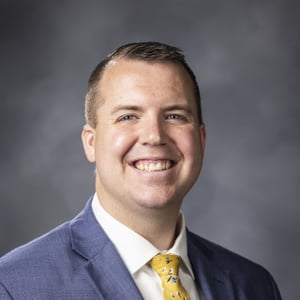
Associate Professor of Law, J. Reuben Clark Law School at Brigham Young University
Tyler Lindley joined BYU Law School in 2024 as an Associate Professor of Law. His research centers on the judicial role and the historical evolution of the judiciary in America. He has extensively examined and published on judicial remedies, federal courts, constitutional law, and administrative law. His scholarly contributions have been or will be featured in the Alabama Law Review, BYU Law Review, Georgia Law Review, Virginia Law Review, and Wake Forest Law Review.
Professor Lindley holds a bachelor's degree in economics from Brigham Young University (2018) and a Juris Doctor from The University of Chicago Law School (2021). During his legal studies, he served as a judicial extern for Judge Ryan Nelson on the US Court of Appeals for the Ninth Circuit. Prior to joining the faculty at BYU Law, he clerked for Chief Judge William Pryor on the US Court of Appeals for the Eleventh Circuit and Judge Gregory Katsas on the US Court of Appeals for the D.C. Circuit. He also served as a Research Fellow at BYU Law between his clerkships.
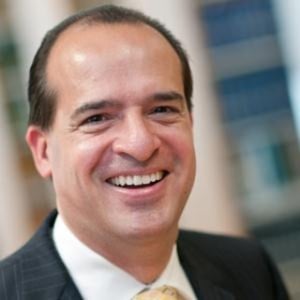
Professor of Law and Rouse Chairholder, Antonin Scalia Law School, George Mason University
Professor Miller holds an Allison and Dorothy Rouse Chair in Law at the Antonin Scalia Law School. An elected member of the American Law Institute and a research member of the European Corporate Governance Institute, Professor Miller is also a Fellow and the Co-Director of the Program on Organizations, Business and Markets at the Classical Liberal Institute at the New York University Law School, an Adjunct Fellow at the Manhattan Institute, and an Affiliated Scholar at the James Wilson Institute on Natural Rights and the American Founding. Prior to joining George Mason University in 2025, Professor Miller was the F. Arnold Daum Chair in Corporate Finance and Law and a Professor of Law at the University of Iowa College of Law, where he had also served as the Associate Dean for Faculty Development.
Professor Miller’s research concerns corporate and securities law, the economic analysis of law, and the philosophy of law. He is particularly interested in applying economic concepts and methods to understand provisions in contracts between sophisticated commercial parties. He has written on material adverse effect clauses under Delaware law, the fiduciary duties of corporate directors, director oversight liability, the history and development of Delaware corporate law, and much more. His articles and working papers are available on his SSRN page.
Professor Miller has been cited by federal and state courts in the United States, including the Delaware Supreme Court and the Delaware Court of Chancery, as well as by the Commercial Court of the United Kingdom and the Ontario Superior Court of Justice (Commercial List) in Canada. Additionally, he is a member of the Committee on Mergers, Acquisitions & Corporate Control Contests and a former chair of the Corporation Law Committee of the New York City Bar Association.
Earlier in his career, Professor Miller was a Professor of Law at the Villanova University School of Law and the Associate Director of the Matthew J. Ryan Center for the Study of Free Institutions and the Public Good at Villanova University. He has been a Visiting Professor of Law at the University of Pennsylvania Law School, a Visiting Assistant Professor of Law at the Cardozo Law School, and an Olin Fellow in Law and Economics at the Columbia Law School.
Before entering academia, Professor Miller was an associate with Wachtell, Lipton, Rosen & Katz. He earned his J.D. from the Yale Law School where he was a Senior Editor of the Yale Law Journal and an Olin Fellow in Law, Economics and Public Policy. He earned his M.A. and M.Phil. degrees in philosophy from Columbia University, where he held a Mellon Fellowship in the Humanities from the Woodrow Wilson National Fellowship Foundation and a Western Civilization Fellowship from the Intercollegiate Studies Institute. He earned his B.A. in philosophy and mathematics from Columbia College.
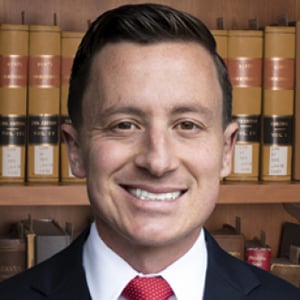
Assistant Professor of Law, Columbus School of Law, Catholic University of America
Chad Squitieri is an Assistant Professor of Law at Catholic University of America’s Columbus School of Law. There he serves as the Director of the Separation of Powers Institute, and as a Managing Director of the Center for the Constitution and the Catholic Intellectual Tradition. Professor Squitieri’s scholarship addresses administrative law and constitutional law topics, including separation-of-powers principles. His scholarship has appeared in the Administrative Law Review, the Harvard Journal of Law and Public Policy, and the Baylor Law Review, among other publications.
Prior to joining the faculty at the Catholic University of America, Prof. Squitieri practiced law at Gibson, Dunn & Crutcher LLP as a member of the Appellate and Constitutional Law and Administrative Law and Regulatory practice groups. He also served as a Special Assistant to former United States Secretary of Labor Eugene Scalia, and as a law clerk to then-Chief Judge D. Brooks Smith of the United States Court of Appeals for the Third Circuit.

Julius E. Davis Professor of Law, University of Minnesota Law School
Ilan Wurman is the Julius E. Davis Professor of Law at the University of Minnesota, where he teaches administrative law and constitutional law. He previously taught at Arizona State University. He writes primarily on the Fourteenth Amendment, administrative law, separation of powers, and constitutionalism. His academic writing has appeared in the Yale Law Journal, the Stanford Law Review, the University of Chicago Law Review, the University of Pennsylvania Law Review, the Virginia Law Review, the Duke Law Journal, the Minnesota Law Review, the Notre Dame Law Review, and the Texas Law Review among other journals.
Professor Wurman is the author of the new book The Constitution of 1789: A New Introduction (Cambridge 2026). His previous books include A Debt Against the Living: An Introduction to Originalism (Cambridge 2017), and The Second Founding: An Introduction to the Fourteenth Amendment (Cambridge 2020). He is also the author of the casebook, Administrative Law Theory and Fundamentals: An Integrated Approach (Foundation Press 3d ed. 2025).
Professor Wurman practices law with the firm Tully Bailey. He has litigated a variety of administrative law and constitutional law cases, including cases involving COVID-19 restrictions, transmission lines, and Appointments Clause challenges. He also devised winning public nuisance theories to force city governments to address the increasingly challenging public camping crises throughout the country.

Showcase Panel 2: Immigration and Originalism
Akhil Reed Amar, Stephanie Barclay, Trevor W. Ezell, Gene P. Hamilton, Jordan J. Lamb, James P. Sullivan
2025 National Lawyers Convention
CLE credit for this event is available at On-Demand CLE. What do the tools of originalism...
Courthouse Steps Oral Argument: Chiles v. Salazar
Stephanie Barclay, Casey Mattox
In Chiles v. Salazar, the Court will consider the question of whether a Colorado law...
Courthouse Steps Oral Argument: Chiles v. Salazar
Stephanie Barclay, Casey Mattox
In Chiles v. Salazar, the Court will consider the question of whether a Colorado law...
General Law in Historical Perspective
Stephanie Barclay, Bradford R. Clark, John C. Harrison, Ann Woolhandler
6th Annual UVA Originalism Symposium
Building on the symposium’s opening discussion, this panel will examine how courts have engaged with...
Luncheon Panel: Abortion Law After Dobbs
Stephanie Barclay, Sherif Girgis, Rachel Rebouché, Stephen E. Sachs, Mary Ziegler
Featuring: Prof. Stephanie Barclay, Professor of Law, Georgetown University Law Center Dean Rachel Rebouché,...
Luncheon Panel: Abortion Law After Dobbs
Stephanie Barclay, Sherif Girgis, Rachel Rebouché, Stephen E. Sachs, Mary Ziegler
Featuring: Prof. Stephanie Barclay, Professor of Law, Georgetown University Law Center Dean Rachel Rebouché,...
Daniel Webster Debate Series: Should the Court Overturn Smith?
Stephanie Barclay, William P. Marshall, William M. Treanor
The Federalist Society's Georgetown Law Chapter's Daniel Webster Debate Series
The Federalist Society's Georgetown Law Chapter'sDaniel Webster Debate Series presents Daniel Webster Debate Series:Should the...
Free Exercise, History and Tradition, and Preferred Pronouns: Key Takeaways from Vlaming v. West Point School Board
Stephanie Barclay, Kate Carté, Chris Schandevel, Eric W. Treene, Adam Unikowsky
High school French teacher Peter Vlaming was fired from his job in West Point, Virginia,...
Free Exercise, History and Tradition, and Preferred Pronouns: Key Takeaways from Vlaming v. West Point School Board
Stephanie Barclay, Kate Carté, Chris Schandevel, Eric W. Treene, Adam Unikowsky
High school French teacher Peter Vlaming was fired from his job in West Point, Virginia,...
Young Legal Scholars Paper Presentations
Stephanie Barclay, Caleb N. Griffin, John C. Harrison, Renée Lettow Lerner, Tyler B. Lindley, Robert T. Miller, Chad C. Squitieri, Ilan Wurman
Featuring: Prof. Stephanie Barclay, "Constitutional Rights as Protected Reasons," Associate Professor of Law, Notre Dame Law School Prof....