
I. Beverly Lake, Jr. Chair in Constitutional Studies and Senior Counsel at the John Locke Foundation., John Locke Foundation
Jeanette Doran is the I. Beverly Lake, Jr. Chair in Constitutional Studies and Senior Counsel at the John Locke Foundation.
Doran began her legal career as a federal law clerk in the Middle District of North Carolina after graduating with honors from Campbell Law School. She then served as the Research and Writing Attorney in the appeals section of the Federal Public Defender’s Office, appearing before the U.S. Court of Appeals for the Fourth Circuit. In 2004, she joined the UNC–Chapel Hill School of Government, and a year later became staff attorney at NCICL, ultimately rising to executive director in 2011. Appointed in 2013 by the Governor to chair the Division of Employment Security’s Board of Review, she completed that public service in 2019.
Doran is also the president of the North Carolina Institute for Constitutional Law (NCICL), and she serves on the state’s Rules Review Commission. She is admitted to practice before the U.S. Supreme Court, the Fourth Circuit, multiple federal district courts, and all North Carolina courts. Doran holds a Juris Doctor from Campbell University.
Executive Director, North Carolina Justice Center
Mr. Glazier has held his current position as Executive Director of the North Carolina Justice Center since 2015. The Justice Center focuses on anti-poverty work in the areas of education, immigration, health care, housing, workers’ rights, consumer law, and budget and tax policy.
Prior to his position as Executive Director of the Justice Center, Mr. Glazier served seven terms from 2003-2015 as state representative from Cumberland County in the North Carolina General Assembly. Mr. Glazier received multiple Legislator of Year Awards, and also received the Order of the Long Leaf Pine from Governor McCrory in 2015.
Mr. Glazier received his law degree from Wake Forest University School of Law in 1981 and his undergraduate degree from Penn State University in 1977.
Professor of Law, Notre Dame Law School
Professor Derek Muller is a nationally-recognized scholar in the field of election law. His research focuses on the role of states in the administration of federal elections, the constitutional contours of voting rights and election administration, the limits of judicial power in the domain of elections, and the Electoral College.
He has published more than two dozen academic works, and his op-eds have appeared in the New York Times, the Los Angeles Times, and the Wall Street Journal. He has testified before Congress, and he is a contributor at the Election Law Blog. He is a co-author on a Federal Courts casebook published by Carolina Academic Press. He is also the co-reporter on a new Restatement of the Law, Election Litigation, an effort led by the American Law Institute.
Professor Muller teaches Election Law, Civil Procedure, and Evidence.
United States Magistrate Judge, Eastern District of North Carolina
Robert T. Numbers, II serves as a United States Magistrate Judge in the United States District Court for the Eastern District of North Carolina.
Judge Numbers received degrees in Political Science and Economics, with honors, from Wake Forest University. After completing his undergraduate work, Judge Numbers obtained his law degree from the University of Notre Dame where he served on the Notre Dame Law Review.
Upon his graduation from law school, Judge Numbers joined the Winston-Salem office of a large, regional law firm. From 2005 until 2010, Judge Numbers’ practice focused on civil rights claims against local municipalities and government contractors. In 2010, Judge Numbers joined the firm’s Raleigh office and concentrated his practice on complex business litigation in state and federal courts.
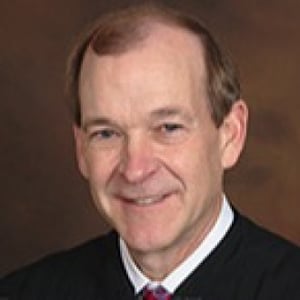
James C. Dever III serves as a United States District Judge for the Eastern District of North Carolina. President George W. Bush nominated Judge Dever (then age 39) in May 2002, and the United States Senate unanimously confirmed him. Before serving as a United States District Judge, Judge Dever served as a United States Magistrate Judge for fifteen months. He served as Chief Judge from October 2011 through October 2018.
Judge Dever received his B.B.A., with high honors, from the University of Notre Dame in 1984. He attended Notre Dame on a four-year ROTC scholarship. He was a Distinguished Military Graduate, was elected to Beta Gamma Sigma, and received the Raymond P. Kent Award (which is awarded to the graduating senior with the highest average in finance/economics classes). He received his J.D., with high honors, from Duke University School of Law in 1987. At Duke, he served as editor-in-chief of the Duke Law Journal, was elected to the Order of the Coif, and received numerous academic awards.
After graduating from law school, he served for one year as a law clerk for Judge J. Clifford Wallace of the U.S. Court of Appeals for the Ninth Circuit. Following his clerkship, Judge Dever was the sole attorney entering active duty in the Air Force selected to serve in the Air Force General Counsel’s Honors Program at the Pentagon. While on active duty, he provided legal advice to and conducted litigation for the Secretary of the Air Force. He served on active duty in the Air Force at the Pentagon from October 1988 until September 1992. At the conclusion of his service, he received the Meritorious Service Medal.
Judge Dever then returned to North Carolina and joined Maupin Taylor & Ellis, P.A. in Raleigh. While in private practice, he engaged in a wide variety of complex civil litigation and served on the law firm’s management committee. He was repeatedly listed in the Best Lawyers in America and in Business North Carolina’s Legal Elite for Employment Law. Since 1997, Judge Dever has taught employment law and criminal procedure as an adjunct law professor at Campbell University’s Norman Adrian Wiggins School of Law. Since 2008, Judge Dever has co-taught a seminar on sentencing and punishment as a senior lecturing fellow at Duke University School of Law. Since 2009, he has taught criminal procedure as a senior lecturing fellow at Duke University School of Law. In 2014, Chief Justice John Roberts appointed Judge Dever to serve on the Advisory Committee on Criminal Rules, where Judge Dever served until 2021. Judge Dever also serves as a member of Duke Law School's Board of Visitors.
Judge Dever’s chambers are in Raleigh, North Carolina.
Executive Director, North Carolina Justice Center
Mr. Glazier has held his current position as Executive Director of the North Carolina Justice Center since 2015. The Justice Center focuses on anti-poverty work in the areas of education, immigration, health care, housing, workers’ rights, consumer law, and budget and tax policy.
Prior to his position as Executive Director of the Justice Center, Mr. Glazier served seven terms from 2003-2015 as state representative from Cumberland County in the North Carolina General Assembly. Mr. Glazier received multiple Legislator of Year Awards, and also received the Order of the Long Leaf Pine from Governor McCrory in 2015.
Mr. Glazier received his law degree from Wake Forest University School of Law in 1981 and his undergraduate degree from Penn State University in 1977.
Professor of Law, Notre Dame Law School
Professor Derek Muller is a nationally-recognized scholar in the field of election law. His research focuses on the role of states in the administration of federal elections, the constitutional contours of voting rights and election administration, the limits of judicial power in the domain of elections, and the Electoral College.
He has published more than two dozen academic works, and his op-eds have appeared in the New York Times, the Los Angeles Times, and the Wall Street Journal. He has testified before Congress, and he is a contributor at the Election Law Blog. He is a co-author on a Federal Courts casebook published by Carolina Academic Press. He is also the co-reporter on a new Restatement of the Law, Election Litigation, an effort led by the American Law Institute.
Professor Muller teaches Election Law, Civil Procedure, and Evidence.

Partner, Nelson Mullins Riley & Scarborough LLP
Phil regularly represents management in labor/employment law and related matters. He advises clients on covenants not to compete and litigates claims involving restrictive covenants, trade secrets, and other business-related litigation. Phil also regularly defends management and employers in employment discrimination cases and counsels management on how to prevent or reduce the risk of these lawsuits.
James C. Dever III serves as a United States District Judge for the Eastern District of North Carolina. President George W. Bush nominated Judge Dever (then age 39) in May 2002, and the United States Senate unanimously confirmed him. Before serving as a United States District Judge, Judge Dever served as a United States Magistrate Judge for fifteen months. He served as Chief Judge from October 2011 through October 2018.
Judge Dever received his B.B.A., with high honors, from the University of Notre Dame in 1984. He attended Notre Dame on a four-year ROTC scholarship. He was a Distinguished Military Graduate, was elected to Beta Gamma Sigma, and received the Raymond P. Kent Award (which is awarded to the graduating senior with the highest average in finance/economics classes). He received his J.D., with high honors, from Duke University School of Law in 1987. At Duke, he served as editor-in-chief of the Duke Law Journal, was elected to the Order of the Coif, and received numerous academic awards.
After graduating from law school, he served for one year as a law clerk for Judge J. Clifford Wallace of the U.S. Court of Appeals for the Ninth Circuit. Following his clerkship, Judge Dever was the sole attorney entering active duty in the Air Force selected to serve in the Air Force General Counsel’s Honors Program at the Pentagon. While on active duty, he provided legal advice to and conducted litigation for the Secretary of the Air Force. He served on active duty in the Air Force at the Pentagon from October 1988 until September 1992. At the conclusion of his service, he received the Meritorious Service Medal.
Judge Dever then returned to North Carolina and joined Maupin Taylor & Ellis, P.A. in Raleigh. While in private practice, he engaged in a wide variety of complex civil litigation and served on the law firm’s management committee. He was repeatedly listed in the Best Lawyers in America and in Business North Carolina’s Legal Elite for Employment Law. Since 1997, Judge Dever has taught employment law and criminal procedure as an adjunct law professor at Campbell University’s Norman Adrian Wiggins School of Law. Since 2008, Judge Dever has co-taught a seminar on sentencing and punishment as a senior lecturing fellow at Duke University School of Law. Since 2009, he has taught criminal procedure as a senior lecturing fellow at Duke University School of Law. In 2014, Chief Justice John Roberts appointed Judge Dever to serve on the Advisory Committee on Criminal Rules, where Judge Dever served until 2021. Judge Dever also serves as a member of Duke Law School's Board of Visitors.
Judge Dever’s chambers are in Raleigh, North Carolina.
Executive Director, North Carolina Justice Center
Mr. Glazier has held his current position as Executive Director of the North Carolina Justice Center since 2015. The Justice Center focuses on anti-poverty work in the areas of education, immigration, health care, housing, workers’ rights, consumer law, and budget and tax policy.
Prior to his position as Executive Director of the Justice Center, Mr. Glazier served seven terms from 2003-2015 as state representative from Cumberland County in the North Carolina General Assembly. Mr. Glazier received multiple Legislator of Year Awards, and also received the Order of the Long Leaf Pine from Governor McCrory in 2015.
Mr. Glazier received his law degree from Wake Forest University School of Law in 1981 and his undergraduate degree from Penn State University in 1977.
Professor of Law, Notre Dame Law School
Professor Derek Muller is a nationally-recognized scholar in the field of election law. His research focuses on the role of states in the administration of federal elections, the constitutional contours of voting rights and election administration, the limits of judicial power in the domain of elections, and the Electoral College.
He has published more than two dozen academic works, and his op-eds have appeared in the New York Times, the Los Angeles Times, and the Wall Street Journal. He has testified before Congress, and he is a contributor at the Election Law Blog. He is a co-author on a Federal Courts casebook published by Carolina Academic Press. He is also the co-reporter on a new Restatement of the Law, Election Litigation, an effort led by the American Law Institute.
Professor Muller teaches Election Law, Civil Procedure, and Evidence.
Partner, Nelson Mullins Riley & Scarborough LLP
Phil regularly represents management in labor/employment law and related matters. He advises clients on covenants not to compete and litigates claims involving restrictive covenants, trade secrets, and other business-related litigation. Phil also regularly defends management and employers in employment discrimination cases and counsels management on how to prevent or reduce the risk of these lawsuits.

Supreme Court Correspondent, The New York Times
Adam Liptak covers the Supreme Court for The New York Times. Liptak’s column on legal affairs, “Sidebar,” appears every other Tuesday.
A graduate of Yale College and Yale Law School, Liptak practiced law at a large New York City law firm and in the legal department of The New York Times Company before joining the paper’s news staff in 2002.
Liptak was a finalist for the Pulitzer Prize in explanatory reporting in 2009 for “American Exception,” a series of articles examining ways in which the American legal system differs from those of other developed nations. He received the 2010 Scripps Howard Award for Washington reporting for a five-part series on the Roberts Court.
He is the author of “To Have and Uphold: The Supreme Court and the Battle for Same-Sex Marriage.”
His journalism has appeared in The New Yorker, Vanity Fair, Business Week and Rolling Stone, and he has published articles in The Arizona Law Review, The Michigan Law Review and The New York University Annual Survey of American Law.
Liptak has taught courses at Yale, Columbia, the University of Chicago, Washington University in St. Louis, the University of Southern California and U.C.L.A. He is a member of the American Academy of Arts and Sciences.
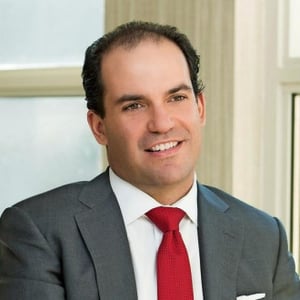
Partner, Latham & Watkins LLP
Roman Martinez is a partner in the Washington, D.C. office of Latham & Watkins. As a member of the firm’s Supreme Court and Appellate Practice, he focuses primarily on appeals in the Supreme Court of the United States, the United States Courts of Appeals, and state appellate courts. Mr. Martinez has handled civil and criminal matters involving a wide range of constitutional, statutory, and administrative law issues, and he has argued cases in the Supreme Court and the D.C., Sixth, Ninth, and Federal Circuits, among other courts.
Mr. Martinez’s appellate practice encompasses civil and criminal matters spanning virtually all areas of law. He recently rejoined Latham after serving as an Assistant to the Solicitor General at the US Department of Justice. In that role, he represented the United States in litigation before the Supreme Court and advised the Solicitor General on the government’s appellate litigation throughout the country.
Mr. Martinez has personally argued seven cases in the Supreme Court, including important cases in the fields of patent law, criminal law, civil rights, and civil procedure. He has filed over 75 briefs in the Supreme Court involving a wide range of legal issues, including administrative, tax, securities, intellectual property, criminal, environmental, education, civil rights, immigration, and First Amendment law.
Over the past year, Mr. Martinez has led Latham appellate teams in cases involving the Administrative Procedure Act, securities, ERISA, products liability, and employment law. Earlier this year, he successfully persuaded the Supreme Court to reject the State of Connecticut’s high-profile effort to reinstate the murder conviction of Michael Skakel. He frequently consults with clients to develop creative approaches to difficult legal questions that arise in and out of litigation.
Mr. Martinez’s extensive pro bono practice focuses chiefly on administrative law challenges to unlawful agency action by the Department of Veterans Affairs, as well as on criminal defense appeals. In 2018, he persuaded the Supreme Court to grant certiorari on behalf of a veteran seeking judicial review of an unlawful regulation promulgated by the Department of Veterans Affairs.
Before joining Latham, Mr. Martinez served as a law clerk to Chief Justice John G. Roberts of the Supreme Court of the United States and to then Judge Brett M. Kavanaugh of the D.C. Circuit.
From 2002 to 2005, Mr. Martinez served as an advisor on the Iraqi political and constitutional process, in various roles at the White House, at the US Embassy and Coalition Provisional Authority in Iraq, and at the Department of Defense. He received the Secretary of Defense Medal for the Global War on Terrorism and the US Department of Defense Distinguished Public Service Award for his service in Iraq.
Mr. Martinez is a member of the Edward Coke Appellate Inn of Court, and he serves on the US Chamber of Commerce's Administrative Law & Government Litigation Advisory Committee. He previously served as a member of the D.C. Circuit’s Advisory Committee on Procedures, and he now serves on the US District Court for the District of Columbia’s Committee on Grievances. His writing has appeared in The Wall Street Journal, The Washington Post, and other publications. He has appeared as a guest on the PBS NewsHour and other television programs to discuss the Supreme Court.
Professor of Law, Notre Dame Law School
Professor Derek Muller is a nationally-recognized scholar in the field of election law. His research focuses on the role of states in the administration of federal elections, the constitutional contours of voting rights and election administration, the limits of judicial power in the domain of elections, and the Electoral College.
He has published more than two dozen academic works, and his op-eds have appeared in the New York Times, the Los Angeles Times, and the Wall Street Journal. He has testified before Congress, and he is a contributor at the Election Law Blog. He is a co-author on a Federal Courts casebook published by Carolina Academic Press. He is also the co-reporter on a new Restatement of the Law, Election Litigation, an effort led by the American Law Institute.
Professor Muller teaches Election Law, Civil Procedure, and Evidence.
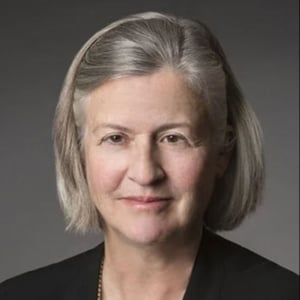
Partner, Sidley Austin LLP
Virginia Seitz is a partner in Sidley Austin’s Supreme Court and Appellate practice. On behalf of a wide range of clients, she has handled cases in the United States Supreme Court, in virtually all federal courts of appeals, and in state appellate courts. Virginia was counsel of record on the amicus brief on behalf of retired military officers in Grutter v. Bollinger, 539 U.S. 306 (2003), and Gratz v. Bollinger, 539 U.S. 244 (2003), which the Supreme Court cited at oral argument and in its opinion and which the New York Times piece noted “may have been the most influential amicus brief in the history of the Supreme Court.” She has handled an array of district court litigation involving important constitutional and federal law issues, including the Appropriations and Supremacy Clauses of the Constitution, the First Amendment, Title IX, Title VII, the Anti-Deficiency Act, ERISA, and federal labor laws.
Virginia returned to Sidley in 2014 after serving in the Senate-confirmed position of Assistant Attorney General for the Office of Legal Counsel in the Department of Justice. She was the first woman to be confirmed to that position. As the leader of that Office, Virginia was responsible for providing legal advice to the President and Executive Branch departments and agencies on issues of particular difficulty and importance. Virginia previously served as an appointee of the Chief Justice on the Advisory Committee on Civil Rules. In January 2017, she was elected to the American Law Institute. Earlier in her career, Virginia was confirmed by the Senate to the first Board of Directors of the Congressional Office of Compliance and served from May 1995 to 2000. Virginia has been recognized for her Appellate Law practice by Chambers USA, in The Legal 500 US in Litigation: Supreme Court and Appellate, and in The Best Lawyers in America.
Virginia clerked at the Supreme Court for Justice William J. Brennan, Jr., and before that for Judge Harry T. Edwards of the D.C. Circuit. She is a graduate of University at Buffalo Law School, received her M.A. from Oxford University where she was a Rhodes Scholar, and received her B.A. from Duke University, summa cum laude with distinction.
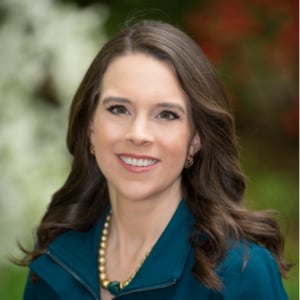
President, JCN
Carrie Campbell Severino is the president of the JCN, and co-author with Mollie Hemingway of the bestselling book Justice on Trial: The Kavanaugh Confirmation and the Future of the Court. As a go-to expert on the confirmation process, Mrs. Severino has been extensively quoted in the media. She regularly appears on television, including FOX, CNN, MSNBC, C-SPAN, and ABC’s This Week.
Severino writes and speaks on a wide range of judicial issues, including the constitutional limits on government, the federal nomination process, and state judicial selection. She has testified before Congress on constitutional questions and briefed Senators on judicial nominations, and regularly files briefs in high-profile Supreme Court cases. She was a law clerk to Supreme Court Justice Clarence Thomas and to Judge David B. Sentelle of the U.S. Court of Appeals for the D.C. Circuit, and is a graduate of Harvard Law School (J.D.), Duke University (B.A., Biology), and Michigan State University (M.A., Linguistics).
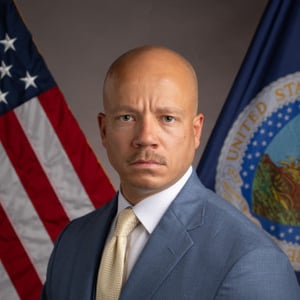
Assistant Secretary for Civil Rights, U.S. Department of Agriculture
Devon Westhill is the Assistant Secretary for Civil Rights at the U.S. Department of Agriculture. The U.S. Senate confirmed President Donald Trump’s nomination of Westhill on October 7, 2025.
Westhill returns to the USDA where he previously headed the civil rights office as Deputy Assistant Secretary in President Trump’s first term. His previous government appointments also include service at the U.S. Department of Labor, liaison to the Administrative Conference of the U.S., and liaison to the White House Initiative on Historically Black Colleges and Universities. Prior to returning to government service, Westhill was President and General Counsel of a nonprofit civil rights organization.
Westhill has testified on civil rights matters before Congress, federal agencies, and as an expert witness in federal court. He has spoken hundreds of times at college campuses, conferences, and on radio and TV programs, and he is frequently quoted in print publications, and his writing has appeared in numerous national outlets. A U.S. Navy veteran, Westhill earned his BA from the University of North Carolina at Chapel Hill and his JD from the University of Florida.
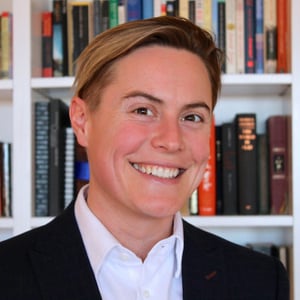
Associate Professor of Legal Studies & Business Ethics, The University of Pennsylvania Wharton School of Business
Amanda Shanor is an Assistant Professor at the University of Pennsylvania Wharton School, where her scholarship focuses on constitutional and administrative law, and in particular the First Amendment.
Shanor is a graduate of Yale Law School and Yale College, and a PhD candidate in law at Yale University. She served as a law clerk to Judges Cornelia T.L. Pillard and Judith W. Rogers on the D.C. Circuit, and Judge Robert W. Sweet in the Southern District of New York. She has taught at both Yale and Georgetown law schools and has published in the New York University Law Review, the Harvard Law Review Forum, and the Yale Law Journal Forum, among others. She is a contributor to Take Care and the co-author of a textbook on counterterrorism law.
Prior to joining the academy, Amanda worked in the National Legal Department of the American Civil Liberties Union on the organization’s Supreme Court litigation, including Masterpiece Cakeshop. Previously, she litigated a number of constitutional and national security cases with Professor David Cole, including Humanitarian Law Project v. Holder, while a fellow at Georgetown.

Former Chief Justice, Arizona Supreme Court
Scott Bales served on the Arizona Supreme Court for fourteen years, including as Chief Justice from July 2014 until July 2019. After retiring from the Court, he was the Executive Director of the Institute for the Advancement of the American Legal System at the University of Denver through July 2020. He now consults on appellate matters and internal investigations and serves as a neutral.
He is the immediate past Chair of the Council of the ABA’s Section on Legal Education and serves on the Council of the American Law Institute and the Board of Trustees for the National Conference of Bar Examiners. He previously chaired the Appellate Judges Conference of the ABA’s Judicial Division. Justice Bales has often taught courses at the law schools at Arizona State University and the University of Arizona.
Before his appointment to the Court, he had practiced law in Arizona for nearly 20 years as a private and public lawyer. He was a partner in Phoenix firms that later became Osborn Maledon P.A. and Lewis Roca Rothgerber Christie. He also served as Arizona’s Solicitor General from 1999-2001 and as a Deputy Assistant Attorney General for the U.S. Department of Justice’s Office of Policy Development from 1998-1999, a Special Investigative Counsel for the Justice Department’s Inspector General from 1995-97, and as a federal prosecutor.
He clerked for Justice Sandra Day O’Connor on the U.S. Supreme Court and Judge Joseph T. Sneed III on the Ninth Circuit Court of Appeals. After graduating from Michigan State University with degrees in history and economics, he received a master’s degree in economics and his law degree from Harvard.
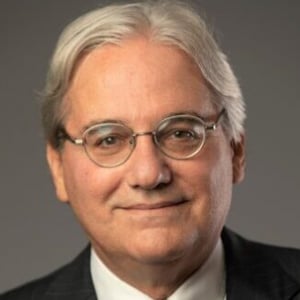
Clinical Professor of Law, Cornell Law School
William A. Jacobson is a Clinical Professor of Law and Director of the Securities Law Clinic.
He is a 1981 graduate of Hamilton College and a 1984 graduate of Harvard Law School. At Harvard he was Senior Editor of the Harvard International Law Journal and Director of Litigation for the Harvard Prison Legal Assistance Project.
Prior to joining the Cornell law faculty in 2007, Professor Jacobson had a highly successful civil litigation and arbitration practice in Providence, Rhode Island, concentrating in investment, employment, and business disputes in the securities industry, including many high profile cases reported in leading newspapers and magazines.
Professor Jacobson has argued cases in numerous federal and state courts, including the Courts of Appeal for the First, Fifth and Sixth Circuits, and the Rhode Island Supreme Court.
Professor Jacobson has a national reputation as a leading practitioner in securities arbitration. He was Treasurer, and is a former member of the Executive Committee and Board of Directors of the Public Investors Arbitration Bar Association, a professional organization of attorneys dedicated to protecting public investors. He frequently is quoted in national media on issues related to investment fraud and investor protection, and in the past has served as one of a small number of private practice attorneys who trained new arbitrators for the Financial Industry Regulatory Authority.
Professor Jacobson is co-author of the Securities Arbitration Desk Reference (Thomson-Reuters), updated annually.
Professor Jacobson also is the founder and publisher of Legal Insurrection, a popular politics and law website. He is frequently quoted in the media on political and legal topics, has authored many Op-Eds in major publications, and appears on television and radio to discuss politics and the law.

MD, JD, Georgetown Scholar
Nicholas D. Lawson, M.D., J.D., is a disability advocate and a person with a disability having lived experience of disability discrimination as a psychiatry resident. He is also a Georgetown Law Scholar and an aspiring disability studies professor who writes about disability rights issues within the academic medical and legal literatures. Dr. Lawson draws from an interdisciplinary background in medicine, law, research, and clinical care to critically appraise expert authorities on persons with disabilities and to fight medical models that contribute to disability oppression. Lawson is particularly interested in reducing structural stigma, in the inclusion of persons with disabilities in positions of leadership and within the professions, and in negative rights and privacy issues.
Lawson’s contributions to law reviews include “To Be a Good Lawyer, One Has to Be a Healthy Lawyer”: Lawyer Well-Being, Discrimination, and Discretionary Systems of Discipline in the Georgetown Journal of Legal Ethics. The Article critiqued professional wellness (aka well-being) policies encouraging surveillance and reporting of persons suspected of having mental health conditions and disabilities. Dr. Lawson’s more recent Article, Suicide Screening and Surveillance of Students, Discrimination, and Privacy: The Garrett Lee Smith Memorial Act, is forthcoming in the Journal of Law and Education. It argues that suicide surveillance policies in high schools, colleges, and universities are counterproductive and lead to discrimination on the basis of suicidality. Lawson argues that institutions can “support” persons with disabilities, including mental health conditions, by complying with disability affirmative action requirements under the Rehabilitation Act, including persons with disabilities in leadership positions, and by investing in disability studies programs and courses within their academic curriculums.
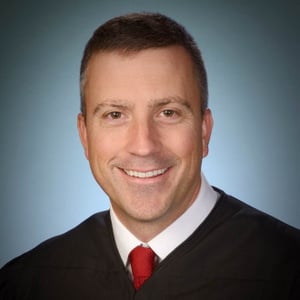
Judge, United States District Court, District of Columbia
Judge Trevor N. McFadden was appointed to the United States District Court for the District of Columbia in 2017. He received his B.A. in 2001 from Wheaton College, IL, magna cum laude. In 2006, he received his J.D. from the University of Virginia School of Law, where he graduated Order of the Coif and was an editor for the Virginia Law Review.
Following graduation from law school, Judge McFadden clerked for Judge Steven Colloton, U.S. Court of Appeals for the Eighth Circuit. He then joined the U.S. Department of Justice, where he served as Counsel to the Deputy Attorney General and as Assistant U.S. Attorney in the District of Columbia. Judge McFadden subsequently became a partner at Baker & McKenzie LLP in Washington, DC, where he focused on white collar investigations. He is also co-author of a treatise, Corporate Settlement Tools: DPAs, NPAs, and Cooperation Agreements.
After four years in private practice, Judge McFadden returned to the U.S. Department of Justice, where he was Deputy Assistant Attorney General and acted as the second-in-command of the Department's Criminal Division. As Deputy Assistant Attorney General, he managed the Division's Fraud and Appellate Sections.
Judge McFadden also has extensive experience in law enforcement. He served as an officer with the Fairfax County, VA, Police Department and as a deputy sheriff in Madison County, VA.
Professor of Law, Notre Dame Law School
Professor Derek Muller is a nationally-recognized scholar in the field of election law. His research focuses on the role of states in the administration of federal elections, the constitutional contours of voting rights and election administration, the limits of judicial power in the domain of elections, and the Electoral College.
He has published more than two dozen academic works, and his op-eds have appeared in the New York Times, the Los Angeles Times, and the Wall Street Journal. He has testified before Congress, and he is a contributor at the Election Law Blog. He is a co-author on a Federal Courts casebook published by Carolina Academic Press. He is also the co-reporter on a new Restatement of the Law, Election Litigation, an effort led by the American Law Institute.
Professor Muller teaches Election Law, Civil Procedure, and Evidence.
Professor of Law, Notre Dame Law School
Professor Derek Muller is a nationally-recognized scholar in the field of election law. His research focuses on the role of states in the administration of federal elections, the constitutional contours of voting rights and election administration, the limits of judicial power in the domain of elections, and the Electoral College.
He has published more than two dozen academic works, and his op-eds have appeared in the New York Times, the Los Angeles Times, and the Wall Street Journal. He has testified before Congress, and he is a contributor at the Election Law Blog. He is a co-author on a Federal Courts casebook published by Carolina Academic Press. He is also the co-reporter on a new Restatement of the Law, Election Litigation, an effort led by the American Law Institute.
Professor Muller teaches Election Law, Civil Procedure, and Evidence.
Professor of Law, Notre Dame Law School
Professor Derek Muller is a nationally-recognized scholar in the field of election law. His research focuses on the role of states in the administration of federal elections, the constitutional contours of voting rights and election administration, the limits of judicial power in the domain of elections, and the Electoral College.
He has published more than two dozen academic works, and his op-eds have appeared in the New York Times, the Los Angeles Times, and the Wall Street Journal. He has testified before Congress, and he is a contributor at the Election Law Blog. He is a co-author on a Federal Courts casebook published by Carolina Academic Press. He is also the co-reporter on a new Restatement of the Law, Election Litigation, an effort led by the American Law Institute.
Professor Muller teaches Election Law, Civil Procedure, and Evidence.
Professor of Law, Notre Dame Law School
Professor Derek Muller is a nationally-recognized scholar in the field of election law. His research focuses on the role of states in the administration of federal elections, the constitutional contours of voting rights and election administration, the limits of judicial power in the domain of elections, and the Electoral College.
He has published more than two dozen academic works, and his op-eds have appeared in the New York Times, the Los Angeles Times, and the Wall Street Journal. He has testified before Congress, and he is a contributor at the Election Law Blog. He is a co-author on a Federal Courts casebook published by Carolina Academic Press. He is also the co-reporter on a new Restatement of the Law, Election Litigation, an effort led by the American Law Institute.
Professor Muller teaches Election Law, Civil Procedure, and Evidence.
Professor of Law, Notre Dame Law School
Professor Derek Muller is a nationally-recognized scholar in the field of election law. His research focuses on the role of states in the administration of federal elections, the constitutional contours of voting rights and election administration, the limits of judicial power in the domain of elections, and the Electoral College.
He has published more than two dozen academic works, and his op-eds have appeared in the New York Times, the Los Angeles Times, and the Wall Street Journal. He has testified before Congress, and he is a contributor at the Election Law Blog. He is a co-author on a Federal Courts casebook published by Carolina Academic Press. He is also the co-reporter on a new Restatement of the Law, Election Litigation, an effort led by the American Law Institute.
Professor Muller teaches Election Law, Civil Procedure, and Evidence.
Professor of Law, Notre Dame Law School
Professor Derek Muller is a nationally-recognized scholar in the field of election law. His research focuses on the role of states in the administration of federal elections, the constitutional contours of voting rights and election administration, the limits of judicial power in the domain of elections, and the Electoral College.
He has published more than two dozen academic works, and his op-eds have appeared in the New York Times, the Los Angeles Times, and the Wall Street Journal. He has testified before Congress, and he is a contributor at the Election Law Blog. He is a co-author on a Federal Courts casebook published by Carolina Academic Press. He is also the co-reporter on a new Restatement of the Law, Election Litigation, an effort led by the American Law Institute.
Professor Muller teaches Election Law, Civil Procedure, and Evidence.

NC NAACP v. Moore: The Impact of Unconstitutional Legislative Maps on a State Legislature's Ability to Propose Constitutional Amendments
Jeanette Doran, Rick Glazier, Derek T. Muller, Robert T. Numbers
In 2018, the North Carolina General Assembly placed several constitutional amendments before voters for ratification. Voters...
Panel 2: The Law of Democracy: Recent and Future Developments in Election Law
James C. Dever, Rick Glazier, Derek T. Muller, Phillip J. Strach
Inaugural North Carolina Chapters Conference
CLE credit anticipated. Featuring: Rick Glazier, Executive Director, North Carolina Justice Center Professor Derek Muller,...
Panel 2: The Law of Democracy: Recent and Future Developments in Election Law
James C. Dever, Rick Glazier, Derek T. Muller, Phillip J. Strach
Inaugural North Carolina Chapters Conference
CLE credit anticipated. Featuring: Rick Glazier, Executive Director, North Carolina Justice Center Professor Derek Muller,...
Supreme Court Preview: What Is in Store for October Term 2022?
Adam Liptak, Roman Martinez, Derek T. Muller, Virginia Seitz, Carrie Campbell Severino, Devon Westhill, Amanda Shanor
Co-Sponsored by the Faculty Division and Practice Groups
On September 21, 2022, the Federalist Society's Faculty Division and Practice Groups will host a panel at the Mayflower...
Breakout Panel: ABA Accreditation of Law Schools
Scott Bales, William Jacobson, Nicholas Lawson, Trevor N. McFadden, Derek T. Muller
Tenth Annual Executive Branch Review
The U.S. Department of Education provides oversight of postsecondary institutions or program accreditation by reviewing...
Courthouse Steps Decision Webinar: Brnovich v. Democratic National Convention
Derek T. Muller
Free Speech & Election Law Practice Group Teleforum
On July 1, 2021, the Supreme Court issued its decision in Brnovich, Attorney General of Arizona...
Courthouse Steps Decision Webinar: Brnovich v. Democratic National Convention
Derek T. Muller
Free Speech & Election Law Practice Group Teleforum
On July 1, 2021, the Supreme Court issued its decision in Brnovich, Attorney General of Arizona...
Brnovich v. Democratic National Committee - Post-Argument SCOTUScast
Derek T. Muller
featuring Derek Muller
On March 2, 2021 the Supreme Court heard oral argument in Brnovich v. Democratic National Committee....
Courthouse Steps Oral Argument Teleforum: Brnovich v. Democratic National Committee
Derek T. Muller
In Brnovich v. Democratic National Committee and the consolidated case of Arizona Republican Party v. Democratic National Committee,...
Republican Party of Pennsylvania v. Degraffenreid - Post-Decision SCOTUScasat
Derek T. Muller
featuring Derek Muller
On February 22, 2021, by a 6-3 vote, the Supreme Court denied cert in Repubulican...