

Tazewell Taylor Professor of Law and William H. Cabell Research Professor, William & Mary Law School
Jonathan H. Adler joined the William & Mary law faculty as the Tazwell Taylor Professor of Law and William H. Cabell Research Professor in 2025. Prior to joining the faculty, he was the inaugural Johan Verheij Memorial Professor of Law and the founding Director of the Coleman P. Burke Center for Environmental Law at the Case Western Reserve University School of Law.
Professor Adler is the author or editor of seven books, including Climate Liberalism: Perspectives on Liberty, Property and Pollution (Palgrave, 2023), Marijuana Federalism: Uncle Sam and Mary Jane (Brookings Institution Press, 2020), Business and the Roberts Court (Oxford University Press, 2016) and Rebuilding the Ark: New Perspectives on Endangered Species Act Reform (AEI Press, 2011).
His articles have appeared in publications ranging from the Harvard Environmental Law Review and Yale Journal on Regulation to the Wall Street Journal, New York Times, and Washington Post. He has testified before Congress a dozen times, and his work has been cited in the U.S. Supreme Court. A 2024 study identified Professor Adler as the seventh most cited legal academic in administrative and environmental law from 2019 to 2023.
Professor Adler is a contributing editor to Civitas Outlook and a regular contributor to the popular legal blog, The Volokh Conspiracy. A regular commentator on constitutional and regulatory issues, he has appeared on numerous radio and television programs, ranging from the PBS Newshour and National Public Radio to the Fox News Channel and Entertainment Tonight.
Professor Adler is a senior fellow at the Property & Environment Research Center in Bozeman, Montana. In 2018, Professor Adler was elected to membership in the American Law Institute and helped co-found the organization Checks and Balances. In 2024, Professor Adler was appointed a public member of the Administrative Conference of the United States.
Professor Adler clerked for the Honorable David B. Sentelle on the U.S. Court of Appeals for the District of Columbia Circuit.
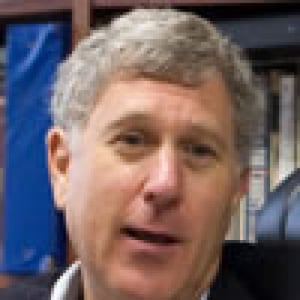
Roger Williams University School of Law
Professor Bogus has achieved national prominence in two areas -- (1) tort law, and especially, products liability; and (2) gun control, including issues involving the Second Amendment.
His work in the first area includes Why Lawsuits Are Good for America: Disciplined Democracy, Big Business and the Common Law (NYU Press). His Constitutional Law research proposes the thesis that James Madison wrote the Second Amendment to ensure that the federal government could not subvert the slave system by disarming the militia, on which the South relied for slave control. Professor Bogus has testified before Congress and spoken about and debated these subjects at many venues across the country, including at Harvard, Columbia, Chicago, Stanford, and Vanderbilt law schools, and his writings on these subjects have been published by law reviews, as well as opinion journals such as The Nation and The American Prospect, and newspapers including USA Today, Boston Globe, Washington Times, and the Providence Journal. Most recently, he was interviewed by National Public Radio. One of his interests is how ideology influences the law, and he is presently at work on a biography of William F. Buckley, Jr. and the conservative movement.
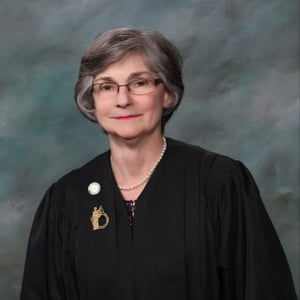
Judge, United States Court of Appeals, Fifth Circuit
Edith Jones graduated from Alamo Heights High School, where she was a National Merit Scholar. In 1971, she received her B.A. in Economics from Cornell University, graduating with honors. In 1974, she was awarded her J.D. at the University of Texas Law School, where she was a law review editor and received the Order of the Coif.
Judge Jones was the first female partner at Andrews, Kurth, Campbell & Jones (now Hunton Andrews Kurth) where she practiced various types of litigation and bankruptcy cases. Judge Jones went on the federal bench on June 1, 1985.
Judge Jones served as a former member of the National Bankruptcy Review Commission, and as a member of the Judicial Conference Commission on Bankruptcy Rules. Judge Jones served on the White House Fellows Commission. Judge Jones served on the board of the Sam Houston Area Council of the Boy Scouts of America. She has been a member of the Garland Walker Inn of Court in Houston for more than 20 years and its President for at least ten years. Judge Jones is also on the Board of the Calvin Coolidge Presidential Foundation.
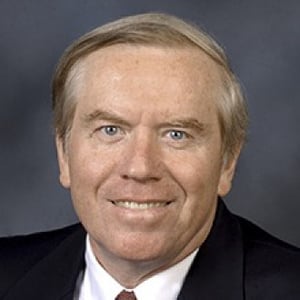
Edward J. Phelps Professor of Law and Economics and Kauffman Distinguished Research Scholar in Law, Economics, and Entrepreneurship, Yale Law School
Professor George L. Priest passed away on Dec. 17, 2024. Please read his obituary here.
George L. Priest is the Edward J. Phelps Professor of Law and Economics and Kauffman Distinguished Research Scholar in Law, Economics, and Entrepreneurship at Yale Law School. An internationally recognized expert, Professor Priest has focused his research over the past two decades on antitrust, the operation of private and public insurance, and the role of the legal system in promoting economic growth. He joined Yale Law School in 1981 and is co-director of the John M. Olin Center for Law, Economics and Public Policy, which facilitates the scholarly work of the Yale law and economics faculty and supports student interest and research in the field. Before coming to Yale, Professor Priest taught law at the University of Chicago, SUNY/Buffalo, and UCLA. His subject areas are antitrust; capitalism; regulated industries; torts; and insurance and public policy. Professor Priest holds a B.A. from Yale and a J.D. from the University of Chicago.

Clayton J. and Henry R. Barber Professor of Law, Northwestern University Pritzker School of Law and Co-Chairman, Board of Directors, The Federalist Society
STEVEN GOW CALABRESI is the Clayton J. & Henry R. Barber Professor at Northwestern Pritzker School of Law. He has also co-taught in the Fall semester at Yale Law School from 2013 to the present. Calabresi clerked for Justice Antonin Scalia and Judges Robert H. Bork and Ralph K. Winter. He was a Special Assistant to Attorney General Meese from 1985 to 1987 and worked with Ken Cribb as his deputy in 1987 on the second floor of the West Wing of the Reagan White House. Calabresi has written books on presidential power and comparative constitutional law and the origins of judicial review. He and Gary Lawson are the co-editors of a casebook on U.S. Constitutional Law, and Calabresi is also the co-editor of a casebook on comparative constitutional law. He has written over seventy law review articles since 1990.
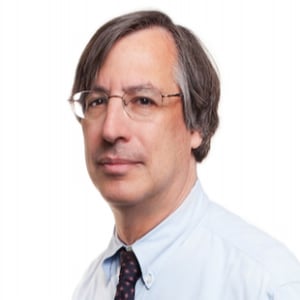
Levin, Mabie & Levin Professor of Law, University of Florida Levin College of Law
Professor Gary Lawson joined the University of Florida Levin College of Law faculty on July 1, 2024, after twenty-four years at Boston University School of Law and eleven years at Northwestern University School of Law. While at Boston University, he was named a William Fairfield Warren Distinguished Professor in 2022 – the highest faculty honor within the university. He has authored or co-authored nine editions of a textbook on administrative law, a textbook on constitutional law, five university press books, one popular press book, and more than one hundred scholarly articles on topics ranging from aspects of constitutional theory and history to the proof of legal propositions. His works have been cited in more than twenty opinions of United States Supreme Court justices. He is a founding member, and serves on the Board of Directors, of the Federalist Society for Law and Public Policy Studies and is on the Editorial Advisory Board of the Heritage Guide to the Constitution.
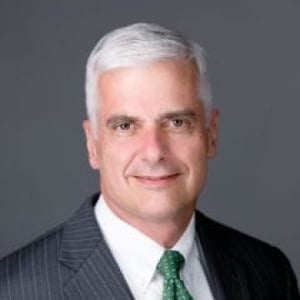
David McIntosh is a leader for the principles of limited constitutional government and individual freedom. He is president of the Club for Growth, the leading advocate for economic liberty.
Former Congressman David McIntosh represented Indiana's 2nd Congressional District in the United States Congress from 1995-2001. As a Freshman, David chaired the Subcommittee on Regulatory Relief. He passed the Congressional Review Act and held extensive oversight and field hearings to build a record of public support for regulatory relief initiatives in energy, biotechnology, pharmaceutical, healthcare, transportation and technology sectors. Another issue that he championed was the elimination of the marriage penalty in the Federal Tax Code.
David served during the Reagan administration as special assistant to Attorney General Edwin Meese III, and as special assistant to President Reagan for Domestic Affairs. During the first Bush administration, he served as executive director of the President's Council on Competitiveness and assistant to the Vice President. The Competitiveness Council coordinated the cost/benefit review of major regulations and promoted legal reform measures.
David is a co-founder of the Federalist Society for Law and Public Policy and serves on the Board of Directors. He remains active with several free market and conservative think tanks and grassroots organizations. David has also had stints at the Hudson Institute and as a Professor of Economics at Ball State School of Business.
Prior to the Club for Growth, David was a partner at Mayer Brown, LLP in Washington, DC.
David graduated from the University of Chicago Law School in 1983, and Yale University, BA, cum laude, in 1980. He and his wife, Ruthie, are the proud parents of Ellie age 17 and Davey age 13.
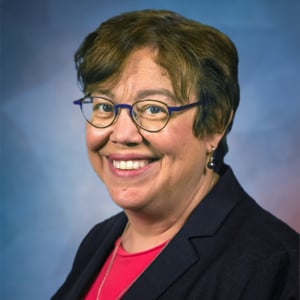
Executive Vice President and Senior Counselor to the President, The Federalist Society for Law and Public Policy Studies
B.A., Yale; J.D., University of Chicago. Lee Liberman Otis is the Executive Vice President and Senior Counselor to the President at the Federalist Society. She also serves as a member of the American Law Institute (ALI), a senior fellow of the Administrative Conference (ACUS), and as the co-chair of the National Constitution Center's Coalition of Freedom Advisory Board. She previously was a special assistant and an Associate Deputy Attorney General at the U.S. Department of Justice, General Counsel of the Department of Energy, an associate in the appellate section of Jones, Day, Reavis & Pogue, an associate counsel to President George H.W. Bush, and a law clerk to Associate Justice Antonin Scalia. She also served as an assistant professor of law at George Mason, where she taught legislation, federal jurisdiction, constitutional law, civil procedure, and appellate advocacy. Ms. Otis has been an important member of the Federalist Society team since the organization’s beginnings. Together with David McIntosh, she led the effort to start what became the Chicago chapter of the Society. She also helped organize the Society’s first conference at Yale, its second conference at Chicago, and its first Lawyers Division chapter in Washington DC, as well as the effort to incorporate the Society, recruit its permanent staff, and obtain its early funding. She was a Founding Director of the Federalist Society.
Edward J. Phelps Professor of Law and Economics and Kauffman Distinguished Research Scholar in Law, Economics, and Entrepreneurship, Yale Law School
Professor George L. Priest passed away on Dec. 17, 2024. Please read his obituary here.
George L. Priest is the Edward J. Phelps Professor of Law and Economics and Kauffman Distinguished Research Scholar in Law, Economics, and Entrepreneurship at Yale Law School. An internationally recognized expert, Professor Priest has focused his research over the past two decades on antitrust, the operation of private and public insurance, and the role of the legal system in promoting economic growth. He joined Yale Law School in 1981 and is co-director of the John M. Olin Center for Law, Economics and Public Policy, which facilitates the scholarly work of the Yale law and economics faculty and supports student interest and research in the field. Before coming to Yale, Professor Priest taught law at the University of Chicago, SUNY/Buffalo, and UCLA. His subject areas are antitrust; capitalism; regulated industries; torts; and insurance and public policy. Professor Priest holds a B.A. from Yale and a J.D. from the University of Chicago.
Robert S. Stevens Professor of Law, Emeritus, Cornell Law School
Partner, Wise Carter Child & Caraway -- Jackson, Miss.
Professor, Cumberland School of Law, Samford University
Michael DeBow joined the Cumberland faculty in 1988. He regularly teaches courses in Property, Business Organizations, Administrative Law, Legislation, and Local Government.
Professor DeBow is a native of Tupelo, Mississippi. He received his bachelor's and master's degrees in economics from the University of Alabama (1976, 1978). He graduated from the Yale Law School in 1980, and is a member of the District of Columbia Bar.
DeBow's career included a stint in private practice in Washington, D.C., followed by a judicial clerkship with Judge Kenneth W. Starr of the U.S. Court of Appeals for the D.C. Circuit in 1983-84. DeBow then served as an attorney-advisor to Federal Trade Commission chairman James C. Miller III (1984-85), and a special assistant to Assistant Attorney General Douglas Ginsburg, in the Antitrust Division of the U.S. Department of Justice (1985-86). He began his teaching career at the University of Georgia business school, where he taught for two years prior to coming to Samford.
From 2000 to 2004, DeBow also acted in a part-time capacity as special assistant for legal policy to Alabama attorney general Bill Pryor. He was a visiting professor of law at George Mason University in 1999. He was a (nonresident) Salvatori Fellow of The Heritage Foundation during 1993-95, and a member of the executive committee of the Association of Private Enterprise Education during 1995-99. DeBow attended summer institutes in quantitative methods for law professors (George Mason Law & Economics Center, 1990), Austrian economics (NYU Department of Economics, 1997), and the study of freedom (Templeton Foundation Freedom Project, 2000). In 2008 he was named an Adjunct Fellow of the Alabama Policy Institute.
Professor DeBow has taught several undergraduate courses at Samford, including one which received a supporting grant from the John Templeton Foundation. Most recently, he taught an undergraduate course in law and economics for the Samford's Brock School of Business. He has also taught public health law for the UAB School of Public Health on several occasions.
DeBow's articles have appeared in such journals as the Texas Law Review, Harvard Journal of Law & Public Policy, Regulation, Policy Review, The Freeman, and the Journal of Law & Politics. He co-edits the Federalist Society's Pre-Law Reading List and its annotated bibliography of conservative and libertarian legal scholarship.
Partner, Wise Carter Child & Caraway -- Jackson, Miss.
Professor, Cumberland School of Law, Samford University
Michael DeBow joined the Cumberland faculty in 1988. He regularly teaches courses in Property, Business Organizations, Administrative Law, Legislation, and Local Government.
Professor DeBow is a native of Tupelo, Mississippi. He received his bachelor's and master's degrees in economics from the University of Alabama (1976, 1978). He graduated from the Yale Law School in 1980, and is a member of the District of Columbia Bar.
DeBow's career included a stint in private practice in Washington, D.C., followed by a judicial clerkship with Judge Kenneth W. Starr of the U.S. Court of Appeals for the D.C. Circuit in 1983-84. DeBow then served as an attorney-advisor to Federal Trade Commission chairman James C. Miller III (1984-85), and a special assistant to Assistant Attorney General Douglas Ginsburg, in the Antitrust Division of the U.S. Department of Justice (1985-86). He began his teaching career at the University of Georgia business school, where he taught for two years prior to coming to Samford.
From 2000 to 2004, DeBow also acted in a part-time capacity as special assistant for legal policy to Alabama attorney general Bill Pryor. He was a visiting professor of law at George Mason University in 1999. He was a (nonresident) Salvatori Fellow of The Heritage Foundation during 1993-95, and a member of the executive committee of the Association of Private Enterprise Education during 1995-99. DeBow attended summer institutes in quantitative methods for law professors (George Mason Law & Economics Center, 1990), Austrian economics (NYU Department of Economics, 1997), and the study of freedom (Templeton Foundation Freedom Project, 2000). In 2008 he was named an Adjunct Fellow of the Alabama Policy Institute.
Professor DeBow has taught several undergraduate courses at Samford, including one which received a supporting grant from the John Templeton Foundation. Most recently, he taught an undergraduate course in law and economics for the Samford's Brock School of Business. He has also taught public health law for the UAB School of Public Health on several occasions.
DeBow's articles have appeared in such journals as the Texas Law Review, Harvard Journal of Law & Public Policy, Regulation, Policy Review, The Freeman, and the Journal of Law & Politics. He co-edits the Federalist Society's Pre-Law Reading List and its annotated bibliography of conservative and libertarian legal scholarship.

The Supreme Court and the 2008 Election
Wichita, KansasInternational Law and Jihad Terrorism: Novel Legal Questions Challenge the Status Quo
Bar Watch Bulletin February 16, 2006
Over the past 72 hours, the American Bar Association has received much press attention for...
Bar Watch Bulletin August 7, 2005
The ABA meeting in Chicago, Illinois included several panel discussions, highlights of which we report...
The Lawyer’s Role in Preventing Corporate Fraud
Roger C. Cramton
Many years ago, during my third year of law school at the University of Chicago,...
Panel I: Should Tort Law be a Form of Public Regulatory Laws?
2004 National Student Symposium
Nashville, TN2004 National Student Symposium
Private Law: The New Frontier for Limited Government
Nashville, TNThe Case for Partisan Judicial Elections
Diane Brey, Erick Kaardal, John J. Soroko, Frank B. Strickland, Michael B. Wallace, Michael DeBow
Views expressed in this paper are those of the authors only, and do not necessarily represent...
The Case for Partisan Judicial Elections
Diane Brey, Erick Kaardal, John J. Soroko, Frank B. Strickland, Michael B. Wallace, Michael DeBow
Views expressed in this paper are those of the authors only, and do not necessarily...
2002 National Student Symposium Banquet: Panel on the Founding of the Federalist Society
2002 National Student Symposium
New Haven, CT