
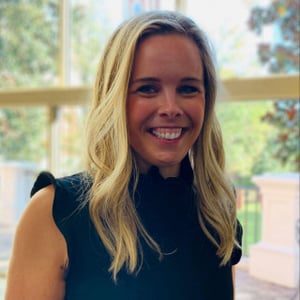
Senior Litigation Counsel, New Civil Liberties Alliance
Margaret Harker litigates for a public interest law firm. She has significant experience in government investigations and litigation, having served in the three branches of our government. Previously, she led complex Congressional investigations for the House Committee on Oversight and Government Reform—including the only government-wide investigation into federal agencies’ strategy (or lack thereof) to counter Chinese Communist Party political warfare against America.
Prior to her time on Capitol Hill, Harker served in the U.S. Department of Justice. She was an Assistant United States Attorney in both the Eastern District of Tennessee and the Eastern District of Virginia. She was a Trial Attorney in the National Security Division, Counterintelligence and Export Control Section, with an emphasis on the administration and enforcement of the Foreign Agents Registration Act.
Harker clerked for the Honorable Henry E. Hudson, U.S. District Court for the Eastern District of Virginia and the Honorable Randolph A. Beales, Court of Appeals of Virginia.
Earlier in her career, she studied in Beijing, China, and worked at the U.S. Chamber of Commerce’s China Center.
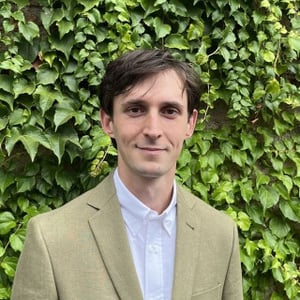
Writer and Editor, Tablet Magazine
Park MacDougald is Editor and Senior Writer at The Scroll, Tablet’s daily afternoon newsletter, a fellow at the Manhattan Institute, and a former recipient of the Novak Fellowship from The Fund for American Studies. His writing has appeared in Tablet, City Journal, New York Magazine, The Washington Examiner, and UnHerd.

Fellow, National Security Institute, Antonin Scalia Law School, George Mason University
Vince Vitkowsky chaired the Executive Committee of the Federalist Society’s International and National Security Law and Policy Practice Group for over a decade. He is also a Fellow at the National Security Institute of George Mason University Law School. Vince spent 45 years in private practice, primarily in AmLaw 100/200 firms and their spin-offs. His practice included domestic and international commercial arbitration and litigation, as well as cyber risks and liabilities. Vince's current focus is on national security policy, artificial intelligence, cybersecurity, and counterterrorism. He has often written and spoken on national security and other public policy issues. Among other affiliations, Vince has been an Adjunct Fellow at the Center for Law and Counterterrorism of the Foundation for the Defense of Democracies, a member of the Executive Committee of the American Branch of the International Law Association, and Co-Chair of the Committee on Interventions and Trial Observations of the International Bar Association’s Human Rights Institute. He received his B.A. from Northwestern University and his J.D. from Cornell Law School.

Executive Vice President, Chief Legal Officer, Gates Corporation
Matthew R. A. Heiman joined the Company in May 2026 and has served as the Company’s Chief Legal Officer and Corporate Secretary since June 2026. As Chief Legal Officer, Mr. Heiman is responsible for all legal functions for Gates, including securities and corporate governance, M&A, litigation, commercial, regulatory, compliance, patents and trademarks, real estate, employment and labor, sustainability and environmental matters. Prior to joining Gates, Mr. Heiman held senior legal leadership roles at Waystar, where he served as Chief Legal & Administrative Officer from 2023 to 2025 and as General Counsel and Corporate Secretary from 2020 to 2023. Prior to that, he was with Johnson Controls, where he served as Vice President, Corporate Secretary, and Associate General Counsel. Mr. Heiman has been a Senior Fellow for the National Security Institute at George Mason University’s Antonin Scalia School of Law since 2018.
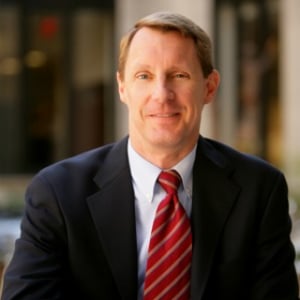
Director, International Legal Studies Program, Vanderbilt Law School
Michael Newton is an expert on terrorism, accountability, transnational justice, and conduct of hostilities issues. Over the course of his career, he has published more than 90 books, articles, op-eds and book chapters. He has been an expert witness in terrorism related trials and is admitted to the counsel list of the International Criminal Court, where, in 2018, he helped prepare the appeal of Jean-Pierre Bemba and participated in oral arguments in the Appeals Chamber. At Vanderbilt, he developed and teaches the innovative International Law Practice Lab, which provides expert assistance to judges, lawyers, legislatures, governments, and policy makers around the world. Professor Newton is most recently the editor of The United States Department of Defense Law of War Manual: Commentary and Critique, forthcoming from Cambridge University Press.
An authority on the law of armed conflict, Professor Newton served as the senior adviser to the Ambassador-at-Large for War Crimes Issues in the U.S. State Department from January 1999 to August 2002, during which he implemented a wide range of policy positions, including U.S. support to accountability mechanisms worldwide. He negotiated the “Elements of Crimes” for the International Criminal Court, and was the senior member of the team teaching international law to the first group of Iraqis who began to think about accountability mechanisms and a constitutional structure in November 2000. He shuttled to Baghdad repeatedly to aid international and Iraqi lawyers and jurists in drafting the Statute of the Iraqi High Tribunal while serving as the International Law Adviser to the Judicial Chambers from 2006 to 2008. He began assisting Iraqi officials, victims and civil society groups on legal issues associated with documentation and investigation of crimes committed by Da’esh on Iraqi soil days after Yazidi victims fled towards Mount Sinjar. He was the U.S. representative on the U.N. Planning Mission for the Sierra Leone Special Court and a founding member of its academic consortium. He is an elected member of the International Institute of Humanitarian Law and on the expert roster of Justice Rapid Response. In addition to teaching the Practice Lab, he develops and coordinates externships and educational opportunities for students interested in international legal issues, having supervised more than 150 such opportunities.
Professor Newton has served on the executive council of the American Society of International Law and as an invited expert for the Genocide Prevention Task Force established by the U.S. Holocaust Memorial Museum and the U.S. Institute of Peace. He is currently on the Advisory Board of the ABA International Criminal Court Project.
Professor Newton served in the U.S. Army more than 21 years, beginning with his commission from the U.S. Military Academy in May 1984 as an armor officer in the 4th Battalion, 68th Armor at Fort Carson, Colorado. After his selection for the Funded Legal Education Program, Newton served as chief of operational law with the Army Special Forces Command (Airborne) during Operation Desert Storm, and as the group judge advocate for the 7th Special Forces Group (Airborne). His deployments include Northern Iraq on Operation Provide Comfort to assist Kurdish civilians, and Haiti with 194th Armored Brigade (Separate), where he organized and led human rights and rules of engagement education for multinational forces, including police. He has taught international and operational law at the Judge Advocate General's School and Center in Charlottesville, Virginia, and taught international law at the United States Military Academy at West Point.

Professor Emeritus of Law, Antonin Scalia Law School, George Mason University
Jeremy A. Rabkin is a Professor Emeritus of Law at the Antonin Scalia Law School, George Mason University. Before joining the faculty in June 2007, he was for over two decades a professor in the Department of Government at Cornell University. Professor Rabkin serves on the board of directors of the Center for Individual Rights, a public interest law firm based in Washington, D.C. Previously he was a board member of the U.S. Institute of Peace and the board of academic advisors of the American Enterprise Institute.
Professor Rabkin’s books include Law Without Nations? (Princeton University Press, 2005). He authored “If You Need a Friend, Don’t Call a Cosmopolitan,” a chapter in Varieties of Sovereignty and Citizenship (Sigal R. Ben-Porath & Rogers M. Smith eds., University of Pennsylvania Press, 2012). His articles have appeared in major law reviews and political science journals and his journalistic contributions in a range of magazines and newspapers, including the Washington Post and the Wall Street Journal.
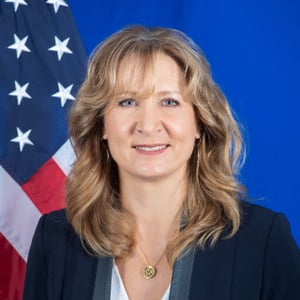
US Department of State, Ambassador At-Large for Global Criminal Justice
Dr. Beth Van Schaack was sworn in as the Department’s sixth Ambassador-at-Large for Global Criminal Justice (GCJ) on March 17, 2022. In this role, she advises the Secretary of State and other Department leadership on issues related to the prevention of and response to atrocity crimes, including war crimes, crimes against humanity, and genocide.
Ambassador Van Schaack served as Deputy to the Ambassador-at-Large in GCJ from 2012 to 2013. Prior to returning to public service in 2022, Ambassador Van Schaack was the Leah Kaplan Visiting Professor in Human Rights at Stanford Law School, where she taught international criminal law, human rights, human trafficking, and a policy lab on Legal & Policy Tools for Preventing Atrocities. In addition, she directed Stanford’s International Human Rights & Conflict Resolution Clinic. Ambassador Van Schaack began her academic career at Santa Clara University School of Law, where, in addition to teaching and writing on international human rights issues, she served as the Academic Adviser to the United States interagency delegation to the International Criminal Court Review Conference in Kampala, Uganda. Earlier in her career, she was a practicing lawyer at Morrison & Foerster, LLP; the Center for Justice & Accountability, a human rights law firm; and the Office of the Prosecutor of the International Criminal Tribunals for Rwanda and the Former Yugoslavia in The Hague.
Ambassador Van Schaack has published numerous articles and papers on international human rights and justice issues, including her 2020 thesis, Imagining Justice for Syria (Oxford University Press). From 2014 to 2022, she served as Executive Editor for Just Security, an online forum for the analysis of national security, foreign policy, and rights. She is a graduate of Stanford (BA), Yale (JD) and Leiden (PhD) Universities.
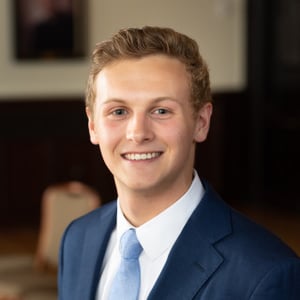
JD Candidate, Harvard Law School
Trevor is a second-year law student at Harvard Law School. Prior to starting law school, he lived in Taiwan as a Fulbright Scholar studying Taiwanese industrial policy, and he worked as a research assistant at a Washington think tank focused on strategic trade controls where he investigated companies involved in the Chinese defense industry.
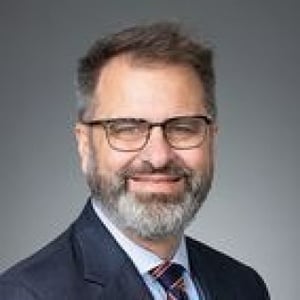
Senior Policy Advisor, Akin Gump LLC
Thomas Krueger advises clients on matters resolving international trade policy matters related to international technology transfers subject to U.S. export, import and investment screening regulations. This includes export control policies and/or economic sanctions with regards to China, Russia and other countries of concern. Thomas has experience with traditional technology fields such as aerospace and defense exports and particular experience with emerging technology policies and regulations such as artificial intelligence, quantum and advanced semiconductor technology. He has conducted numerous risk assessments on cutting-edge technology transfers and advises clients on risk mitigation measures.
Previously, Thomas served as a Director of Strategic Trade and Nonproliferation at the National Security Council. In that role, he was responsible for advising the President and National Security Advisor on technology transfers, as well as coordinating interagency positions on U.S. export controls and technology transfer policies.
Prior to his work in at the National Security Council, Thomas held several positions at the U.S. Department of State, including as a Senior Foreign Affairs Officer. Among other duties, he served as the senior advisor to State Department leadership on export controls and technology transfer policies and regulations. Thomas represented the Department of State’s foreign policy positions on EAR-related technology licenses and regulations to the Department of Commerce. He also led the State Department’s nonproliferation reviews of Committee on Foreign Investment in the United States (CFIUS) filings and sanctions-related export controls policies. Thomas also served as a Defense Trade Controls Analyst in the State Department’s Bureau of Political-Military Affairs. Thomas is a retiree from the U.S. Army.

Partner & Chair, National Security Practice, Wiley Rein LLP

Global Technology Counsel, Sony Corporation of America
Christopher Ekren is Global Technology Counsel for Sony. Based out of Silicon Valley, he is currently the lead US in house counsel for key Sony advanced technology initiatives in the areas of Artificial Intelligence (Sony AI, Inc.) , Gene Therapy (Sony Biotechnology Inc.), Satellite Communications (Sony Space Communications Inc.), Semiconductor and Component Technologies (Sony Semiconductor Solutions of America), Sony’s Research Labs US operations, as well as engineering and product development activities part of Sony’s North American core electronics business. He has concurrent global roles supporting Sony’s technology standards, open source software and special technology projects.

Executive Vice President and Senior Policy Advisor, Stephens, Inc.
Mary Kissel is Executive Vice President and Senior Policy Advisor at Stephens Inc., where she provides advice on geopolitical risk and macroeconomic trends to Stephens clients and the Stephens management team. Previously, she served as Senior Advisor to Secretary of State Michael R. Pompeo from October 2018 to January 2021. Prior to joining the State Department, she had a long and distinguished career on The Wall Street Journal editorial board, including stints as chief foreign policy commentator in New York City and Asia-Pacific editorial page editor, based in Hong Kong. Ms. Kissel hosts the Nixon Seminar on Conservative Realism and National Security, is a member of the Council on Foreign Relations, and serves on the boards of the American Australian Council, The Marathon Initiative, and RXO, Inc. She is a graduate of Harvard University and the Johns Hopkins School of Advanced International Studies.
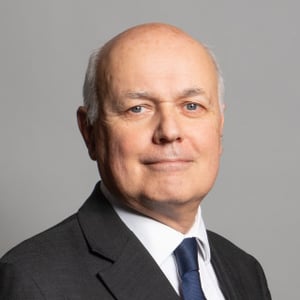
Member of Parliament for Chingford & Woodford Green, House of Commons
The Rt Hon Sir Iain Duncan Smith is the Conservative MP for Chingford and Woodford Green, and has been an MP continuously since 1992.
Between 1997 and 2001, he was Shadow Secretary of State for Social Security and then Shadow Secretary of State for Defence. From 2001 to 2003, he was leader of the Conservative Party.
He took a lead role in the Vote Leave campaign ahead of the EU referendum on 23 June 2016, appearing many times in the media and public debates, and is now working alongside colleagues to ensure the Government achieves a smooth and rapid exit from the EU and forms a new relationship based on trade, continuing friendship and cooperation.
Before entering politics, he served in the Scots Guards from 1975 to 1982. During this time, he saw service in Northern Ireland and Rhodesia/ Zimbabwe. After leaving the army, he worked in industry, first with the GUC, then as a Director of a property company and subsequently as a Director at the publishing company Jane’s Information Group.
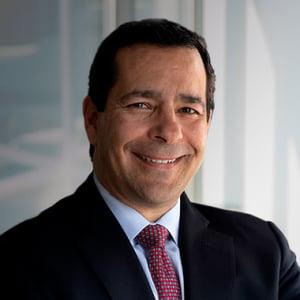
CEO, The Evanina Group; Former Director of the National Counterintelligence and Security Center
Mr. Evanina was confirmed by the U.S. Senate on May 6, 2020 to be the first Senate-confirmed Director of the National Counterintelligence and Security Center (NCSC). Mr. Evanina served as the Director of NCSC since June 2, 2014. In this position, he was the head of Counterintelligence (CI) for the U.S. Government.
Under Mr. Evanina’s leadership, NCSC produced the President’s National Counterintelligence Strategy of the United States of America 2020, which has been instrumental in raising foreign intelligence threat awareness to critical infrastructure sectors and the private sector executives regarding supply chain, economic security, cyber, and malign foreign influence.
Mr. Evanina chaired the National Counterintelligence Policy Board, and the Allied Security and Counterintelligence Forum comprised of senior CI and security leaders from Australia, Canada, New Zealand, and the UK. Mr. Evanina also served as Chair of the NATO Counterintelligence Panel.
Prior to his selection as the Director of NCSC, Mr. Evanina served as the Chief of the Central Intelligence Agency’s Counterespionage Group. He also previously served as Assistant Special Agent in Charge of the FBI’s Washington Field Office, where he led operations in both the Counterintelligence and Counterterrorism Divisions.
Mr. Evanina currently serves as Founder and CEO of the Evanina Group advising CEOs and Board of Directors on strategic corporate risk.

Founder and Executive Director, National Security Institute; Assistant Professor of Law, Antonin Scalia Law School, George Mason University
Jamil N. Jaffer is the Founder and Executive Director of the National Security Institute at the Antonin Scalia Law School at George Mason University where he also serves as an Assistant Professor of Law, Director of the National Security Law and Policy Program, and Director of the Cyber, Intelligence, and National Security LLM Program. Jamil also teaches classes on counterterrorism, intelligence, surveillance, cybersecurity, and other national security matters, as well as a summer course held abroad with U.S. Supreme Court Justice Neil M. Gorsuch. Jamil is also affiliated with Stanford University’s Center for International Security and Cooperation and previously served as a Visiting Fellow at the Hoover Institution from 2016 to 2019.
Jamil is also a Venture Partner with Paladin Capital Group, where he assists the firm with investments across the full range of its themes and theses, including a focus on dual-use national security technologies. Jamil also serves on the board of directors of RangeForce, a cybersecurity training and readiness platform startup and Tozny, a digital identity startup, and on the advisory boards of U.S. Strategic Metals, North America’s largest primary producer of cobalt, a critical mineral used in EV batteries, aerospace, and other national security applications; and Constella Intelligence, a deep and dark web intelligence startup. Jamil also serves as an advisor to Beacon Global Strategies, a strategic advisory firm and Duco, a technology platform startup that connects corporations with geopolitical and international business experts. Jamil is also the managing director of Trigraph Caveat Capital, a private investment vehicle.
Among other things, Jamil currently serves on the Board of Directors for the Greater Washington Board of Trade, the Board of Advisors for the Global Cyber Alliance, and the Advisory Board of the Foundation for the Defense of Democracies’ Center on Cyber and Tech Innovation, the Executive Committee of the Reagan Institute Strategy Group. Jamil is also a Fellow at the Academy for Judaic, Christian, and Islamic Studies, an advisor to the Concordia Summit, and is a member of the Board of Directors for the Center for Intelligence Policy, the Board of Directors of Speech First, and the Executive Committee of the International Law and National Security Practice Group of the Federalist Society.
Immediately prior to his current positions, from 2015-2021, Jamil served as a senior business leader at IronNet Cybersecurity, helping take the company from a bootstrapped first-year technology products startup through two rounds of venture capital fundraising, growing from 40 employees to over 300, and through its listing on New York Stock Exchange. In his role as IronNet's Senior Vice President for Strategy, Partnerships & Corporate Development, Jamil worked directly for the co-CEOs of the company, Gen (ret.) Keith B. Alexander, the former Director of the National Security Agency and Founding Commander of U.S. Cyber Command, and Bill Welch, the former COO of Zscaler and Duo; in that role, Jamil led all of the company’s strategic and technology partnership efforts, including developing go-to-market and technology integration plans with some of the largest cloud platforms and cybersecurity companies in the market, evaluating potential acquisition targets, and developing overall corporate strategy and thought leadership around collective security and collaborative defense in the cyber arena.
Prior to his time at IronNet, Jamil served on the leadership team of the Senate Foreign Relations Committee as Chief Counsel and Senior Advisor under Chairman Bob Corker (R-TN), where he worked on key national security and foreign policy issues, including leading the drafting of the proposed Authorization for the Use of Military Force against ISIS in 2014 and 2015, the AUMF against Syria in 2013, and revisions to the 9/11 AUMF against al Qaeda. Jamil was also the lead architect of the Iran Nuclear Agreement Review Act and two sanctions laws against Russia for its first intervention in Ukraine.
Prior to joining SFRC, Jamil served as Senior Counsel to the House Permanent Select Committee on Intelligence under Chairman Mike Rogers (R-MI) where he led the committee’s oversight of NSA surveillance, NRO intelligence issues, and NGA analytic and collection matters, as well as intelligence community-wide counterterrorism issues. Jamil was also the lead architect of the Cyber Intelligence Sharing and Protection Act, the nation’s first cyber threat intelligence sharing legislation that was signed into law in 2015.
In the Bush Administration, Jamil served in the White House as an Associate Counsel to the President, handling Defense Department, State Department, and intelligence community matters, and serving as one of the White House Counsel’s primary representatives to the National Security Council Deputies Committee.
Prior to the White House, Jamil served on the leadership team of the Justice Department’s National Security Division as Counsel to the Assistant Attorney General for National Security, where he focused on counterterrorism and intelligence matters. At NSD, Jamil helped lead the division’s work on In re: Directives, the first ever two-party litigated matter in the FISA Court and the second case before the FISA Court of Review in its 30-year history. Jamil also led NSD’s efforts on the President’s Comprehensive National Cybersecurity Initiative (CNCI), including the drafting of NSPD-54/HSPD-23, and related classified matters, and advised the National Security Agency (NSA) and U.S. Cyber Command’s predecessor organization, the Joint Function Component Command for Network Warfare (JFCC-NW), on matters related to cyber intelligence collection and offensive cyber activities. For his work on these matters, Jamil was awarded the Assistant Attorney General’s Award for Special Initiative and was among the group of lawyers awarded the Director of National Intelligence’s 2008 Legal Award (Team of the Year – Cyber Legal).
Jamil also served in other positions in the Justice Department, including in the Office of Legal Policy, where he worked on the confirmations of Chief Justice John G. Roberts, Jr. and Justice Samuel A. Alito, Jr. to the United States Supreme Court.
Jamil also served as a lawyer in private practice at Kellogg Huber, a Washington, DC-based litigation boutique, as a policy advisor to Congressman Bob Goodlatte (R-VA), and as a staff member or senior advisor on a number of political campaigns, including two presidential campaigns and a presidential transition team. While in law school, Jamil was a member of the University of Chicago Law Review, managing editor of the Chicago Journal of International Law, and National Symposium Editor of the Harvard Journal of Law & Public Policy. Following law school, Jamil served as a law clerk to Judge Edith H. Jones of the United States Court of Appeals for the Fifth Circuit and, later in his career, as a law clerk to then-Judge Neil M. Gorsuch when he first joined the United States Court of Appeals for the Tenth Circuit as well as a law clerk to Justice Neil Gorsuch when he joined the U.S. Supreme Court.
Jamil has published multiple op-eds and academic articles on national security, foreign policy, cybersecurity, counterterrorism, encryption, and intelligence matters, and is the co-author of a book chapter with former NSA Director Gen. (Ret.) Keith B. Alexander on national security and the press in National Security, Leaks, and the Freedom of the Press: The Pentagon Papers Fifty Years On (2021) and a book chapter with former CIA Director Gen. (ret.) Mike Hayden on ISIS, al Qaeda, and other international terrorist groups in Choosing to Lead: American Foreign Policy for a Disordered World (2015). Jamil has also written book chapters on cybersecurity and surveillance, as well as op-eds and policy papers with former Attorney General Michael B. Mukasey, former National Counterterrorism Center Director Matt Olsen, and Congressman Mike Waltz (R-FL), among others.
Jamil has previously taught graduate-level courses in intelligence law and policy at George Washington University’s Elliott School of International Affairs and the National Intelligence University, served an outside advisor to the Cyberspace Solarium Commission, and has recently testified before committees of the U.S. Senate and House of Representatives on China, cybersecurity, counterterrorism, and other national security matters. Jamil has also recently appeared on a range of national television and radio outlets including CNN, Fox News, Fox Business, MSNBC, Bloomberg, PBS, Voice of America, and National Public Radio, and in various print and online publications, including the Wall Street Journal, New York Times, and the Washington Post on a range of national security matters including cybersecurity, counterterrorism, surveillance, encryption, privacy, and foreign policy issues.
Jamil holds degrees from UCLA (BA, cum laude), the University of Chicago Law School (JD, with honors), and the United States Naval War College (MA, with distinction).

Entrepreneur and Author of WOKE, INC.
Conservative leaders have called Vivek Ramaswamy one of “the most compelling conservative voices in the country” and “one of the towering intellects” in America.
Vivek Ramaswamy is a New York Times bestselling author and a successful entrepreneur who has founded multiple successful enterprises. A first-generation American, he is the founder and executive chairman of Roivant Sciences, a new type of biopharmaceutical company focused on the application of technology to drug development. He founded Roivant in 2014 and led the largest biotech IPOs of 2015 and 2016, eventually culminating in successful clinical trials in multiple disease areas that led to FDA-approved products.
Mr. Ramaswamy was born and raised in southwest Ohio. He graduated summa cum laude in Biology from Harvard in 2007 and began his career as a successful biotech investor at a prominent hedge fund. Mr. Ramaswamy continued to work as an investor while earning his law degree at Yale.
Mr. Ramaswamy was featured on the cover of Forbes magazine in 2015 for his work in drug development. In 2020 he emerged as a prominent commentator on stakeholder capitalism, free speech, and woke culture. He has authored numerous articles and op-eds, which have appeared in The Wall Street Journal, The New York Times, National Review, Newsweek, and Harvard Business Review.
Mr. Ramaswamy serves on the board of directors of the Philanthropy Roundtable, the Foundation for Research on Equal Opportunity, and St. Xavier High School.

Founder, Law Office of Eileen J. O'Connor PLLC
After nearly 30 years as a national tax specialist with the IRS and major accounting firms, Eileen J. O’Connor, now an attorney in private practice, was Assistant Attorney General for the Justice Department’s Tax Division for six years during the administration of President George W. Bush and a member of then-President-elect Trump’s Treasury Department Transition Team. She focuses on federal administrative and tax law.

Vice President and Publisher, The Political Forum
Stephen R. Soukup is the senior commentator, Vice President, and Publisher of The Political Forum, an “independent research provider” that delivers research and consulting services to the institutional investment community, with an emphasis on economic, social, political, and geopolitical events likely to have an impact on the financial markets in the United States and abroad. He is also the Director of The Political Forum Institute, a non-profit educational organization dedicated to creating and preserving community, primarily among those who earn their livings and create wealth for the nation through the capital markets. Mr. Soukup has followed politics and federal regulatory policy for the financial community since 1996, when he joined the award-winning Washington-research office of Prudential Securities. He is also the Fellow in Culture and Economy at the Culture of Life Foundation.
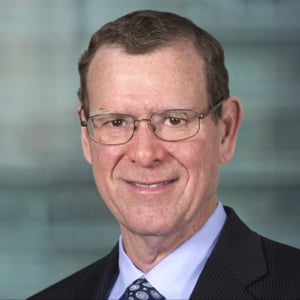
Executive in Residence, Wake Forest University School of Business
John Allison is an Executive in Residence at the Wake Forest School of Business. He is a member of the Cato Institute’s Board of Directors and Chairman of the Executive Advisory Council of the Cato Institute’s Center for Monetary and Financial Alternatives. Allison was president and CEO of the Cato Institute from October 2012 to April 2015. Prior to joining Cato, Allison was chairman and CEO of BB&T Corporation, the 10th-largest financial services holding company headquartered in the United States. During his tenure as CEO from 1989 to 2008, BB&T grew from $4.5 billion to $152 billion in assets. He was recognized by theHarvard Business Reviewas one of the top 100 most successful CEOs in the world over the last decade.
Allison has received the Corning Award for Distinguished Leadership, been inducted into the North Carolina Business Hall of Fame, and received the Lifetime Achievement Award from theAmerican Banker. He is the author of The Financial Crisis and the Free Market Cure: Why Pure Capitalism Is the World Economy’s Only Hope and The Leadership Crisis and the Free Market Cure: Why the Future of Business Depends on the Return to Life, Liberty, and the Pursuit of Happiness. In addition, he is a former Distinguished Professor of Practice at Wake Forest University School of Business, and serves on the Board of Visitors at the business schools at Wake Forest, Duke, and the University of North Carolina–Chapel Hill.
Allison is a Phi Beta Kappa graduate of the University of North Carolina–Chapel Hill. He received his master’s degree in management from Duke University and is also a graduate of the Stonier Graduate School of Banking. Allison is the recipient of six honorary doctorate degrees.

Senior Judge, United States Court of Appeals, District of Columbia Circuit
Circuit Judge Douglas H. Ginsburg was appointed to the United States Court of Appeals for the District of Columbia in 1986. After receiving his B.S. from Cornell University in 1970, and his J.D. from the University of Chicago Law School in 1973, he clerked on the D.C. Circuit and for Justice Thurgood Marshall on the United States Supreme Court. Thereafter, Judge Ginsburg was a professor at the Harvard Law School, the Deputy Assistant and then Assistant Attorney General for the Antitrust Division of the Department of Justice, as well as the Administrator of the Office of Information and Regulatory Affairs in the Office of Management and Budget. Concurrent with his service as a federal judge, Judge Ginsburg has taught at the University of Chicago Law School and the New York University School of Law. Judge Ginsburg is currently a Professor of Law at the George Mason University and a visiting professor at University College London, Faculty of Laws.
Judge Ginsburg is the Chairman of the International Advisory Board of the Global Antitrust Institute at the Law and Economics Center of the George Mason University School of Law. He also serves on the Advisory Boards of: Competition Policy International; the Harvard Journal of Law and Public Policy; the Journal of Competition Law and Economics; the Journal of Law, Economics & Policy; the Supreme Court Economic Review; the University of Chicago Law Review; the New York University Journal of Law and Liberty; and, at University College London, both the Centre for Law, Economics and Society and the Jevons Institute for Competition Law and Economics.
In 2020, Judge Ginsburg was the 11th recipient of the John Sherman Award, presented by the Antitrust Division of the Department of Justice in recognition of the awardee’s Lifetime Contributions to Antitrust Law and Policy.
In 2014, Judge Ginsburg received the Lifetime Achievement Award given annually by the Global Competition Review.
He is the author or co-author of several books and more than 100 articles on competition and regulation, including, most recently, Growing Convergence: The Limited Role of Antitrust in Standard Essential Patent Disputes, in CPI Antitrust Chronicle, Summer 2021, Vol. 1, No. 2.
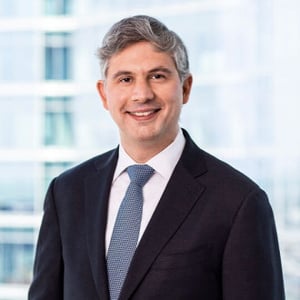
Partner, Keller Postman
Ashley Keller is one of the founding Partners of Keller Postman LLC. An experienced trial and appellate lawyer, Ashley helps set strategic direction across virtually all of the firm’s cases. He represents clients in a wide variety of practice areas and types of claims, including product-liability, antitrust, class action, and arbitration matters.
Ashley is one of the leaders of Keller Postman’s national product-liability practice. He leverages his ability to detangle complex concepts and develop novel legal theories to support individual client matters and as counsel on numerous product-liability multidistrict litigation matters. He chairs the plaintiffs’ Law & Briefing Committee in the Zantac (Ranitidine) Product Liability MDL in the U.S. District Court for the Southern District of Florida.
Ashley also litigates complex antitrust and class action matters. Among his notable cases, Ashley represents numerous States in antitrust litigation against Google for monopolizing products and services used by advertisers and publishers in online-display advertising.
Ashley also has played a central role in developing the firm’s pioneering arbitration practice, which includes pursuing individual arbitrations for clients whose claims are subject to arbitration clauses with class-action waivers. In part through managing the complexity of pursuing these individual claims simultaneously, the firm has secured millions in settlements for more than 500,000 employees and consumers.
Before launching Keller Postman, Ashley co-founded the litigation finance firm Gerchen Keller Capital, which grew to more than $1.3 billion in assets under management and was the world’s largest private investment manager focused on legal and regulatory risk prior to being acquired by Burford Capital in 2016.
Previously, Ashley was a partner at Bartlit Beck Herman Palenchar & Scott LLP, The American Lawyer’s litigation boutique of the year. While there, he handled various trial and appellate matters involving multi-billion-dollar securities and patent cases, contract disputes, mass torts, and class actions.
Ashley also worked as an analyst at Alyeska Investment Group, a Chicago-based market-neutral hedge fund, where he focused on investments in companies facing litigation and other complicated regulatory matters.
Ashley was named a 2021 Plaintiffs’ Lawyers Trailblazer by the National Law Journal. He is also listed on Lawdragon’s 500 Leading Lawyers in America, Lawdragon’s 500 Leading Plaintiff Consumer Lawyers, Lawdragon’s Leading Plaintiff Financial Lawyers, National Trial Lawyers’ Top 100, and Illinois Super Lawyers.
Ashley was a law clerk for Justice Anthony M. Kennedy at the Supreme Court of the United States and Judge Richard Posner at the U.S. Court of Appeals for the Seventh Circuit. He graduated magna cum laude from Harvard College, received his M.B.A. from the University of Chicago Booth School of Business and received his J.D. from the University of Chicago Law School, where he graduated first in his class.
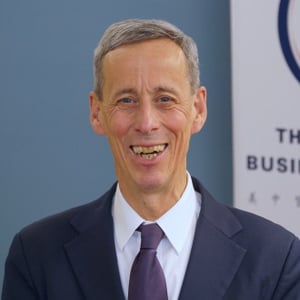
President, US-China Business Council
On July 26, 2018, Craig Allen began his tenure in Washington, DC as the president of the US-China Business Council (USCBC), a private, nonpartisan, nonprofit organization representing over 200 American companies doing business with China. Prior to joining USCBC, Craig had a long, distinguished career in US public service.
Craig began his government career in 1985 at the Department of Commerce’s International Trade Administration (ITA). He entered government as a Presidential Management Intern, rotating through the four branches of ITA. From 1986 to 1988, he was an international economist in ITA’s China Office.
In 1988, Craig transferred to the American Institute in Taiwan, where he served as Director of the American Trade Center in Taipei. He held this position until 1992, when he returned to the Department of Commerce for a three-year posting at the US Embassy in Beijing as Commercial Attaché.
In 1995, Craig was assigned to the US Embassy in Tokyo, where he served as a Commercial Attaché. In 1998, he was promoted to Deputy Senior Commercial Officer. In 1999, Craig became a member of the Senior Foreign Service.
From 2000, Craig served a two-year tour at the National Center for APEC in Seattle. While there, he worked on the APEC Summits in Brunei, China, and Mexico. In 2002, it was back to Beijing, where Craig served as the Senior Commercial Officer. In Beijing, Craig was promoted to the Minister Counselor rank of the Senior Foreign Service.
After a four-year tour in South Africa, Craig became Deputy Assistant Secretary for Asia at the US Department of Commerce’s International Trade Administration. He later became Deputy Assistant Secretary for China. Craig was sworn in as the United States ambassador to Brunei Darussalam on December 19, 2014. He served there until July 2018, when he transitioned to President of the US-China Business Council.
Craig received a B.A. from the University of Michigan in Political Science and Asian Studies in 1979. He received a Master of Science in Foreign Service from Georgetown University in 1985.

Judge, United States Court of Appeals, Ninth Circuit
Judge Carlos Bea serves as a judge on the United States Court of Appeals for the Ninth Circuit. He received his Bachelor's Degree from Stanford University in 1956 and his J.D. from Stanford Law School in 1958. Judge Bea was born in San Sebastian, Spain, and immigrated with his family to Cuba in 1939. In 1952, he represented Cuba on the Cuban National basketball team in the Helsinki Olympics. Judge Bea became a naturalized citizen of the United States in 1958. He engaged in private practice in San Francisco, principally in the area of civil trials (jury and non-jury), from 1959-75 at Dunne, Phelps & Mills and from 1975-90 at Carlos Bea, A Law Corporation. He taught courses in civil litigation advocacy at Hastings College of Law and Stanford Law School. From 1990 to 2003, Judge Bea served as a judge of the San Francisco Superior Court. He was nominated by President George W. Bush to the United States Court of Appeals for the Ninth Circuit and was confirmed in 2003.
Judge Bea and his wife Louise reside in San Francisco, where they raised their four sons, Sebastian, Alexander, Nicholas, and Dominic.
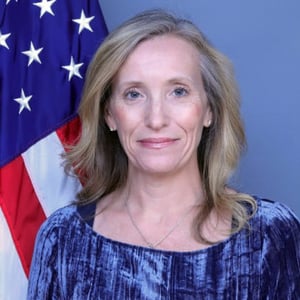
Adjunct Senior Fellow, Indo-Pacific Security Program, Center for New American Security; Senior Advisor, Krach Institute for Tech Diplomacy, Purdue University
Throughout her career in foreign policy, Ambassador Kelley E. Currie has specialized in human rights, political reform, development, and humanitarian issues, with a focus on the Indo-Pacific region. Ambassador Currie is currently an Adjunct Senior Fellow at the Center for a New American Security, a Washington D.C. think tank, and a Senior Advisor to the Krach Institute for Tech Diplomacy at Purdue University. She is a member of the board of directors of the National Endowment for Democray; the board of governors of the East-West Center; and the advisory boards of Spirit of America and the Vandenberg Coalition.
Ambassador Currie was unanimously confirmed in December 2019 as Ambassador-at-Large for Global Women's Issues and the U.S. Representative at the United Nations Commission on the Status of Women and served in that position until January 2021. Prior to that appointment, she served under Ambassador Nikki Haley as the U.S. Representative to the UN Economic and Social Council and Alternative Representative to the UN General Assembly (2017-2018). While awaiting confirmation between ambassadorial appointments, she was appointed interim senior official in the Department of State's Office of Global Criminal Justice. From 2009 until her appointment to the USUN leadership, she was a Senior Fellow with the Project 2049 Institute and the founding Director of the Institute's Burma Transition Initiative. Ambassador Currie also held senior policy positions with the U.S. Congress, international organizatons, and non-governmental organizations.
Ambassador Currie received a Juris Doctor from Georgetown University Law Center with a focus on International Human Rights Law, and an undergraduate degree cum laude in Political Science from the University of Georgia's School of Public and International Affairs.
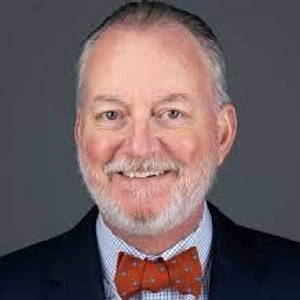
Executive Vice President and General Counsel, TE Connectivity
John S. Jenkins Jr. is the Executive Vice President, General Counsel of TE Connectivity. John is responsible for the company’s global legal, compliance, corporate governance, government affairs, intellectual property, security and risk management, and corporate social responsibility activities. He is also responsible for bringing TE’s industry-leading connectivity solutions, engineering, and operations expertise to the emerging markets with focus on India, China, and South America. He joined TE Connectivity in October 2012.
Prior to joining TE Connectivity, John was with Tyco International for ten years and was the Vice President, Corporate Secretary, and International General Counsel. John was responsible for the Board of Directors activities, securities and capital markets transactions and reporting, mergers and acquisitions, executive compensation, global procurement, real estate, and tax planning. Prior to 2003, John worked as a litigator with McGuireWoods, LLP. John began his career in 1987 as an Officer in the United States Navy, and served as a judge advocate both as Military Prosecutor and Senior Defense Counsel, and finally as Legislative Counsel to the Secretary of the Navy.
John earned his law degree from George Washington University with high honors and his Bachelor’s degree from the University of Virginia.

Director of Foreign and Defense Policy Studies, American Enterprise Institute
Kori Schake leads foreign and defense policy studies at the American Enterprise Institute. She is the author of Safe Passage: the Transition from British to American Hegemony, and with Jim Mattis the editor of Warriors and Citizens: American Views on Our Military. Dr. Schake has taught at Stanford, Johns Hopkins SAIS, and West Point. She has also had a distinguished career in government, working at the US State Department, the US Department of Defense, and the National Security Council.
President, US-China Business Council
On July 26, 2018, Craig Allen began his tenure in Washington, DC as the president of the US-China Business Council (USCBC), a private, nonpartisan, nonprofit organization representing over 200 American companies doing business with China. Prior to joining USCBC, Craig had a long, distinguished career in US public service.
Craig began his government career in 1985 at the Department of Commerce’s International Trade Administration (ITA). He entered government as a Presidential Management Intern, rotating through the four branches of ITA. From 1986 to 1988, he was an international economist in ITA’s China Office.
In 1988, Craig transferred to the American Institute in Taiwan, where he served as Director of the American Trade Center in Taipei. He held this position until 1992, when he returned to the Department of Commerce for a three-year posting at the US Embassy in Beijing as Commercial Attaché.
In 1995, Craig was assigned to the US Embassy in Tokyo, where he served as a Commercial Attaché. In 1998, he was promoted to Deputy Senior Commercial Officer. In 1999, Craig became a member of the Senior Foreign Service.
From 2000, Craig served a two-year tour at the National Center for APEC in Seattle. While there, he worked on the APEC Summits in Brunei, China, and Mexico. In 2002, it was back to Beijing, where Craig served as the Senior Commercial Officer. In Beijing, Craig was promoted to the Minister Counselor rank of the Senior Foreign Service.
After a four-year tour in South Africa, Craig became Deputy Assistant Secretary for Asia at the US Department of Commerce’s International Trade Administration. He later became Deputy Assistant Secretary for China. Craig was sworn in as the United States ambassador to Brunei Darussalam on December 19, 2014. He served there until July 2018, when he transitioned to President of the US-China Business Council.
Craig received a B.A. from the University of Michigan in Political Science and Asian Studies in 1979. He received a Master of Science in Foreign Service from Georgetown University in 1985.
Judge, United States Court of Appeals, Ninth Circuit
Judge Carlos Bea serves as a judge on the United States Court of Appeals for the Ninth Circuit. He received his Bachelor's Degree from Stanford University in 1956 and his J.D. from Stanford Law School in 1958. Judge Bea was born in San Sebastian, Spain, and immigrated with his family to Cuba in 1939. In 1952, he represented Cuba on the Cuban National basketball team in the Helsinki Olympics. Judge Bea became a naturalized citizen of the United States in 1958. He engaged in private practice in San Francisco, principally in the area of civil trials (jury and non-jury), from 1959-75 at Dunne, Phelps & Mills and from 1975-90 at Carlos Bea, A Law Corporation. He taught courses in civil litigation advocacy at Hastings College of Law and Stanford Law School. From 1990 to 2003, Judge Bea served as a judge of the San Francisco Superior Court. He was nominated by President George W. Bush to the United States Court of Appeals for the Ninth Circuit and was confirmed in 2003.
Judge Bea and his wife Louise reside in San Francisco, where they raised their four sons, Sebastian, Alexander, Nicholas, and Dominic.
Adjunct Senior Fellow, Indo-Pacific Security Program, Center for New American Security; Senior Advisor, Krach Institute for Tech Diplomacy, Purdue University
Throughout her career in foreign policy, Ambassador Kelley E. Currie has specialized in human rights, political reform, development, and humanitarian issues, with a focus on the Indo-Pacific region. Ambassador Currie is currently an Adjunct Senior Fellow at the Center for a New American Security, a Washington D.C. think tank, and a Senior Advisor to the Krach Institute for Tech Diplomacy at Purdue University. She is a member of the board of directors of the National Endowment for Democray; the board of governors of the East-West Center; and the advisory boards of Spirit of America and the Vandenberg Coalition.
Ambassador Currie was unanimously confirmed in December 2019 as Ambassador-at-Large for Global Women's Issues and the U.S. Representative at the United Nations Commission on the Status of Women and served in that position until January 2021. Prior to that appointment, she served under Ambassador Nikki Haley as the U.S. Representative to the UN Economic and Social Council and Alternative Representative to the UN General Assembly (2017-2018). While awaiting confirmation between ambassadorial appointments, she was appointed interim senior official in the Department of State's Office of Global Criminal Justice. From 2009 until her appointment to the USUN leadership, she was a Senior Fellow with the Project 2049 Institute and the founding Director of the Institute's Burma Transition Initiative. Ambassador Currie also held senior policy positions with the U.S. Congress, international organizatons, and non-governmental organizations.
Ambassador Currie received a Juris Doctor from Georgetown University Law Center with a focus on International Human Rights Law, and an undergraduate degree cum laude in Political Science from the University of Georgia's School of Public and International Affairs.
Executive Vice President and General Counsel, TE Connectivity
John S. Jenkins Jr. is the Executive Vice President, General Counsel of TE Connectivity. John is responsible for the company’s global legal, compliance, corporate governance, government affairs, intellectual property, security and risk management, and corporate social responsibility activities. He is also responsible for bringing TE’s industry-leading connectivity solutions, engineering, and operations expertise to the emerging markets with focus on India, China, and South America. He joined TE Connectivity in October 2012.
Prior to joining TE Connectivity, John was with Tyco International for ten years and was the Vice President, Corporate Secretary, and International General Counsel. John was responsible for the Board of Directors activities, securities and capital markets transactions and reporting, mergers and acquisitions, executive compensation, global procurement, real estate, and tax planning. Prior to 2003, John worked as a litigator with McGuireWoods, LLP. John began his career in 1987 as an Officer in the United States Navy, and served as a judge advocate both as Military Prosecutor and Senior Defense Counsel, and finally as Legislative Counsel to the Secretary of the Navy.
John earned his law degree from George Washington University with high honors and his Bachelor’s degree from the University of Virginia.
Director of Foreign and Defense Policy Studies, American Enterprise Institute
Kori Schake leads foreign and defense policy studies at the American Enterprise Institute. She is the author of Safe Passage: the Transition from British to American Hegemony, and with Jim Mattis the editor of Warriors and Citizens: American Views on Our Military. Dr. Schake has taught at Stanford, Johns Hopkins SAIS, and West Point. She has also had a distinguished career in government, working at the US State Department, the US Department of Defense, and the National Security Council.

Foreign Influence Operations and National Security
Margaret Harker, Park MacDougald, Vincent Vitkowsky
Foreign influence operations have become increasingly important in geopolitical competition and American national security. China...
Panel II: Adjudicating Atrocities from the Russia-Ukraine War: Can It Be Done, In What Tribunals, and Should There Be Limits?
Matthew R. A. Heiman, Michael A. Newton, Jeremy A. Rabkin, Beth Van Schaack
Many experts have asserted that Russia has committed acts that are war crimes and crimes...
America's Expanding Semiconductor Export Controls
Trevor R. Jones, Thomas Krueger, Nazak Nikakhtar
Much of global economic competition today centers around gaining market share in the semiconductor industry....
Western Business in China: Can We Sell Without Selling Out?
Christopher Ekren, Mary Kissel, Sir Iain Duncan Smith
China offers a paramount opportunity for corporate investment, due to its market size, supply chain...
What is the future of U.S. Counterintelligence and the National Counterintelligence and Security Center?
William Evanina, Jamil N. Jaffer
The Senate Select Committee on Intelligence released a detailed report in September 2022 on the...
Keynote Address by Vivek Ramaswamy
Vivek Ramaswamy
The 2022 Missouri Chapters Conference took place on January 24, 2022, at the Missouri State...
Talks with Authors: The Dictatorship of Woke Capital
Eileen J. O'Connor, Stephen Soukup
Please join us for the latest installment in our Talks with Authors Series, in which...
13th Annual Rosenkranz Debate & Luncheon
John A. Allison, Douglas H. Ginsburg, Ashley Keller
The 2021 National Lawyers Convention took place November 11-13, 2021 at the Mayflower Hotel in...
China, Global Companies, and Human Rights
Craig B. Allen, Carlos T. Bea, Kelley Currie, John S. Jenkins, Kori Schake
The 2021 National Lawyers Convention took place November 11-13, 2021 at the Mayflower Hotel in...
China, Global Companies, and Human Rights
Craig B. Allen, Carlos T. Bea, Kelley Currie, John S. Jenkins, Kori Schake
The 2021 National Lawyers Convention took place November 11-13, 2021 at the Mayflower Hotel in...