
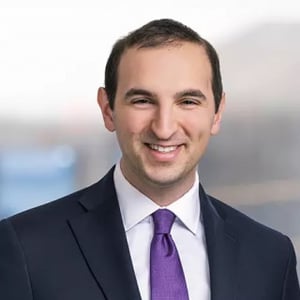
Associate, Covington & Burling LLP
Eli Nachmany is an associate at Covington & Burling LLP in the Washington, DC, office. He clerked for Judge Steven J. Menashi of the U.S. Court of Appeals for the Second Circuit. Eli graduated magna cum laude from Harvard Law School, where he was Editor-in-Chief of the Harvard Journal of Law & Public Policy. Prior to law school, Eli served as the speechwriter to the U.S. Secretary of the Interior and as a domestic policy aide in the White House Office of American Innovation. He graduated summa cum laude from New York University with a B.S. in Sports Management. Eli’s scholarship on administrative law and executive power has appeared in the BYU Law Review, George Mason Law Review, Wake Forest Law Review, and Yale Law Journal Forum.
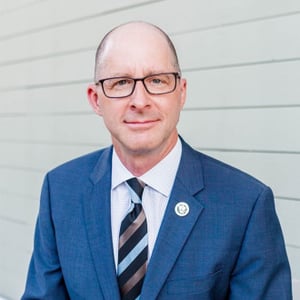
Judge, U.S. District Court for the Southern District of Texas
Hon. Charles Eskridge, Judge, United States District Court for the Southern District of Texas, Houston Division, was born in Cleveland, Ohio, and arrived in Houston, Texas, at the age of 11 with his parents in 1974.
Judge Eskridge received a B.S. from Trinity University and a J.D. from Pepperdine University School of Law. He served as a law clerk to Chief Judge Charles Clark of the United States Court of Appeals for the Fifth Circuit, as a law clerk to Justice Byron White of the Supreme Court of the United States, and as a special assistant to the Hon. Howard Holtzmann of the Iran/U.S. Claims Tribunal in The Hague.
From 1994 to 2019, Judge Eskridge was in private practice in Houston, Texas, litigating complex commercial disputes. He teaches Origins of the Federal Constitution at the University of Houston Law Center and has served as the Distinguished Visiting Practitioner of Law at the Pepperdine University School of Law.
President Donald J. Trump nominated him to the federal bench on May 3, 2019. Following confirmation by the Senate, Judge Eskridge took his seat on October 22, 2019.
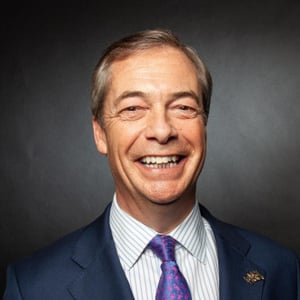
Former Member of the European Parliament, South East England Constituency
President, Congress of Catalan Culture Foundation
Michael Strubell was born in 1949 in Oxford (UK). His father was English and his mother was and still is Catalan. They met during her family´s exile in England following the Spanish Civil War.
He has a degree in Psychology and Physiology (PPP) from Oxford University, an M.Sc. in Psychology of Education from the Institute of Education, London University, and a degree in Psychology from the Universitat Autònoma de Barcelona, where he also received a Diploma in Advanced Studies.
His main fields of research have been language policy and planning and related topics, especially in the field of European minority languages.
He taught at international schools for eight years, before moving to Barcelona to work for the restored Catalan government (1980 to 1999), where he held several posts in the language planning agency, devoted to the promotion and recovery of Catalan. He is a member (and former secretary) of the Consell Social de la Llengua Catalana.
From 1999 to his retirement in 2014 he lectured at the UOC (Universitat Oberta de Catalunya) in Barcelona in language planning and sociolinguistics. He was deputy director of the Estudis d'Humanitats i Filologia, and from 2001 to 2004 he was the director of the Humanities degree programme. He was a co-author of the White Paper on the Humanities degree (2005) written for ANECA, Spain’s Universities quality agency. He was executive Secretary and later Director of the Linguamón-UOC Chair in Multilingualism (2009-2014).
He is author (or co-author) of dozens of academic papers, and of eight books, as well as several Reports for European institutions. He has sat on the editorial boards of four academic journals in the fields of language policy and sociolinguistics.
He has been a consultant for the Council of Europe and the Organisation for Security and Cooperation in Europe, for language-policy-related missions to Kazakhstan, Estonia, Latvia, Croatia, the Russian Federation and other countries. He helped draft several sets of “Recommendations” on the rights of National Minorities, for the OSCE, and coordinated half a dozen European research projects.
Outside the academic world he is a board member of several private foundations in the fields of language, culture and the handicapped.
Without ever being a member of a political party, he has been actively involved in the Catalan independence movement. He chaired Catalunya 2003, a political association calling for greater self-government (2002 - 2005). Since 2007 he has been a member of anotherplatform, Sobirania i Progrés, promoting the democratic path towards the freedom of the Catalan people. He was one of the founders, in 2009, of the Assemblea Nacional Catalana, a grassroots organisation working for Catalonia's independence. It grew rapidly to over 30,000 members and, since 2012, has organised historic rallies and marches, particularly on Catalonia’s National Day (September 11) each year.
He is married, has two sons and a daughter, and his main hobbies are mushroom hunting, listening to classical music and hill-walking. He lives with his wife between Barcelona and Palamós (on the Costa Brava).
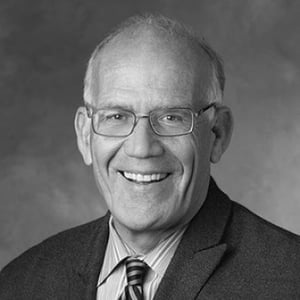
Martin and Illie Anderson Senior Fellow, Hoover Institution
Victor Davis Hanson is the Martin and Illie Anderson Senior Fellow at the Hoover Institution; his focus is classics and military history.
Hanson was a National Endowment for the Humanities fellow at the Center for Advanced Studies in the Behavioral Sciences, Stanford, California (1992–93), a visiting professor of classics at Stanford University (1991–92), the annual Wayne and Marcia Buske Distinguished Visiting Fellow in History at Hillsdale College (2004–), the Visiting Shifron Professor of Military History at the US Naval Academy (2002–3),and the William Simon Visiting Professor of Public Policy at Pepperdine University (2010).
In 1991 he was awarded an American Philological Association Excellence in Teaching Award. He received the Eric Breindel Award for Excellence in Opinion Journalism (2002), presented the Manhattan's Institute's Wriston Lecture (2004), and was awarded the National Humanities Medal (2007) and the Bradley Prize (2008).
Hanson is the author of hundreds of articles, book reviews, and newspaper editorials on Greek, agrarian, and military history and essays on contemporary culture. He has written or edited twenty-four books, the latest of which is The Case for Trump (Basic Books, 2019). His other books include The Second World Wars (Basic Books, 2017); The Savior Generals: How Five Great Commanders Saved Wars That Were Lost - from Ancient Greece to Iraq (Bloomsbury 2013); The End of Sparta (Bloomsbury, 2011); The Father of Us All: War and History, Ancient and Modern (Bloomsbury, 2010); Makers of Ancient Strategy: From the Persian Wars to the Fall of Rome (ed.) (Princeton, 2010); The Other Greeks (California, 1998); The Soul of Battle (Free Press, 1999); Carnage and Culture (Doubleday, 2001); Ripples of Battle (Doubleday, 2003); A War Like No Other (Random House, 2005); The Western Way of War (Alfred Knopf, 1989; 2nd paperback ed., University of California Press, 2000); The Wars of the Ancient Greeks (Cassell, 1999; paperback ed., 2001); and Mexifornia: A State of Becoming (Encounter, 2003), as well as two books on family farming, Fields without Dreams (Free Press, 1995) and The Land Was Everything (Free Press, 1998). Currently, he is a syndicated columnist for Tribune Media Services and a weekly columnist for the National Review Online.
Hanson received a BA in classics at the University of California, Santa Cruz (1975), was a fellow at the American School of Classical Studies, Athens (1977–78), and received his PhD in classics from Stanford University (1980).

Topics
What’s Next for Iran and Its Proxies?
Iran and Hamas have focused the world’s attention in one place. But while all eyes...
Topics
Live and Let LIV?
This post was originally published at Lawfare. For more than a year, the most important...
Topics
An American Leader of the International Telecommunication Union
Last month, for the first time in history, the world elected an American to head...
Topics
For Clarity on Cryptocurrency, Look to Congress or the Supreme Court
With the rapid growth of cryptocurrencies have come increasing calls for its regulation and both...
Topics
Let Me Vote Those Shares for You
From the Financial Times: The world’s largest asset manager [BlackRock] is set to allow big...
Topics
Former Senator Carl Levin’s Defense of the Filibuster
President Joe Biden’s announcement that he is open to reforming the Senate’s filibuster has energized...
Empowering the “Honest Broker”: Lessons Learned from the National Security Council Under President Donald J. Trump
Eli Nachmany
On September 18, 2019, Robert O’Brien took over as President Donald J. Trump’s National Security...
Topics
Why Rudy Giuliani Matters . . . and It Has Nothing to Do with Ukraine
Rudy Giuliani is a tragic figure. His painful appearances on Fox News and CNN in 2019...
What Is Magna Carta? [No. 86]
Charles R. Eskridge
When King John signed Magna Carta in 1215, he was responding to the demands of...
Secession: Sovereignty & Nationalism [POLICYbrief]
Nigel Farage, Michael Strubell, Victor Davis Hanson
With over two dozen active separatist movements in Europe alone, the concepts of sovereignty and...