
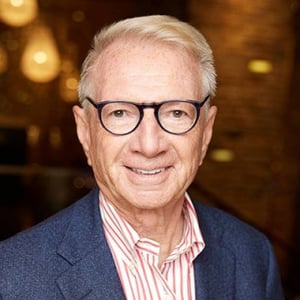
Senior Labor and Employment Counsel, CHRO Association
Roger King is a highly regarded labor relations attorney, whose career spans more than 40 years. Roger recently retired as a partner with Jones Day law firm. He now serves as Senior Labor and Employment counsel for the Association.
Roger specializes in labor and employment, healthcare, collective bargaining, contract administration and representation campaigns. Roger represented the winning side as co-counsel in the landmark U.S. Supreme Court case known as Noel Canning, which successfully challenged President Obama’s authority to make recess appointments to the National Labor Relations Board.
After graduating from Cornell University Law School, he was a Captain and Legal Services Officer in the United States Air Force, on the Staff of United States Senator Robert Taft, Jr. and, subsequently, was appointed as Professional Staff Counsel to the United States Senate Labor Committee.
Roger has testified before both the U.S. Senate and House Labor Committees, is a fellow of the College of Labor and Employment Lawyers, and serves on the Advocacy Committee of the American Society for Healthcare Human Resources Association (ASHHRA) and on the Executive Committee of the Ohio State Bar Association Labor and Employment Law Section Council.
He is a nationally recognized author/speaker on employment matters and has represented employers regarding labor and employment issues both before administrative agencies and in federal and state courts. He has represented the U.S. Chamber of Commerce, the Society for Human Resource Management (SHRM), the HR Policy Association (HRPA), the National Manufactures Association (NAM), the American Hospital Association (AHA), and the Coalition for a Democratic Workplace (CDW) in federal courts regarding numerous labor law issues.
Other clients Roger has represented include the Cleveland Clinic Foundation, Catholic Health Partners, MedStar Health, HCA, Texas Health Resources, Unity Point Health, UHS, Trinity Health, National Beef, General Cable, Orlando Health, ProMedica, Premier Health, Cedars-Sinai, Yale New Haven Health System, McLaren Health Care Corporation, Ohio, California and American Hospital Associations, Bon Secoure Health System, Kaleida Health, Sisters of Levenworth Health System, Lakeland Regional Medical Center, Clarion Clinic, Fisher-Titus Medical Center, Saint Joseph Health System, Benefis Healthcare, Community Health Systems, American Water Works, Macy’s Inc., Verizon and General Motors.
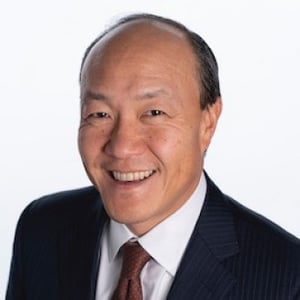
President, U.S. Chamber of Commerce Institute for Legal Reform
Harold H. Kim was elected president of the U.S. Chamber Institute for Legal Reform (ILR) in December 2019, after nearly 12 years of holding a senior leadership position within ILR. Under Kim, the Institute will continue to be a comprehensive, multifaceted global legal reform campaign with cutting-edge advocacy, research, communications, and voter education initiatives.
Kim is responsible for providing strategy, policy guidance, programmatic management, and leadership for ILR’s comprehensive program aimed at improving the nation’s litigation climate.
Before joining ILR, Kim was special assistant to the president in the White House Office of Legislative Affairs. There he served as former President George W. Bush’s liaison to the Senate on matters involving national security, the judiciary, civil justice reform, intellectual property, and criminal law enforcement. During his tenure, he helped win confirmation for several of President Bush’s judicial and executive nominees and worked closely with Congress to advance the administration’s policy priorities.
From 2003 to 2007, Kim served as counsel to the Senate Judiciary Committee, deputy chief counsel to the late ranking member Arlen Specter, and senior committee counsel for then-Chairman Orrin Hatch. During the passage of the 2005 Class Action Fairness Act, Kim was the committee’s chief civil counsel and advised Republican members during the bill’s committee markup and Senate floor action. He also advised committee members in the areas of asbestos, class action, medical malpractice, and bankruptcy litigation reform.
Prior to government service, Kim was a senior litigation associate at the Washington, D.C.-based law firm of Patton Boggs, LLP.
Kim is an elected member of the American Law Institute and the International Association of Defense Counsel. He is a graduate of the University of California, Irvine, and earned a J.D. from The Catholic University of America.
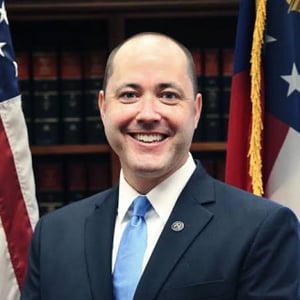
Attorney General, State of Georgia
Christopher M. Carr was appointed by Governor Nathan Deal and sworn into office as Georgia's 54th Attorney General on November 1, 2016. On November 6, 2018, Carr was elected by the people of Georgia to serve a full four-year term.
As Attorney General, Carr believes he has no more solemn duty than to protect and defend the Constitution of the United States, the Constitution and laws of the State of Georgia and the interests of the people of the State of Georgia. He also believes that his office must play a significant role in protecting Georgians. Since taking office in 2016, Carr has made it a priority to combat opioid misuse, gang violence, human trafficking, elder abuse and consumer fraud. He established and leads the Statewide Opioid Task Force – which now has more than 400 members – and the Georgia Anti-Gang Network – which is focused on strengthening multi-jurisdictional investigations and prosecutions. To help prevent our older, at-risk adults from falling victim to scams, Carr created the Georgia Consumer Protection Guide for Older Adults, and he works every day to make sure older, at-risk adults and all consumers are protected from exploitation in any form. Carr is also a champion for the state’s Sunshine Laws, working each day to ensure that government operates openly and transparently. In 2019, he announced the creation of the state's first-ever Human Trafficking Prosecution Unit at the Department of Law. Under his leadership, the unit will work with statewide partners to aggressively combat buyers and traffickers.
Carr appoints all members of the Georgia Consumer Advisory Board and is a member of the Georgia Board of Homeland Security. He served on Georgia’s Judicial Nominating Commission, the body charged with recommending candidates to the Governor to fill judicial vacancies, from 2011 through 2018, and the Executive Committee for the Georgia Older Adults Cabinet from 2016 - 2018. A dedicated member of the National Association of Attorneys General, Carr currently serves on the Human Trafficking, Substance Abuse and Presidential Initiative Committees (focused on elder abuse in 2017-18 and natural disasters in 2018-19) where he collaborates with his colleagues to shape the association's policies in these respective areas.
Carr previously served as Commissioner of the Georgia Department of Economic Development (GDEcD) under Governor Deal from November 2013 to November 2016. As Commissioner, Carr led the state agency responsible for creating jobs and investment in Georgia through business recruitment, retention and expansion, international trade and tourism, as well as the arts, film and music industries. During Carr's three-year tenure at GDEcD, the state of Georgia was recognized as the top state in the nation in which to do business for three consecutive years. In addition, GDEcD helped facilitate 1,069 projects across the state that represent approximately $14.4 billion in investment and the creation of more than 84,000 jobs. In 2015, GDEcD was recognized as the top economic development agency in the country.
Prior to joining GDEcD, Carr was Chief of Staff for U.S. Senator Johnny Isakson for six years. During his time in Washington, Carr advised the Senator on federal legislation, numerous judicial nominees for the U.S. Supreme Court and lower federal courts in Georgia and across the country.
Carr began his career with Georgia Pacific, then practiced law with Alston & Bird LLP in Atlanta and later served as Vice President and General Counsel for the Georgia Public Policy Foundation.
A graduate from the University of Georgia’s Terry College of Business and Lumpkin School of Law, Carr is admitted to practice law in Georgia.

Laurence A. Tisch Professor of Law and Director, Classical Liberal Institute, New York University School of Law; Senior Fellow, The Civitas Institute, University of Texas at Austin
Richard A. Epstein is the inaugural Laurence A. Tisch Professor of Law at NYU School of Law. Prior to his joining the faculty, he was a visiting law professor at NYU from 2007 through 2009. He served as the Peter and Kirstin Bedford Senior Fellow at the Hoover Institution from 2000 to 2024. Since 2024 to the present he is a senior lecturer at the Civitas Institute at the University of Texas—Austin. Epstein is also the James Parker Hall Distinguished Service Professor of Law Emeritus and a senior lecturer at the University of Chicago. His initial law school appointment was at the University of Southern California from 1968 to 1972. Epstein received an LL.D., h.c. from the University of Ghent, 2003. He has been a member of the American Academy of Arts and Sciences since 1985 and was a Senior Fellow of the Center for Clinical Medical Ethics at the University of Chicago Division of Biological Sciences, also from 1983. to 2022 He served as editor of the Journal of Legal Studies from 1981 to 1991, and of the Journal of Law and Economics from 1991-2001. From 2001 to 2010 he was a director of the John M. Olin Program in Law and Economics at the University of Chicago.
His newest book, The Myth of Birthright Citizenship: What the Fourteenth Amendment Really Says was published in 2026 (Encounter Books). Prior to that he has published many books including, The Dubious Morality of the Modern Administrative State (Roman & Littlefield 2020).Earlier he published th Classical Liberal Constitution: The Uncertain Quest for Limited Government (Harvard 2014) iHis previous books include Design for Liberty: Private Property, Public Administration and the Rule of Law (Harvard 2011); The Case Against the Employee Free Choice Act (Hoover 2009); Supreme Neglect: How to Revive the Constitutional Protection of Property Rights (Oxford 2008); Antitrust Decrees in Theory and Practice: Why Less is More (AEI 2007); Overdose: How Excessive Government Regulation Stifles Pharmaceutical Innovation (Yale University Press. 2006); How Progressives Rewrote the Constitution (Cato 2006); Cases and Materials on Torts (Aspen Law & Business; 8th ed. 2004); Skepticism and Freedom: A Modern Case for Classical Liberalism (University of Chicago, 2003); Torts (Aspen Law & Business 1999); Principles for a Free Society: Reconciling Individual Liberty with the Common Good (Perseus Books, 1998): Mortal Peril: Our Inalienable Rights to Health Care (Addison-Wesley, 1997); Simple Rules for a Complex World (Harvard, 1995); Bargaining With the State (Princeton, 1993); Forbidden Grounds: The Case Against Employment Discrimination Laws (Harvard , 1992); Takings: Private Property and the Power of Eminent Domain (Harvard, 1985); and Modern Products Liability Law (Greenwood Press, 1980). He has also edited(with Catherine M. Sharkey) Cases and Materials on the Law of Torts (10th edition 2012).
Professor Epstein has written numerous articles on a wide range of legal and interdisciplinary subjects. He has taught courses in administrative law, antitrust law, civil procedure, communications, constitutional law, contracts, corporations, criminal law, employment discrimination law, environmental law, food and drug law health law and policy, legal history, labor law, property, real estate development and finance, jurisprudence, labor law; land use planning, patents, individual, estate and corporate taxation, Roman Law; torts, and workers' compensation.
Professor Epstein also writes a regular column for Civitas Institute, which also sponsors his podcast, The Libertarian with Charles C.W. Cooke, and Law Talk, with Cooke and John Yoo. He also does a podcast with John Batchelor. And appears regularly on the Freedom File with Judge Andrew Napolitano.

Executive Director, Ohio Dental Association
David J. Owsiany is the executive director of the Ohio Dental Association and a past president of the Columbus Lawyers Chapter of the Federalist Society.
He has served as CEO of a statewide health care association, president of the Buckeye Institute, chief of policy for the Ohio Department of Insurance, judicial law clerk for the Illinois Appellate Court, and staffer on the United State Senate Judiciary Committee.
Mr. Owsiany has written dozens of articles on legal and public policy issues for various publications, including the University of Toledo Law Review, the Federalist Society's State Court Docket Watch, Columbus Dispatch, Cincinnati Enquirer, Crain’s Cleveland Business, and Akron Beacon Journal.
Owsiany received his J.D. from Washington University School of Law in St. Louis and B.A. from the University of Michigan in Ann Arbor.

COVID-19 Labor and Employment Teleforum Series #3
G. Roger King
Employers are increasingly being faced with difficult issues with respect to COVID-19, including challenging labor...
COVID Liability Issues
Harold H. Kim, Christopher M. Carr
COVID-19 has changed life as we know it in innumerable ways. But what can we...
Pacific Operators Offshore, LLP v. Valladolid - Post-Decision SCOTUScast
Richard A. Epstein
On January 11, 2012, the Supreme Court announced its decision in Pacific Operators Offshore LLP v....
The Ohio Supreme Court: A Court at the Crossroads
David J. Owsiany
The Ohio Supreme Court has actively engaged in a series of usurpations of legislative authority...