

President, Cass & Associates, PC
Ronald A. Cass is Dean Emeritus of Boston University School of Law (where he was Dean from 1990-2004), President of Cass & Associates, PC, former Vice-Chairman and Commissioner of the U.S. International Trade Commission, former faculty member at Boston University School of Law and the University of Virginia Law School, and Distinguished Senior Fellow at the C. Boyden Gray Center for the Study of the Administrative State. Dean Cass also sits as an arbitrator for commercial, international, and intellectual property rights disputes, and is a former United States member of the Panel of Conciliators of the International Centre for Settlement of Investment Disputes. He is a member of the Council of the Administrative Conference of the United States and has received seven presidential appointments, spanning Presidents Ronald Reagan to Donald J. Trump.
As a law professor, lecturer, and scholar, Dean Cass has been teaching and writing about a wide array of legal issues on topics such as administrative law and regulation, antitrust, constitutional law, communications, intellectual property, international trade, separation of powers, and legal process. He has published more than 160 scholarly books, chapters, articles, and papers, including a leading casebook on administrative law. Dean Cass has taught judges as well as students in schools of law, economics, business, and public policy and has held academic appointments in the United States, Europe, and Latin America.
In addition to his academic work, Dean Cass has participated in numerous important legal cases as an amicus, consultant, or expert, and has advised businesses, law firms, investment funds, and government agencies on a range of trade, antitrust, intellectual property, and regulatory issues. He has a broad range of affiliations with professional groups, and has received numerous honors, fellowships and awards.
Dean Cass is a graduate of the University of Virginia and the University of Chicago Law School.
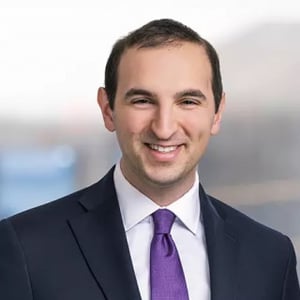
Associate, Covington & Burling LLP
Eli Nachmany is an associate at Covington & Burling LLP in the Washington, DC, office. He clerked for Judge Steven J. Menashi of the U.S. Court of Appeals for the Second Circuit. Eli graduated magna cum laude from Harvard Law School, where he was Editor-in-Chief of the Harvard Journal of Law & Public Policy. Prior to law school, Eli served as the speechwriter to the U.S. Secretary of the Interior and as a domestic policy aide in the White House Office of American Innovation. He graduated summa cum laude from New York University with a B.S. in Sports Management. Eli’s scholarship on administrative law and executive power has appeared in the BYU Law Review, George Mason Law Review, Wake Forest Law Review, and Yale Law Journal Forum.
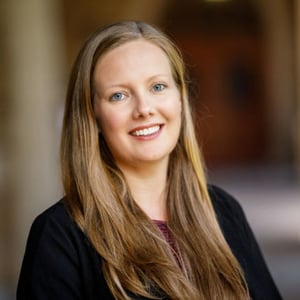
Professor of Law, University of Notre Dame Law School
Emily Bremer teaches and writes in the areas of administrative law, regulatory process, and civil procedure. Her scholarship focuses primarily on matters of procedural design, with a recent focus on the history and interpretation of the Administrative Procedure Act (APA). She is a recipient of the AALS’s award for the year’s best administrative law scholarship by a junior scholar and the AALL’s Joseph L. Andrew’s Legal Literature Award for her contribution to the Bremer-Kovacs Collection of Historical Documents Related to the APA (HeinOnline). Bremer’s articles include a defense forthcoming in the Virginia Law Review of the constitutionality of the APA’s regime for ensuring the competence and impartiality of Administrative Law Judges; a plea in the Yale Journal on Regulation for administrative law to take greater account of the on-the-ground reality of administration; twin articles uncovering the intellectual foundation and meaning of the APA’s adjudication and rulemaking provisions; and three separate studies that served as the basis of recommendations of the Administrative Conference of the United States (ACUS) on the subjects of agency declaratory orders, incorporation by reference, and statutory limitations on the jurisdiction of the Court of Federal Claims. Bremer serves as a Senior Fellow of ACUS, a co-editor of the administrative law section of Jotwell, and a regular contributor to the Yale Journal on Regulation’s Notice & Comment blog.
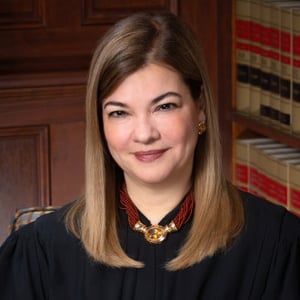
Judge, United States Court of Appeals, Eleventh Circuit
Judge Barbara Lagoa was born in Miami, Florida. She received her Bachelor of Arts cum laude in 1989 from Florida International University where she majored in English and was a member of the Phi Kappa Phi honor society. Judge Lagoa received her Juris Doctor from Columbia University School of Law in 1992, where she served as an Associate Editor of the Columbia Law Review. She is fluent in English and Spanish. On December 6, 2019, she received her commission as a judge on the U.S. Eleventh Circuit Court of Appeals from President Donald Trump.
On January 9, 2019, she became the first Hispanic woman and the first Cuban American woman appointed to serve on the Florida Supreme Court. Prior to her appointment by Governor Ron DeSantis to the Florida Supreme Court, Governor Jeb Bush appointed her in June of 2006 to serve on the Third District Court of Appeal. At that court, she became the first Hispanic woman and the first Cuban American woman appointed to serve on the Third District Court of Appeal. On January 1, 2019, she became the first Hispanic female Chief Judge of the Third District Court of Appeal.
Prior to joining the bench, Judge Lagoa practiced in both the civil and criminal arenas. Her civil practice at Greenberg Traurig focused on general and complex commercial litigation, particularly the areas of employment discrimination, business torts, securities litigation, construction litigation, and insurance coverage disputes. In 2003, she joined the United States Attorney’s Office for the Southern District of Florida as an Assistant United States Attorney, where she worked in the Civil, Major Crimes and Appellate Sections. As an Assistant United States Attorney, she tried numerous criminal jury trials, including drug conspiracies and Hobbs Act violations. She also handled a significant number of appeals.
While a practicing lawyer, Judge Lagoa was admitted to The Florida Bar, the United States District Courts for the Middle and Southern Districts of Florida, and the United States Court of Appeals for the Eleventh Circuit. She was also a member of many local, state, and national professional groups including the Dade County Bar Association, and the Florida Association for Women Lawyers.
Judge Lagoa’s civic and community activities include service on the Board of Directors for the YWCA of Greater Miami and Dade County, the Film Society of Miami, Kristi House, and the FIU Alumni Association. She was also a member of the Federal Judicial Nominating Commission. She is currently a member of the Eugene P. Spellman and William Hoeveler Chapter of the American Inns of Court.
Judge Lagoa is married to Paul C. Huck, Jr., an attorney. They have three daughters.
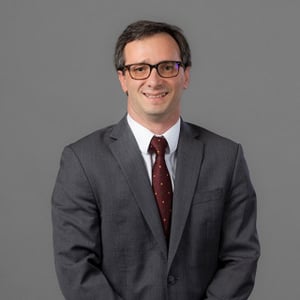
Assistant Professor of Law, George Mason University, Antonin Scalia Law School
Robert Leider is an Assistant Professor of Law at Antonin Scalia Law School, George Mason University. His scholarly interests are in criminal law, criminal procedure, and constitutional law, especially concerning questions about the use of force and the rule of law. He has written on the law of self-defense, the constitutional allocation of military power, and gun control. Among other places, he has published in the Florida Law Review (forthcoming), the Indiana Law Journal, and the Wall Street Journal.
Before joining Antonin Scalia Law School, Professor Leider was at Arnold & Porter in Washington, DC. He was previously with Mayer Brown LLP and was an Olin-Searle-Smith Fellow at the University of Pennsylvania Law School. He has clerked for Judge Diane S. Sykes, of the U.S. Court of Appeals for the Seventh Circuit, and Justice Clarence Thomas. Professor Leider earned a BA, summa cum laude, from The George Washington University, a JD from Yale Law School, and a PhD in Philosophy (dissertation defended with distinction) from Georgetown University. While at Yale, he served as an articles editor for the Yale Law Journal.
Professor Leider teaches criminal law and torts.
Judge, United States Court of Appeals, Sixth Circuit
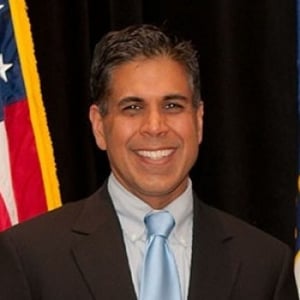
Amul R. Thapar serves as a judge on the United States Court of Appeals for the Sixth Circuit. His judicial career began in 2007 when President George W. Bush nominated him to serve on the Eastern District of Kentucky, making him the first South Asian Article III judge in American history. In 2017, he became President Donald J. Trump’s first appellate court nominee.
Before joining the bench, Judge Thapar served as the United States Attorney for the Eastern District of Kentucky. While United States Attorney, Judge Thapar worked on the Attorney General’s Advisory Committee (“AGAC”) and chaired the AGAC’s Controlled Substances and Asset Forfeiture subcommittee. He also served on the Terrorism and National Security subcommittee, the Violent Crime subcommittee, and the Child Exploitation working group.
Judge Thapar has worked in private practice, at Williams & Connolly in Washington, D.C., and Squire, Sanders & Dempsey in Cincinnati, Ohio. He also served as an Assistant United States Attorney in both the Southern District of Ohio and the District of Columbia.
Judge Thapar received his undergraduate degree from Boston College and his law degree from the University of California, Berkeley. After graduating, Judge Thapar worked as a law clerk to the Honorable S. Arthur Spiegel of the United States District Court for the Southern District of Ohio, and the Honorable Nathaniel R. Jones of the United States Court of Appeals for the Sixth Circuit.
Judge Thapar has also published in the Yale Law Journal, Michigan Law Review, and Catholic University Law Review. He teaches courses on originalism, the Federalists and Anti-Federalists, and legal writing at Notre Dame Law School, the University of Virginia School of Law, and Vanderbilt Law School.
Professor of History, Georgia Southern University
Johnathan O'Neill is Professor of History at Georgia Southern University. Professor O’Neill is the author of Originalism in American Law and Politics: A Constitutional History (2005) and Conservative Thought and American Constitutionalism Since the New Deal (2023).
Professor of Law, University of Notre Dame Law School
Emily Bremer teaches and writes in the areas of administrative law, regulatory process, and civil procedure. Her scholarship focuses primarily on matters of procedural design, with a recent focus on the history and interpretation of the Administrative Procedure Act (APA). She is a recipient of the AALS’s award for the year’s best administrative law scholarship by a junior scholar and the AALL’s Joseph L. Andrew’s Legal Literature Award for her contribution to the Bremer-Kovacs Collection of Historical Documents Related to the APA (HeinOnline). Bremer’s articles include a defense forthcoming in the Virginia Law Review of the constitutionality of the APA’s regime for ensuring the competence and impartiality of Administrative Law Judges; a plea in the Yale Journal on Regulation for administrative law to take greater account of the on-the-ground reality of administration; twin articles uncovering the intellectual foundation and meaning of the APA’s adjudication and rulemaking provisions; and three separate studies that served as the basis of recommendations of the Administrative Conference of the United States (ACUS) on the subjects of agency declaratory orders, incorporation by reference, and statutory limitations on the jurisdiction of the Court of Federal Claims. Bremer serves as a Senior Fellow of ACUS, a co-editor of the administrative law section of Jotwell, and a regular contributor to the Yale Journal on Regulation’s Notice & Comment blog.
Judge, United States Court of Appeals, Eleventh Circuit
Judge Barbara Lagoa was born in Miami, Florida. She received her Bachelor of Arts cum laude in 1989 from Florida International University where she majored in English and was a member of the Phi Kappa Phi honor society. Judge Lagoa received her Juris Doctor from Columbia University School of Law in 1992, where she served as an Associate Editor of the Columbia Law Review. She is fluent in English and Spanish. On December 6, 2019, she received her commission as a judge on the U.S. Eleventh Circuit Court of Appeals from President Donald Trump.
On January 9, 2019, she became the first Hispanic woman and the first Cuban American woman appointed to serve on the Florida Supreme Court. Prior to her appointment by Governor Ron DeSantis to the Florida Supreme Court, Governor Jeb Bush appointed her in June of 2006 to serve on the Third District Court of Appeal. At that court, she became the first Hispanic woman and the first Cuban American woman appointed to serve on the Third District Court of Appeal. On January 1, 2019, she became the first Hispanic female Chief Judge of the Third District Court of Appeal.
Prior to joining the bench, Judge Lagoa practiced in both the civil and criminal arenas. Her civil practice at Greenberg Traurig focused on general and complex commercial litigation, particularly the areas of employment discrimination, business torts, securities litigation, construction litigation, and insurance coverage disputes. In 2003, she joined the United States Attorney’s Office for the Southern District of Florida as an Assistant United States Attorney, where she worked in the Civil, Major Crimes and Appellate Sections. As an Assistant United States Attorney, she tried numerous criminal jury trials, including drug conspiracies and Hobbs Act violations. She also handled a significant number of appeals.
While a practicing lawyer, Judge Lagoa was admitted to The Florida Bar, the United States District Courts for the Middle and Southern Districts of Florida, and the United States Court of Appeals for the Eleventh Circuit. She was also a member of many local, state, and national professional groups including the Dade County Bar Association, and the Florida Association for Women Lawyers.
Judge Lagoa’s civic and community activities include service on the Board of Directors for the YWCA of Greater Miami and Dade County, the Film Society of Miami, Kristi House, and the FIU Alumni Association. She was also a member of the Federal Judicial Nominating Commission. She is currently a member of the Eugene P. Spellman and William Hoeveler Chapter of the American Inns of Court.
Judge Lagoa is married to Paul C. Huck, Jr., an attorney. They have three daughters.
Assistant Professor of Law, George Mason University, Antonin Scalia Law School
Robert Leider is an Assistant Professor of Law at Antonin Scalia Law School, George Mason University. His scholarly interests are in criminal law, criminal procedure, and constitutional law, especially concerning questions about the use of force and the rule of law. He has written on the law of self-defense, the constitutional allocation of military power, and gun control. Among other places, he has published in the Florida Law Review (forthcoming), the Indiana Law Journal, and the Wall Street Journal.
Before joining Antonin Scalia Law School, Professor Leider was at Arnold & Porter in Washington, DC. He was previously with Mayer Brown LLP and was an Olin-Searle-Smith Fellow at the University of Pennsylvania Law School. He has clerked for Judge Diane S. Sykes, of the U.S. Court of Appeals for the Seventh Circuit, and Justice Clarence Thomas. Professor Leider earned a BA, summa cum laude, from The George Washington University, a JD from Yale Law School, and a PhD in Philosophy (dissertation defended with distinction) from Georgetown University. While at Yale, he served as an articles editor for the Yale Law Journal.
Professor Leider teaches criminal law and torts.
Judge, United States Court of Appeals, Sixth Circuit
Amul R. Thapar serves as a judge on the United States Court of Appeals for the Sixth Circuit. His judicial career began in 2007 when President George W. Bush nominated him to serve on the Eastern District of Kentucky, making him the first South Asian Article III judge in American history. In 2017, he became President Donald J. Trump’s first appellate court nominee.
Before joining the bench, Judge Thapar served as the United States Attorney for the Eastern District of Kentucky. While United States Attorney, Judge Thapar worked on the Attorney General’s Advisory Committee (“AGAC”) and chaired the AGAC’s Controlled Substances and Asset Forfeiture subcommittee. He also served on the Terrorism and National Security subcommittee, the Violent Crime subcommittee, and the Child Exploitation working group.
Judge Thapar has worked in private practice, at Williams & Connolly in Washington, D.C., and Squire, Sanders & Dempsey in Cincinnati, Ohio. He also served as an Assistant United States Attorney in both the Southern District of Ohio and the District of Columbia.
Judge Thapar received his undergraduate degree from Boston College and his law degree from the University of California, Berkeley. After graduating, Judge Thapar worked as a law clerk to the Honorable S. Arthur Spiegel of the United States District Court for the Southern District of Ohio, and the Honorable Nathaniel R. Jones of the United States Court of Appeals for the Sixth Circuit.
Judge Thapar has also published in the Yale Law Journal, Michigan Law Review, and Catholic University Law Review. He teaches courses on originalism, the Federalists and Anti-Federalists, and legal writing at Notre Dame Law School, the University of Virginia School of Law, and Vanderbilt Law School.
Harry Kalven, Jr. Professor of Law & Faculty Director, Constitutional Law Institute, University of Chicago Law School
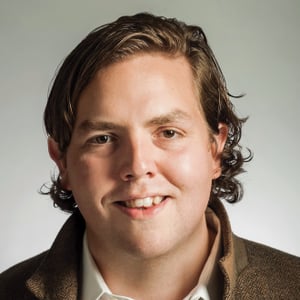
William Baude is a Professor of Law and the Faculty Director of the Constitutional Law Institute at the University of Chicago Law School, where he teaches federal courts, constitutional law, and conflict of laws. His current research interests include different aspects of the Fourteenth Amendment (particularly both Section One and Section Three) and the nature of judicial discretion.
Among his other activities Baude is: the co-editor of two textbooks, The Constitution of the United States and Hart & Wechsler's Federal Courts in the Federal System; an Affiliated Scholar at the Center for the Study of Constitutional Originalism; a founding member of the Academic Freedom Alliance; a member of the American Law Institute; an occasional blogger at The Volokh Conspiracy; and a podcaster on Divided Argument. He also recently served on the Presidential Commission on the Supreme Court of the United States.
Professor Baude received his BS in Mathematics from the University of Chicago and his JD from Yale Law School. He then clerked for then-Judge Michael McConnell on the United States Court of Appeals, and Chief Justice John Roberts on the United States Supreme Court. Before joining the Chicago faculty, he was a fellow at the Stanford Constitutional Law Center, and a lawyer in Washington, DC.

Professor of Law, South Texas College of Law Houston
Josh Blackman is a national thought leader on constitutional law and the United States Supreme Court. Josh’s work was quoted during two presidential impeachment trials. He has testified before Congress and advises federal and state lawmakers. Josh regularly appears on TV, including NBC, CBS, ABC, Fox, and the BBC. Josh is also a frequent guest on NPR and other syndicated radio programs. He has published commentaries in the New York Times, Wall Street Journal, Washington Post, and leading national publications.
Since 2012, Josh has served as a professor at the South Texas College of Law Houston. He holds the Centennial Chair of Constitutional Law. Josh is an Adjunct Fellow at the Manhattan Institute. Josh has written more than seven dozen law review articles that have been cited more than a thousand times. Josh was selected as the Jurist of the Year by the Texas Journal of Law & Public Policy, received the inaugural Meese III Originalism Award, and was awarded the Inaugural Joseph Story Award. Josh was selected by Forbes Magazine for the “30 Under 30” in Law and Policy. Josh is the President of the Harlan Institute, and founded FantasySCOTUS, the Internet’s Premier Supreme Court Fantasy League. He blogs at the Volokh Conspiracyand posts@JoshMBlackman.
Professor of Law, South Texas College of Law Houston
Josh Blackman is a national thought leader on constitutional law and the United States Supreme Court. Josh’s work was quoted during two presidential impeachment trials. He has testified before Congress and advises federal and state lawmakers. Josh regularly appears on TV, including NBC, CBS, ABC, Fox, and the BBC. Josh is also a frequent guest on NPR and other syndicated radio programs. He has published commentaries in the New York Times, Wall Street Journal, Washington Post, and leading national publications.
Since 2012, Josh has served as a professor at the South Texas College of Law Houston. He holds the Centennial Chair of Constitutional Law. Josh is an Adjunct Fellow at the Manhattan Institute. Josh has written more than seven dozen law review articles that have been cited more than a thousand times. Josh was selected as the Jurist of the Year by the Texas Journal of Law & Public Policy, received the inaugural Meese III Originalism Award, and was awarded the Inaugural Joseph Story Award. Josh was selected by Forbes Magazine for the “30 Under 30” in Law and Policy. Josh is the President of the Harlan Institute, and founded FantasySCOTUS, the Internet’s Premier Supreme Court Fantasy League. He blogs at the Volokh Conspiracyand posts@JoshMBlackman.
Professor of Law & Helen L. Crocker Faculty Scholar, Stanford Law School
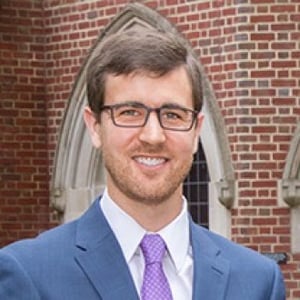
Jud Campbell joined the faculty of Stanford Law School in 2023. He previously served as a professor of law at the University of Richmond School of Law and as a visiting professor of law at the University of Chicago Law School and at Harvard Law School. His academic focus is constitutional history and First Amendment law. His publications include articles in the Stanford Law Review, Yale Law Journal, Harvard Law Review, Texas Law Review, Constitutional Commentary, and Law and History Review. After completing his J.D. at Stanford Law School, he clerked for Judge Diane S. Sykes on the U.S. Court of Appeals for the Seventh Circuit, and for Judge José A. Cabranes on the U.S. Court of Appeals for the Second Circuit. He then served as the Executive Director of the Stanford Constitutional Law Center. He holds a bachelor’s degree from the University of North Carolina at Chapel Hill and two master’s degrees from the London School of Economics, where he studied as a Marshall Scholar.
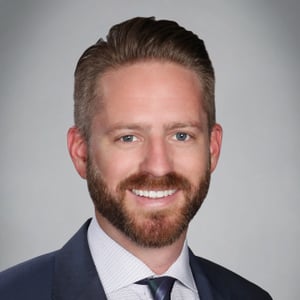
Andrew DeLoach received his B.A. in Literature from the University of California, San Diego. He earned his J.D. from California Western School of Law in San Diego. While there, he competed with the Trial Team and served as Vice President of the Federalist Society. After law school, Professor DeLoach attended the International Academy of Apologetics, Evangelism & Human Rights in Strasbourg, France, and became a Fellow of the Academy. From 2009–2012, he hosted a radio program discussing Christian apologetics, world religions. He has published articles in the Journal of Christian Legal Thought, Public Discourse, and Modern Reformation, and co-authored a book chapter titled “Myth and Resurrection,” in The Resurrection Fact: Responding to Modern Critics (New Reformation Press, 2016). His teaching and research interests include human rights and international law, religious freedom, philosophy of law, law, and literature, and law, religion, and culture. Professor DeLoach practiced in civil litigation and appeals for several years before opening his own practice specializing in estate planning and probate. He teaches courses in International Human Rights; International Law; Constitutional Law; and Jurisprudence. He is Director and Professor of the summer International Human Rights program in The Hague, Netherlands, and Strasbourg, France. Prof. DeLoach also oversees the Human Rights track of the MLS program, for which he has created and taught courses in International Human Rights Law, Philosophy and Theology of Justice, and The Law of Genocide. He also teaches at Chapman University (M.A. and School of Law), and has taught in the Department of History and Political Thought at Concordia University, Irvine.
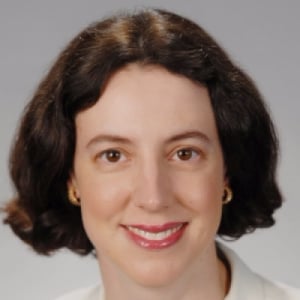
Donald Phillip Rothschild Research Professor, George Washington University Law School
Renée Lettow Lerner is Donald Phillip Rothschild Research Professor of Law at George Washington University Law School.
Professor Lerner works in the fields of U.S. and English legal history, civil and criminal procedure, and comparative law. She advises judges, lawyers, and government officials from the United States and countries in Europe, Latin America, and Asia about the differences between adversarial and nonadversarial legal systems.
She writes extensively about the history of American juries. Her work includes not only scholarly articles, but also online publications intended for a broader audience of legal professionals and the public. In many different settings, she has debated the role of juries with other academics and with lawyers. She has a book forthcoming with Oxford University Press in the Very Short Introduction Series entitled “The Jury.” She is also working on a book about the American civil jury, from the colonial period to the present.
She is the author, with John Langbein and Bruce Smith, of the book History of the Common Law: The Development of Anglo-American Legal Institutions (2009).
Her recent writings include a book review of Amalia D. Kessler’s Inventing American Exceptionalism: The Origins of American Adversarial Legal Culture, 1800-1877, 67 J. Legal Ed. 888 (2018); “How the Creation of Appellate Courts in England and the United States Limited Judicial Comment on Evidence to the Jury,” 40 Journal of the Legal Profession 215 (2016); “The Troublesome Inheritance of Americans in Magna Carta and Trial by Jury,” in Magna Carta and its Modern Legacy 77-98 (Robert Hazell and James Melton eds., Cambridge University Press 2015); and “The Failure of Originalism in Preserving Constitutional Rights to Civil Jury Trial,” 22 William & Mary Bill of Rights Journal 811 (2014).
Professor Lerner received an A.B. summa cum laude in history from Princeton University. She was a Rhodes Scholar at Oxford University, where she studied English legal history. At Yale Law School, she was Articles Editor of the Yale Law Journal. She served as a law clerk to Justice Anthony M. Kennedy of the U.S. Supreme Court and to Judge Stephen F. Williams of the U.S. Court of Appeals for the District of Columbia Circuit. From 2003 to 2005, she served as Deputy Assistant Attorney General in the Office of Legal Counsel at the U.S. Department of Justice.
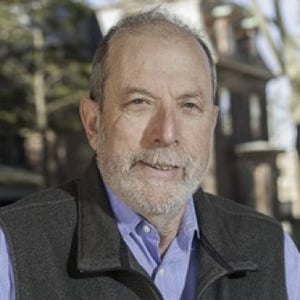
Distinguished Professor of Law, Rutgers Law School
Earl Maltz is a Distinguished Professor and the author of two books and more than 50 articles on constitutional law, statutory interpretation, the role of the courts and legal history. He teaches constitutional law, employment discrimination, conflicts of law and a seminar on the Supreme Court.
Professor Maltz is the author of Rethinking Constitutional Law: Originalism, Interventionism, and the Politics of Judicial Review (1994), Civil Rights, The Constitution and Congress, 1863-1865 (1990), and over 50 articles on constitutional law, statutory interpretation, the role of the courts and legal history. He received his B.A. from Northwestern University, where he was elected to Phi Beta Kappa, and his J.D. cum laude from Harvard. Professor Maltz teaches Constitutional Law, Employment Discrimination, Conflicts of Law, and a seminar on the Supreme Court.
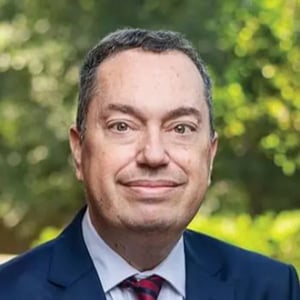
Professor of Law, University of Alabama School of Law
Professor Rosen received his LLM with honors from the University of London, London School of Economics, in 1997, his JD from Yale Law School in 1994, and his BS from Cornell University, School of Industrial and Labor Relations, in 1991 as a Merill Presidential Scholar. He served as a Senior Editor of the Yale Law Journal and an Editor of the Yale Journal of International Law. Upon graduation from Yale, he clerked for the Honorable Edward E. Carnes of the U.S. Court of Appeals for the Eleventh Circuit in Montgomery, Alabama. From 1995 to 1996, he was an associate with the Washington, D.C. firm of Fried, Frank, Harris, Shriver & Jacobson. From 1998 to 2002, he worked in Washington, D.C. for the U.S. Securities and Exchange Commission's Division of Market Regulation, where he achieved the rank of Special Counsel. During his time at the Commission, he provided counsel on matters before the President's Working Group on Financial Markets, aided the restoration of financial markets following the terrorist attacks of September 11, 2001, assisted with legislative drafting, and worked on matters including foreign market access, financial derivatives, market structure, and the regulation of exchanges and over-the-counter markets. While at the SEC, Professor Rosen received the Commission's Law and Policy Award and the Manuel F. Cohen Award from the Securities Law Committee of the Federal Bar Association. Before arriving at the University of Alabama, he served as the first Fellow for the Fordham University School of Law's Center for Corporate, Securities and Financial Law in New York City. He has spoken both in the United States and abroad at events sponsored by such organizations as the Association of American Law Schools, the American Society of International Law, the Law and Society Association, the Southeastern Association of Law Schools, Futures Industry Association, the Small Business Committee of the American Bar Association's Section on Business Law, the Washington Campus, National Regulatory Services, and the United Kingdom's City and Financial Conferences.
Professor Rosen has taught multiple courses at the law school including business organizations, securities regulation, international business transactions, economy in crisis (public policy-making role-playing simulation course), integrated financial regulation (banking, commodities, securities, and insurance law), and conflict of laws. He also holds a courtesy appointment in the Department of Economics, Finance, and Legal Studies at The University of Alabama’s Culverhouse College of Commerce and Business Administration and has been appointed to The University of Alabama Graduate School faculty in connection with his work on PhD dissertation committees. His focus on inter-disciplinary matters also has led to his membership in organizations such as the American Economic Association, American Finance Association, and American Law and Economics Association. He has advised The Journal of the Legal Profession and was awarded the Edward M. Friend Jr. Award in the year he coached the law school's team to its first appearance in the national final rounds as a super-regional champion in the American Bar Association's National Appellate Advocacy Competition. He has served as Director of the law school's successful judicial clerkship program, and the law school's students selected him for the 2007-2008 Outstanding Faculty Member Award.
Since joining the legal academy, Professor Rosen continues his public policy work and has advised federal and state government officials. His expertise is sought in various contexts. For example, he has testified before the Committee on Financial Services of the United States House of Representatives. Professor Rosen also currently serves as a Uniform Law Commissioner. He was appointed to represent Alabama on the Uniform Law Commission by the Governor for a term of service that runs to April 4, 2023.
Professor Rosen also continues to be involved in legal matters around the globe. He has advised on business law curricula in Ethiopia and has been selected to teach courses at Australia National University in Canberra, Pusan National University in Korea, and the University of Fribourg in Switzerland. He has served as Director of the law school's exchange program with the University of Fribourg. In addition, he has served as a Corresponding Editor for the American Society of International Law's International Legal Materials and as Co-Chair of ASIL’s Teaching International Law Interest Group. His work for the American Bar Association has included service to the Section of International Law and Practice. His interest in development issues also has led to his participation in the World Bank's Law, Justice, and Development Week program and the International Finance Corporation's Doing Business Project. Moreover, he has served as a member of the Board of Directors of the American Society of Comparative Law and has been selected to be the United States Reporter on Company Law and the Law of Succession for the Congress of the Academy of International Comparative Law in Vienna, Austria.
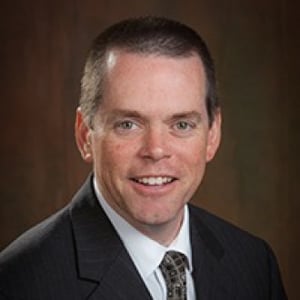
Associate Professor of Law,, St. Thomas University College of Law

Topics
Illegitimate Attacks on the Court’s Legitimacy
This post originally appeared at Law & Liberty. Journalists and professors have formed a ululating...
The Curtain Falls on Chevron: Will the Chevron Two-Step Give Way to a Simpler Loper Bright-Line Rule?
Ronald A. Cass
Traditionally, administrative law cases don’t make news. Instead, they make snooze. They can be exciting...
Massachusetts Supreme Judicial Court Sides with Government in Nondelegation Case
Eli Nachmany
In Robinhood Financial LLC v. Secretary of Commonwealth, the Massachusetts Supreme Judicial Court sided...
Panel I: What is General Common Law and How do Originalist/Textualist Judges Use It?
Emily Bremer, Barbara Lagoa, Robert Leider, Amul R. Thapar
Justice Antonin Scalia succeeded in making textualism the predominant method of legal interpretation. But now...
Panel I: What is General Common Law and How do Originalist/Textualist Judges Use It?
2024 Florida Chapters Conference
Kissimmee, FLA Debate with Professor Will Baude and Professor Josh Blackman
Chicago Lawyers Chapter
Chicago, ILTopics
2023 National Lawyers Convention: Insurrection & the 14th Amendment
Editor's Note: On December 19th, 2023 the Colorado Supreme Court ruled that Former President Donald Trump...
7 Minute Presentations of Works in Progress Panel 2-A
Washington, DC25th Annual Federalist Society Faculty Conference
Washington, DCA Deeper Originalism: From Court-Centered Jurisprudence to Constitutional Self-Government
Johnathan O'Neill
Originalism has substantially reoriented constitutional discourse since it first reemerged in response to the Warren...