
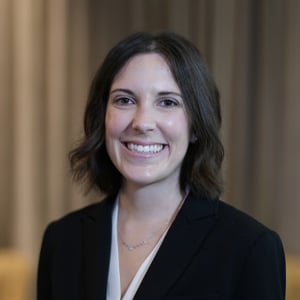
Director, Faculty Relations, The Federalist Society
Katie McClendon is the Director of Faculty Relations at the Federalist Society, where she has worked since 2015.
Katie holds a J.D. from the University of Pennsylvania Law School and a B.A. in Political Science from Biola University, where she was a member of the Torrey Honors Institute. She is a fellow of the John Jay Institute and the Blackstone Legal Fellowship. Katie is originally from Los Angeles, and she now lives with her husband and four children in Atlanta.

Thomas M. Siebel Senior Fellow, The Hoover Institution, Stanford University; Gary T. Schwartz Distinguished Professor of Law Emeritus, UCLA School of Law
Eugene Volokh is the Thomas M. Siebel Senior Fellow at the Hoover Institution (Stanford), as well as the Gary T. Schwartz Distinguished Professor of Law Emeritus and Distinguished Research Professor at UCLA School of Law. He recently retired from teaching at UCLA, after 30 years there, and is now focusing on research.
Volokh is the author of the textbooks The First Amendment and Related Statutes (8th ed. 2023), and Academic Legal Writing (5th ed. 2016), as well as over 100 academic law journal articles, mostly on First Amendment law. He is a member of The American Law Institute; the editor-in-chief of the Journal of Free Speech Law; and the creator and coauthor of The Volokh Conspiracy, a leading legal blog founded in 2002 (hosted at the Washington Post from 2014 to 2017 and now at Reason Magazine).

Professor of Law, Northwestern University Pritzker School of Law
Joshua Kleinfeld teaches and writes about political, legal, and moral philosophy, criminal law, and criminal procedure. He also practices law in Northwestern's Juvenile Criminal Defense Clinic. He is a full professor with tenure at the Northwestern Pritzker School of the Law and (by courtesy) in Northwestern’s philosophy department. In 2017-18, he was a visiting professor at Harvard and Stanford Law Schools. He is the recipient of the Bator Award, given annually to one American law professor under the age of 40 who has demonstrated "excellence in legal scholarship, a commitment to teaching, a concern for students, and who has made a significant public impact."
In philosophy, Kleinfeld's research focuses on the idea of "embodied ethical life," as developed in the socio-theoretic tradition of Hegel, Weber, and Durkheim. This tradition aims to understand and critique social life by bringing to light the normative ideas implicit in social practices and institutions. In law, this means that the most interesting philosophical concepts are often those reflected or actualized in legal practice – in the law as judges and lawyers think of it and wield it.
In criminal law and procedure, Kleinfeld has developed a theory known as "reconstructivism," which holds that the chief office of criminal law is not to dole out retributive justice, nor to optimize crime and cost control, but to reconstruct a violated normative order in the wake of a crime. This work, which draws on the thought of Hegel, Durkheim, Jean Hampton, and Antony Duff, develops an alternative to retributive and utilitarian theories of criminal law by focusing on the distinctive social function and sense of justice at work in the criminal system.
Kleinfeld is also involved in practical criminal justice reform. In this vein, he defends children accused of homicide in the Northwestern Juvenile Criminal Defense clinic and assists in litigation efforts meant to reform American criminal law through the courts. He has also developed a view of criminal justice reform known as "democratization," which holds that the root of the American criminal justice crisis is a set of bureaucratic attitudes, structures, and incentives divorced from the American public’s concerns and sense of justice, and that the primary solution is to make criminal justice more community-focused and responsive to lay influences. Working with others, he has developed a number of policy proposals meant to reform American criminal justice in a democratic direction.
Kleinfeld holds a JD from Yale Law School, a PhD in philosophy from the Goethe University of Frankfurt (supervised by Axel Honneth, Klaus Günther, and Rainer Forst), and a BA in philosophy from Yale College. He clerked for Judge J. Harvie Wilkinson on the United States Court of Appeals for the Fourth Circuit; Judge Janice Rogers Brown on the United States Court of Appeals for the D.C. Circuit; and President (chief justice) Aharon Barak of the Supreme Court of Israel. He worked as an Associate at Debevoise & Plimpton LLP in Frankfurt, Germany, in the area of corporate criminal law. Before law school, he worked as a Senior Research Analyst at the White House’s Council on Bioethics.

Maurice A. Deane Distinguished Professor of Constitutional Law and Faculty Director of International Programs, Hofstra University School of Law
Professor Ku’s primary research interest is the relationship of international law to constitutional law. He has also conducted academic research on a wide range of topics including international dispute resolution, international criminal law, and China’s relationship with international law. He teaches courses such as U.S. constitutional law, U.S. foreign affairs law, transnational law, and international trade and business law. Since 2014, he has served as the faculty director of international programs, overseeing Hofstra Law’s study abroad, exchange and LL.M. programs. Professor Ku also teaches Constitutional Law in our online degree programs: Master of Laws in American Law and Master of Arts in American Legal Studies. He has also been selected as the John DeWitt Gregory Research Scholar and as a Hofstra Law Research Fellow. He is a member of the American Law Institute.
He is the co-author, with John Yoo, of Taming Globalization: International Law, the U.S. Constitution, and the New World Order (Oxford University Press 2012). He also has published more than 40 law review articles, book chapters and symposia essays. He has given dozens of academic lectures and workshops at major universities and conferences in the United States, Europe and Asia.
He co-founded the leading international law weblog Opinio Juris, which is read daily by thousands worldwide. His essays and op-eds have been published in major news publications such as the Wall Street Journal, the Los Angeles Times, and the NYTimes.com. He has been frequently interviewed for television news programs and quoted in print and electronic media. He has also signed or submitted amicus briefs to national and international courts and served as an expert witness in both domestic and international proceedings.
Before joining the Hofstra Law faculty, Professor Ku served as a law clerk to the Honorable Jerry E. Smith of the U.S. Court of Appeals for the Fifth Circuit and as an Olin Fellow and Lecturer in Law at the University of Virginia Law School. Professor Ku also practiced as an associate at the New York City law firm of Debevoise & Plimpton, specializing in litigation and arbitration arising out of international disputes. He has been a visiting professor at the College of William & Mary Marshall- Wythe School of Law in Williamsburg, Virginia; a Fulbright Distinguished Lecturer in Law at East China University of Political Science and Law in Shanghai, China; and a Taiwan Fellow at National Taiwan University in Taipei, Taiwan. He is a member of the New York Bar and a graduate of Yale College and Yale Law School.

Senior Fellow and Director of Constitutional Studies, Manhattan Institute
Ilya Shapiro is a senior fellow and director of constitutional studies at the Manhattan Institute and a contributing editor of City Journal. Previously he was executive director and senior lecturer at the Georgetown Center for the Constitution, and before that a vice president of the Cato Institute.
Shapiro is the author of Lawless: The Miseducation of America’s Elites (2025) and Supreme Disorder: Judicial Nominations and the Politics of America’s Highest Court (2020), coauthor of Religious Liberties for Corporations? (2014), and editor of 11 volumes of the Cato Supreme Court Review (2008-18). He has contributed to a variety of academic, popular, and professional publications, including the Wall Street Journal, Harvard Journal of Law & Public Policy, Washington Post, Los Angeles Times, USA Today, National Review, and Newsweek. He also regularly provides commentary for various media outlets, writes the Shapiro’s Gavel newsletter on Substack, and once appeared on the Colbert Report.
Shapiro has testified many times before Congress and state legislatures and has filed more than 500 amicus curiae “friend of the court” briefs in the Supreme Court. He lectures regularly on behalf of the Federalist Society, is a member of the board of fellows of the Jewish Policy Center, was an inaugural Washington Fellow at the National Review Institute, and has been an adjunct law professor at the George Washington University and University of Mississippi. He is also the chairman of the board of advisers of the Mississippi Justice Institute, a barrister in the Edward Coke Appellate Inn of Court, and a former member of the Virginia Advisory Committee to the U.S. Commission on Civil Rights.
Earlier in his career, Shapiro was a special assistant/adviser to the Multi-National Force in Iraq on rule-of-law issues and practiced at Patton Boggs and Cleary Gottlieb. Before entering private practice, he clerked for Judge E. Grady Jolly of the U.S. Court of Appeals for the Fifth Circuit. He holds an AB from Princeton University, an MSc from the London School of Economics, and a JD from the University of Chicago Law School.
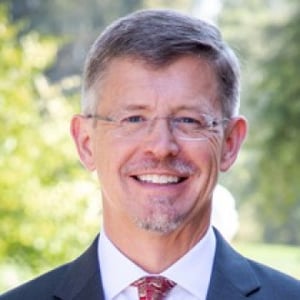
John D. Ayer Chair in Business Law and Martin Luther King Jr. Professor of Law, UC Davis School of Law
Professor Dodge is a leading expert on international law, international transactions, and international dispute resolution. He served as Counselor on International Law to the Legal Adviser at the U.S. Department of State from 2011 to 2012 and as Co-Reporter for the American Law Institute’s Restatement (Fourth) of Foreign Relations Law from 2012 to 2018. He is currently a member of the State Department’s Advisory Committee on International Law and an Adviser to the American Law Institute’s Restatement (Third) of the Conflict of Laws.
Professor Dodge is co-author (with Detlev Vagts, Hannah Buxbaum, and Harold Koh) of the casebook Transnational Business Problems (6th ed. Foundation Press 2019) and co-editor (with David Sloss and Michael Ramsey) of International Law in the U.S. Supreme Court: Continuity and Change (Cambridge University Press 2011), which won the American Society of International Law’s 2012 certificate of merit. He has more than 60 other publications in books and law reviews, including the Columbia Law Review, the Duke Law Journal, the Georgetown Law Journal, the Harvard Law Review, the Michigan Law Review, and the Yale Law Journal. The U.S. Supreme Court and the Supreme Court of Canada have relied on his work, as have state courts and lower federal courts in the United States.
Professor Dodge teaches International Business Transactions, International Litigation and Arbitration, Conflict of Laws, and Contracts. He has won the Rutter Distinguished Teaching Award both at UC Davis and at UC Hastings, where he was previously Roger J. Traynor Professor of Law.
Professor Dodge received his B.A. in History, summa cum laude, from Yale University in 1986. After teaching English in Tianjin, China, he attended Yale Law School, where he was a Notes Editor of the Yale Law Journal, served as Director of the Lowenstein International Human Rights Project, and earned his J.D. in 1991. Professor Dodge clerked for Judge William A. Norris of the U.S. Court of Appeals for the Ninth Circuit and for Justice Harry A. Blackmun of the U.S. Supreme Court. From 1993 to 1995, he was an attorney at Arnold & Porter in Washington, D.C.
He is a member of the American Law Institute.
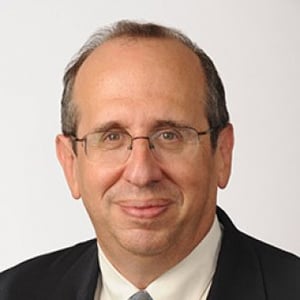
Director and Senior Fellow, Berkeley Center for Law and Technology, University of California at Berkeley
Mark Cohen heads the Asia IP Project at the Berkeley Center for Law and Technology at Berkeley Law School. He is also responsible for teaching international trade law and research and writing on IP issues. Previously, Cohen was Senior Counsel, China in the Office of Policy and International Affairs at the U.S. Patent and Trademark Office, after serving as a visiting professor at Fordham Law School (2011-2012). Prior to that time, he served in such functions as: Director, International Intellectual Property at Microsoft Corporation; Of Counsel to Jones Day’s Beijing office; and Senior Intellectual Property Attaché at the U.S. Embassy in Beijing (2004- 2008). In total, he has over 30 years private, public sector, in-house and academic experience in China and transition economies, with a focus on technology trade and intellectual property.
Cohen was the first IPR Attaché posted by USPTO to handle IPR issues in a foreign country. In addition, he launched the annual “Ambassador’s IPR Roundtable” which he co-chaired for five years, devised IPR “toolkits”, “road shows”, pro-bono programs, internal training programs for the US government and external training programs, and worked with USPTO and other US agencies to engage China and Chinese IP agencies. Cohen led a China team at USPTO consisting of 21 individuals in DC, Beijing, Shanghai and Guangzhou, China on all aspects of USPTO’s activities in China. Among his book-length publications are Antimonopoly Law and Practice in China (Oxford University Press 2011, with Steve Harris et al.). He was also the editor of Chinese Intellectual Property Law and Practice (Kluwer Law International 1999) and has edited or published a number of on-line publications, including the blog www.chinaipr.com.
Mr. Cohen has taught and lectured at numerous universities in the United States, Asia and Europe. Amongst other honors, he was the recipient of the US Chamber of Commerce’s “IP Champion” award in 2014. Mr. Cohen holds a J.D. degree from Columbia University (1984), an M.A. from the University of Wisconsin in Chinese Language and Literature (1979) and a B.A. from the State University of New York at Albany in Chinese Studies (1977).
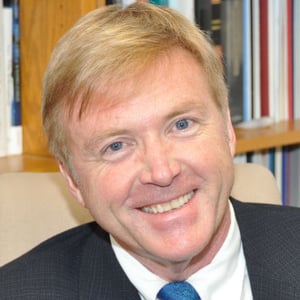
Hon. William Matthew Byrne, Jr. Chair Professor of Law, Loyola Law School, Loyola Marymount University
Prior to joining Loyola in 2013, Professor Justin Hughes taught at Cardozo Law School where he served as director of Cardozo’s Intellectual Property Program, 2004 through 2008, and founded the law school’s Indie Film Clinic, the first of its kind.
From 2009 through 2013, Professor Hughes also worked in the Obama Administration as Senior Advisor to the Undersecretary of Commerce for Intellectual Property. In that capacity he was the United States chief negotiator for the Beijing Treaty on Audiovisual Performances (2012) and the Marrakesh Treaty for the Blind (2013).
In the 1990s, Professor Hughes did volunteer work in democracy development in Latin America, West Africa and the Balkans. He has practiced law in Paris and Los Angeles. As a Henry Luce Scholar, he clerked for the Lord President of the Malaysian Supreme Court in Kuala Lumpur.
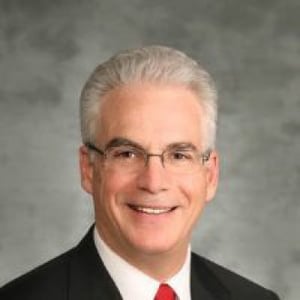
Dinsmore & Shohl LLP, Partner
Brian is chair of Dinsmore’s IP Transactions and Licensing Group. He is a past president of the Licensing Executives Society (USA and Canada), Inc. (LES), the leading professional society devoted to commercial transactions and licensing of intangible property. He continues to serve LES as senior vice president for public policy. He has extensive experience in a wide variety of commercial transactions involving intangible property, and is known for creative licensing strategies to promote collaboration and resolve IP-related disputes.
He is a registered patent attorney with more than 30 years of experience before the U.S. Patent and Trademark Office and in structuring global IP portfolios and strategies. He has extensive experience in contested proceedings before the USPTO Patent Trial and Appeal Board (interferences, Inter Partes Reviews and Post Grant Reviews), as well as contested matters in federal courts and the International Trade Commission. His wide-ranging experience affords a broad, informed perspective and facilitates creative approaches to intellectual property management, licensing, and enforcement.
In addition to his leadership of LES, Brian served on the LES Board of Directors 2007 – 2018. In his ongoing role as senior vice president for public policy he is responsible for coordinating the society’s public policy positions, amicus briefs, and congressional outreach. He works with legislators, the executive branch, and the courts toward consistent, reliable, and prudent IP laws and policies that advance innovation and economic development. He has also served LES as trustee for education, and has long served as an author, editor, and faculty member of LES educational programs focusing on best practices in IP licensing.
He is also active in the global society, LES International (LESI). Among his various roles in LESI, he has served as co-chair of the External Relations Committee, coordinating public policy and advocacy for effective IP laws and policies among the 33 regional LES societies, and with various non-governmental organizations such as WIPO and EPO. In 2019, he received the LES International President’s Service Recognition Award.
Brian also serves as Chair of the Board of Directors of the Bayh Dole Coalition, a 501(c)(4) corporation dedicated to promoting and preserving the Bayh Dole Act. He is a member of the Founding Board of Directors of the United States Intellectual Property Alliance (USIPA), an organization dedicated to raising public awareness of, and appreciation for, the role of IP in fostering innovation for the public good; and he has served on the DC Bar Intellectual Property Section Steering Committee (2013 – 2016).
In 2016, Brian testified before the U.S. Senate Committee on Small Business and Entrepreneurship on the effects of the America Invents Act on small business and entrepreneurs in a hearing entitled “An Examination of Changes to the U.S. Patent System & Impacts on America's Small Businesses.”
With his longstanding and diverse patent practice, in both private practice and in-house, Brian advises corporate leaders and entrepreneurs in effective IP procurement practices, and in maximizing value from IP assets. He has been retained as a testifying witness in IP and licensing disputes by the U.S. Department of Justice, the U.S. Department of the Treasury, and by various private enterprises.
Brian has been acknowledged by IAM magazine as among its “IAM Strategy 300”, the world’s leading IP strategists, and among “The World's Leading Patent and Technology Licensing Lawyers.”
He earned B.S. and M.S. degrees from the Department of Chemistry, Rochester Institute of Technology, Rochester, NY; and Juris Doctor from Syracuse University, College of Law, Syracuse, NY (1986).
Brian has served his alma mater as president of the RIT Alumni Association 2005 – 2009; and now serves on the RIT Board of Trustees as a member of its Executive Committee, chair of its Student Life Committee, and vice-chair of its Committee on Trustees. In 2013, Brian was awarded RIT’s Outstanding Alumnus Award, and in 2005 he was awarded the Distinguished Alumnus Award by RIT’s College of Science.
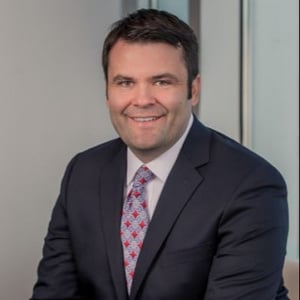
Shareholder, Parr Brown Gee & Loveless
Stephen Mouritsen is a member of Parr Brown’s commercial litigation group. Prior to joining Parr Brown, Mr. Mouritsen was an associate with the law firms of Willkie Farr & Gallagher LLP and Cravath, Swaine & Moore LLP in New York. Mr. Mouritsen served as a law clerk to the Honorable Associate Chief Justice Thomas R. Lee of the Utah Supreme Court. Prior to law school, Mr. Mouritsen worked as a registered financial representative for Fidelity Investments.
Mr. Mouritsen has experience with a wide variety of securities-related matters, including securities fraud, mortgage fraud, trading violations, market manipulation schemes, as well as SEC and PCAOB investigations. Mr. Mouritsen also has significant experience with internal investigations, environmental litigation, and corporate restructuring litigation.
With a background in linguistics, Mr. Mouritsen has written and lectured extensively on the intersection between law and language. His writing has appeared in the Yale Law Journal, the Washington Law Review, the Columbia Science and Technology Law Review, and at the Volokh Conspiracy legal blog. His work has been cited by judges in the United States Courts of Appeals for the Third, Sixth, and Tenth Circuits, as well as the Idaho, Michigan, Montana, and Utah Supreme Court. His work has also been cited in leading casebooks on legislation and contracts, and in the Congressional Research Service’s report on Statutory Interpretation.
Mr. Mouritsen currently serves as an adjunct professor at the J. Reuben Clark Law School at Brigham Young University, where he teaches courses on the theory and practice of legal interpretation and law and corpus linguistics. From 2016 through 2018, Mr. Mouritsen served as an associate (non-resident research fellow) at the University of Chicago Law School.
Mr. Mouritsen received his B.A. in English, from the Brigham Young University, in 2002. In 2007 he received his M.A. in linguistics from Brigham Young University. He attended Brigham Young University’s J. Reuben Clark Law School, where he was the Lead Articles Editor of the BYU Law Review, a First Prize, John S. Welch Award for Outstanding Legal Writing, and graduated magna cum laude in 2010.
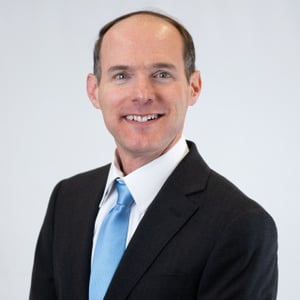
Associate Professor & Director, Constitutional Government Initiative, Wheatley Institute, Brigham Young University
James C. Phillips is the Constitutional Government Initiative Director and an associate professor at BYU’s Wheatley Institute. He is also a fellow with the UC-Berkeley School of Law’s Public Law and Policy Program and an academic affiliate with the D.C.-based law firm Schaerr|Jaffe. His scholarship has been cited by judges around the country, including at the U.S. Supreme Court, and has been covered in various media outlets, including the New York Times Magazine, USA Today, Reuters, CNN, and Fox News. He is a member of the Executive Committee of the Federalist Society's Religious Liberty Practice Group and the J. Reuben Clark Law Society Religious Liberty Committee.
Prior to joining Wheatley, Phillips was associate professor of law at Chapman University’s Fowler School of Law, where he taught Constitutional Law, Religion and the Constitution, Civil Procedure, Family Law, and Professional Responsibility and was named 1L Professor of the Year. Dr. Phillips has taught Administrative Law at BYU’s J. Reuben Clark Law School, where he also helped conceive and design the Corpus of Founding-Era American English. He was also a Non-resident Fellow with Stanford Law School’s Constitutional Law Center.
Dr. Phillips has published dozens of academic articles, primarily in law journals, but also communications, business, and history journals. His longer pieces have been published in, for example, the University of Pennsylvania Law Review, the Southern California Law Review, and the Harvard Journal of Law and Public Policy, and his shorter articles have been published in journals such as the Yale Law Journal Forum and the Duke Law Journal Online. Dr. Phillips has also written op-eds on constitutional issues for Newsweek, The Atlantic, the Los Angeles Times, the Orange County Register, Deseret News, and National Review.
Prior to his university posts, Dr. Phillips practiced law as a Constitutional Law Fellow for the Becket Fund for Religious Liberty and an associate for Kirton | McConkie. He has worked on dozens of cases at the U.S. Supreme Court, as well as cases in federal and state courts throughout the country. He is a member of the bar in Utah and D.C. He clerked for Judge Thomas B. Griffith on the U.S. Court of Appeal for the D.C. Circuit and for Justice Thomas R. Lee on the Utah Supreme Court. Dr. Phillips earned his JD, Order of the Coif, from UC-Berkeley’s School of Law, where he was a member of the California Law Review. He also has a PhD in Jurisprudence & Social Policy from UC-Berkeley, an M.A. in Mass Communication from BYU, and a B.A. in History from Arizona State University.
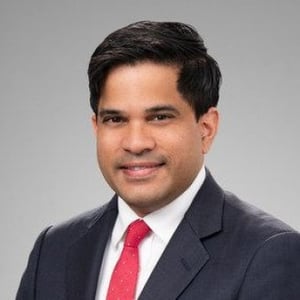
Partner, Latham & Watkins LLP
Sy Damle is one of the nation’s foremost practitioners in copyright law, with a particular focus on copyright rate-setting and software copyrights. Mr. Damle is a partner in the Washington, D.C. office of Latham & Watkins and a member of the Intellectual Property Litigation Practice. He also serves as an advisor to the American Law Institute’s Restatement of the Law, Copyright, and regularly writes and speaks about cutting-edge copyright issues. Mr. Damle focuses his practice on high-stakes copyright litigation and regulatory matters.
Mr. Damle joined Latham after serving as General Counsel and Associate Register of Copyrights at the US Copyright Office. In this role, Mr. Damle was responsible for the agency’s litigation, regulatory, and other legal work. While at the Copyright Office, Mr. Damle played a central role in every significant copyright case to reach the Supreme Court, addressing areas as diverse as software copyrights, fee awards in copyright actions, and the scope of the safe harbors in the Digital Millennium Copyright Act (DMCA). In addition, Mr. Damle led the Office’s first comprehensive regulatory revision effort in decades, concluding over 20 rulemakings, and helped lead two rulemakings under the anti-circumvention provisions of the DMCA. He was also responsible for overseeing the work of the Copyright Royalty Board (CRB), which establishes royalty rates and terms for major segments of the copyright industry. In that role, he wrote and issued binding opinions addressing novel questions of copyright law that govern CRB proceedings. Mr. Damle also regularly advised Congress on novel copyright issues, including by drafting and reviewing legislation.
Previously, Mr. Damle served as an appellate attorney for the Civil Division of the Department of Justice (DOJ). In his role at the DOJ, he appeared as lead counsel in more than 40 appeals, focusing on intellectual property, administrative law, and constitutional matters. He was responsible for the defense of rate-setting determinations of the CRB in the US Court of Appeals for the D.C. Circuit. He also wrote briefs in a number of high-profile Supreme Court cases, including Cable News Network v. CSC Holdings, addressing alleged copyright infringement by remote DVR services, and Ashcroft v. Iqbal, addressing pleading standards. Mr. Damle also served as senior counsel in the Consumer Financial Protection Bureau.
Mr. Damle’s work has been recognized by leading publications, including the National Law Journal, which has named him one of the top 40 Under 40 minority lawyers in the United States, and as one of DC’s Rising Stars.
Mr. Damle is a member of the Copyright Society of the USA, and serves on the board of the Edward Coke Appellate Inn of Court.
Mr. Damle earned his JD from the University of Virginia, where he graduated first in his class. He holds systems engineering and business degrees from the University of Pennsylvania, and was a software developer and information technology consultant prior to attending law school. He also served as a clerk for Judge Sandra L. Lynch of the US Court of Appeals for the First Circuit.
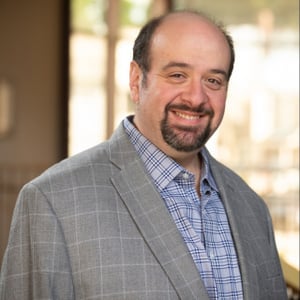
Associate Professor, UNH Franklin Pierce School of Law
Zvi S. Rosen is an Associate Professor at UNH Franklin Pierce School of Law and the Faculty Director of the Franklin Pierce Society for Intellectual Property. He has served as a Assistant Professor at the Southern Illinois University School of Law, as a Visiting Assistant Professor at the Maurice A. Deane School of Law at Hofstra University, and as a Visiting Scholar and Professorial Lecturer in Law at George Washington University School of Law.
In 2015-2016, he was the Abraham L. Kaminstein Scholar in Residence at the U.S. Copyright Office. Mr. Rosen received his J.D. from Northwestern University School of Law in 2005 and LLM in Intellectual Property in 2006 from the George Washington University Law School. He has practiced at Fried, Frank, Harris, Shriver & Jacobson LLP as well as smaller firms and his own practice, and clerked for the Hon. Thomas B. Bennett of the U.S. Bankruptcy Court for the Northern District of Alabama. He has written extensively on the development of modern copyright and trademark law, as well as on bankruptcy law.
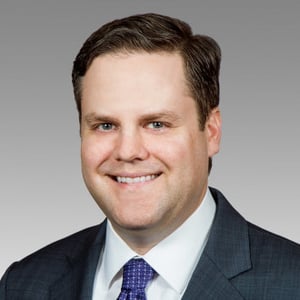
Partner, Osborn Maledon
Eric Fraser regularly handles high-profile appeals and issue litigation. He has argued major cases before the Ninth Circuit, Arizona Supreme Court, and Arizona Court of Appeals. Benchmark Litigation named him to its 40 & Under Hot List (2018-2019) and Southwest Super Lawyers lists him as a Rising Star (2013-2019) for appeals.
Before joining private practice, Fraser clerked on the U.S. Court of Appeals for the D.C. Circuit. He currently serves as a Ninth Circuit Appellate Lawyer Representative and as Chair Elect for the Appellate Practice Section of the State Bar. He also regularly writes about appeals, including contributing to SCOTUSblog, co-editing the azapp.com blog, and coauthoring a monthly column in Arizona Attorney magazine covering civil appeals. The New York Times, Arizona Republic, Bloomberg Businessweek, Fox News, and many local media outlets have featured his discussion of his cases or legal analysis.

Judge, Arizona Court of Appeals, Division One
The Honorable Jennifer M. Perkins began service on the Arizona Court of Appeals, Division One, on October 30, 2017. At the time of her appointment by Governor Douglas Ducey, Judge Perkins was Assistant Solicitor General for the State of Arizona.
Judge Perkins was born in Portales, New Mexico, and primarily raised in Albuquerque. She attended the prestigious Albuquerque Academy from 1988-1995, before moving to Washington D.C. to attend the Elliott School of International Affairs at the George Washington University as a National Merit Scholar. Therafter, she relocated again to Dallas, Texas, and earned her juris doctor from the SMU Dedman School of Law, graduating cum laude in 2002.
Judge Perkins started her career at the law firm of Browning & Peifer (now Peifer, Hanson, Mullins, and Baker) in Albuquerque, New Mexico. While there, she litigated complex commercial matters including class action plaintiff and defense work, and assisted with employment and contract litigation. In 2003, the judge accompanied the Honorable James O. Browning in transitioning to the federal district court bench, serving as his first law clerk.
After her clerkship, Judge Perkins moved to Arizona to work for the Institute for Justice, Arizona Chapter, a public interest law firm. She spent five years with IJ-AZ litigating civil rights cases in Arizona and across the country. In 2009, the judge became Disciplinary Counsel for the Arizona Commission on Judicial Conduct, where she reviewed and prosecuted ethics complaints against state court judges throughout Arizona. After five years serving the state in this capacity, Judge Perkins entered private practice by joining an appellate law firm in Phoenix. While there, she worked on state and federal appeals involving a wide range of legal subjects, including complex business disputes, property rights, judicial ethics, and personal injury matters.
In January 2015, Judge Perkins joined the Office of the Arizona Attorney General to serve as the first Assistant Solicitor General; in that capacity, she was responsible for oversight of Attorney General Opinions and served as ethics counsel to the entire office. In addition to these two primary roles, the judge assisted on a variety of matters including trial and appellate litigation of election-related matters; federal appellate litigation with the Federalism Unit; state criminal appeals; and drafting amicus briefs on behalf of Arizona in state and federal courts.
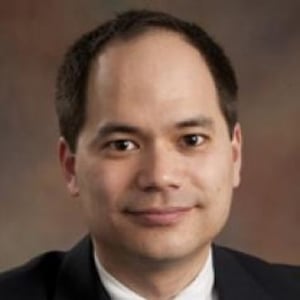
Professor of Law, University of Chicago Law School
William H. J. Hubbard received his JD with high honors from the Law School in 2000, where he was executive editor of the Law Review. He clerked for the Hon. Patrick E. Higginbotham of the US Court of Appeals for the Fifth Circuit. From 2001 to 2006, he practiced law as a litigation associate at Mayer Brown LLP in Chicago, where he specialized in commercial litigation, electronic discovery, and appellate practice. From 2006 to 2011, he completed the PhD program in Economics at the University of Chicago. Before joining the faculty in 2011, he was a Kauffman Legal Research Fellow and Lecturer in Law at the Law School.
Mr. Hubbard currently serves as an editor of the Journal of Legal Studies. He teaches courses in civil procedure and has been an organizer for the Law and Economics Workshop. His current research primarily involves economic analysis of litigation, courts, and civil procedure. Other research interests include family, education, and labor economics.
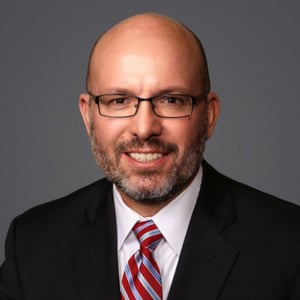
Shareholder, Ogletree, Deakins, Nash, Smoak & Stewart
Chris Murray is Co-Chair of the firm’s Arbitration and Alternative Dispute Resolution Practice Group. In this role, he assists attorneys throughout the firm and clients nationwide to create, roll out, and enforce effective employment arbitration agreements and other ADR programs. Mr. Murray has extensive experience with class/collective action waivers in employment arbitration. Mr. Murray was part of the Ogletree team that successfully defended the use of such waivers in the Fifth Circuit’s landmark decision in D.R. Horton, Inc. v. N.L.R.B. Since then, he has successfully defended the enforceability of class action waivers in numerous subsequent cases and submitted an amicus brief on the subject on behalf of several major employers’ associations in the Supreme Court’s Murphy Oil case. Mr. Murray assists clients and the Firm’s attorneys to draft or revise arbitration programs focused on a client’s specific needs and goals and in light of changing law and evolving best practices.
Attorney and Legal Commentator
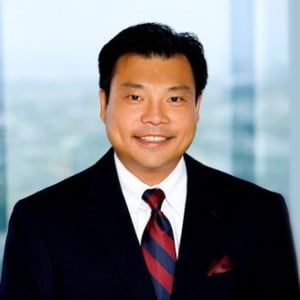
John Shu is an attorney and legal commentator. His focus areas include constitutional law, securities & corporate law, antitrust law, administrative law, politics, and international affairs. Mr. Shu has lectured and published on a wide variety of issues.
Mr. Shu served President George H.W. Bush and President George W. Bush. He also served Judge Stanley Sporkin, U.S. District Court for the District of Columbia, who was Director of Enforcement at the U.S. Securities & Exchange Commission and General Counsel at the Central Intelligence Agency, and Judge Paul Roney, U.S. Court of Appeals for the Eleventh Circuit, who was Presiding Judge of the Foreign Intelligence Surveillance Court of Review.
Mr. Shu is a member of the National Committee on U.S. - China Relations, the Pacific Council on International Policy, and the Foreign Policy Association.

Federalist Society Review, Volume 23
Katie McClendon
The Federalist Society Review is the legal journal of the Federalist Society. The Review is...
Open Minds with Prof. Eugene Volokh & Prof. Joshua Kleinfeld, Part I
Eugene Volokh, Joshua Kleinfeld
What made Professor Volokh the independent and influential thinker he is today? It began with...
Topics
NCAA v. Alston and the Future of Antitrust
On June 21, the Supreme Court issued its opinion in NCAA v. Alston, unanimously affirming a...
Nestle USA, Inc. v. Doe - Post-Decision SCOTUScast
Julian Ku, Ilya Shapiro, William S. Dodge
On June 17, 2021 the Supreme Court issued its 8-1 decision in Nestle USA, Inc....
Deep Dive Episode 164 – How Will the Biden Administration Handle China's Intellectual Property Practices?
Mark Cohen, Justin Hughes, Brian O'Shaughnessy
The Biden administration faces a variety of issues when it comes to China, from trade...
Corpus Linguistics in Legal Interpretation
Stephen Mouritsen, James C. Phillips
Corpus linguistics has recently emerged as a method for addressing problems in legal interpretation. Corpus...
Courthouse Steps Oral Argument Teleforum: Georgia v. Public Resource.org Inc.
Sy Damle, Zvi Rosen
In its very first case on copyright, the Supreme Court under Chief Justice John Marshall...
Compelled Speech or Public Accommodation?
Eric M. Fraser, Jennifer Perkins
On September 16, 2019, the Arizona Supreme Court issued a 4-3 decision in Brush &...
Arbitration in the #MeToo Era
William H.J. Hubbard, Christopher C. Murray
Employers are increasingly turning to arbitration to reduce the costs and burdens of employment-related litigation....
Courthouse Steps: Animal Science Products v. Hebei Welcome Pharmaceutical
John Shu
Animal Science Products, a U.S. company, sued Hebei Welcome Pharmaceutical Co., a Chinese company, for...