
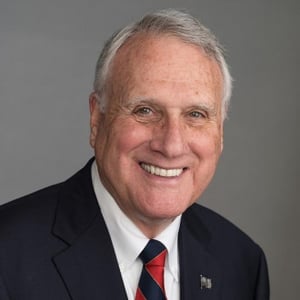
Senior Advisor, Covington & Burling
Senator Jon Kyl advises companies on domestic and international policies that influence U.S. and multi-national businesses and assists corporate clients on tax, health care, national security, and intellectual property matters, among others.
Jon served in the U.S. Senate from 1995 to 2013, retiring as the second-highest ranking Republican senator. He returned to the Senate in September 2018 after being appointed to succeed the late John McCain, and retired again at the end of 2018.
During Jon’s 26 years in Congress, he built a reputation for mastering the complexities of legislative policy and coalition building, first in the House of Representatives and then in the Senate. In 2010, Time magazine called him one of the 100 most influential people in the world, noting his "encyclopedic knowledge of domestic and foreign policy, and his hard work and leadership" and his "power to persuade."
Jon sat on the powerful Senate Finance Committee and was the ranking Republican on the Senate Judiciary Committee’s Subcommittee on Crime and Terrorism. A member of the Republican Leadership for well over a decade, Jon chaired the Senate Republican Policy Committee and the Senate Republican Conference, before becoming Senate Republican Whip. In filling Senator McCain’s seat, he served on the Armed Services and Homeland Security Committees.
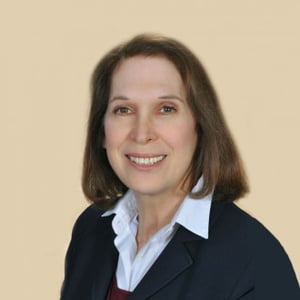
Professor Emerita of Law, George Mason University Antonin Scalia School of Law
Professor Emerita Joyce Lee Malcolm is an historian and constitutional scholar active in the area of constitutional history, focusing on the development of individual rights in Great Britain and America. She is the author of eight books, most recently The Tragedy of Benedict Arnold: An American Life, May 2018. Professor Malcolm has written many books and articles on gun control, the Second Amendment, and individual rights. Her work was cited several times in the recent U.S. Supreme Court opinion in District of Columbia v. Heller.
Professor Malcolm has previously taught at Princeton University, Bentley College, Boston University, Northeastern University and Cambridge University. She was also a Senior Advisor at the Massachusetts Institute of Technology Security Studies Program, a Visiting Scholar at Massachusetts Center for Renaissance Studies, and is a Bye Fellow at Robinson College, Cambridge University.
Her seventh book, Peter's War: A New England Slave Boy and the American Revolution, was published by Yale University Press in 2009. "Magna Carta in America: Entrenched," a chapter authored by Professor Malcolm, appears in Magna Carta: The Foundation of Freedom 1215-2015 (Nicholas Vincent, Third Millennium Publishing). Her essays have appeared in The Wall Street Journal, The Financial Times, USA Today, The Boston Globe and other newspapers.
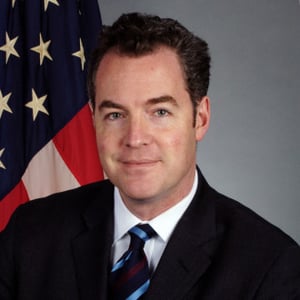
President and Founder, JKC Consulting LLC
John Kneuer is the President and Founder of JKC Consulting LLC. He sits on multiple public and private company boards.
Prior to starting Kneuer LLC, Mr. Kneuer served as the Assistant Secretary of Commerce for Communications and Information. In this capacity Mr. Kneuer was the principal advisor to the President of the United States on telecommunications policy and the Administrator of the National Telecommunications and Information Administration ("NTIA").In addition to representing the Executive Branch in domestic and international telecommunications and information policy activities, NTIA also manages the federal use of spectrum; performs cutting edge telecommunications research and engineering, including resolving technical telecommunications issues for the federal government and private sector; and administers infrastructure and public telecommunications facilities grants.
Prior to his service at NTIA, Mr. Kneuer served as a Senior Associate at the law firm of Piper Rudnick in Washington, D.C., providing regulatory and legislative representation to corporate clients in the telecommunications, defense, and transportation industries. Earlier in his career, Mr. Kneuer served as the Executive Director for Government Relations at the Industrial Telecommunications Association, and prior to that served as an Attorney-Advisor in the Commercial Wireless Division of the Federal Communications Commission's Wireless Bureau. Mr. Kneuer received B.A. and J.D. degrees from the Catholic University of America.
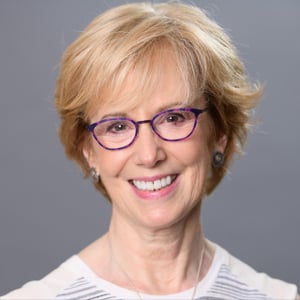
Director, GW Regulatory Studies Center & Distinguished Professor of Practice, Trachtenberg School of Public Policy & Public Administration, The George Washington University
Susan Dudley is the Founder and Director of the George Washington University Regulatory Studies Center, established in 2009 to raise awareness of regulations’ effects and improve regulatory policy through research, education, and outreach. She is also a distinguished professor of practice in the Trachtenberg School of Public Policy and Public Administration. She is past-president of the Society for Benefit Cost Analysis, a senior fellow of the Administrative Conference of the United States, and on the Regulatory Transparency Project Regulatory Practice Working Group. Her book, Regulation: A Primer, with Jerry Brito, is available on Amazon.com.
From April 2007 through January 2009, Professor Dudley served as the Presidentially-appointed Administrator of the Office of Information and Regulatory Affairs in the U.S. Office of Management and Budget and was responsible for the review of draft executive branch regulations under Executive Order 12866, the collection of federal-government-wide information under the Paperwork Reduction Act, the development and implementation of government-wide policies in the areas of information policy, privacy, and statistical policy, and international regulatory cooperation efforts.
Prior to OIRA, she directed the Regulatory Studies Program at the Mercatus Center at George Mason University, and taught courses on regulation at the George Mason University School of Law. Earlier in her career, Professor Dudley served as an economist at OIRA, as well as the Environmental Protection Agency and the Commodity Futures Trading Commission. She was also a consultant to government and private clients at Economists Incorporated. She holds a Master of Science degree from the Sloan School of Management at MIT and a Bachelor of Science degree (summa cum laude) in Resource Economics from the University of Massachusetts, Amherst.
Senior Counsel and Head of Regulatory Advocacy, General Electric Company
Michael A. Fitzpatrick currently serves as Senior Counsel and Head of Regulatory Advocacy for General Electric Company. He previously served as the Associate Administrator of the Office of Management and Budget’s Office of Information and Regulatory Affairs, where he helped lead the development of regulatory policy and White House review of significant Executive Branch regulatory actions. He served as the Executive Branch liaison to the ABA’s Administrative Law Section and has led several U.S. delegations abroad for meetings with the European Union and Canada.
During the Presidential Transition, Fitzpatrick served as deputy lead of the Executive Office of the President and Government Operations Agency Review Teams. From 2001 to 2009, Fitzpatrick was in the Washington, D.C. office of Akin Gump Strauss Hauer & Feld LLP, where he was a partner in the Litigation Practice Group, specializing in white collar, complex civil, and regulatory matters. Before joining Akin Gump, Fitzpatrick served as an Assistant United States Attorney in Washington, D.C., and as a Senior Advisor to the Administrator of the Office of Information and Regulatory Affairs at the Office of Management and Budget.
Fitzpatrick clerked for Judge William Norris on the U.S. Court of Appeals for the Ninth Circuit after graduating from Stanford Law School.
United States Senate, North Dakota
U.S. Senator Heidi Heitkamp is the first female Senator elected from North Dakota. She took the oath of office on January 3, 2013.
Already in her short time in the Senate, Senator Heitkamp has quickly become a proven Senator who works across the aisle to fight for North Dakotans. Senator Heitkamp has personally shown that if Senators work together, it can lead to real solutions.
As a former director of the one-of-a-kind Dakota Gasification synfuels plant, Senator Heitkamp has a long record of serving as a champion for North Dakota’s energy jobs and industry. She is continuing those efforts in the Senate, working to responsibly harness North Dakota’s energy resources, promoting the state’s all-of-the-above energy plan which she believes should serve as a model for the entire country, and fighting to lift the 40-year old ban on exporting U.S. crude oil.
Senator Heitkamp sits on the Senate Committee on Agriculture, Nutrition, and Forestry, where she has been fighting for North Dakota’s farmers and ranchers, and to make sure they get the resources and support they need to continue to feed North Dakota, the country, and the world. Starting on day one in the Senate, she helped write, negotiate, and pass a long-term, comprehensive Farm Bill which Congress passed in 2014.
As a member on the Senate Committee on Indian Affairs, Senator Heitkamp is continuing her pledge -- from her time as North Dakota’s Attorney General -- to stand up for Native American families and make sure the U.S. government lives up to its treaty and trust responsibilities. The first bill she introduced in the Senate would better protect Native children and make sure they have the economic and educational tools to thrive.
Through her leadership on the Senate Committee on Banking, Housing and Urban Affairs, Senator Heitkamp has worked to reform the nation’s housing finance system, make housing more affordable, address North Dakota’s housing shortage, and provide relief to small financial institutions.
Senator Heitkamp also serves on the Senate Committee on Homeland Security and Governmental Affairs and the Senate Committee on Small Business and Entrepreneurship.
Senator Heitkamp previously served as North Dakota’s Attorney General, battling drug dealers, protecting senior citizens from scams, and working to keep sexual predators off streets and away from kids, even after their prison terms were up.
During her time as North Dakota’s Attorney General, Senator Heitkamp brokered an agreement between 46 states and the tobacco industry, which forced the tobacco industry to tell the truth about smoking and health. The settlement resulted in the award of about $336 million to North Dakota taxpayers to date. It was one of the largest civil settlements in U.S. history. When very little of this funding was being sent to anti-tobacco programs as intended, Senator Heitkamp led a successful ballot initiative in 2008 that mandated significant increases.
Previously, Senator Heitkamp served as North Dakota’s Tax Commissioner. Under her tenure, the State of North Dakota attempted to make catalog retailers collect the sales tax the state and municipalities were already owed on sales. The debate went all the way to the Supreme Court in the caseQuill v. North Dakota.
Senator Heitkamp received a B.A. from the University of North Dakota and a law degree from Lewis and Clark Law School. She lives in Mandan, North Dakota with her husband, Dr. Darwin Lange, a family practitioner. They have two children, Ali and Nathan.

Executive Vice President, The Federalist Society
Dean Reuter is Executive Vice President at the Federalist Society for Law and Public Policy Studies. He has served in two federal government agency Offices of the Inspector General, as Counsel to the Inspector General and Deputy Inspector General, responsible for policing the use of federal funds granted and contracted through those agencies. As such, he helped conduct and oversee criminal investigations across the country. He is the principal author of the non-fiction book, The Hidden Nazi: The Untold Story of America's Deal with the Devil, and editor of Liberty’s Nemesis: The Unchecked Expansion of the State and Confronting Terror: 9/11 and the Future of American National Security. He was appointed by the President and served as Vice-Chairman of the Board of Directors of the Corporation for National and Community Service, and recently served as an appointee on the U.S. Commission on Presidential Scholars. He is a graduate of Hood College (BA with Honors) and the University of Maryland School of Law.
Former Acting Attorney General
Jeffrey A. Rosen is a member of the Investigations and Regulatory Enforcement Practice of Cravath, Swaine & Moore LLP. He previously served in the U.S. Department of Justice (DOJ) as Acting Attorney General and Deputy Attorney General, as well as Deputy Secretary and General Counsel at the U.S. Department of Transportation (DOT), and General Counsel and Senior Policy Advisor at the White House Office of Management and Budget (OMB).
With decades of both public and private sector executive leadership experience, including past service on the global management committee of one of the world’s leading law firms, he has built a career specializing in the management of complex, sensitive, and consequential matters.

Laurence H. Silberman Chair in Constitutional Governance, American Enterprise Institute; Executive Director, Antonin Scalia Law School’s C. Boyden Gray Center for the Study of the Administrative State
Adam J. White is the Laurence H. Silberman Chair in Constitutional Governance and senior fellow at the American Enterprise Institute, where he focuses on the Supreme Court and the administrative state. He also directs the Antonin Scalia Law School’s C. Boyden Gray Center for the Study of the Administrative State.
He writes on regulation and constitutional government for a variety of publications. He practiced law in Washington, D.C., after clerking for the D.C. Circuit's Judge David Sentelle. He also has been chairman of the ABA's Administrative Law Section.
In 2021, he served on the Presidential Commission on the Supreme Court of the United States, where he criticized “Court packing” and other efforts to restructure the Supreme Court.
University Professor of Law and Religion and Director of the Eleanor H. McCullen Center for Law, Religion and Public Policy, Villanova University Charles Widger School of Law
Michael P. Moreland was appointed University Professor of Law and Religion and Director of the Eleanor H. McCullen Center for Law, Religion and Public Policy at Villanova University in 2017. Professor Moreland joined the Villanova faculty in 2006 and served as Vice Dean from 2012 to 2015. His research is primarily in the areas of torts, law and religion, constitutional law, and Catholic social thought, and he regularly teaches Torts, First Amendment, seminars in law and religion, and undergraduate courses in ethics.
Professor Moreland is the co-editor of Christianity and Private Law (Routledge, 2021), and his most recent publications include: “The Authority of Tradition: John Henry Newman and Legal Theory” in Christianity and the Making of Irish Law (Routledge, 2025); “Christianity and Torts” in The Oxford Handbook on Christianity and Law, (Oxford University Press, 2023); “Germaneness and Religious Liberty” in the Notre Dame Law Review (2023); “Contingency and Contestation in Christianity and Liberalism” in the Notre Dame Law Review (2023); “Friendship as the Primary Purpose of Law” in The American Journal of Jurisprudence 279 (2022); and “The Moral of Torts” (with Jeffrey Pojanowski) in Christianity and Private Law (Routledge, 2021).
Professor Moreland was a Visiting Professor of Law at the University of Notre Dame and the Mary Ann Remick Senior Visiting Fellow at the Notre Dame Center for Ethics and Culture from 2015 to 2017. He was the Forbes Visiting Fellow at Princeton University in the James Madison Program during academic year 2010-11. He has served as the project leader for grants from the John Templeton Foundation and the Charles Koch Foundation. He serves as the Chair of the Federalist Society’s Religious Liberties Practice Group Executive Committee and the Chair of the Board of Trustees of the Institute for Advanced Catholic Studies at the University of Southern California.
Professor Moreland received his BA in philosophy from the University of Notre Dame, his MA and PhD in theological ethics from Boston College, and his JD from the University of Michigan Law School. Following law school, Professor Moreland clerked for the Honorable Paul J. Kelly Jr., of the United States Court of Appeals for the Tenth Circuit and was an associate at Williams & Connolly LLP in Washington, DC, where he represented clients in First Amendment, professional liability, and products liability matters. Before coming to Villanova, he served as Associate Director for Domestic Policy at the White House under President George W. Bush, where he worked on a range of legal policy issues, including criminal justice, immigration, civil rights, and liability reform.
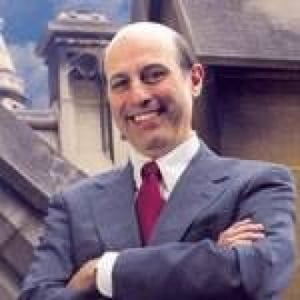
Garwood Visiting Professor and Visiting Fellow, James Madison Pr, Cleveland-Marshall College of Law
David F. Forte is Professor of Law at Cleveland State University, where he was the inaugural holder of the Charles R. Emrick, Jr.- Calfee Halter & Griswold Endowed Chair. This fall, Professor Forte will be the Garwood Visiting Professor at Princeton University in the Department of Politics, and Visiting Fellow at the James Madison Program in American Ideals and Institutions. He holds degrees from Harvard College, Manchester University, England, the University of Toronto and Columbia University.
During the Reagan administration, Professor Forte served as chief counsel to the United States delegation to the United Nations and alternate delegate to the Security Council. He has authored a number of briefs before the United States Supreme Court, and has frequently testified before the United States Congress and consulted with the Department of State on human rights and international affairs issues. His advice was specifically sought on the approval of the Genocide Convention, on world-wide religious persecution, and Islamic extremism. He has appeared and spoken frequently on radio and television, both nationally and internationally. In 2002, the Department of State sponsored a speaking tour for Professor Forte in Amman, Jordan, and he was also a featured speaker to the Meeting of Peoples in Rimini, Italy, a meeting which gathers over 500,000 people from all over Europe. He has also been called to testify before the state legislatures of Ohio, Kansas, and Idaho as well as the New York City Council. He has assisted in drafting a number of pieces of legislation for the Ohio General Assembly dealing with abortion, international trade, and federalism. He has sat as acting judge on the municipal court of Lakewood Ohio and was chairman of Professional Ethics Committee of the Cleveland Bar Association. He has received a number of awards for his public service, including the Cleveland Bar Association’s President’s Award, the Cleveland State University Award for Distinguished Service, the Cleveland State University Distinguished Teaching Award, and the Cleveland-Marshall College of Law Alumni Award for Faculty Excellence. He served as Consultor to the Pontifical Council for the Family under Pope St. John Paul II and Pope Benedict XVI. In 2003, Dr. Forte was a Distinguished Fulbright Chair at the University of Trento and returned there in 2004 as a Visiting Professor. For the academic year, 2008-2009, Professor Forte was Senior Visiting Scholar at the Center for the Study of Religion and the Constitution in at the Witherspoon Institute in Princeton, New Jersey. He was the Robert E. Henderson Constitution Day Lecturer at the Ashbrook Center at Ashland University, and he has given over 300 invited addresses and papers at more than 100 academic institutions. His work has been cited by the U.S. Supreme Court.
Professor Forte was a Bradley Scholar at the Heritage Foundation, and Visiting Scholar at the Liberty Fund. He has been President of the Ohio Association of Scholars, was on the Board of Directors of the Philadelphia Society, and is also adjunct Scholar at the Ashbrook Center. He has been appointed to the Ohio State Advisory Committee to the U.S. Commission on Civil Rights. He has also been a Civil War re-enactor and a Merit Badge Counselor for the Boy Scouts.
He writes and speaks nationally on topics such as constitutional law, religious liberty, Islamic law, the rights of families, and international affairs. He served as book review editor for the American Journal of Jurisprudence and has edited a volume entitled, Natural Law and Contemporary Public Policy, published by Georgetown University Press. His book, Islamic Law Studies: Classical and Contemporary Applications, has been published by Austin & Winfield. He is Senior Editor of The Heritage Guide to the Constitution (2006), 2d edition (2014), published by Regnery & Co, a clause by clause analysis of the Constitution of the United States.
His teaching competencies include Constitutional Law, the First Amendment, Islamic Law, Jurisprudence, Natural Law, International Law, International Human Rights, the Presidency, and Constitutional History.
Director, GW Regulatory Studies Center & Distinguished Professor of Practice, Trachtenberg School of Public Policy & Public Administration, The George Washington University
Susan Dudley is the Founder and Director of the George Washington University Regulatory Studies Center, established in 2009 to raise awareness of regulations’ effects and improve regulatory policy through research, education, and outreach. She is also a distinguished professor of practice in the Trachtenberg School of Public Policy and Public Administration. She is past-president of the Society for Benefit Cost Analysis, a senior fellow of the Administrative Conference of the United States, and on the Regulatory Transparency Project Regulatory Practice Working Group. Her book, Regulation: A Primer, with Jerry Brito, is available on Amazon.com.
From April 2007 through January 2009, Professor Dudley served as the Presidentially-appointed Administrator of the Office of Information and Regulatory Affairs in the U.S. Office of Management and Budget and was responsible for the review of draft executive branch regulations under Executive Order 12866, the collection of federal-government-wide information under the Paperwork Reduction Act, the development and implementation of government-wide policies in the areas of information policy, privacy, and statistical policy, and international regulatory cooperation efforts.
Prior to OIRA, she directed the Regulatory Studies Program at the Mercatus Center at George Mason University, and taught courses on regulation at the George Mason University School of Law. Earlier in her career, Professor Dudley served as an economist at OIRA, as well as the Environmental Protection Agency and the Commodity Futures Trading Commission. She was also a consultant to government and private clients at Economists Incorporated. She holds a Master of Science degree from the Sloan School of Management at MIT and a Bachelor of Science degree (summa cum laude) in Resource Economics from the University of Massachusetts, Amherst.
Senior Counsel and Head of Regulatory Advocacy, General Electric Company
Michael A. Fitzpatrick currently serves as Senior Counsel and Head of Regulatory Advocacy for General Electric Company. He previously served as the Associate Administrator of the Office of Management and Budget’s Office of Information and Regulatory Affairs, where he helped lead the development of regulatory policy and White House review of significant Executive Branch regulatory actions. He served as the Executive Branch liaison to the ABA’s Administrative Law Section and has led several U.S. delegations abroad for meetings with the European Union and Canada.
During the Presidential Transition, Fitzpatrick served as deputy lead of the Executive Office of the President and Government Operations Agency Review Teams. From 2001 to 2009, Fitzpatrick was in the Washington, D.C. office of Akin Gump Strauss Hauer & Feld LLP, where he was a partner in the Litigation Practice Group, specializing in white collar, complex civil, and regulatory matters. Before joining Akin Gump, Fitzpatrick served as an Assistant United States Attorney in Washington, D.C., and as a Senior Advisor to the Administrator of the Office of Information and Regulatory Affairs at the Office of Management and Budget.
Fitzpatrick clerked for Judge William Norris on the U.S. Court of Appeals for the Ninth Circuit after graduating from Stanford Law School.
United States Senate, North Dakota
U.S. Senator Heidi Heitkamp is the first female Senator elected from North Dakota. She took the oath of office on January 3, 2013.
Already in her short time in the Senate, Senator Heitkamp has quickly become a proven Senator who works across the aisle to fight for North Dakotans. Senator Heitkamp has personally shown that if Senators work together, it can lead to real solutions.
As a former director of the one-of-a-kind Dakota Gasification synfuels plant, Senator Heitkamp has a long record of serving as a champion for North Dakota’s energy jobs and industry. She is continuing those efforts in the Senate, working to responsibly harness North Dakota’s energy resources, promoting the state’s all-of-the-above energy plan which she believes should serve as a model for the entire country, and fighting to lift the 40-year old ban on exporting U.S. crude oil.
Senator Heitkamp sits on the Senate Committee on Agriculture, Nutrition, and Forestry, where she has been fighting for North Dakota’s farmers and ranchers, and to make sure they get the resources and support they need to continue to feed North Dakota, the country, and the world. Starting on day one in the Senate, she helped write, negotiate, and pass a long-term, comprehensive Farm Bill which Congress passed in 2014.
As a member on the Senate Committee on Indian Affairs, Senator Heitkamp is continuing her pledge -- from her time as North Dakota’s Attorney General -- to stand up for Native American families and make sure the U.S. government lives up to its treaty and trust responsibilities. The first bill she introduced in the Senate would better protect Native children and make sure they have the economic and educational tools to thrive.
Through her leadership on the Senate Committee on Banking, Housing and Urban Affairs, Senator Heitkamp has worked to reform the nation’s housing finance system, make housing more affordable, address North Dakota’s housing shortage, and provide relief to small financial institutions.
Senator Heitkamp also serves on the Senate Committee on Homeland Security and Governmental Affairs and the Senate Committee on Small Business and Entrepreneurship.
Senator Heitkamp previously served as North Dakota’s Attorney General, battling drug dealers, protecting senior citizens from scams, and working to keep sexual predators off streets and away from kids, even after their prison terms were up.
During her time as North Dakota’s Attorney General, Senator Heitkamp brokered an agreement between 46 states and the tobacco industry, which forced the tobacco industry to tell the truth about smoking and health. The settlement resulted in the award of about $336 million to North Dakota taxpayers to date. It was one of the largest civil settlements in U.S. history. When very little of this funding was being sent to anti-tobacco programs as intended, Senator Heitkamp led a successful ballot initiative in 2008 that mandated significant increases.
Previously, Senator Heitkamp served as North Dakota’s Tax Commissioner. Under her tenure, the State of North Dakota attempted to make catalog retailers collect the sales tax the state and municipalities were already owed on sales. The debate went all the way to the Supreme Court in the caseQuill v. North Dakota.
Senator Heitkamp received a B.A. from the University of North Dakota and a law degree from Lewis and Clark Law School. She lives in Mandan, North Dakota with her husband, Dr. Darwin Lange, a family practitioner. They have two children, Ali and Nathan.
Executive Vice President, The Federalist Society
Dean Reuter is Executive Vice President at the Federalist Society for Law and Public Policy Studies. He has served in two federal government agency Offices of the Inspector General, as Counsel to the Inspector General and Deputy Inspector General, responsible for policing the use of federal funds granted and contracted through those agencies. As such, he helped conduct and oversee criminal investigations across the country. He is the principal author of the non-fiction book, The Hidden Nazi: The Untold Story of America's Deal with the Devil, and editor of Liberty’s Nemesis: The Unchecked Expansion of the State and Confronting Terror: 9/11 and the Future of American National Security. He was appointed by the President and served as Vice-Chairman of the Board of Directors of the Corporation for National and Community Service, and recently served as an appointee on the U.S. Commission on Presidential Scholars. He is a graduate of Hood College (BA with Honors) and the University of Maryland School of Law.
Former Acting Attorney General
Jeffrey A. Rosen is a member of the Investigations and Regulatory Enforcement Practice of Cravath, Swaine & Moore LLP. He previously served in the U.S. Department of Justice (DOJ) as Acting Attorney General and Deputy Attorney General, as well as Deputy Secretary and General Counsel at the U.S. Department of Transportation (DOT), and General Counsel and Senior Policy Advisor at the White House Office of Management and Budget (OMB).
With decades of both public and private sector executive leadership experience, including past service on the global management committee of one of the world’s leading law firms, he has built a career specializing in the management of complex, sensitive, and consequential matters.
Laurence H. Silberman Chair in Constitutional Governance, American Enterprise Institute; Executive Director, Antonin Scalia Law School’s C. Boyden Gray Center for the Study of the Administrative State
Adam J. White is the Laurence H. Silberman Chair in Constitutional Governance and senior fellow at the American Enterprise Institute, where he focuses on the Supreme Court and the administrative state. He also directs the Antonin Scalia Law School’s C. Boyden Gray Center for the Study of the Administrative State.
He writes on regulation and constitutional government for a variety of publications. He practiced law in Washington, D.C., after clerking for the D.C. Circuit's Judge David Sentelle. He also has been chairman of the ABA's Administrative Law Section.
In 2021, he served on the Presidential Commission on the Supreme Court of the United States, where he criticized “Court packing” and other efforts to restructure the Supreme Court.
University Professor of Law and Religion and Director of the Eleanor H. McCullen Center for Law, Religion and Public Policy, Villanova University Charles Widger School of Law
Michael P. Moreland was appointed University Professor of Law and Religion and Director of the Eleanor H. McCullen Center for Law, Religion and Public Policy at Villanova University in 2017. Professor Moreland joined the Villanova faculty in 2006 and served as Vice Dean from 2012 to 2015. His research is primarily in the areas of torts, law and religion, constitutional law, and Catholic social thought, and he regularly teaches Torts, First Amendment, seminars in law and religion, and undergraduate courses in ethics.
Professor Moreland is the co-editor of Christianity and Private Law (Routledge, 2021), and his most recent publications include: “The Authority of Tradition: John Henry Newman and Legal Theory” in Christianity and the Making of Irish Law (Routledge, 2025); “Christianity and Torts” in The Oxford Handbook on Christianity and Law, (Oxford University Press, 2023); “Germaneness and Religious Liberty” in the Notre Dame Law Review (2023); “Contingency and Contestation in Christianity and Liberalism” in the Notre Dame Law Review (2023); “Friendship as the Primary Purpose of Law” in The American Journal of Jurisprudence 279 (2022); and “The Moral of Torts” (with Jeffrey Pojanowski) in Christianity and Private Law (Routledge, 2021).
Professor Moreland was a Visiting Professor of Law at the University of Notre Dame and the Mary Ann Remick Senior Visiting Fellow at the Notre Dame Center for Ethics and Culture from 2015 to 2017. He was the Forbes Visiting Fellow at Princeton University in the James Madison Program during academic year 2010-11. He has served as the project leader for grants from the John Templeton Foundation and the Charles Koch Foundation. He serves as the Chair of the Federalist Society’s Religious Liberties Practice Group Executive Committee and the Chair of the Board of Trustees of the Institute for Advanced Catholic Studies at the University of Southern California.
Professor Moreland received his BA in philosophy from the University of Notre Dame, his MA and PhD in theological ethics from Boston College, and his JD from the University of Michigan Law School. Following law school, Professor Moreland clerked for the Honorable Paul J. Kelly Jr., of the United States Court of Appeals for the Tenth Circuit and was an associate at Williams & Connolly LLP in Washington, DC, where he represented clients in First Amendment, professional liability, and products liability matters. Before coming to Villanova, he served as Associate Director for Domestic Policy at the White House under President George W. Bush, where he worked on a range of legal policy issues, including criminal justice, immigration, civil rights, and liability reform.

Post-Election Commentary: Sen. Jon Kyl & Bob Robb
Phoenix, ArizonaThe Future of the Second Amendment: Issues for 2017 and Beyond
GreenvilleOur Fractured Republic, Religious and Political Divides, and the Role of Pluralism
Should the United States Cede Control of the Internet?
TeleforumCongressional Regulatory Reform Proposals
Susan E. Dudley, Michael Fitzpatrick, Heidi Heitkamp, Dean Reuter, Jeffrey A. Rosen, Adam White
Modern statutes and executive orders are intended to ensure that new regulations do more good...
Congressional Regulatory Reform Proposals
Fourth Annual Executive Branch Review Conference
Washington, DCTopics
Executive Branch Review Conference Live Streams
The Fourth Annual Executive Branch Review Conference was live streamed on May 17. The theme...
Little Sisters Go to Court: Little Sisters of the Poor Home for the Aged v. Burwell Oral Argument Preview - Podcast
Michael P. Moreland
In the much-discussed Little Sisters of the Poor Home for the Aged v. Burwell case, the...
Little Sisters Go to Court: Little Sisters of the Poor Home for the Aged v. Burwell Oral Argument Preview
TeleforumChief Justice John Roberts: A Radical on Free Speech?
Fort Worth, Texas