
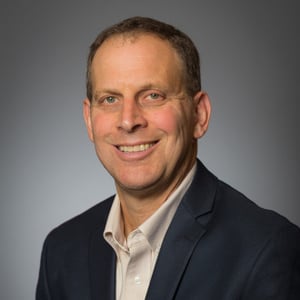
Robert S. Stevens Professor of Law, Cornell Law School
Michael C. Dorf, the Robert S. Stevens Professor of Law at Cornell Law School, has been teaching law since 1992. He has authored or co-authored six books and over one hundred scholarly articles and essays for law journals and peer-reviewed science and social science journals. He also frequently writes for non-lawyers. In addition to occasional contributions to The New York Times, USA Today, CNN.com, The Los Angeles Times, and other wide-circulation publications, Professor Dorf has been writing a bi-weekly column since 2000 and publishes a popular blog, Dorf on Law. He received his undergraduate and law degrees from Harvard. After law school, Dorf served as a law clerk for Judge Stephen Reinhardt of the U.S. Court of Appeals for the Ninth Circuit and then for Justice Anthony M. Kennedy of the U.S. Supreme Court. He has worked with several law firms and maintains an active pro bono practice mostly consisting of writing Supreme Court briefs. Before joining the Cornell faculty, Professor Dorf taught at Rutgers-Camden Law School for three years and at Columbia Law School for thirteen years.

Laurence A. Tisch Professor of Law and Director, Classical Liberal Institute, New York University School of Law; Senior Fellow, The Civitas Institute, University of Texas at Austin
Richard A. Epstein is the inaugural Laurence A. Tisch Professor of Law at NYU School of Law. Prior to his joining the faculty, he was a visiting law professor at NYU from 2007 through 2009. He served as the Peter and Kirstin Bedford Senior Fellow at the Hoover Institution from 2000 to 2024. Since 2024 to the present he is a senior lecturer at the Civitas Institute at the University of Texas—Austin. Epstein is also the James Parker Hall Distinguished Service Professor of Law Emeritus and a senior lecturer at the University of Chicago. His initial law school appointment was at the University of Southern California from 1968 to 1972. Epstein received an LL.D., h.c. from the University of Ghent, 2003. He has been a member of the American Academy of Arts and Sciences since 1985 and was a Senior Fellow of the Center for Clinical Medical Ethics at the University of Chicago Division of Biological Sciences, also from 1983. to 2022 He served as editor of the Journal of Legal Studies from 1981 to 1991, and of the Journal of Law and Economics from 1991-2001. From 2001 to 2010 he was a director of the John M. Olin Program in Law and Economics at the University of Chicago.
His newest book, The Myth of Birthright Citizenship: What the Fourteenth Amendment Really Says was published in 2026 (Encounter Books). Prior to that he has published many books including, The Dubious Morality of the Modern Administrative State (Roman & Littlefield 2020).Earlier he published th Classical Liberal Constitution: The Uncertain Quest for Limited Government (Harvard 2014) iHis previous books include Design for Liberty: Private Property, Public Administration and the Rule of Law (Harvard 2011); The Case Against the Employee Free Choice Act (Hoover 2009); Supreme Neglect: How to Revive the Constitutional Protection of Property Rights (Oxford 2008); Antitrust Decrees in Theory and Practice: Why Less is More (AEI 2007); Overdose: How Excessive Government Regulation Stifles Pharmaceutical Innovation (Yale University Press. 2006); How Progressives Rewrote the Constitution (Cato 2006); Cases and Materials on Torts (Aspen Law & Business; 8th ed. 2004); Skepticism and Freedom: A Modern Case for Classical Liberalism (University of Chicago, 2003); Torts (Aspen Law & Business 1999); Principles for a Free Society: Reconciling Individual Liberty with the Common Good (Perseus Books, 1998): Mortal Peril: Our Inalienable Rights to Health Care (Addison-Wesley, 1997); Simple Rules for a Complex World (Harvard, 1995); Bargaining With the State (Princeton, 1993); Forbidden Grounds: The Case Against Employment Discrimination Laws (Harvard , 1992); Takings: Private Property and the Power of Eminent Domain (Harvard, 1985); and Modern Products Liability Law (Greenwood Press, 1980). He has also edited(with Catherine M. Sharkey) Cases and Materials on the Law of Torts (10th edition 2012).
Professor Epstein has written numerous articles on a wide range of legal and interdisciplinary subjects. He has taught courses in administrative law, antitrust law, civil procedure, communications, constitutional law, contracts, corporations, criminal law, employment discrimination law, environmental law, food and drug law health law and policy, legal history, labor law, property, real estate development and finance, jurisprudence, labor law; land use planning, patents, individual, estate and corporate taxation, Roman Law; torts, and workers' compensation.
Professor Epstein also writes a regular column for Civitas Institute, which also sponsors his podcast, The Libertarian with Charles C.W. Cooke, and Law Talk, with Cooke and John Yoo. He also does a podcast with John Batchelor. And appears regularly on the Freedom File with Judge Andrew Napolitano.

Ronald Reagan Distinguished Fellow Emeritus, The Heritage Foundation
Edwin Meese III, the prominent conservative leader, thinker and elder statesman, continues a quarter-century formal association with The Heritage Foundation as the leading think tank’s Ronald Reagan Distinguished Fellow Emeritus.
In that capacity, Meese oversees special projects and acts as an ambassador for Heritage within the conservative movement.
Meese was chairman of Heritage’s Center for Legal and Judicial Studies from its founding in 2001 until what he calls his “semi-retirement” on Feb. 1, 2013.
He joined Heritage in 1988 as the think tank's first Ronald Reagan Distinguished Fellow -- the only policy chair in the country to be officially named for the 40th president. His work focused on keeping President Reagan’s legacy of conservative principles alive in public debate and discourse.
The legal center now bears his name, in recognition of Meese’s contributions to the rule of law and the nation’s understanding of constitutional law. Its mission is to educate government officials, the media and the public about the Constitution and legal principles -- and how they affect public policy.
Perhaps best known as U.S. attorney general during Reagan’s second term, Meese’s service to the conservative icon stretched from the California governor’s mansion in 1966 to the White House in 1981 before he went to the Department of Justice four years later.
His Heritage “hats” kept Meese among the major conservative voices in national policy debates at an age when most men and women enjoyed quiet retirements.
In 2006, for example, Meese was named to the Iraq Study Group, a special presidential commission dedicated to examining the best resolutions for America's involvement in Iraq. In the past few years he wrote and spoke about constitutional topics ranging from religious liberty to the responsibility of Supreme Court justices.
Immediately after Reagan's death in 2004, and in the years since, Meese often agreed to major media appearances to discuss the lasting impact of his old friend, mentor and boss. He has summarized the Reagan legacy in three accomplishments: Reagan cut taxes and kept them low. He worked to defeat and end the Soviet Union and its worldwide push for communism. And he restored America's faith in itself after years of failure and "malaise."
"I admired him as a leader and cherish his friendship," Meese wrote in a 2004 essay for Heritage members and supporters. "Ronald Reagan had strong convictions. He was committed to the principles that had led to the founding of our nation. And he had the courage to follow his convictions against all odds." <[>Edwin Meese III was born Dec. 2, 1931, to Edwin Jr. and Leone Meese in Oakland, Calif. He graduated from Yale University in 1953 and holds a law degree from the University of California-Berkeley.
Meese spent much of his adult life working for Reagan, first after the former actor, sports announcer and athlete was elected as California’s governor in 1966 and then when he sought and won the presidency in 1980.
Reagan never forgot Meese's loyalty and hard work. During a press conference at which reporters questioned Meese's actions at the Justice Department, Reagan replied: "If Ed Meese is not a good man, there are no good men."
During the Reagan governorship, Meese served as executive assistant and chief of staff from 1969 through 1974 and as legal affairs secretary from 1967 through 1968. He previously was deputy district attorney in Alameda County, Calif.
From January 1981 to February 1985, Meese held the position of counsellor to the president -- the senior job on the White House staff -- and functioned as Reagan's chief policy adviser. In 1985, he received Government Executive magazine's annual award for excellence in management.
Meese served as the 75th attorney general of the United States from February 1985 to August 1988. As the nation's chief law enforcement officer, he directed the Justice Department and led international efforts to combat terrorism, drug trafficking and organized crime.
Meese’s relationship with Heritage began when he met with senior management to discuss the think tank's landmark policy guide, Mandate for Leadership, prepared for the incoming administration. Meese later recalled that Reagan personally handed out copies of the 1,093-page book to members of his Cabinet and asked them to read it. Nearly two-thirds of Mandate's 2,000 recommendations would be adopted or attempted by the Reagan administration.
More than a decade after joining Heritage, Meese assumed the chairmanship of its Center for Legal and Judicial Studies. Under his guidance, the center counseled White House staffers, Justice Department officials and Senate Judiciary Committee members on the importance of filling judicial vacancies with qualified men and women who are committed to interpreting the Constitution according to the founding document's original meaning.
The center became known for hosting "moot court" practice sessions to sharpen the arguments of attorneys slated to bring important cases before the Supreme Court. Those cases addressed constitutional issues ranging from property rights to racial preferences in primary and secondary schools to restrictions on free speech in campaign finance law.
Meese headed the legal center's Advisory Board for the writing and editing of the best-selling book, The Heritage Guide to the Constitution (Regnery, 2005). In it, 109 experts walked readers through a clause-by-clause analysis of the Constitution. Sen. Tom Coburn (R-Okla.) was among those keeping the reference work handy during Judiciary Committee hearings on Supreme Court nominees.
Meese's other books include “Leadership, Ethics and Policing” (Prentice Hall, 2004); “Making America Safer” (Heritage, 1997); and “With Reagan: The Inside Story” (Regnery Gateway, 1992).He wrote the Introduction to a well-received 2010 book on the “overcriminalization” trend, “One Nation Under Arrest,” by Heritage veterans Paul Rosenzweig and Brian W. Walsh.
He also is a distinguished visiting fellow at the Hoover Institution at Stanford University in California and lectures, writes and consults throughout the United States on a variety of subjects.
As both attorney general and counsellor to Reagan, Meese was a member of the Cabinet and the National Security Council. He served as chairman of the Domestic Policy Council and the National Drug Policy Board. After Reagan won the White House in the 1980 election, Meese headed the transition team. During the campaign, he was the Reagan-Bush Committee's senior official.
Meese had a career outside government and politics. From 1977 to 1981, he was a law professor at the University of San Diego, where he also directed the Center for Criminal Justice Policy and Management.
He was an executive in the aerospace and transportation industry as vice president for administration of Rohr Industries Inc. in Chula Vista, Calif. He left Rohr to return to the practice of law, doing corporate and general work in San Diego County.
A retired colonel in the Army Reserve, Meese remains active in numerous civic and educational organizations.
He and his wife, Ursula, have two grown children and reside in McLean, Va.
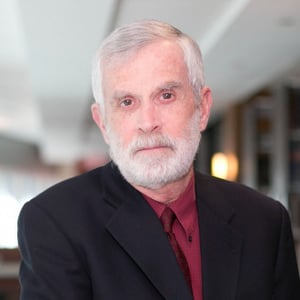
Robert W. Woodruff Professor of Law, Emory Law
Michael John Perry is the author of thirteen books and over eighty-five articles and essays. The titles of Perry’s books reflect his particular interests: The Constitution, the Courts, and Human Rights (Yale, 1982); Morality, Politics, and Law (Oxford, 1988); Love and Power: The Role of Religion and Morality in American Politics (Oxford, 1991); The Constitution in the Courts: Law or Politics? (Oxford, 1994); Religion in Politics: Constitutional and Moral Perspectives (Oxford, 1997); The Idea of Human Rights: Four Inquiries (Oxford, 1998); We the People: The Fourteenth Amendment and the Supreme Court (Oxford, 1999); Under God? Religious Faith and Liberal Democracy (Cambridge, 2003); Toward a Theory of Human Rights: Religion, Law, Courts (Cambridge, 2007); Constitutional Rights, Moral Controversy, and the Supreme Court (Cambridge, 2009); The Political Morality of Liberal Democracy (Cambridge, 2010); Human Rights in the Constitutional Law of the United States (Cambridge, 2013); and A Global Political Morality: Human Rights, Democracy, and Constitutionalism (Cambridge, 2017).
Since 2003, Perry has held a Robert W. Woodruff University Chair at Emory University, where he teaches in the law school. A Woodruff Chair is the highest honor Emory University bestows on a member of its faculty. Perry is also a senior fellow at Emory University’s Center for the Study of Law and Religion and a co-editor of the Journal of Law and Religion (Cambridge University Press).
Before coming to Emory, Perry was the inaugural occupant of the Howard J. Trienens Chair in Law at Northwestern University (1990-1997), where he taught for fifteen years (1982-1997). He then held the University Distinguished Chair in Law at Wake Forest University (1997-2003). Perry began his teaching career at the Ohio State University College of Law (1975-82) and has taught as a visiting professor at several law schools: Yale (1978-79), Tulane (spring semester, 1987), New York Law School (spring semester, 1990), the University of Tokyo (fall semester, 1991), the University of Alabama (fall semester, 2005), the University of Western Ontario, Canada (January term, 2009), and the University of Dayton (intrasession course, March 2011). For three consecutive fall semesters (2009, 2010, 2011), Perry was the University Distinguished Visiting Professor in Law and Peace Studies at the University of San Diego, where he taught an introductory course on international human rights both to law students and to graduate students at the Joan B. Kroc School of Peace Studies.
Perry, who was born and raised in Louisville, Kentucky, received his AB from Georgetown University (1968) and his JD from Columbia University (1973). After graduating from law school, Perry served as law clerk both to US District Judge Jack B. Weinstein (1973-74) and, a year later, to US Circuit Judge Shirley M. Hufstedler (1974-75). Perry is married to Sarah Anne O’Leary, a public health specialist at the US Centers for Disease Control and Prevention, in Atlanta. They have two sons: Daniel and Gabriel.
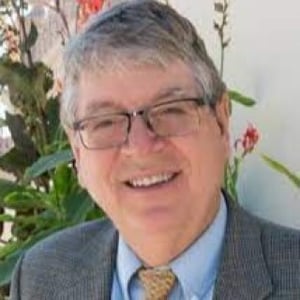
Warren Distinguished Professor of Law; Co-Executive Director, Institute for Law & Religion; Co-Executive Director, Institute for Law & Philosophy, University of San Diego School of Law
Steven D. Smith, J.D. Yale 1979, B.A. BYU 1976, is a Warren Distinguished Professor of Law at the University of San Diego, and Co-Director of that university's Institute for Law and Religion. Before moving to San Diego, he was the Robert and Marion Short Professor at Notre Dame Law School and the Byron R. White Professor of Law at the University of Colorado.
Professor Smith's first book, Foreordained Failure: The Quest for a Constitutional Principle of Religious Freedom (Oxford 1995), critically examines both the standard historical and normative accounts of religious freedom. This examination is continued in his most recent book, The Rise and Decline of American Religious Freedom (Harvard 2014), which offers a "revised account" in contrast to the standard story of religious freedom in this country. Recently described as a kind of "conservative Crit," Professor Smith has offered critical analyses of more general philosophical and jurisprudential themes in Law's Quandary (Harvard 2004) and The Disenchantment of Secular Discourse (Harvard 2010).
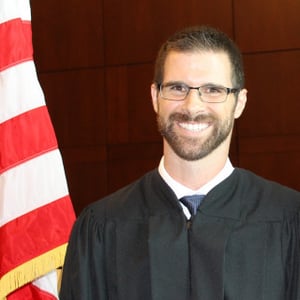
Judge, U.S. District Court, Eastern and Western Districts of Missouri
Josh Divine was most recently the Solicitor General of Missouri, where he oversaw the office's appellate and special litigation divisions. As Solicitor General, Mr. Divine led Missouri's trial and appellate teams to some of its most significant victories. Mr. Divine was lead counsel in blocking $700 billion in student loan bailouts attempted by the federal government. He was lead counsel in obtaining a $25 billion judgment against China for antitrust violations. And he was lead counsel in successfully defending the Missouri law that prohibits gender transition interventions in minors, making Missouri the only state in the nation to prevail at trial against an equal protection challenge to one of these laws. In addition, Mr. Divine's work at the trial court in Missouri v. Biden (restyled Murthy v. Missouri) helped expose systemic violations of the First Amendment by the federal government, which the trial court found was unconstitutionally pressuring social media companies to suppress millions of free speech posts.
Before serving as Solicitor General, Mr. Divine was Chief Counsel to U.S. Senator Josh Hawley, where he oversaw all legal issues, managed matters related to the Judiciary Committee, and developed tech policy. Mr. Divine clerked on the Supreme Court for Justice Thomas and on the Eleventh Circuit for Judge William Pryor. He received a J.D. from Yale Law School and a Bachelor of Science degree in mathematics from the University of Northern Colorado. His recent legal scholarship has appeared in the Virginia Law Review and the Hastings Law Journal.
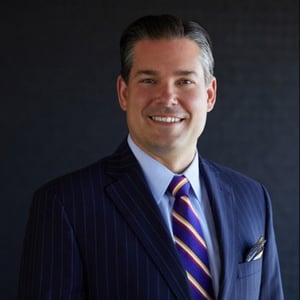
Partner, Graves Garrett Greim LLC
Edward “Eddie” Greim focuses his practice on complex commercial litigation, free speech and election law, and internal investigations and whistleblower claims. He has been recognized for his successful representation of businesses and individuals in commercial litigation while also being named a “go-to” lawyer on policy and constitutional issues.
Eddie was named a Constitutional and Election Law Trailblazer by the National Law Journal in 2020. His free speech and election law practice has included numerous constitutional challenges to election and campaign finance laws; representation of clients in state and federal ethics and campaign finance enforcement actions and investigations; initiative petition drafting and litigation; litigation and advice regarding First Amendment protections for petition circulation; representation of not-for-profit clients before state regulators; litigation of state and federal redistricting issues; and advice on campaign and election law compliance.
Eddie complements his trial work in complex, high-profile commercial and constitutional cases with oral advocacy and briefing in important appeals. Recognized as a Missouri Lawyers Media POWER 30 Appellate Attorney in 2021, he has argued before the Missouri and Kansas supreme courts multiple times, other state appellate courts across the country, and before the Sixth, Seventh, Eighth, and Tenth U.S. Courts of Appeals.
Eddie’s notable work for clients includes:
Recovering substantial compensation and injunctive relief for plaintiffs, in complex multiyear litigation, as lead counsel in the first and only nationwide class action certified against the Internal Revenue Service for violating taxpayer protection statutes when it targeted hundreds of groups based on their political viewpoints.
Successful First Amendment challenge to Missouri’s 2016 campaign finance restrictions.
Successful challenge to a vast, multiyear, secret criminal investigation into Wisconsin political groups and nonprofits, and follow-up challenge to expose role of state ethics board which secretly aided the investigation and was later dissolved by the legislature.
U.S. Supreme Court amicus brief for the National Republican Redistricting Trust in the 2019 Rucho litigation, and federal and state redistricting litigation and advice since 2011.
Challenges under the First Amendment in federal court, and in briefing to the Michigan Supreme Court on state constitutional grounds, to unprecedented emergency powers claimed by Michigan Governor in 2020.
Representation of numerous public officials and private citizens who are subject to “lawfare” attacks based on their political viewpoints or policy objectives.
Oversight of multiple internal investigations.
Eddie received his law degree from Harvard Law School in 2002, where he taught on the Board of Student Advisers, received the Dean’s Award for Leadership, and served as President of the Harvard Catholic Law Students Association. He received two bachelor’s degrees, summa cum laude, in economics and political science from the University of Missouri.
A native of Excelsior Springs, Missouri, Eddie lives in Kansas City with his family. He enjoys Missouri and military history. On many weekends, he can be found with his wife and daughters exploring sites of local interest. He enjoys reading and debating and has given presentations or organized discussions at numerous gatherings, formal and informal, of professional and personal interest.
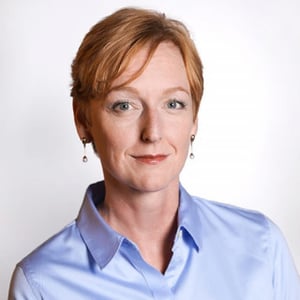
Raymond & Miriam Ehrlich Eminent Scholar Chair in US Constitutional Law, University of Florida Levin College of Law
Lyrissa Lidsky is the Raymond & Miriam Ehrlich Eminent Scholar Chair in U.S. Constitutional Law at Florida Law. She previously served as Dean of the University of Missouri School of Law from 2017-2022. The focus of her research and teaching is the intersection of Tort Law and the First Amendment, with an emphasis on defamation and free speech issues in social media. Missouri Lawyers Media named Lidsky its 2020 Woman of the Year based on her scholarship, passion for law, mentorship of students, and engagement of constituencies supporting the school of law.
Before becoming dean at Missouri, Lidsky served in a variety of leadership roles at UF Law, including as associate dean for graduate and international programs and associate dean for faculty development. She also held the Stephen C. O’Connell Chair in Law and received a number of teaching awards during her 23-year tenure at UF, including student-selected awards such as Teacher of the Year (twice) and Faculty Graduation Speaker (three times), as well as Teacher of the Year, which was selected by a faculty committee.
Lidsky is co-reporter on the Restatement of Defamation and Privacy, which is now in progress. She is co-author of a leading Media Law casebook, a First Amendment casebook, and a reference book on press freedom and has published dozens of articles, culminating in a forthcoming article in the Virginia Law Review, co-authored with Professor Christina Koningisor, called First Amendment Disequilibrium. Her work on anonymous speech has been cited by a number of state supreme courts and the highest courts of Canada and Hong Kong.
Before becoming a law professor, Lidsky served as a clerk for the Honorable Joseph T. Sneed of the United States Court of Appeals for the Ninth Circuit in San Francisco, Calif. Lidsky received her law degree from the University of Texas School of Law with high honors. She was initiated into Order of the Coif in recognition of her scholastic achievement and served as articles editor of the Texas Law Review. Before law school, she was a Fulbright Scholar at Cambridge University in England, studying medieval legal history and early development of the Common Law. She received her bachelor’s degree, summa cum laude, in English and political science from Texas A&M University.
Visiting Associate Professor of Law and Research Fellow for the Study of Objectivism
An accomplished scholar on Objectivism and privacy law, Professor Amy Peikoff has served as a faculty member at universities around the country over the past decade, teaching and writing in the areas of Contemporary Moral Problems, Contracts, Ethics, Information Privacy Law, Morality and Business, Philosophy of Law, Political Philosophy and Professional Responsibility. She served as a visiting lecturer at the University of Texas at Austin in 2003, a visiting assistant professor at the University of North Carolina at Chapel Hill in 2004, an assistant and associate professor at the U.S. Air Force Academy from 2005 to 2008, and as a visiting fellow at Chapman University School of Law from 2008 to 2012.
She joined Southwestern’s adjunct faculty in January 2013, also serving as a research fellow, and was appointed as Visiting Associate Professor and Research Fellow for the Study of Objectivism at Southwestern in July 2014. She is teaching courses in Law and Literature, Education Law and Jurisprudence Seminar. In her role as a Research Fellow, Professor Peikoff will engage in scholarly work related to the philosophy and writings of Ayn Rand. The Fellowship is funded by the Anthem Foundation for Objectivist Scholarship.
In trying to convey to her students some effective ways to approach their studies, Professor Peikoff shares what she found to be true in her own law school career. “If you care about what the law says about a particular issue, you will remember it and do better on exams,” she says. “Always try to connect what you're learning in school to things and people you value.”
Professor Peikoff’s articles have been published in a variety of scholarly journals such as Brandeis Law Journal, NYU Journal of Law & Liberty, St. John’s Law Review and Virginia Journal of Social Policy & The Law, among others. She has lectured and served as a panelist on privacy issues and individual rights at dozens of Objectivist conferences and scholarly forums around the country, including DePaul College of Law, Keck Graduate Institute, Stanford, UCLA and University of Texas at Austin, as well as the Liberty Conference in Brazil.
Professor Peikoff finds the most exciting aspect of her area of interest to be “seeing a problem and coming up with a solution that can affect something you care about.” For example, after writing about privacy issues for many years, she found her interest waning, until the 2012 Supreme Court decision in United States v. Jones inspired her to solve the problem of the "third-party doctrine" and, one year later, “Edward Snowden's revelations made that solution more relevant than ever.”
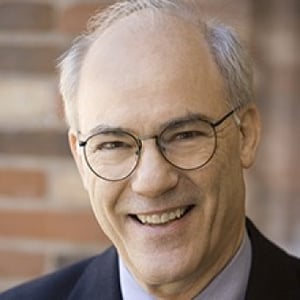
Walter E. Meyer Professor Emeritus of Property and Urban Law and Professorial Lecturer in Law, Yale Law School
Robert C. Ellickson was appointed Walter E. Meyer Professor of Property and Urban Law at Yale Law School in 1988. He has published numerous articles in legal and public policy journals on topics such as land use and housing policy, land tenure systems, social norms, homelessness, and the organization of households, community associations, and cities. Professor Ellickson’s books include Order Without Law: How Neighbors Settle Disputes (1991) (awarded the Order of the Coif Triennial Book Award in 1996), The Household: Informal Order Around the Hearth (2008), Land Use Controls: Cases and Materials (4th edition 2013, with Vicki Been, Roderick M. Hills, Jr. and Christopher Serkin), and Perspectives on Property Law (4th edition 2014, with Carol M. Rose and Henry E. Smith). He has written about ancient systems of land tenure and also periodically teaches a seminar on the history of development of the City of New Haven. Robert Ellickson was a member of the USC Law Faculty in 1970–1981, and the Stanford Law Faculty in 1981–88. He also has been a visiting professor at the Harvard and University of Chicago Law Schools. He was a founding member and later a director of the American Law and Economics Association, and served as its President in 2000–01. In 2016, the Association awarded him the Ronald H. Coase Medal in recognition of his scholarly contributions. Professor Ellickson served as an adviser during the American Law Institute’s preparation of the Restatement, Third, Property—Servitudes, and currently serves in the same capacity for the Restatement (Fourth) of Property. He is a fellow of the American Academy of Arts and Sciences, and, in 2008, received the William & Mary Law School’s Brigham-Kanner Property Rights Prize for Property Scholarship. At Yale Law School he has served as Deputy Dean (1991–92) and, during the reconstruction of the Sterling Law buildings, as chairman of the Building Committee. Prior to entering teaching in 1970, he worked for a Presidential commission on housing policy and then for Levitt & Sons, the homebuilding firm. Professor Ellickson is married to Lynn Hammer and has two children. For many decades he competed in competitive Scrabble tournaments and, during intervals when fortune smiled, was ranked as one of the top 20 players in the United States.

Senior Judge, United States Court of Appeals, District of Columbia Circuit
Circuit Judge Douglas H. Ginsburg was appointed to the United States Court of Appeals for the District of Columbia in 1986. After receiving his B.S. from Cornell University in 1970, and his J.D. from the University of Chicago Law School in 1973, he clerked on the D.C. Circuit and for Justice Thurgood Marshall on the United States Supreme Court. Thereafter, Judge Ginsburg was a professor at the Harvard Law School, the Deputy Assistant and then Assistant Attorney General for the Antitrust Division of the Department of Justice, as well as the Administrator of the Office of Information and Regulatory Affairs in the Office of Management and Budget. Concurrent with his service as a federal judge, Judge Ginsburg has taught at the University of Chicago Law School and the New York University School of Law. Judge Ginsburg is currently a Professor of Law at the George Mason University and a visiting professor at University College London, Faculty of Laws.
Judge Ginsburg is the Chairman of the International Advisory Board of the Global Antitrust Institute at the Law and Economics Center of the George Mason University School of Law. He also serves on the Advisory Boards of: Competition Policy International; the Harvard Journal of Law and Public Policy; the Journal of Competition Law and Economics; the Journal of Law, Economics & Policy; the Supreme Court Economic Review; the University of Chicago Law Review; the New York University Journal of Law and Liberty; and, at University College London, both the Centre for Law, Economics and Society and the Jevons Institute for Competition Law and Economics.
In 2020, Judge Ginsburg was the 11th recipient of the John Sherman Award, presented by the Antitrust Division of the Department of Justice in recognition of the awardee’s Lifetime Contributions to Antitrust Law and Policy.
In 2014, Judge Ginsburg received the Lifetime Achievement Award given annually by the Global Competition Review.
He is the author or co-author of several books and more than 100 articles on competition and regulation, including, most recently, Growing Convergence: The Limited Role of Antitrust in Standard Essential Patent Disputes, in CPI Antitrust Chronicle, Summer 2021, Vol. 1, No. 2.
Earl Warren DeLano Professor Emeritus of Law, University of Michigan Law School
James E. Krier, the Earl Warren DeLano Professor Emeritus of Law, has taught courses on contracts, property, trusts and estates, behavioral law and economics, and pollution policy.
His research interests are primarily in the fields of property and law and economics, and he is the author or co-author of several books, including Environmental Law and Policy, Pollution and Policy, and Property (8th ed.). Professor Krier's most recent articles have been published in the Harvard Law Review, the Supreme Court Economic Review, the UCLA Law Review, and the Cornell Law Review. A professor of law at UCLA and Stanford before joining the Michigan Law faculty in 1983, he has been a visiting professor at Harvard Law School, Yeshiva University's Benjamin N. Cardozo School of Law, and the University of Alabama Law School. He then practiced law for two years with Arnold & Porter in Washington, D.C. In 2012, he was awarded the Brigham-Kanner Property Rights Prize.
President, Norton Regulatory Strategies and Former Secretary, U.S. Department of the Interior
Gale Norton has three decades of experience handling energy, natural resources, and environmental issues. As Secretary of the Interior, 2001-2006, she played a key role in shaping national energy policies. A member of President George W. Bush’s Cabinet, Norton was responsible for managing over 20% of the land area of the United States, a Fortune-500-sized budget, and a workforce of 70,000 employees.
In the face of crises including the September 11th attacks and the War on Terror, increasing domestic energy production became a major focus for Norton’s term. She oversaw lands and offshore areas that produced a third of America's domestic oil, natural gas, and coal. She was actively involved in consideration of the Energy Policy Act of 2005, offshore and onshore oil and gas production, coal mine leasing and reclamation, hydroelectric generation, as well as biomass, wind and geothermal development.
Norton led efforts that resolved 70-year-old interstate disputes on the Colorado River and instituted a west-wide water conservation program. She championed the President's Healthy Forest Initiative and Cooperative Conservation.
Norton returned to Colorado as General Counsel for Royal Dutch Shell Unconventional Oil, 2007-2010. She was a member of Shell’s global legal leadership team, and handled legal, regulatory and governmental issues for Shell’s oil shale and in-situ oil sands projects, primarily in Colorado and Alberta.
As an attorney, Norton has handled multi-billion-dollar and high-profile litigation involving products liability, antitrust, taxation, environmental and constitutional issues, including arguing cases before the US Supreme Court and negotiating one of the largest lawsuit settlements in history. Norton served two terms as the elected Attorney General of Colorado, 1991-1999.
Norton’s background also includes serving as senior counsel at Brownstein, Hyatt & Farber, P.C.; Associate Solicitor of the U.S. Department of the Interior; Assistant to the Deputy Secretary of Agriculture; National Fellow of Stanford University’s Hoover Institution; and Senior Attorney for Mountain States Legal Foundation. Norton has a B.A., J.D. and honorary Ph.D. from the University of Denver, and an honorary Dr. Eng. from the Colorado School of Mines. She has chaired the National Park Foundation and the Migratory Bird Conservation Commission.
Norton is currently a Senior Advisor for Clean Range Ventures, an energy technology venture capital firm. She serves on boards for the Federalist Society, the Reagan Alumni Association, and the University of Colorado Renewable and Sustainable Energy Institute. She and her husband, John Hughes, are avid international travelers, golfers, skiers and outdoor enthusiasts.
University Professor; John Edward Sexton Professor of Law; Director, Frank J. Guarini Center on Environmental, Energy, and Land Use Law, New York University School of Law
Recognized as one of the world's leading scholars in environmental and administrative law, Richard Stewart is University Professor and John Edward Sexton Professor of Law at New York University School of Law. Prior to joining the NYU School of Law faculty, Stewart had served as a Byrne Professor of Administrative Law at Harvard Law School and a member of the faculty of the Kennedy School of Government at Harvard; Assistant Attorney General in charge of the Environment and Natural Resource Division of the U.S. Department of Justice, and Chairman of the Environmental Defense Fund.
Professor Stewart directs the school's Frank J. Guarini Center on Environmental and Land Use Law, which sponsors research, conferences, and publications on cutting-edge issues of environmental and land use law. Students are closely involved in the Center's activities, many of which focus on international and comparative environmental law issues, with a focus on climate law, policy and finance. His climate research and policy work includes how climate mitigation and adaptation can be promoted through sustainable cities policies and measures, and how private and public climate finance for developing countries can promote climate-sustainable urban development.
Stewart is also closely involved in the efforts of the U.S. government to solve the nation’s nuclear waste management and disposal problems. Stewart, along with NYU Professor Benedict Kingsbury, co-directs a major project on Global Administrative Law, examining how procedural opportunities for public participation in administrative decision making and review mechanisms can help meet accountability gaps in current global regulatory institutions, ranging from the WTO and the UN to informal networks of environmental and economic regulatory officials. This project, headquartered at NYU, is proceeding in collaboration with academics and officials around the globe, has produced an extensive body of research and publications aimed at developing strategies for strengthening the accountability and responsiveness of global regulatory bodies. The project includes substantial work on climate and other global environmental issues.
Stewart has worked with the Environmental Protection Committee of China’s National People’s Congress to strengthen China’s environmental laws. He has also been involved, with UN agencies and NGOs, in the development of domestic and international emissions trading systems to control greenhouse gases. He and colleagues have published a major book on Climate Finance, and held an international conference and series of workshops on climate finance in Abu Dhabi under the auspices of the NYU Abu Dhabi Institute. The Center has also conducted environmental legal assistance projects for developing countries and countries with economies in transition including issues of urbanization. Students are extensively involved in these projects.
A prolific author, Stewart has published ten books and more than 100 articles on environmental and administrative law, including the intersection between theory and practice in environmental law and the need to develop innovative methods for environmental protection. His writing favors a reliance on a market-oriented approach to environmental protection, rather than the central-planning systems of command and control regulation that have been used for the past 30 years. He has been a visiting professor at the Universities of Bologna, Chicago, and Rome, the University of California at Berkeley, the European University Institute, Yale University and Georgetown University. He is a member of the American Academy of Arts and Sciences and the American Law Institute, a Director of the Health Effects Institute, and a member of the editorial boards of several European scholarly journals. He holds honorary degrees from The University of Rome "La Sapienza” and the Erasmus University in the Netherlands.
Senior Counsel, Caplin & Drysdale; Adjunct Professor of Law, Georgetown Law
Professor Carney is a Senior Counsel with Caplin & Drysdale, Cht’d. in Washington, D.C. He served as a Trial Attorney for the Tax Division of the U.S. Department of Justice for six years, and was in private (law firm) tax practice for many years, specializing in IRS administrative practice, tax controversies (audit and IRS Appeals Office), and tax litigation. He also advised clients in a similar capacity as a partner in the National Tax Office of Ernst & Young LLP in Washington. He is a member of the District of Columbia bar, as well as the bars of the U.S. Tax Court, U.S. Court of Federal Claims, U.S. District Court for the District of Columbia, and the U.S. Courts of Appeals for the Federal Circuit, D.C Circuit, and Eleventh Circuit.
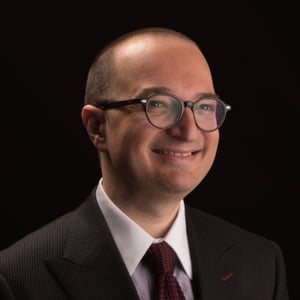
Professor of Law, University of Baltimore School of Law (on leave); Senior Counsel, U.S. Department of Justice
Professor Dolin’s scholarship centers on patent law with a specific focus on how the patent regime affects innovation, especially in bio-pharmaceutical areas. His work in these areas includes a number of scholarly articles, presentations, amicus briefs, and congressional testimony.
Dr. Dolin is currently on leave from his academic duties while he serves as Senior Counsel in the Civil Rights Division of the United States Department of Justice.
From January 2020 to January 2022, Professor Dolin served as a resident Associate Justice of the Supreme Court of the Republic of Palau. In this role, he (together with other members of the Court) heard appeals in civil, criminal, administrative, and constitutional law matters.
Prior to joining the University of Baltimore School of Law, Professor Dolin held visiting appointments in other law schools. He also served as a law clerk to the Hon. Pauline Newman, of the U.S. Court of Appeals for the Federal Circuit and the late Hon. H. Emory Widener Jr., of the U.S. Court of Appeals for the Fourth Circuit.
Rumors that he has a real Russian bear in his office are entirely true.

Associate Dean for Research and Intellectual Life, McKnight Presidential Professor in Law, Distinguished McKnight University Professor, Harlan Albert Rogers Professor in Law, Associate Director, Corporate Institute, University of Minnesota Law School
Professor Kristin E. Hickman is the McKnight Presidential Professor in Law, a Distinguished McKnight University Professor, and Harlan Albert Rogers Professor in Law at the University of Minnesota Law School. She also has taught at Harvard Law School and Northwestern University School of Law. Professor Hickman teaches and writes primarily in the areas of administrative law, tax administration, and statutory interpretation. Her articles on these topics have appeared in the Columbia Law Review, Cornell Law Review, Virginia Law Review, Duke Law Journal, and other publications. She also co-authors the Administrative Law Treatise with Richard J. Pierce, Jr., and a casebook on federal administrative law with Pierce and Christopher J. Walker. Her scholarly work has been cited several times in opinions of the United States Supreme Court as well as regularly in lower court judicial opinions and court briefs.
In 2018-19, Professor Hickman served as Special Adviser to the Administrator of the Office of Information and Regulatory Affairs in Washington, D.C. She presently serves as a Senior Fellow, and previously served as a public member and chair of the judicial review committee, for the Administrative Conference of the United States. She also is a Fellow of the American College of Tax Counsel.
Professor Hickman received her B.S. degree in business administration with a concentration in accounting and a secondary major in history from Trinity University in San Antonio, Texas. After practicing for several years as a certified public accountant, Professor Hickman earned her J.D. degree, magna cum laude, from Northwestern University School of Law, where she was awarded the Raoul Berger Prize and the Lowden Wigmore Prize for her scholarly writings. Following law school, Professor Hickman clerked for The Honorable David B. Sentelle of the United States Court of Appeals for the District of Columbia Circuit and practiced law as an associate with the Chicago office of Skadden, Arps, Slate, Meagher & Flom, concentrating on corporate and international tax transactions and matters.
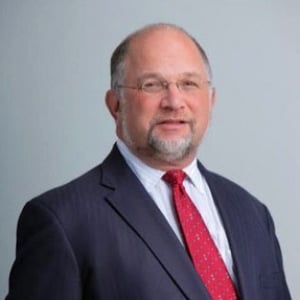
Stu Bassin has been a leading figure in the federal tax arena for the past two decades. He founded the Bassin Law Firm following a long career as one of the U.S. Department of Justice’s top tax litigators and a stint as the national leader of the civil tax litigation practice of an AmLaw 100 law firm.
The U.S. Justice Department has recognized his skills by naming him an Outstanding Attorney on six different occasions. His work for private clients was recognized by U.S. News and World Report, which named his prior firm as one of the country’s top 15 tax litigation firms. During 2019, he was elected to the American College of Tax Counsel, an honorary society reserved for those at the top of the profession. He is recognized as a thought leader in the profession, frequently speaking at bar association events and publishing in leading professional journals.
Stu handles a wide variety of tax matters, particularly involving disputes with the IRS. He is one of the leading tax litigators in the country and has tried many of the most prominent cases of the past decade. He also has broad expertise in civil litigation, particularly complex cases and matters involving electronic discovery questions. Often, he advises small businesses on an array of general corporate and business issues.
He lives in Bethesda, Maryland with his wife, daughter, and dog. In his free time, he served on the board of his local high school crew club and is involved in other community affairs. He is admitted to practice in Maryland, the District of Columbia, and many federal courts.
Senior Counsel, Caplin & Drysdale; Adjunct Professor of Law, Georgetown Law
Professor Carney is a Senior Counsel with Caplin & Drysdale, Cht’d. in Washington, D.C. He served as a Trial Attorney for the Tax Division of the U.S. Department of Justice for six years, and was in private (law firm) tax practice for many years, specializing in IRS administrative practice, tax controversies (audit and IRS Appeals Office), and tax litigation. He also advised clients in a similar capacity as a partner in the National Tax Office of Ernst & Young LLP in Washington. He is a member of the District of Columbia bar, as well as the bars of the U.S. Tax Court, U.S. Court of Federal Claims, U.S. District Court for the District of Columbia, and the U.S. Courts of Appeals for the Federal Circuit, D.C Circuit, and Eleventh Circuit.
Associate Dean for Research and Intellectual Life, McKnight Presidential Professor in Law, Distinguished McKnight University Professor, Harlan Albert Rogers Professor in Law, Associate Director, Corporate Institute, University of Minnesota Law School
Professor Kristin E. Hickman is the McKnight Presidential Professor in Law, a Distinguished McKnight University Professor, and Harlan Albert Rogers Professor in Law at the University of Minnesota Law School. She also has taught at Harvard Law School and Northwestern University School of Law. Professor Hickman teaches and writes primarily in the areas of administrative law, tax administration, and statutory interpretation. Her articles on these topics have appeared in the Columbia Law Review, Cornell Law Review, Virginia Law Review, Duke Law Journal, and other publications. She also co-authors the Administrative Law Treatise with Richard J. Pierce, Jr., and a casebook on federal administrative law with Pierce and Christopher J. Walker. Her scholarly work has been cited several times in opinions of the United States Supreme Court as well as regularly in lower court judicial opinions and court briefs.
In 2018-19, Professor Hickman served as Special Adviser to the Administrator of the Office of Information and Regulatory Affairs in Washington, D.C. She presently serves as a Senior Fellow, and previously served as a public member and chair of the judicial review committee, for the Administrative Conference of the United States. She also is a Fellow of the American College of Tax Counsel.
Professor Hickman received her B.S. degree in business administration with a concentration in accounting and a secondary major in history from Trinity University in San Antonio, Texas. After practicing for several years as a certified public accountant, Professor Hickman earned her J.D. degree, magna cum laude, from Northwestern University School of Law, where she was awarded the Raoul Berger Prize and the Lowden Wigmore Prize for her scholarly writings. Following law school, Professor Hickman clerked for The Honorable David B. Sentelle of the United States Court of Appeals for the District of Columbia Circuit and practiced law as an associate with the Chicago office of Skadden, Arps, Slate, Meagher & Flom, concentrating on corporate and international tax transactions and matters.

Professor Emeritus, Paul M. Hebert Law Center, Louisiana State University
In memoriam
Dr. John Baker is Professor Emeritus of Law, and previously the Dale E. Bennett Professor of Law, at Louisiana State University Law School. He is currently Visiting Professor at Peking University School of Transnational Law (via Zoom) and has been Visiting Professor at The Center for the Constitution, Georgetown Law School (2013-2020). He has also been a Visiting Fellow at Oriel College, the University of Oxford (2012-2014) and taught at Blackfriars Hall, Oxford in 2014. Dr. Baker has also been an adjunct Fellow at the Heritage Foundation (Spring, 2008) and a Distinguished Scholar at the Catholic University of America Law School (2011-12). He has taught at Tulane Law School, George Mason Law School, Pepperdine Law School, New York Law School, Hong Kong University, and the University of Dallas, School of Management and also taught and/or lectured in 17 foreign countries. Notable among his foreign visits are the
following: Visiting Professor at the University of Lyon III (France) (1999-2011); Visiting Professor at the Universidad de los Andes, Chile (2012), as a Fulbright Specialist (2006); and a Fulbright Scholar at various universities in the Philippines. Dr. Baker received his J.D., with honors, from the University of Michigan Law School and his B.A., magna cum laude, from the University of Dallas. He also earned a Ph.D. in Political Thought from the University of London. Baker has taught over a dozen different subjects, mostly courses in public law. His main areas of interest are Constitutional Law (particularly federalism and separation of powers), Criminal Law, Anti-Terrorism Law, International Law, Health Care Law, Mediation, and Comparative Law.
In addition to law review articles and book chapters, Dr. Baker’s academic publications include Hall's Criminal Law: Cases and Materials (with Benson, Force and George; 5th ed. Michie, 1993); An Introduction to the Law of the United States (ed. with Levasseur; University Press of America, 1992). He has also published on Forbes.com, FoxNews.com, in The Washington Times, and a number of times in The Wall Street Journal. He argues in federal court, including two oral arguments in the U.S. Supreme Court. For many years, he co-taught courses for the Federalist Society on separation of powers with the late Supreme Court Justice Antonin Scalia. In September 2016, he co-taught a Supreme Court seminar in China with Justice Samuel Alito. Following law school, he served as a law clerk in federal district court and as an assistant district attorney in New Orleans before joining LSU in 1975. While a professor, he has been as a consultant to USAID, USIA (since rolled into the State Department), the Justice Department, the U.S. Senate Judiciary Subcommittee on Separation of Powers, and the Office of Planning in the White House. He served on an ABA Task Force which issued the report, The Federalization of Crime (1998) and later as a consultant to the “Bi-Partisan Task Force on the Over- federalization of Crime” (2012-2014) created by the U.S. House Judiciary Subcommittee on Crime. Dr. Baker was a co-founder of the first iteration (1995) of Stratfor Inc., a global intelligence agency. He co-authored its first book: The Intelligence Edge (with Friedman, Friedman and Chapman; Crown Books/Random House 1997). In 2022, he began a short, weekly video podcast available on YouTube and Rumble, The Baker Brief.
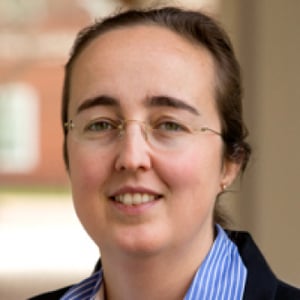
Assistant Professor of Political Science, Old Dominion University
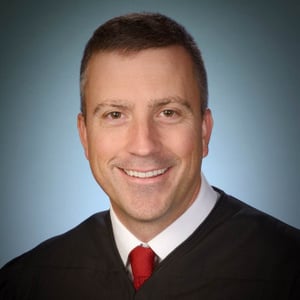
Judge, United States District Court, District of Columbia
Judge Trevor N. McFadden was appointed to the United States District Court for the District of Columbia in 2017. He received his B.A. in 2001 from Wheaton College, IL, magna cum laude. In 2006, he received his J.D. from the University of Virginia School of Law, where he graduated Order of the Coif and was an editor for the Virginia Law Review.
Following graduation from law school, Judge McFadden clerked for Judge Steven Colloton, U.S. Court of Appeals for the Eighth Circuit. He then joined the U.S. Department of Justice, where he served as Counsel to the Deputy Attorney General and as Assistant U.S. Attorney in the District of Columbia. Judge McFadden subsequently became a partner at Baker & McKenzie LLP in Washington, DC, where he focused on white collar investigations. He is also co-author of a treatise, Corporate Settlement Tools: DPAs, NPAs, and Cooperation Agreements.
After four years in private practice, Judge McFadden returned to the U.S. Department of Justice, where he was Deputy Assistant Attorney General and acted as the second-in-command of the Department's Criminal Division. As Deputy Assistant Attorney General, he managed the Division's Fraud and Appellate Sections.
Judge McFadden also has extensive experience in law enforcement. He served as an officer with the Fairfax County, VA, Police Department and as a deputy sheriff in Madison County, VA.
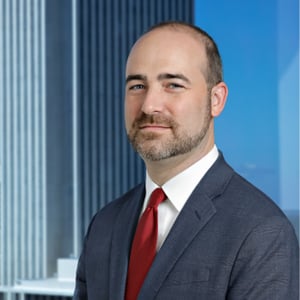
Partner, Shutts & Bowen LLP
Daniel Nordby is a partner in the Tallahassee office of Shutts & Bowen LLP, where he is a member of the Appellate Practice Group. His practice focuses on high-profile, high stakes matters of law and public policy, particularly in the areas of constitutional, appellate and administrative law.
Over the course of his career, Daniel has developed extensive experience in the area of government and administrative law. He is a Past Chair of the Florida Bar’s Administrative Law Section and has served on the Section’s Executive Council for more than a decade. Daniel has represented clients in some of Florida’s largest competitive procurements and has served as counsel of record in a variety of administrative and judicial proceedings involving the application of constitutional and administrative law principles. He has personally presented oral argument on multiple occasions before the Florida Supreme Court, Florida’s First District Court of Appeal, and the Federal Court of Appeals for the Eleventh Circuit on high-profile matters of constitutional law. A representative list of Daniel’s reported opinions in the state and federal courts is available here.
Daniel draws on his prior service in the public sector when representing businesses, individuals and governmental clients on their most challenging legal issues. As General Counsel to then-Governor Rick Scott from 2017-2019, Daniel provided oversight and strategic direction for all major litigation involving Florida’s executive branch agencies and advised Governor Scott on the appointment of more than 100 judges to Florida’s trial and appellate courts. Daniel’s career also includes service as General Counsel to the Florida House of Representatives, General Counsel to Florida’s Secretary of State, Assistant General Counsel to the Florida Department of Education, and Staff Attorney to the Florida Legislature’s Joint Administrative Procedures Committee.
Daniel continues his public service as a gubernatorial appointee to the Florida Supreme Court Judicial Nominating Commission. After serving on the Commission from 2012-2018 as a direct appointee of Governor Scott, Daniel was appointed by Governor DeSantis in July 2019 to a third term. He currently serves as Chair of the Florida Supreme Court Judicial Nominating Commission.
Daniel is also involved with several non-profit and community groups. He is a graduate of Leadership Florida (Connect VI), a member of Florida Blue Key, a member of the American Enterprise Institute’s Leaders Network, and a member of the James Madison Institute’s Inaugural Class of Leaders Fellows. Daniel is on the Steering Committee of the Tallahassee Lawyers Chapter of the Federalist Society for Law and Public Policy Studies and is a Past President of both its Tallahassee Lawyers Chapter and University of Florida Student Chapter. Daniel is an Eagle Scout and attends St. Peter’s Anglican Cathedral in Tallahassee.
Daniel is a “triple-Gator” with three degrees from the University of Florida: a J.D. (with high honors), a B.S. in Microbiology and Cell Science, and a B.A. in Classical Studies. He has been recognized as a Florida Super Lawyers “Rising Star” and has been named to the roster of Florida Legal Elite by Florida Trend magazine in the categories of “Government & Administrative Law,” “Best Government & Non-Profit Attorneys,” and ”Best Up & Coming Attorneys.”

Judge, United States Court of Appeals, Fifth Circuit
Andrew Oldham is a Circuit Judge on the United States Court of Appeals for the Fifth Circuit. Before ascending to the bench, Judge Oldham served as General Counsel to Texas Governor Greg Abbott, where he advised the Governor on a range of issues under federal and state law and managed litigation in which the Governor was an interested party. Before that he served as Deputy Solicitor General for the State of Texas, where he represented Texas in federal courts across the country, including twice before the United States Supreme Court. Before moving to Texas, Judge Oldham was an attorney at Kellogg Hansen Todd Figel & Frederick in Washington, D.C. His practice focused on appellate litigation in federal courts of appeals throughout the country. Before entering private practice, Judge Oldham served as a law clerk to Justice Samuel A. Alito, Jr., at the Supreme Court of the United States and to Judge David B. Sentelle of the U.S. Court of Appeals for the District of Columbia Circuit. He also worked as an attorney-adviser in the Office of Legal Counsel at the U.S. Department of Justice from 2006 to 2008. Judge Oldham earned a B.A. from the University of Virginia with highest honors, a Truman Scholarship for graduate school, an M. Phil., first class (with distinction), from Cambridge University, and a J.D., magna cum laude, from Harvard Law School.
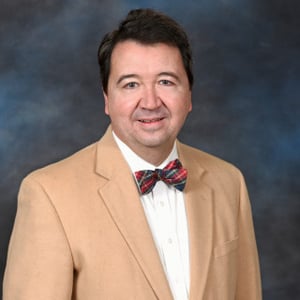
Judge, United States Court of Appeals, Sixth Circuit
John K. Bush is a Circuit Judge on the United States Court of Appeals for the Sixth Circuit.
His chambers are in Louisville, Kentucky. Prior to joining the court, Judge Bush was a partner in the
Louisville office of the firm Bingham Greenebaum Doll (now Dentons Bingham Greenebaum),
where he also was co-chair of the firm’s litigation department. He began his legal practice in the
Washington, D.C. office of Gibson Dunn & Crutcher.
Judge Bush served as a law clerk for Judge J. Smith Henley of the United States Court of
Appeals for the Eighth Circuit. He was graduated summa cum laude from Vanderbilt University,
and cum laude from Harvard Law School. He is an adjunct lecturer at The George Washington
University Law School and the Brandeis School of Law at the University of Louisville.
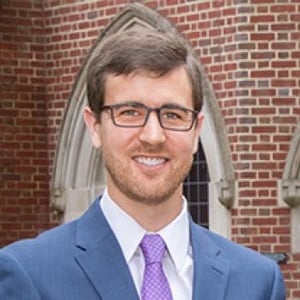
Professor of Law & Helen L. Crocker Faculty Scholar, Stanford Law School
Jud Campbell joined the faculty of Stanford Law School in 2023. He previously served as a professor of law at the University of Richmond School of Law and as a visiting professor of law at the University of Chicago Law School and at Harvard Law School. His academic focus is constitutional history and First Amendment law. His publications include articles in the Stanford Law Review, Yale Law Journal, Harvard Law Review, Texas Law Review, Constitutional Commentary, and Law and History Review. After completing his J.D. at Stanford Law School, he clerked for Judge Diane S. Sykes on the U.S. Court of Appeals for the Seventh Circuit, and for Judge José A. Cabranes on the U.S. Court of Appeals for the Second Circuit. He then served as the Executive Director of the Stanford Constitutional Law Center. He holds a bachelor’s degree from the University of North Carolina at Chapel Hill and two master’s degrees from the London School of Economics, where he studied as a Marshall Scholar.

Senior Director of Strategic Partnerships, First Liberty Institute
Lisa Budzynski Ezell is the former Vice President and Director of the Federalist Society’s Lawyers Chapters. In this role, she managed a growing network of over 90 lawyers chapters nationwide, including oversight of leadership recruitment, chapter programming, state conferences, civics education outreach, and young lawyers activities. She holds a Bachelor of Arts degree from Saint Mary’s College in Political Science and History and a Master of Public Policy from George Mason University.
Assistant Professor of Political Science, Old Dominion University

Vice President for Legal Affairs, Cato Institute
Roger Pilon is the Cato’s Institute’s vice president for legal affairs, the founding director of Cato’s Robert A. Levy Center for Constitutional Studies, the inaugural holder of Cato’s B. Kenneth Simon Chair in Constitutional Studies, and the founding publisher of the Cato Supreme Court Review.
Prior to joining Cato, Pilon held five senior posts in the Reagan administration, including at State and Justice, and was a national fellow at Stanford’s Hoover Institution. In 1989 the Bicentennial Commission presented him with its Benjamin Franklin Award for excellence in writing on the U.S. Constitution. In 2001 Columbia University’s School of General Studies awarded him its Alumni Medal of Distinction. Pilon lectures and debates at universities and law schools across the country and testifies often before Congress.
His writing has appeared in the Wall Street Journal, the Washington Post, the New York Times, the Los Angeles Times, Legal Times, National Law Journal, Harvard Journal of Law and Public Policy, Stanford Law and Policy Review, and elsewhere. He has appeared on ABC’s Nightline, CBS’s 60 Minutes II, Fox News Channel, NPR, CNN, MSNBC, CNBC, C-SPAN, and other media.
Pilon holds a BA from Columbia University, an MA and a PhD from the University of Chicago, and a JD from the George Washington University School of Law.

Hugh and Hazel Darling Foundation Professor of Law; Director, Center for the Study of Constitutional Originalism, University of San Diego School of Law
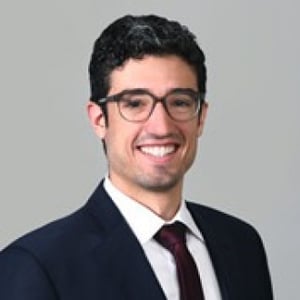
Assistant United States Attorney, United States Attorney’s Office
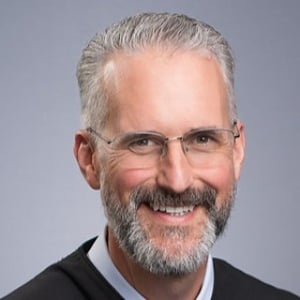
Justice, Supreme Court of Texas
Justice Kyle D. Hawkins was appointed to the Supreme Court of Texas by Governor Greg Abbott in October 2025.
Justice Hawkins previously served in the U.S. Department of Justice as Counselor to the Solicitor General, where he represented the United States before the U.S. Supreme Court. Previously, he served as the Texas Solicitor General, the state’s chief appellate advocate charged with representing the state, its agencies, and its officers in state and federal appellate courts. Earlier in his career, he served as a law clerk for U.S. Supreme Court Justice Samuel A. Alito, Jr., and for Judge Edith H. Jones of the U.S. Court of Appeals for the Fifth Circuit. As an appellate practitioner, Justice Hawkins argued five cases in the U.S. Supreme Court, nine in the Texas Supreme Court, and dozens more in other federal and state appellate courts.
In addition to his government service, Justice Hawkins served as a partner in the Dallas and Houston offices of Gibson, Dunn & Crutcher LLP, and he chaired the Texas appellate practice of Lehotsky Keller Cohn LLP, a national litigation boutique. Justice Hawkins has served as an Adjunct Professor of Law at the University of Texas School of Law.
Justice Hawkins lives in Austin, Texas, with his wife and four children.
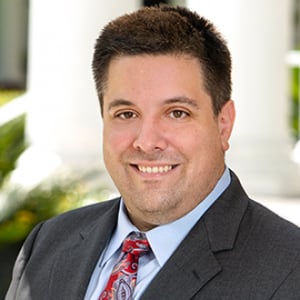
Sheila M. McDevitt Professor of Law and Faculty Director of the Election Law Center, Florida State University College of Law
Professor Morley joined FSU Law in 2018, and teaches and writes in the areas of election law, constitutional law, remedies, and the federal courts. He is best known for his work on election emergencies and post-election litigation, nationwide and other defendant-oriented injunctions, the jurisdiction of the federal courts and their equitable powers more generally. He has testified before congressional committees, made presentations to election officials for the U.S. Election Assistance Commission and participated in bipartisan blue-ribbon groups to develop election reforms. The governor of Florida also appointed Professor Morley to the Criminal Punishment Code Task Force, to propose potential revisions to the legislature.
The U.S. Supreme Court has cited several of his articles, and he was counsel of record for the successful Petitioner in a landmark campaign finance case. Professor Morley has appeared on C-SPAN, Court TV, Fox News and numerous local news programs, and has been quoted in the Washington Post, Los Angeles Times, Roll Call, Politico, U.S. News and World Report, and a wide range of other national publications. His work has been published in many of the nation’s top law reviews, including the Georgetown Law Journal, Northwestern University Law Review, Boston University Law Review and Emory Law Journal.
Before joining FSU Law, Professor Morley was a Climenko Fellow and Lecturer in Law at Harvard Law School. Prior to his experience in academia, he served in government as special assistant to the General Counsel of the Army at the Pentagon, as well as a law clerk for Judge Gerald B. Tjoflat of the U.S. Court of Appeals for the Eleventh Circuit. During his tenure with the Army General Counsel’s office, he was awarded the Meritorious Civilian Service Award and the Army Staff Lapel Pin. He also worked as an associate at Williams & Connolly LLP and the Supreme Court & Appellate group of Winston & Strawn, LLP, both in Washington, D.C.
Professor Morley earned his J.D. from Yale Law School in 2003, where he was a senior editor on the Yale Law Journal; served on the moot court board; and received the Thurman Arnold Prize for Best Oralist in the Morris Tyler Moot Court of Appeals.
Judge, United States Court of Appeals, Fifth Circuit
Andrew Oldham is a Circuit Judge on the United States Court of Appeals for the Fifth Circuit. Before ascending to the bench, Judge Oldham served as General Counsel to Texas Governor Greg Abbott, where he advised the Governor on a range of issues under federal and state law and managed litigation in which the Governor was an interested party. Before that he served as Deputy Solicitor General for the State of Texas, where he represented Texas in federal courts across the country, including twice before the United States Supreme Court. Before moving to Texas, Judge Oldham was an attorney at Kellogg Hansen Todd Figel & Frederick in Washington, D.C. His practice focused on appellate litigation in federal courts of appeals throughout the country. Before entering private practice, Judge Oldham served as a law clerk to Justice Samuel A. Alito, Jr., at the Supreme Court of the United States and to Judge David B. Sentelle of the U.S. Court of Appeals for the District of Columbia Circuit. He also worked as an attorney-adviser in the Office of Legal Counsel at the U.S. Department of Justice from 2006 to 2008. Judge Oldham earned a B.A. from the University of Virginia with highest honors, a Truman Scholarship for graduate school, an M. Phil., first class (with distinction), from Cambridge University, and a J.D., magna cum laude, from Harvard Law School.
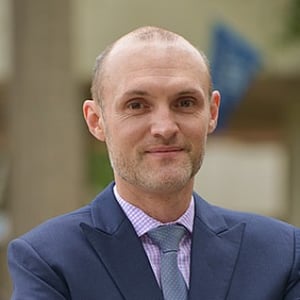
Associate Professor of Law, Washington and Lee University School of Law
Alan M. Trammell teaches and writes primarily in the fields of civil procedure, federal courts, constitutional law, and conflict of laws. He is recognized as one of the leading authorities on universal injunctions and has been invited to present his research at numerous conferences, on podcasts, and in popular media. His scholarship has appeared in the Columbia Law Review, the Virginia Law Review, the Cornell Law Review, the Texas Law Review, and the Vanderbilt Law Review.
Before joining the W&L faculty in 2020, Professor Trammell taught as an Assistant Professor at the University of Arkansas (Fayetteville). He has also served as an Associate-in-Law at Columbia Law School and a Visiting Assistant Professor at Brooklyn Law School, where the student body selected him as Professor of the Year in 2014.
Professor Trammell earned his law degree from the University of Virginia where he was a Hardy Cross Dillard Scholar and served as Articles Development Editor of the Virginia Law Review. After graduation, he clerked for the Honorable Stephen F. Williams of the U.S. Court of Appeals for the D.C. Circuit and the Honorable Theodor Meron of the International Criminal Tribunal for the former Yugoslavia in The Hague (Netherlands). He then spent three years as a litigation associate at the firm now known as Kellogg, Hansen, Todd, Figel & Frederick PLLC in Washington, D.C.
Before law school, he received a bachelor's degree from Wake Forest University and master's degrees from the London School of Economics & Political Science and Oxford University, where he studied as a Marshall Scholar.
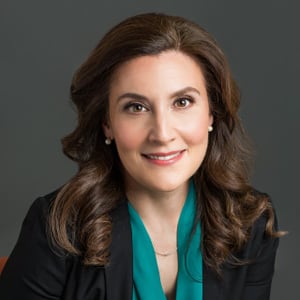
Board Member, U.S. Privacy and Civil Liberties Oversight Board
Beth A. Williams is a Board Member of the United States Privacy and Civil Liberties Oversight Board, an agency whose mission is to ensure that the federal government's efforts to prevent terrorism are balanced with the need to protect privacy and civil liberties.
Prior to her Board service, Ms. Williams was the Assistant Attorney General for the Office of Legal Policy at the United States Department of Justice from August 2017 to December 2020. In that role, she served as the primary policy advisor to the Attorney General and the Deputy Attorney General, and as the Chief Regulatory Officer for the Department. Ms. Williams also led the judicial nomination process for the Department, assisting in the selection and confirmation of more than 230 Article III judges to the bench.
Prior to becoming Assistant Attorney General, Ms. Williams was a litigation and appellate partner at a national law firm, where her practice focused on complex commercial, securities, appellate, and First Amendment litigation. From 2005-2006, Ms. Williams served as Special Counsel to the United States Senate Committee on the Judiciary, where she assisted with the confirmation of Chief Justice John G. Roberts, Jr. and Associate Justice Samuel A. Alito, Jr. to the United States Supreme Court.
Ms. Williams clerked for the Hon. Richard C. Wesley on the United State Court of Appeals for the Second Circuit. She graduated from Harvard College magna cum laude, with a degree in History and Literature, and she earned her law degree from Harvard Law School, where she served as Executive Editor of the Harvard Journal of Law and Public Policy.
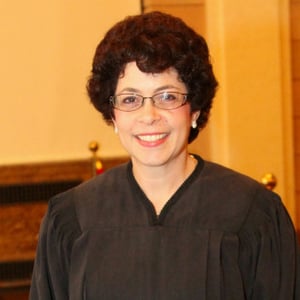
Eighth Judicial District Court, Clark County, Nevada
Judge Elissa Cadish graduated magna cum laude from the University of Pennsylvania in 1986, receiving her Bachelor of Arts degree with honors in Political Science. She received her law degree from the University of Virginia School of Law in 1989. After graduation, she moved to Las Vegas and clerked for two years for Honorable Philip M. Pro in the United States District Court for the District of Nevada.
Judge Cadish then entered private practice where she focused on commercial litigation and employment law. She practiced most recently at Hale Lane Peek Dennison and Howard, where she worked from 1995 until August of 2007, becoming a shareholder at Hale Lane in 2000. In July of 2007, she was appointed to fill the District Judge vacancy in Department 6 where she presently serves.
Judge Cadish was President of the Southern Nevada Association of Women Attorneys from 2004 to 2006, and remains an active member in that organization. She is also a Master in the Howard D. McKibben Inn of Court. She was Chair of the Court’s Civil Bench Bar Committee from 2008 until 2011, President of the Howard D. McKibben Chapter of the American Inn of Court from 2010 to 2012, Judicial Representative on the Clark County Bar Association’s Executive Board from January 2010 to December 2011, and is currently Chair of the State Bar’s Law Related Education Committee. She was honored as the Clark County Bar Association’s Ambassador of the Year for 2010, the Trial by Peers Judge of the Year for 2009, and a recipient of the Clark County Law Foundation’s Liberty Bell Award in 2016. She was recently elected to membership in the American Law Institute. Judge Cadish hears civil and criminal cases in District Court.
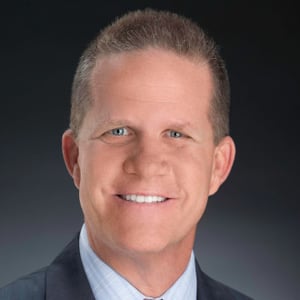
Lieutenant Governor, State of Nevada
A third generation Nevadan, born and raised in Las Vegas, Lieutenant Governor Mark Hutchison is a husband, father and grandfather, constitutional lawyer, and business owner. He has a strong sense of commitment and dedication to Nevada and is deeply honored to represent the Silver State.
Mark was raised in a modest blue-collar family and is the product of Nevada’s public education system. After he graduated from Bonanza High School Mark earned his business administration degree, Phi Kappa Phi, from the University of Nevada, Las Vegas and received his law degree, magna cum laude, from Brigham Young University. Following law school Mark clerked for a judge on the U.S. Seventh Circuit Court of Appeals in Indiana. Mark then worked for a national law firm until returning to Nevada and founding his own law firm in 1996 with his good friend, John Steffen. Today, Mark is the senior partner at Hutchison & Steffen, one of the largest law firms in the state, employing nearly one hundred Nevadans. Mark has been widely recognized by his peers and clients as a skilled an effective lawyer. As a result, Mark has been a key figure in some of Nevada’s most significant governmental disputes at the intersection of law and politics.
On November 4, 2014, Mark Hutchison was elected to serve as Nevada’s 34th Lieutenant Governor. Prior to running for lieutenant governor, Mark had a long history of public service. Mark served on the Nevada Commission on Ethics for six years, two of which he chaired the commission. Mark also had the pleasure of serving in the Nevada State Senate (Senate District 6) to which he was elected in 2012. In addition to his service in the public sector Mark served as a member of numerous non-profit and community organizations, some of which he is still active in today.
Mark was sworn in to office on January 5, 2015. As Lieutenant Governor, Mark is a member of Governor Brian Sandoval’s cabinet and serves as President of the State Senate. Mark is the Chairman of the Commission on Tourism, Vice-Chairman of the State Board of Transportation, a member of the Board of the Governor’s Office of Economic Development, and a member of the Executive Budget Audit Committee. On November 17, 2015 Mark was appointed to the Governor’s Commission on Homeland Security and was later appointed to the Commission’s subcommittee on Cyber Security where he serves as Chairman. On February 9, 2017, Mark was appointed as Chairman of the Governor's Committee on Energy Choice. Mark also serves as a member of the Board of Directors for the Public Education Foundation and as Co-Chair of What’s Next Nevada?
When not focused on his duties as Lieutenant Governor or at his law firm, Mark is focused on his family. Mark and his wife Cary have been married for thirty years and together they have six children and six grandchildren. Mark enjoys doing just about anything with his family and has spent many enjoyable years coaching the athletic teams of his children and their friends. When he can, Mark continues to help the football team at Palo Verde High School where his youngest son still plays. Mark and his family are also active in their church. During his limited free time, Mark enjoys running, collecting leatherback books, and writing.
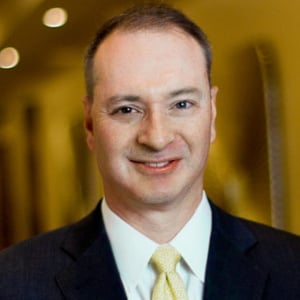
Managing Shareholder, Saltzman Mugan Dushoff, PLLC
Over the course of his twenty-plus years as an attorney in Las Vegas, Mr. Saltzman has developed a corporate law practice focused on financial institution and liquor law. He assists businesses in their formation, licensing and governance matters; he also counsels businesses on corporate mergers and acquisition matters. He assists highly regulated financial institutions and captive insurance companies in corporate and regulatory compliance matters and he has testified before the Nevada legislature as an expert on trust company legislation and drafted portions of Nevada law relating to the chartering and operation of Nevada trust companies. He has counseled trust companies and financial service firms on Blockchain and cryptocurrency related legal compliance matters.
Mr. Saltzman has developed and managed the firm’s liquor law practice into Nevada’s largest alcohol beverage specialty law practice group. He and his team of attorneys and paralegals assist a wide range of liquor retailers, wholesalers and suppliers in licensing and compliance matters in all Nevada jurisdictions. More information on Mr. Saltzman’s liquor law practice can be found at his blog: www.nvliquorlaw.com
Matthew Saltzman received a Bachelor of Arts degree in Economics and Philosophy from University of Wisconsin, Madison in 1987. In 1993, he received his Juris Doctor from University of Pittsburgh School of Law, where he was also Executive Editor of the University of Pittsburgh Law Review and served as teaching assistant for the Legal Research and Writing course.
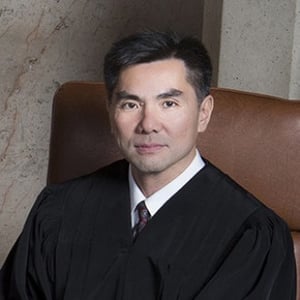
Nevada Court of Appeals, Department 1
Judge Jerome T. Tao was appointed to the Court of Appeals, Department 1, by Governor Brian Sandoval in December 2014.
Judge Tao was appointed by Governor Sandoval in January 2011 to the Eighth Judicial District Court. As a District Court Judge, he earned a retention rating of 86 percent in the December 2013 Las Vegas Review-Journal “Judging the Judges” survey, which was the fourth-highest score among the 32 judges in the civil-criminal division of the Eighth Judicial District Court. In 2014, Judge Tao was re-elected to the District Court in a landslide, winning more than 67% of the vote, and following his appointment to the Court of Appeals was re-elected in 2016 with 70% of the vote.
Previously he served at various times as a Clark County Deputy District Attorney, Chief Deputy Public Defender, and as a civil attorney in private practice. He has been active in a variety of community organizations including Leadership Las Vegas, Focus Las Vegas, the UNLV Vice-President’s Commission on Diversity, and serves on the adjunct faculty of the UNLV Boyd Law School, teaching classes in trial advocacy.
In 2017, Judge Tao was elected to The American Law Institute, the leading independent organization in the United States producing scholarly work to clarify, modernize, and improve the law. By participating in the Institute’s work, Judge Tao influences the development of the law in both existing and emerging areas.
Judge Tao is a graduate of Cornell University (B.S. 1989) and the George Washington University (J.D. 1992, with honors), where he served on the Law Review and the Moot Court Board.
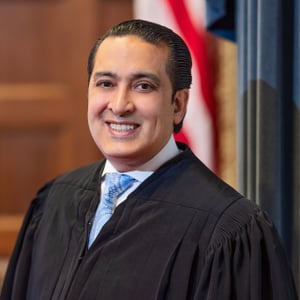
Judge, United States Court of Appeals, Sixth Circuit
John B. Nalbandian serves as a United States Circuit Judge from Kentucky on the U.S. Court of Appeals for the Sixth Circuit. He was nominated and confirmed to that position in 2018. Prior to that, Judge Nalbandian was a partner in the litigation practice group of Taft Stettinius & Hollister LLP in Cincinnati, where he served as the firm’s lead appellate lawyer and also practiced complex litigation in state and federal courts. Judge Nalbandian was board certified by the Ohio State Bar Association as a specialist in appellate law. Prior to joining Taft, Judge Nalbandian practiced for five years in the appellate section of Jones Day in Washington, DC. Upon graduation from law school, Judge Nalbandian clerked for the Honorable Jerry E. Smith of the U.S. Court of Appeals for the Fifth Circuit in Houston. While in private practice, he also served as a board member of the State Justice Institute, a nonprofit organization established by the federal government to improve the administration of justice in state courts. He served as President of the Cincinnati Lawyers Chapter of the Federalist Society. He has also been involved in his community as a board member of the Greater Cincinnati Minority Counsel Program, and as a board member of the Asian Pacific Bar Association of Southwest Ohio. Judge Nalbandian earned his B.S., magna cum laude, from the Wharton School at the University of Pennsylvania and his J.D. from the University of Virginia School of Law, where he was inducted into the Order of the Coif and served as managing editor of the Virginia Law Review.

Panel IV: Is Originalism Possible? Normative Indeterminacy and the Judicial Role [Archive Collection]
Michael C. Dorf, Richard A. Epstein, Edwin Meese, Michael J. Perry, Steven Douglas Smith
On April 7-9, 1995, the Federalist Society held its fourteenth annual National Student Symposium at...
A Conversation with Judge Nalbandian
Chicago Student Chapter
Chicago, ILPanel One: Big Tech: Government Regulation of Social Media Content Moderation by Big Tech: Good or Bad?
Josh Divine, Edward D. Greim, Lyrissa Lidsky, Amy Peikoff
The 2022 Missouri Chapters Conference took place on January 24, 2022, at the Missouri State...
Panel III: Regulation and Property: Allies or Enemies? [Archive Collection]
Robert C. Ellickson, Douglas H. Ginsburg, James E. Krier, Gale A. Norton, Richard B. Stewart
On March 10-11, 1989, the Federalist Society's University of Michigan student chapter hosted the eighth...
The Implications and Importance of CIC Services, LLC v. Internal Revenue Service
Robert T. Carney, Gregory Dolin, Kristin E. Hickman
On December 1st, the Supreme Court heard oral arguments in the case CIC Services, LLC v....
The Changing Environment for APA Challenges to Tax Regulations
Stuart Bassin, Robert T. Carney, Kristin E. Hickman
Until recently, the Internal Revenue Service and Treasury Department typically issued regulations involving the tax...
Session I: Revisiting the Antifederalists
John S. Baker, Michelle Kundmueller, Trevor N. McFadden, Daniel E. Nordby, Andrew Oldham
On January 31-February 1, 2020, The Federalist Society's Florida lawyers chapters hosted their annual Florida...
Panel 1: The Anti-Federalists at the Founding
John K. Bush, Jud Campbell, Lisa Ezell, Michelle Kundmueller, Roger Pilon, Michael B. Rappaport, Justin James Gilio
On January 25, 2020, the Federalist Society hosted its annual Western Chapters Conference at the...
Panel Two: Discussion on Nationwide Injunctions
Kyle Douglas Hawkins, Michael T. Morley, Andrew Oldham, Alan M. Trammell, Beth A. Williams
On September 14, 2019, The Federalist Society held a panel on Nationwide Injunctions during its...
Nevada Supreme Court Candidate Forum
Elissa Cadish, Mark Hutchison, Matthew Saltzman, Jerry Tao
On September 28, 2018, the Las Vegas Lawyers Chapter hosted a luncheon forum featuring two...