

Laurence H. Silberman Chair in Constitutional Governance, American Enterprise Institute; Executive Director, Antonin Scalia Law School’s C. Boyden Gray Center for the Study of the Administrative State
Adam J. White is the Laurence H. Silberman Chair in Constitutional Governance and senior fellow at the American Enterprise Institute, where he focuses on the Supreme Court and the administrative state. He also directs the Antonin Scalia Law School’s C. Boyden Gray Center for the Study of the Administrative State.
He writes on regulation and constitutional government for a variety of publications. He practiced law in Washington, D.C., after clerking for the D.C. Circuit's Judge David Sentelle. He also has been chairman of the ABA's Administrative Law Section.
In 2021, he served on the Presidential Commission on the Supreme Court of the United States, where he criticized “Court packing” and other efforts to restructure the Supreme Court.
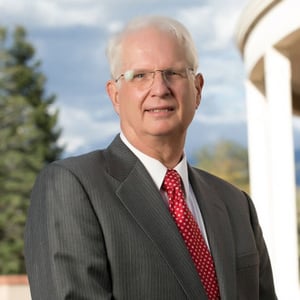
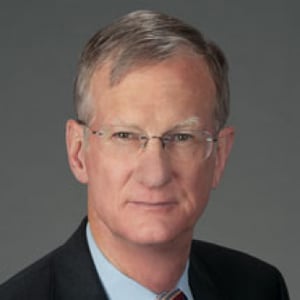
Shareholder, Brownstein Hyatt Farber Schreck, LLP
From Capitol Hill to Albuquerque, Hal Stratton is a familiar figure in the halls of government. He has spent over three decades navigating government—as the head of a federal agency, as a state attorney general, as a small business owner and as a successful litigator and government relations advisor.
Hal advises and counsels clients in the areas of mining, oil and gas, natural resources product safety regulation, products liability litigation, state and federal government relations, and multistate and class action litigation with an emphasis on product safety and liability as well as areas affected by state attorneys general. Hal also counsels clients concerning international trade, regulation and product health and safety.
In 1978, Hal was elected to the New Mexico House of Representatives at the age of 27 by defeating the House Majority Whip. During his four terms in the New Mexico House he served on a number of committees, including the Judiciary Committee, where he served as chairman; the Energy & Natural Resources Committee, where he served as vice chairman; and the Transportation and Rules Committees. In 1986, he was elected New Mexico’s attorney general—the only Republican to serve in that position since 1930.
While in the private practice of law, Hal has handled and litigated numerous matters involving oil and gas, federal and state grazing lease and condemnation rights, oil and gas tax and royalty valuation, asbestos landfill siting and matters with the Office of Aircraft Safety (now the National Business Center Aviation Management), among others. He has also handled a number of matters involving American Indian tribes.
Hal has served as an adjunct professor of law at George Mason University School of Law where he created a course on state attorneys general and multistate litigation and regulation. He is a Distinguished Military Graduate, served on active duty in the U.S. Army, and is the recipient of a number of awards including the American Legislative Exchange Council’s Legislator of the Year award and recognition as the National Right to Work Committee’s Statesman of the Year.
Board Member, Center for Equal Opportunity
Roger Clegg is a Board Member at and former President and General Counsel of the Center for Equal Opportunity. He focuses on legal issues arising from civil rights laws--including the regulatory impact on business and the problems in higher education created by affirmative action. A former Deputy Assistant Attorney General in the Reagan and Bush administrations, Clegg held the second highest positions in both the Civil Rights Division (1987-91) and in the Environment and Natural Resources Division (1991-93). He has held several other positions at the U.S. Justice Department, including Assistant to the Solicitor General (1985-87), Associate Deputy Attorney General (1984-85), and Acting Assistant Attorney General in the Office of Legal Policy (1984). Clegg is a graduate of Yale University Law School (1981).
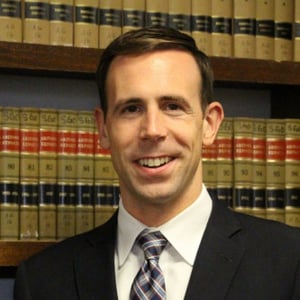
Shareholder, Greenberg Traurig, LLP
Dominic E. Draye has litigated at every level of the state and federal judiciary—from state trial court to the Supreme Court of the United States. His practice focuses on constitutional, regulatory, and environmental matters, and he has represented clients in both the public and private sectors. In the federal appellate courts, Mr. Draye has represented clients in the Second, Fifth, Seventh, Ninth, and D.C. Circuits.
Before joining Greenberg, Mr. Draye served as the Solicitor General of Arizona, where he briefed and argued the State’s highest-profile civil and criminal appeals and served as lead counsel for several multi-state coalitions litigating over agency rulemaking in the D.C. Circuit. Prior to government service, Mr. Draye was a litigator in the Washington, D.C., office of Kirkland & Ellis LLP, where his practice focused on legal issues and appeals.
Mr. Draye is a sought-after speaker on topics of administrative and constitutional law. He clerked for Hon. Edith H. Jones on the United States Court of Appeals for the Fifth Circuit and attended the University of Pennsylvania Law School.
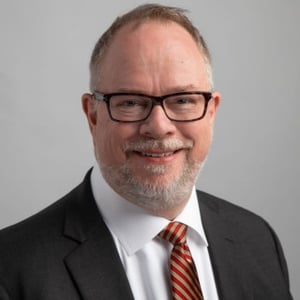
Managing Attorney of the Washington Office, Institute for Justice
William R. Maurer is the Managing Attorney of the Washington state office of the Institute for Justice, which engages in litigation in the areas of economic liberty, private property rights, educational choice, & freedom of speech.
Maurer is an advocate against the criminalization of poverty and the governmental use of the criminal and civil enforcement systems to raise revenue. He was lead counsel in a class action challenging the use of tickets to raise revenue in the city of Pagedale, Missouri. The suit resulted in a federal consent decree that reformed the city’s ticketing and municipal court system. He regularly speaks, teaches, and writes about the abuse of fines and fees in the criminal justice system. He was a participant in summits on taxation by citation put on by the White House and Department of Justice during the Obama Administration. His work on the issue includes serving as an advisory board member of the Fines and Fees Justice Center.
In addition to his work on criminal and civil justice reform, Maurer is a First Amendment litigator. In 2011, he successfully argued before the U.S. Supreme Court that Arizona’s punitive campaign financing regime was unconstitutional. Before the Washington Supreme Court, he successfully argued against efforts to classify radio commentary as a contribution under the state’s campaign finance law.
His cases and advocacy have been covered in the Washington Post, the New York Times, the Economist, the Wall Street Journal, and other major media outlets.
Maurer was named a “Washington Superlawyer” by Washington Law & Politics Magazine for several years. He is a chapter author in numerous legal reference works and has written several articles for law reviews and legal publications across the country.
Prior to joining IJ-WA, Maurer clerked for Washington Supreme Court Justice Richard Sanders and then practiced law at Perkins Coie LLP. Maurer received his law degree in 1994 from the University of Wisconsin – Madison, where he was an editor of the Wisconsin Law Review. He received his BA from Bard College in 1989.
Legal Scholar and Solo Practitioner
Jack received his B.A. in History from the University of Virginia in 1977, graduating with Highest Distinction. After graduating Yale Law School in 1980, he served active duty in the U.S. Army's JAG Corps, rising to the rank of Major, where he represented the United States in more than 250 cases.
He practiced for a decade as an Associate for Bradley Arant in Birmingham, Alabama. He proudly served the State of Alabama in the Office of the Attorney General, both as Deputy and Assistant Attorney General, handling complex civil and criminal litigation cases for the people of Alabama. In 2000, he won the "Best Brief Award" from the National Association of Attorneys General for his brief in a case decided by the U.S. Supreme Court, James Alexander v. Martha Sandoval – a case he won. He was Special Assistant to the Inspector General for the Corporation for National and Community Service, Visiting Legal Fellow for the Center for Judicial and Legal Studies for the Heritage Foundation, Of Counsel at Strickland Brockington Lewis, a solo practitioner, and General Counsel for Indigo Energy.
Most recently, he "re-upped" for military service, volunteering his legal services to the Georgia State Defense Force where twice each month he provided legal services for National Guardsmen who were being deployed. He wore his military uniform for the last time in October 2024.
Jack Park passed away on March 16, 2026.
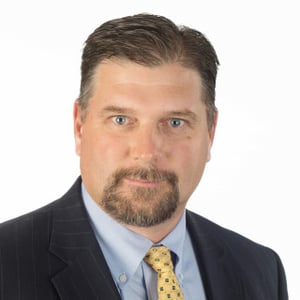
Executive Director, Ohio Dental Association
David J. Owsiany is the executive director of the Ohio Dental Association and a past president of the Columbus Lawyers Chapter of the Federalist Society.
He has served as CEO of a statewide health care association, president of the Buckeye Institute, chief of policy for the Ohio Department of Insurance, judicial law clerk for the Illinois Appellate Court, and staffer on the United State Senate Judiciary Committee.
Mr. Owsiany has written dozens of articles on legal and public policy issues for various publications, including the University of Toledo Law Review, the Federalist Society's State Court Docket Watch, Columbus Dispatch, Cincinnati Enquirer, Crain’s Cleveland Business, and Akron Beacon Journal.
Owsiany received his J.D. from Washington University School of Law in St. Louis and B.A. from the University of Michigan in Ann Arbor.
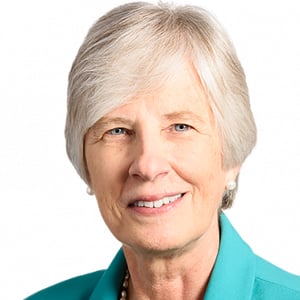
Ronald Reagan Distinguished Fellow, The Heritage Foundation
Becky Norton Dunlop, a prominent leader, strategist, and counselor in the conservative movement, is The Heritage Foundation’s Ronald Reagan Distinguished Fellow.
Dunlop, who joined the leading think tank in 1998, holds the only policy chair in the country to be officially named for the 40th president. She succeeds Ed Meese, the U.S. attorney general under Reagan, who assumed emeritus status.
Dunlop oversees special projects, travels as an ambassador for Heritage, and works tirelessly to assure that the legacy of principles, policies, and practices represented by the life and service of Ronald Reagan remain in the hearts and minds of Americans.
Previously, Dunlop was Heritage’s vice president for external relations from 1998 until May 2016. She served on the Trump Transition team.
Dunlop was a senior official in the Reagan administration from 1981-1989 inside the White House, at the Justice Department, and at the Interior Department.
She served from 1994-1998 as Secretary of Natural Resources for the Commonwealth of Virginia in the Cabinet of then-Virginia Gov. George Allen.
As political director for the American Conservative Union from 1973- 1977, she was instrumental in organizing grass-roots activists for Reagan’s unsuccessful 1976 race for the Republican nomination and advised his successful 1980 nomination and general election campaigns.
From Reagan’s first inauguration in 1981 to 1985, her White House posts included Deputy Assistant to the President for Presidential Personnel and Special Assistant to the President and Director of his Cabinet office. During Reagan’s second term, Dunlop served as senior special assistant to Meese, then attorney general, in charge of managing Cabinet-level domestic policy issues. She oversaw major policy reports on the environment, the family, federalism, tort reform, privatization, and welfare reform.
She completed her service in the Reagan administration as deputy undersecretary of the Interior Department and as assistant interior secretary for fish, wildlife, and parks.
Dunlop is one of the few of the insiders from the beginnings of the Reagan era who remain active in public policy leadership.
As Virginia’s natural resources chief, Dunlop worked to streamline, decentralize, and down-size agencies while protecting and improving the environment. She is one of the few “free-market environmentalists” to have headed a state agency and put ideas into action. Her book, “Clearing the Air” (Alexis de Tocqueville Institute, 2000), chronicles some of her experiences in advancing those principles.
In 2002, President George W. Bush appointed her to a part-time post as chairwoman of the Federal Service Impasses Panel. The seven-member panel resolves disputes between federal agencies management and labor unions. Under her leadership, it took on several hundred cases and eliminated backlogs.
Other current leadership roles include the boards of the Virginia Institute for Public Policy, the Reagan Ranch Board of Governors, the Reagan Alumni Association, the Association for American Educators and the AAE Foundation, the Council for National Policy and the American Conservative Union.
In addition to topics addressing conservative principles and their roots in the nation’s founding, Dunlop is a sought-after public speaker on the idea that personnel is policy; on energy, natural resources and the environment (including free market environmentalism); on federalism as a former member of a governor’s Cabinet; Capitalism and the Rule of Law, and on the Reagan administration (including the 40th president’s effective leadership style).
A graduate of Miami University in Ohio, she currently resides in Arlington, Virginia, with her husband, George S. Dunlop. The Dunlops are members of Oakland Baptist Church in Alexandria, Virginia.
Professor of Law, Vermont Law School
John Echeverria is a Professor of Law at Vermont Law School where he teaches Property, Public Law and a wide range of environmental and natural resource law courses. Prior to joining the Vermont Law School faculty in 2009, he served for 12 years as Executive Director of the Georgetown Environmental Law & Policy Institute at Georgetown University Law Center. He also was General Counsel of the National Audubon Society and General Counsel and Conservation Director of American Rivers, Inc., and was an Associate for four years in the Washington, D.C. office of Hughes, Hubbard & Reed. He served for one year as law clerk to the Honorable Gerhard A. Gesell of the U.S. District Court for the District of Columbia immediately after graduating from law school.
Professor Echeverria has written several books and numerous scholarly articles on environmental and natural resource law topics. He has published pieces for more general audiences in The New York Times, The Washington Post, and The Christian Science Monitor. He has represented state and local governments, environmental organizations, and planning groups in a variety of legal matters at all levels of the federal and state court systems. In 2007, Professor Echeverria received the Jefferson Fordham Advocacy Award from the American Bar Association to recognize outstanding excellence within the area of state and local government law over a lifetime of achievement. In addition to teaching at Vermont Law School, he has served as a Visiting Professor at Harvard Law School and Georgetown University Law Center.
Professor Echeverria received a JD degree from the Yale Law School. He received a Master’s degree from the Yale School of Forestry and Environmental Studies as well as a BA degree from Yale College (summa cum laude).
Levin, Mabie & Levin Professor of Law, University of Florida Levin College of Law
Professor Gary Lawson joined the University of Florida Levin College of Law faculty on July 1, 2024, after twenty-four years at Boston University School of Law and eleven years at Northwestern University School of Law. While at Boston University, he was named a William Fairfield Warren Distinguished Professor in 2022 – the highest faculty honor within the university. He has authored or co-authored nine editions of a textbook on administrative law, a textbook on constitutional law, five university press books, one popular press book, and more than one hundred scholarly articles on topics ranging from aspects of constitutional theory and history to the proof of legal propositions. His works have been cited in more than twenty opinions of United States Supreme Court justices. He is a founding member, and serves on the Board of Directors, of the Federalist Society for Law and Public Policy Studies and is on the Editorial Advisory Board of the Heritage Guide to the Constitution.

Thinking About the "Practically Unthinkable": Energy Infrastructure and the Threat of Low-Probability, High-Impact Events
Adam White
The National Environmental Policy Act1 requires federal agencies to ascertain and evaluate the possible environmental...
Environmental Law
The Obamacare Incident: Is the Individual Mandate Unconstitutional?
Engage Volume 11, Issue 2, September 2010
*Online-Only Issue* CIVIL RIGHTS Catch or Release? The Employment Non-Discrimination Act's Exemption for Religious Organizations...
Vermont Attorney General Uses State Consumer Fraud Statute to Implement Consumer Product Penalties
Harold "Hal" Stratton
The provisions of Section 218 of the Consumer Product Safety Improvement Act of 2008 (“CPSIA”)...
Bar Watch Bulletin for Sunday, August 8, 2010
ABA Watch is reporting live from the ABA’s Annual Meeting in San Francisco.David Boies, who...
H.R. 3335: “The Democracy Restoration Act”
Roger B. Clegg
Brought to you by the Free Speech & Election Law Practice Group Last year, H.R. 3335,...
Fair Elections Now Act
Dominic Draye, William R. Maurer
Brought to you by the Free Speech & Election Law Practice Group Congress is considering...
Executive Order on Preemption
John J. Park
Brought to you by the Federalism & Separation of Powers Practice GroupOn May 20, 2009, President Obama...
The Rise and Fall of Lead Paint Litigation in Ohio
David J. Owsiany
Over the last four years, Ohio has experienced a significant amount of activity related to...