
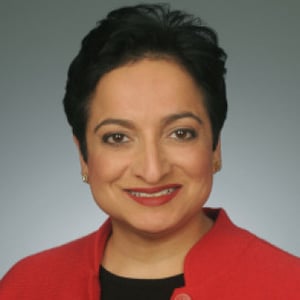
President, Mastercard Center for Inclusive Growth
Shamina Singh has spent her career building connections across the public, private and non-profit sectors to deliver strategies that contribute positively to the global economy. As president of the Mastercard Center for Inclusive Growth, she is responsible for ensuring the Center achieves its mission to advance sustainable and equitable economic growth and financial inclusion around the world. Previously, she served as the Global Director of Mastercard’s Government Services and Solutions, where she worked to digitize social subsidy programs in over 40 countries.
In 2015, Ms. Singh was appointed by President Obama to a six-year term on the board of the Corporation for National and Community Service, a federal agency responsible for engaging more than five million citizens in community service. She currently serves as Board Chair. She is also a member of the U.S. Secretary of State’s Advisory Committee on Public-Private Partnerships, a newly-formed advisory body to the U.S. Government on policies, proposals and strategies for developing public-private partnerships that promote shared value with the private sector worldwide.
Prior to joining Mastercard, Ms. Singh led Government and Public Affairs for Nike and spent five years with Citigroup’s Global Community Development Group. Over a 15-year career in the public sector, she held senior positions in the White House and the U.S. House of Representatives.
Ms. Singh is an alumna of the World Economic Forum’s Young Global Leaders program and currently serves on the Council on Economic Growth and Social Inclusion. She is on the board of Global Health Corps and the advisory boards of Data & Society and the Beeck Center for Social Impact + Innovation at Georgetown University. She is a Henry Crown Fellow with the Aspen Institute. Shamina holds an M.P.A from the Lyndon B. Johnson School of Public Affairs at the University of Texas, Austin and a B.S. from Old Dominion University.
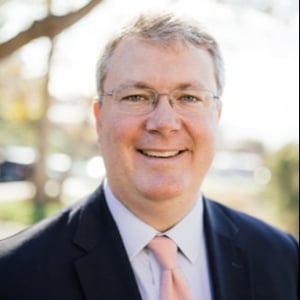
Professor of Law, Pepperdine University School of Law
Prior to joining the law faculty in 2008, Professor Childress was associated with the international law firm Jones Day in Washington, D.C., as a member of their Issues and Appeals practice, where he focused on Supreme Court litigation, general appellate litigation, and significant motions practice in trial litigation. While in private practice, his appellate representations included preparation of writs of certiorari, merits briefs, and amicus briefs in the U.S. Supreme Court. Professor Childress has briefed and argued appeals before the U.S. Court of Appeals for the Ninth Circuit and has briefed matters in numerous other trial and appellate courts in the First, Second, Third, Fourth, Fifth, Seventh, and D.C. Circuits, as well as in various state courts. He has significant private practice experience in transnational litigation/arbitration, complex civil procedure, conflict of laws, constitutional law, immigration law, international dispute resolution, federal Indian law, and national security law, including cases related to the war on terror. He maintains an active pro bono practice. During his time in Washington, D.C., Professor Childress co-taught a Supreme Court Litigation course at the Georgetown University Law Center and served as a "Justice" in the Georgetown University Law Center Supreme Court Institute. Professor Childress is admitted to practice in Virginia, the District of Columbia, and the U.S. Supreme Court.
Professor Childress clerked for the Honorable Paul V. Niemeyer on the U.S. Court of Appeals for the Fourth Circuit. While at Duke Law School, he served as editor-in-chief of the Duke Law Journal (Volume 53) and received the faculty award for outstanding achievement in international, transnational, and comparative law. While at Oxford Brookes University, he served as a Rotary Ambassadorial Scholar in the United Kingdom, where his research focused, in part, on European constitutionalism and European Union law.
Professor Childress's primary research interests are international civil litigation and arbitration, private international law, comparative law, and ethics. His scholarship has appeared in the Duke Law Journal, the U.C. Davis Law Review, the Northwestern Law Review, the Georgetown Law Journal, the Virginia Journal of International Law, the William and Mary Law Review and the North Carolina Law Review. He has also published an edited volume with Cambridge University Press entitled "The Role of Ethics in International Law." He is working extensively on the role that international civil litigation and arbitration plays in an increasingly global world. He is the American co-editor of the private international law blog ConflictOfLaws.net.
Professor Childress teaches Civil Procedure, International Litigation, Comparative Law, Conflict of Laws, and Ethical Lawyering.

Dr. John Eastman is the former Henry Salvatori Professor of Law & Community Service and former Dean at Chapman University's Dale E. Fowler School of Law, where he had been a member of the faculty since 1999, specializing in Constitutional Law, Legal History, and Property. He is a founding director of the Center for Constitutional Jurisprudence, a public interest law firm affiliated with the Claremont Institute that he founded in 1999. He has a Ph.D. in Government from the Claremont Graduate School and a J.D. from the University of Chicago Law School, and a B.A. in Politics and Economics from the University of Dallas. He serves as the Chairman of the Board of the National Organization for Marriage.
Prior to joining the Chapman law faculty, Dr. Eastman served as a law clerk to the Honorable Clarence Thomas, Associate Justice, Supreme Court of the United States, and to the Honorable J. Michael Luttig, Judge, United States Court of Appeals for the Fourth Circuit and practiced law with the national law firm of Kirkland & Ellis. Dr. Eastman has also represented numerous clients in important constitutional law matters and has argued before the Supreme Court. On behalf of the Claremont Institute Center for Constitutional Jurisprudence, he has participated as amicus curiae before the Supreme Court of the United States, U.S. Courts of Appeals, and State Supreme Courts in more than one hundred cases of constitutional significance, including Boy Scouts of America v. Dale, Zelman v. Simmons-Harris (the school vouchers case), Kelo v. New London, Ct. (eminent domain), and Van Orden v. Perry (the 10 Commandments case). He has also appeared as an expert legal commentator on numerous television and radio programs, including C-SPAN, Fox News, PBS, NewsHour, and The O'Reilly Factor.

Paul J. Schierl Professor of Law, University of Notre Dame Law School
Professor Richard W. Garnett teaches and writes in the areas of constitutional law, criminal law, the First Amendment, and law and religion. He is a leading authority on questions and debates regarding religious freedom and church-state relations, and is the founding director of Notre Dame Law School’s Program on Church, State, and Society.
Garnett clerked for the late Chief Justice of the United States, William H. Rehnquist, and also for the late Chief Judge of the United States Court of Appeals for the Eighth Circuit, Richard S. Arnold. He earned his J.D. from Yale Law School in 1995 and his B.A., summa cum laude, from Duke University in 1990. He joined the faculty in 1999 after practicing law in Washington, D.C. with Miller, Cassidy, Larroca & Lewin.
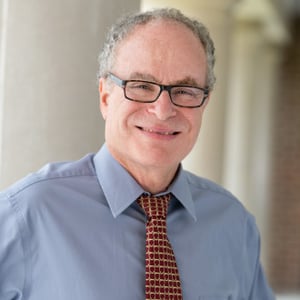
William Rand Kenan, Jr. Distinguished Professor of Law, University of North Carolina School of Law
William (Bill) Marshall joined the Carolina Law faculty in 2001 and serves as the William R. Kenan Jr. Distinguished Professor of Law. His teaching and research interests include the first amendment, presidential power, election law, federal jurisdiction, federal judicial selection, civil procedure, and media law. Marshall is the author of numerous book chapters, articles, and essays on free speech, separation of powers, the Establishment Clause, and the Free Exercise Clause. His work has appeared in the Harvard Law Review, the Yale Law Journal, the Supreme Court Review, and the University of Chicago Law Review, among others.
Marshall received his law degree from the University of Chicago and his undergraduate degree from the University of Pennsylvania. Marshall was Deputy Counsel to the President and Deputy Assistant to the President during the Clinton Administration and also served as the Solicitor General for the State of Ohio. He has taught at the Northwestern, Boston University, Vanderbilt, Ohio State, DePaul, Case Western Reserve, William and Mary, and the University Connecticut law schools. Prior to beginning his teaching career, Marshall was a Special Assistant Attorney General for the State of Minnesota.
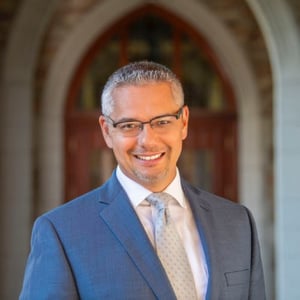
Tocqueville Associate Professor Department of Political Science and Concurrent Associate Professor of Law, University of Notre Dame Law School
Vincent Phillip Muñoz is the Tocqueville Associate Professor of Religion & Public Life in the Department of Political Science at the University of Notre Dame. He is the founding director of Notre Dame's undergraduate minor in Constitutional Studies and directs Notre Dame's Tocqueville Program for Inquiry into Religion and Public Life.
Muñoz writes and teaches across the fields of constitutional law, American politics, and political philosophy with a focus on religious liberty and the American Founding. His first book, God and the Founders: Madison, Washington, and Jefferson (Cambridge University Press, 2009) won the Hubert Morken Award from the American Political Science Association for the best publication on religion and politics in 2009 and 2010. His First Amendment church-state case reader, Religious Liberty and the American Supreme Court: The Essential Cases and Documents (Rowman & Littlefield) was first published in 2013 (revised edition, 2015) and is being used at Notre Dame and other leading universities.
Muñoz's current project is a scholarly monograph on the natural right of religious liberty and the original meaning of the First Amendment's Religion Clauses. Articles from that project have appeared in American Political Science Review, The Harvard Journal of Law and Public Policy, Notre Dame Law Review, American Political Thought, and the University of Pennsylvania's Journal of Constitutional Law.
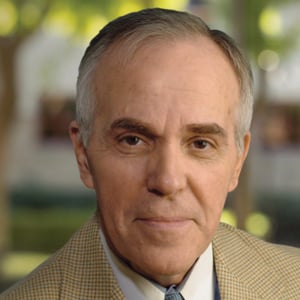
Professor of Government, Claremont Graduate University
Michael Uhlmann has been a professor in the Division of Politics & Economics at Claremont Graduate University since 2002. His research specializations include American presidency, executive–congressional relations, and the federal judiciary—namely, the federal administrative process and national security decision making. In addition to his regular coursework at CGU, Uhlmann teaches in and directs CGU’s Tribal Administration Certificate Program, made possible through a generous grant from the San Manuel Band of Mission Indians.
Uhlmann received his PhD in Government from Claremont Graduate University after receiving his BA in History from Yale University and his LLB from the University of Virginia Law School. Immediately prior to joining the CGU faculty, Uhlmann served as a senior vice president of the Lynde and Harry Bradley Foundation in Milwaukee, Wisconsin. Before that, he was a senior fellow at the Ethics and Public Policy Center in Washington, D.C. He had also served for many years as a partner in the Washington office of Pepper, Hamilton, & Scheetz, a large international law firm, where he specialized in federal antitrust and administrative law. Concurrently held alongside his position at CGU, Uhlmann is an adjunct professor at Claremont McKenna College, teaching a variety of courses in the Department of Government.
In addition to his academic career, private legal practice, and philanthropic work, Uhlmann has had a distinguished career in government, beginning with service as a staff and committee counsel in the U.S. Senate and as assistant general counsel of the Federal Trade Commission. In 1974, following Senate confirmation, he was appointed by President Gerald Ford to be assistant attorney general for Legislative Affairs in the Department of Justice. From 1981 to 1984, he served as special assistant to President Ronald Reagan and associate director of the White House Office of Policy Development. He directed legal and administrative policy for the Reagan presidential transition in 1980–1981 and chaired the Department of Justice transition team for President-Elect George H. W. Bush in 1988–1989.
Uhlmann has written for many leading newspapers and journals of opinion, including National Review, Weekly Standard, Philadelphia Inquirer, Los Angeles Times, Washington Post, First Things, and Claremont Review of Books.
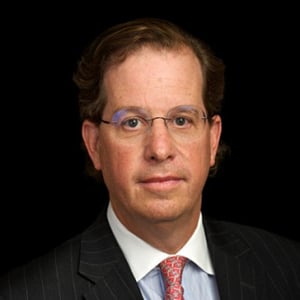
Managing Partner, Cooper & Kirk PLLC
David Thompson is the Managing Partner of Cooper & Kirk and joined the firm at its founding. Mr. Thompson has extensive trial and appellate experience in a wide range of matters and has secured victories worth billions of dollars. He has successfully challenged numerous laws on Second Amendment grounds. He has also litigated cases in over 30 federal district courts, argued in each of the 13 federal circuit courts of appeal, and argued before the U.S. Supreme Court, as well as many state courts. Mr. Thompson was awarded an A.B. degree, magna cum laude, from Harvard University in 1991, where he was elected to Phi Beta Kappa. In 1994, Mr. Thompson received a J.D. degree, cum laude, from Harvard Law School.

Partner, Baker Hostetler LLP
David Rivkin is a member of the firm's litigation, international and environmental teams and is co-leader of the firm's national appellate practice. He has extensive experience in constitutional, administrative and international law litigation and has been involved in numerous high-profile cases. With his prior experience in the government sector, David draws on a wealth of knowledge when providing compliance advice to companies and handling enforcement proceedings before government agencies on issues arising out of multilateral and unilateral sanctions, the Foreign Corrupt Practices Act (FCPA), anti-boycott issues, bankruptcy and financial fraud matters, and environmental and energy issues.
David has developed and implemented legislative, regulatory and litigation initiatives for two presidential administrations. Over the years, he has published hundreds of articles, op-eds, book reviews and book chapters on a variety of international, legal, constitutional, defense, arms control, foreign policy, environmental and energy issues for various newspapers and magazines, including The Wall Street Journal, The Washington Post, The New York Times, USA Today and The Los Angeles Times, and has been a frequent commentator and guest on TV and radio shows including ABC, CBS, NBC, CNN, Fox News, NPR and PBS.

Partner, BakerHostetler, Adjunct Fellow, The Manhattan Institute
Andrew Grossman leads BakerHostetler’s Appellate and Major Motion team. He has appeared before the U.S. Supreme Court, nearly all the federal courts of appeals, as well as some state appellate courts, litigating high-profile and complex commercial, administrative and constitutional issues.
Andrew works with practice groups across BakerHostetler to identify and tackle complex issues, advise on administrative law and strategy, tee up issues for appeal and tackle appeals. He has developed and implemented litigation and administrative strategies for clients in several fields and industries.
In addition to his practice, Andrew advises members of Congress on matters of constitutional and administrative law, having testified more than a dozen times before the House and Senate Judiciary Committees. He has been a frequent legal commentator on radio and television, having appeared on Fox News, CNN, MSNBC, CNBC, NPR and its affiliates, CBN and elsewhere. His legal commentary has also appeared in dozens of magazines and newspapers, including The Wall Street Journal, USA Today, The Washington Post, The Washington Times and many others.
Andrew is a Senior Legal Fellow at the Buckeye Institute, an Adjunct Fellow the Manhattan Institute and a member of the leadership of the Federalist Society. He previously served as an adjunct scholar at the Cato Institute’s Robert A. Levy Center for Constitutional Studies and a legal fellow at the Heritage Foundation’s Meese Center for Legal and Judicial Studies. He clerked for Judge Edith H. Jones on the U.S. Court of Appeals for the Fifth Circuit.
Associate Professor, George Mason University School of Policy, G, and International Affairs
Colin Dueck is an Associate Professor in George Mason University’s School of Policy, Government, and International Affairs. He studied politics at Princeton University, and international relations at Oxford under a Rhodes scholarship. He has published three books on American foreign and national security policies, The Obama Doctrine: American Grand Strategy Today (Oxford 2015), Hard Line: The Republican Party and U.S. Foreign Policy since World War II (Princeton 2010), andReluctant Crusaders: Power, Culture, and Change in American Grand Strategy (Princeton 2006.) He has provided congressional testimony and published articles on these same subjects in journals such as International Security, Orbis, Security Studies, Review of International Studies, Political Science Quarterly, and World Policy Journal, as well as online at RealClearPolitics, National Review, Foreign Affairs, The National Interest, and the New York Times. His current research focus is on the relationship between party politics, presidential leadership, American conservatism, and U.S. foreign policy strategies. He is the faculty adviser for the Alexander Hamilton Society at George Mason University, and a member of the International Institute for Strategic Studies.
Research Fellow in Defense and Homeland Security Studies, Cato Institute
Benjamin H. Friedman is a research fellow in defense and homeland security studies. He writes about U.S. defense politics, focusing on strategy, budgeting, and war. He has co-edited two books and has published in International Security, Political Science Quarterly, Foreign Affairs, the New York Times, the LA Times, the Atlantic, the Philadelphia Inquirer, USA Today, the Hill, Politico, the Christian Science Monitor, and various other journals. Ben is a graduate of Dartmouth College, a Ph.D. candidate in Political Science at the Massachusetts Institute of Technology, and an Adjunct Lecturer at George Washington’s Elliott School of International Affairs.
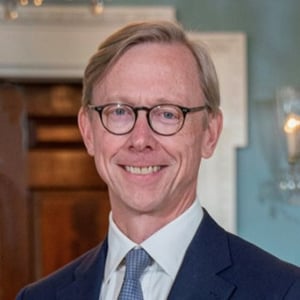
Founder, Latitude, LLC
Brian Hook is the founder of Latitude, LLC, an international strategic consulting firm based in Washington, DC.
Mr. Hook worked on the Romney campaign as senior advisor on foreign policy. He chaired the foreign policy and national security task forces of the Romney Readiness Project. From 2010-2011, he was the foreign policy director of Governor Tim Pawlenty’s presidential campaign.
Mr. Hook served in a number of positions during the Bush Administration, including Assistant Secretary of State for International Organizations; Senior Advisor to the U.S. Ambassador to the United Nations; Special Assistant to the President for Policy, Office of the Chief of Staff; and Counsel, Office of Legal Policy, at the Justice Department.
From 1999-2003, he practiced corporate law at Hogan & Hartson in Washington, D.C.
Before practicing law, he served as a policy advisor to Iowa Governor Terry Branstad and to U.S. Congressman James Leach.
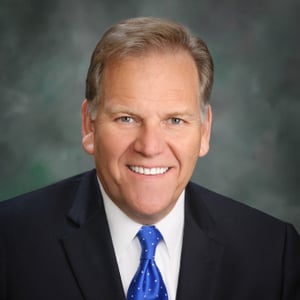
David Abshire Chair, Center for the Study of the Presidency and Congress
Mike Rogers is a former member of Congress representing Michigan's Eighth Congressional District, and previously served as an officer in the U.S. Army and FBI special agent.
While in Congress Mr. Rogers chaired the powerful House Permanent Select Committee on Intelligence (HPSCI) where he authorized and oversaw a budget of $70 billion that funded the nation's 17 intelligence agencies.
He currently serves as the Vice Chairman of the Board at the MITRE Corporation, and as a Director at leading companies including CyberSponse, IAP, and 4IQ. He is currently investing in and helping build companies that are developing solutions for healthcare, energy efficiency and communications challenges.
Mr. Rogers is a Senior Fellow at Harvard University and a member of the Board of Trustees and the David Abshire Chair at the Center for the Study of the Presidency and Congress, where he directs the Center’s national security programs. Mr. Rogers is a regular public speaker on global affairs, cybersecurity, and leadership.
He also serves as a regular national security commentator on CNN and hosted the channel’s documentary-style original series Declassified, which offered viewers insights into America’s spy stories. Mr. Rogers is a 1985 graduate of Adrian College. He is married to Kristi Rogers and has two children.
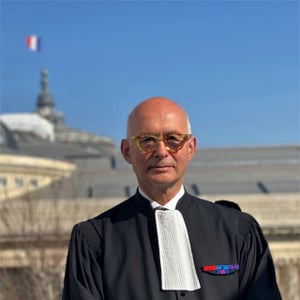
Partner, Supreme Court Attorney, Cabinet Briard LLP
François-Henri Briard is a Knight of the Legion of Honor, an Officer of the National Order of Merit and a Knight of the Palmes Académiques.
He was a member of the Governing Board of the Bar of the French Supreme Courts (2003-2005).
François-Henri Briard was a trustee of Sarah Lawrence College in New York for eight years. He is President of the Institut Vergennes, a member of the U.S. Supreme Court Historical Society and an honorary member of the Society of the Cincinnati and of the Sons of the American Revolution. He is also an expert with the Federalist Society, a U.S. think tank that focuses on constitutional and judicial issues.
He is a member of the Institute of Consulting Tax Attorneys (IACF) and an associate member of the Academy of Moral Sciences, Letters and Arts of Versailles and Ile de France.
He is a member of the French Navy civilian reserve with the rank of frigate captain and has been awarded a medal by the voluntary military services. On behalf of the Firm, he received the Military Reserve Prize (2011).
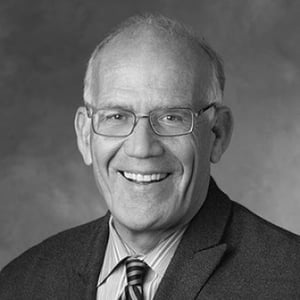
Martin and Illie Anderson Senior Fellow, Hoover Institution
Victor Davis Hanson is the Martin and Illie Anderson Senior Fellow at the Hoover Institution; his focus is classics and military history.
Hanson was a National Endowment for the Humanities fellow at the Center for Advanced Studies in the Behavioral Sciences, Stanford, California (1992–93), a visiting professor of classics at Stanford University (1991–92), the annual Wayne and Marcia Buske Distinguished Visiting Fellow in History at Hillsdale College (2004–), the Visiting Shifron Professor of Military History at the US Naval Academy (2002–3),and the William Simon Visiting Professor of Public Policy at Pepperdine University (2010).
In 1991 he was awarded an American Philological Association Excellence in Teaching Award. He received the Eric Breindel Award for Excellence in Opinion Journalism (2002), presented the Manhattan's Institute's Wriston Lecture (2004), and was awarded the National Humanities Medal (2007) and the Bradley Prize (2008).
Hanson is the author of hundreds of articles, book reviews, and newspaper editorials on Greek, agrarian, and military history and essays on contemporary culture. He has written or edited twenty-four books, the latest of which is The Case for Trump (Basic Books, 2019). His other books include The Second World Wars (Basic Books, 2017); The Savior Generals: How Five Great Commanders Saved Wars That Were Lost - from Ancient Greece to Iraq (Bloomsbury 2013); The End of Sparta (Bloomsbury, 2011); The Father of Us All: War and History, Ancient and Modern (Bloomsbury, 2010); Makers of Ancient Strategy: From the Persian Wars to the Fall of Rome (ed.) (Princeton, 2010); The Other Greeks (California, 1998); The Soul of Battle (Free Press, 1999); Carnage and Culture (Doubleday, 2001); Ripples of Battle (Doubleday, 2003); A War Like No Other (Random House, 2005); The Western Way of War (Alfred Knopf, 1989; 2nd paperback ed., University of California Press, 2000); The Wars of the Ancient Greeks (Cassell, 1999; paperback ed., 2001); and Mexifornia: A State of Becoming (Encounter, 2003), as well as two books on family farming, Fields without Dreams (Free Press, 1995) and The Land Was Everything (Free Press, 1998). Currently, he is a syndicated columnist for Tribune Media Services and a weekly columnist for the National Review Online.
Hanson received a BA in classics at the University of California, Santa Cruz (1975), was a fellow at the American School of Classical Studies, Athens (1977–78), and received his PhD in classics from Stanford University (1980).
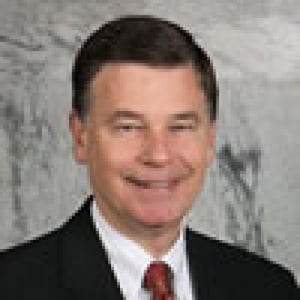
Partner, Stone Pigman Walther Wittmann LLC
Mr. Thomson concentrates his practice in white collar criminal defense, government investigations, and corporate compliance. He has tried over 50 criminal trials to verdict in federal and state courts, and has experience in appellate litigation. His practice also includes civil litigation and information security. Prior to joining Stone Pigman, Mr. Thomson had a 23 year career as a federal prosecutor with the U.S. Department of Justice. He served on special assignment with the National Security Agency, where he worked on matters involving information assurance and intelligence collection.
Prior to private practice, Mr. Thomson was recognized numerous times by government agencies, including a Special Commendation Award given by the U.S. Attorney General for completing the Justice Department's Leadership Excellence and Achievement Program; Special Commendation by FBI Director for outstanding performance for successful corruption prosecution after Hurricane Katrina; Special Award from the U.S. Postal Service for prosecution of corrupt employee; Special Award by New Orleans Police Department, ATF and U.S. Department of Justice for his contributions to Project Exile; and Special Awards for Outstanding Contributions to Drug Law Enforcement from the Drug Enforcement Administration.
Founder, Latitude, LLC
Brian Hook is the founder of Latitude, LLC, an international strategic consulting firm based in Washington, DC.
Mr. Hook worked on the Romney campaign as senior advisor on foreign policy. He chaired the foreign policy and national security task forces of the Romney Readiness Project. From 2010-2011, he was the foreign policy director of Governor Tim Pawlenty’s presidential campaign.
Mr. Hook served in a number of positions during the Bush Administration, including Assistant Secretary of State for International Organizations; Senior Advisor to the U.S. Ambassador to the United Nations; Special Assistant to the President for Policy, Office of the Chief of Staff; and Counsel, Office of Legal Policy, at the Justice Department.
From 1999-2003, he practiced corporate law at Hogan & Hartson in Washington, D.C.
Before practicing law, he served as a policy advisor to Iowa Governor Terry Branstad and to U.S. Congressman James Leach.
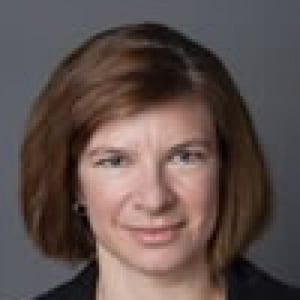
Senior Fellow in National Security, Human Rights First
Heather Hurlburt is a Senior Fellow in National Security at Human RIghts First. Previously, she served as the Executive Director of the National Security Network, an organization whose priorities include working with political leaders, experts, and advocates to create a safer, saner foreign policy. The 2008 presidential election cycle provided the impetus for NSN's progressive national security rapid response structure to augment efforts of candidates and campaigns.
Ms. Hurlburt brings nearly two decades of experience developing, shaping and communicating U.S. foreign policy. For five years she ran her own communications and strategy practice, with a broad client list including individual political, entertainment, and educational leaders, as well as groups such as DATA (Debt AIDS Trade Africa), the Rockefeller Brothers Fund, the Stanley Foundation, and many others. She is a Senior Adviser to the U.S. in the World Project of the New America Foundation.
Ms. Hurlburt served in the Clinton Administration, both in the State Department and as a Special Assistant and Speechwriter to President Clinton. She was the Washington Deputy Director of the International Crisis Group (ICG) and served as a Program Director at the Carnegie Endowment for International Peace. She spent four years as a member of the U.S. delegation to the Organization for Security and Cooperation in Europe (OSCE).
Ms. Hurlburt is co-author of US in the World: Talking Global Issues with Americans, published by the Rockefeller Brothers Fund and the Aspen Institute in 2004 to help foreign policy experts and advocates communicate effectively with American citizens. She has published opinion pieces widely in print and online, comments frequently on presidential speech-making and other topics, and blogs regularly at www.democracyarsenal.org.
She is a graduate of Brown University and the George Washington University and lives in Washington, D.C. with her husband and son.

Accelerating Financial Inclusion and Inclusive Growth - Podcast
Shamina Singh
Today, approximately two billion people lack access to financial services. Because of their exclusive reliance...
Venezuela v. Helmerich & Payne International - Post-Argument SCOTUScast
Donald Childress
On November 2, 2016, the Supreme Court heard oral argument in Venezuela v. Helmerich &...
Religious Liberties: Is the Religious Freedom Restoration Act (RFRA) the Future of Religious Liberty?
John C. Eastman, Richard W. Garnett, William P. Marshall, Vincent Phillip Munoz, Michael Uhlmann
In his seminal decision in Employment Division v. Smith in 1990, Justice Antonin Scalia held...
Topics
Helmerich & Payne International v. Venezuela
On Wednesday, November 2, 2016, the Supreme Court will hear oral arguments in the case...
Giveth & Taketh Away? - Podcast
David H. Thompson
After a bailout that arguably helped keep them afloat, the United States government has effectively...
The Alt-Chain Revolution: Regulatory Considerations for the Next Wave of Bitcoin Innovation - Podcast
David B. Rivkin, Andrew Grossman
Bitcoin is dead. Long live Bitcoin. A counterintuitive feature of the groundbreaking cryptocurrency—and there are...
International: When Should America Act to Maintain International Order?
Colin Dueck, Benjamin H. Friedman, Brian H. Hook, Mike J. Rogers, François-Henri Briard
Most would agree that the world is unsettled, with hotspots in the Middle East, North...
Victor Davis Hanson Discusses Foreign Policy - Podcast
Victor Davis Hanson
Acclaimed military historian, prolific columnist and political essayist Victor Davis Hanson discusses President Obama’s foreign...
Interpol’s Transnational Policing By “Red Notice” and “Diffusions”: Procedural Standards, Systemic Abuses, and Reforms Necessary to Assure Fairness and Integrity
Peter M. Thomson
Note from the Editor: This article is about Interpol’s use of Red Notices and Diffusions;...
Dealing with Putin’s Russia: What is the Best Approach? - Podcast
Brian H. Hook, Heather Hurlburt
From the time he entered office after being tapped by Boris Yeltsin to succeed him,...