

Milton R. Underwood Chair in Free Enterprise, Vanderbilt University Law School
Brian Fitzpatrick is the Milton R. Underwood Chair in Free Enterprise and Professor of Law at Vanderbilt Law School, where his research focuses on class action litigation, federal courts, judicial selection, and constitutional law. He is best known for his empirical studies of class action settlements as well as his book The Conservative Case for Class Actions (University of Chicago Press, 2019). Professor Fitzpatrick joined Vanderbilt's law faculty in 2007 after serving as the John M. Olin Fellow at New York University School of Law. He graduated first in his class from Harvard Law School and went on to clerk for Judge Diarmuid O'Scannlain on the U.S. Court of Appeals for the Ninth Circuit and Justice Antonin Scalia on the U.S. Supreme Court. After his clerkships, Professor Fitzpatrick practiced commercial and appellate litigation for several years at Sidley Austin in Washington, D.C., and served as Special Counsel for Supreme Court Nominations to U.S. Senator John Cornyn. Before earning his law degree, Fitzpatrick graduated summa cum laude with a bachelor's of science in chemical engineering from the University of Notre Dame. He has received the Hall-Hartman Outstanding Professor Award, which recognizes excellence in classroom teaching, for his Civil Procedure and Federal Courts courses.

Tazewell Taylor Professor of Law and William H. Cabell Research Professor, William & Mary Law School
Jonathan H. Adler joined the William & Mary law faculty as the Tazwell Taylor Professor of Law and William H. Cabell Research Professor in 2025. Prior to joining the faculty, he was the inaugural Johan Verheij Memorial Professor of Law and the founding Director of the Coleman P. Burke Center for Environmental Law at the Case Western Reserve University School of Law.
Professor Adler is the author or editor of seven books, including Climate Liberalism: Perspectives on Liberty, Property and Pollution (Palgrave, 2023), Marijuana Federalism: Uncle Sam and Mary Jane (Brookings Institution Press, 2020), Business and the Roberts Court (Oxford University Press, 2016) and Rebuilding the Ark: New Perspectives on Endangered Species Act Reform (AEI Press, 2011).
His articles have appeared in publications ranging from the Harvard Environmental Law Review and Yale Journal on Regulation to the Wall Street Journal, New York Times, and Washington Post. He has testified before Congress a dozen times, and his work has been cited in the U.S. Supreme Court. A 2024 study identified Professor Adler as the seventh most cited legal academic in administrative and environmental law from 2019 to 2023.
Professor Adler is a contributing editor to Civitas Outlook and a regular contributor to the popular legal blog, The Volokh Conspiracy. A regular commentator on constitutional and regulatory issues, he has appeared on numerous radio and television programs, ranging from the PBS Newshour and National Public Radio to the Fox News Channel and Entertainment Tonight.
Professor Adler is a senior fellow at the Property & Environment Research Center in Bozeman, Montana. In 2018, Professor Adler was elected to membership in the American Law Institute and helped co-found the organization Checks and Balances. In 2024, Professor Adler was appointed a public member of the Administrative Conference of the United States.
Professor Adler clerked for the Honorable David B. Sentelle on the U.S. Court of Appeals for the District of Columbia Circuit.
Director, Vanderbilt Health Policy Center, Vanderbilt University Law School
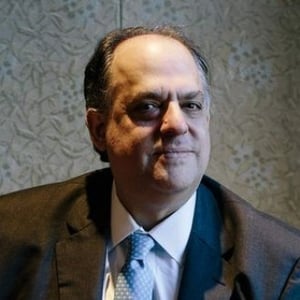
Director of Litigation and Senior Attorney, Hamilton Lincoln Law Institute
Theodore H. Frank is director at the Hamilton Lincoln Law Institute and the Center for Class Action Fairness. Frank founded and ran CCAF as a non-profit, public interest law firm in 2009.
Frank has won several landmark appeals and tens of millions of dollars for consumers and other plaintiffs through his class action work. Adam Liptak of The New York Times calls Frank “the leading critic of abusive class action settlements” and the American Lawyer Litigation Daily referred to him as “the indefatigable scourge of underwhelming class action settlements.”
Previously, Frank clerked for the Honorable Frank H. Easterbrook on the Seventh Circuit Court of Appeals, and was a litigator at firms in Washington and Los Angeles and a resident fellow at the American Enterprise Institute. Frank is a frequent public speaker and has testified before Congress multiple times on legal issues. He has been profiled by The Wall Street Journal, Forbes, GQ, and the ABA Journal, among other publications.
In 2008, Frank was elected to membership in the American Law Institute. He also serves on the Executive Committee of the Federalist Society Litigation Practice Group. Frank graduated from The University of Chicago Law School in 1994 with high honors and as a member of the Order of the Coif and the Law Review. He is a member of the District of Columbia Bar and the state bars of California and Illinois.
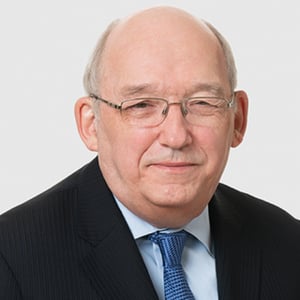
Senior Fellow, American Enterprise Institute
Thomas Miller is a senior fellow at the American Enterprise Institute (AEI), where he studies health care policy, including regulatory barriers to choice and competition, market-based alternatives to the Affordable Care Act, health care litigation, and the political economy of health care reform.
A former senior health economist for the Joint Economic Committee in Congress, Mr. Miller was previously a trial attorney, journalist, and sports broadcaster.
Mr. Miller is the coauthor of the bestseller “Why Obamacare Is Wrong for America” (HarperCollins, 2011), the first in-depth examination of the impact of the Affordable Care Act. His analyses and commentary have been published and featured widely in peer-reviewed publications and in the popular press, including Cato Journal, Health Affairs, Law and Contemporary Problems, the Journal of Law, Medicine, and Politics, the Los Angeles Times, The New York Times, USA Today, The Wall Street Journal, and The Washington Post.
Mr. Miller has also testified before Congress on the uninsured, health care costs, Medicare cost sharing, high-risk pools, health care competition, health insurance tax credits, the individual mandate, genetic information, Social Security, and the federal reinsurance of catastrophic events, among others. He also speaks regularly on various college campuses and teaches a seminar on “Shaping Law and Policy” at Duke University School of Law.
Mr. Miller has a JD from the Duke University School of Law and a BA in political science from New York University.
Professor of Law, Vanderbilt University Law School
Richard A. Nagareda, whose scholarship focuses on mass tort litigation, heads the law school's Cecil D. Branstetter Litigation & Dispute Resolution Program. Professor Nagareda's recent scholarship explores the impact of class action lawsuits on the pursuit of legal rights. In 2003, he was appointed as Associate Reporter for the American Law Institute project on Principles of the Law of Aggregate Litigation. He teaches courses on evidence and complex litigation and a year-long seminar for third-year students on the civil litigation system. Professor Nagareda previously taught on the faculty of the University of Georgia School of Law and as a visitor at the University of Texas School of Law. Before joining the academy, Professor Nagareda clerked for Judge Douglas H. Ginsburg, of the D.C. Circuit, and practiced in the Office of Legal Counsel of the United States Department of Justice and as an associate at Shea & Gardner in Washington, D.C. In 2002 he won the Hartman Award for Excellence in Teaching.
J.D. University of Chicago
A.B. Stanford University
Professor of Law, Vanderbilt University Law School
Richard A. Nagareda, whose scholarship focuses on mass tort litigation, heads the law school's Cecil D. Branstetter Litigation & Dispute Resolution Program. Professor Nagareda's recent scholarship explores the impact of class action lawsuits on the pursuit of legal rights. In 2003, he was appointed as Associate Reporter for the American Law Institute project on Principles of the Law of Aggregate Litigation. He teaches courses on evidence and complex litigation and a year-long seminar for third-year students on the civil litigation system. Professor Nagareda previously taught on the faculty of the University of Georgia School of Law and as a visitor at the University of Texas School of Law. Before joining the academy, Professor Nagareda clerked for Judge Douglas H. Ginsburg, of the D.C. Circuit, and practiced in the Office of Legal Counsel of the United States Department of Justice and as an associate at Shea & Gardner in Washington, D.C. In 2002 he won the Hartman Award for Excellence in Teaching.
J.D. University of Chicago
A.B. Stanford University
Director, Vanderbilt Health Policy Center, Vanderbilt University Law School
Milton R. Underwood Professor of Law Emeritus and Professor of History Emeritus, Vanderbilt University
James Ely is a renowned legal historian and property rights expert whose career accomplishments were recognized with both the Brigham-Kanner Property Rights Prize and the Owner's Counsel of American Crystal Eagle Award in 2006. He is the author of several books that have received widespread critical acclaim from legal scholars and historians, including The Guardian of Every Other Right: A Constitutional History of Property Rights, The Fuller Court: Justices, Rulings and Legacy in which he examines the work of the Supreme Court between 1888 and 1910, Railroads and American Law in which he systematically explores the way that the rise of the railroad shaped American legal culture, and The Contract Clause: A Constitutional History. He also is the author of numerous articles dealing with the rights of property owners. He served as an editor of both the Oxford Companion to the Supreme Court, and the second edition of the Oxford Guide to Supreme Court Decisions. Professor Ely received the Tennessee History Book Award in 2002 for A History of the Tennessee Supreme Court. Between 1987 and 1999, he served as an associate editor of the American Journal of Legal History. Since Professor Ely joined Vanderbilt faculty in 1972, he has been frequently recognized by students as one of the law school's outstanding teachers.
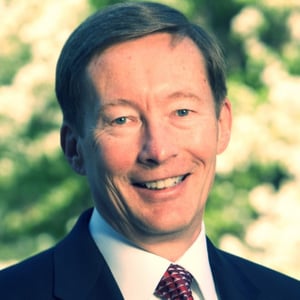
Professor of the Practice of Law and Executive Director, Center on Law, Ethics and National Security, Duke University Law School
Charles J. Dunlap Jr. joined the Duke Law faculty in July 2010 where he is currently a professor of the practice of law and Executive Director of the Center on Law, Ethics and National Security. His teaching and scholarly writing focus on national security, law of armed conflict, the use of force under international law, civil-military relations, cyberwar, airpower, military justice, and ethical issues related to the practice of national security law.
Dunlap retired from the Air Force in June 2010, having attained the rank of major general during a 34-year career in the Judge Advocate General Corps. In his capacity as Deputy Judge Advocate General spanning from May 2006 to March 2010, he assisted the Judge Advocate General in the professional supervision of more than 2,200 judge advocates, 350 civilian lawyers, 1,400 enlisted paralegals, and 500 civilians around the world. In addition to overseeing an array of military justice, operational, international, and civil law functions, he provided legal advice to commanders and civilian leaders at all levels.
In the course of his career, Dunlap has been involved in various high-profile interagency and policy matters, including his testimony before the U.S. House of Representatives concerning the Military Commissions Act of 2006.
Dunlap previously served as the senior lawyer (staff judge advocate) at Air Combat Command Headquarters at Langley Air Force Base in Virginia, at Air Education and Training Command Headquarters at Randolph Air Force Base in Texas, and at U.S. Strategic Command, Omaha, Nebraska, among other leadership posts. Additionally, he served on the faculty of the Air Force Judge Advocate General School where he taught various civil and criminal law topics. An experienced trial lawyer, he also spent two years as a military trial judge for a 22-state circuit. He served tours in the United Kingdom and Korea, and deployed for operations in the Middle East and Africa. He also led military-to-military delegations to Colombia, Uruguay, South Africa, and the Czech Republic.
A prolific author and accomplished public speaker, Dunlap’s commentary on a wide variety of national security topics has been published in leading newspapers and military journals. His 2001 essay written for Harvard University’s Carr Center on “lawfare,” a concept he defines as “the use or misuse of law as a substitute for traditional military means to accomplish an operational objective,” has been highly influential among military scholars and in the broader legal academy.
Dunlap is also the author of the prize-winning essay, “The Origins of the Military Coup of 2012”, originally published in 1992, which was selected for the 40th Anniversary Edition of Parameters (Winter 2010-2011).
Dunlap’s legal scholarship has been published in the Stanford Law Review, the Yale Journal of International Affairs, the Harvard Law’s National Security Journal, the Wake Forest Law Review, the Fletcher Forum of World Affairs, the University of Nebraska Law Review, the Texas Tech Law Review, Temple Law’s Journal of International & Comparative Law, the University of North Carolina’s Journal of International Law, the Connecticut Law Review, the Tennessee Law Review, and the Vanderbilt Journal of Transnational Law, among others.
He’s also authored numerous articles and opinion pieces in a range of publications including The Atlantic, the New York Times, the Washington Post, the Washington Times, the Air Force Times, Strategic Studies Quarterly, the Georgetown Journal of International Affairs, Business Insider, the Journal of Genocide Research, The Hill, Small Wars Journal, and the blogs, Lawfare and Just Security.
Maj Gen Dunlap founded his blog Lawfire in 2015 and has since written over 300 posts on a wide variety of subjects.
Dunlap's wife, Joy, was a vice president of the National Association of Broadcasters, and later a deputy director of Government Relations for the Military Officers Association of America. She served as the elected president of Duke Campus Club, and is a recipient of the prestigious Order of the Emerald by Kappa Delta sorority. Her blog, Speaking Joyfully, won 3rd place in the blog category at the 2021 Blue Ridge Mountains Christian Writers Conference. They reside in Durham.
Director, Legal Project at the Middle East Forum
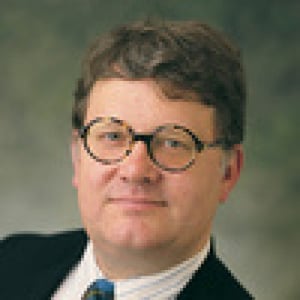
Distinguished Visiting Professor, Hofstra Law School
Scott Horton is a Distinguished Visiting Professor at Hofstra Law School and an adjunct professor at Columbia Law School. He teaches international commercial law and the law of armed conflict. He is also a contributing editor at Harper's Magazine and writes on law and legal policy issues for several other publications. A life-long human rights advocate, Scott served as counsel to Andrei Sakharov and Elena Bonner, among other activists in the former Soviet Union. He is a co-founder of the American University in Central Asia, where he currently serves as a trustee, and has been involved in some of the most significant foreign investment projects in the Central Eurasian region. Scott recently led a number of studies of issues associated with the conduct of the war on terror, including major studies of the introduction of highly coercive interrogation techniques and the program of extraordinary renditions for the New York City Bar Association, where he has chaired several committees, including, most recently, the Committee on International Law. He is also an associate of the Harriman Institute at Columbia University, a member of the board of the National Institute of Military Justice, Center on Law and Security of NYU Law School, the EurasiaGroup and the American Branch of the International Law Association and a member of the Council on Foreign Relations. He co-authored a recent study on legal accountability for private military contractors, Private Security Contractors at War. He appeared as a congressional witness five times in the last two years, offering testimony on issues under the law of armed conflict, military contractor liability and the extraordinary renditions program.
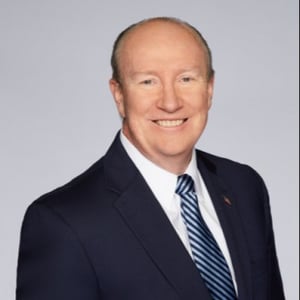
Senior Fellow, National Review
Bestselling author Andrew C. McCarthy is a contributing editor at National Review, a senior fellow at National Review Institute, and a Fox News contributor. He is a former Chief Assistant United States Attorney in the Southern District of New York and led the terrorism prosecution against the “Blind Sheikh” (Omar Abdel Rahman) and eleven other jihadists for conducting a war of urban terrorism against the United States that included the 1993 World Trade Center bombing and a plot to bomb New York City landmarks. During is 20-year career as a prosecutor, he received numerous honors, including the Justice Department’s highest awards. Andy speaks and writes widely on law and national security, radical Islam, politics, and culture. He has testified before Congress as an expert on issues of constitutional law, counterterrorism, and law-enforcement. He is a columnist for The Hill, and his essays and book reviews appear frequently at The New Criterion. His most recent New York Times bestselling book is Ball of Collusion (Encounter Books, 2019), about the Russiagate controversy (an updated version was published in 2020). His other books include Willful Blindness (2008), The Grand Jihad (2010), Spring Fever: The Illusion of Islamic Democracy (2012), and Faithless Execution (2014). He has also written several pamphlets in the Broadside series published by Encounter Books, most recently Islam and Free Speech (2015).
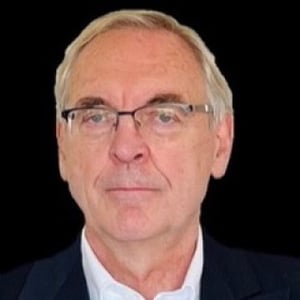
Fellow, National Security Institute, Antonin Scalia Law School, George Mason University
Vince Vitkowsky chaired the Executive Committee of the Federalist Society’s International and National Security Law and Policy Practice Group for over a decade. He is also a Fellow at the National Security Institute of George Mason University Law School. Vince spent 45 years in private practice, primarily in AmLaw 100/200 firms and their spin-offs. His practice included domestic and international commercial arbitration and litigation, as well as cyber risks and liabilities. Vince's current focus is on national security policy, artificial intelligence, cybersecurity, and counterterrorism. He has often written and spoken on national security and other public policy issues. Among other affiliations, Vince has been an Adjunct Fellow at the Center for Law and Counterterrorism of the Foundation for the Defense of Democracies, a member of the Executive Committee of the American Branch of the International Law Association, and Co-Chair of the Committee on Interventions and Trial Observations of the International Bar Association’s Human Rights Institute. He received his B.A. from Northwestern University and his J.D. from Cornell Law School.
Tazewell Taylor Professor of Law and William H. Cabell Research Professor, William & Mary Law School
Jonathan H. Adler joined the William & Mary law faculty as the Tazwell Taylor Professor of Law and William H. Cabell Research Professor in 2025. Prior to joining the faculty, he was the inaugural Johan Verheij Memorial Professor of Law and the founding Director of the Coleman P. Burke Center for Environmental Law at the Case Western Reserve University School of Law.
Professor Adler is the author or editor of seven books, including Climate Liberalism: Perspectives on Liberty, Property and Pollution (Palgrave, 2023), Marijuana Federalism: Uncle Sam and Mary Jane (Brookings Institution Press, 2020), Business and the Roberts Court (Oxford University Press, 2016) and Rebuilding the Ark: New Perspectives on Endangered Species Act Reform (AEI Press, 2011).
His articles have appeared in publications ranging from the Harvard Environmental Law Review and Yale Journal on Regulation to the Wall Street Journal, New York Times, and Washington Post. He has testified before Congress a dozen times, and his work has been cited in the U.S. Supreme Court. A 2024 study identified Professor Adler as the seventh most cited legal academic in administrative and environmental law from 2019 to 2023.
Professor Adler is a contributing editor to Civitas Outlook and a regular contributor to the popular legal blog, The Volokh Conspiracy. A regular commentator on constitutional and regulatory issues, he has appeared on numerous radio and television programs, ranging from the PBS Newshour and National Public Radio to the Fox News Channel and Entertainment Tonight.
Professor Adler is a senior fellow at the Property & Environment Research Center in Bozeman, Montana. In 2018, Professor Adler was elected to membership in the American Law Institute and helped co-found the organization Checks and Balances. In 2024, Professor Adler was appointed a public member of the Administrative Conference of the United States.
Professor Adler clerked for the Honorable David B. Sentelle on the U.S. Court of Appeals for the District of Columbia Circuit.
Director, Vanderbilt Health Policy Center, Vanderbilt University Law School
Director of Litigation and Senior Attorney, Hamilton Lincoln Law Institute
Theodore H. Frank is director at the Hamilton Lincoln Law Institute and the Center for Class Action Fairness. Frank founded and ran CCAF as a non-profit, public interest law firm in 2009.
Frank has won several landmark appeals and tens of millions of dollars for consumers and other plaintiffs through his class action work. Adam Liptak of The New York Times calls Frank “the leading critic of abusive class action settlements” and the American Lawyer Litigation Daily referred to him as “the indefatigable scourge of underwhelming class action settlements.”
Previously, Frank clerked for the Honorable Frank H. Easterbrook on the Seventh Circuit Court of Appeals, and was a litigator at firms in Washington and Los Angeles and a resident fellow at the American Enterprise Institute. Frank is a frequent public speaker and has testified before Congress multiple times on legal issues. He has been profiled by The Wall Street Journal, Forbes, GQ, and the ABA Journal, among other publications.
In 2008, Frank was elected to membership in the American Law Institute. He also serves on the Executive Committee of the Federalist Society Litigation Practice Group. Frank graduated from The University of Chicago Law School in 1994 with high honors and as a member of the Order of the Coif and the Law Review. He is a member of the District of Columbia Bar and the state bars of California and Illinois.
Senior Fellow, American Enterprise Institute
Thomas Miller is a senior fellow at the American Enterprise Institute (AEI), where he studies health care policy, including regulatory barriers to choice and competition, market-based alternatives to the Affordable Care Act, health care litigation, and the political economy of health care reform.
A former senior health economist for the Joint Economic Committee in Congress, Mr. Miller was previously a trial attorney, journalist, and sports broadcaster.
Mr. Miller is the coauthor of the bestseller “Why Obamacare Is Wrong for America” (HarperCollins, 2011), the first in-depth examination of the impact of the Affordable Care Act. His analyses and commentary have been published and featured widely in peer-reviewed publications and in the popular press, including Cato Journal, Health Affairs, Law and Contemporary Problems, the Journal of Law, Medicine, and Politics, the Los Angeles Times, The New York Times, USA Today, The Wall Street Journal, and The Washington Post.
Mr. Miller has also testified before Congress on the uninsured, health care costs, Medicare cost sharing, high-risk pools, health care competition, health insurance tax credits, the individual mandate, genetic information, Social Security, and the federal reinsurance of catastrophic events, among others. He also speaks regularly on various college campuses and teaches a seminar on “Shaping Law and Policy” at Duke University School of Law.
Mr. Miller has a JD from the Duke University School of Law and a BA in political science from New York University.
Milton R. Underwood Chair in Free Enterprise, Vanderbilt University Law School
Brian Fitzpatrick is the Milton R. Underwood Chair in Free Enterprise and Professor of Law at Vanderbilt Law School, where his research focuses on class action litigation, federal courts, judicial selection, and constitutional law. He is best known for his empirical studies of class action settlements as well as his book The Conservative Case for Class Actions (University of Chicago Press, 2019). Professor Fitzpatrick joined Vanderbilt's law faculty in 2007 after serving as the John M. Olin Fellow at New York University School of Law. He graduated first in his class from Harvard Law School and went on to clerk for Judge Diarmuid O'Scannlain on the U.S. Court of Appeals for the Ninth Circuit and Justice Antonin Scalia on the U.S. Supreme Court. After his clerkships, Professor Fitzpatrick practiced commercial and appellate litigation for several years at Sidley Austin in Washington, D.C., and served as Special Counsel for Supreme Court Nominations to U.S. Senator John Cornyn. Before earning his law degree, Fitzpatrick graduated summa cum laude with a bachelor's of science in chemical engineering from the University of Notre Dame. He has received the Hall-Hartman Outstanding Professor Award, which recognizes excellence in classroom teaching, for his Civil Procedure and Federal Courts courses.
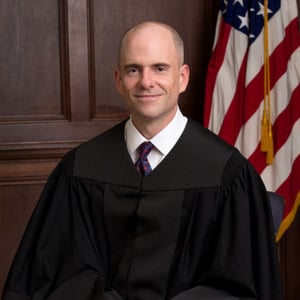
Judge, United States Court of Appeals, Eleventh Circuit
Judge Kevin C. Newsom is a member of the United States Court of Appeals for the Eleventh Circuit. He sits in Birmingham, Alabama.
Before his appointment to the bench, Judge Newsom was the head of the appellate practice group at Bradley Arant Boult Cummings LLP and, before that, the Solicitor General of Alabama. As a practicing lawyer, Judge Newsom argued four cases in the Supreme Court of the United States, and nearly 40 more in the United States Courts of Appeals and state supreme and appellate courts.
Judge Newsom graduated summa cum laude from Samford University and magna cum laude from Harvard Law School, where he was an articles editor on the Harvard Law Review. Following law school, Judge Newsom clerked for Judge Diarmuid F. O’Scannlain of the United States Court of Appeals for the Ninth Circuit and Justice David H. Souter of the Supreme Court of the United States.
Judge Newsom teaches at Harvard Law School, Yale Law School, Stanford Law School, and the University of Chicago Law School. His published work has appeared in the Yale Law Journal and the Harvard Law Review.
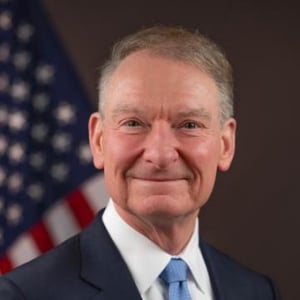
Chairman of the Securities and Exchange Commission
Paul S. Atkins was sworn into office as the 34th Chairman of the Securities and Exchange Commission on April 21, 2025, after being nominated by President Donald J. Trump on January 20, 2025, and confirmed by the U.S. Senate on April 9, 2025.
Prior to returning to the SEC, Chairman Atkins was most recently chief executive of Patomak Global Partners, a company he founded in 2009. Chairman Atkins helped lead efforts to develop best practices for the digital asset sector. He served as an independent director and non-executive chairman of the board of BATS Global Markets, Inc. from 2012 to 2015.
Chairman Atkins was appointed by President George W. Bush to serve as a Commissioner of the SEC from 2002 to 2008. During his tenure, he advocated for transparency, consistency, and the use of cost-benefit analysis at the agency. Chairman Atkins also represented the SEC at meetings of the President’s Working Group on Financial Markets and the U.S.-EU Transatlantic Economic Council. From 2009 to 2010, he was appointed a member of the Congressional Oversight Panel for the Troubled Asset Relief Program.
Before serving as an SEC Commissioner, Chairman Atkins was a consultant on securities and investment management industry matters, especially regarding issues of strategy, regulatory compliance, risk management, new product development, and organizational control.
From 1990 to 1994, Chairman Atkins served on the staff of two chairmen of the SEC, Richard C. Breeden and Arthur Levitt, ultimately as chief of staff and counselor, respectively. He received the SEC’s 1992 Law and Policy Award for work regarding corporate governance matters.
Chairman Atkins began his career as a lawyer in New York, focusing on a wide range of corporate transactions for U.S. and foreign clients, including public and private securities offerings and mergers and acquisitions. He was resident for 2½ years in his firm's Paris office and admitted as conseil juridique in France.
A member of the New York and Florida bars, Chairman Atkins received his J.D. from Vanderbilt University School of Law in 1983 and was Senior Student Writing Editor of the Vanderbilt Law Review. He received his A.B., Phi Beta Kappa, from Wofford College in 1980.
Originally from Lillington, North Carolina, Chairman Atkins grew up in Tampa, Florida. He and his wife Sarah have three sons.

SCOTUScast 5-27-09 featuring Brian Fitzpatrick
Brian T. Fitzpatrick
On Wednesday, January 21, the Supreme Court announced its decision in Fitzgerald v. Barnstable School...
The Voting Rights Act, State Redistricting Plans, and Voting Rights Cases
Kelo and Eminent Domain Abuse
International Lawfare and National Security
International & National Security Practice Group
New YorkPanel III: Health Care and the Environment
Jonathan H. Adler, James Blumstein, Theodore "Ted" Frank, Thomas P. Miller
Prof. Jonathan Adler, Case Western Reserve University School of Law Prof. James Blumstein, Vanderbilt Law...
Panel III: Health Care and the Environment
The Future of Federalism Conference
Washington, DC2008 U.S. Supreme Court Round-Up
SCOTUScast 4-21-08 featuring Richard Nagareda
Richard A. Nagareda
On April 16, 2008, the Supreme Court heard oral argument in Taylor v. Sturgell. At...
An Evening with SEC Commissioner Paul S. Atkins
Nashville, TennesseeSCOTUScast 2-26-08 featuring Richard Nagareda
Richard A. Nagareda
On February 20, 2008 the Supreme Court decided Riegel v. Medtronic. In Riegel, the Court...