

Professor Emeritus, Paul M. Hebert Law Center, Louisiana State University
In memoriam
Dr. John Baker is Professor Emeritus of Law, and previously the Dale E. Bennett Professor of Law, at Louisiana State University Law School. He is currently Visiting Professor at Peking University School of Transnational Law (via Zoom) and has been Visiting Professor at The Center for the Constitution, Georgetown Law School (2013-2020). He has also been a Visiting Fellow at Oriel College, the University of Oxford (2012-2014) and taught at Blackfriars Hall, Oxford in 2014. Dr. Baker has also been an adjunct Fellow at the Heritage Foundation (Spring, 2008) and a Distinguished Scholar at the Catholic University of America Law School (2011-12). He has taught at Tulane Law School, George Mason Law School, Pepperdine Law School, New York Law School, Hong Kong University, and the University of Dallas, School of Management and also taught and/or lectured in 17 foreign countries. Notable among his foreign visits are the
following: Visiting Professor at the University of Lyon III (France) (1999-2011); Visiting Professor at the Universidad de los Andes, Chile (2012), as a Fulbright Specialist (2006); and a Fulbright Scholar at various universities in the Philippines. Dr. Baker received his J.D., with honors, from the University of Michigan Law School and his B.A., magna cum laude, from the University of Dallas. He also earned a Ph.D. in Political Thought from the University of London. Baker has taught over a dozen different subjects, mostly courses in public law. His main areas of interest are Constitutional Law (particularly federalism and separation of powers), Criminal Law, Anti-Terrorism Law, International Law, Health Care Law, Mediation, and Comparative Law.
In addition to law review articles and book chapters, Dr. Baker’s academic publications include Hall's Criminal Law: Cases and Materials (with Benson, Force and George; 5th ed. Michie, 1993); An Introduction to the Law of the United States (ed. with Levasseur; University Press of America, 1992). He has also published on Forbes.com, FoxNews.com, in The Washington Times, and a number of times in The Wall Street Journal. He argues in federal court, including two oral arguments in the U.S. Supreme Court. For many years, he co-taught courses for the Federalist Society on separation of powers with the late Supreme Court Justice Antonin Scalia. In September 2016, he co-taught a Supreme Court seminar in China with Justice Samuel Alito. Following law school, he served as a law clerk in federal district court and as an assistant district attorney in New Orleans before joining LSU in 1975. While a professor, he has been as a consultant to USAID, USIA (since rolled into the State Department), the Justice Department, the U.S. Senate Judiciary Subcommittee on Separation of Powers, and the Office of Planning in the White House. He served on an ABA Task Force which issued the report, The Federalization of Crime (1998) and later as a consultant to the “Bi-Partisan Task Force on the Over- federalization of Crime” (2012-2014) created by the U.S. House Judiciary Subcommittee on Crime. Dr. Baker was a co-founder of the first iteration (1995) of Stratfor Inc., a global intelligence agency. He co-authored its first book: The Intelligence Edge (with Friedman, Friedman and Chapman; Crown Books/Random House 1997). In 2022, he began a short, weekly video podcast available on YouTube and Rumble, The Baker Brief.

Judge, United States Court of Appeals, Fifth Circuit
Andrew Oldham is a Circuit Judge on the United States Court of Appeals for the Fifth Circuit. Before ascending to the bench, Judge Oldham served as General Counsel to Texas Governor Greg Abbott, where he advised the Governor on a range of issues under federal and state law and managed litigation in which the Governor was an interested party. Before that he served as Deputy Solicitor General for the State of Texas, where he represented Texas in federal courts across the country, including twice before the United States Supreme Court. Before moving to Texas, Judge Oldham was an attorney at Kellogg Hansen Todd Figel & Frederick in Washington, D.C. His practice focused on appellate litigation in federal courts of appeals throughout the country. Before entering private practice, Judge Oldham served as a law clerk to Justice Samuel A. Alito, Jr., at the Supreme Court of the United States and to Judge David B. Sentelle of the U.S. Court of Appeals for the District of Columbia Circuit. He also worked as an attorney-adviser in the Office of Legal Counsel at the U.S. Department of Justice from 2006 to 2008. Judge Oldham earned a B.A. from the University of Virginia with highest honors, a Truman Scholarship for graduate school, an M. Phil., first class (with distinction), from Cambridge University, and a J.D., magna cum laude, from Harvard Law School.
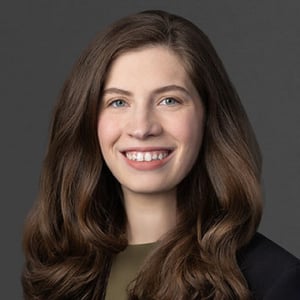
Associate, Kirkland & Ellis LLP
Rachel Daley is a litigation associate at Kirkland & Ellis LLP. Her practice focuses on drafting dispositive motions and appellate briefs in federal courts around the country. Rachel previously served as a law clerk to Justice Neil M. Gorsuch on the Supreme Court of the United States, Judge Amul R. Thapar on the U.S. Court of Appeals for the Sixth Circuit, and Judge Andrew S. Oldham on the U.S. Court of Appeals for the Fifth Circuit. Rachel is a graduate of the University of Virginia School of Law. She served as president of the law school's Federalist Society chapter in 2021, when UVA received the Federalist Society's award for Chapter of the Year. She lives in Austin, Texas with her husband, Kevin, and their two daughters.
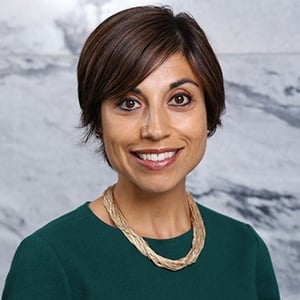
Professor of Law, UC Irvine School of Law
Mehrsa Baradaran is a Professor of Law at UC Irvine School of Law.
Previously, she was the Robert Cotten Alston Chair in Corporate Law and Associate Dean for strategic initiatives with a focus on diversity and inclusion efforts and national and international faculty scholarship recognition at the University of Georgia School of Law.
Baradaran writes about banking law, financial inclusion, inequality, and the racial wealth gap. Her scholarship includes the books How the Other Half Banks and The Color of Money: Black Banks and the Racial Wealth Gap, both published by the Harvard University Press. The Color of Money: Black Banks and the Racial Wealth Gap was awarded the Best Book of the Year by the Urban Affairs Association, the PROSE Award Honorable Mention in the Business, Finance & Management category. Baradaran was also selected as a finalist at the 2018 Georgia Author of the Year Awards for the book in the category of history/biography.
Baradaran has also published articles including "Jim Crow Credit" in the Irvine Law Review, "Regulation by Hypothetical" in the Vanderbilt Law Review, "It's Time for Postal Banking" in the Harvard Law Review Forum, "Banking and the Social Contract" in the Notre Dame Law Review, "How the Poor Got Cut Out of Banking" in the Emory Law Journal, "Reconsidering the Separation of Banking and Commerce" in the George Washington Law Review and "The ILC and the Reconstruction of U.S. Banking" in the SMU Law Review. Of note, her article "The New Deal with Black America" was selected for presentation at the 2017 Stanford/Harvard/Yale Junior Faculty Forum.
Baradaran and her books have received significant national and international media coverage and have been featured in the New York Times, the Atlantic, Slate, American Banker, the Wall Street Journal and Financial Times; on National Public Radio’s “Marketplace,” C-SPAN’s “Washington Journal” and Public Broadcasting Service’s “NewsHour;” and as part of TEDxUGA. She has advised U.S. Senators and Congressmen on policy, testified before the U.S. Congress, and spoken at national and international forums like the U.S. Treasury and the World Bank.
She earned her bachelor's degree cum laude from Brigham Young University and her law degree cum laude from NYU, where she served as a member of the New York University Law Review.
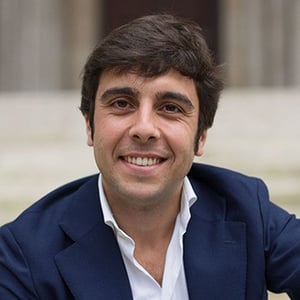
Executive Director, Government Affairs, Goldman Sachs
Diego Zuluaga serves as Executive Director, Government Affairs at Goldman Sachs.
Previously Zuluaga served as a Principal at Fingleton. Prior to joining Fingleton, Zuluaga was an associate director of financial regulation studies at the Cato Institute’s Center for Monetary and Financial Alternatives, where he covered financial technology and consumer credit. Before joining Cato, Zuluaga was Head of Financial Services and Tech Policy at the Institute of Economic Affairs in London. While at the IEA, he wrote on international capital mobility, multi-sided platform regulation, and price controls on consumer credit, among other subjects.
Zuluaga is the author of “Should Cryptocurrencies Be Regulated like Securities?” and “The Community Reinvestment Act in the Age of Fintech and Bank Competition.” He has previously testified on the impact of restrictions on short-term lending before the House Subcommittee on Consumer Protection and Financial Institutions. Zuluaga's work has featured in print and broadcast media, such as Politico, the Wall Street Journal, Newsweek, American Banker, the London Times, and the Daily Telegraph. Zuluaga is a prolific public speaker as well as a former lecturer in economics at the University of Buckingham.
Originally from Bilbao in northern Spain, Zuluaga holds a BA in economics and history from McGill University, and an MSc in financial economics from the University of Oxford.
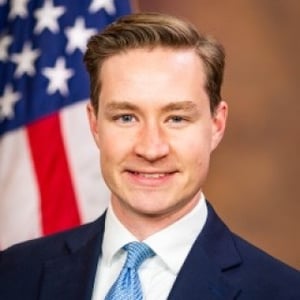
Assistant Attorney General, Office of Legal Counsel, U.S. Department of Justice
T. Elliot Gaiser is the Office of Legal Counsel’s 27th Assistant Attorney General. He was nominated by President Donald Trump on April 29, 2025, confirmed by the United States Senate on July 30, 2025, and sworn in as AAG by Attorney General Pam Bondi on August 4, 2025.
Prior to joining the Office of Legal Counsel, Mr. Gaiser served as the 11th Solicitor General of Ohio. In that role, he represented his home state and its agencies before the Supreme Court of the United States, the United States Court of Appeals for the Sixth Circuit, the Supreme Court of Ohio, and other state and federal courts. He also advised Ohio Attorney General Dave Yost on significant legal and constitutional matters important to the people of Ohio.
Mr. Gaiser clerked for Justice Samuel A. Alito, Jr. of the Supreme Court of the United States, Judge Neomi Rao of the United States Court of Appeals for the D.C. Circuit, and Judge Edith H. Jones of the United States Court of Appeals for the Fifth Circuit. In the private sector, Mr. Gaiser worked at the law firms Jones Day, Boyden Gray, and Gibson Dunn. He graduated from the University of Chicago Law School and Hillsdale College. He is also a husband and father.
Professor Emeritus, Paul M. Hebert Law Center, Louisiana State University
In memoriam
Dr. John Baker is Professor Emeritus of Law, and previously the Dale E. Bennett Professor of Law, at Louisiana State University Law School. He is currently Visiting Professor at Peking University School of Transnational Law (via Zoom) and has been Visiting Professor at The Center for the Constitution, Georgetown Law School (2013-2020). He has also been a Visiting Fellow at Oriel College, the University of Oxford (2012-2014) and taught at Blackfriars Hall, Oxford in 2014. Dr. Baker has also been an adjunct Fellow at the Heritage Foundation (Spring, 2008) and a Distinguished Scholar at the Catholic University of America Law School (2011-12). He has taught at Tulane Law School, George Mason Law School, Pepperdine Law School, New York Law School, Hong Kong University, and the University of Dallas, School of Management and also taught and/or lectured in 17 foreign countries. Notable among his foreign visits are the
following: Visiting Professor at the University of Lyon III (France) (1999-2011); Visiting Professor at the Universidad de los Andes, Chile (2012), as a Fulbright Specialist (2006); and a Fulbright Scholar at various universities in the Philippines. Dr. Baker received his J.D., with honors, from the University of Michigan Law School and his B.A., magna cum laude, from the University of Dallas. He also earned a Ph.D. in Political Thought from the University of London. Baker has taught over a dozen different subjects, mostly courses in public law. His main areas of interest are Constitutional Law (particularly federalism and separation of powers), Criminal Law, Anti-Terrorism Law, International Law, Health Care Law, Mediation, and Comparative Law.
In addition to law review articles and book chapters, Dr. Baker’s academic publications include Hall's Criminal Law: Cases and Materials (with Benson, Force and George; 5th ed. Michie, 1993); An Introduction to the Law of the United States (ed. with Levasseur; University Press of America, 1992). He has also published on Forbes.com, FoxNews.com, in The Washington Times, and a number of times in The Wall Street Journal. He argues in federal court, including two oral arguments in the U.S. Supreme Court. For many years, he co-taught courses for the Federalist Society on separation of powers with the late Supreme Court Justice Antonin Scalia. In September 2016, he co-taught a Supreme Court seminar in China with Justice Samuel Alito. Following law school, he served as a law clerk in federal district court and as an assistant district attorney in New Orleans before joining LSU in 1975. While a professor, he has been as a consultant to USAID, USIA (since rolled into the State Department), the Justice Department, the U.S. Senate Judiciary Subcommittee on Separation of Powers, and the Office of Planning in the White House. He served on an ABA Task Force which issued the report, The Federalization of Crime (1998) and later as a consultant to the “Bi-Partisan Task Force on the Over- federalization of Crime” (2012-2014) created by the U.S. House Judiciary Subcommittee on Crime. Dr. Baker was a co-founder of the first iteration (1995) of Stratfor Inc., a global intelligence agency. He co-authored its first book: The Intelligence Edge (with Friedman, Friedman and Chapman; Crown Books/Random House 1997). In 2022, he began a short, weekly video podcast available on YouTube and Rumble, The Baker Brief.
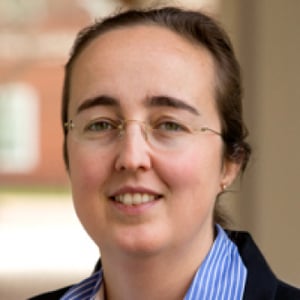
Assistant Professor of Political Science, Old Dominion University
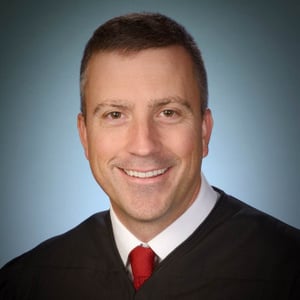
Judge, United States District Court, District of Columbia
Judge Trevor N. McFadden was appointed to the United States District Court for the District of Columbia in 2017. He received his B.A. in 2001 from Wheaton College, IL, magna cum laude. In 2006, he received his J.D. from the University of Virginia School of Law, where he graduated Order of the Coif and was an editor for the Virginia Law Review.
Following graduation from law school, Judge McFadden clerked for Judge Steven Colloton, U.S. Court of Appeals for the Eighth Circuit. He then joined the U.S. Department of Justice, where he served as Counsel to the Deputy Attorney General and as Assistant U.S. Attorney in the District of Columbia. Judge McFadden subsequently became a partner at Baker & McKenzie LLP in Washington, DC, where he focused on white collar investigations. He is also co-author of a treatise, Corporate Settlement Tools: DPAs, NPAs, and Cooperation Agreements.
After four years in private practice, Judge McFadden returned to the U.S. Department of Justice, where he was Deputy Assistant Attorney General and acted as the second-in-command of the Department's Criminal Division. As Deputy Assistant Attorney General, he managed the Division's Fraud and Appellate Sections.
Judge McFadden also has extensive experience in law enforcement. He served as an officer with the Fairfax County, VA, Police Department and as a deputy sheriff in Madison County, VA.
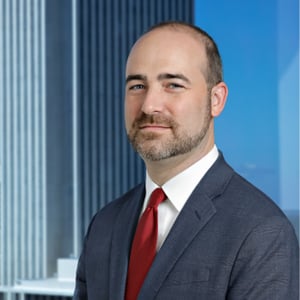
Partner, Shutts & Bowen LLP
Daniel Nordby is a partner in the Tallahassee office of Shutts & Bowen LLP, where he is a member of the Appellate Practice Group. His practice focuses on high-profile, high stakes matters of law and public policy, particularly in the areas of constitutional, appellate and administrative law.
Over the course of his career, Daniel has developed extensive experience in the area of government and administrative law. He is a Past Chair of the Florida Bar’s Administrative Law Section and has served on the Section’s Executive Council for more than a decade. Daniel has represented clients in some of Florida’s largest competitive procurements and has served as counsel of record in a variety of administrative and judicial proceedings involving the application of constitutional and administrative law principles. He has personally presented oral argument on multiple occasions before the Florida Supreme Court, Florida’s First District Court of Appeal, and the Federal Court of Appeals for the Eleventh Circuit on high-profile matters of constitutional law. A representative list of Daniel’s reported opinions in the state and federal courts is available here.
Daniel draws on his prior service in the public sector when representing businesses, individuals and governmental clients on their most challenging legal issues. As General Counsel to then-Governor Rick Scott from 2017-2019, Daniel provided oversight and strategic direction for all major litigation involving Florida’s executive branch agencies and advised Governor Scott on the appointment of more than 100 judges to Florida’s trial and appellate courts. Daniel’s career also includes service as General Counsel to the Florida House of Representatives, General Counsel to Florida’s Secretary of State, Assistant General Counsel to the Florida Department of Education, and Staff Attorney to the Florida Legislature’s Joint Administrative Procedures Committee.
Daniel continues his public service as a gubernatorial appointee to the Florida Supreme Court Judicial Nominating Commission. After serving on the Commission from 2012-2018 as a direct appointee of Governor Scott, Daniel was appointed by Governor DeSantis in July 2019 to a third term. He currently serves as Chair of the Florida Supreme Court Judicial Nominating Commission.
Daniel is also involved with several non-profit and community groups. He is a graduate of Leadership Florida (Connect VI), a member of Florida Blue Key, a member of the American Enterprise Institute’s Leaders Network, and a member of the James Madison Institute’s Inaugural Class of Leaders Fellows. Daniel is on the Steering Committee of the Tallahassee Lawyers Chapter of the Federalist Society for Law and Public Policy Studies and is a Past President of both its Tallahassee Lawyers Chapter and University of Florida Student Chapter. Daniel is an Eagle Scout and attends St. Peter’s Anglican Cathedral in Tallahassee.
Daniel is a “triple-Gator” with three degrees from the University of Florida: a J.D. (with high honors), a B.S. in Microbiology and Cell Science, and a B.A. in Classical Studies. He has been recognized as a Florida Super Lawyers “Rising Star” and has been named to the roster of Florida Legal Elite by Florida Trend magazine in the categories of “Government & Administrative Law,” “Best Government & Non-Profit Attorneys,” and ”Best Up & Coming Attorneys.”
Judge, United States Court of Appeals, Fifth Circuit
Andrew Oldham is a Circuit Judge on the United States Court of Appeals for the Fifth Circuit. Before ascending to the bench, Judge Oldham served as General Counsel to Texas Governor Greg Abbott, where he advised the Governor on a range of issues under federal and state law and managed litigation in which the Governor was an interested party. Before that he served as Deputy Solicitor General for the State of Texas, where he represented Texas in federal courts across the country, including twice before the United States Supreme Court. Before moving to Texas, Judge Oldham was an attorney at Kellogg Hansen Todd Figel & Frederick in Washington, D.C. His practice focused on appellate litigation in federal courts of appeals throughout the country. Before entering private practice, Judge Oldham served as a law clerk to Justice Samuel A. Alito, Jr., at the Supreme Court of the United States and to Judge David B. Sentelle of the U.S. Court of Appeals for the District of Columbia Circuit. He also worked as an attorney-adviser in the Office of Legal Counsel at the U.S. Department of Justice from 2006 to 2008. Judge Oldham earned a B.A. from the University of Virginia with highest honors, a Truman Scholarship for graduate school, an M. Phil., first class (with distinction), from Cambridge University, and a J.D., magna cum laude, from Harvard Law School.

Judge, United States Court of Appeals, Third Circuit
Stephanos Bibas is a judge on the U.S. Court of Appeals for the Third Circuit. Judge Bibas was previously a professor of law and criminology at the University of Pennsylvania Law School. As director of the Penn Law Supreme Court Clinic, he argued six cases before the Supreme Court of the United States and filed briefs in dozens of others. He graduated summa cum laude and Phi Beta Kappa from Columbia University in 1989 with a B.A. in political theory and from Oxford University in 1991 with a B.A. in jurisprudence. He then earned his J.D. from Yale Law School in 1994.
After graduating from Yale Law, Judge Bibas clerked for Judge Patrick Higginbotham of the U.S. Court of Appeals for the Fifth Circuit and Justice Anthony Kennedy on the Supreme Court and was a litigation associate at Covington & Burling LLP in Washington, D.C. Thereafter, Judge Bibas served as an Assistant U.S. Attorney in the Southern District of New York, where he successfully prosecuted the world’s leading expert in Tiffany stained glass for hiring a grave robber to steal priceless Tiffany windows from cemeteries. Before his tenure at Penn Law, Judge Bibas taught at the University of Chicago Law School and the University of Iowa College of Law and was a research fellow at Yale Law School. He has published two books and seventy scholarly articles.
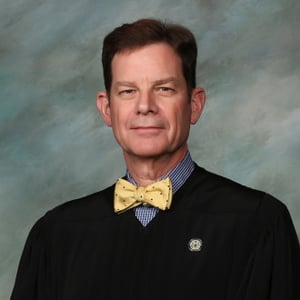
Judge, United States Court of Appeals, Fifth Circuit
Kurt D. Engelhardt was nominated for a seat on the United States Fifth Circuit Court of Appeals by President Donald J. Trump, confirmed by the Senate on May 9, 2018, and officially sworn in as a United States Circuit Judge on May 15, 2018. Judge Engelhardt is based in New Orleans, Louisiana, at the John Minor Wisdom U.S. Court of Appeals Building.
Judge Engelhardt was previously nominated for a seat on the United States District Court for the Eastern District of Louisiana by President George W. Bush, and upon confirmation, was officially sworn in as a United States District Judge on December 14, 2001. While a District Judge, Judge Engelhardt served by designation on nine different panels of the United States Fifth Circuit Court of Appeals. On October 1, 2015, he became Chief United States District Court Judge for the Eastern District of Louisiana, a position he held until joining the United States Fifth Circuit on May 15, 2018.
Judge Engelhardt attended Brother Martin High School in New Orleans, where he graduated with honors in 1978. He attended Louisiana State University in Baton Rouge, from which he graduated with a Bachelor of Arts in history in 1982. In the Fall of 1982, Judge Engelhardt commenced his legal education at the Paul M. Hebert Law Center at Louisiana State University, graduating in May of 1985.
Judge Engelhardt served a two-year clerkship with Judge Charles Grisbaum, Jr. of the Louisiana Fifth Circuit Court of Appeal, located in Gretna, Louisiana. From there, he became associated with the Metairie law firm of Little, Metzger and Lamz (APLC), and worked in the downtown New Orleans office of that firm in 1988-89. He then joined the law firm of Hailey, McNamara, Hall, Larmann & Papale, became a partner in July 1998, and practiced there until his confirmation to the federal bench in December 2001.
In 1995, Judge Engelhardt was nominated for a spot on the nine-member Louisiana Judiciary Commission, and was appointed by the Governor to serve a four-year term on that body. In 1998, he was elected by his fellow commission members to serve as Chairman, in which capacity he presided over the Commission’s trials of formal charges lodged against sitting state judges. His work on the Judiciary Commission has been cited for its excellence by the Louisiana Supreme Court.
Judge Engelhardt is a member of the Advisory Board of the New Orleans Chapter of The Federalist Society; a past member of the United States Judicial Conference Committee on Federal-State Jurisdiction; a member of the Board of Directors (and past president) of the New Orleans Chapter of the Federal Bar Association; a member of the American Judicature Society; and a member of the Federal Circuit Bar Association. He has served on the Fifth Circuit's Criminal Pattern Jury Instruction Committee, charged with updating and/or drafting pattern jury instructions for district judges within the jurisdiction of the United States Fifth Circuit. Recently, he was appointed by Fifth Circuit Chief Judge Carl Stewart to chair the Circuit's Judicial Impairment Protocol Committee, established to create a framework for the judiciary to internally address disabilities of all types which may impact a judge's ability to handle his/her docket.
Judge Engelhardt is also a member of the American Bar Association, Jefferson Bar Association, Louisiana State Bar Association, New Orleans Bar Association, and the Phi Alpha Delta Law Fraternity. Judge Engelhardt serves on the Board of Directors of the Cancer Association of Greater New Orleans.

Associate Director of Litigation, National Immigrant Justice Center
Mark Fleming is the Associate Director of Litigation at the National Immigrant Justice Center (NIJC) located in Chicago, Illinois. Mr. Fleming focuses on litigation and public policy at the intersection of state and local law enforcement and civil immigration enforcement. He has litigated multiple class actions related to Immigration and Customs Enforcement’s (ICE) use of immigration detainers. Mr. Fleming provided technical expertise in the drafting and passage of Chicago’s Welcoming City Ordinance in 2012 and the Illinois TRUST Act in 2017. Mr. Fleming has been quoted in various national media outlets and appeared in a PBS FRONTLINE documentary on ICE enforcement and detention. Mr. Fleming graduated magna cum laude from the Georgetown University Law Center.
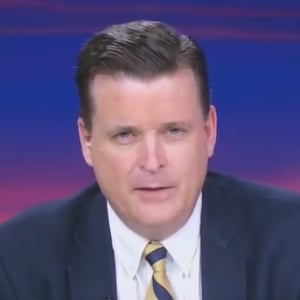
Director of Litigation, Immigration Reform Law Institute
Mr. Hajec joined the Immigration Reform Law Institute (IRLI) in 2017 as its Director of Litigation, and is responsible for overseeing IRLI’s public interest litigation. Previously, he has focused his career on constitutional and other civil rights law in the public interest, and has had an abiding concern about the many adverse effects of illegal and excessive legal immigration on American jobs and communities.
At IRLI, in addition to representing plaintiffs in immigration-related civil lawsuits, he has overseen the drafting and filing of nearly 100 briefs, mostly amicus curiae briefs in defense of the Trump administration’s immigration initiatives, which have been subjected to an unprecedented degree of legal assault by well-funded interest groups.
Prior to joining IRLI, Mr. Hajec was an attorney at the Center for Individual Rights (CIR), where he litigated a string of high-profile cases, including the defense of videographer James O’Keefe in suits brought by former ACORN employees, a class action suit on behalf of Asian American students discriminated against by the New York City public schools, and a case that resulted in the U.S. Court of Appeals for the Fifth Circuit’s striking down Texas’s psychologists licensing statute as an overbroad restriction on free speech.
Before CIR, Mr. Hajec was an officer in the Navy Judge Advocate General’s Corps, where he served as a defense counsel before courts-martial and then as Appellate Government Counsel, arguing over 100 appeals before the Navy-Marine Corps Court of Criminal Appeals and the Court of Appeals for the Armed Forces. He received the Navy Commendation Medal for his legal work, and also because of his poor handling of an emergency during a hurricane.
He received his law degree from the University of Pennsylvania Law School and his undergraduate degree, cum laude, from the University of Michigan. He has a Ph.D. in philosophy from the University of Miami, and studied philosophy and sociology at Oxford University.

Vice President, Edwin Meese III Institute for the Rule of Law, Advancing American Freedom
John G. Malcolm oversees Advancing American Freedom’s work to increase understanding of the Constitution and the rule of law as Vice President of the organization’s Edwin Meese III Institute for the Rule of Law. Malcolm brings to the challenge a wealth of legal expertise and experience in both the public and private sectors.
Prior to joining Advancing American Freedom in 2025, Malcolm was the Vice President of the Institute for Constitutional Government and the Director of the Meese Center for Legal and Judicial Studies at the Heritage Foundation. Prior to joining Heritage in 2012, Malcolm was general counsel at the U.S. Commission on International Religious Freedom, as well as a distinguished practitioner in residence at Pepperdine Law School. From 2004 to 2009, Malcolm was executive vice president and director of worldwide anti-piracy operations for the Motion Picture Association.
Malcolm served as a deputy assistant attorney general in the Department of Justice’s Criminal Division from 2001 to 2004, where he oversaw sections on computer crime and intellectual property, domestic security, child exploitation and obscenity, and special investigations. Immediately prior to that, he was a founding partner in the Atlanta law firm of Malcolm & Schroeder, LLP.
From 1990 to 1997, Malcolm was an assistant U.S. attorney in Atlanta, assigned to the fraud and public corruption section, and also an associate independent counsel, investigating fraud and abuse in the Department of Housing and Urban Development. He was honored with the Director’s Award for Superior Performance for his work in connection with the successful prosecution of Walter Leroy Moody Jr., who assassinated an 11th Circuit judge and the head of the Savannah chapter of the NAACP.
A graduate of Harvard Law School and Columbia College, Malcolm began his career as a law clerk to a federal district court judge and a federal appellate court judge, and as an associate at the Atlanta-based law firm of Sutherland, Asbill & Brennan (new Eversheds Sutherland).
Malcolm, who resides in Washington, D.C., serves on the Board of Trustees of the Washington National Opera and is a Senate-confirmed member of the Board of Directors of the Legal Services Corporation, the largest funder of civil legal aid in the United States.
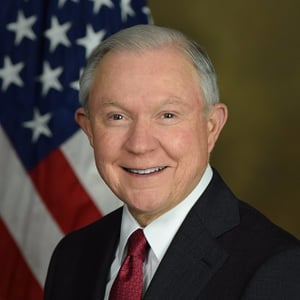
Former United States Attorney General
Jeff Sessions served as the 84th Attorney General of the United States from February 9, 2017 until November 7, 2018.
Prior to becoming Attorney General, Mr. Sessions served as a United States Senator for Alabama since 1996. As a United States Senator, he focused his energies on maintaining a strong military, upholding the rule of law, limiting the role of government, and providing tax relief to stimulate economic growth and to empower Americans to keep more of their hard-earned money.
Mr. Sessions was born in Selma, Alabama on December 24, 1946, and grew up in Hybart, the son of a country store owner. Growing up in the country, Sessions was instilled with certain core values – honesty, hard work, belief in God and parental respect – that define him today. In 1964, he became an Eagle Scout and thereafter received the Distinguished Eagle Scout Award. After attending school in nearby Camden, Sessions attended Huntingdon College in Montgomery, graduating with a Bachelor of Arts degree in 1969. He received a Juris Doctorate degree from the University of Alabama in 1973. Sessions served in the United States Army Reserve from 1973 to 1986, ultimately attaining the rank of Captain. He still considers that period to be one of the most rewarding chapters of his life.
Sessions’ interest in the law led to a distinguished legal career, first as a practicing attorney in Russellville, Alabama, and then in Mobile. Following a two-year stint as Assistant United States Attorney for the Southern District of Alabama (1975-1977), Sessions was nominated by President Reagan in 1981 and confirmed by the Senate to serve as the United States Attorney for the Southern District of Alabama, a position he held for 12 years. Sessions was elected Alabama Attorney General in 1995, serving as the State’s chief legal officer until 1996, when he entered the United States Senate.
Sessions and his wife, Mary Blackshear Sessions, originally of Gadsden, Alabama, have three children, Mary Abigail Reinhardt, Ruth Sessions Walk, and Sam. They have seven granddaughters, Jane Ritchie, Alexa, Gracie, Sophia, Hannah, Joanna, and Phoebe, and three grandsons, Jim Beau, Lewis, and Nicholas.

Professor of Law, Antonin Scalia Law School, George Mason University
ILYA SOMIN is Professor of Law at George Mason University and the B. Kenneth Simon Chair in Constitutional Studies at the Cato Institute. His research focuses on constitutional law, property law, democratic theory, federalism, and migration rights. He is the author of Free to Move: Foot Voting, Migration, and Political Freedom (Oxford University Press, revised and expanded edition, 2022), Democracy and Political Ignorance: Why Smaller Government is Smarter (Stanford University Press, revised and expanded second edition, 2016), and The Grasping Hand: Kelo v. City of New London and the Limits of Eminent Domain (University of Chicago Press, 2015, rev. paperback ed., 2016), coauthor of A Conspiracy Against Obamacare: The Volokh Conspiracy and the Health Care Case (Palgrave Macmillan, 2013), and co-editor of Eminent Domain: A Comparative Perspective (Cambridge University Press, 2017). Democracy and Political Ignorance has been translated into Italian and Japanese.
Somin’s work has appeared in numerous scholarly journals, including the Yale Law Journal, Stanford Law Review, Northwestern University Law Review, Georgetown Law Journal, Critical Review, and others. Somin has also published articles in a variety of popular press outlets, including the New York Times, Washington Post, Wall Street Journal, Los Angeles Times, CNN, NBC, The Atlantic, USA Today, Boston Globe, US News and World Report, South China Morning Post, National Law Journal and Reason. He has been quoted or interviewed by the New York Times, Washington Post, Wall Street Journal, Time, Newsweek, The Economist, the Christian Science Monitor, the Financial Times, The Guardian, the Associated Press, CBS, MSNBC, NPR, BBC, Reuters, the Canadian Broadcasting Corporation, the Australian Broadcasting Corporation, Radio Free Europe/Radio Liberty, Al Jazeera, and the Voice of America, among other media.
Somin’s writings have been cited in decisions by the United States Supreme Court, multiple state supreme courts and lower federal courts, and the Supreme Court of Israel. He is co-counsel for the plaintiffs in VOS Selections, Inc. v. Trump, a case challenging the constitutionality of President Trump’s “Liberation Day” tariffs. Somin has testified on the use of drones for targeted killing in the War on Terror before the US Senate Judiciary Subcommittee on the Constitution, Civil Rights, and Human Rights. In 2009, he testified on property rights issues at the United States Senate Judiciary Committee confirmation hearings for Supreme Court Justice Sonia Sotomayor. Somin writes regularly for the popular Volokh Conspiracy law and politics blog, now affiliated with Reason magazine (previously affiliated with the Washington Post from 2014 to 2017). From 2006 to 2013, he served as Co-Editor of the Supreme Court Economic Review, one of the country’s top-rated law and economics journals.
Somin has served as a visiting professor at the University of Pennsylvania Law School. He has also been a visiting professor or scholar at the Georgetown University Law Center, the University of Hamburg, Germany, the University of Torcuato Di Tella in Buenos Aires, Argentina, Uriel Reichman University in Israel, and Zhengzhou University in China. He is a University Affiliate of the Schar School of Policy and Government at George Mason University, and an affiliated faculty member of the George Mason University Institute for Immigration Research. Before joining the faculty at George Mason, Somin was the John M. Olin Fellow in Law at Northwestern University Law School in 2002-2003. In 2001-2002, he clerked for the Hon. Judge Jerry E. Smith of the U.S. Court of Appeals for the Fifth Circuit. Professor Somin earned his B.A., Summa Cum Laude, at Amherst College, M.A. in Political Science from Harvard University, and J.D. from Yale Law School.
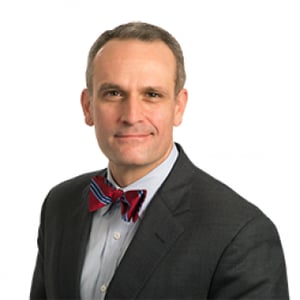
Shareholder, Littler Mendelson PC
Matthew J. Hank practices employment law, including issues arising under the common law and various statutes:
He particularly focuses on disputes concerning (1) wage and hour class actions (including cases involving independent contractor relationships, overtime claims, and payroll debit cards) and (2) noncompetition agreements and trade secrets.
Matthew served as a law clerk to the Hon. Daniel Manion of the U.S. Court of Appeals for the Seventh Circuit and the Hon. Paul V. Gadola of the U.S. District Court for the Eastern District of Michigan. Before attending law school, he served for four years on active duty in the United States Army as an Armor officer.
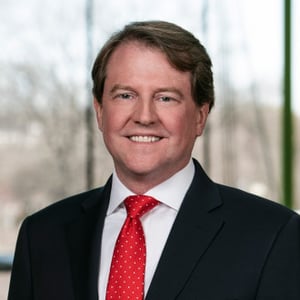
Partner, Jones Day
Don McGahn represents clients before government agencies, in enforcement matters, and in court disputes arising from government regulation or action. He handles litigation, crisis management, regulatory compliance, and political issues.
Prior to rejoining Jones Day in 2019, Don served as Counsel to the President of the United States, advising Donald J. Trump on all legal issues concerning the President and his administration, including constitutional and statutory authority, executive orders, international agreements, tariffs, trade, administrative law, and national security. Don also managed the judicial selection process for the President. During Don's tenure, a historic number of judges were appointed to the federal bench, including two Supreme Court justices. In addition, he spearheaded President Trump's deregulation efforts, which resulted in deregulation at record rates. Following Don's departure from the White House, the President appointed him to the Council of the Administrative Conference of the United States, a nonpartisan, independent agency dedicated to promoting improvement to administrative agency processes.
Don's accomplishments have been recognized at the highest levels of government. Senate Majority Leader Mitch McConnell stated that Don concluded his tenure "not only as the best White House Counsel I've seen on the job, but more broadly, as one of the most successful and consequential aides to any President in recent memory."
Don was nominated by President George W. Bush in 2008, and confirmed in the Senate by unanimous consent, to serve as a member of the Federal Election Commission. He also served as outside Counsel to the Committee on House Administration during the 113th and 114th Congresses and as general counsel to the National Republican Congressional Committee.
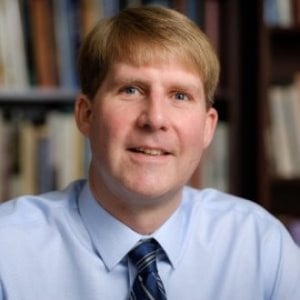
Professor of Politics, Wake Forest University
John Dinan, author of "State Constitutional Politics: Governing by Amendment in the American States," can comment on mid-term elections and the state constitutional amendments appearing on the ballot. From voter identification to redistricting, Dinan can place particular amendments in nationwide and historical perspective. Based on his research, he can also address the arguments and issues that routinely surface in campaigns supporting and opposing various amendments. He is also prepared to comment on federal and state policies in areas ranging from the Affordable Care Act to legislative redistricting to voter-registration rules. Dinan closely follows U.S. and North Carolina political races, including gubernatorial and congressional races. Dinan teaches courses on campaigns and elections, state politics and congress and policymaking. He frequently provides commentary for news outlets across the country and his research was cited by the U.S. Supreme Court in Arizona State Legislature v. Arizona Independent Redistricting Commission (2015). He is also the author of "The American State Constitutional Tradition" and an annual review of state constitutional developments in the 50 states, as well as numerous articles on state and federal politics.
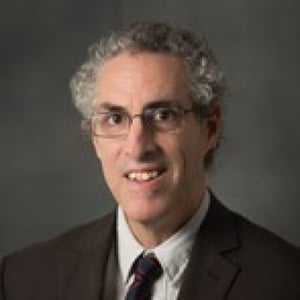
Regents Professor, University System of Maryland
Professor Graber held a faculty position in the Department of Government and Politics at the University of Maryland, College Park from 1993-2007 and taught at the University of Maryland School of Law as an adjunct professor beginning in the fall of 2002. In 2004, he was appointed Professor of Government and Law at the School of Law, a title he held until May 1, 2015 at which time he received an appointment as the Jacob A. France Professor of Constitutionalism. In 2016, he was named Regents Professor, one of only seven Regents Professors in the history of the University System of Maryland and the only Regents Professor on the UMB campus. He served as associate dean for research and faculty development from 2010 to 2013. He has also been one of the organizers of the annual Constitutional Law "Schmooze", which attracts scholars from across the country to the law school.
He is the author of A New Introduction to American Constitutionalism, forthcoming in 2013 from Oxford University Press, and co-editor (with Keith Whittington and Howard Gillman) of American Constitutionalism: Structures and Powers and American Constitutionalism: Rights and Powers, both also from Oxford University Press. He is presently working on Forged in Failure, a book that will examine how much constitutional change in the United States has been caused by the failure of constitutional practices to function as expected.
Professor Graber is also the author of scores of articles, including "The Non-Majoritarian Problem: Legislative Deference to the Judiciary" in Studies in American Political Development, "Naked Land Transfers and American Constitutional Development", published in the Vanderbilt Law Review and "Resolving Political Questions into Judicial Questions: Tocqueville’s Aphorism Revisited", published by Constitutional Commentary.
During fall 2013, he was a visiting faculty member at the University of Virginia School of Law.

Vice President, Networks, The Federalist Society for Law and Public Policy Studies
Nathan Kaczmarek is Vice President for Networks at the Federalist Society. He began his legal career in Detroit representing nationwide clients in all phases of healthcare litigation and complex medical malpractice claims. He has since served as a Senior Legal and Policy Advisor in the U.S. House of Representatives and as Counsel for the Subcommittee on Regulatory Affairs and Federal Management in the U.S. Senate. Prior to overseeing the Networks, he was Director of the Practice Groups, the Regulatory Transparency Project, and the Article I Initiative for the Federalist Society.
Nathan holds degrees from Hillsdale College and Thomas M. Cooley Law School. He is a Liaison Representative for The Administrative Conference of the United States. He also serves as Vice President of the Associates of St. John Bosco, a Virginia based non-profit dedicated to Catholic high school and college students.
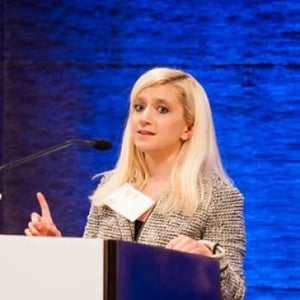
Executive Director, The Constitutional Sources Project
Julie Silverbrook is Executive Director of The Constitutional Sources Project (www.ConSource.org), a non-partisan, not-for-profit organization devoted to increasing understanding, facilitating research, and encouraging discussion of the U.S. Constitution by connecting individuals with the documentary history of its creation, ratification, and amendment. ConSource educates lawyers, judges, teachers, and students about United States Constitutional History. Prior to leading ConSource, Ms. Silverbrook was the Founding Director of an award-winning constitutional literacy program called Constitutional Conversations, in collaboration with the Institute of Bill of Rights Law at William & Mary Law School, the Colonial Williamsburg Foundation, and the Williamsburg Regional Library System. Ms. Silverbrook has given lectures and presentations on the Constitution at a number of colleges and universities, as well as at historical societies, presidential homes, state bar associations and social studies associations.
Ms. Silverbrook holds a J.D. from the William & Mary Law chool, where she received the National Association of Women Lawyers Award and the Thurgood Marshall Award and served as a Senior Articles Editor on the William & Mary Bill of Rights Journal. She graduated Summa Cum Laude, Phi Beta Kappa (elected as Junior) from The George Washington University with a B.A. in Political Science. Upon graduation, she was awarded the GW Columbian College of Arts and Sciences Distinguished Scholar Award, the highest academic award given to a student in the arts and sciences college. Ms. Silverbrook was also awarded the John C. Morgan Prize by the Department of Political Science–an award given annually to an outstanding graduate pursuing a law degree after graduation. In 2013, she was awarded a GW Political Science Department 100th Anniversary Alumni Award.
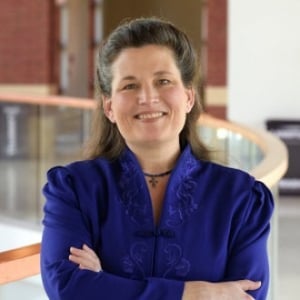
Lecturer, University of Virginia, University of Richmond
Lynn Uzzell received her B.A. in speech communications at Black Hills State University and her M.A. and Ph.D. in politics at the University of Dallas. She has taught extensively on political philosophy, rhetoric, the United States Constitution, and American political thought at Baylor University, the University of Virginia, and the University of Richmond. She specializes in the Constitutional Convention of 1787. For four years she was also the scholar in residence at the Center for the Constitution at James Madison’s Montpelier.

Donald Phillip Rothschild Research Professor, George Washington University Law School
Renée Lettow Lerner is Donald Phillip Rothschild Research Professor of Law at George Washington University Law School.
Professor Lerner works in the fields of U.S. and English legal history, civil and criminal procedure, and comparative law. She advises judges, lawyers, and government officials from the United States and countries in Europe, Latin America, and Asia about the differences between adversarial and nonadversarial legal systems.
She writes extensively about the history of American juries. Her work includes not only scholarly articles, but also online publications intended for a broader audience of legal professionals and the public. In many different settings, she has debated the role of juries with other academics and with lawyers. She has a book forthcoming with Oxford University Press in the Very Short Introduction Series entitled “The Jury.” She is also working on a book about the American civil jury, from the colonial period to the present.
She is the author, with John Langbein and Bruce Smith, of the book History of the Common Law: The Development of Anglo-American Legal Institutions (2009).
Her recent writings include a book review of Amalia D. Kessler’s Inventing American Exceptionalism: The Origins of American Adversarial Legal Culture, 1800-1877, 67 J. Legal Ed. 888 (2018); “How the Creation of Appellate Courts in England and the United States Limited Judicial Comment on Evidence to the Jury,” 40 Journal of the Legal Profession 215 (2016); “The Troublesome Inheritance of Americans in Magna Carta and Trial by Jury,” in Magna Carta and its Modern Legacy 77-98 (Robert Hazell and James Melton eds., Cambridge University Press 2015); and “The Failure of Originalism in Preserving Constitutional Rights to Civil Jury Trial,” 22 William & Mary Bill of Rights Journal 811 (2014).
Professor Lerner received an A.B. summa cum laude in history from Princeton University. She was a Rhodes Scholar at Oxford University, where she studied English legal history. At Yale Law School, she was Articles Editor of the Yale Law Journal. She served as a law clerk to Justice Anthony M. Kennedy of the U.S. Supreme Court and to Judge Stephen F. Williams of the U.S. Court of Appeals for the District of Columbia Circuit. From 2003 to 2005, she served as Deputy Assistant Attorney General in the Office of Legal Counsel at the U.S. Department of Justice.
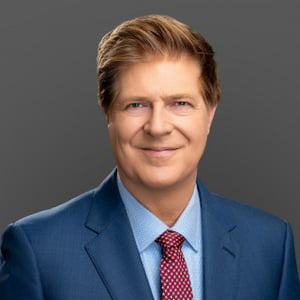
Senior Fellow, Ave Maria School of Law and Host of the Four Boxes Diner Second Amendment Channel
Mark W. Smith is a visiting member of the Senior Common Room, New College, Oxford University and a Visiting Fellow in Pharmaceutical Public Policy and Law in the Department of Pharmacology, Oxford University. Mark is also a Distinguished Scholar and Senior Fellow of Law and Public Policy at the Ave Maria School of Law. He hosts the Four Boxes Diner YouTube Channel (youtube.com/TheFourBoxesDiner), which addresses Second Amendment scholarship, cases, history and related issues, and whose videos have received almost 90 million views. Mark's scholarship has been cited by federal courts and by parties before the United States Supreme Court in Viramontes v. Cook County, New York State Rifle & Pistol Ass’n v. Bruen and in United States v. Rahimi. He is a graduate of the NYU School of Law. Mark is also a New York Times bestselling author who appears frequently in the national media including on the Fox News Channel.

Deputy Secretary of Transportation, US Department of Transportation
Steven G. Bradbury was sworn in as the Deputy Secretary of Transportation on March 13, 2025, following his confirmation by the U.S. Senate on March 11, 2025. In this role, he oversees the Department’s operating administrations and spearheads initiatives to ensure a safe, efficient, and modern transportation system that strengthens economic productivity and global competitiveness. Deputy Secretary Bradbury also assists Secretary Duffy in managing the Department’s activities, including its workforce of over 58,000 employees and an annual budget exceeding $109 billion.
Bradbury previously served as the 23rd General Counsel of the Department of Transportation from 2017 to 2021, as the Acting Deputy Secretary from 2019, and as Acting Secretary of Transportation in 2021. As General Counsel, he was the chief legal officer, advising on all legal matters and ensuring the integrity and compliance of the Department’s policies and programs.
Before rejoining DOT, Bradbury was a Distinguished Fellow at The Heritage Foundation from December 2022 to March 2025. He has extensive experience in the public and private sector, having served as Principal Deputy and Acting Assistant Attorney General at the U.S. Department of Justice and as a partner at Kirkland & Ellis LLP and Dechert LLP. Earlier in his career, he clerked for Justice Clarence Thomas and Judge James L. Buckley.
Bradbury holds a J.D., magna cum laude, from the University of Michigan Law School and a B.A. in English from Stanford University.
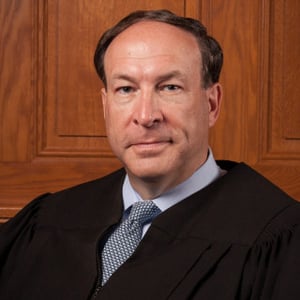
Judge, United States Court of Appeals, Seventh Circuit
Michael B. Brennan was confirmed and sworn in as a Circuit Judge for the U.S. Court of Appeals for the Seventh Circuit in May 2018.
He previously worked as a partner in the Milwaukee law firm of Gass Weber Mullins LLC, where he tried cases and handled appeals in federal and state courts, as a judge on the Milwaukee County Circuit, where he presided over a variety of criminal and civil calendars, and as an assistant district attorney in the Milwaukee County District Attorney’s office.
Brennan’s undergraduate degree is from the University of Notre Dame, and his law degree from Northwestern University School of Law, where he was an editor on the law review and the moot court champion. He served as a law clerk on the U.S. District Court for the Eastern District of Wisconsin and the U.S. Court of Appeals for the Seventh Circuit.
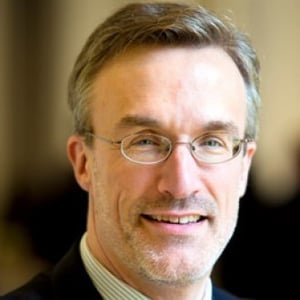
Edward B. Shils Professor of Law and Professor of Political Science; Director, Penn Program on Regulation, University of Pennsylvania Law School
Cary Coglianese is the Edward B. Shils Professor of Law and Professor of Political Science at the University of Pennsylvania, where he currently serves as the director of the Penn Program on Regulation and has served as the law school’s Deputy Dean for Academic Affairs. He specializes in the study of regulation and regulatory processes, with an emphasis on the empirical evaluation of alternative regulatory strategies and the role of public participation, negotiation, and business-government relations in policy making. His most recent books include: Achieving Regulatory Excellence; Does Regulation Kill Jobs?; Regulatory Breakdown: The Crisis of Confidence in U.S. Regulation; Import Safety: Regulatory Governance in the Global Economy; and Regulation and Regulatory Processes.
Prior to joining Penn Law, Coglianese spent a dozen years on the faculty at Harvard University’s John F. Kennedy School of Government. He also has taught as a visiting law professor at Stanford and Vanderbilt, founded the Law & Society Association’s international collaborative research network on regulatory governance, served as a founding editor of the peer-reviewed journal Regulation & Governance, and created and now advises the daily production of The Regulatory Review. The chair of the Administrative Conference of the United States' committee on rulemaking, he has led a National Science Foundation initiative on e-rulemaking, served on the ABA’s task force on improving Regulations.Gov, and chaired a task force on transparency and public participation in the regulatory process that offered a blueprint to the Obama Administration on open government. He is a co-chair of the American Bar Association’s administrative law section committee on e-government, past co-chair of the section's committee on rulemaking, and a past member of the section's Council. He currently serves as a member of a committee of the National Academies of Sciences, Engineering, and Medicine studying performance-based safety regulation and of an Aspen Institute dialogue on energy policy governance. He has served as a consultant to the Administrative Conference of the United States, Environment Canada, the Organization for Economic Cooperation and Development, the U.S. Department of Commerce, the U.S. Department of Transportation, and the U.S. Environmental Protection Agency.

Director, GW Regulatory Studies Center & Distinguished Professor of Practice, Trachtenberg School of Public Policy & Public Administration, The George Washington University
Susan Dudley is the Founder and Director of the George Washington University Regulatory Studies Center, established in 2009 to raise awareness of regulations’ effects and improve regulatory policy through research, education, and outreach. She is also a distinguished professor of practice in the Trachtenberg School of Public Policy and Public Administration. She is past-president of the Society for Benefit Cost Analysis, a senior fellow of the Administrative Conference of the United States, and on the Regulatory Transparency Project Regulatory Practice Working Group. Her book, Regulation: A Primer, with Jerry Brito, is available on Amazon.com.
From April 2007 through January 2009, Professor Dudley served as the Presidentially-appointed Administrator of the Office of Information and Regulatory Affairs in the U.S. Office of Management and Budget and was responsible for the review of draft executive branch regulations under Executive Order 12866, the collection of federal-government-wide information under the Paperwork Reduction Act, the development and implementation of government-wide policies in the areas of information policy, privacy, and statistical policy, and international regulatory cooperation efforts.
Prior to OIRA, she directed the Regulatory Studies Program at the Mercatus Center at George Mason University, and taught courses on regulation at the George Mason University School of Law. Earlier in her career, Professor Dudley served as an economist at OIRA, as well as the Environmental Protection Agency and the Commodity Futures Trading Commission. She was also a consultant to government and private clients at Economists Incorporated. She holds a Master of Science degree from the Sloan School of Management at MIT and a Bachelor of Science degree (summa cum laude) in Resource Economics from the University of Massachusetts, Amherst.
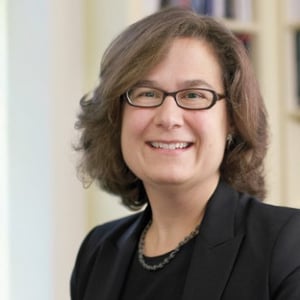
Segal Family Professor of Regulatory Law and Policy, New York University School of Law
Catherine Sharkey is the Segal Family Professor of Regulatory Law and Policy at NYU School of Law. She is a leading authority on torts, products liability, artificial intelligence in federal administrative agencies, public nuisance, punitive damages, and federal preemption of state tort law. She is a Senior Fellow of the Administrative Conference of the United States (ACUS), a member of its Roundtable on Artificial Intelligence in Federal Agencies, author of Algorithmic Tools in Retrospective Review (2023) and co-author of Government by Algorithm: Artificial Intelligence in Federal Administrative Agencies (2020). Sharkey is co-author of Cases and Materials on Torts (13th edition, 2024) and Business, Defamation, and Privacy Torts (1st ed., forthcoming 2025), and co-editor of Foundations of Tort Law (2nd edition, 2009). She is an elected member of the American Law Institute and an adviser to the Restatement Third, Torts: Liability for Economic Harm and Restatement Third, Torts: Remedies projects.

Laurence A. Tisch Professor of Law and Director, Classical Liberal Institute, New York University School of Law; Senior Fellow, The Civitas Institute, University of Texas at Austin
Richard A. Epstein is the inaugural Laurence A. Tisch Professor of Law at NYU School of Law. Prior to his joining the faculty, he was a visiting law professor at NYU from 2007 through 2009. He served as the Peter and Kirstin Bedford Senior Fellow at the Hoover Institution from 2000 to 2024. Since 2024 to the present he is a senior lecturer at the Civitas Institute at the University of Texas—Austin. Epstein is also the James Parker Hall Distinguished Service Professor of Law Emeritus and a senior lecturer at the University of Chicago. His initial law school appointment was at the University of Southern California from 1968 to 1972. Epstein received an LL.D., h.c. from the University of Ghent, 2003. He has been a member of the American Academy of Arts and Sciences since 1985 and was a Senior Fellow of the Center for Clinical Medical Ethics at the University of Chicago Division of Biological Sciences, also from 1983. to 2022 He served as editor of the Journal of Legal Studies from 1981 to 1991, and of the Journal of Law and Economics from 1991-2001. From 2001 to 2010 he was a director of the John M. Olin Program in Law and Economics at the University of Chicago.
His newest book, The Myth of Birthright Citizenship: What the Fourteenth Amendment Really Says was published in 2026 (Encounter Books). Prior to that he has published many books including, The Dubious Morality of the Modern Administrative State (Roman & Littlefield 2020).Earlier he published th Classical Liberal Constitution: The Uncertain Quest for Limited Government (Harvard 2014) iHis previous books include Design for Liberty: Private Property, Public Administration and the Rule of Law (Harvard 2011); The Case Against the Employee Free Choice Act (Hoover 2009); Supreme Neglect: How to Revive the Constitutional Protection of Property Rights (Oxford 2008); Antitrust Decrees in Theory and Practice: Why Less is More (AEI 2007); Overdose: How Excessive Government Regulation Stifles Pharmaceutical Innovation (Yale University Press. 2006); How Progressives Rewrote the Constitution (Cato 2006); Cases and Materials on Torts (Aspen Law & Business; 8th ed. 2004); Skepticism and Freedom: A Modern Case for Classical Liberalism (University of Chicago, 2003); Torts (Aspen Law & Business 1999); Principles for a Free Society: Reconciling Individual Liberty with the Common Good (Perseus Books, 1998): Mortal Peril: Our Inalienable Rights to Health Care (Addison-Wesley, 1997); Simple Rules for a Complex World (Harvard, 1995); Bargaining With the State (Princeton, 1993); Forbidden Grounds: The Case Against Employment Discrimination Laws (Harvard , 1992); Takings: Private Property and the Power of Eminent Domain (Harvard, 1985); and Modern Products Liability Law (Greenwood Press, 1980). He has also edited(with Catherine M. Sharkey) Cases and Materials on the Law of Torts (10th edition 2012).
Professor Epstein has written numerous articles on a wide range of legal and interdisciplinary subjects. He has taught courses in administrative law, antitrust law, civil procedure, communications, constitutional law, contracts, corporations, criminal law, employment discrimination law, environmental law, food and drug law health law and policy, legal history, labor law, property, real estate development and finance, jurisprudence, labor law; land use planning, patents, individual, estate and corporate taxation, Roman Law; torts, and workers' compensation.
Professor Epstein also writes a regular column for Civitas Institute, which also sponsors his podcast, The Libertarian with Charles C.W. Cooke, and Law Talk, with Cooke and John Yoo. He also does a podcast with John Batchelor. And appears regularly on the Freedom File with Judge Andrew Napolitano.
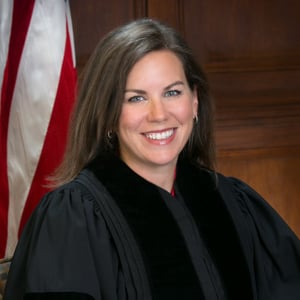
Judge, United States Court of Appeals, Eleventh Circuit
Britt C. Grant is a judge on the U.S. Court of Appeals for the Eleventh Circuit. Judge Grant was appointed to the federal bench in August 2018 after serving as a Justice on the Supreme Court of Georgia. Prior to her judicial appointment, she served as the Solicitor General of Georgia and practiced in the Washington, D.C. office of Kirkland & Ellis. Upon graduation from law school, Judge Grant served as a law clerk to then-Judge Brett M. Kavanaugh of the U.S. Court of Appeals for the District of Columbia Circuit. She earned her J.D., with distinction, from Stanford Law School, where she was the Co-Founder of the Stanford National Security and the Law Society, and the President of the Stanford Law chapter of the Federalist Society. Before enrolling in law school, Judge Grant served in The White House in a variety of domestic policy roles as well as on the staff of Congressman Nathan Deal. Judge Grant earned her B.A., summa cum laude, from Wake Forest University, where she was inducted into Phi Beta Kappa. She now lives in Atlanta, Georgia with her husband and three children.

Maurice and Hilda Friedman Professor of Law, Columbia Law School; CEO, New Civil Liberties Alliance
Philip Hamburger is the Maurice and Hilda Friedman Professor of Law at Columbia Law School, and Chief Executive Officer at the New Civil Liberties Alliance. Before coming to Columbia, he was the John P. Wilson Professor at the University of Chicago Law School.
He writes on constitutional law and its history—with particular emphasis on religious liberty, freedom of speech and the press, judicial office, administrative power, and unconstitutional conditions.
His books are Separation of Church and State (Harvard 2002), Law and Judicial Duty (Harvard 2008), Is Administrative Law Unlawful? (Chicago 2014), The Administrative Threat (Encounter 2017), and Liberal Suppression: Section 501(c)(3) and the Taxation of Speech (Chicago 2018). A forthcoming book is Purchasing Submission: Conditions, Power, and Freedom (Harvard 2021).
He is a member of the American Academy of Arts and Sciences, and he has served on the board of directors of the American Society for Legal History. He has twice received the Sutherland Prize for the most significant contribution to English legal history, and has been awarded the Henry Paolucci - Walter Bagehot Book Award, the Hayek Book Prize, and the Bradley Prize.
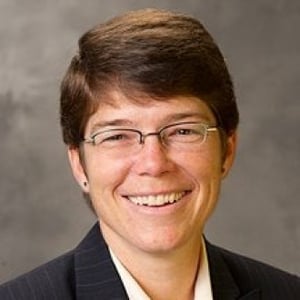
Professor of Law, Rutgers Law School
Professor Kovacs teaches Administrative Law, Natural Resources Law, Environmental Law, and Property.
Prior to joining the Rutgers faculty in 2011, she spent twelve years in the U.S. Department of Justice’s Environment and Natural Resources Division, Appellate Section. She wrote more than 100 appellate and Supreme Court briefs and argued more than sixty appeals in all thirteen of the federal circuit courts of appeals, twice en banc, and in three state supreme courts. Her cases covered a wide range of areas including environmental, administrative, and constitutional law, both civil and criminal. Among other cases, Professor Kovacs defended the Navy's use of low frequency active sonar and the display of a Latin cross in the Mojave National Preserve; she prosecuted crimes under the Bald and Golden Eagle Protection Act; she pursued a claim to compensate the Oneida Indians for the State of New York's unlawful purchase of their land in the early 19th Century; and she defended the Endangered Species Act against Fifth Amendment takings claims.
In 2016, Professor Kovacs was a political appointee serving as Senior Advisor to the Director of the Bureau of Land Management in the U.S. Department of the Interior. She also spent three years litigating primarily constitutional claims as an attorney in the Baltimore City Law Department, and she clerked for the Honorable Robert C. Murphy, former Chief Judge of the Maryland Court of Appeals. Professor Kovacs is a cum laude graduate of Yale University and the Georgetown University Law Center.
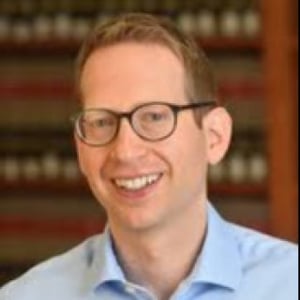
Professor of Law, UCLA Law
Jon Michaels is Professor of Law at UCLA School of Law. His scholarly and teaching interests include constitutional law, administrative law, national security law, the separation of powers, presidential power, regulation, bureaucracy, and privatization.
Michaels (view CV) is a graduate of Williams College, Oxford University, where he was a Marshall Scholar, and Yale Law School, where he served as an articles editor for the Yale Law Journal. Michaels clerked first for Judge Guido Calabresi of the U.S. Court of Appeals for the Second Circuit and then for Justice David Souter of the U.S. Supreme Court. Immediately prior to his appointment at UCLA, Michaels worked as an associate in Arnold & Porter’s National Security Law and Public Policy Group in Washington, DC.
A two-time winner of the American Constitution Society’s Cudahy Award for scholarly excellence in administrative law, Michaels is a frequent legal affairs commentator for national and local media outlets and contributes regularly to the Take Care blog.
His book, Constitutional Coup: Privatization’s Threat to the American Republic, was published by Harvard University Press in October 2017. (Read the Introduction. Read reviews and interviews.)
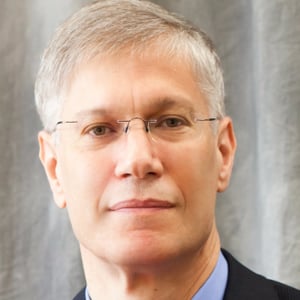
Chairman of the Board, The Ayn Rand Institute
Yaron Brook is chairman of the board of the Ayn Rand Institute. He wears many hats at the institute and travels extensively as ARI’s spokesman.
Brook can be heard weekly on The Yaron Brook Show, which airs live on the BlogTalkRadio podcast. He is also a frequent guest on national radio and television programs.
An internationally sought-after speaker and debater, Brook also pens works that make one think. As coauthor, with Don Watkins, of the national best-seller Free Market Revolution: How Ayn Rand's Ideas Can End Big Government, Brook and Watkins argue that the answer to our current economic woes lies not in "trickle-down government" but in Rand's inspiring philosophy of capitalism and self-interest. Last year, Brook and Watkins released a new book, Equal Is Unfair: America's Misguided Fight Against Income Inequality, a book that shows the real key to making America a freer, fairer, more prosperous nation is to protect and celebrate the pursuit of success―not pull down the high fliers in the name of equality. Brook is also contributing author to Neoconservatism: An Obituary for an Idea, Winning the Unwinnable War: America’s Self-Crippled Response to Islamic Totalitarianism and Big Tent: The Story of the Conservative Revolution — As Told by the Thinkers and Doers Who Made It Happen. He was a columnist at Forbes.com, and his articles have been featured in the Wall Street Journal, USA Today, Investor’s Business Daily and many other publications.
Brook was born and raised in Israel. He served as a first sergeant in Israeli military intelligence and earned a BSc in civil engineering from Technion-Israel Institute of Technology in Haifa, Israel. In 1987 he moved to the United States where he received his MBA and PhD in finance from the University of Texas at Austin; he became an American citizen in 2003. For seven years he was an award-winning finance professor at Santa Clara University, and in 1998 he cofounded BH Equity Research, a private equity and hedge fund manager, of which he is managing founder and director.
Brook serves on the boards of the Ayn Rand Institute, the Clemson Institute for the Study of Capitalism and CEHE (Center for Excellence in Higher Education), and he is a member of the Association of Private Enterprise Education and the Mont Pelerin Society.
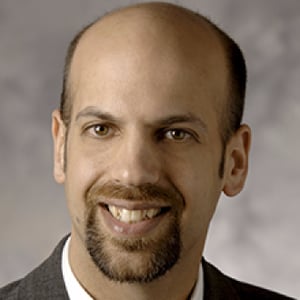
Guido Calabresi Professor of Law, Yale Law School
Daniel Markovits is Guido Calabresi Professor of Law at Yale Law School. He works in the philosophical foundations of private law, moral and political philosophy, and behavioral economics. He has written articles on contract, legal ethics, distributive justice, democratic theory, and other-regarding preferences. Professor Markovits concentrates, in each area, on the ways in which legal orderings engage the human instinct in favor of sociality to sustain cooperation even among persons who pursue conflicting interests and endorse competing moral ideals. He finds respectful relations in surprising places, for example in contracts between self-interested buyers and sellers, litigation between adversary disputants, and political competition between partisan parties. In each case, Markovits argues, seemingly competitive interactions contain, in their immanent logic, forms of reciprocal recognition and respect. After earning a B.A. in Mathematics, summa cum laude from Yale University, Markovits received a British Marshall Scholarship to study in England, where he was awarded an M.Sc. in Econometrics and Mathematical Economics from the L.S.E. and a B.Phil. and D.Phil. in Philosophy from the University of Oxford. Markovits then returned to Yale to study law and, after clerking for the Honorable Guido Calabresi, joined the faculty at Yale.

Feddie Night Fights: The Federalist/Anti-Federalist Debate
John S. Baker, Andrew Oldham, Rachel L. Daley
On September 25, 2020, the Federalist Society's University of Virginia Student Chapter hosted the first...
Deep Dive Episode 110 – Community Reinvestment Act: Remedy or Relic?
Mehrsa Baradaran, Diego Zuluaga, T. Elliot Gaiser
Congress passed the Community Reinvestment Act in 1977, intending to encourage depository institutions to help...
Session I: Revisiting the Antifederalists
John S. Baker, Michelle Kundmueller, Trevor N. McFadden, Daniel E. Nordby, Andrew Oldham
On January 31-February 1, 2020, The Federalist Society's Florida lawyers chapters hosted their annual Florida...
The Wisdom and Legality of Sanctuary Cities
Stephanos Bibas, Kurt Damian Engelhardt, Mark Fleming, Christopher Hajec, John G. Malcolm, Jefferson B. Sessions, Ilya Somin
On November 14, 2019, the Federalist Society's Criminal Law & Procedure Practice Group hosted a...
Keynote Address by Don McGahn
Matthew J. Hank, Donald F. McGahn
On October 24, 2019, The Federalist Society held its annual Third Circuit Chapters Conference. The...
Laboratories of Democracy - Part I: Early State Constitutions and Their Influence on the Legislative Branch
John Dinan, Mark Graber, Nathan Kaczmarek, Julie Silverbrook, Lynn Uzzell
On July 19, 2019, the Federalist Society's Article I Initiative cosponsored a two-part panel with...
Lunch and Keynote Address by Renée Lerner
Renée Lettow Lerner, Mark W. Smith
On January 15, 2019, the Federalist Society's Civil Rights and Criminal Law & Procedure Practice...
Showcase Panel II: Balancing Insulation and Accountability of Agency Decisions
Steven Gill Bradbury, Michael B. Brennan, Cary Coglianese, Susan E. Dudley, Catherine M. Sharkey
Many federal government decisions that affect Americans’ day-to-day lives are made by agencies. Agency decisions,...
Showcase Panel I: What is Regulation For?
Richard A. Epstein, Britt C. Grant, Philip A. Hamburger, Kathryn Kovacs, Jon D. Michaels
The administrative state, with roots over a century old, was founded on the premise that...
Income Inequality: Is It Fair or Unfair?
Yaron Brook, Daniel Markovits
The Yale Federalist Society presents a conversation and Q&A on income inequality. Is it fair...