

Vice President, Edwin Meese III Institute for the Rule of Law, Advancing American Freedom
John G. Malcolm oversees Advancing American Freedom’s work to increase understanding of the Constitution and the rule of law as Vice President of the organization’s Edwin Meese III Institute for the Rule of Law. Malcolm brings to the challenge a wealth of legal expertise and experience in both the public and private sectors.
Prior to joining Advancing American Freedom in 2025, Malcolm was the Vice President of the Institute for Constitutional Government and the Director of the Meese Center for Legal and Judicial Studies at the Heritage Foundation. Prior to joining Heritage in 2012, Malcolm was general counsel at the U.S. Commission on International Religious Freedom, as well as a distinguished practitioner in residence at Pepperdine Law School. From 2004 to 2009, Malcolm was executive vice president and director of worldwide anti-piracy operations for the Motion Picture Association.
Malcolm served as a deputy assistant attorney general in the Department of Justice’s Criminal Division from 2001 to 2004, where he oversaw sections on computer crime and intellectual property, domestic security, child exploitation and obscenity, and special investigations. Immediately prior to that, he was a founding partner in the Atlanta law firm of Malcolm & Schroeder, LLP.
From 1990 to 1997, Malcolm was an assistant U.S. attorney in Atlanta, assigned to the fraud and public corruption section, and also an associate independent counsel, investigating fraud and abuse in the Department of Housing and Urban Development. He was honored with the Director’s Award for Superior Performance for his work in connection with the successful prosecution of Walter Leroy Moody Jr., who assassinated an 11th Circuit judge and the head of the Savannah chapter of the NAACP.
A graduate of Harvard Law School and Columbia College, Malcolm began his career as a law clerk to a federal district court judge and a federal appellate court judge, and as an associate at the Atlanta-based law firm of Sutherland, Asbill & Brennan (new Eversheds Sutherland).
Malcolm, who resides in Washington, D.C., serves on the Board of Trustees of the Washington National Opera and is a Senate-confirmed member of the Board of Directors of the Legal Services Corporation, the largest funder of civil legal aid in the United States.

Judge, United States Court of Appeals, Sixth Circuit
Judge Readler earned his undergraduate and law degrees from the University of Michigan. After graduating, he served as a law clerk to Judge Alan Norris of the United States Court of Appeals for the Sixth Circuit. Judge Readler then began practicing law in the Columbus office of the international law firm Jones Day, eventually spending ten years as a partner in the firm’s Issues and Appeals Practice Group. While at Jones Day, Judge Readler appeared in state and federal trial and appellate courts around the country, most frequently the Supreme Court of Ohio and the Sixth Circuit. Judge Readler also successfully argued before the United States Supreme Court in McQuiggin v. Perkins on behalf of an inmate claiming actual innocence. His other pro bono representations include representing capital defendants before the Tenth Circuit and the Supreme Court of Ohio, as well as representing defendants sentenced to life in prison before the Sixth Circuit. While at Jones Day, Judge Readler traveled to Nairobi with Lawyers Without Borders to train Kenyan lawyers in prosecuting domestic violence cases, and he was also a recipient of the American Marshall Memorial Fellowship awarded by the German Marshall Fund of the United States. Following his career in private practice, Judge Readler served as Acting Assistant Attorney General for the Civil Division of the United States Department of Justice from 2017 to 2019. In that role, Judge Readler led and supervised over 1,000 lawyers in the Department’s largest litigating division, briefing and arguing several cases on behalf of the United States in federal courts across the country, including high-profile cases significant to the Administration and the Department. In March 2019, Judge Readler was confirmed to serve as a Circuit Judge on the Sixth Circuit. He resides in Columbus.

Agnes Williams Sesquicentennial Professor of Federal Courts, Georgetown Law
Stephen I. Vladeck is a professor of law at the Georgetown University Law Center, and is a nationally recognized expert on the federal courts; the Supreme Court; national security law; and military justice.
Vladeck is author of the New York Times bestselling book, “The Shadow Docket: How the Supreme Court Uses Stealth Rulings to Amass Power and Undermine the Republic,” which won the 2023 Writers’ League of Texas Book Award for Non-Fiction and was a finalist for the 2024 ABA Silver Gavel Award for Media and the Arts. Vladeck is also a highly regarded appellate advocate, having argued three cases before the U.S. Supreme Court and over a dozen before various lower federal civilian and military courts. He has received numerous awards for his influential and widely cited legal scholarship, his prolific popular writing, his teaching, and his service to the legal profession—including the 2024 University of Texas President’s Research Impact Award and his selection by the Order of the Coif to serve as its Distinguished Visiting Professor for 2025.
Vladeck is CNN’s Supreme Court analyst and editor and author of “One First,” a popular weekly newsletter about the Supreme Court. Together with Bobby Chesney, Vladeck co-hosts the popular and award-winning “National Security Law Podcast.” He is also a co-author of Aspen Publishers’ leading national security law and counterterrorism law casebooks. And he is a member of the Board of Trustees of EarthJustice—the nation’s premier nonprofit public interest environmental law organization.
Vladeck graduated from Yale Law School in 2004—where he was executive editor of the Yale Law Journal and won the Harlan Fiske Stone Prize for outstanding moot court oralist and shared the Potter Stewart Prize for best moot court team performance. After law school, he clerked for the Honorable Marsha S. Berzon on the U.S. Court of Appeals for the Ninth Circuit and the Honorable Rosemary Barkett on the U.S. Court of Appeals for the Eleventh Circuit. He earned a B.A. summa cum laude with Highest Distinction in History and Mathematics from Amherst College in 2001—where he wrote his senior thesis on “Leipzig’s Shadow: The War Crimes Trials of the First World War and Their Implications from Nuremberg to the Present.” A native New Yorker and hopeless Mets fan, Vladeck lives in the District with his wife, Karen (Founder and Managing Partner of Risepoint Search Partners); their daughters, Madeleine and Sydney; and their eleven-year-old pug, Roxanna.
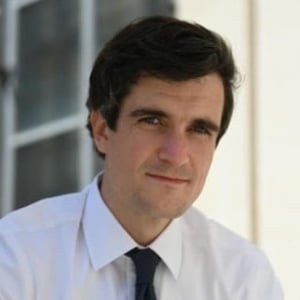
Former Special Counsel, U.S. Department of Justice, Antitrust Division
Brendan Ballou is a former special Counsel at U.S. Department of Justice, Antitrust Division, where he served from 2020-2025. He is also the author of Plunder: Private Equity's Plan to Pillage America.
Previously, he worked in private practice, and before that, in the National Security Division of the Justice Department, where he advised the White House on counterterrorism and other policies. He graduated from Columbia University and Stanford Law School.
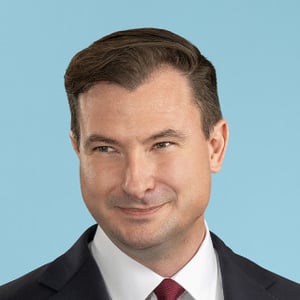
Partner, Continental PLLC
Stephen is a seasoned trial attorney whose practice centers on high-stakes litigation. Currently, he is a Partner at Continental PLLC based in their Miami and Washington DC offices. He currently serves on the Executive Committee for the Federalist Society's Criminal Law and Procedure Practice Group and as Co-President of the Miami Lawyer Chapter.
Over the course of his career, Stephen has been lead or co-lead trial counsel in more than 30 trials to verdict in both state and federal courts. Most recently, Stephen served as Counselor to the United States Attorney for the District of New Jersey. As a Senior Executive in the office, he assisted in overseeing one of the nation’s largest U.S. Attorney’s offices and helped implement nationwide Department of Justice policy initiatives. Immediately prior to that, Stephen was Special Counsel at a global law firm where he handled complex commercial litigation, intellectual property disputes, insurance recovery claims, corporate investigations, and white-collar matters.
Stephen began his legal career as an Assistant State Attorney in Miami-Dade County. He later served as an Assistant United States Attorney for the Southern District of Florida, where he worked in the appellate, civil, and criminal divisions in Miami. During his time in the criminal division, he prosecuted a wide range of federal offenses including international narcotics and arms trafficking, securities fraud, money laundering, wire fraud, identity theft, firearms offenses, kidnapping, child exploitation, immigration violations, and investigating an international gold smuggling operation. His cases have received national and international media coverage, including a feature on National Geographic’s To Catch a Smuggler.
Outside the courtroom, Stephen is an Adjunct Professor at the University of Miami School of Law, where he teaches courses on civil and criminal pretrial litigation. He also serves as a Commissioner on Florida’s Third District Court of Appeals Judicial Nominating Commission.
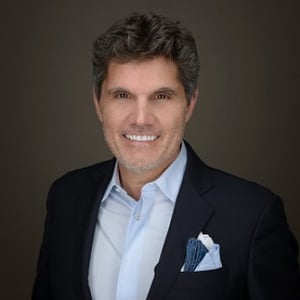
Principal, Lauro & Singer
John F. Lauro is an accomplished trial lawyer with over thirty years of experience specializing in complex criminal and commercial litigation. Throughout his career he has concluded several high-profile matters that have generated considerable public attention and successful results for his clients. Mr. Lauro has recently tried two of the most significant white collar cases in the past decade involving complex accounting and medical economics issues. During his career, Mr. Lauro has obtained a Rule 29 acquittal in a high profile federal criminal case on behalf of the former president of a national healthcare company, who had been accused of violating the federal securities and conspiracy laws. Mr. Lauro has successfully represented an individual charged in the first “dot-com securities fraud” case brought in federal court in Manhattan, which resulted in a jury acquittal on all counts. Additionally, he has represented a well-known sports figure, who had been charged with violating the federal wire fraud statute in connection with gambling activities. Mr. Lauro has also obtained a dismissal of all civil claims against a Middle Eastern banking institution in connection with the 9/11 litigation pending in New York. The case went to the Supreme Court, which denied review. Finally, Mr. Lauro obtained a multi-million dollar judgment against a New York investment advisor for defrauding an international jewelry manufacturer in connection with an investment account.
Mr. Lauro grew up in New York and later graduated from Georgetown University in 1979, magna cum laude. While a college student, Mr. Lauro was elected to a position as an Advisory Neighborhood Commissioner in the District of Columbia. As an elected official, he focused most of his attention on the development of the Georgetown waterfront and other constituent issues. He then attended Georgetown University Law Center and graduated in 1982, magna cum laude. While a law student, Mr. Lauro was an editor of the Georgetown Law Journal.
Following graduation from law school, Mr. Lauro returned to New York and began practicing with the international law firm of Morgan, Lewis, and Bockius. He later joined the criminal division of the United States Attorney’s Office for the Eastern District of New York. After government service, Mr. Lauro established a practice in Florida, and became a partner with a national law firm. In 1994, he founded Lauro Law Firm, which now has offices in New York and Florida.
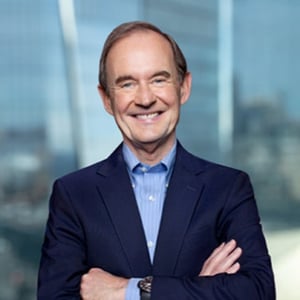
Chairman and Managing Partner, Boies Schiller Flexner
David Boies has been the Chairman and a Managing Partner of Boies Schiller Flexner since its founding in 1997.
David has been selected as one of the 100 Most Influential People in the World by Time Magazine (2010). He has been named Global International Litigator of the Year by Who’s Who Legal an unprecedented seven times. David has been named the Litigator of the Year by The American Lawyer; the Lawyer of the Year by The National Law Journal (twice); the Antitrust Lawyer of the Year by the New York Bar Association; Best Lawyers in America from 1987-2021; Lawdragon 500 Leading Lawyers; and an Eminent Practitioner by Chambers USA. He was named one of the Top 50 Big Law Innovators of the Last 50 Years by The American Lawyer in 2013.
David is the recipient of Honorary Doctor of Laws from the University of Redlands (2000), New York Law School (2007), University of New Hampshire School of Law (2013), and New York University (2013) and an Honorary Doctor of Letters from the Chicago Theological Seminary (2011). His awards include the Award of Merit from the Yale Law School, the ABA Medal from the American Bar Association, the Vanderbilt Medal from New York University Law School, the Pinnacle Award from the International Dyslexia Association, the William Brennan Award from the University of Virginia, the Role Model Award from Equality Forum, the Lead by Example Award from the National Association of Women Lawyers, the Torch of Learning Award from the American Friends of Hebrew University, the Eisendrath Bearer of Light Award from the Union for Reform Judaism, and a Lifetime Achievement Award from the Mississippi Center for Justice.
David served as Chief Counsel and Staff Director of the United States Senate Antitrust Subcommittee in 1978 and Chief Counsel and Staff Director of the United States Senate Judiciary Committee in 1979.
In 1991-1993, he was counsel to the Federal Deposit Insurance Corporation, recovering $1.2 billion from companies who sold junk bonds to failed savings and loan associations.
In 1998-2000, he served as Special Trial Counsel for the United States Department of Justice in its antitrust suit against Microsoft. David also served as the lead counsel for former Vice-President Al Gore in connection with litigation relating to the 2000 election Florida vote count. As co-lead counsel for the plaintiffs in Perry v. Brown, he won the first judgment establishing the right to marry for gay and lesbian citizens under the U.S. Constitution.
David was born in Sycamore, Illinois on March 11, 1941. He attended the University of Redlands (1960-62), and received a B.S. from Northwestern University (1964), an LL.B., magna cum laude from Yale University (1966), and an LL.M. from New York University (1967).
He is a member of Phi Beta Kappa, a Fellow of the American College of Trial Lawyers and the International Academy of Trial Lawyers; and a Trustee of the National Constitution Center, Cold Spring Harbor Laboratory, New York University Law School Foundation and St. Luke’s-Roosevelt Hospital Center. He is the author of numerous publications including Courting Justice (2004), Redeeming the Dream (with Ted Olson), and Public Control of Business (with Paul Verkuil), published by Little Brown in 1977. He has taught courses at New York University Law School and Cardozo Law School.
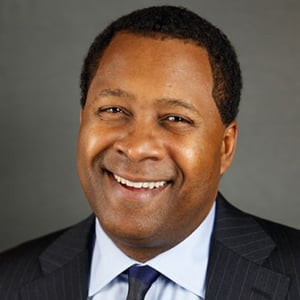
Partner, Kirkland & Ellis LLP
Reginald “Reg” Brown is a partner in the Washington, D.C., office of Kirkland & Ellis LLP. He has a vibrant and diverse crisis and governmental investigations practice, and regularly counsels financial institutions and other industry-leading clients facing complex and significant regulatory, enforcement and reputational matters.
Reg provides investigations-related guidance, strategic counsel and crisis management assistance to a broad range of companies and senior executives confronting challenges and opportunities at the intersection of government, law, media and public policy. He has assisted leading institutions and high-profile individual clients with more than a hundred congressional inquiries, as well as numerous federal, state and global government investigations and crisis avoidance and mitigation matters.
Reg leads teams of lawyers responding to some of the most challenging Department of Justice (DOJ), Consumer Financial Protection Bureau (CFPB), State Attorneys General and other regulatory or enforcement matters for financial institutions. Many of his clients are among the world's most prominent banks, hedge funds, private equity and venture firms, energy companies, government contractors, healthcare institutions and technology firms, as well as CEOs and high-ranking public officials. Reg has also assisted prospective and incumbent high-level public officials in connection with complex ethics agreements and governmental controversies.
Prior to joining Kirkland, Reg was a partner at WilmerHale, where he served as chairman of the firm's Financial Institutions Group and led the firm's congressional investigations practice as vice chair of the Crisis Management and Strategic Response Group. He previously served in the White House Counsel's office, where he was the White House's principal legal liaison to the Departments of Treasury and Housing and Urban Development, as well as many independent financial services agencies. In this role, he provided counsel on a wide variety of issues. Among other things, Reg served as a counselor for the White House Office of Political Affairs, Presidential Personnel Office and the National Economic Council.
Prior to his government service, Reg served as assistant to the CEO and vice president of corporate strategy at Nationwide Mutual Insurance Company, and as the deputy general counsel to former Florida Governor Jeb Bush. He served as a Peace Corps volunteer in the Federated States of Micronesia early in his professional career.

Founding Partner, Cooper & Kirk PLLC
Charles J. Cooper is a founding member and the chairman of Cooper & Kirk, PLLC, “one of the Nation’s leading litigation boutiques” (Above The Law 2017). The National Law Journal recently wrote that Mr. Cooper’s “brilliant legal career has so far spanned five decades and thrust Cooper into the spotlight in some of the most historic moments of the country’s modern history.” He has argued nine cases before the United States Supreme Court and scores of appeals before each of the 13 federal courts of appeals and several state supreme courts. He has been lead trial counsel in numerous complex, weeks-long trials in federal courts throughout the country. Named by the National Law Journal as one of the 10 best litigators in Washington D.C., Mr. Cooper’s work has been reported in numerous press accounts, and he has been called a “powerhouse attorney” (Fortune 2015), “a hard-nosed litigator” (Washington Post 2017), and “one of the country’s most in-demand civil litigators and a Washington legal institution unto himself” (The American Spectator 2014).
After graduating from the University of Alabama School of Law in 1977, where he ranked first in his class and served as Editor-in-Chief of the Alabama Law Review, Mr. Cooper began his career as a law clerk to Judge Paul Roney on the Fifth Circuit Court of Appeals and to Justice William H. Rehnquist in 1978–79. He then practiced law in Atlanta for two years before joining the Civil Rights Division of the U.S. Department of Justice, where he served as the Deputy Assistant Attorney General in charge of, among other things, appellate matters. In 1985 President Reagan appointed him to the position of Assistant Attorney General for the Office of Legal Counsel, which is the office responsible for providing legal opinions and advice to the White House, the Attorney General, and Executive Branch departments and agencies on issues covering the full spectrum of federal constitutional, statutory, and regulatory law.
In 1988 he returned to private practice as a litigation partner in the Washington, D.C. office of McGuireWoods. From 1990 until the founding of Cooper & Kirk in 1996, he was a partner at Shaw Pittman (now Pillsbury Winthrop Shaw Pittman), where he headed the firm’s Constitutional and Government Litigation Group.
Mr. Cooper has represented a wide range of public and private clients in highly complex constitutional, civil rights, antitrust, healthcare, banking, intellectual property, elections, campaign finance, administrative, commercial, and government contract cases. He has led trial teams in cases that have won judgments and settlements valued in the billions of dollars and that have established ground-breaking constitutional precedents.
Much of Mr. Cooper’s practice has involved representing high-profile clients in nationally prominent matters, including: the State of Florida in a First Amendment suit brought by the Disney Company concerning its autonomous regulatory authority over its Disney World property; the Commonwealth of Virginia in a suit seeking to enjoin the removal of noncitizens from its voter rolls; 38 members of the Duke Lacrosse team falsely accused of rape by officials of Duke University and the City of Durham; Harper Lee in a copyright dispute with the heirs of Gregory Peck; high-ranking former government officials such as former Attorneys General John Ashcroft, Jeff Sessions, and William Barr, and Ambassador John Bolton; several Governors and United States Senators; over 100 Members of Congress; and many state, territorial, and local government bodies and officials. He has also represented and advised government officials and public figures in connection with sensitive private issues that needed to be, and were, resolved discreetly without becoming matters of public record.
In 1998 Chief Justice Rehnquist appointed Mr. Cooper to the Standing Committee on Rules of Practice and Procedure of the Judicial Conference of the United States, where he served for three terms. He also served as a Public Member, appointed by President George H.W. Bush, of the National Commission on Judicial Discipline and Removal. He is a member of numerous professional associations, including the American Law Institute (since 1993) and the American Academy of Appellate Lawyers (since 1996). He is also an active member of the Federalist Society and the Republican National Lawyers Association, which in 2010 named him Republican Lawyer of the Year and in 2016 honored him with its Edwin Meese III Award.
Mr. Cooper has published scores of articles and spoken extensively on constitutional and legal policy topics. He has appeared before congressional committees on 26 occasions, testifying as an expert on a wide variety of legal issues, including the Chevron doctrine of judicial deference to administrative agencies, the diversity of citizenship jurisdiction of federal courts, statehood bills for Puerto Rico and the District of Columbia, and the impeachment of President Clinton.
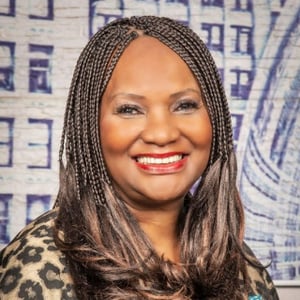
President, American Bar Association
Deborah Enix-Ross, a senior adviser to the International Dispute Resolution Group of Debevoise & Plimpton in New York City, is president of the American Bar Association, the world’s largest voluntary association of lawyers, judges, and other legal professionals.
Enix-Ross served as chair of the ABA’s policymaking House of Delegates and as chair of the ABA Center for Human Rights. As chair of the ABA International Law Section, she co-founded the Women’s Interest Network and worked with the International Bar Association to create its Women’s Interest Group. She also led an international legal exchange delegation to Liberia, Sierra Leone, and Ghana, where she delivered an address commemorating the country’s 50th anniversary of independence.
Enix-Ross is a fellow of the American Bar Foundation and has served as vice president of the World Justice Project, chair of the ABA Section Officers Conference, vice chair of the International Bar Association’s Bar Issues Commission, and ABA representative to the IBA. She is a member of the American Law Institute.
Enix-Ross joined Debevoise & Plimpton in 2002. Previously, she served as senior legal officer with the World Intellectual Property Organization Arbitration and Mediation Center in Geneva, Switzerland. She also was a director of international litigation with Price Waterhouse and the American representative to the International Chamber of Commerce International Court of Arbitration. She started her legal career with MFY Legal Services in New York City.
Enix-Ross was appointed by the U.S. Departments of Commerce and State as one of the original eight U.S. members of the trilateral NAFTA Advisory Committee on Private Commercial Disputes. She is a member of the Advisory Committee of the New York Law School Alternative Dispute Resolution Skills Program. She is also a former member of the advisory board of the Institute for Transnational Arbitration, the ADR Advisory Board of the International Law Institute, and the Board of Directors of the American Arbitration Association.
Enix-Ross earned a B.A. in broadcast journalism from the University of Miami and J.D. from the University of Miami School of Law. She also received a diploma in comparative law from the Parker School of Foreign and Comparative Law of Columbia University and a certificate in international law from the London School of Economics.
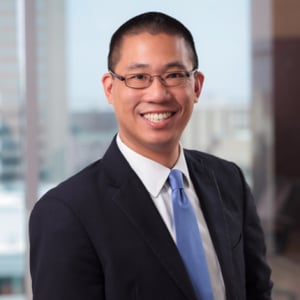
Chair, Issues & Appeals, Hunton Andrews Kurth LLP
The former Solicitor General of West Virginia, Mr. Lin has been on the front lines of many precedent-setting cases in appellate courts across the country, including in a US Supreme Court victory that George Will called “the court’s most severe rebuke of a president” since the Truman administration. Having argued more than 60 appeals, he brings to clients a well-honed ability to identify the most persuasive issues for appeal and a practiced understanding of how best to frame complex legal questions in appellate courts.
With experience in the private sector and multiple branches of government, Mr. Lin’s practice has spanned a wide range of issues, including major questions of constitutional and administrative law at the federal and state levels. On behalf of more than two dozen states, he won a stay from the US Supreme Court of the EPA’s Clean Power Plan. Described by the New York Times as an “unprecedented” order, the stay was the first time the Supreme Court had ever put a regulation on hold before review by a federal appeals court. In that same case, Elbert argued before the en banc DC Circuit in an historic proceeding that one commenter quoted in E&E News compared to “the NBA All-Star Game.” At the state level, Elbert led the effort that persuaded the West Virginia Supreme Court of Appeals to overturn an injunction of the state’s right-to-work law.
In 2013, Mr. Lin was appointed the Solicitor General of West Virginia. During his four-and-a-half year tenure, he served as a member of the Attorney General’s senior management team, oversaw all civil and criminal appeals, and argued nearly two dozen cases in federal and state appellate courts. He authored more than twenty-five briefs in the US Supreme Court and more than forty-five formal Opinions of the Attorney General.
Earlier in his career, Mr. Lin served as a trial attorney in the Federal Programs Branch of the US Department of Justice’s Civil Division, where he received a Special Service Award. He has also been a law clerk at all three levels of the federal judiciary: for Justice Clarence Thomas on the US Supreme Court; for Judge William H. Pryor Jr. on the US Court of Appeals for the Eleventh Circuit; and for Senior Judge Robert E. Keeton on the US District Court for the District of Massachusetts.
Mr. Lin speaks regularly on a wide variety of topics, including constitutional law, administrative law, environmental law, state and federal relations, the US Supreme Court, and appellate practice. He has testified before Congress, and has spoken at the national conventions of the American Bar Association, the Association of Corporate Counsel, the National Asian Pacific American Bar Association, the Federalist Society, Americans for Prosperity, and the American Legislative Exchange Council. He is an elected member of the American Law Institute, a public member of the Administrative Conference of the United States, and a fellow of the American Academy of Appellate Lawyers.
Mr. Lin is admitted to practice in the following federal courts: the Supreme Court of the United States; the First, Second, Third, Fourth, Fifth, Sixth, Seventh, Eighth, Ninth, Eleventh, D.C., and Federal Circuits; the District of Massachusetts; the Northern and Southern Districts of West Virginia; and the Eastern and Western Districts of Virginia.
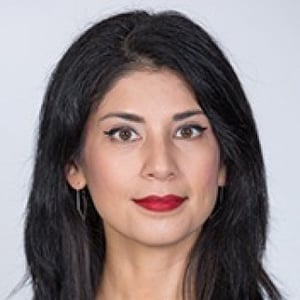
Professor of Law and Michael R. Klein Distinguished Scholar Chair, University of Miami School of Law
Mary Anne Franks, Professor of Law and Michael R. Klein Distinguished Scholar Chair, is a nationally and internationally recognized expert on the intersection of civil rights and technology. She teaches classes on criminal law, criminal procedure, First Amendment law, Second Amendment law, family law, and law and technology. Professor Franks is also an Affiliated Faculty member of the University of Miami Department of Philosophy and an Affiliate Fellow of the Yale Law School Information Society Project (ISP).
Dr. Franks is the author of the award-winning book, The Cult of the Constitution: Our Deadly Devotion to Guns and Free Speech (Stanford Press, 2019). In 2020, she was awarded a grant from the Knight Foundation to support research for her second book, Fearless Speech (expected 2022). Her scholarship has appeared in the Harvard Law Review, the California Law Review, and UCLA Law Review, among others. Dr. Franks has also authored numerous articles for the popular press, including the New York Times, the Atlantic, the Washington Post, and Newsweek. She has delivered more than a hundred lectures to a range of audiences around the world, including law schools, domestic violence organizations, law firms, and tech companies. She was named a member of the American Law Institute in October 2018.
Dr. Franks is the President and Legislative & Tech Policy Director of the Cyber Civil Rights Initiative, a nonprofit organization dedicated to combating online abuse and discrimination. In 2013, she drafted the first model criminal statute on nonconsensual pornography (sometimes referred to as “revenge porn”), which has served as the template for multiple state laws and for pending federal legislation on the issue. She also served as the reporter for the Uniform Law Commission’s 2018 Uniform Civil Remedies for the Unauthorized Disclosure of Intimate Images Act. Dr. Franks is a principal investigator for a 2020 National Science Foundation grant project, COVID-19 and sexual cyberviolence: Impact on general users and vulnerable populations. She regularly advises legislators, tech industry leaders, and advocacy organizations on issues relating to online privacy, sexual exploitation, extortion, harassment, and threats.
Dr. Franks holds a J.D. from Harvard Law School as well as a doctorate and a master’s degree from Oxford University, where she studied as a Rhodes Scholar. She previously taught at the University of Chicago Law School as a Bigelow Fellow and Lecturer in Law and at Harvard University as a lecturer in social studies and philosophy.

Maurice and Hilda Friedman Professor of Law, Columbia Law School; CEO, New Civil Liberties Alliance
Philip Hamburger is the Maurice and Hilda Friedman Professor of Law at Columbia Law School, and Chief Executive Officer at the New Civil Liberties Alliance. Before coming to Columbia, he was the John P. Wilson Professor at the University of Chicago Law School.
He writes on constitutional law and its history—with particular emphasis on religious liberty, freedom of speech and the press, judicial office, administrative power, and unconstitutional conditions.
His books are Separation of Church and State (Harvard 2002), Law and Judicial Duty (Harvard 2008), Is Administrative Law Unlawful? (Chicago 2014), The Administrative Threat (Encounter 2017), and Liberal Suppression: Section 501(c)(3) and the Taxation of Speech (Chicago 2018). A forthcoming book is Purchasing Submission: Conditions, Power, and Freedom (Harvard 2021).
He is a member of the American Academy of Arts and Sciences, and he has served on the board of directors of the American Society for Legal History. He has twice received the Sutherland Prize for the most significant contribution to English legal history, and has been awarded the Henry Paolucci - Walter Bagehot Book Award, the Hayek Book Prize, and the Bradley Prize.

Judge, United States Court of Appeals, District of Columbia Circuit
Judge Katsas was appointed to the D.C. Circuit in December 2017. He graduated from Princeton University and Harvard Law School, where he was an executive editor on the Harvard Law Review. Between 1989 and 1992, he served as a law clerk to Judge Edward Becker on the Third Circuit, to then-Judge Clarence Thomas on the D.C. Circuit, and to Justice Thomas on the Supreme Court. Between 1992 and 2001, he was an associate and then partner in the Washington office of Jones Day, where he specialized in appellate and complex civil litigation. Between 2001 and 2009, he served in many senior positions in the Department of Justice, including as Assistant Attorney General for the Civil Division and as Acting Associate Attorney General. In 2009, he returned to Jones Day. From January to December 2017, he served as Deputy Assistant to the President and Deputy Counsel to the President.
Before joining the bench, Judge Katsas argued more than 75 appeals, including three cases in the Supreme Court, 13 cases in the D.C. Circuit, and cases in every other federal court of appeals. By appointment of the Chief Justice, he served on the Advisory Committee on Appellate Rules from 2013 to 2017. In 2016, he was elected to membership in the American Academy of Appellate Lawyers.

Thomas M. Siebel Senior Fellow, The Hoover Institution, Stanford University; Gary T. Schwartz Distinguished Professor of Law Emeritus, UCLA School of Law
Eugene Volokh is the Thomas M. Siebel Senior Fellow at the Hoover Institution (Stanford), as well as the Gary T. Schwartz Distinguished Professor of Law Emeritus and Distinguished Research Professor at UCLA School of Law. He recently retired from teaching at UCLA, after 30 years there, and is now focusing on research.
Volokh is the author of the textbooks The First Amendment and Related Statutes (8th ed. 2023), and Academic Legal Writing (5th ed. 2016), as well as over 100 academic law journal articles, mostly on First Amendment law. He is a member of The American Law Institute; the editor-in-chief of the Journal of Free Speech Law; and the creator and coauthor of The Volokh Conspiracy, a leading legal blog founded in 2002 (hosted at the Washington Post from 2014 to 2017 and now at Reason Magazine).
Professor of Law and Michael R. Klein Distinguished Scholar Chair, University of Miami School of Law
Mary Anne Franks, Professor of Law and Michael R. Klein Distinguished Scholar Chair, is a nationally and internationally recognized expert on the intersection of civil rights and technology. She teaches classes on criminal law, criminal procedure, First Amendment law, Second Amendment law, family law, and law and technology. Professor Franks is also an Affiliated Faculty member of the University of Miami Department of Philosophy and an Affiliate Fellow of the Yale Law School Information Society Project (ISP).
Dr. Franks is the author of the award-winning book, The Cult of the Constitution: Our Deadly Devotion to Guns and Free Speech (Stanford Press, 2019). In 2020, she was awarded a grant from the Knight Foundation to support research for her second book, Fearless Speech (expected 2022). Her scholarship has appeared in the Harvard Law Review, the California Law Review, and UCLA Law Review, among others. Dr. Franks has also authored numerous articles for the popular press, including the New York Times, the Atlantic, the Washington Post, and Newsweek. She has delivered more than a hundred lectures to a range of audiences around the world, including law schools, domestic violence organizations, law firms, and tech companies. She was named a member of the American Law Institute in October 2018.
Dr. Franks is the President and Legislative & Tech Policy Director of the Cyber Civil Rights Initiative, a nonprofit organization dedicated to combating online abuse and discrimination. In 2013, she drafted the first model criminal statute on nonconsensual pornography (sometimes referred to as “revenge porn”), which has served as the template for multiple state laws and for pending federal legislation on the issue. She also served as the reporter for the Uniform Law Commission’s 2018 Uniform Civil Remedies for the Unauthorized Disclosure of Intimate Images Act. Dr. Franks is a principal investigator for a 2020 National Science Foundation grant project, COVID-19 and sexual cyberviolence: Impact on general users and vulnerable populations. She regularly advises legislators, tech industry leaders, and advocacy organizations on issues relating to online privacy, sexual exploitation, extortion, harassment, and threats.
Dr. Franks holds a J.D. from Harvard Law School as well as a doctorate and a master’s degree from Oxford University, where she studied as a Rhodes Scholar. She previously taught at the University of Chicago Law School as a Bigelow Fellow and Lecturer in Law and at Harvard University as a lecturer in social studies and philosophy.
Judge, United States Court of Appeals, District of Columbia Circuit
Judge Katsas was appointed to the D.C. Circuit in December 2017. He graduated from Princeton University and Harvard Law School, where he was an executive editor on the Harvard Law Review. Between 1989 and 1992, he served as a law clerk to Judge Edward Becker on the Third Circuit, to then-Judge Clarence Thomas on the D.C. Circuit, and to Justice Thomas on the Supreme Court. Between 1992 and 2001, he was an associate and then partner in the Washington office of Jones Day, where he specialized in appellate and complex civil litigation. Between 2001 and 2009, he served in many senior positions in the Department of Justice, including as Assistant Attorney General for the Civil Division and as Acting Associate Attorney General. In 2009, he returned to Jones Day. From January to December 2017, he served as Deputy Assistant to the President and Deputy Counsel to the President.
Before joining the bench, Judge Katsas argued more than 75 appeals, including three cases in the Supreme Court, 13 cases in the D.C. Circuit, and cases in every other federal court of appeals. By appointment of the Chief Justice, he served on the Advisory Committee on Appellate Rules from 2013 to 2017. In 2016, he was elected to membership in the American Academy of Appellate Lawyers.
Thomas M. Siebel Senior Fellow, The Hoover Institution, Stanford University; Gary T. Schwartz Distinguished Professor of Law Emeritus, UCLA School of Law
Eugene Volokh is the Thomas M. Siebel Senior Fellow at the Hoover Institution (Stanford), as well as the Gary T. Schwartz Distinguished Professor of Law Emeritus and Distinguished Research Professor at UCLA School of Law. He recently retired from teaching at UCLA, after 30 years there, and is now focusing on research.
Volokh is the author of the textbooks The First Amendment and Related Statutes (8th ed. 2023), and Academic Legal Writing (5th ed. 2016), as well as over 100 academic law journal articles, mostly on First Amendment law. He is a member of The American Law Institute; the editor-in-chief of the Journal of Free Speech Law; and the creator and coauthor of The Volokh Conspiracy, a leading legal blog founded in 2002 (hosted at the Washington Post from 2014 to 2017 and now at Reason Magazine).
Arbitrator, American Arbitration Association & Former Deputy Director, Office of Federal Contract Compliance Programs (OFCCP), U.S. Department of Labor
Bob Gaglione is an Arbitrator for the American Arbitration Association based in San Diego, California. He also teaches law and politics courses at several universities in Southern California.
From 2019-2021, Mr. Gaglione was a Presidential appointee serving as Deputy Director of the Office of Federal Contract Compliance Programs (OFCCP) at the U.S. Department of Labor.
Mr. Gaglione has over 30 years of legal experience, including most recently, serving as founder and principal of Gaglione Law Group in San Diego, CA, where he practiced civil litigation including business, employment, insurance, real estate, and tort litigation. He previously served as a partner at the law firm of McInnis, Fitzgerald, Rees & Sharkey – one of San Diego’s largest law firms at the time.
For more than a decade, Mr. Gaglione has been as a member of the American Arbitration Association National Roster of Neutrals and Panel of Arbitrators. He served as an Arbitrator or Mediator in close to 100 cases before he went to work for the Department of Labor. .
Mr. Gaglione was elected by his peers to a three-year term on the San Diego County Bar Association Board of Directors from 2011-2014. He is a founding Director of the San Diego Chapter of the Federalist Society and a Chair of the Board of Advisors of this chapter. Mr. Gaglione is a Past President of the Todd American Inn of Court and a past Chair of the Bar History Committee and Litigation Section of the San Diego County Bar Association. He has also served on the Board of Directors of the San Diego-Imperial Council of Boy Scouts of America.
Mr. Gaglione is AV-rated by Martindale Hubbell and has been featured in Best’s Directory of Recommended Insurance Attorneys, Law & Business Directory of Environmental Attorneys and Who’s Who in American Law. Mr. Gaglione has been included in the San Diego Daily Transcript Top Attorneys, was named a Super Lawyer numerous times, and has made the list of Top Lawyers in San Diego Magazine.
Mr. Gaglione has taught law and political science courses at DeVry University, Keller Graduate School of Management, and JP Catholic University. He is also a frequent lecturer at the University of San Diego School of Law, San Diego State University, and California Western School of Law.
Mr. Gaglione hosted a radio show known as Independent Counsel: the news from a legal perspective for over seven years. He is also a frequent legal commentator on radio and television news programs.
Mr. Gaglione received a Bachelor of Science degree in Business Administration from the University of Southern California and a Juris Doctor degree from the University of San Diego School of Law. He is a member of the California, District of Columbia, and New York Bars. He is also admitted to practice before the United States Supreme Court, the Ninth Circuit Court of Appeals, and all United States District Courts in California.
Associate Dean for Academic Affairs, The George Washington University Law School
Aram A. Gavoor is the Associate Dean for Academic Affairs and an internationally recognized scholar in American administrative law, national security, and federal courts. His co-authored work was cited by the U.S. Supreme Court in Department of Commerce v. New York (2019). His scholarship has earned placement in the Florida Law Review, Indiana Law Journal, Ohio State Law Journal, and other law journals. He has briefed and argued over a dozen high-profile public law cases before a majority of the U.S. Courts of Appeals and numerous cases before almost a third of the 94 U.S. District Courts. Associate Dean Gavoor frequently shares his national security, artificial intelligence policy, and federal courts expertise with international news media, including CNN, BBC World News, Wall Street Journal, NBC News, and ABC (Australia) World News. In 2021, the National Law Journal named Associate Dean Gavoor a Rising Star (top 40 under 40) honoree.
Earlier in his career, Associate Dean Gavoor served as Senior Counsel for National Security in the Civil Division of the U.S. Department of Justice, as third-in-rank Counselor to the Administrator of the Office of Information and Regulatory Affairs in the White House Office of Management and Budget, and in private practice. He received the Attorney General's Award for Distinguished Service in 2019, the Civil Division Special Commendation Award in 2020, 2019, and 2018, and a Commendation from the Human Rights and Special Prosecutions Section of the Criminal Division in 2018.
Associate Dean Gavoor previously served on the law school’s part-time faculty from 2008-2017 before accepting a term-limited position as Visiting Associate Professor from 2017-2019. He received GW Law’s Distinguished Adjunct Faculty Teaching Award from the 2020 and 2017 graduating classes. He currently teaches Constitutional Law II, Administrative Law, National Security Law, and Federal Courts.
Associate Judge, Superior Court of the District of Columbia and President of the Bar Association of the District of Columbia
Craig E. Leen is an Associate Judge of the Superior Court of the District of Columbia. He also serves as the 139th President of the Bar Association of the District of Columbia and a Professorial Lecturer in Law at George Washington University School of Law.
Prior to being sworn in, Judge Leen was a partner at K&L Gates in the Washington, DC office focused on labor & employment, litigation, government contracts, and administrative & regulatory law. He was also the pro bono coordinator for the DC office.
Judge Leen was formerly a federal agency head, serving as Director of the Office of Federal Contract Compliance Programs (OFCCP) at the U.S. Department of Labor.
Prior to his federal service at OFCCP, Judge Leen was the City Attorney of the City of Coral Gables, and before that was Chief of the Appeals Section and then Chief of the Federal Litigation Section at the Miami-Dade County Attorney's Office. Earlier in his career, Judge Leen served as a law clerk to the Honorable Robert E. Keeton, United States District Judge, District of Massachusetts.
In recognition of his public service, Judge Leen received the Secretary's Exceptional Achievement Award - Professional while at the U.S. Department of Labor, and the Paul S. Buchman Award for Outstanding Contribution in the Area of Legal Public Service while in local government.
Judge Leen received his Juris Doctor from Columbia Law School, graduating as a Harlan Fiske Stone Scholar, and having served as a teaching fellow in both Contracts and Torts. Judge Leen received his Bachelor of Arts, cum laude, from Georgetown University, where he majored in both Government and Economics.

Professor Emeritus, Paul M. Hebert Law Center, Louisiana State University
In memoriam
Dr. John Baker is Professor Emeritus of Law, and previously the Dale E. Bennett Professor of Law, at Louisiana State University Law School. He is currently Visiting Professor at Peking University School of Transnational Law (via Zoom) and has been Visiting Professor at The Center for the Constitution, Georgetown Law School (2013-2020). He has also been a Visiting Fellow at Oriel College, the University of Oxford (2012-2014) and taught at Blackfriars Hall, Oxford in 2014. Dr. Baker has also been an adjunct Fellow at the Heritage Foundation (Spring, 2008) and a Distinguished Scholar at the Catholic University of America Law School (2011-12). He has taught at Tulane Law School, George Mason Law School, Pepperdine Law School, New York Law School, Hong Kong University, and the University of Dallas, School of Management and also taught and/or lectured in 17 foreign countries. Notable among his foreign visits are the
following: Visiting Professor at the University of Lyon III (France) (1999-2011); Visiting Professor at the Universidad de los Andes, Chile (2012), as a Fulbright Specialist (2006); and a Fulbright Scholar at various universities in the Philippines. Dr. Baker received his J.D., with honors, from the University of Michigan Law School and his B.A., magna cum laude, from the University of Dallas. He also earned a Ph.D. in Political Thought from the University of London. Baker has taught over a dozen different subjects, mostly courses in public law. His main areas of interest are Constitutional Law (particularly federalism and separation of powers), Criminal Law, Anti-Terrorism Law, International Law, Health Care Law, Mediation, and Comparative Law.
In addition to law review articles and book chapters, Dr. Baker’s academic publications include Hall's Criminal Law: Cases and Materials (with Benson, Force and George; 5th ed. Michie, 1993); An Introduction to the Law of the United States (ed. with Levasseur; University Press of America, 1992). He has also published on Forbes.com, FoxNews.com, in The Washington Times, and a number of times in The Wall Street Journal. He argues in federal court, including two oral arguments in the U.S. Supreme Court. For many years, he co-taught courses for the Federalist Society on separation of powers with the late Supreme Court Justice Antonin Scalia. In September 2016, he co-taught a Supreme Court seminar in China with Justice Samuel Alito. Following law school, he served as a law clerk in federal district court and as an assistant district attorney in New Orleans before joining LSU in 1975. While a professor, he has been as a consultant to USAID, USIA (since rolled into the State Department), the Justice Department, the U.S. Senate Judiciary Subcommittee on Separation of Powers, and the Office of Planning in the White House. He served on an ABA Task Force which issued the report, The Federalization of Crime (1998) and later as a consultant to the “Bi-Partisan Task Force on the Over- federalization of Crime” (2012-2014) created by the U.S. House Judiciary Subcommittee on Crime. Dr. Baker was a co-founder of the first iteration (1995) of Stratfor Inc., a global intelligence agency. He co-authored its first book: The Intelligence Edge (with Friedman, Friedman and Chapman; Crown Books/Random House 1997). In 2022, he began a short, weekly video podcast available on YouTube and Rumble, The Baker Brief.
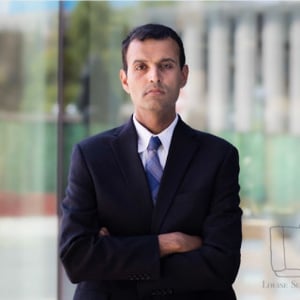
Managing Director, Berkeley Research Group (BRG)
Dr. Dasgupta served as Assistant Secretary for Trade and Economic Security, responsible for a comprehensive national security portfolio. His duties included oversight of the Committee on Foreign Investment in the United States (CFIUS), Team Telecom, the Forced Labor Enforcement Task Force (FLETF), Information and Communications Technology and Services (ICTS), Arctic security initiatives, the Icebreaker Collaboration Effort (ICE) Pact, and related trade matters. Sohan Dasgupta also served as political head of the Millennium Challenge Corporation (MCC), supporting U.S. foreign policy and national security objectives. Previously, he had served as Deputy General Counsel of the U.S. Department of Homeland Security (DHS).
Dr. Dasgupta holds a JD from the University of California, Berkeley, where he was elected to the Order of the Coif; a PhD in international trade and arbitration from the University of Cambridge; MSc from the University of Oxford; and BA in Economics–Operations Research and History from Columbia University. He commenced his legal career with clerkships on the U.S. Court of Appeals for the Ninth Circuit and the U.S. District Court for the Southern District of West Virginia.
Dr. Dasgupta has addressed the Hungarian, Romanian, and Guatemalan parliaments, and has spoken at the invitation of Members of the U.S. Congress, the British Parliament, the European Union Parliament, the Congress of the Philippines, and the Legislative Assembly of El Salvador.

Daniel Webster Debate Series: Do Nationwide Injunctions Undermine the President's Lawful Authority?
John G. Malcolm, Chad A. Readler, Stephen I. Vladeck
The Federalist Society's Georgetown Law Chapter'sDaniel Webster Debate Series presents Daniel Webster Debate Series:Do...
The Weaponization of DOJ?
Brendan Ballou, Stephen James Demanovich, John F. Lauro
High-profile politically adjacent actions (including prosecutions, pardons, & dismissals) from both the current and past...
Daniel Webster Debate Series: Should the Court Shut Down Its "Shadow Docket"?
The Federalist Society's Georgetown Law Chapter'sDaniel Webster Debate Series presents Daniel Webster Debate Series: Should...
"Civility in the Law" DC Lunch
David Boies, Reginald J. Brown, Charles J. Cooper, Deborah Enix-Ross
Join us on Wednesday, May 24th, at 12:00 PM ETfor a special edition of our Washington, DC, Lawyers...
PG-15 FedSoc Study Break: My Experience as a State Solicitor General & West Virginia v. EPA
Elbert Lin
The Federalist Society's Federalism & Separation of Powers Practice Group, Student Division & University of Miami School...
Textual Challenges of Section 230
Mary Anne Franks, Philip A. Hamburger, Gregory G. Katsas, Eugene Volokh
This panel addressed the textual questions of §230: is the statute correctly understood to permit...
Free Speech and Compelled Speech: First Amendment Challenges to a Marketplace of Ideas
Mary Anne Franks, Gregory G. Katsas, Jed Rubenfeld, Eugene Volokh
Section 230 has been understood to shield internet platforms from liability for content posted by...
What Is The Office of Federal Contract Compliance Programs?
Robert J. Gaglione, Aram A. Gavoor, Craig E. Leen
In the scheme of the Administrative State’s employment anti-discrimination functions, the Department of Labor’s Office...
Is There a Constitutional Issue in the USMCA?
John S. Baker, Sohan Dasgupta
Some argue that the United States Mexico Canada Agreement (USMCA) presents interesting questions about how...
Hobby Lobby