
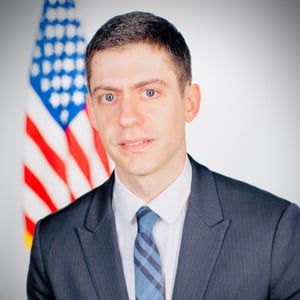
Partner, Quinn Emanuel
John F. Bash is an American attorney who served as the United States Attorney for the Western District of Texas from 2017 to 2020. After graduating from Harvard Law School, Mr. Bash clerked for Judge Kavanaugh during his first year on the bench and went on to clerk for Justice Antonin Scalia. He then served as an Assistant to the Solicitor General in the U.S. Department of Justice, where he argued ten cases in the United States Supreme Court. He also served briefly as Special Assistant to the President and Associate Counsel to the President before his appointment as United States Attorney.
Federal Public Defender for the Southern District of Florida
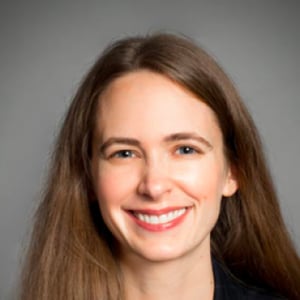
Co-Director, Tsai Center for Law, Science and Innovation, Altshuler Distinguished Teaching Professor, and Professor of Law, Southern Methodist University Dedman School of Law, SMU Dedman School of Law
Meghan J. Ryan is an award-winning teacher and scholar working at the intersection of criminal law & procedure, torts, and law & science. Her current research focuses on the impact of evolving science, technology, and cultural values on criminal convictions and punishments, as well as on civil liability and remedies. This includes research on forensic science, wrongful convictions, sentencing, cruel & unusual punishments, and toxic torts.
Professor Ryan received her A.B., magna cum laude, in Chemistry from Harvard University. She earned her J.D., magna cum laude, from the University of Minnesota Law School, where she was a member of the Order of the Coif and received the American Law Institute-American Bar Association Scholarship and Leadership Award. She was also a member of both the Minnesota Law Review and the Minnesota Journal of Global Trade.
After graduation, Professor Ryan clerked for the Honorable Roger L. Wollman of the U.S. Court of Appeals for the Eighth Circuit. She also practiced law in the trial group at the Minneapolis-based law firm of Dorsey & Whitney LLP, where she focused her practice on commercial and intellectual property litigation, as well as on white collar defense and compliance. Additionally, Professor Ryan has conducted research in the areas of bioinorganic chemistry, molecular biology, and experimental therapeutics at the Mayo Clinic and the University of Minnesota. Prior to joining the SMU faculty, Professor Ryan was a Visiting Assistant Professor at the University of Minnesota Law School, where she taught Criminal Law, Criminal Process, and Sales.
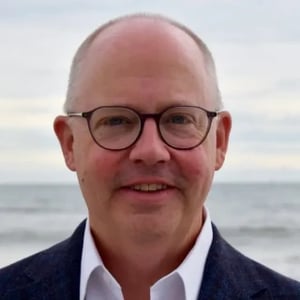
Edward Rood Eminent Scholar Chair, Professor of Law, and Senior Fellow, Hamilton Center for Classical and Civic Education, University of Florida Levin College of Law
Professor Stinneford researches, teaches, and consults about legal ethics, criminal law, criminal procedure, and constitutional law. His work has been cited by the United States Supreme Court, several state supreme courts and federal courts of appeal, and numerous scholars. It has been published in numerous scholarly journals including the Georgetown Law Journal, the Northwestern University Law Review, the Virginia Law Review, the Notre Dame Law Review, and the William & Mary Law Review. The Stanford-Yale Junior faculty forum selected one of his articles as the best paper in the category of Constitutional History, and the AALS Criminal Justice Section named another article as the best paper in its Junior Scholars Paper Competition. In the fall of 2015, he was a Visiting Scholar at the Georgetown Law Center, Center for the Constitution.
John Stinneford was the inaugural Director and serves as a Senior Fellow of the Hamilton Center for Classical and Civic Education at the University of Florida. The Hamilton Center is a new academic unit whose mission is to promote civic education and civic discourse and to foster intellectual diversity. Its core purpose is to help students develop the knowledge, habits of thought, analytical skills, and character to be citizens and leaders in a free society. It will do so through curriculum, public programming, and (in conjunction with the Florida Department of Education) teacher training. Its curriculum will focus primarily on the Western intellectual tradition and the American founding.
Before joining the Florida faculty in 2009, Stinneford clerked for the Hon. James Moran of the United States District Court for the Northern District of Illinois, served as an Assistant United States Attorney, and practiced law with Winston & Strawn in Chicago. Stinneford teaches first-year courses in Criminal Law and Constitutional Law, and upper-level courses in Professional Responsibility, Criminal Procedure, Federal Criminal Law, Law & Literature, and White Collar Crime.

Judge, United States Court of Appeals, Sixth Circuit
Amul R. Thapar serves as a judge on the United States Court of Appeals for the Sixth Circuit. His judicial career began in 2007 when President George W. Bush nominated him to serve on the Eastern District of Kentucky, making him the first South Asian Article III judge in American history. In 2017, he became President Donald J. Trump’s first appellate court nominee.
Before joining the bench, Judge Thapar served as the United States Attorney for the Eastern District of Kentucky. While United States Attorney, Judge Thapar worked on the Attorney General’s Advisory Committee (“AGAC”) and chaired the AGAC’s Controlled Substances and Asset Forfeiture subcommittee. He also served on the Terrorism and National Security subcommittee, the Violent Crime subcommittee, and the Child Exploitation working group.
Judge Thapar has worked in private practice, at Williams & Connolly in Washington, D.C., and Squire, Sanders & Dempsey in Cincinnati, Ohio. He also served as an Assistant United States Attorney in both the Southern District of Ohio and the District of Columbia.
Judge Thapar received his undergraduate degree from Boston College and his law degree from the University of California, Berkeley. After graduating, Judge Thapar worked as a law clerk to the Honorable S. Arthur Spiegel of the United States District Court for the Southern District of Ohio, and the Honorable Nathaniel R. Jones of the United States Court of Appeals for the Sixth Circuit.
Judge Thapar has also published in the Yale Law Journal, Michigan Law Review, and Catholic University Law Review. He teaches courses on originalism, the Federalists and Anti-Federalists, and legal writing at Notre Dame Law School, the University of Virginia School of Law, and Vanderbilt Law School.
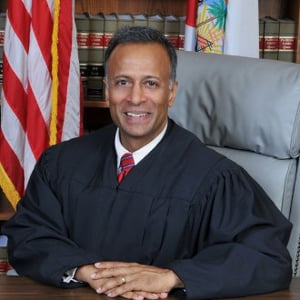
United States District Judge, United States District Court for the Southern District of Florida
On December 20, 2019, Raag Singhal received his judicial commission to serve on the United States District Court for the Southern District of Florida. Judge Singhal is the first Asian American in history to serve as an Article III judge in the jurisdiction of the Eleventh Circuit (Alabama, Georgia and Florida).
Immediately prior to becoming a federal judge, Judge Singhal spent eight years as a State Circuit Court Judge in Broward County, Florida, having been appointed by then-Governor Rick Scott in 2011. During that period of time, Singhal served, at times, in the Criminal, Civil and Mental Health divisions and was fortunate enough to sit as an Associate Judge on Florida’s Fourth District Court of Appeal on four occasions.
As a lawyer, Singhal gained experience at a civil litigation firm followed by three years as an Assistant State Attorney. After that, Singhal ran a successful criminal defense practice in Fort Lauderdale for eighteen years. During that time, he handled more than two hundred jury trials including thirty first-degree murder cases.
Judge Singhal has had leadership roles in many law-related groups. He is past-President of the Broward Association of Criminal Defense Lawyers and the Stephen H. Booher Chapter of the American Inns of Court. He was on the Board of Directors of the Broward County Bar Association, and is a frequent speaker at events for various local Bar groups such as the Asian Pacific American Bar Association and the Federalist Society. Singhal was also Associate Dean of the Florida College for Advanced Judicial Studies upon his elevation to the federal court system.
Judge Singhal received his law degree from Wake Forest University School of Law in 1989 where he was very active in Moot Court activities, and was on the winning team of the J. Braxton Craven National Moot Court Competition (4th Amendment). He received his undergraduate degree in Political Science from Rice University in 1986.
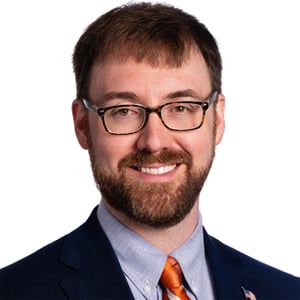
Senior Legal Fellow, Courts and the Constitution, Legal Policy Center, The Heritage Foundation
Zack is a Senior Legal Fellow of Courts and the Constitution at The Heritage Foundation.
He previously served for several years as an Assistant United States Attorney in the Northern District of Florida. Prior to that, he spent two years as an associate in the Washington, D.C. office of Cleary Gottlieb Steen & Hamilton, which he joined after clerking for the Hon. Emmett R. Cox on the United States Court of Appeals for the Eleventh Circuit.
Smith received his undergraduate, master’s, and law degrees from the University of Florida. During law school, Smith served as the Editor in Chief of the Florida Law Review and served on the executive boards of several student organizations, including the UF Chapter of the Federalist Society.
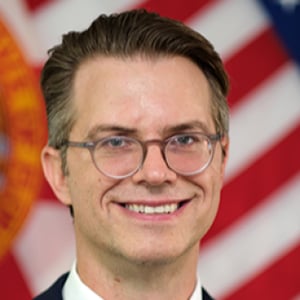
Solicitor General of Florida
Henry Whitaker became Florida’s Solicitor General in July 2021. He came to the position after four years of serving in the Office of Legal Counsel of the U.S. Department of Justice, including as Principal Deputy Assistant Attorney General, where he advised the White House Counsel’s Office, the Attorney General, and cabinet secretaries on a range of important and complex legal issues. Before that, Solicitor General Whitaker worked on the Appellate Staff of the Civil Division of the U.S. Department of Justice for almost nine years, arguing more than 40 appeals in the federal appellate courts. He clerked for Justice Clarence Thomas of the U.S. Supreme Court and for Judge David B. Sentelle of the U.S. Court of Appeals for the D.C. Circuit after graduating magna cum laude from both Harvard Law School and Yale College.
Special Assistant/Counsel, United States Commission on Civil Rights
Alexander Heideman is Special Assistant/Counsel at the United States Commission on Civil Rights.
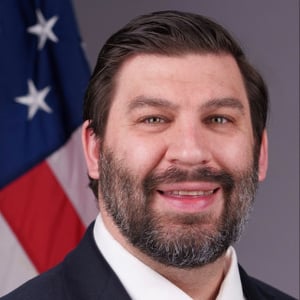
Deputy Counsel, the President
Gary currently is the Deputy Counsel to the President. He was previously a partner at the Dhillon Law Group and worked at the Department of the Interior and Federal Election Commission. He is a native of Virginia, and earned his B.A. and J.D. from the University of Virginia.
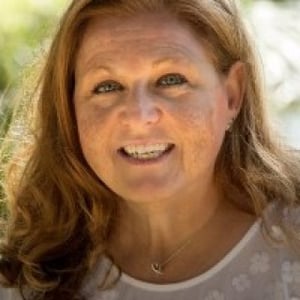
Director, Office of Government Information Services, United States National Archives and Records Administration
In December 2016, Alina M. Semo became the Director of the Office of Government Information Services (OGIS), the Federal Freedom of Information Act (FOIA) ombudsman’s office, which is part of the National Archives and Records Administration (NARA).
Prior to joining OGIS, Ms. Semo served as the Director of Litigation in NARA's Office of General Counsel for two and a half years. Before coming to NARA, Ms. Semo led the FOIA Litigation Unit in the Office of the General Counsel at the Federal Bureau of Investigation (FBI) for over ten years, and also served as an Assistant General Counsel in the Litigation Branch for nearly five years. Ms. Semo began her federal government career as a Department of Justice trial attorney and later senior counsel in the Federal Programs Branch, Civil Division, from 1991 to 1999, and from 1988 to 1991 worked as an associate at Hopkins & Sutter in Washington, D.C.
Ms. Semo holds a Bachelor of Arts degree in Government and Politics from the University of Maryland, College Park, and a Juris Doctor degree from Georgetown University Law School; she is licensed in the District of Columbia and Maryland.
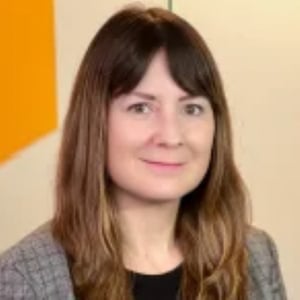
Deputy Executive Director and Legal Director, Reporters Committee for Freedom of the Press
Katie Townsend (@katie_rcfp) is Deputy Executive Director and Legal Director at the Reporters Committee for Freedom of the Press (www.rcfp.org), a nonprofit organization based in Washington, D.C. She oversees the litigation, amicus, and other legal work of Reporters Committee attorneys, and represents the Reporters Committee, news organizations, and individual journalists, including documentary filmmakers, in court access, freedom of information, and other First Amendment and press freedom matters.
Prior to joining the Reporters Committee as its first Litigation Director in 2014, Ms. Townsend was an associate in the Los Angeles office of Gibson Dunn & Crutcher LLP, where her practice focused on media and entertainment litigation. She was recognized in 2015 as a Washington, D.C. “Rising Star” by The National Law Journal and, in 2015, was named one of the “Next Gen – Hollywood’s Up-and-Coming Execs 35 and Under” by the Hollywood Reporter. She is a Fellow of the American Bar Foundation and serves on the International Documentary Association’s Enterprise Documentary Fund Advisory Committee.
Ms. Townsend is a 2007 graduate of the University of Virginia School of Law, where she was a member of the editorial board of the Virginia Law Review. She graduated summa cum laude from the University of Florida in 2004 with a B.A. in English and a B.S. in broadcast journalism.

Deputy Secretary of Agriculture, U.S. Department of Agriculture
Judge Stephen Alexander Vaden was appointed as the Deputy Secretary of the U.S. Department of Agriculture on July 7, 2025. Alongside Secretary Brooke L. Rollins, Deputy Secretary Vaden leads the Department’s operations and implements policies that support America’s food and farm systems. A native of Union City, Tennessee, Deputy Secretary Vaden brings expertise in agricultural policy, law, and rural development. Previously, he served as a judge on the U.S. Court of International Trade and as General Counsel of USDA. Throughout Deputy Secretary Vaden’s time as General Counsel, he led successful Supreme Court litigation, advanced regulatory reform, and supported the implementation of the 2018 Farm Bill. He is a graduate of Yale Law School and Vanderbilt University. A public servant with strong agricultural roots, Deputy Secretary Vaden is committed to revitalizing rural America and ensuring an abundant, affordable, and safe U.S. food supply.
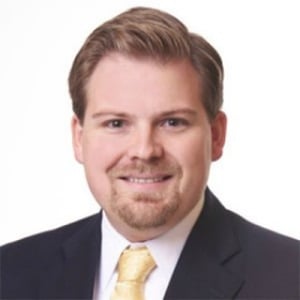
Counsel, Cause of Action Institute
Ryan P. Mulvey has worked as policy counsel at Americans for Prosperity Foundation since December 2019. He previously worked as Counsel as Cause of Action Institute (2013-2019) and continues to volunteer in that position. Ryan’s practice touches on various aspects of government oversight, civic engagement, and administrative and constitutional law. He regularly lectures on government transparency matters and litigates cases under the Freedom of Information Act and Administrative Procedure Act. Ryan has helped to prosecute state public records requests, too, and provided amicus support at various levels of state and federal courts, including the Supreme Court, on various matters. As a policy expert, he regularly advises congressional staff about FOIA reform and cutting-edge transparency issues.
Ryan was graduated from the University of San Diego (2010) summa cum laude with an honors degree in history and political science. He earned his JD and MA in philosophy from Boston University (2013). While a law student, Ryan completed internships at the Cato Institute’s Center for Constitutional Studies, as well as the Office of the General Counsel of the Roman Catholic Archdiocese of Boston. He served as Executive Editor for Notes and Comments at the Review of Banking & Financial Law and worked as a research assistant for the second revised edition of the Heritage Foundation’s Guide to the Constitution (2014).
Ryan is admitted to the practice of law in New York State, the District of Columbia, and the Commonwealth of Virginia. In addition to his work at AFPF, Ryan is the president of the American Society of Access Professionals and a contributor at FOIA Advisor.
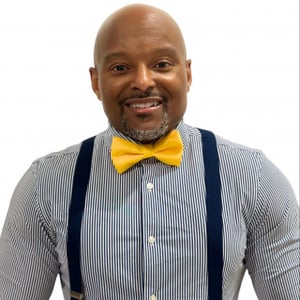
Dean, Delaware Law School
Dean Todd Clark is Dean of Delaware Law School. He joins Delaware Law School after serving as Associate Dean of Academic Affairs & Professor of Law at St. Thomas University Benjamin L. Crump College of Law. Before St. Thomas, Dean Clark was Professor of Law at North Carolina Central University School of Law where he taught Business Associations, Contracts, Corporate Justice, Employment Discrimination, and Hip Hop, Law & Justice. At NCCU, he also served on the ABA Compliance team and was the Director of the Justice in the Practice of Law Certificate Program and the Director of New Initiatives. Before that, Dean Clark was a Lecturer in Law at West Virginia University College of Law, where he taught Legal Writing and Appellate Advocacy.
Dean Clark earned his B.A. in Political Science from Wittenberg University, his M.B.A. from West Virginia University College of Business and Economics, and his J.D. from University of Pittsburgh School of Law. Following his graduation from law school, he practiced law at the law firm of Steptoe & Johnson.
His scholarship includes a book, CORPORATE JUSTICE (Carolina Academic Press), as well as numerous law review articles and other scholarship on social justice, corporate discretion, and sexual harassment. He is currently working on a casebook on Sports Law.

Senior Fellow and Director of Constitutional Studies, Manhattan Institute
Ilya Shapiro is a senior fellow and director of constitutional studies at the Manhattan Institute and a contributing editor of City Journal. Previously he was executive director and senior lecturer at the Georgetown Center for the Constitution, and before that a vice president of the Cato Institute.
Shapiro is the author of Lawless: The Miseducation of America’s Elites (2025) and Supreme Disorder: Judicial Nominations and the Politics of America’s Highest Court (2020), coauthor of Religious Liberties for Corporations? (2014), and editor of 11 volumes of the Cato Supreme Court Review (2008-18). He has contributed to a variety of academic, popular, and professional publications, including the Wall Street Journal, Harvard Journal of Law & Public Policy, Washington Post, Los Angeles Times, USA Today, National Review, and Newsweek. He also regularly provides commentary for various media outlets, writes the Shapiro’s Gavel newsletter on Substack, and once appeared on the Colbert Report.
Shapiro has testified many times before Congress and state legislatures and has filed more than 500 amicus curiae “friend of the court” briefs in the Supreme Court. He lectures regularly on behalf of the Federalist Society, is a member of the board of fellows of the Jewish Policy Center, was an inaugural Washington Fellow at the National Review Institute, and has been an adjunct law professor at the George Washington University and University of Mississippi. He is also the chairman of the board of advisers of the Mississippi Justice Institute, a barrister in the Edward Coke Appellate Inn of Court, and a former member of the Virginia Advisory Committee to the U.S. Commission on Civil Rights.
Earlier in his career, Shapiro was a special assistant/adviser to the Multi-National Force in Iraq on rule-of-law issues and practiced at Patton Boggs and Cleary Gottlieb. Before entering private practice, he clerked for Judge E. Grady Jolly of the U.S. Court of Appeals for the Fifth Circuit. He holds an AB from Princeton University, an MSc from the London School of Economics, and a JD from the University of Chicago Law School.
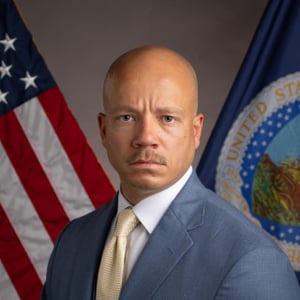
Assistant Secretary for Civil Rights, U.S. Department of Agriculture
Devon Westhill is the Assistant Secretary for Civil Rights at the U.S. Department of Agriculture. The U.S. Senate confirmed President Donald Trump’s nomination of Westhill on October 7, 2025.
Westhill returns to the USDA where he previously headed the civil rights office as Deputy Assistant Secretary in President Trump’s first term. His previous government appointments also include service at the U.S. Department of Labor, liaison to the Administrative Conference of the U.S., and liaison to the White House Initiative on Historically Black Colleges and Universities. Prior to returning to government service, Westhill was President and General Counsel of a nonprofit civil rights organization.
Westhill has testified on civil rights matters before Congress, federal agencies, and as an expert witness in federal court. He has spoken hundreds of times at college campuses, conferences, and on radio and TV programs, and he is frequently quoted in print publications, and his writing has appeared in numerous national outlets. A U.S. Navy veteran, Westhill earned his BA from the University of North Carolina at Chapel Hill and his JD from the University of Florida.
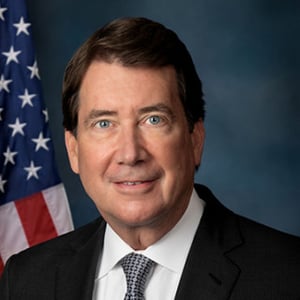
United States Senator, Tennessee
United States Senator Bill Hagerty was elected to the U.S. Senate in 2020 and is currently serving his first term representing the state of Tennessee. His committee assignments include: U.S. Senate Committee on Banking, Housing, & Urban Affairs; U.S. Senate Committee on Foreign Relations; U.S. Senate Committee on Appropriations; and the U.S. Senate Committee on Rules & Administration. Prior to his election to the U.S. Senate, Hagerty served as the U.S. Ambassador to Japan.
Hagerty is a life-long businessman. He started his business career with the Boston Consulting Group, where his work took him to five continents, including three years based in Tokyo, Japan. He later became a venture capital and private equity investor where he invested in and served as an executive and board member of a wide range of companies, including ones listed on the New York Stock Exchange and NASDAQ. From 2011 to 2014, Hagerty took leave from his business career to serve as a member of the Governor’s Cabinet and Commissioner of the Tennessee Department of Economic and Community Development.
Hagerty, an Eagle Scout, is originally from Sumner County, Tennessee. Today, he and his wife Chrissy are both active volunteers in several community and civic organizations, and live in Davidson County, Tennessee. They are the parents of four children.
Senior Legal Fellow, Courts and the Constitution, Legal Policy Center, The Heritage Foundation
Zack is a Senior Legal Fellow of Courts and the Constitution at The Heritage Foundation.
He previously served for several years as an Assistant United States Attorney in the Northern District of Florida. Prior to that, he spent two years as an associate in the Washington, D.C. office of Cleary Gottlieb Steen & Hamilton, which he joined after clerking for the Hon. Emmett R. Cox on the United States Court of Appeals for the Eleventh Circuit.
Smith received his undergraduate, master’s, and law degrees from the University of Florida. During law school, Smith served as the Editor in Chief of the Florida Law Review and served on the executive boards of several student organizations, including the UF Chapter of the Federalist Society.
Professor of Political Science, University of Florida
Dr. Michael P. McDonald is Professor of Political Science at University of Florida. He received his Ph.D. in Political Science from University of California, San Diego and B.S. in Economics from California Institute of Technology. He held a one-year post-doc fellowship at Harvard University and previously taught at Vanderbilt University; University of Illinois, Springfield; and George Mason University.
His research interests are in the areas of elections and methodology. His voter turnout research shows that turnout is not declining, the ineligible population is rising. He is a co-principle investigator on the Public Mapping Project, a project to encourage public participation in redistricting. He is co-author with Micah Altman of The Public Mapping Project: How Public Participation Can Revolutionize Redistricting; co-author with Micah Altman and Jeff Gill of Numerical Issues in Statistical Computing for the Social Scientist,and is co-editor with John Samples of The Marketplace of Democracy: Electoral Competition and American Politics. His research appears in several edited volumes and in scholarly journals including American Political Science Review, American Journal of Political Science, Journal of Politics, Public Opinion Quarterly, Political Behavior, Political Analysis, Political Geography, State Politics and Policy Quarterly, PS: Political Science and Politics, Sociological Methods and Research, Social Science Computing Review, The Election Law Journal, Política y Gobierno, and the law review journals of New York University Journal of Legislation and Public Policy, Duke J. Constitutional Law and Public Policy, University of Richmond Law Review, Case Western Law Review and the Georgetown Law Review.
On the practical side of politics, Dr. McDonald has worked for the national exit poll organization; consulted to the U.S. Election Assistance Commission; consulted to the Pew Center for the States; served on campaign staff for state legislative campaigns in California and Virginia; has worked for national polling firms; has been an expert witness for election lawsuits in Florida, Georgia, Indiana, Kansas, Massachusetts, Rhode Island, and Washington; and has worked as a redistricting consultant or expert witness in Alaska, Arizona, California, Georgia, Maryland, Michigan, New Jersey, New York, Ohio, Oklahoma, Texas, and Virginia. He has worked as a media consultant to the Associated Press, ABC, and NBC, and is frequently quoted in the media regarding United States elections. His opinion editorials have appeared in The Washington Post, USA Today, The Politico, The Hill, The Milwaukee Journal-Sentinel, The American Prospect, and Roll Call.
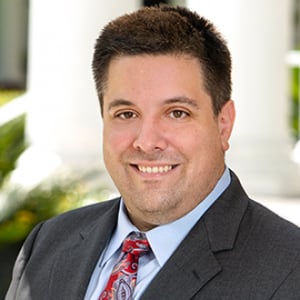
Sheila M. McDevitt Professor of Law and Faculty Director of the Election Law Center, Florida State University College of Law
Professor Morley joined FSU Law in 2018, and teaches and writes in the areas of election law, constitutional law, remedies, and the federal courts. He is best known for his work on election emergencies and post-election litigation, nationwide and other defendant-oriented injunctions, the jurisdiction of the federal courts and their equitable powers more generally. He has testified before congressional committees, made presentations to election officials for the U.S. Election Assistance Commission and participated in bipartisan blue-ribbon groups to develop election reforms. The governor of Florida also appointed Professor Morley to the Criminal Punishment Code Task Force, to propose potential revisions to the legislature.
The U.S. Supreme Court has cited several of his articles, and he was counsel of record for the successful Petitioner in a landmark campaign finance case. Professor Morley has appeared on C-SPAN, Court TV, Fox News and numerous local news programs, and has been quoted in the Washington Post, Los Angeles Times, Roll Call, Politico, U.S. News and World Report, and a wide range of other national publications. His work has been published in many of the nation’s top law reviews, including the Georgetown Law Journal, Northwestern University Law Review, Boston University Law Review and Emory Law Journal.
Before joining FSU Law, Professor Morley was a Climenko Fellow and Lecturer in Law at Harvard Law School. Prior to his experience in academia, he served in government as special assistant to the General Counsel of the Army at the Pentagon, as well as a law clerk for Judge Gerald B. Tjoflat of the U.S. Court of Appeals for the Eleventh Circuit. During his tenure with the Army General Counsel’s office, he was awarded the Meritorious Civilian Service Award and the Army Staff Lapel Pin. He also worked as an associate at Williams & Connolly LLP and the Supreme Court & Appellate group of Winston & Strawn, LLP, both in Washington, D.C.
Professor Morley earned his J.D. from Yale Law School in 2003, where he was a senior editor on the Yale Law Journal; served on the moot court board; and received the Thurman Arnold Prize for Best Oralist in the Morris Tyler Moot Court of Appeals.
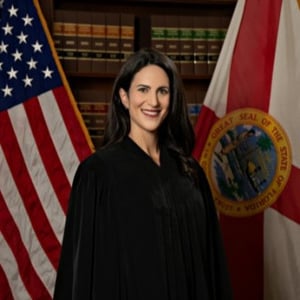
Justice, Florida Supreme Court
On May 23, 2023, Governor Ron DeSantis appointed Justice Meredith L. Sasso to be the 93rd justice of the Supreme Court of Florida.
Justice Sasso was raised in Tallahassee. She received her undergraduate degree from the University of Florida in 2005 and her law degree from the University of Florida in 2008, where she was a member of the Justice Campbell Thornal Moot Court Board. She began her career in private practice, representing clients in large loss general liability, auto negligence, and complex commercial claims in state and federal courts at trial and on appeal. She also served as guardian ad litem, representing abused or neglected children.
In August 2016, Justice Sasso joined the Office of the General Counsel to Governor Rick Scott, serving as Chief Deputy General Counsel. In this role, she represented the Governor in litigation before the Florida Supreme Court, the First District Court of Appeal, and state and federal trial courts, among other duties. In January 2019, Governor Rick Scott appointed her to the Fifth District Court of Appeal. Governor Ron DeSantis recommissioned her to the newly created Sixth District Court of Appeal on January 1, 2023, where she was elected by her colleagues to serve as its first Chief Judge.
She is an appointed member of the Florida Bar Appellate Court Rules Committee. She is also a member of the American Enterprise Institute Leadership Network and the Federalist Society.
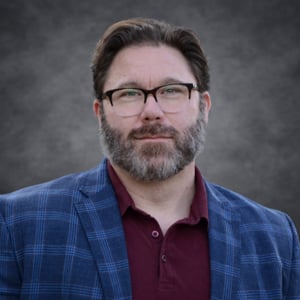
Founder, Consilia Law, PLLC
Phil Gordon is the founder of Consilia Law, PLLC, in Waco, Texas. He practices election and political law and regulatory compliance, and advises businesses in regulated industries.
Phil began his career as Associate Counsel to the 58th Presidential Inaugural Committee. He then spent nearly a decade at a nationally recognized political law firm in Washington, D.C. and built a litigation practice centered on election law, redistricting, and constitutional litigation. He has been author or co-author of nine briefs before the Supreme Court of the United States, including as counsel for parties in Moore v. Harper and Upstate Jobs Party v. Kosinski, and as amicus counsel in Alexander v. South Carolina State Conference of the NAACP, Trump v. Anderson, Gill v. Whitford, and Public Interest Legal Foundation v. Benson, among others.
Beyond the Supreme Court, Phil has tried redistricting cases before three-judge federal panels in Pennsylvania, Michigan, and Louisiana, including as trial counsel for the State of Louisiana in Robinson v. Callais. He has briefed appeals in the D.C., Second, Sixth, and Eleventh Circuits, including victories for the NRSC and RGA in the Eleventh Circuit and for New Republican PAC in the D.C. Circuit. His broader practice covers campaign finance compliance, FARA, and regulatory counsel for political committees, officeholders, advocacy organizations, and businesses operating in regulated environments.
Phil holds a J.D. from Baylor Law School, an M.S. in Community and Regional Planning from the University of Texas at Austin, and a B.A. in Philosophy from California State University, Los Angeles. He is licensed in Texas, Virginia, and the District of Columbia, and is admitted to practice before the Supreme Court of the United States, multiple federal courts of appeals, and several federal district courts.
Professor of Political Science, University of Florida
Dr. Michael P. McDonald is Professor of Political Science at University of Florida. He received his Ph.D. in Political Science from University of California, San Diego and B.S. in Economics from California Institute of Technology. He held a one-year post-doc fellowship at Harvard University and previously taught at Vanderbilt University; University of Illinois, Springfield; and George Mason University.
His research interests are in the areas of elections and methodology. His voter turnout research shows that turnout is not declining, the ineligible population is rising. He is a co-principle investigator on the Public Mapping Project, a project to encourage public participation in redistricting. He is co-author with Micah Altman of The Public Mapping Project: How Public Participation Can Revolutionize Redistricting; co-author with Micah Altman and Jeff Gill of Numerical Issues in Statistical Computing for the Social Scientist,and is co-editor with John Samples of The Marketplace of Democracy: Electoral Competition and American Politics. His research appears in several edited volumes and in scholarly journals including American Political Science Review, American Journal of Political Science, Journal of Politics, Public Opinion Quarterly, Political Behavior, Political Analysis, Political Geography, State Politics and Policy Quarterly, PS: Political Science and Politics, Sociological Methods and Research, Social Science Computing Review, The Election Law Journal, Política y Gobierno, and the law review journals of New York University Journal of Legislation and Public Policy, Duke J. Constitutional Law and Public Policy, University of Richmond Law Review, Case Western Law Review and the Georgetown Law Review.
On the practical side of politics, Dr. McDonald has worked for the national exit poll organization; consulted to the U.S. Election Assistance Commission; consulted to the Pew Center for the States; served on campaign staff for state legislative campaigns in California and Virginia; has worked for national polling firms; has been an expert witness for election lawsuits in Florida, Georgia, Indiana, Kansas, Massachusetts, Rhode Island, and Washington; and has worked as a redistricting consultant or expert witness in Alaska, Arizona, California, Georgia, Maryland, Michigan, New Jersey, New York, Ohio, Oklahoma, Texas, and Virginia. He has worked as a media consultant to the Associated Press, ABC, and NBC, and is frequently quoted in the media regarding United States elections. His opinion editorials have appeared in The Washington Post, USA Today, The Politico, The Hill, The Milwaukee Journal-Sentinel, The American Prospect, and Roll Call.
Sheila M. McDevitt Professor of Law and Faculty Director of the Election Law Center, Florida State University College of Law
Professor Morley joined FSU Law in 2018, and teaches and writes in the areas of election law, constitutional law, remedies, and the federal courts. He is best known for his work on election emergencies and post-election litigation, nationwide and other defendant-oriented injunctions, the jurisdiction of the federal courts and their equitable powers more generally. He has testified before congressional committees, made presentations to election officials for the U.S. Election Assistance Commission and participated in bipartisan blue-ribbon groups to develop election reforms. The governor of Florida also appointed Professor Morley to the Criminal Punishment Code Task Force, to propose potential revisions to the legislature.
The U.S. Supreme Court has cited several of his articles, and he was counsel of record for the successful Petitioner in a landmark campaign finance case. Professor Morley has appeared on C-SPAN, Court TV, Fox News and numerous local news programs, and has been quoted in the Washington Post, Los Angeles Times, Roll Call, Politico, U.S. News and World Report, and a wide range of other national publications. His work has been published in many of the nation’s top law reviews, including the Georgetown Law Journal, Northwestern University Law Review, Boston University Law Review and Emory Law Journal.
Before joining FSU Law, Professor Morley was a Climenko Fellow and Lecturer in Law at Harvard Law School. Prior to his experience in academia, he served in government as special assistant to the General Counsel of the Army at the Pentagon, as well as a law clerk for Judge Gerald B. Tjoflat of the U.S. Court of Appeals for the Eleventh Circuit. During his tenure with the Army General Counsel’s office, he was awarded the Meritorious Civilian Service Award and the Army Staff Lapel Pin. He also worked as an associate at Williams & Connolly LLP and the Supreme Court & Appellate group of Winston & Strawn, LLP, both in Washington, D.C.
Professor Morley earned his J.D. from Yale Law School in 2003, where he was a senior editor on the Yale Law Journal; served on the moot court board; and received the Thurman Arnold Prize for Best Oralist in the Morris Tyler Moot Court of Appeals.
Justice, Florida Supreme Court
On May 23, 2023, Governor Ron DeSantis appointed Justice Meredith L. Sasso to be the 93rd justice of the Supreme Court of Florida.
Justice Sasso was raised in Tallahassee. She received her undergraduate degree from the University of Florida in 2005 and her law degree from the University of Florida in 2008, where she was a member of the Justice Campbell Thornal Moot Court Board. She began her career in private practice, representing clients in large loss general liability, auto negligence, and complex commercial claims in state and federal courts at trial and on appeal. She also served as guardian ad litem, representing abused or neglected children.
In August 2016, Justice Sasso joined the Office of the General Counsel to Governor Rick Scott, serving as Chief Deputy General Counsel. In this role, she represented the Governor in litigation before the Florida Supreme Court, the First District Court of Appeal, and state and federal trial courts, among other duties. In January 2019, Governor Rick Scott appointed her to the Fifth District Court of Appeal. Governor Ron DeSantis recommissioned her to the newly created Sixth District Court of Appeal on January 1, 2023, where she was elected by her colleagues to serve as its first Chief Judge.
She is an appointed member of the Florida Bar Appellate Court Rules Committee. She is also a member of the American Enterprise Institute Leadership Network and the Federalist Society.
Founder, Consilia Law, PLLC
Phil Gordon is the founder of Consilia Law, PLLC, in Waco, Texas. He practices election and political law and regulatory compliance, and advises businesses in regulated industries.
Phil began his career as Associate Counsel to the 58th Presidential Inaugural Committee. He then spent nearly a decade at a nationally recognized political law firm in Washington, D.C. and built a litigation practice centered on election law, redistricting, and constitutional litigation. He has been author or co-author of nine briefs before the Supreme Court of the United States, including as counsel for parties in Moore v. Harper and Upstate Jobs Party v. Kosinski, and as amicus counsel in Alexander v. South Carolina State Conference of the NAACP, Trump v. Anderson, Gill v. Whitford, and Public Interest Legal Foundation v. Benson, among others.
Beyond the Supreme Court, Phil has tried redistricting cases before three-judge federal panels in Pennsylvania, Michigan, and Louisiana, including as trial counsel for the State of Louisiana in Robinson v. Callais. He has briefed appeals in the D.C., Second, Sixth, and Eleventh Circuits, including victories for the NRSC and RGA in the Eleventh Circuit and for New Republican PAC in the D.C. Circuit. His broader practice covers campaign finance compliance, FARA, and regulatory counsel for political committees, officeholders, advocacy organizations, and businesses operating in regulated environments.
Phil holds a J.D. from Baylor Law School, an M.S. in Community and Regional Planning from the University of Texas at Austin, and a B.A. in Philosophy from California State University, Los Angeles. He is licensed in Texas, Virginia, and the District of Columbia, and is admitted to practice before the Supreme Court of the United States, multiple federal courts of appeals, and several federal district courts.

Topics
The Campus Climate for Jews: One FedSoc Student Leader’s Perspective
Hamas’ recent terrorist attack on Israel has prompted an increasing disconnect between myself, my campus,...
After Dobbs and Samia: The Potential Implications of Applying a Dobbs Lens to the Supreme Court’s Constitutional Criminal Jurisprudence
2023 National Lawyers Convention
Washington, DCPanel II: U.S. Supreme Court Review
Raag Singhal, Zack Smith, Henry Charles Whitaker
Featuring: Zack Smith, Legal Fellow and Manager, Supreme Court and Appellate Advocacy Program, Meese Center, The...
Hispanic-Serving Institutions and Emerging Constitutional Issues
Alexander M. Heideman
In 2019, Florida Gulf Coast University’s (FGCU) “Florida Educational Equity Report” noted that FGCU “continues...
$64,000 Questions — Obtaining Information from the Executive Branch
Gary Lawkowski, Alina M. Semo, Katie Townsend, Stephen Alexander Vaden, Ryan Patrick Mulvey
We’ve grown accustomed to learning about government actions only because an enterprising person or group...
Higher Ed & DEI
Todd Clark, Ilya Shapiro, Devon Westhill
In recent years, American organizations of all kinds have dedicated resources towards diversity, equity, and...
Necessary & Proper Episode 82: The D.C. Crime Bill: What Happens Next?
Bill Hagerty, Zack Smith
In November 2022, the District of Columbia City Council passed the Revised Criminal Code Act...
The D.C. Crime Bill: What Happens Next?
Bill Hagerty, Zack Smith
In November 2022, the District of Columbia City Council passed the Revised Criminal Code Act...
Panel One: Redistricting in Florida: 2010s vs. 2020s
Michael P. McDonald, Michael T. Morley, Meredith Sasso, Phillip Michael Gordon
The first panel of the Federalist Society's Eighth Annual Florida Chapters Conference featured an impressive...
Panel One: Redistricting in Florida: 2010s vs. 2020s
Michael P. McDonald, Michael T. Morley, Meredith Sasso, Phillip Michael Gordon
The first panel of the Federalist Society's Eighth Annual Florida Chapters Conference featured an impressive...