
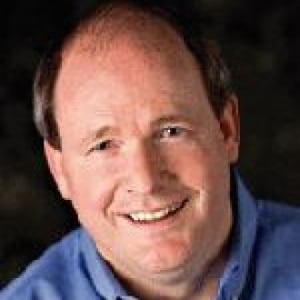
Regent’s Professor of Law and Director for the Center for Law, Science and Innovation, ASU Sandra Day O’Connor College of Law
Gary Marchant is a Regent's Professor of Law and director of the Center for Law, Science and Innovation. His research interests include legal aspects of genomics and personalized medicine, the use of genetic information in environmental regulation, risk and the precautionary principle, and governance of emerging technologies such as nanotechnology, neuroscience, biotechnology and artificial intelligence.
He teaches courses in Law, Science and Technology, Genetics and the Law, Biotechnology: Science, Law and Policy, Health Technologies and Innovation, Privacy, Big Data and Emerging Technologies, and Artificial Intelligence: Law and Ethics. He was named a Regents' Professor in 2011 and also is a professor in ASU’s School of Life Sciences, a Distinguished Sustainability Scientist in ASU’s Julie Ann Wrigley Global Institute of Sustainability, and is a Lincoln Professor of Emerging Technologies Law and Ethics with the Lincoln Center for Applied Ethics at ASU.
Prior to joining ASU in 1999, Professor Marchant was a partner at the Washington, D.C., office of Kirkland & Ellis, where his practice focused on environmental and administrative law. During law school, he was Editor-in-Chief of the Harvard Journal of Law & Technology and editor of the Harvard Environmental Law Review and was awarded the Fay Diploma (awarded to top graduating student at Harvard Law School).
Professor Marchant frequently lectures about the intersection of law and science at national and international conferences. He has authored more than 150 articles and book chapters on various issues relating to emerging technologies. Among other activities, he has served on five National Academy of Sciences committees, has been the principal investigator on several major grants, and has organized numerous academic conferences on law and science issues.

Executive Vice President, The Federalist Society
Dean Reuter is Executive Vice President at the Federalist Society for Law and Public Policy Studies. He has served in two federal government agency Offices of the Inspector General, as Counsel to the Inspector General and Deputy Inspector General, responsible for policing the use of federal funds granted and contracted through those agencies. As such, he helped conduct and oversee criminal investigations across the country. He is the principal author of the non-fiction book, The Hidden Nazi: The Untold Story of America's Deal with the Devil, and editor of Liberty’s Nemesis: The Unchecked Expansion of the State and Confronting Terror: 9/11 and the Future of American National Security. He was appointed by the President and served as Vice-Chairman of the Board of Directors of the Corporation for National and Community Service, and recently served as an appointee on the U.S. Commission on Presidential Scholars. He is a graduate of Hood College (BA with Honors) and the University of Maryland School of Law.

Partner, Clement & Murphy, PLLC
Paul served as the 43rd Solicitor General of the United States from June 2005 until June 2008. Before his confirmation as Solicitor General, he served as Acting Solicitor General for nearly a year and as Principal Deputy Solicitor General for over three years.
Paul has argued over 100 cases before the United States Supreme Court, including McConnell v. FEC, Tennessee v. Lane, United States v. Booker, MGM v. Grokster, Hobby Lobby v. Burwell, Epic Systems Corp. v. Lewis, Rucho v. Common Cause, Facebook v. Duguid, and TransUnion v. Ramirez. Paul has argued more Supreme Court cases since 2000 than any lawyer in or out of government. He has also argued many important cases in the lower courts, including Walker v. Cheney, United States v. Moussaoui and NFL v. Brady.
Paul’s practice focuses on appellate matters, constitutional litigation and strategic counseling. He represents a broad array of clients in the Supreme Court and in federal and state appellate courts. Last year, for example, he successfully argued Supreme Court cases involving significant issues of energy regulation, statutory interpretation, state sovereign immunity and Article III standing, and successfully argued a trademark appeal in the Fourth Circuit, and a constitutional appeal before the en banc Eleventh Circuit.
Paul focuses on high-stakes appeals. In recent years, he successfully defended a $1.2 billion jury verdict for clients in a Tenth Circuit case, while securing the reversal of an over $2 billion jury verdict for another client in the Seventh Circuit and the approval of a nearly $1 billion dollar class action settlement in the Third Circuit. He has initiated major administrative law challenges and constitutional litigation against the federal government, such as the successful challenge to the HHS drug-pricing rule and threatened challenges that led to the withdrawal of the Treasury Department’s proposed cryptocurrency regulations. He also counsels clients on a variety of strategic legal questions, whether arising from pending legislation, government inquiries or ongoing litigation.
Paul has undertaken substantial pro bono engagements in the Supreme Court, such as twice successfully representing the defendant in Bond v. United States and successfully representing the Omaha Tribe in Nebraska v. Parker, the guardian ad litem in Adoptive Couple v. Baby Girl, the defendant in Sekhar v. United States, a high school football coach in Kennedy v. Bremerton, and the Little Sisters of the Poor. Paul’s pro bono representation also precipitated the federal government’s confession of error in United States v. Rojas.
Following law school, Paul clerked for Judge Laurence H. Silberman of the U.S. Court of Appeals for the D.C. Circuit and for Associate Justice Antonin Scalia of the U.S. Supreme Court. After his clerkships, he went on to serve as Chief Counsel of the U.S. Senate Subcommittee on the Constitution, Federalism and Property Rights.
Paul is a Distinguished Lecturer in Law at the Georgetown University Law Center, where he has taught in various capacities since 1998. He also serves as a Senior Fellow of the Law Center’s Supreme Court Institute. He is the Justice Joseph Story Distinguished Practitioner in Residence at the Gray Center at Scalia Law School.
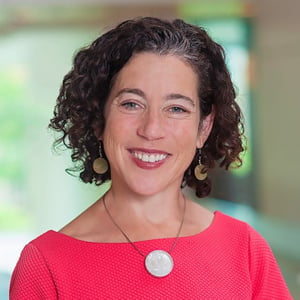
Assistant Professor of Law, American University Washington College of Law
Jennifer Daskal joined American University Washington College of Law (WCL) in 2013 as an Assistant Professor of Law. She teaches and writes in the fields of criminal law, national security law, and constitutional law. From 2009-2011, Prof. Daskal was counsel to the Assistant Attorney General for National Security at the Department of Justice and, among other things, served on the Secretary of Defense and Attorney General-led Detention Policy Task Force. Prior to joining DOJ, she was the senior counterterrorism counsel at Human Rights Watch, worked as a staff attorney for the Public Defender Service for the District of Columbia, and clerked for the Honorable Jed S. Rakoff. She spent two years before joining WCL’s faculty as a national security law fellow and adjunct professor at Georgetown Law Center.
Prof. Daskal is a graduate of Brown University, Harvard Law School, and Cambridge University, where she was a Marshall Scholar. Recent publications include The Un-Territoriality of Data, 326 Yale L.J. 326 (2015); Pre-Crime Restraints: The Explosion of Targeted, Non-Custodial Prevention, 99 Cornell L. Rev. 327 (2014); After the AUMF, 5 Harvard Nat'l Sec. L. J. 115 (2014) (co-authored with Steve Vladeck); and The Geography of the Battlefield: A Framework for Detention and Targeting Outside the ‘Hot’ Conflict Zone, 171 Penn. L. Rev. 1165 (2013). Prof. Daskal has published op-eds in the New York Times, Washington Post, International Herald Tribune, L.A. Times, and Salon.com, and she has appeared on BBC, C-Span, CNN, MSNBC, and NPR, among other media outlets. She is an Executive Editor of and regular contributor to the Just Security blog.
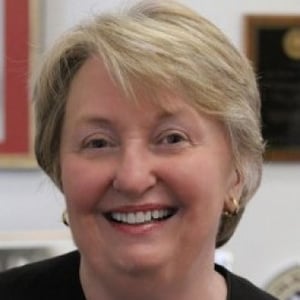
Judge, Contra Costa County Superior Court in California
Judge Haight was appointed to Contra Costa County Superior Court by Governor Pete Wilson in 1993.
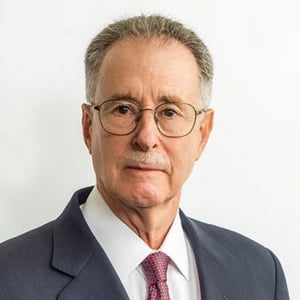
Wallace and Beverley Woodbury University Professor of Law; Co-director of the Litigation and Dispute Resolution Program, The George Washington University Law School
Stephen A. Saltzburg joined GW Law in 1990. Before that, he taught at the University of Virginia School of Law, and was named the first incumbent of the Class of 1962 Endowed Chair. In 1996, he founded and directed the master’s program in Litigation and Dispute Resolution at GW. He was named University Professor, the highest title a University can confer upon a faculty member, in 2004. The Chief Justice of the United States appointed him as reporter for, and then as a member of, the Advisory Committee on the Federal Rules of Criminal Procedure and as a member of the Advisory Committee on the Federal Rules of Evidence. He was the reporter for the Civil Justice Reform Act Committee for the D.C. District Court before he became chair. He has served as a special master in two class action cases in the D.C. District Court, and continues to serve as a mediator for the U.S. Court of Appeals for D.C. He has mediated a variety of disputes involving public agencies and private litigants; served as a sole arbitrator, panel chair, and panel member in domestic arbitrations; and served as an arbitrator for the International Chamber of Commerce.
Professor Saltzburg held the following governmental positions: associate independent counsel in the Iran-Contra investigation; deputy assistant attorney general in the Criminal Division of the U.S. Department of Justice, the Attorney General’s ex-officio representative on the U.S. Sentencing Commission; and director of the U.S. Treasury Department Tax Refund Fraud Task Force. He was chair of the ABA Criminal Justice Section from 2007 to 2008, and represents the section in the ABA House of Delegates. He was appointed to the ABA Task Force on Terrorism and the Law and to the ABA Task Force on Gatekeeper Regulation and the Profession in 2001, and to the ABA President’s Advisory Group on Citizen Detention and Enemy Combatant Issues in 2002. In 2001 he was appointed by Chief Judge Edward R. Becker of the U.S. Court of Appeals for the Third Circuit as co-chair of the Task Force on the Selection of Lead Counsel in Class Actions, which published its final report in 2002. Professor Saltzburg is the author of numerous books and articles on evidence, procedure, and litigation.
Partner, Davis Polk & Wardwell LLP
Kenneth Wainstein is a partner at Davis Polk & Wardwell, where he focuses his practice on corporate internal investigations and civil and criminal enforcement proceedings. Ken spent over 20 years in a variety of law enforcement and national security positions in the government. Between 1989 and 2001, Ken served as an Assistant U.S. Attorney in both the Southern District of New York and the District of Columbia, where he handled criminal prosecutions ranging from public corruption to gang prosecution cases and held a variety of supervisory positions, including Acting United States Attorney. In 2001, he was appointed Director of the Executive Office for U.S. Attorneys, where he provided oversight and support to the 94 U.S. Attorneys’ Offices. Between 2002 and 2004, Ken served as General Counsel of the Federal Bureau of Investigation and then as Chief of Staff to Director Robert S. Mueller III. In 2004, Ken was appointed and then confirmed as United States Attorney for the District of Columbia, where he had the privilege to lead the largest United States Attorney’s Office in the country. In 2006, the U.S. Senate confirmed Ken as the first Assistant Attorney General for National Security. In that position, Ken established and led the new National Security Division, which consolidated DOJ’s law enforcement and intelligence activities on counterterrorism and counterintelligence matters. In 2008, after 19 years at the Justice Department, Ken was named Homeland Security Advisor by President George W. Bush. In this capacity, he coordinated the nation’s counterterrorism, homeland security, infrastructure protection, and disaster response and recovery efforts. He advised the President, convened and chaired meetings of the Cabinet Officers on the Homeland Security Council, and oversaw the inter-agency coordination process for homeland security and counterterrorism programs.
Visiting Professor of Public and International Affairs, Charles and Marie Robertson Visiting Professor, Princeton School of Public and International Affairs
Martin S. Flaherty is a longtime is Visiting Professor at the Princeton School of Public and International Affairs, where he was Fellow in the Program in Law and Public Affairs. He is also Leitner Family Professor of International Human Rights Law and Founding Co-Director of the Leitner Center for International Law and Justice at Fordham Law School. Professor Flaherty also currently teaches at Columbia Law School and Barnard College. Previously he has taught at China University of Political Science and Law and the National Judges College in Beijing, Sungkyunkwan University in Seoul, Queen’s University Belfast. Professor Flaherty earlier served as a law clerk for Justice Byron R. White of the U.S. Supreme Court and Chief Judge John Gibbons of the U.S. Court of Appeals for the Third Circuit.
Flaherty received a J.D. from Columbia Law School, where he was Book Reviews and Articles Editor of the Columbia Law Review, an M.A. and M.Phil., with distinction, from Yale (in history), and B.A. summa cum laude from Princeton. For the Leitner Center, Human Rights First, and the New York City Bar Association, he has led or participated in human rights missions to Northern Ireland, Turkey, Hong Kong, Mexico, Malaysia, Kenya, Romania and China. Professor Flaherty is currently the President of the American Association of the International Commission of Jurists, https://www.aaicj.org, a member of the Council on Foreign Relations, and a legal expert advisor at the Sixth Committee of the United Nations General Assembly.
Flaherty’s scholarly publications focus upon international human rights, foreign affairs, and constitutional law and history, and appear in such journals as the Columbia Law Review, the Yale Law Journal, the Michigan Law Review, the University of Chicago Law Review, Constitutional Commentary, the Harvard Journal of Law and Policy, and the Harvard Human Rights Journal. He has written, appeared, or been quoted in The New York Times, The Washington Post, The New Yorker, The Boston Globe, The Daily News, Newsday, the PBS Newshour, CNN, MSNBC, and NPR. He is also the author of the Restoring the Global Judiciary: Why the Supreme Court Should Rule in Foreign Affairs (Princeton University Press, 2019).

George C. Dix Professor in Constitutional Law, Northwestern University Pritzker School of Law
John O. McGinnis is a graduate of Harvard College and Harvard Law School where he was an editor of the Harvard Law Review. He also has an MA degree from Balliol College, Oxford, in philosophy and theology. Professor McGinnis clerked on the U.S. Court of Appeals for the District of Columbia. From 1987 to 1991, he was deputy assistant attorney general in the Office of Legal Counsel at the Department of Justice. He is the author of Accelerating Democracy: Transforming Government Through Technology (Princeton 2013) and Originalism and the Good Constitution (Harvard 2013) (with M. Rappaport). He is a past winner of the Paul Bator award given by the Federalist Society to an outstanding academic under 40. He has been listed by the United States on the roster of panelists who may be called upon to decide World Trade Organization Disputes.

Partner, Baker Hostetler LLP
David Rivkin is a member of the firm's litigation, international and environmental teams and is co-leader of the firm's national appellate practice. He has extensive experience in constitutional, administrative and international law litigation and has been involved in numerous high-profile cases. With his prior experience in the government sector, David draws on a wealth of knowledge when providing compliance advice to companies and handling enforcement proceedings before government agencies on issues arising out of multilateral and unilateral sanctions, the Foreign Corrupt Practices Act (FCPA), anti-boycott issues, bankruptcy and financial fraud matters, and environmental and energy issues.
David has developed and implemented legislative, regulatory and litigation initiatives for two presidential administrations. Over the years, he has published hundreds of articles, op-eds, book reviews and book chapters on a variety of international, legal, constitutional, defense, arms control, foreign policy, environmental and energy issues for various newspapers and magazines, including The Wall Street Journal, The Washington Post, The New York Times, USA Today and The Los Angeles Times, and has been a frequent commentator and guest on TV and radio shows including ABC, CBS, NBC, CNN, Fox News, NPR and PBS.

Address: "Emerging Technologies: The Future of Law"
Gary E. Marchant, Dean Reuter
Prof. Gary E. Marchant, Lincoln Professor of Emerging Technologies, Law and Ethics, Arizona State University...
When Good Laws Go Bad: College Sports and Title IX
Joe Bock, Christina Hoff Sommers
On September 30, 2010, the Rutgers-Newark Student Chapter of the Federalist Society hosted this event...
A Supreme Court Preview: What's on Tap for the 2006-07 Term - Event Audio
Paul D. Clement
United States Solicitor General Paul D. Clement gave a preview of the 2006-07 term of...
Bringing Terrorists to Justice-Can Criminal Prosecution Work?
Jennifer Daskal, Lois Haight Herrington, Kenneth M. Karas, Stephen A. Saltzburg, Kenneth L. Wainstein
The Federalist Society's Criminal Law Practice Group presented this panel discussion at the 2006 Annual...
Customary International Law, the War on Terror, and the Constitution
Jose A. Cabranes, Martin Flaherty, David Golove, John O. McGinnis, David B. Rivkin
The Law of Nations includes principles of customary international law. Customary international law has played...