
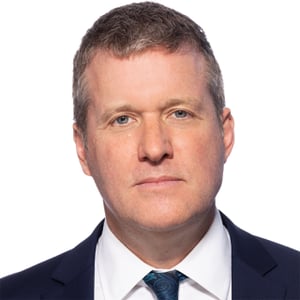
Senior Research Fellow, Border Security and Immigration Center, The Heritage Foundation
Simon Hankinson is a Senior Research Fellow in the Border Security and Immigration Center at The Heritage Foundation.
From 1999–2022, he was a Foreign Service Officer serving in India, Fiji, Ghana, Slovakia, Togo, Washington, D.C., Marseille, and Nairobi. Prior to entering the State Department, Hankinson worked as a lawyer in London, and then taught history, English, and drama at a private school in Miami.
Hankinson holds a master’s degree in modern history from St. Andrews, Scotland, a degree from the College of Law in London, and a master’s degree in international security affairs from the National Defense University in Washington, D.C.
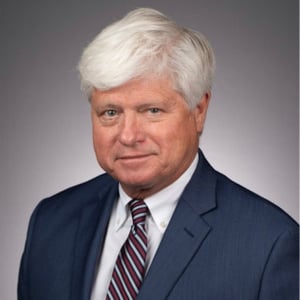
Immigration Law and Policy Fellow, Cornell Law School
Randel Johnson has worked on employment and immigration law and policy issues for over twenty-five years, bringing a broad perspective from working in the executive agencies, on Capitol Hill, and in the private sector. Deeply involved in past efforts on comprehensive immigration reform, including testifying in both the U.S. House of Representatives and the U.S. Senate, his experience includes working as the senior vice president at the U.S. Chamber of Commerce, labor counsel to the House Education and Labor Committee, and special assistant to the solicitor of labor at the U.S. Department of Labor. He was also a partner at the law firm of Seyfarth Shaw and most recently a judge on the Administrative Review Board at the Labor Department.
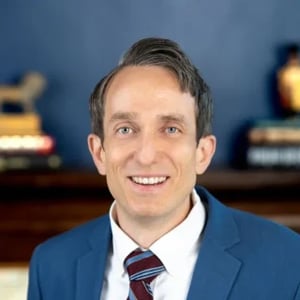
Senior Counsel, America First Legal Foundation
James Rogers is Senior Counsel at America First Legal Foundation, where he litigates in a number of areas, including border security, election integrity, parental rights, and administrative and constitutional law. Before joining America First Legal, from 2021 to 2022, he was Senior Litigation Counsel at the Solicitor General’s Office of the Arizona Attorney General’s Office. While there, he spearheaded lawsuits against the Biden Administration’s destructive open borders policies and its COVID19 vaccine mandates. From 2015 to 2021, James was a Foreign Service Officer at the U.S. Department of State, where he worked in the Office of the Assistant Legal Advisor for Consular Affairs, at the U.S. Consulate in Porto Alegre, Brazil, and at the U.S. Embassy in Windhoek, Namibia.
Prior to joining the Department of State, he was a commercial litigation partner at Osborn Maledon, a Phoenix-based firm with a #1 litigation ranking from Chambers and Partners. James earned a J.D. from Harvard Law School in 2009, an L.L.M. in International Law from the University of Cambridge in 2008, and a B.A., with honors, in International Studies from Brigham Young University in 2005. He is a sixth-generation Arizonan and lives in Mesa, Arizona, with his four children.
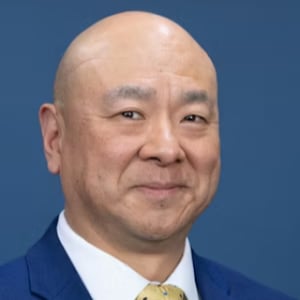
Vice President, Immigration Policy, U.S. Chamber of Commerce
Patrick Shen is vice president for Immigration Policy at the U.S. Chamber of Commerce. He helps Chamber member companies develop sensible, pro-growth immigration policies and advocates for such policies on our members’ behalf before Congress and the executive branch.
Before joining the Chamber, Shen was an immigration lawyer for over 30 years in the government and private sector. Most recently, he was a partner at a leading global business immigration law firm where he advised multinational companies on worksite compliance and represented employers from all sectors in government enforcement actions.
Earlier in his career, Shen was confirmed unanimously by the U.S. Senate as Special Counsel for Immigration-related Unfair Employment Practices in the Justice Department. He previously served as the policy and planning director of U.S. Immigration and Customs Enforcement (ICE) and the chief immigration counsel for the Senate Judiciary Committee.
Shen began his government career as a trial attorney for the former Immigration and Naturalization Service (INS), the U.S. Attorney’s Office for the Eastern District of New York, and the Justice Department’s Civil Division in Washington, D.C.
Shen received his undergraduate and law degrees from Brigham Young University. He was an adjunct professor at American University’s Washington College of Law and a sports reporter in Taiwan before attending law school. He became a certified emergency medical technician (EMT) shortly after September 11, 2001, and still volunteers with his local fire department in Maryland.

Partner, Holland & Hart
Chris provides strategic counsel when companies and individuals face government audits or investigations of their immigration practices. With nearly three decades of experience, he brings extensive experience and government relationships to help clients prepare for such audits and investigations and to defend them when regulators show up.
Often working with clients in times of crisis, Chris’s goal is to alleviate anxiety and put them at ease. Whether counseling a company about responding to a subpoena or defending it in a government investigation or raid, clients appreciate his pragmatic, straight forward counsel and clear plans of action.
Chris and his team work closely with in house legal and human resources departments to provide training and to help them develop effective compliance policies and internal audit and remediation plans. When significant legal concerns arise, he helps teams conduct internal investigations and formulate the best path forward to protect the interests of the company.
Chris also works with executives, operational leaders, and talent management teams to help position a company for success with effective, compliant global mobility programs. With expertise maneuvering within the complex US immigration process, he helps a wide range of companies secure employment-based non-immigrant (e.g., E, H, L, O, P, TN, etc.) and immigrant (first, second, and third preference categories) visas.
Chris also works with organizations seeking to do business outside of the United States, working closely with in-house and outside counsel to assess legal risks and develop solutions to overcome challenges with doing business abroad.
Chris’s fluency in Spanish is a value-add to clients.
Chris rejoins Holland & Hart from Ogletree Deakins where he was an equity shareholder and managed the firm’s Denver immigration practice.

Judge, U.S. Court of Appeals for the Third Circuit
Hon. Jennifer Mascott served as Associate Professor of Law and Director of the Separation of Powers Institute at The Catholic University of America’s Columbus School of Law before her appointment to the federal bench. On July 16, 2025, President Donald J. Trump nominated her to the U.S. Court of Appeals for the Third Circuit (Delaware), and she was confirmed on October 9, 2025.
Prior to her confirmation, Judge Mascott wrote extensively in administrative and constitutional law, statutory interpretation, and the separation of powers. Her scholarship—published in leading journals including the Stanford Law Review, Notre Dame Law Review, and Supreme Court Review—was cited by the U.S. Supreme Court and multiple federal courts. She also contributed Supreme Court commentary for NBC Universal.
Before joining Catholic Law, she was an Assistant Professor and Co-Director of The C. Boyden Gray Center at George Mason University’s Antonin Scalia Law School. In 2022 she became co-author of Beermann, Cass & Diver’s Administrative Law: Cases and Materials (9th ed.). In 2023 she received the Justice Joseph Story Award for excellence in scholarship, teaching, and advancing the rule of law.
Judge Mascott also served as a Council Member of the ABA’s Administrative Law Section and as a Public Member of the Administrative Conference of the United States. She frequently testified before Congress on executive power, regulatory reform, and judicial jurisdiction, and participated in multiple Supreme Court confirmation hearings.
From 2019 to 2021, she took leave from academia to serve as Deputy Assistant Attorney General in the Department of Justice’s Office of Legal Counsel and later as Associate Deputy Attorney General, where she argued federal cases and assisted with Justice Amy Coney Barrett’s confirmation. Earlier in her career, she clerked for Justice Clarence Thomas and for then-Judge Brett M. Kavanaugh on the D.C. Circuit.
Judge Mascott earned her J.D. summa cum laude from the George Washington University Law School and her B.A. from the same institution.
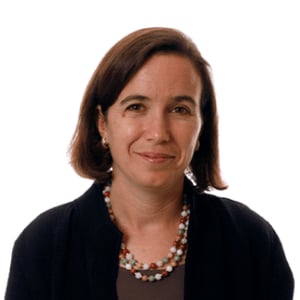
Joseph L. Sax Collegiate Professor of Law and Co-Director of the Environmental and Energy Law Program, University of Michigan Law School

Charles Evans Hughes Professor of Law, Columbia Law School
THOMAS W. MERRILL is the Charles Evans Hughes Professor of Law at Columbia Law School. He previously taught at Northwestern University School of Law and Yale Law School. He has undergraduate degrees from Grinnell College and Oxford University, where he studied as a Rhodes Scholar, and a law degree from the University of Chicago. He clerked on the D.C. Circuit (for Chief Judge David Bazelon) and the U.S. Supreme Court (for Justice Harry Blackmun). From 1987-1990 he served as Deputy Solicitor General, U.S. Department of Justice. Professor Merrill’s writings related to property include Property: Principles and Policies (Foundation Press Second Edition, 2012) (with Henry E. Smith); Property: The Oxford Introductions to U.S. Law (Oxford U. Press, 2010); Property: Takings (Foundation Press, 2002)(with David Dana); and numerous articles, including “The Economics of Public Use” (Cornell Law Review 1986); “The Landscape of Constitutional Property” (Virginia Law Review 2000); and “The Character of the Governmental Action” (Vermont Law Review 2012). He is a member of the American Academy of Arts and Sciences.
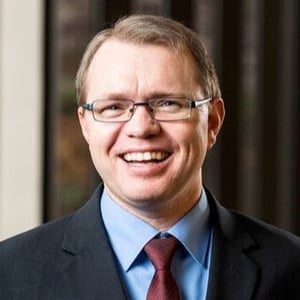
Charles I. Francis Professorship in Law, University of Texas at Austin School of Law
Professor Aaron Nielson lectures and writes in the areas of administrative law, civil procedure, and federal courts. Before joining the faculty, he served as Solicitor General of Texas and represented Texas before the U.S. Supreme Court and the Texas Supreme Court, as well as overseeing all appellate litigation for the State. Earlier in his career, he was a professor at Brigham Young University and an appellate and antitrust partner in the Washington, D.C. office of Kirkland & Ellis LLP. He also clerked for Justice Samuel A. Alito, Jr. of the U.S. Supreme Court, Judge Janice Rogers Brown of the U.S. Court of Appeals for the D.C. Circuit, and Judge Jerry E. Smith of the U.S. Court of Appeals for the Fifth Circuit.
As Solicitor General, Professor Nielson successfully defended against a First Amendment challenge Texas’s law requiring online pornographers to institute age verification. In 2020, the U.S. Supreme Court appointed him to defend the constitutionality of a federal agency. He currently serves as a Senior Fellow of the Administrative Conference of the United States after completing a six-year term as an appointed public member and chair of the Conference’s Administration & Management Committee.
Nielson’s research focuses on administrative law, federal litigation, and the separation of powers. He has published (or soon will publish) in the Harvard Law Review, Columbia Law Review, University of Chicago Law Review, University of Pennsylvania Law Review, Duke Law Journal, Georgetown Law Journal, Cornell Law Review, and Northwestern University Law Review, among others. Nielson has been recognized for teaching for teaching and scholarship and in 2021 received the Federalist Society’s Joseph Story Award, which recognizes a young academic for excellence in legal scholarship, a commitment to teaching, and a concern for students, and who has made a significant public impact in a manner that advances the rule of law in a free society. He is also an elected member of the American Law Institute.
Professor Nielson received his J.D. magna cum laude from Harvard Law School and an LL.M from the University of Cambridge, where he focused his studies on the institutions that regulate global competition and commerce. He received his undergraduate degree summa cum laude from the University of Pennsylvania, majoring in economics and political science.
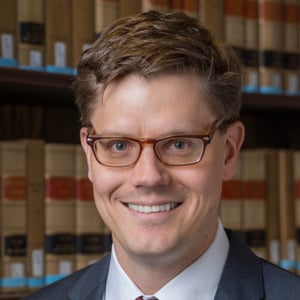
Associate Professor, University of Notre Dame Law School
Jeffrey Pojanowski joined the faculty and community of Notre Dame Law School in 2010. He teaches and writes in the areas of administrative law, jurisprudence, and torts. At present, his scholarship focuses on the legal theory of administrative action, as well as the philosophy and intellectual history of legal reasoning.
Prof. Pojanowski earned his A.B. in Public Policy with highest honors from Princeton University and graduated magna cum laude from Harvard Law School in 2004, where he was Articles Co-Chair for the Harvard Law Review. After law school, he served as a law clerk to then-Judge John Roberts on the United States Court of Appeals for the D.C. Circuit and then to Justice Anthony Kennedy on the Supreme Court of the United States. He then practiced law with Latham & Watkins in Washington, D.C., where he specialized in appellate litigation and administrative-law matters.

Judge, United States Court of Appeals, Sixth Circuit
Judge Readler earned his undergraduate and law degrees from the University of Michigan. After graduating, he served as a law clerk to Judge Alan Norris of the United States Court of Appeals for the Sixth Circuit. Judge Readler then began practicing law in the Columbus office of the international law firm Jones Day, eventually spending ten years as a partner in the firm’s Issues and Appeals Practice Group. While at Jones Day, Judge Readler appeared in state and federal trial and appellate courts around the country, most frequently the Supreme Court of Ohio and the Sixth Circuit. Judge Readler also successfully argued before the United States Supreme Court in McQuiggin v. Perkins on behalf of an inmate claiming actual innocence. His other pro bono representations include representing capital defendants before the Tenth Circuit and the Supreme Court of Ohio, as well as representing defendants sentenced to life in prison before the Sixth Circuit. While at Jones Day, Judge Readler traveled to Nairobi with Lawyers Without Borders to train Kenyan lawyers in prosecuting domestic violence cases, and he was also a recipient of the American Marshall Memorial Fellowship awarded by the German Marshall Fund of the United States. Following his career in private practice, Judge Readler served as Acting Assistant Attorney General for the Civil Division of the United States Department of Justice from 2017 to 2019. In that role, Judge Readler led and supervised over 1,000 lawyers in the Department’s largest litigating division, briefing and arguing several cases on behalf of the United States in federal courts across the country, including high-profile cases significant to the Administration and the Department. In March 2019, Judge Readler was confirmed to serve as a Circuit Judge on the Sixth Circuit. He resides in Columbus.
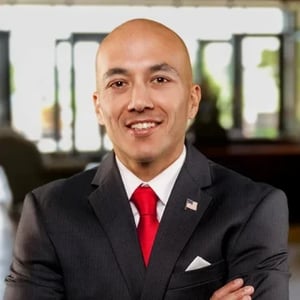
Executive Director of External Affairs and Senior Counsel, First Liberty Institute
Mike Berry serves as Executive Director of External Affairs and Senior Counsel at First Liberty Institute. Mike returned to First Liberty after serving as Chief Counsel to United States Senator Ted Cruz.
Prior to working on the Hill, Mike spent many years in public interest litigation including with First Liberty from 2013-2024. Prior to that, Mike served for seven years as an attorney with the U.S. Marine Corps, leaving active duty in 2013. Among his numerous positions within the Marine Corps, Mike deployed to Afghanistan in 2008 and he served as an Adjunct Professor of Law at the United States Naval Academy. Mike continues to proudly serve our nation as a member of the Marine Corps Reserve.
Mike earned his bachelor’s degree from Texas A&M University, and he earned his law degree from The Ohio State University.

Anna Bower is a senior editor at Lawfare. Anna holds a Bachelor of Laws from the University of Cambridge and a Juris Doctorate from Harvard Law School. She joined Lawfare as a recipient of Harvard’s Sumner M. Redstone Fellowship in Public Service. Prior to law school, Anna worked as a judicial assistant for a Superior Court judge in the Northeastern Judicial Circuit of Georgia. She also previously worked as a Fulbright Fellow at Anadolu University in Eskişehir, Turkey. A native of Georgia, Anna is based in Atlanta and Washington, D.C.
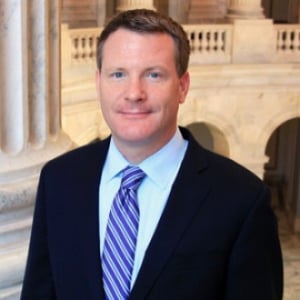
Founder, Article III Project
Mike Davis, the former Chief Counsel for Nominations to Senate Judiciary Chairman Chuck Grassley, is the founder and president of the Article III Project (A3P). A3P defends constitutionalist judges and the rule of law. Davis also leads the Internet Accountability Project (IAP), an advocacy organization fighting to rein in Big Tech, along with the Unsilenced Majority, an organization dedicated to opposing Cancel Culture and fighting back against the woke mob and their enablers.
As Chief Counsel for Nominations, Davis advised Chairman Grassley and other senators on the confirmation of federal judges and senior Executive Branch appointees, serving as staff lead for 30 hearings and 41 markup meetings. He oversaw the floor votes for 278 nominees, including the confirmations of Justice Brett Kavanaugh and the record number of circuit judges confirmed during President Trump’s first two years in office.
Davis has served in all three branches of the federal government, including for President George W. Bush, the Justice Department, House Speaker Newt Gingrich, and current Supreme Court Justice Neil Gorsuch. Davis also led the outside support team for Justice Gorsuch’s successful confirmation to the Supreme Court.
Before returning to public service in 2017, Davis spent nearly ten years as a civil litigator in Denver, working at one of the largest law firms in the world and one of the top-ranked law firms in Colorado before running his own law practice for more than five years.
Davis is from Des Moines, Iowa. He received his Bachelor of Arts in 2000 and Juris Doctor in 2004, both from the University of Iowa. In 2017, Davis received Iowa Law’s “Emerging Leader Award.” Davis also serves on the University of Iowa Political Science Advisory Board.
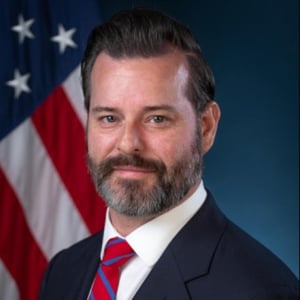
United States Attorney, Southern District of Florida
Jason A. Reding Quiñones was sworn in on August 13, 2025, as the United States Attorney for the Southern District of Florida, following his nomination by President Donald J. Trump and confirmation by the United States Senate. He is the first U.S. Attorney confirmed during President Trump’s second administration and was administered the oath of office by Attorney General Pamela Bondi.
Prior to his appointment, U.S. Attorney Reding Quiñones served as a trial judge in the Eleventh Judicial Circuit of Florida, where he presided over both civil and criminal domestic violence cases. His previous federal service includes work as a national security official in the Department of Justice’s National Security Division, where he focused on counterterrorism matters and intelligence operations, and as a federal prosecutor in both the Eastern District of Virginia and the Southern District of Florida, where he tried both civil and criminal cases on behalf of the United States.
A decorated veteran of more than 22 years of military service, U.S. Attorney Reding Quiñones has served in both the United States Army and the United States Air Force as a cavalry scout, infantry officer, logistics officer, and judge advocate. He continues to serve as a reserve lieutenant colonel, providing legal counsel on national security and counterterrorism matters to the Commander, U.S. Central Command.
U.S. Attorney Reding Quiñones earned a Bachelor of Arts in Anthropology, with a minor in Military Sciences, from the University of Florida, and a Juris Doctor from Florida International University College of Law.
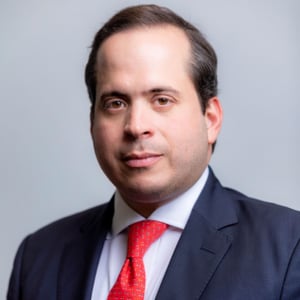
Partner, Continental PLLC
Jesus M. Suarez is a Chambers USA ranked trial lawyer who excels at counseling clients through challenging legal situations. Jesus has broad experience in matters involving complex legal and financial disputes, including controversies involving bankruptcies, civil and criminal litigation, and related governmental inquiries. Jesus often represents parties in litigation matters arising from business disputes, business reorganizations, liquidations, Ponzi schemes, and other fraudulent and insolvent enterprises. He also counsels clients before various municipal, state and federal governments and agencies.
In addition to being recognized by Chambers & Partners USA in the Florida: Bankruptcy Litigation category, he is AV rated by Martindale-Hubbell, and has been recognized as a Rising Star by Florida Super Lawyers and a Top Up and Comer by Florida Trend. He is a graduate of the National Institute of Trial Advocacy (National Session).
Jesus is a member of the Florida Bar and admitted to practice before the U.S. District Court and U.S. Bankruptcy Court for the Southern and Middle Districts of Florida. He received his Juris Doctor from the University of Florida College of Law and inducted into Florida Blue Key.
Jesus earned his Bachelor of Business Administration, cum laude, from Loyola University Chicago, where he majored in finance and international business. Jesus is a member of the Belen Jesuit Alumni Association and the Federalist Society for Law and Public Policy Studies.
Jesus is the 2024-2025 Chair of the Eleventh Circuit Judicial Nominating Commission. He was appointed to the JNC by Governor Ron DeSantis in 2021.

Former President & CEO, The Federalist Society for Law and Public Policy Studies
Eugene B. Meyer, former President and CEO of the Federalist Society, has served as Executive Director, CEO, and/or President of the organization for more than 40 years. He is responsible for shepherding the organization from a small group of law students to a community of 90,000 lawyers, law students, academics, judges, and others interested in the rule of law. The Society now includes a Student Chapter at nearly every ABA-accredited law school in the country and Lawyers Chapters in 220 major cities across the nation. Gene earned his B.A. in history at Yale in 1975 and his M.A. in political science from the London School of Economics in 1976. Gene currently serves on the boards of the U.S. Chess Center, the Holman Foundation, the Sarah Scaife Foundation, and the advisory board of the Adam Smith Society. He holds the title of International Chess Master.
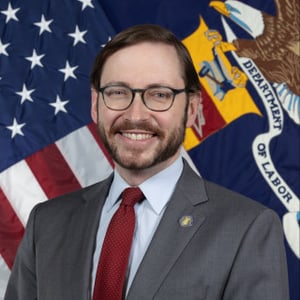
Solicitor, U.S. Department of Labor
Jonathan Berry is Solicitor at the U.S. Department of Labor, in service to President Trump’s agenda to put American workers first. He leads the Department’s lawyers in advising the Secretary and agency leadership on all aspects of law and in representing the Department in court. He was previously managing partner at Boyden Gray PLLC, where he provided strategic counsel and litigated on issues at the intersection of law, politics, and public policy. Earlier, he headed the regulatory office at Labor, and also served at the Department of Justice, in the first Trump Administration. Mr. Berry served as a law clerk to Judge Jerry E. Smith of the United States Court of Appeals for the Fifth Circuit, and to Associate Justice Samuel A. Alito, Jr., of the Supreme Court of the United States.
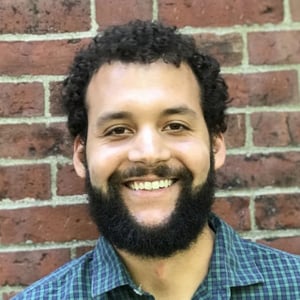
Assistant Professor of Environmental Studies, Bates College
Tyler Austin Harper is a literary scholar working at the intersection of the history of science, philosophy, and environmental studies. His book, “The Paranoid Animal: Human Extinction Before the Bomb,” is under contract with Princeton University Press. It examines how British literary figures, scientists, and social theorists engaged with the concept of human extinction prior to the nuclear age. Specifically, his work argues that the period between 1800 and 1945 witnessed a shift from fatalistic visions of the end of humanity—dominant during the Romantic Era and influenced by theories of geological catastrophism—toward a new, post-Darwinian conception of human extinction in which threats to the species were reimagined as risks that could be mitigated by technological intervention, prefiguring current debates about AI, nuclear war, and climate change. His scholarly work has been published in Modern Language Quarterly, Science Fiction Studies, Syndicate, and Paradoxa.
Harper is a contributing writer at The Atlantic. His public writing on politics, culture, race, and technology has appeared in The Atlantic, The New York Times, The Washington Post, The Boston Globe, Jacobin, and other outlets.

Senior Scholar, Manhattan Institute; Professor of Law Emerita, University of San Diego
Gail Heriot is a Senior Scholar at the Manhattan Institute, a Professor of Law Emerita at the University of San Diego and the Chairman of the Board of the American Civil Rights Project. She served on the U.S. Commission on Civil Rights for 18 years. Her new book is entitled “Why We Walk on Eggshells: How Our Civil Rights Laws Stifle Our Public Discourse.”

John Paul Stevens Professor of Law, Northwestern University School of Law
Andrew Koppelman is John Paul Stevens Professor of Law, Professor (by courtesy) of Political Science, and Philosophy Department Affiliated Faculty at Northwestern University. He received the Walder Award for Research Excellence from Northwestern, the Hart-Dworkin award in legal philosophy from the Association of American Law Schools, and the Edward S. Corwin Prize from the American Political Science Association. His scholarship focuses on issues at the intersection of law and political philosophy. He has written more than 100 scholarly articles and eight books, most recently Burning Down the House: How Libertarian Philosophy Was Corrupted by Delusion and Greed, (St. Martin’s Press). His column appears regularly at The Hill. You can find his recent work at andrewkoppelman.com.
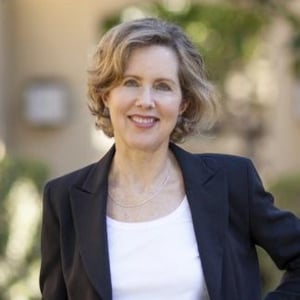
Thomas W. Smith Fellow; Contributing Editor, City Journal, Manhattan Institute
Heather Mac Donald is the Thomas W. Smith Fellow at the Manhattan Institute, a contributing editor of City Journal, and a New York Times bestselling author. She is a recipient of the 2005 Bradley Prize. Mac Donald’s work at City Journal has covered a range of topics, including higher education, immigration, policing, homelessness and homeless advocacy, criminal-justice reform, and race relations. Her writing has appeared in the Wall Street Journal, Washington Post, New York Times, Los Angeles Times, The New Republic, and The New Criterion. Mac Donald's newest book, The Diversity Delusion: How Race and Gender Pandering Corrupt the University and Undermine Our Culture (2018), argues that toxic ideas first spread by higher education have undermined humanistic values, fueled intolerance, and widened divisions in our larger culture.
Mac Donald’s The War on Cops (2016), a New York Times bestseller, warns that raced-based attacks on the criminal-justice system, from the White House on down, are eroding the authority of law and putting lives at risk. Other previous works include The Burden of Bad Ideas (2001), a collection of Mac Donald’s City Journal essays, details the effects of the 1960s counterculture’s destructive march through America’s institutions. In The Immigration Solution: A Better Plan than Today’s (2007), coauthored with Victor Davis Hanson and Steven Malanga, she chronicles the effects of broken immigration laws and proposes a practical solution to securing the country’s porous borders. In Are Cops Racist? (2010), another City Journal anthology, Mac Donald investigates the workings of the police, the controversy over so-called racial profiling, and the anti-profiling lobby’s harmful effects on black Americans.
A nonpracticing lawyer, Mac Donald clerked for the Honorable Stephen Reinhardt, U.S. Court of Appeals for the Ninth Circuit, and was an attorney-advisor in the Office of the General Counsel of the U.S. Environmental Protection Agency and a volunteer with the Natural Resources Defense Council. She has frequently testified before U.S. House and Senate Committees. In 1998, Mac Donald was appointed to Mayor Rudolph Giuliani’s task force on the City University of New York. She has received numerous awards for her writing:
A frequent guest on Fox News and other TV and radio programs, Mac Donald holds a B.A. in English from Yale University, graduating with a Mellon Fellowship to Cambridge University, where she earned an M.A. in English and studied in Italy through a Clare College study grant. She holds a J.D. from Stanford University Law School.
At the Criminal Justice Legal Foundation's 2018 annual meeting in downtown Los Angeles, U.S. Attorney General Jeff Sessions called Mac Donald, “the greatest thinker on criminal justice in America today.”

Judge, United States Court of Appeals, Third Circuit
Judge Paul Matey was appointed to the United States Court of Appeals for the Third Circuit in 2019 by President Trump.
Before his judicial service, Judge Matey was a partner at Lowenstein Sandler in New Jersey where he practiced complex commercial litigation and criminal defense. Earlier, Judge Matey was the Senior Vice President, General Counsel and Secretary for University Hospital Newark, an academic medical center and teaching hospital.
He also served as the Deputy Chief Counsel to Governor Chris Christie, and as an Assistant United States Attorney in the District of New Jersey, where he was awarded the Justice Department’s Director’s Award for Superior Performance. He also practiced at the Washington D.C. firm of Kellogg, Hansen, Todd, Figel & Frederick, and served as a law clerk to judges on the United States Court of Appeals for the Third Circuit and the United States District Court for the District of New Jersey.
He earned his bachelor’s degree from the University of Scranton, a Jesuit University, in 1993, and his juris doctorate, summa cum laude, from Seton Hall University School of Law in 2001, where he served as Editor-in-Chief of the Seton Hall Law Review.
In 2019, Judge Matey was elected to membership in the American Law Institute and, since 2020, has lectured on administrative law and the American legal history at Seton Hall.
Senior Research Fellow (Wolfson College); Fellow (Lauterpacht Centre for International Law), Faculty of Law, University of Cambridge
Over twenty years' experience as legal adviser, advocate, and strategist in complex multi-jurisdiction matters across several substantive fields, including public international law, international investment protection, trade law, and law of the sea. Academic writings on international arbitration, international organizations, use of force, State immunity, State succession, recognition of States, artificial intelligence, law & technology.

Stevenson Bernard Professor, George Washington University Law School
The Honorable F. Scott Kieff is the Stevenson Bernard Professor at George Washington University Law School and a Visiting Fellow at Stanford University’s Hoover Institution.
He served as Commissioner of the U.S. International Trade Commission from 2013-2017. He also served during the Bush, Obama, and Trump Administrations in the part-time leadership of the national security defense-intelligence community.
He was previously a professor of law and medicine at Washington University in Saint Louis and a Senior Fellow at Hoover. A former law clerk to U.S. Circuit Judge Giles S. Rich, he is a graduate of Penn Law School and MIT, where he studied molecular biology and microeconomics. He was elected to the European Academy of Sciences and Arts in 2012 and the Academia Europaea in 2024.
His private sector work through Kieff Strategies LLC (www.kieffstrategies.com) provides neutral services including mediation and compliance, and expert services including crisis management, advising, and testimony.

Former Chief Judge, United States Court of Appeals for the Federal Circuit
Judge Michel served for more than 22 years on the Federal Circuit, retiring on May 31, 2010. From December 25, 2004 until his retirement, he also discharged the duties of Chief Judge of this national court, serving simultaneously on the U.S. Judicial Conference -- the Judiciary's governing body -- and by appointment of the Chief Justice on its seven-judge Executive Committee.
He judged several thousand appeals and authored more than 800 opinions, one third concerning intellectual property law. Intellectual Asset Management magazine inducted him into its Hall of Fame and he was designated one of the 50 most influential leaders in intellectual property law in the world. His contributions were also recognized by lifetime achievement and similar awards by the American Intellectual Property Law Association (AIPLA); Intellectual Property Owners Education Foundation (IPO); the American Bar Association's Intellectual Property Section; Managing Intellectual Property magazine; the Sedona Conference; the Patent and Trademark Office Society (PTOS); the New York, Chicago, Philadelphia, and Los Angeles Intellectual Property Law Associations; and the William C. Connor, the Giles S. Rich, and the Richard Linn Intellectual Property American Inns of Court. In 2010 the Los Angeles IP Inn was renamed in his honor as the Paul R. Michel IP Inn.
Judge Michel received the Jefferson Medal, the Eli Whitney Award, and the Katz-Kiley Prize as well as Honorary Doctor of Law degrees from the Catholic University of America and the John Marshall Law School. He is a lifetime Member of Honore of FICPI, the international association of private practitioners of intellectual property law. Williams College granted him the Kellogg Award for "outstanding leadership in law and public service."
Judge Michel has written numerous articles on patent law and advocacy, taught related courses and master classes at George Washington University, the University of Akron, and John Marshall law schools, serving as well on their IP advisory boards and on counterpart boards at the universities of California (Berkley), Washington, and Maryland. He co-authored a casebook, Patent Litigation and Strategy (West, 1999) and an August 2010 editorial in the New York Times on strengthening the patent system to promote prosperity and create new jobs.
A frequent speaker at conferences and law schools during his judicial tenure and since, he retired from a lifetime appointment to be free to speak out on the national need for better patent policy and protection of intellectual property and the vital, unmet resource needs of the courts, the PTO, the International Trade Commission, and other IP-related agencies. He was appointed Distinguished Scholar in Residence by IPO, following his retirement. Judge Michel also consults for law firms and their clients in intellectual property litigations, conducting moot courts, mock trials, case evaluations, editing briefs, advising on strategy and providing mediation and arbitration services.
Senior Research Fellow (Wolfson College); Fellow (Lauterpacht Centre for International Law), Faculty of Law, University of Cambridge
Over twenty years' experience as legal adviser, advocate, and strategist in complex multi-jurisdiction matters across several substantive fields, including public international law, international investment protection, trade law, and law of the sea. Academic writings on international arbitration, international organizations, use of force, State immunity, State succession, recognition of States, artificial intelligence, law & technology.
Stevenson Bernard Professor, George Washington University Law School
The Honorable F. Scott Kieff is the Stevenson Bernard Professor at George Washington University Law School and a Visiting Fellow at Stanford University’s Hoover Institution.
He served as Commissioner of the U.S. International Trade Commission from 2013-2017. He also served during the Bush, Obama, and Trump Administrations in the part-time leadership of the national security defense-intelligence community.
He was previously a professor of law and medicine at Washington University in Saint Louis and a Senior Fellow at Hoover. A former law clerk to U.S. Circuit Judge Giles S. Rich, he is a graduate of Penn Law School and MIT, where he studied molecular biology and microeconomics. He was elected to the European Academy of Sciences and Arts in 2012 and the Academia Europaea in 2024.
His private sector work through Kieff Strategies LLC (www.kieffstrategies.com) provides neutral services including mediation and compliance, and expert services including crisis management, advising, and testimony.
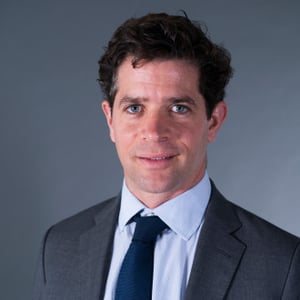
Senior Fellow, Brookings Institution
Dr. Meltzer is a senior fellow at the Brookings Institution in Washington D.C., where he is an expert on international trade law and policy issues, including digital trade, emerging technologies and AI. At Brookings, Meltzer leads the Digital Economy and Trade Project and co-leads the Forum for Cooperation on AI. Meltzer has testified before the U.S. Congress, the U.S. International Trade Commission and the European Parliament on trade issues. He has been an expert witness in litigation on data flows and privacy issues in the EU and a consultant to the World Bank on trade and privacy matters. He is also a member of Australia’s National Data Advisory Council. Meltzer teaches digital trade law at Melbourne University Law School and at the University of Toronto Law School, where he is an adjunct professor. Meltzer also teaches ecommerce and digital trade at the UK Foreign, Commonwealth and Development Office diplomatic academy. Before joining Brookings, Meltzer was posted as a diplomat at the Australian Embassy in Washington D.C. and prior to that was an international trade negotiator in Australia’s Department of Foreign Affairs and Trade. Meltzer has appeared in print and news media, including the Economist, the New York Times, the Washington Post, CNN, Bloomberg, MSNBC, CBS, Fox, the Asahi Shimbun and China Daily. Meltzer holds an S.J.D. and LL.M. from the University of Michigan Law School in Ann Arbor and law and commerce degrees from Monash University in Melbourne, Australia.
CoFounder, RightsClick
Steven’s extensive background in IP law and policy began as an attorney for the U.S. Senate Judiciary Committee, after which, he served as senior counsel for Policy and International Affairs at the U.S. Copyright Office and then as Chief Intellectual Property Counsel for the Global Intellectual Property Center of the U.S. Chamber of Commerce. Before co-founding RightsClick, he started the IP consultancy Sentinel Worldwide, and teaches copyright law at George Washington University Law School.
Senior Research Fellow (Wolfson College); Fellow (Lauterpacht Centre for International Law), Faculty of Law, University of Cambridge
Over twenty years' experience as legal adviser, advocate, and strategist in complex multi-jurisdiction matters across several substantive fields, including public international law, international investment protection, trade law, and law of the sea. Academic writings on international arbitration, international organizations, use of force, State immunity, State succession, recognition of States, artificial intelligence, law & technology.
Stevenson Bernard Professor, George Washington University Law School
The Honorable F. Scott Kieff is the Stevenson Bernard Professor at George Washington University Law School and a Visiting Fellow at Stanford University’s Hoover Institution.
He served as Commissioner of the U.S. International Trade Commission from 2013-2017. He also served during the Bush, Obama, and Trump Administrations in the part-time leadership of the national security defense-intelligence community.
He was previously a professor of law and medicine at Washington University in Saint Louis and a Senior Fellow at Hoover. A former law clerk to U.S. Circuit Judge Giles S. Rich, he is a graduate of Penn Law School and MIT, where he studied molecular biology and microeconomics. He was elected to the European Academy of Sciences and Arts in 2012 and the Academia Europaea in 2024.
His private sector work through Kieff Strategies LLC (www.kieffstrategies.com) provides neutral services including mediation and compliance, and expert services including crisis management, advising, and testimony.
Former Chief Judge, United States Court of Appeals for the Federal Circuit
Judge Michel served for more than 22 years on the Federal Circuit, retiring on May 31, 2010. From December 25, 2004 until his retirement, he also discharged the duties of Chief Judge of this national court, serving simultaneously on the U.S. Judicial Conference -- the Judiciary's governing body -- and by appointment of the Chief Justice on its seven-judge Executive Committee.
He judged several thousand appeals and authored more than 800 opinions, one third concerning intellectual property law. Intellectual Asset Management magazine inducted him into its Hall of Fame and he was designated one of the 50 most influential leaders in intellectual property law in the world. His contributions were also recognized by lifetime achievement and similar awards by the American Intellectual Property Law Association (AIPLA); Intellectual Property Owners Education Foundation (IPO); the American Bar Association's Intellectual Property Section; Managing Intellectual Property magazine; the Sedona Conference; the Patent and Trademark Office Society (PTOS); the New York, Chicago, Philadelphia, and Los Angeles Intellectual Property Law Associations; and the William C. Connor, the Giles S. Rich, and the Richard Linn Intellectual Property American Inns of Court. In 2010 the Los Angeles IP Inn was renamed in his honor as the Paul R. Michel IP Inn.
Judge Michel received the Jefferson Medal, the Eli Whitney Award, and the Katz-Kiley Prize as well as Honorary Doctor of Law degrees from the Catholic University of America and the John Marshall Law School. He is a lifetime Member of Honore of FICPI, the international association of private practitioners of intellectual property law. Williams College granted him the Kellogg Award for "outstanding leadership in law and public service."
Judge Michel has written numerous articles on patent law and advocacy, taught related courses and master classes at George Washington University, the University of Akron, and John Marshall law schools, serving as well on their IP advisory boards and on counterpart boards at the universities of California (Berkley), Washington, and Maryland. He co-authored a casebook, Patent Litigation and Strategy (West, 1999) and an August 2010 editorial in the New York Times on strengthening the patent system to promote prosperity and create new jobs.
A frequent speaker at conferences and law schools during his judicial tenure and since, he retired from a lifetime appointment to be free to speak out on the national need for better patent policy and protection of intellectual property and the vital, unmet resource needs of the courts, the PTO, the International Trade Commission, and other IP-related agencies. He was appointed Distinguished Scholar in Residence by IPO, following his retirement. Judge Michel also consults for law firms and their clients in intellectual property litigations, conducting moot courts, mock trials, case evaluations, editing briefs, advising on strategy and providing mediation and arbitration services.
Senior Research Fellow (Wolfson College); Fellow (Lauterpacht Centre for International Law), Faculty of Law, University of Cambridge
Over twenty years' experience as legal adviser, advocate, and strategist in complex multi-jurisdiction matters across several substantive fields, including public international law, international investment protection, trade law, and law of the sea. Academic writings on international arbitration, international organizations, use of force, State immunity, State succession, recognition of States, artificial intelligence, law & technology.
Stevenson Bernard Professor, George Washington University Law School
The Honorable F. Scott Kieff is the Stevenson Bernard Professor at George Washington University Law School and a Visiting Fellow at Stanford University’s Hoover Institution.
He served as Commissioner of the U.S. International Trade Commission from 2013-2017. He also served during the Bush, Obama, and Trump Administrations in the part-time leadership of the national security defense-intelligence community.
He was previously a professor of law and medicine at Washington University in Saint Louis and a Senior Fellow at Hoover. A former law clerk to U.S. Circuit Judge Giles S. Rich, he is a graduate of Penn Law School and MIT, where he studied molecular biology and microeconomics. He was elected to the European Academy of Sciences and Arts in 2012 and the Academia Europaea in 2024.
His private sector work through Kieff Strategies LLC (www.kieffstrategies.com) provides neutral services including mediation and compliance, and expert services including crisis management, advising, and testimony.
Senior Fellow, Brookings Institution
Dr. Meltzer is a senior fellow at the Brookings Institution in Washington D.C., where he is an expert on international trade law and policy issues, including digital trade, emerging technologies and AI. At Brookings, Meltzer leads the Digital Economy and Trade Project and co-leads the Forum for Cooperation on AI. Meltzer has testified before the U.S. Congress, the U.S. International Trade Commission and the European Parliament on trade issues. He has been an expert witness in litigation on data flows and privacy issues in the EU and a consultant to the World Bank on trade and privacy matters. He is also a member of Australia’s National Data Advisory Council. Meltzer teaches digital trade law at Melbourne University Law School and at the University of Toronto Law School, where he is an adjunct professor. Meltzer also teaches ecommerce and digital trade at the UK Foreign, Commonwealth and Development Office diplomatic academy. Before joining Brookings, Meltzer was posted as a diplomat at the Australian Embassy in Washington D.C. and prior to that was an international trade negotiator in Australia’s Department of Foreign Affairs and Trade. Meltzer has appeared in print and news media, including the Economist, the New York Times, the Washington Post, CNN, Bloomberg, MSNBC, CBS, Fox, the Asahi Shimbun and China Daily. Meltzer holds an S.J.D. and LL.M. from the University of Michigan Law School in Ann Arbor and law and commerce degrees from Monash University in Melbourne, Australia.
CoFounder, RightsClick
Steven’s extensive background in IP law and policy began as an attorney for the U.S. Senate Judiciary Committee, after which, he served as senior counsel for Policy and International Affairs at the U.S. Copyright Office and then as Chief Intellectual Property Counsel for the Global Intellectual Property Center of the U.S. Chamber of Commerce. Before co-founding RightsClick, he started the IP consultancy Sentinel Worldwide, and teaches copyright law at George Washington University Law School.

What are the Challenges That Immigration Policy Poses for Businesses?
Simon Hankinson, Randel K. Johnson, James Rogers, Patrick Shen, Chris L. Thomas
Immigration policy has significant impacts on businesses, and the debate over wise immigration policy includes...
Panel I: How We Got Here – The Supreme Court’s “Anti-Administrativist” Turn?
Jenn L. Mascott, Nina A. Mendelson, Thomas W. Merrill, Aaron Nielson, Jeffrey Pojanowski, Chad A. Readler
Featuring: Prof. Jeffrey Pojanowski, Biolchini Family Professor of Law, Notre Dame Law School Prof. Jennifer...
Panel 4: Modern Lawfare and the American Democracy
Michael D. Berry, Anna Bower, Mike Davis, Jason A. Reding Quiñones, Jesus Manuel Suarez
The courtroom has emerged as the new battleground for political wars. Increasingly, political candidates are...
A Tribute to President and CEO Eugene Meyer
Eugene B. Meyer
Guests gathered at the 2024 National Lawyers Convention to honor President and CEO Eugene B....
Showcase Panel I: The Age of Group Identity: What is it? How Did We Get Here? How Do We Move Beyond It?
Jonathan Berry, Tyler Austin Harper, Gail L. Heriot, Andrew Koppelman, Heather Mac Donald, Paul B. Matey
The generation of political leaders that produced the landmark legislation of the Civil Rights Era...
A Response to: Ten Years On: The America Invents Act and the role of the Patent Trial and Appeal Board in resolving patent disputes
Thomas D. Grant, F. Scott Kieff, Paul Redmond Michel
Join us on July 27 to hear three experts give a response to our April...
A Response to: Ten Years On: The America Invents Act and the role of the Patent Trial and Appeal Board in resolving patent disputes
TeleforumTrade and Its Cross-Cutting Equities: New Horizons, New Challenges
Intellectual Property and International & National Security Law Practice Groups
Trade and Its Cross-Cutting Equities: New Horizons, New Challenges
Thomas D. Grant, F. Scott Kieff, Joshua Meltzer, Steven M. Tepp
The Trump Administration re-focused U.S. trade policy on the interests of several sectors of the...
2021 Executive Branch Review Week
The Next Four Years