

Associate, Consovoy McCarthy PLLC
Ms. Bates assists clients with a variety of litigation and appellate matters that encompass constitutional law, administrative law, and commercial litigation. Before joining the firm, Ms. Bates was a law clerk to Judge Kyle Duncan of the U.S. Court of Appeals for the Fifth Circuit. She previously served as a Legal Policy Analyst at the Heritage Foundation, where she researched and wrote about the courts, judicial nominations, and various constitutional issues. She also co-hosted Heritage’s SCOTUS 101 podcast. She earned her B.A. magna cum laude in Politics from Hillsdale College, and her J.D. from the Antonin Scalia Law School at George Mason University. Ms. Bates is a member of the Virginia Bar.

Judge, United States Court of Appeals, Fifth Circuit
Judge Duncan received his B.A. from Louisiana State University in 1994, his J.D. from the Paul M. Hebert Law Center at Louisiana State University in 1997, and his LL.M. from Columbia Law School in 2004.
After graduating from law school, he clerked for Louisiana-based Circuit Judge John Malcolm Duhé Jr. of the United States Court of Appeals for the Fifth Circuit.
From 2008–2012, Duncan served as Appellate Chief for Louisiana's Attorney General's office. From 2012–2014, he served as general counsel of the Becket Fund for Religious Liberty. From 2004-2008, he was an assistant professor of law at the University of Mississippi School of Law.
Before becoming a judge, Duncan practiced at the Washington, D.C. firm of Schaerr Duncan LLP, where he was a founding partner. He was appointed by President Trump to the United States Court of Appeals for the Fifth Circuit on May 1, 2018.
General Counsel, U.S. Department of Homeland Security
James H. Percival graduated from the University of California, Santa Barbara and the University of Virginia School of Law. Before his work at the Department of Homeland Security, he was Chief of Staff to then Florida Attorney General Ashley Moody. James previously served in a number of other roles for Attorney General Moody and as Senior Counsel at the U.S. Department of Justice. Before beginning his public service, James worked for a global law firm and clerked for Judge Emmett Ripley Cox of the U.S. Court of Appeals for the Eleventh Circuit. In between college and law school, James worked as a substitute teacher and as a missionary in South America.

Senior Fellow and Director of Constitutional Studies, Manhattan Institute
Ilya Shapiro is a senior fellow and director of constitutional studies at the Manhattan Institute and a contributing editor of City Journal. Previously he was executive director and senior lecturer at the Georgetown Center for the Constitution, and before that a vice president of the Cato Institute.
Shapiro is the author of Lawless: The Miseducation of America’s Elites (2025) and Supreme Disorder: Judicial Nominations and the Politics of America’s Highest Court (2020), coauthor of Religious Liberties for Corporations? (2014), and editor of 11 volumes of the Cato Supreme Court Review (2008-18). He has contributed to a variety of academic, popular, and professional publications, including the Wall Street Journal, Harvard Journal of Law & Public Policy, Washington Post, Los Angeles Times, USA Today, National Review, and Newsweek. He also regularly provides commentary for various media outlets, writes the Shapiro’s Gavel newsletter on Substack, and once appeared on the Colbert Report.
Shapiro has testified many times before Congress and state legislatures and has filed more than 500 amicus curiae “friend of the court” briefs in the Supreme Court. He lectures regularly on behalf of the Federalist Society, is a member of the board of fellows of the Jewish Policy Center, was an inaugural Washington Fellow at the National Review Institute, and has been an adjunct law professor at the George Washington University and University of Mississippi. He is also the chairman of the board of advisers of the Mississippi Justice Institute, a barrister in the Edward Coke Appellate Inn of Court, and a former member of the Virginia Advisory Committee to the U.S. Commission on Civil Rights.
Earlier in his career, Shapiro was a special assistant/adviser to the Multi-National Force in Iraq on rule-of-law issues and practiced at Patton Boggs and Cleary Gottlieb. Before entering private practice, he clerked for Judge E. Grady Jolly of the U.S. Court of Appeals for the Fifth Circuit. He holds an AB from Princeton University, an MSc from the London School of Economics, and a JD from the University of Chicago Law School.
Nonresident Senior Fellow, American Enterprise Institute
Jim Harper is a nonresident senior fellow at the American Enterprise Institute (AEI), where he focuses on privacy issues, and select legal and constitutional law issues.
A lawyer by training, Mr. Harper has served as counsel for the Subcommittee on Commercial, and Administrative Law of the US House Committee on the Judiciary and as counsel for the Senate Committee on Government Affairs. More recently, he worked at the Competitive Enterprise Institute and the Cato Institute, where he wrote on the intersection of business, technology, and public policy, including privacy, surveillance, data security, telecommunications, and cryptocurrencies. He also served as global policy counsel for the Bitcoin Foundation. Mr. Harper was a founding member of the Department of Homeland Security’s Data Privacy and Integrity Advisory Committee. Early in his post-Hill career, he represented companies such as PayPal and Verisign before Congress.
Mr. Harper is the co-editor of “Terrorizing Ourselves: Why U.S. Counterterrorism Policy Is Failing and How to Fix It” (Cato Institute, 2010) and the author of “Identity Crisis: How Identification Is Overused and Misunderstood” (Cato Institute, 2006). He has written several amicus briefs in Fourth Amendment cases before the U.S. Supreme Court and has published scholarly articles in a variety of law journals. In the popular press, Mr. Harper has been published in The New York Times and The Wall Street Journal, among many other publications.
Mr. Harper has a law degree from the U.C. Hastings College of the Law, where he was editor-in-chief of the Hastings Constitutional Law Quarterly, and a BA from the University of California, Santa Barbara.

Professor of Law, Stanford Law School
Orin S. Kerr is a Professor of Law at Stanford Law School, where he teaches and writes in the areas of criminal procedure and computer crime law. Kerr earned mechanical engineering degrees from Princeton University and Stanford University before graduating with a J.D. from Harvard Law School. He is a former law clerk to Justice Anthony M. Kennedy at the United States Supreme Court and Judge Leonard I. Garth of the U.S. Court of Appeals for the Third Circuit.
Legal Fellow, Center for Constitutional Studies, Cato Institute
Brent Skorup is a legal fellow in the Cato Institute’s Robert A. Levy Center for Constitutional Studies.
Before joining Cato, he was a senior research fellow at the Mercatus Center at the George Mason University. His research areas include free speech, technology law, Fourth Amendment protections, regulation, and property law. Skorup has published pieces in economics and law journals and in popular media, including The Wall Street Journal, The New York Times, Bloomberg Law, Reuters, and Wired. He’s appeared as a TV and radio interview guest for news outlets like C‑SPAN, NPR, CBS News, ABC News, and CNBC Asia.
The Pennsylvania Supreme Court, a dissenting opinion at the Illinois Supreme Court, and the ALI's Restatement of the Law of Property have cited his legal research and he has testified as a technology and legal expert in legislative hearings in several states. Skorup has been appointed to several federal and state advisory bodies and he is currently a member of the Texas Advanced Air Mobility Advisory Committee.
Skorup has a BA in economics from Wheaton College and a law degree from the George Mason University School of Law, where he was articles editor for the Civil Rights Law Journal. He was a legal clerk at the FCC’s wireless bureau and Office of General Counsel and at the Energy and Commerce Committee in the U.S. House of Representatives.
Special Assistant/Counsel, United States Commission on Civil Rights
Alexander Heideman is Special Assistant/Counsel at the United States Commission on Civil Rights.
Constitutional Scholarship Director and Senior Legal Analyst, Pacific Legal Foundation
Anastasia Boden is Director of Constitutional Scholarship at Pacific Legal Foundation, where she leads the organization’s Supreme Court commentary and directs scholarly analysis in support of the firm’s litigation. She has represented entrepreneurs and small businesses nationwide in challenges to onerous licensing regimes, anti-competitive titling restrictions, Certificate of Need (“competitor’s veto”) laws, and other forms of unnecessary red tape that block economic opportunity.
Prior to this role, Anastasia developed nearly a dozen constitutional challenges to Certificate of Need laws across the country, helping spur legislative reform in Montana, Pennsylvania, and West Virginia. Her victories include a ruling invalidating Houston’s busking restrictions, multiple appellate decisions expanding access to the courts for civil rights plaintiffs, and the legislative repeal of Virginia’s happy-hour advertising ban.
Her writings on law and liberty have been featured in USA Today, The Washington Post, The Wall Street Journal, the Los Angeles Times, the Chicago Tribune, Forbes, and more, and she has appeared on Headline News, CBS News, Fox News, ReasonTV, Newsmax, and John Stossel. In 2020, she was featured on Libertarian Party presidential candidate Jo Jorgensen’s Supreme Court shortlist.
Anastasia earned her BA with dean’s honors from the University of California, Santa Barbara, and her JD from Georgetown University Law Center, where she was research assistant to Professor Randy E. Barnett—the “intellectual godfather” of the constitutional challenge to Obamacare. She is the co-creator of the podcast Dissed, about infamous Supreme Court dissents. She authors the biweekly newsletter SCOTUS Scoop and the column, “In Dissent” for SCOTUSblog.
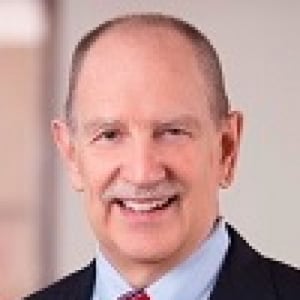
Retired
Tom Gede retired in 2023 as a principal in Morgan Lewis Consulting LLC and of counsel to the firm. He currently consults on a variety of legal and policy matters for both public and private clients. Tom has a national reputation and distinguished background in federal Indian law. Prior to retirement, he represented clients in complex governmental matters in litigation, administrative and regulatory proceedings, including high-profile matters involving state governments. A former senior deputy in the California Attorney General’s office, Tom was amicus coordinator and Supreme Court counsel, and argued cases in the US Supreme Court, the California Supreme Court, and numerous state and federal appellate courts.
Tom also served as executive director of the Conference of Western Attorneys General (CWAG), coordinating activities on key legal and policy issues, such as federal Indian law, energy, environmental, public lands, financial services, and telecommunications, for the attorneys general of 18 western states and territories. In 2016, Tom was elected as a Member of the American Law Institute (ALI), and served as an Adviser on the Restatement of the Law Third - The Law of American Indians. Tom also taught federal Indian law as an adjunct law professor at the University of the Pacific - McGeorge School of Law. He served as an assistant editor for and the author of the Indian gaming chapter in CWAG’s American Indian Law Deskbook (2d & 3d eds.). He has been engaged in Indian gaming and Indian law matters for more than three decades, having focused on the gaming compacts with Indian tribes, as well as complex civil and criminal jurisdiction, land, natural resources, water and law enforcement issues in Indian country. He has testified before Congress on American Indian and Native Alaskan issues. In 2012 he was appointed by Speaker John Boehner to serve on the United States Indian Law and Order Commission, where he examined criminal justice issues in Indian country and Alaska, resulting in the issuance of an important report to the President and Congress.
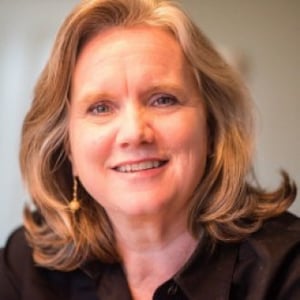
Principal, Sharon Fast Gustafson, Attorney at Law, PLC
SHARON FAST GUSTAFSON is the immediate past General Counsel of the U.S. Equal Employment Opportunity Commission (EEOC), where she enforced Title VII of the Civil Rights Act of 1964, the Americans with Disabilities Act, and the Age Discrimination in Employment Act.
Ms. Gustafson graduated with honors from Georgetown Law Center in 1991 and has concentrated her practice in employment law. She worked for four years in the labor and employment law group at Jones, Day in Washington, D.C. Since that time, she has had a broad-based solo practice advising and representing employers and employees in handling all aspects of the employment relationship, in compliance with federal and state workplace laws, and in designing and implementing sound employment policies and practices.
Ms. Gustafson is an experienced litigator in federal and state courts; before administrative agencies, including the EEOC, state and local civil rights offices, and the Department of Labor (DOL) Wage and Hour Division; and in mediation and arbitration. She is admitted to practice in state and federal courts in Virginia, Maryland, and the District of Columbia, and in the United States Supreme Court.
Ms. Gustafson successfully litigated a pregnancy discrimination case, Young v. UPS, 575 U.S. 206 (2015), from EEOC intake to a successful outcome at the U.S. Supreme Court. In 2016, she received the Metropolitan Washington Employment Lawyers Association’s “Lawyer of the Year” award “in recognition of outstanding dedication to Civil Rights, Equality, and Justice.”
Ms. Gustafson represents both employers and employees in matters relating to employment law.
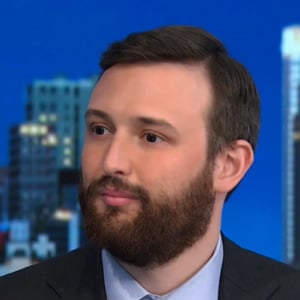
Senior Staff Attorney, Speech, Privacy & Technology Project, ACLU
Brian Hauss is a senior staff attorney with the ACLU’s Speech, Privacy & Technology Project, where he focuses on free expression issues. Since joining the ACLU in 2012, he has litigated cases defending the First Amendment rights of writers, journalists, media organizations, activists, advocacy groups, labor unions and private citizens. He has authored or co-authored numerous Supreme Court amicus curiae briefs on behalf of the ACLU and other groups. He also regularly discusses First Amendment issues in the media and at law schools throughout the country. Brian was a 2021-22 Wasserstein Public Interest Fellow at Harvard Law School. He is a graduate of Yale University and Harvard Law School and served as a law clerk to the Hon. Marsha S. Berzon of the U.S. Court of Appeals for the Ninth Circuit.

Professor of Law, Antonin Scalia Law School, George Mason University
ILYA SOMIN is Professor of Law at George Mason University and the B. Kenneth Simon Chair in Constitutional Studies at the Cato Institute. His research focuses on constitutional law, property law, democratic theory, federalism, and migration rights. He is the author of Free to Move: Foot Voting, Migration, and Political Freedom (Oxford University Press, revised and expanded edition, 2022), Democracy and Political Ignorance: Why Smaller Government is Smarter (Stanford University Press, revised and expanded second edition, 2016), and The Grasping Hand: Kelo v. City of New London and the Limits of Eminent Domain (University of Chicago Press, 2015, rev. paperback ed., 2016), coauthor of A Conspiracy Against Obamacare: The Volokh Conspiracy and the Health Care Case (Palgrave Macmillan, 2013), and co-editor of Eminent Domain: A Comparative Perspective (Cambridge University Press, 2017). Democracy and Political Ignorance has been translated into Italian and Japanese.
Somin’s work has appeared in numerous scholarly journals, including the Yale Law Journal, Stanford Law Review, Northwestern University Law Review, Georgetown Law Journal, Critical Review, and others. Somin has also published articles in a variety of popular press outlets, including the New York Times, Washington Post, Wall Street Journal, Los Angeles Times, CNN, NBC, The Atlantic, USA Today, Boston Globe, US News and World Report, South China Morning Post, National Law Journal and Reason. He has been quoted or interviewed by the New York Times, Washington Post, Wall Street Journal, Time, Newsweek, The Economist, the Christian Science Monitor, the Financial Times, The Guardian, the Associated Press, CBS, MSNBC, NPR, BBC, Reuters, the Canadian Broadcasting Corporation, the Australian Broadcasting Corporation, Radio Free Europe/Radio Liberty, Al Jazeera, and the Voice of America, among other media.
Somin’s writings have been cited in decisions by the United States Supreme Court, multiple state supreme courts and lower federal courts, and the Supreme Court of Israel. He is co-counsel for the plaintiffs in VOS Selections, Inc. v. Trump, a case challenging the constitutionality of President Trump’s “Liberation Day” tariffs. Somin has testified on the use of drones for targeted killing in the War on Terror before the US Senate Judiciary Subcommittee on the Constitution, Civil Rights, and Human Rights. In 2009, he testified on property rights issues at the United States Senate Judiciary Committee confirmation hearings for Supreme Court Justice Sonia Sotomayor. Somin writes regularly for the popular Volokh Conspiracy law and politics blog, now affiliated with Reason magazine (previously affiliated with the Washington Post from 2014 to 2017). From 2006 to 2013, he served as Co-Editor of the Supreme Court Economic Review, one of the country’s top-rated law and economics journals.
Somin has served as a visiting professor at the University of Pennsylvania Law School. He has also been a visiting professor or scholar at the Georgetown University Law Center, the University of Hamburg, Germany, the University of Torcuato Di Tella in Buenos Aires, Argentina, Uriel Reichman University in Israel, and Zhengzhou University in China. He is a University Affiliate of the Schar School of Policy and Government at George Mason University, and an affiliated faculty member of the George Mason University Institute for Immigration Research. Before joining the faculty at George Mason, Somin was the John M. Olin Fellow in Law at Northwestern University Law School in 2002-2003. In 2001-2002, he clerked for the Hon. Judge Jerry E. Smith of the U.S. Court of Appeals for the Fifth Circuit. Professor Somin earned his B.A., Summa Cum Laude, at Amherst College, M.A. in Political Science from Harvard University, and J.D. from Yale Law School.
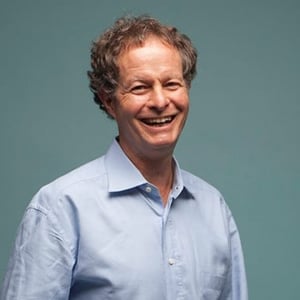
Co-Founder and CEO, Whole Foods Market
John Mackey, co-founder and CEO of Whole Foods Market, has built the natural and organic grocer from a single store in Austin, Texas in 1978, into a Fortune 500 company, which went public in 1992, and was purchased by Amazon in 2017. Today Whole Foods Market is a top U.S. supermarket with more than 500 stores and 95,000 Team Members across the U.S., Canada and U.K
While devoting his career to helping shoppers satisfy their lifestyle needs with quality natural and organic foods, Mackey has also focused on building a more conscious way of doing business. He was the visionary for Whole Planet Foundation to help end poverty in developing nations, the Local Producer Loan Program, which provided $25 million in low interest loans to help local food producers expand their businesses, and the Global Animal Partnership’s rating scale for humane farm animal treatment.
Mackey has been recognized as one of Fortune’s “World’s 50 Greatest Leaders,” Ernst & Young’s “Entrepreneur of the Year Overall Winner for the United States,” Institutional Investor’s “Best CEO in America,” Barron’s “World’s Best CEO,” MarketWatch’s “CEO of the Year,” Fortune’s “Businessperson of the Year,” and Esquire’s “Most Inspiring CEO.”
A strong believer in free market principles, Mackey co-founded the Conscious Capitalism Movement (http://consciouscapitalism.org/) and co-authored a New York Times and Wall Street Journal best-selling book entitled “Conscious Capitalism: Liberating the Heroic Spirit of Business” (Harvard Business Review Press 2013) to boldly defend and reimagine capitalism, and encourage a way of doing business that is grounded in ethical consciousness. Mackey cut his pay to $1 in 2006 and continues to work for Whole Foods Market out of passion to see the business realize its potential for deeper purpose, for the joy of leading a great company and to answer the call to service that he feels in his heart.
Most recently, Mackey has focused on returning to the company’s roots around healthy eating and lifestyle choices. A passionate advocate of healthy eating education, he laid the foundation for health and wellness programs for team members and customers. Mackey is co-author of The Whole Foods Diet: The Lifesaving Plan for Health and Longevity (Grand Central Life & Style 2017); and The Whole Foods Cookbook: 120 Delicious and Healthy Plant-Centered Recipes (Grand Central Life & Style 2018).
Mackey is an avid backpacker and long-distance hiker. He lives in Austin, TX with his wife Deborah.

Secretary, U.S. Department of Agriculture
Sonny Perdue came by his knowledge of agriculture the old fashioned way: he was born into a farming family in Bonaire, Georgia. From childhood, and through his life in business and elected office, Perdue has experienced the industry from every possible perspective. Uniquely qualified as a former farmer, agribusinessman, veterinarian, state legislator, and governor of Georgia, he became the 31st United States Secretary of Agriculture on April 25, 2017.
Perdue’s policies as U.S. Secretary of Agriculture will be guided by four principles which will inform his decisions. First, he will maximize the ability of the men and women of America’s agriculture and agribusiness sector to create jobs, to produce and sell the foods and fiber that feed and clothe the world, and to reap the earned reward of their labor. It should be the aim of the American government to remove every obstacle and give farmers, ranchers, and producers every opportunity to prosper. Second, he will prioritize customer service every day for American taxpayers and consumers. They will expect, and have every right to demand, that their government conduct the people’s business efficiently, effectively, and with the utmost integrity. Third, as Americans expect a safe and secure food supply, USDA will continue to serve in the critical role of ensuring the food we put on the table to feed our families meets the strict safety standards we’ve established. Food security is a key component of national security, because hunger and peace do not long coexist. And fourth, Perdue will always remember that America’s agricultural bounty comes directly from the land. And today, those land resources sustain more than 320 million Americans and countless millions more around the globe. Perdue’s father’s words still ring true: We’re all stewards of the land, owned or rented, and our responsibility is to leave it better than we found it.
Additionally, Perdue recognizes that American agriculture needs a strong advocate to promote its interests to international markets. The United States is blessed to be able to produce more than its citizens can consume, which implies that we should sell the bounty around the world. The relationship between the USDA and its trade representatives, as well as with the U.S. Trade Representative and Department of Commerce, will be vital. The work of promoting American agricultural products to other countries will begin with those relationships and will benefit us domestically, just as it will fulfill the moral imperative of helping to feed the world. Perdue has pledged to be an unapologetic advocate for American agriculture.
Under Secretary Perdue, the USDA will always be facts-based and data-driven, with a decision-making mindset that is customer-focused. He will seek solutions to problems and not lament that the agency might be faced with difficult challenges.
As a youngster growing up on a dairy and diversified row crop farm in rural Georgia, Perdue never fully realized that the blessings of purposeful, meaningful work would serve him as well as they have in life. When he was a young boy feeding the calves and plowing the fields, he was an integral part of the workforce on his father’s farm. As the son of a mother who was an English teacher for 42 years, he benefitted from her teachings as well – not just by instilling in him the beliefs he still holds dear, but also by lending him an appreciation and respect for language and proper grammar. But more than anything in his life, it was the family farm which shaped Sonny Perdue. He has lived and breathed the exhilaration of a great crop and the despair and devastation of a drought. He learned by experience what his father told him as a child, “If you take care of the land, the land will take care of you.”
The work ethic cemented in him by his farming roots has remained with Sonny Perdue throughout his life. As a younger man, he served his country in the U.S. Air Force, rising to the rank of Captain. After earning a Doctor of Veterinary Medicine from the University of Georgia, he put that training to use in private practice in North Carolina. As a member of the Georgia State Senate for eleven years, he eventually ascended to the position of President Pro Tempore as elected by his senate colleagues. As a two-term governor of Georgia, he was credited with transforming a budget deficit into a surplus, dramatically increasing the student performance in public schools, and fostering an economic environment that allowed employers to flourish and manufacturers and agricultural producers to achieve record levels of exports. He followed these accomplishments with a successful career in agribusiness, where he focused on commodities and transportation in enterprises that have spanned the southeastern United States. These experiences have proven invaluable in his current role as principal advocate for American agriculture and all that it serves.
Perdue is a strong believer in good government, in that it should operate efficiently and serve the needs of its customers: the people of the United States. As a state senator, he was recognized as a leading authority on issues including energy and utilities, agriculture, transportation, emerging technologies and economic development, and for his ability to grasp the nuances of complex problems. As governor, he reformed state budget priorities, helped Georgians create more than 200,000 new jobs, and promoted his home state around the world to attract new businesses. In 2009, the Reason Foundation’s Innovators in Action magazine recognized Perdue as a leader who “aggressively pursued new strategies to increase the effectiveness and efficiency of government and deliver better value at less cost to taxpayers.” In addition, he was named “Public Official of the Year” in October 2010 by Governing Magazine. To this day, his thoughts are never very far from the wishes of the citizens – the true owners of the government.
Perdue’s views on agriculture have always been shaped by his first-hand knowledge of all of its aspects, both as a farmer and as an agribusinessman. He appreciates the daily concerns and needs of American farmers, while also understanding the intricacies of global commodities markets. He is acknowledged as a national leader in agriculture, having served as a board member for the National Grain & Feed Association, and as President of both the Georgia Feed and Grain Association and the Southeastern Feed and Grain Association. Perdue has long-standing, close relationships with the leadership of the American Farm Bureau and has been recognized by the Georgia 4-H and FFA programs, among others, for his leadership in agriculture.
As the product of Georgia, a state where agriculture is the leading economic driver, Perdue recognizes that agriculture is an issue and industry which cuts across political party boundaries. He recognizes that the size, scope, and diversity of America’s agricultural sector requires reaching across the aisle so that partisanship doesn’t get in the way of good solutions for American farmers, ranchers, and consumers.
Perdue has been married to Mary Ruff Perdue for 45 years and has four adult children and fourteen grandchildren. He and his wife have served as foster parents for eight children awaiting adoption. Perdue remains a licensed airplane and helicopter pilot and avid outdoor sportsman.

Co-Founder & CEO, Eat JUST Inc.
Eat Just, Inc. (formerly Hampton Creek) is bringing healthier and more affordable food to everyone, everywhere. We believe that solving the problem means solving the problem for everybody—not just those who can afford it. Our technology, which is based upon understanding plants from every corner of the planet, enables consumers, food manufactures, and the largest retailers around the world, to offer better, healthier products, at a more affordable cost.
Constitutional Scholarship Director and Senior Legal Analyst, Pacific Legal Foundation
Anastasia Boden is Director of Constitutional Scholarship at Pacific Legal Foundation, where she leads the organization’s Supreme Court commentary and directs scholarly analysis in support of the firm’s litigation. She has represented entrepreneurs and small businesses nationwide in challenges to onerous licensing regimes, anti-competitive titling restrictions, Certificate of Need (“competitor’s veto”) laws, and other forms of unnecessary red tape that block economic opportunity.
Prior to this role, Anastasia developed nearly a dozen constitutional challenges to Certificate of Need laws across the country, helping spur legislative reform in Montana, Pennsylvania, and West Virginia. Her victories include a ruling invalidating Houston’s busking restrictions, multiple appellate decisions expanding access to the courts for civil rights plaintiffs, and the legislative repeal of Virginia’s happy-hour advertising ban.
Her writings on law and liberty have been featured in USA Today, The Washington Post, The Wall Street Journal, the Los Angeles Times, the Chicago Tribune, Forbes, and more, and she has appeared on Headline News, CBS News, Fox News, ReasonTV, Newsmax, and John Stossel. In 2020, she was featured on Libertarian Party presidential candidate Jo Jorgensen’s Supreme Court shortlist.
Anastasia earned her BA with dean’s honors from the University of California, Santa Barbara, and her JD from Georgetown University Law Center, where she was research assistant to Professor Randy E. Barnett—the “intellectual godfather” of the constitutional challenge to Obamacare. She is the co-creator of the podcast Dissed, about infamous Supreme Court dissents. She authors the biweekly newsletter SCOTUS Scoop and the column, “In Dissent” for SCOTUSblog.
Professor, University of North Carolina at Wilmington
Mike Adams is a professor at the University of North Carolina at Wilmington (UNCW). He writes a weekly column for The Daily Wire and speaks frequently on First Amendment and pro-life issues. After graduating from Mississippi State University in 1993 with a PhD in Criminology, his research emphasized social psychological causes of crime and delinquency. He won the Faculty Member of the Year Award from the Office of the Dean of Students in 1998 and again in 2000. Later, after his involvement in a free speech controversy in the wake of the 9/11 attack his research emphasis shifted to threats to free speech, due process, and academic integrity in higher education. In 2006, he was denied a promotion full professor and filed suit in federal court alleging that UNCW retaliated against him for his criticism the diversity movement in general as well as his criticism of specific policies within his own university. The retaliation lawsuit set up a legal challenge concerning whether Garcetti v. Ceballos (2006), which denied First Amendment protection to public employees who were commenting about their “official duties,” applied to college professors. In Adams v. UNCW (2011), the 4th Circuit Court of Appeals unanimously ruled in his favor. The ruling set up a federal trial on the issue of retaliation, which he also won before a jury in federal district court in Greenville, North Carolina.

Professor of History, Brooklyn College and the CUNY Graduate Center
KC Johnson is professor of history at Brooklyn College and the CUNY Graduate Center, where he has taught since 1999. He has written 13 books on topics in U.S. political history, U.S. foreign policy, and legal and policy debates surrounding campus due process and civil liberties. His Duke lacrosse case blog, Durham-in-Wonderland, was named ABA Journal’s Best Ethics Blog in 2007; and he continues to blog on higher-ed matters at the blog Minding the Campus.
FIRE
Constitutional Scholarship Director and Senior Legal Analyst, Pacific Legal Foundation
Anastasia Boden is Director of Constitutional Scholarship at Pacific Legal Foundation, where she leads the organization’s Supreme Court commentary and directs scholarly analysis in support of the firm’s litigation. She has represented entrepreneurs and small businesses nationwide in challenges to onerous licensing regimes, anti-competitive titling restrictions, Certificate of Need (“competitor’s veto”) laws, and other forms of unnecessary red tape that block economic opportunity.
Prior to this role, Anastasia developed nearly a dozen constitutional challenges to Certificate of Need laws across the country, helping spur legislative reform in Montana, Pennsylvania, and West Virginia. Her victories include a ruling invalidating Houston’s busking restrictions, multiple appellate decisions expanding access to the courts for civil rights plaintiffs, and the legislative repeal of Virginia’s happy-hour advertising ban.
Her writings on law and liberty have been featured in USA Today, The Washington Post, The Wall Street Journal, the Los Angeles Times, the Chicago Tribune, Forbes, and more, and she has appeared on Headline News, CBS News, Fox News, ReasonTV, Newsmax, and John Stossel. In 2020, she was featured on Libertarian Party presidential candidate Jo Jorgensen’s Supreme Court shortlist.
Anastasia earned her BA with dean’s honors from the University of California, Santa Barbara, and her JD from Georgetown University Law Center, where she was research assistant to Professor Randy E. Barnett—the “intellectual godfather” of the constitutional challenge to Obamacare. She is the co-creator of the podcast Dissed, about infamous Supreme Court dissents. She authors the biweekly newsletter SCOTUS Scoop and the column, “In Dissent” for SCOTUSblog.

Founder, Chef, Chef Geoff's
Geoff graduated from Georgetown University in 1995 with a degree in theology. He then went on to graduate first in his class at the Culinary Institute of America in Hyde Park, NY. Geoff opened Chef Geoff’s in 2000 and Chef Geoff’s Downtown in 2002. Both were opened before he reached the age of 30. In 2006 Geoff opened his third restaurant, LIA’S in Chevy Chase, MD. In late 2008 Geoff opened Hank’s Tavern & Eats in Hyattsville, MD. He operates the 200 seat restaurant in partnership with his brother Chris Tracy. Geoff’s fifth restaurant, Chef Geoff’s Tysons Corner opened in 2009 in Vienna, VA. The sixth restaurant, Chef Geoff’s Rockville, opened in 2012.
Geoff, along with a very talented team, oversees restaurant operations as well as managing the concept, menu development, marketing, finances, and growth at each of the restaurants. The restaurants serve 750,000 guests every year and employ more than 400 amazing people.
Geoff is also the co-author of the New York Times Best Seller, Baby Love. Baby Love teaches busy parents how to feed “Healthy, Easy, Delicious Meals for Your Baby and Toddler”. The book is published by St. Martin’s Press.
As an active member of the Washington DC community, Geoff serves as vice chairman on the executive board of the Restaurant Association of Metropolitan Washington. Additionally, Geoff contributes to more than 150 charities and organization every year in the form of silent auctions, fundraising appearances, and even the Chef Geoff sponsored Little League team. Geoff is also a member of the Washington Baltimore chapter of the Young Presidents Organization.
In 2006 the National Restaurant Association awarded Chef Geoff’s The Best Neighbor Award for its contributions to the community. In 2009 Geoff was awarded the Albert Uster “Chef of the Year Award”. In 2010 Geoff was named one of the top 40 business people under the age of 40 by Washington Business Journal. In 2011 Chef Geoff’s Tysons won the RAMMY award for “Hottest Restaurant Bar Scene”. In 2009 and 2011 Lia’s was selected as “Best Restaurant in Chevy Chase” by Bethesda Magazine in its annual Reader’s Choice Awards. In 2012, the readers of Washingtonian Magazine selected Geoff as “Best Local Chef”.
Geoff is extraordinarily fortunate to be married to the love of his life and CBS This Morning Anchor Norah O’Donnell. They reside in both New York City and Washington DC with their three beautiful children Grace, Henry, and Riley.

Shouted Down: When Protest Becomes Censorship
Tiffany H. Bates, Stuart Kyle Duncan, James Hamilton Percival, Ilya Shapiro
Colleges and universities have long been understood as marketplaces of ideas, carrying with them a...
Digital Privacy and the Fourth Amendment: Data Ownership, Warrants, and Constitutional Rights
Jim Harper, Orin S. Kerr, Brent Skorup
As Americans use smartphones, search engines, AI tools, and financial services, they generate vast amounts...
Hispanic-Serving Institutions and Emerging Constitutional Issues
Alexander M. Heideman
In 2019, Florida Gulf Coast University’s (FGCU) “Florida Educational Equity Report” noted that FGCU “continues...
A Seat at the Sitting - April 2023
Anastasia P. Boden, Thomas F. Gede, Sharon Fast Gustafson, Brian Hauss, Ilya Somin
Each month, a panel of constitutional experts convenes to discuss the Court’s upcoming docket sitting...
Deep Dive Episode 140 – It Can Be Done Live: The Future of Our Food
John Mackey, Sonny Perdue, Josh Tetrick, Anastasia P. Boden
The creators of the award-winning documentary, They Say It Can’t Be Done, in partnership with...
In the Name of Diversity
The University of California and other institutions in California now require academic job applicants to...
The Student Right to Counsel
Mike S. Adams, KC Johnson, Adam Kissell
Note from the Editor: This article argues that a student right to counsel in quasi-criminal...
Virginia’s (Un)happy Hour: Is the State Restricting Ads and Economic Rights?
Anastasia P. Boden, Geoffrey Tracy
In Virginia, it’s perfectly legal to have a happy hour; it’s just illegal to talk...