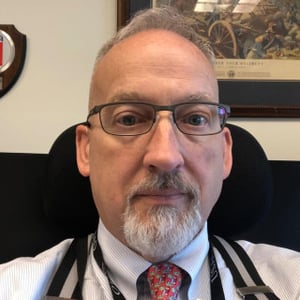
Chairman & CEO, The Abraham Group
Secretary Spencer Abraham is Chairman & CEO of The Abraham Group.
He served as the tenth Secretary of Energy of United States from 2001-2005. He helped President George W. Bush devise America’s first national energy plan in over a decade and oversaw its implementation. As part of this plan, he led efforts to broaden America’s international energy partnerships as well as forge closer ties to key oil producing nations.
Secretary Abraham has been a close observer of world energy markets, and under his leadership the Department of Energy conducted a number of important short and long-term studies of world oil, gas, electricity and other markets.
According to the Presidential Management Agenda scorecard, the Department of Energy went from “worst to first” of well-run agencies under Secretary Abraham’s leadership.
Prior to being a Cabinet Member, Secretary Abraham served as an effective and highly productive U.S. Senator from Michigan for six years. In the Senate, he was a member of the Senate Commerce, Judiciary and Budget Committees and served as chairman of the Senate Immigration Subcommittee and the Senate Commerce Subcommittee on Manufacturing and Competitiveness. He was also a senior official in the Administration of former President George H.W. Bush as Deputy Chief of Staff to the Vice President.
Secretary Abraham is a member of the Board of Directors of Occidental Petroleum, NRG Energy, PBF Energy, Uranium Energy Corp and Two Harbors Investment Corporation.
In addition, he is a frequent commentator on FOX News, CNN and Bloomberg TV as well as a periodic contributor of op-ed articles to the Financial Times, The Wall Street Journal, The Washington Post, The Weekly Standard and other publications.
Spencer Abraham and his wife, Jane, are the parents of adult children. He holds a law degree from Harvard University, where he co-founded the Federalist Society, and is a native of East Lansing, Michigan.
Former United States Senator, Utah
Over nearly four decades of public service, Senator Orrin Hatch established himself as a leading conservative voice in the United States Senate. As the upper chamber’s most senior Republican, he served as President Pro Tempore and as Chairman of the Senate Finance Committee. In this capacity, he fought to create jobs and strengthen the economy by repealing and replacing Obamacare, reforming the tax code, and opening up overseas markets to American exports.
As a long-time member and former Chairman of the Senate Judiciary Committee, Senator Hatch also fought to check judicial activism and protect our liberties. He was instrumental in confirming conservative judges to the federal bench and played an indispensable role in confirming Supreme Court Justices Antonin Scalia, Clarence Thomas, and Samuel Alito as well as scores of district and circuit court judges.
One of Senator Hatch’s particularly noteworthy achievements on the Judiciary Committee is the Religious Freedom Restoration Act of 1993—a bill he co-authored with the late Senator Ted Kennedy. This landmark legislation prohibits substantial government burdens on the free exercise of religion, allowing all Americans to live, work, and worship in accordance with their beliefs.
In addition to protecting our individual liberties, Senator Hatch was on the front lines of legislative battles to protect our free-market economy and system of limited government under the Constitution. His reputation as a statesman and his record of fiscal responsibility earned him the nickname “Mr. Balanced Budget” from President Reagan.
By virtually all measures, Senator Hatch was among the most effective and consequential legislators in history. Since he first came to Congress in 1977, no legislator alive today has authored more bills that have become law than Senator Hatch.
Of all Senator Hatch’s achievements, he is proudest of his family, and he credits the love of his wife and children as the key to his success. He and Elaine have been married for more than fifty years. Together, they are the parents of six children, twenty-three grandchildren, and sixteen great-grandchildren.
Partner, Earth and Water Law; retired Yale Law School professor (1981-2025), Yangtze River Distinguished Professor, Guangzhou Law School, ChinaDistinguished Adjunct Professor at Antonin Scalia Law School
E. Donald Elliott is a Florence Rogatz Visiting Professor of Law at Yale Law School and a leading academic scholar, as well as practitioner, in the fields of administrative and environmental law. He is “one of the most well-known, well-regarded environmental law professors in the nation,” according to John Cruden, former President of the Environmental Law Institute and Assistant Attorney General, Environment and Natural Resources Division, U.S. Department of Justice during the Obama administration. Elliott has been on the Yale Law faculty since 1981 and currently teaches courses in environmental law, energy law, administrative law and civil procedure. He is also senior of counsel in the Washington D.C. office of Covington & Burling LLP, and co-chair of the firm's Environmental Practice Group. From 2003 until he joined Covington in 2013, he was a partner in Willkie Farr & Gallagher LLP, chairing the firm’s worldwide Environment, Health and Safety Department.
From 1989 to 1991, Elliott served as Assistant Administrator and General Counsel of the U.S. Environmental Protection Agency (EPA). In 1993, he was named to the first endowed chair in environmental law and policy at any major American law school, the Julien and Virginia Cornell Chair in Environmental Law and Litigation at Yale Law School. From 2003-2009, he was a member of the National Academy of Sciences Board on Environmental Studies and Toxicology, which advises the federal government on environmental issues. Elliott also testifies frequently in Congress on environmental issues.
He has served as a consultant on improving the relationship of law and science to the Federal Courts Study Committee, which was chartered by Congress to make recommendations for improving the federal courts, and to the Carnegie Commission for Law, Science and Government. He co-chaired the National Environmental Policy Institute’s Committee on Improving Science at EPA.
Elliott is a Senior Fellow of the Administrative Conference of the United States (ACUS) and an elected member of the American College of Environmental Lawyers and the American Law Institute. He serves on the Board of the Connecticut Fund for the Environment and as chair of its legal committee, as well on the Advisory Board for NYU’s Institute for Policy Integrity. He is a former member of the boards of the Environmental Law Institute, and the Center for Clean Air Policy. He is the author or coauthor of seven books and has published more than 70 articles in professional journals. He was named one of the top 25 environmental attorneys in the United States by the National Law Journal and is highly ranked in Chambers USA: Leading Lawyers for Business; Best Lawyers in America; D.C. Super Lawyers; Who’s Who in American Law; and Who’s Who in the World.
He earned both his B.A., summa cum laude and Phi Beta Kappa, and his J.D. from Yale. Following graduation, he was a law clerk for Gerhard Gesell in the U.S. District Court for the District of Columbia, and for Chief Judge David Bazelon of the U.S. Court of Appeals for the District of Columbia Circuit.
Professor, Department of International Finance, Moscow State Institute for International Relations
Professor, Department of Moscow State Institute of International Finance, doctor of economic sciences, corresponding member of the Academy of Economics and Commerce. He was consultant of the United Nations (1991-1993), member of the Advisory Council to the President of the European Bank for Reconstruction and Development (EBRD) (1993-1996), head of the Department of international monetary relations of the Ministry of Foreign Affairs Russia (2001-11).
Founder; Chairman Emeritus, Competitive Enterprise Institute
Fred L. Smith, Jr. is the founder and Chairman Emeritus of the Competitive Enterprise Institute. He served as president from 1984 to 2013 and is currently the Director of CEI’s Center for Advancing Capitalism.
His public policy research has covered a wide range of topics, including regulatory reform, free market environmentalism, antitrust law, and international finance and comparative economics. Smith’s current focus is bringing leaders in the business and academic worlds together to defend capitalism and craft narratives that highlight the moral legitimacy of free markets.
His many published works include chapters in the books “Field Guide to Effective Communication” (2004), “Corporate Aftershock: The Public Policy Lessons from the Collapse of Enron and Other Major Corporations” (2003), “Ecology, Liberty, & Property: A Free Market Environmental Reader” (2000), “The Future of Financial Privacy: Private Choices versus Political Rules” (1999), “Environmental Politics: Public Costs, Private Rewards” (1992), and “Steering The Elephant: How Washington Works” (1987). His academic articles have appeared in journals such as Harvard Journal of Law and Economics and Knowledge, Technology, and Policy.
Smith has also written widely for leading newspapers and magazines such as The Wall Street Journal, Washington Post, USA Today, National Journal, Economic Affairs, and Forbes. He has also made hundreds of television and radio appearances on networks such as ABC, CNBC, CNN, Fox News, National Public Radio, and Radio America, among others.
Before founding CEI, Smith served as Director of Government Relations for the Council for a Competitive Economy, as a senior economist for the Association of American Railroads, and for five years as a Senior Policy Analyst at the Environmental Protection Agency. He is currently a member of the Board of Directors of the Competitive Enterprise Institute, the American Conservative Union, and the American Council on Science and Health and a member of the Foundation for Economic Education’s Faculty Network.
Smith graduated with top honors and holds a Bachelors of Science in Theoretical Mathematics and Political Science from Tulane University. He has also done graduate work in mathematics and applied mathematical economics at Harvard, SUNY at Buffalo, and the University of Pennsylvania.
Former Archivist of the United States
Allen Weinstein (September 1, 1937 – June 18, 2015) was an American historian, educator, and federal official who served in several different offices. He was, under the Reagan administration, cofounder of the National Endowment for Democracy in 1983. He served as the Archivist of the United States from February 16, 2005, until his resignation on December 19, 2008. After his resignation, he returned to the International Foundation for Electoral Systems as a senior strategist and was a visiting faculty member at the University of Maryland.
Ronald Reagan Distinguished Fellow Emeritus, The Heritage Foundation
Edwin Meese III, the prominent conservative leader, thinker and elder statesman, continues a quarter-century formal association with The Heritage Foundation as the leading think tank’s Ronald Reagan Distinguished Fellow Emeritus.
In that capacity, Meese oversees special projects and acts as an ambassador for Heritage within the conservative movement.
Meese was chairman of Heritage’s Center for Legal and Judicial Studies from its founding in 2001 until what he calls his “semi-retirement” on Feb. 1, 2013.
He joined Heritage in 1988 as the think tank's first Ronald Reagan Distinguished Fellow -- the only policy chair in the country to be officially named for the 40th president. His work focused on keeping President Reagan’s legacy of conservative principles alive in public debate and discourse.
The legal center now bears his name, in recognition of Meese’s contributions to the rule of law and the nation’s understanding of constitutional law. Its mission is to educate government officials, the media and the public about the Constitution and legal principles -- and how they affect public policy.
Perhaps best known as U.S. attorney general during Reagan’s second term, Meese’s service to the conservative icon stretched from the California governor’s mansion in 1966 to the White House in 1981 before he went to the Department of Justice four years later.
His Heritage “hats” kept Meese among the major conservative voices in national policy debates at an age when most men and women enjoyed quiet retirements.
In 2006, for example, Meese was named to the Iraq Study Group, a special presidential commission dedicated to examining the best resolutions for America's involvement in Iraq. In the past few years he wrote and spoke about constitutional topics ranging from religious liberty to the responsibility of Supreme Court justices.
Immediately after Reagan's death in 2004, and in the years since, Meese often agreed to major media appearances to discuss the lasting impact of his old friend, mentor and boss. He has summarized the Reagan legacy in three accomplishments: Reagan cut taxes and kept them low. He worked to defeat and end the Soviet Union and its worldwide push for communism. And he restored America's faith in itself after years of failure and "malaise."
"I admired him as a leader and cherish his friendship," Meese wrote in a 2004 essay for Heritage members and supporters. "Ronald Reagan had strong convictions. He was committed to the principles that had led to the founding of our nation. And he had the courage to follow his convictions against all odds." <[>Edwin Meese III was born Dec. 2, 1931, to Edwin Jr. and Leone Meese in Oakland, Calif. He graduated from Yale University in 1953 and holds a law degree from the University of California-Berkeley.
Meese spent much of his adult life working for Reagan, first after the former actor, sports announcer and athlete was elected as California’s governor in 1966 and then when he sought and won the presidency in 1980.
Reagan never forgot Meese's loyalty and hard work. During a press conference at which reporters questioned Meese's actions at the Justice Department, Reagan replied: "If Ed Meese is not a good man, there are no good men."
During the Reagan governorship, Meese served as executive assistant and chief of staff from 1969 through 1974 and as legal affairs secretary from 1967 through 1968. He previously was deputy district attorney in Alameda County, Calif.
From January 1981 to February 1985, Meese held the position of counsellor to the president -- the senior job on the White House staff -- and functioned as Reagan's chief policy adviser. In 1985, he received Government Executive magazine's annual award for excellence in management.
Meese served as the 75th attorney general of the United States from February 1985 to August 1988. As the nation's chief law enforcement officer, he directed the Justice Department and led international efforts to combat terrorism, drug trafficking and organized crime.
Meese’s relationship with Heritage began when he met with senior management to discuss the think tank's landmark policy guide, Mandate for Leadership, prepared for the incoming administration. Meese later recalled that Reagan personally handed out copies of the 1,093-page book to members of his Cabinet and asked them to read it. Nearly two-thirds of Mandate's 2,000 recommendations would be adopted or attempted by the Reagan administration.
More than a decade after joining Heritage, Meese assumed the chairmanship of its Center for Legal and Judicial Studies. Under his guidance, the center counseled White House staffers, Justice Department officials and Senate Judiciary Committee members on the importance of filling judicial vacancies with qualified men and women who are committed to interpreting the Constitution according to the founding document's original meaning.
The center became known for hosting "moot court" practice sessions to sharpen the arguments of attorneys slated to bring important cases before the Supreme Court. Those cases addressed constitutional issues ranging from property rights to racial preferences in primary and secondary schools to restrictions on free speech in campaign finance law.
Meese headed the legal center's Advisory Board for the writing and editing of the best-selling book, The Heritage Guide to the Constitution (Regnery, 2005). In it, 109 experts walked readers through a clause-by-clause analysis of the Constitution. Sen. Tom Coburn (R-Okla.) was among those keeping the reference work handy during Judiciary Committee hearings on Supreme Court nominees.
Meese's other books include “Leadership, Ethics and Policing” (Prentice Hall, 2004); “Making America Safer” (Heritage, 1997); and “With Reagan: The Inside Story” (Regnery Gateway, 1992).He wrote the Introduction to a well-received 2010 book on the “overcriminalization” trend, “One Nation Under Arrest,” by Heritage veterans Paul Rosenzweig and Brian W. Walsh.
He also is a distinguished visiting fellow at the Hoover Institution at Stanford University in California and lectures, writes and consults throughout the United States on a variety of subjects.
As both attorney general and counsellor to Reagan, Meese was a member of the Cabinet and the National Security Council. He served as chairman of the Domestic Policy Council and the National Drug Policy Board. After Reagan won the White House in the 1980 election, Meese headed the transition team. During the campaign, he was the Reagan-Bush Committee's senior official.
Meese had a career outside government and politics. From 1977 to 1981, he was a law professor at the University of San Diego, where he also directed the Center for Criminal Justice Policy and Management.
He was an executive in the aerospace and transportation industry as vice president for administration of Rohr Industries Inc. in Chula Vista, Calif. He left Rohr to return to the practice of law, doing corporate and general work in San Diego County.
A retired colonel in the Army Reserve, Meese remains active in numerous civic and educational organizations.
He and his wife, Ursula, have two grown children and reside in McLean, Va.
Former United States Assistant Attorney General, Civil Rights Division, United States Department of Justice
William Bradford served as the United States Assistant Attorney General for the Civil Rights Division from 1981 to 1988.
Reynolds was Senior Counsel in BakerBotts Antitrust and Competition division. He graduated with a LL.B. from Vanderbilt University Law School in 1967 where he was Order of the Coif and Editor-in-Chief of the Vanderbilt Law Review. In 1964, he received a B.A. from Yale University.
Reynolds passed away on September 14, 2019, in Seabrook Island, South Carolina at age 77.
Former United States Attorney General
Richard Lewis Thornburgh was born on July 16, 1932 in Pittsburgh, Pennsylvania. He graduated with a bachelor’s degree in engineering from Yale University in 1954 and earned his LL.B degree from the University of Pittsburgh in 1957. Mr. Thornburgh also holds honorary degrees from 31 colleges and universities.
Following law school, Mr. Thornburgh worked in private industry until 1959 when he joined the Pittsburgh law firm then known as Kirkpatrick & Lockhart. In 1967, he was elected as a delegate to the Pennsylvania Constitutional Convention. From 1969 to 1975, Mr. Thornburgh was the U.S. Attorney for the Western District of Pennsylvania and was appointed Assistant Attorney General for the Criminal Division in 1975, serving two years in Washington, D.C. in that role before returning to private practice as a partner at Kirkpatrick & Lockhart. Pennsylvania elected Mr. Thornburgh governor in 1979 and he served two terms. Mr. Thornburgh also taught courses at the Harvard University Kennedy School of Government and directed that school’s Institute of Politics from 1987 to 1988.
Appointed by President Reagan, Richard Thornburgh was sworn in as Attorney General on August 12, 1988. President George H.W. Bush reinstated him as Attorney General in 1989 and he served until 1991. In 1992, the American Legion honored Mr. Thornburgh with its highest award, the “Distinguished Services Medal.” He published his autobiography in 2003 entitled, Where the Evidence Leads: The Autobiography of Dick Thornburgh.
James Madison Distinguished Professor of Law and Class of 1941 Research Professor of Law, University of Virginia School of Law
Professor John C. Harrison is the James Madison Distinguished Professor of Law and Class of 1941 Research Professor of Law at the University of Virginia School of Law. He joined the faculty at University of Virginia in 1993 as an associate professor of law after a distinguished career with the U.S. Department of Justice. His teaching subjects include constitutional history, federal courts, remedies, corporations, civil procedure, legislation and property. In 2008 he was on leave from the Law School to serve as counselor on international law in the Office of the Legal Adviser at the U.S. Department of State.
A 1977 graduate of the University of Virginia, Harrison earned his law degree in 1980 at Yale, where he served as editor of the Yale Law Journal and editor and articles editor of the Yale Studies in World Public Order. He was an associate at Patton Boggs & Blow in Washington, D.C., and clerked for Judge Robert Bork on the U.S. Court of Appeals for the District of Columbia Circuit. He worked with the Department of Justice from 1983-93, serving in numerous capacities, including deputy assistant attorney general in the Office of Legal Counsel (1990-93).
Rothgerber Professor of Constitutional Law, Colorado Law
Robert Nagel joined the faculty of CU Law School in 1975, leaving a position as a deputy attorney general in Pennsylvania. Since that time, he has focused on constitutional law and theory. For an audience of legal scholars, Professor Nagel has written prolifically, including four books and over 50 law review articles. However, he has also contributed to the popular debate on constitutional issues, including free speech, hate codes, and federalism, by addressing his ideas to the general citizenry in articles and opinion pieces in publications such as The New Republic, the Wall Street Journal, First Things, and Washington Monthly. Much of his work has focused on the relationship between the judiciary (and its interpretation of the Constitution) and the wider context of American political culture. His two earlier books on this topic, Constitutional Cultures: The Mentality and Consequences of Judicial Review and Judicial Power and American Character: Censoring Ourselves in an Anxious Age, were widely read and reviewed. He has recently completed The Implosion of American Federalism, a book on the cultural and constitutional ramifications of political centralization. Professor Nagel has testified before several congressional committees. He was formerly the director of the Law School's Byron R. White Center for the Study of American Constitutional Law. In 2003, he was elected a Fellow of the American Academy of Arts and Sciences.
Inez Milholland Professor of Civil Liberties, New York University School of Law
Burt Neuborne is the Inez Milholland Professor of Civil Liberties and founding Legal Director of the Brennan Center for Justice at NYU Law School. For 45 years, he has been one of the nation's foremost civil liberties lawyers, serving as National Legal Director of the ACLU from 1981-86, Special Counsel to the NOW Legal Defense and Education Fund from 1990-1996, and as a member of the New York City Human Rights Commission from 1988-1992. He has argued numerous Supreme Court cases, and has litigated literally hundreds of important constitutional cases in the state and federal courts. He challenged the constitutionality of the Vietnam War, pioneered the flag burning cases, worked on the Pentagon Papers case, worked with Justice Ruth Bader Ginsburg when she headed the ACLU Women's Rights Project, anchored the ACLU's legal program during the Reagan years, and defended the Legal Services program against unconstitutional attacks. He currently directs the legal program of the Brennan Center, especially its efforts to reinforce American democracy and secure campaign finance reform. The Brennan Center was established in 1994 to honor Justice William Brennan, Jr.’s monumental contribution to American Law.
At the same time, Professor Neuborne has forged a national reputation as a constitutional scholar and teacher. In 1990, he was the recipient of the University-wide Distinguished Teacher Award at New York University for his work in teaching Civil Procedure, Evidence, Federal Courts and Constitutional Law. He is the author of three books and over 20 law review articles on diverse areas of constitutional law and procedure. Among his best known scholarly works is the two-volume Political and Civil Rights in the United States, which he co-authored with NYU colleagues Norman Dorsen and Sylvia Law and the Deputy Solicitor General of the United States, Paul Bender. His 1992 lectures on American law at Universitat Pompeu Fabra in Barcelona have been translated and published in Spanish. In 2001, in recognition of his scholarship and his work in the courts, Professor Neuborne was elected to membership in the American Academy of Arts and Sciences.
In 1996, Professor Neuborne appeared as Jerry Falwell's lawyer in Milos Forman's The People v. Larry Flynt.
For the past 14 years, Professor Neuborne has served as a principal counsel in a series of lawsuits seeking to recover property unjustly taken from Holocaust victims by Swiss banks and German corporations during the Nazi era. The litigation has succeeded in assembling more than $8.5 billion for distribution to Holocaust victims and their families throughout the world. Professor Neuborne was appointed by the Court to oversee the $1.25 Swiss bank settlement, and was appointed by the United States to serve on the Board of Trustees of the German Foundation “Remembrance, Responsibility and Future,” established to distribute the $5.2 billion settlement in the German slave labor litigation.
Professor Neuborne is married to Helen Redleaf Neuborne.
Dean and Foundation Professor of Law, George Mason University School of Law
Dean and Foundation Professor of Law Daniel D. Polsby joined the faculty of the law school in 1999 after serving 23 years on the Northwestern University law faculty, most recently (since 1990) as the Kirkland & Ellis Professor of Law. He has held visiting appointments in the law schools of the University of Southern California, the University of Michigan, and Cornell University. He was appointed acting dean of the George Mason School of Law in 2004 and was named dean in 2005.
Dean Polsby has published dozens of articles on such diverse subjects as voting rights, family law, employment rights, and spectrum utilization. He is the author of the award-winning article, "The False Promise of Gun Control," the cover essay of the March 1994 Atlantic Monthly. The article is one of the most widely anthologized essays of recent years.
Dean Polsby received his B.A. from Oakland University (1964) and earned his J.D. magna cum laude from the University of Minnesota (1971). He teaches Criminal Law, Family Law, Constitutional Law, and other subjects.
Partner, Akin Gump Strauss Hauer & Feld LLP
Steven Ross has extensive public- and private-sector experience in representing corporations, institutions, boards and individuals in all manner of investigations, including congressional, criminal and regulatory proceedings and related civil litigation. He concentrates on congressional investigations, internal investigations, governmental ethics, federal election law, white collar criminal defense and constitutional issues.
From 1983 to 1993, Steven served as the General Counsel of the U.S. House of Representatives, advising and representing its members, leadership, committees and employees from both political parties. He has also counseled the leadership and relevant committees on numerous congressional investigations.
In private practice, Steven guides clients through complex congressional inquiries and related litigation. He represents clients in investigations conducted by various federal executive branch departments, commissions and agencies, including the U.S. departments of Justice, Education, Health and Human Services, Defense and the Interior, as well as the Federal Election Commission and the Food and Drug Administration.
Steven has significant litigation experience, ranging from trials before U.S. district courts to arguments before the Supreme Court and numerous federal courts of appeals. He was actively involved in defending the constitutionality of multiple federal statutes, including the Independent Counsel Act, the Competition in Contracting Act and the Gramm-Rudman-Hollings Deficit Reduction Act.
Over the course of his career, Steven has litigated seminal cases regarding the scope of Congress’ oversight and investigations power, both on behalf of Congress and as counsel to private parties implicated by such inquiries. He has taught constitutional law as an adjunct professor at George Mason University Law School and served as a guest lecturer on the topic of congressional investigations at a number of law schools, including NYU, Fordham and the Georgetown University Law Center.
Scholar and former Deputy Solicitor General of the United States
Paul Michael Bator (June 2, 1929 – February 24, 1989) was an American legal academic, Supreme Court advocate and expert on United States federal courts. In addition to teaching for almost 30 years at Harvard Law School and the University of Chicago Law School, Bator served as Deputy Solicitor General of the United States during the Reagan Administration.
Beneficial Professor of Law, Harvard Law School
Educated at Princeton, Oxford and Columbia Law School, Charles Fried, the Beneficial Professor of Law, has been teaching at Harvard Law School since 1961. He was Solicitor General of the United States, 1985-89, and an Associate Justice of the Supreme Judicial Court of Massachusetts, 1995-99. His scholarly and teaching interests have been moved by the connection between normative theory and the concrete institutions of public and private law. During his career at Harvard he has taught Criminal Law, Commercial Law, Roman Law, Torts, Contracts, Labor Law, Constitutional Law and Federal Courts, Appellate and Supreme Court Advocacy. The author of many books and articles, his Anatomy of Values (1970), Right and Wrong (1978), and Modern Liberty (2006) develop themes in moral and political philosophy with applications to law. Contract as Promise (1980), Making Tort Law (2003, with David Rosenberg) and Saying What the Law Is: The Constitution in the Supreme Court (2004) are fundamental inquiries into broad legal institutions. Order & Law: Arguing the Reagan Revolution (1991) discusses major themes developed in Fried's time as Solicitor General. In recent years Fried has taught Constitutional Law and Contracts. During his time as a teacher he has also argued a number of major cases in state and federal courts, most notably Daubert v. Merrell Dow Pharmaceuticals, in which the Supreme Court established the standards for the use of expert and scientific evidence in federal courts.
Sterling Professor of Law, Yale Law School
Anthony Kronman is Sterling Professor of Law at Yale Law School. A former Dean of Yale Law School, Professor Kronman teaches in the areas of contracts, bankruptcy, jurisprudence, social theory, and professional responsibility. Before coming to Yale, he taught at the University of Chicago. Among his books are Education's End: Why Our Colleges and Universities Have Given Up on the Meaning of Life, Max Weber, Contracts: Cases and Materials (with F. Kessler and G. Gilmore), and Lost Lawyer. His latest book, Confessions of a Born-Again Pagan, was published by Yale University Press in 2016. Professor Kronman received his B.A. from Williams College, and his Ph.D. in Philosophy and J.D. from Yale.
Senior Lecturer in Law, University of Chicago Law School
Following his graduation from Harvard Law School, Judge Posner clerked for Justice William J. Brennan, Jr. From 1963 to 1965, he was assistant to Commissioner Philip Elman of the Federal Trade Commission. For the next two years, he was assistant to the solicitor general of the United States. Prior to going to Stanford Law School in 1968 as Associate Professor, Judge Posner served as general counsel of the President's Task Force on Communications Policy. He first came to the University of Chicago Law School in 1969, and was Lee and Brena Freeman Professor of Law prior to his appointment in 1981 as a judge of the US Court of Appeals for the Seventh Circuit. He was the chief judge of the court from 1993 to 2000.
Judge Posner has written a number of books, including Economic Analysis of Law (9th ed., 2014); The Economics of Justice (1981); Law and Literature (3rd ed. 2009); The Problems of Jurisprudence (1990); Cardozo: A Study in Reputation (1990); The Essential Holmes (1992); Sex and Reason (1992); Overcoming Law (1995); The Federal Courts: Challenge and Reform (1996); Law and Legal Theory in England and America (1996); The Problematics of Moral and Legal Theory (1999); Antitrust Law (2d ed. 2001); Law, Pragmatism, and Democracy (2003); Catastrophe: Risk and Response (2004); Preventing Surprise Attacks: Intelligence Reform in the Wake of 9/11 (2005); How Judges Think (2008); A Failure of Capitalism: The Crisis of '08 and the Descent into Depression (2009); The Crisis of Capitalist Democracy (2010); The Behavior of Federal Judges: A Theoretical and Empirical Study of Rational Choice (coauthored with Lee Epstein and William M. Landes) (2013); and Reflections on Judging (2013). He also wrote books on the Clinton impeachment and Bush v. Gore, many articles in legal and economic journals, and book reviews in the popular press.
He has taught administrative law, antitrust, economic analysis of law, history of legal thought, conflict of laws, regulated industries, law and literature, the legislative process, family law, primitive law, torts, civil procedure, evidence, health law and economics, law and science, and jurisprudence. He was the founding editor of the Journal of Legal Studies and (with Orley Ashenfelter) the American Law and Economics Review. He is an Honorary Bencher of the Inner Temple and a corresponding fellow of the British Academy, and he was the President of the American Law and Economics Association from 1995 to 1996 and the honorary President of the Bentham Club of University College, London, for 1998. He has received honorary degrees from leading American and foreign universities, along with a number of awards, including the Thomas Jefferson Memorial Foundation Award in Law from the University of Virginia in 1994, the Marshall-Wythe Medallion from the College of William and Mary in 1998, the 2003 Research Award from the Fellows of the American Bar Foundation, the 2003 John Sherman Award from the US Department of Justice, the Learned Hand Medal for Excellence in Federal Jurisprudence from the Federal bar Council in 2005, the Thomas C. Schelling Award from the John F. Kennedy School of Government at Harvard University in 2005, and the Ronald H. Coase Medal from the American Law and Economics Association in 2010.
Department of Education Chafes under Court Restrictions on Racial Preferences
Michael F. Williams
A top official of the Clinton Administration's Department of Education recently sent an open letter...
Opening Remarks and Keynote Address by Senator Orrin Hatch [Archive Collection]
1991 Annual Lawyers Convention
Washington, DCEnvironmental Problems in Eastern Europe: Learning from the United States' Mistakes [Archive Collection]
1990 National Lawyers Convention
New Orleans, LA1990 National Student Symposium
The Future of Civil Rights Law
Stanford, CAThe Presidency and Congress
Constitutionally Separated and Shared Powers
Washington, DCBanquet Address by Edwin Meese III
1989 National Student Symposium
Ann Arbor, MIBanquet and Address by Attorney General Richard Thornburgh [Archive Collection]
Second Annual National Lawyers Convention
Washington, DCConstitutional Protections of Economic Activity
A Symposium in Celebration of the Bicentennial of the Constitution
Arlington, VAPanel IV: The Role of the Legislative and Executive Branches in Interpreting the Constitution [Archive Collection]
1987 National Student Symposium
Chicago, ILPanel II: Jurisprudential Responses to Legal Realism [Archive Collection]
1987 National Student Symposium
Chicago, IL