

Director, Center for Education Policy and Mark A. Kolokotrones Fellow in Education, The Heritage Foundation
As director of the Center for Education Policy at The Heritage Foundation, Lindsey Burke oversees Heritage’s research and policy on issues pertaining to preschool, K-12, and higher education reform. Burke’s research has been presented at academic conferences and published in peer-reviewed journals including Social Science Quarterly, Educational Research and Evaluation, and the Journal of School Choice, and her commentary and op-eds have appeared in numerous magazines and newspapers. She is a frequent guest on radio and television shows and speaks on education reform issues across the country and internationally. She has published evaluations of education choice options for public policy foundations across the country and has done extensive work shaping and evaluating education savings accounts (ESAs).
In 2021, Burke was tapped to join Governor-elect Glenn Youngkin’s transition steering committee and was also appointed to serve on the Youngkin landing team for education. Burke was also appointed by Governor Youngkin to serve on the Board of Visitors for George Mason University. Her term runs from July 1, 2022 to June 30, 2026.
Burke also serves as a fellow at EdChoice, the namesake foundation of Milton and Rose Friedman, on the national advisory board of Learn4Life, a network of public charter schools serving “opportunity youth,” on the board of the Educational Freedom Institute, on the advisory board of the Independent Women’s Forum’s Education Freedom Center, and as a Trustee of Choice Media.
In 2015, Burke won Heritage’s prestigious W. Glenn and Rita Ricardo Campbell Award in recognition of her work fighting for expanded education choice options. The award is given annually to a policy expert who has made “an outstanding contribution to the analysis and promotion of a free society.”
Burke holds a bachelor's degree in politics from Hollins University in Roanoke, VA, and a master of teaching degree in foreign language education from the University of Virginia. She earned her Ph.D. in education policy from George Mason University, where she examined the intersection of education choice and institutional theory.
Professor of Law, University of San Diego School of Law (Retired)
Gail Heriot is a recently retired law professor from the University of San Diego. She also served as a member of the U.S. Commission on Civil Rights from 2007 to 2025. She is also the chairman of the board of the American Civil Rights Project and the chair emerita of the Civil Rights practice group at the Federalist Society for Law & Public Policy.
Professor Heriot is a prolific writer in the area of civil rights. She is the author of many law review articles. She is also the editor (along with Maimon Schwarzschild) of the 2021 anthology, A Dubious Expediency: How Race Preferences Damage Higher Education. Her upcoming book is entitled, Why We Walk on Eggshell: How Our Civil Rights Laws Helped Bring About the Woke Era—And the Trump Era, Too.
Her writings for a general audience have appeared in the Wall Street Journal, the San Diego Union-Tribune, the National Review and many other newspapers and magazines.
In 1996, she co-chaired the successful “Yes on Proposition 209” campaign, which amended the California Constitution to prohibit state-sponsored discrimination or preferential treatment based on race, sex, color, ethnicity or national origin. In 2020, she co-chaired the “No on Proposition 16” campaign, which successfully prevented Proposition 209’s repeal.
Former Assistant Secretary for Civil Rights, U.S. Department of Education; Former Chair, U.S. Commission on Civil Rights
Catherine E. Lhamon served as Assistant Secretary of Education for Civil Rights from November 17, 2021 to January 20, 2025. Before that, she served as the Chair of the U.S. Commission on Civil Rights. President Obama appointed Lhamon to a six-year term on the Commission on December 15, 2016, and the Commission unanimously confirmed the President’s designation of Lhamon to chair the Commission on December 28, 2016. Lhamon also serves in the cabinet of California Governor Gavin Newsom, where she has been Legal Affairs Secretary since January 2019. Lhamon previously litigated civil rights cases at the National Center for Youth Law.
Before coming to the Commission, Lhamon served as the Assistant Secretary for Civil Rights at the U.S. Department of Education until January 2017. President Obama nominated her to the Assistant Secretary for Civil Rights position on June 10, 2013, and she was unanimously confirmed by the U.S. Senate on August 1, 2013. Immediately prior to joining the Department of Education, Lhamon was director of impact litigation at Public Counsel, the nation’s largest pro bono law firm. Before that, she practiced for a decade at the ACLU of Southern California, ultimately as assistant legal director.
Earlier in her career, Lhamon was a teaching fellow and supervising attorney in the Appellate Litigation Program at Georgetown University Law Center, after clerking for The Honorable William A. Norris on the United States Court of Appeals for the Ninth Circuit. In 2016, Politico Magazine named Lhamon one of Politico 50 Thinkers Transforming Politics and the National Action Network honored Lhamon with their Action & Authority Award. In 2015, Yale Law School named Lhamon their Gruber Distinguished Lecturer and the Association of University Centers on Disabilities awarded Lhamon their Special Recognition Award. Chronicle of Higher Education named Lhamon to their 2014 Influence List as the Enforcer. The Daily Journal listed her as one of California’s Top Women Litigators in 2010 and 2007, and as one of the Top 20 California Lawyers Under 40 in 2007. In 2004, California Lawyer magazine named Lhamon Attorney of the Year for Civil Rights.
Lhamon received her J.D. from Yale Law School, where she was the Outstanding Woman Law Graduate, and she graduated summa cum laude from Amherst College.
Thomas P. O’Neill, Jr. Professor of American Politics, Boston College; Co-Chair, Harvard Program on Constitutional Government
R. Shep Melnick is the Thomas P. O’Neill, Jr. Professor of American Politics at Boston College and co-chair of the Harvard Program on Constitutional Government. He is the author of The Crucible of Desegregation: The Uncertain Search for Educational Equality (Univeristy of Chicago Press, 2023); The Transformation of Title IX: Regulating Gender Equality in Education, (Brookings, 2018), Between the Lines: Interpreting Welfare Rights (Brookings,1994), and Regulation and the Courts: The Case of the Clean Air Act (Brookings, 1983), as well as many articles on courts, agencies, and public policy. He is currently completing a book on education and the civil rights state. In 2012 he received the American Political Science Association Law and Courts Section’s “Lasting Contribution” award. He received his BA and PhD from Harvard, and taught at Harvard and Brandeis before moving to Boston College. He has also been a Research Associate at Brookings, President of the New England Political Science Association, and an elected member of the NH House of Representatives.
General Counsel, Mountain States Legal Foundation
William E. Trachman is General Counsel for Mountain States Legal Foundation, where he protects the rights of individuals to live freely and securely under the U.S. Constitution. Previously, he was appointed to serve in the Department of Education as Deputy Assistant Secretary in the Office for Civil Rights. Prior to his appointment, he served as General Counsel to the Douglas County School District, where he helped litigate the fight for school choice in the school district. Presently, Mr. Trachman serves as Chair of the Colorado Federalist Society and the Vice Chair of the U.S. Commission on Civil Rights’ Colorado Advisory Board. He previously taught as an Adjunct Professor at the University of Denver, Sturm College of Law. He attended U.C. Berkeley for both undergraduate and law school, and then clerked for the Honorable Harris Hartz on the 10th Circuit Court of Appeals. Mr. Trachman is licensed in Colorado, California, and Washington, D.C.

President and Managing Director, The Arctic Institute
Dr. Romain Chuffart is the President and Managing Director of The Arctic Institute.
He is one of the co-hosts of The Arctic Institute’s Bookshelf Podcast. Before his appointment as Managing Director in September 2022, Romain served as Internal Communication Manager on The Arctic Institute’s Leadership board. Romain was also a contributing writer to the Institute’s weekly publication, The Arctic This Week App. He also serves as the TAI project manager for the “Challenges to Ocean Governance: Regional Disputes, Global Consequences? (OceanGov)” and Arctic Geopolitics in a New Era (GEOARC) in partnership with the Fridtjof Nansen Institute.
His research interests include human rights and the rights of Indigenous Peoples, international environmental law, Arctic cooperation and ocean governance. Romain also conducts more theoretical research on public international law combining insights from political theory, international relations, political geography, and other social sciences.
Romain is the current Nansen Professor in Arctic Studies (2024/2025) at the University of Akureyri, Iceland. He holds a PhD in law from Durham University in the United Kingdom. Between 2019 and 2023, Romain was part of the Durham Arctic Research Centre for Training and Interdisciplinary Collaboration (DurhamARCTIC). At Durham, his research focused on Indigenous rights and Arctic environmental governance. Romain also holds a MA in Polar Law from the University of Akureyri, Iceland.
He has published several articles in Arctic-specific journals on Arctic governance and Indigenous rights, such as The Yearbook of Polar Law, the Arctic Yearbook, and the Polar Journa
Senior Fellow in National Security Affairs, American Foreign Policy Council
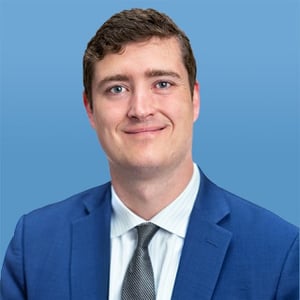
Alexander Gray joined AFPC as a Senior Fellow in National Security Affairs in February 2021. His work focuses on U.S. security and defense strategy in the Indo-Pacific; U.S.-China competition globally, particularly in the Pacific Islands and the Polar Regions; U.S. defense strategy and modernization for an era of Great Power competition; and the intersection of U.S. national and economic security.
Mr. Gray most recently served as Deputy Assistant to the President and Chief of Staff of the National Security Council (NSC) at the White House, where he was responsible for the management of the National Security Advisor’s Front Office and the budget, security, and personnel functions of the NSC. Previously, Mr. Gray served as Special Assistant to the President for the Defense Industrial Base at the White House National Economic Council (NEC). He was the principal Executive Office of the President official focused on the health and resiliency of the defense and manufacturing industrial base and U.S. maritime industry. Mr. Gray played a key role in Executive Order 13806, the first-ever whole-of-government assessment of the U.S. defense industrial base.
Additionally, Mr. Gray was the Director for Oceania & Indo-Pacific Security at the NSC, the first NSC Director ever focused primarily on Australia, New Zealand, and the Pacific Islands. Mr. Gray represented the U.S. at the 2019 Presidential Inauguration in the Federated States of Micronesia; the 2019 Pacific Islands Forum in Tuvalu; and at numerous U.S.-Australia-New Zealand strategic dialogues and intelligence exchanges.
Earlier in his career, Mr. Gray was a Member of the 2016 Presidential Transition Team at the U.S. Department of State and served as Senior Advisor to former U.S. Rep. J. Randy Forbes, a senior Member of the House Armed Services Committee. Mr. Gray is currently a Member of the Board of Visitors of the U.S. Coast Guard Academy for a three-year term. He is a recipient of the Secretary of Defense Medal for Outstanding Public Service and the National Security Council’s Outstanding Service Award.
Mr. Gray’s writings have appeared in Foreign Policy, The National Interest, National Review Online, The Weekly Standard, Naval War College Review, Strategic Studies Quarterly, and the Proceedings of the U.S. Naval Institute. He is a graduate of the Elliott School of International Affairs at George Washington University.
Judicial Law Clerk, U.S. District Court for the Southern District of Florida
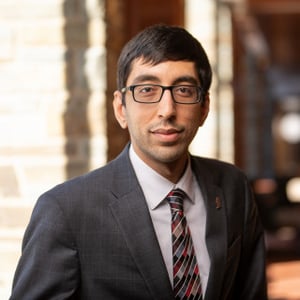
Nitin is a recent graduate of Cornell Law School. Before his time in Ithaca, he majored in International Studies and Political Science at Johns Hopkins University and focused on power competition in South Asia during his graduate studies at the University of Oxford.
President and Managing Director, The Arctic Institute
Dr. Romain Chuffart is the President and Managing Director of The Arctic Institute.
He is one of the co-hosts of The Arctic Institute’s Bookshelf Podcast. Before his appointment as Managing Director in September 2022, Romain served as Internal Communication Manager on The Arctic Institute’s Leadership board. Romain was also a contributing writer to the Institute’s weekly publication, The Arctic This Week App. He also serves as the TAI project manager for the “Challenges to Ocean Governance: Regional Disputes, Global Consequences? (OceanGov)” and Arctic Geopolitics in a New Era (GEOARC) in partnership with the Fridtjof Nansen Institute.
His research interests include human rights and the rights of Indigenous Peoples, international environmental law, Arctic cooperation and ocean governance. Romain also conducts more theoretical research on public international law combining insights from political theory, international relations, political geography, and other social sciences.
Romain is the current Nansen Professor in Arctic Studies (2024/2025) at the University of Akureyri, Iceland. He holds a PhD in law from Durham University in the United Kingdom. Between 2019 and 2023, Romain was part of the Durham Arctic Research Centre for Training and Interdisciplinary Collaboration (DurhamARCTIC). At Durham, his research focused on Indigenous rights and Arctic environmental governance. Romain also holds a MA in Polar Law from the University of Akureyri, Iceland.
He has published several articles in Arctic-specific journals on Arctic governance and Indigenous rights, such as The Yearbook of Polar Law, the Arctic Yearbook, and the Polar Journa
Senior Fellow in National Security Affairs, American Foreign Policy Council
Alexander Gray joined AFPC as a Senior Fellow in National Security Affairs in February 2021. His work focuses on U.S. security and defense strategy in the Indo-Pacific; U.S.-China competition globally, particularly in the Pacific Islands and the Polar Regions; U.S. defense strategy and modernization for an era of Great Power competition; and the intersection of U.S. national and economic security.
Mr. Gray most recently served as Deputy Assistant to the President and Chief of Staff of the National Security Council (NSC) at the White House, where he was responsible for the management of the National Security Advisor’s Front Office and the budget, security, and personnel functions of the NSC. Previously, Mr. Gray served as Special Assistant to the President for the Defense Industrial Base at the White House National Economic Council (NEC). He was the principal Executive Office of the President official focused on the health and resiliency of the defense and manufacturing industrial base and U.S. maritime industry. Mr. Gray played a key role in Executive Order 13806, the first-ever whole-of-government assessment of the U.S. defense industrial base.
Additionally, Mr. Gray was the Director for Oceania & Indo-Pacific Security at the NSC, the first NSC Director ever focused primarily on Australia, New Zealand, and the Pacific Islands. Mr. Gray represented the U.S. at the 2019 Presidential Inauguration in the Federated States of Micronesia; the 2019 Pacific Islands Forum in Tuvalu; and at numerous U.S.-Australia-New Zealand strategic dialogues and intelligence exchanges.
Earlier in his career, Mr. Gray was a Member of the 2016 Presidential Transition Team at the U.S. Department of State and served as Senior Advisor to former U.S. Rep. J. Randy Forbes, a senior Member of the House Armed Services Committee. Mr. Gray is currently a Member of the Board of Visitors of the U.S. Coast Guard Academy for a three-year term. He is a recipient of the Secretary of Defense Medal for Outstanding Public Service and the National Security Council’s Outstanding Service Award.
Mr. Gray’s writings have appeared in Foreign Policy, The National Interest, National Review Online, The Weekly Standard, Naval War College Review, Strategic Studies Quarterly, and the Proceedings of the U.S. Naval Institute. He is a graduate of the Elliott School of International Affairs at George Washington University.
Judicial Law Clerk, U.S. District Court for the Southern District of Florida
Nitin is a recent graduate of Cornell Law School. Before his time in Ithaca, he majored in International Studies and Political Science at Johns Hopkins University and focused on power competition in South Asia during his graduate studies at the University of Oxford.
Partner, Holtzman Vogel
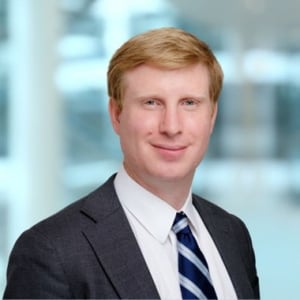
Kellen is an experienced trial and appellate lawyer who litigates criminal, civil, and regulatory cases in a variety of areas, including cybersecurity & privacy, constitutional law, complex fraud, and national security. In criminal matters, he has obtained declinations, dismissals, misdemeanor pleas, and presidential pardons for prominent individuals and companies facing federal investigations. In civil matters, he has successfully defended Fortune 500 companies in multidistrict litigation and brought affirmative litigation to challenge government overreach. Kellen has a perfect record in both jury trials and appellate arguments: he has twice obtained reversals of jury verdicts on appeal and he won every trial and appeal during his six years as a federal prosecutor.
As an Assistant U.S. Attorney in the Eastern District of Virginia, Kellen obtained a hacking indictment against Julian Assange and represented the United States at Assange’s extradition hearings. He also received the Attorney General’s Award for leading the trial and arguing the appeal in a case charging a malware-testing company with aiding and abetting the 2013 cyberattack on Target Stores. The case is now the lead precedent governing when tech companies can be held liable for crimes committed by their users. Kellen won convictions in dozens of cases involving hacking, wiretapping, complex fraud, conspiracy/RICO, public corruption, national security, and intellectual property.
Kellen was later promoted to Deputy Assistant Attorney General of DOJ’s National Security Division (NSD), where he ran NSD’s Appellate Unit, which represents the DOJ in civil and criminal appeals affecting national security and advises on sensitive prosecutions involving export controls/sanctions, trade secrets, and the Foreign Agents Registration Act (FARA). In that role, Kellen oversaw the defense of President Trump’s TikTok and WeChat bans and successfully sought certiorari in civil cases interpreting the Foreign Intelligence Surveillance Act and the State Secrets doctrine.
Partner, Holtzman Vogel
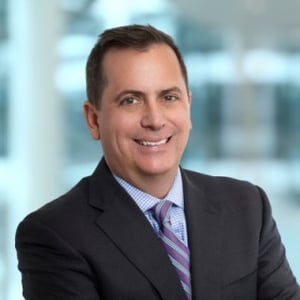
Jonathan Fahey is partner with Holtzman Vogel and focuses his practice on investigations and white-collar criminal defense, representing individuals and corporations in high-stakes litigation in federal and state court.
A former federal and state prosecutor and seasoned trial lawyer, having tried dozens of criminal and civil cases to a jury in federal and state court, Jonathan has also successfully litigated significant constitutional issues. He also utilizes his years of leading grand jury investigations to assist clients with government and corporate investigations.
Jonathan began his career as a judicial law clerk for the Arlington County Circuit Court. He then worked as an Assistant Commonwealth’s Attorney in Fairfax County before transitioning to the United States Attorney’s Office in the Eastern District of Virginia, where he served as an Assistant United States Attorney and Special Assistant United States Attorney.
While with the United States Attorney’s Office, Jonathan led grand jury investigations in cases involving RICO, drug trafficking, human trafficking, public corruption, and white-collar offenses. For his work, he received multiple awards, including the Attorney General’s John Marshall Award, for the prosecution of a serial killer and sexual predator. He held several leadership positions within the office, including serving as the chief of the Special Assistant United States Attorney Section, where he trained and supervised attorneys in the prosecution of felony and misdemeanor cases. He also regularly conducted training for law enforcement agencies on legal and ethical issues.
In addition to his work as a criminal prosecutor, Jonathan has significant leadership experience within the executive branch. He served as the general counsel with the White House Office of National Drug Control Policy. He also served as Deputy Assistant Secretary at the Department of Homeland Security, Acting Principal Legal Advisor and then Acting Director for Immigration and Customs Enforcement.
Jonathan appears frequently on Fox News and Fox Business providing legal analysis as well as commentary on current events and political issues.
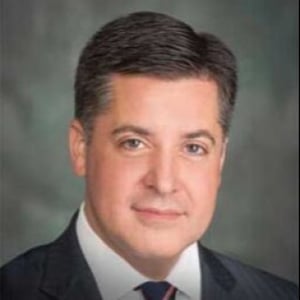
General Counsel and Chief Compliance Officer, SAP National Security Services
Joseph Moreno is SAP NS2’s General Counsel and Chief Compliance Officer. Joe manages legal risk, oversees compliance, and ensures the company operates within legal boundaries as we conduct business with the U.S. Government and highly regulated entities.
Prior to joining SAP NS2, Joe was a Global Litigation partner with Cadwalader, Wickersham & Taft LLP. Before private practice, Joe served as a federal prosecutor at the U.S. Department of Justice in the National Security Division’s Counterterrorism Section, where he investigated and prosecuted international money laundering, terrorist financing, and other financial crimes. A decorated combat veteran of Operations Enduring Freedom and Iraqi Freedom, Joe is a Lieutenant Colonel in the United States Army Reserve and has served on active duty in Europe, the Middle East and Africa.
Joe earned his undergraduate degree from Stony Brook University, his law degree from St. John’s University School of Law, and an M.B.A. from St. John’s University Peter J. Tobin College of Business.
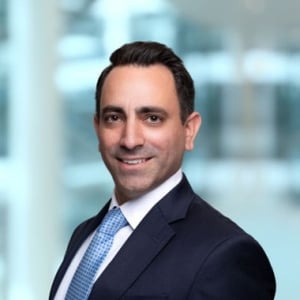
Partner, Holtzman Vogel
Mark Pinkert is a litigation and appellate partner with Holtzman Vogel. He represents clients at every stage of litigation, in state and federal courts around the country. He has extensive experience in constitutional law, administrative law, political law, antitrust, white collar defense, and complex commercial disputes. Additionally, Mark maintains an active practice focused on religious freedom, First Amendment rights, and combatting antisemitism, especially on college campuses.
Mark is a formidable writer and advocate. He has drafted letters, white papers to government agencies, legal memoranda, regulatory comments, complaints, dispositive motions, motions in limine, appellate briefs, and several briefs in the U.S. Supreme Court. His incisive and persuasive writing style has helped him earn key victories for his clients. Mark has argued a Daubert motion in a multi-billion-dollar environmental dispute and was recently appointed lead counsel by the Eleventh Circuit Court of Appeals to represent an indigent petitioner in a habeas corpus appeal. Mark’s legal commentary has been published in The Wall Street Journal, National Review, Times of Israel, Daily Business Review, University of Miami Law Review, and many others.
Mark is also an adept legal strategist, advising some of the largest companies in the world on their most pressing issues. Rather than merely react to problems, he provides holistic thinking and anticipates issues before they arise. He helps clients develop proactive plans of action that mitigate risks, avoid conflict, and reduce costs.
Before joining Holtzman Vogel, Mark worked at a global law firm and clerked for the Honorable Adalberto Jordan (11th Cir.) and the Honorable Roy K. Altman (S.D. Fla.). Clerking at both the trial and appellate levels has given him rare insight into the federal court system and has sharpened his advocacy.
At Yale Law School, Mark was an Articles Editor for the Yale Law Journal and an editor for the Yale Journal of Law & Humanities. He was also a research assistant and taught constitutional law to high school students in New Haven.
Director, Center for Education Policy and Mark A. Kolokotrones Fellow in Education, The Heritage Foundation
As director of the Center for Education Policy at The Heritage Foundation, Lindsey Burke oversees Heritage’s research and policy on issues pertaining to preschool, K-12, and higher education reform. Burke’s research has been presented at academic conferences and published in peer-reviewed journals including Social Science Quarterly, Educational Research and Evaluation, and the Journal of School Choice, and her commentary and op-eds have appeared in numerous magazines and newspapers. She is a frequent guest on radio and television shows and speaks on education reform issues across the country and internationally. She has published evaluations of education choice options for public policy foundations across the country and has done extensive work shaping and evaluating education savings accounts (ESAs).
In 2021, Burke was tapped to join Governor-elect Glenn Youngkin’s transition steering committee and was also appointed to serve on the Youngkin landing team for education. Burke was also appointed by Governor Youngkin to serve on the Board of Visitors for George Mason University. Her term runs from July 1, 2022 to June 30, 2026.
Burke also serves as a fellow at EdChoice, the namesake foundation of Milton and Rose Friedman, on the national advisory board of Learn4Life, a network of public charter schools serving “opportunity youth,” on the board of the Educational Freedom Institute, on the advisory board of the Independent Women’s Forum’s Education Freedom Center, and as a Trustee of Choice Media.
In 2015, Burke won Heritage’s prestigious W. Glenn and Rita Ricardo Campbell Award in recognition of her work fighting for expanded education choice options. The award is given annually to a policy expert who has made “an outstanding contribution to the analysis and promotion of a free society.”
Burke holds a bachelor's degree in politics from Hollins University in Roanoke, VA, and a master of teaching degree in foreign language education from the University of Virginia. She earned her Ph.D. in education policy from George Mason University, where she examined the intersection of education choice and institutional theory.
Professor of Law, University of San Diego School of Law (Retired)
Gail Heriot is a recently retired law professor from the University of San Diego. She also served as a member of the U.S. Commission on Civil Rights from 2007 to 2025. She is also the chairman of the board of the American Civil Rights Project and the chair emerita of the Civil Rights practice group at the Federalist Society for Law & Public Policy.
Professor Heriot is a prolific writer in the area of civil rights. She is the author of many law review articles. She is also the editor (along with Maimon Schwarzschild) of the 2021 anthology, A Dubious Expediency: How Race Preferences Damage Higher Education. Her upcoming book is entitled, Why We Walk on Eggshell: How Our Civil Rights Laws Helped Bring About the Woke Era—And the Trump Era, Too.
Her writings for a general audience have appeared in the Wall Street Journal, the San Diego Union-Tribune, the National Review and many other newspapers and magazines.
In 1996, she co-chaired the successful “Yes on Proposition 209” campaign, which amended the California Constitution to prohibit state-sponsored discrimination or preferential treatment based on race, sex, color, ethnicity or national origin. In 2020, she co-chaired the “No on Proposition 16” campaign, which successfully prevented Proposition 209’s repeal.
Former Assistant Secretary for Civil Rights, U.S. Department of Education; Former Chair, U.S. Commission on Civil Rights
Catherine E. Lhamon served as Assistant Secretary of Education for Civil Rights from November 17, 2021 to January 20, 2025. Before that, she served as the Chair of the U.S. Commission on Civil Rights. President Obama appointed Lhamon to a six-year term on the Commission on December 15, 2016, and the Commission unanimously confirmed the President’s designation of Lhamon to chair the Commission on December 28, 2016. Lhamon also serves in the cabinet of California Governor Gavin Newsom, where she has been Legal Affairs Secretary since January 2019. Lhamon previously litigated civil rights cases at the National Center for Youth Law.
Before coming to the Commission, Lhamon served as the Assistant Secretary for Civil Rights at the U.S. Department of Education until January 2017. President Obama nominated her to the Assistant Secretary for Civil Rights position on June 10, 2013, and she was unanimously confirmed by the U.S. Senate on August 1, 2013. Immediately prior to joining the Department of Education, Lhamon was director of impact litigation at Public Counsel, the nation’s largest pro bono law firm. Before that, she practiced for a decade at the ACLU of Southern California, ultimately as assistant legal director.
Earlier in her career, Lhamon was a teaching fellow and supervising attorney in the Appellate Litigation Program at Georgetown University Law Center, after clerking for The Honorable William A. Norris on the United States Court of Appeals for the Ninth Circuit. In 2016, Politico Magazine named Lhamon one of Politico 50 Thinkers Transforming Politics and the National Action Network honored Lhamon with their Action & Authority Award. In 2015, Yale Law School named Lhamon their Gruber Distinguished Lecturer and the Association of University Centers on Disabilities awarded Lhamon their Special Recognition Award. Chronicle of Higher Education named Lhamon to their 2014 Influence List as the Enforcer. The Daily Journal listed her as one of California’s Top Women Litigators in 2010 and 2007, and as one of the Top 20 California Lawyers Under 40 in 2007. In 2004, California Lawyer magazine named Lhamon Attorney of the Year for Civil Rights.
Lhamon received her J.D. from Yale Law School, where she was the Outstanding Woman Law Graduate, and she graduated summa cum laude from Amherst College.
Thomas P. O’Neill, Jr. Professor of American Politics, Boston College; Co-Chair, Harvard Program on Constitutional Government
R. Shep Melnick is the Thomas P. O’Neill, Jr. Professor of American Politics at Boston College and co-chair of the Harvard Program on Constitutional Government. He is the author of The Crucible of Desegregation: The Uncertain Search for Educational Equality (Univeristy of Chicago Press, 2023); The Transformation of Title IX: Regulating Gender Equality in Education, (Brookings, 2018), Between the Lines: Interpreting Welfare Rights (Brookings,1994), and Regulation and the Courts: The Case of the Clean Air Act (Brookings, 1983), as well as many articles on courts, agencies, and public policy. He is currently completing a book on education and the civil rights state. In 2012 he received the American Political Science Association Law and Courts Section’s “Lasting Contribution” award. He received his BA and PhD from Harvard, and taught at Harvard and Brandeis before moving to Boston College. He has also been a Research Associate at Brookings, President of the New England Political Science Association, and an elected member of the NH House of Representatives.
General Counsel, Mountain States Legal Foundation
William E. Trachman is General Counsel for Mountain States Legal Foundation, where he protects the rights of individuals to live freely and securely under the U.S. Constitution. Previously, he was appointed to serve in the Department of Education as Deputy Assistant Secretary in the Office for Civil Rights. Prior to his appointment, he served as General Counsel to the Douglas County School District, where he helped litigate the fight for school choice in the school district. Presently, Mr. Trachman serves as Chair of the Colorado Federalist Society and the Vice Chair of the U.S. Commission on Civil Rights’ Colorado Advisory Board. He previously taught as an Adjunct Professor at the University of Denver, Sturm College of Law. He attended U.C. Berkeley for both undergraduate and law school, and then clerked for the Honorable Harris Hartz on the 10th Circuit Court of Appeals. Mr. Trachman is licensed in Colorado, California, and Washington, D.C.
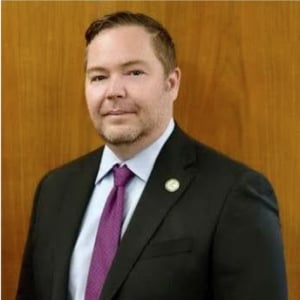
Assistant U.S. Attorney, Central District of California
President and Managing Director, The Arctic Institute
Dr. Romain Chuffart is the President and Managing Director of The Arctic Institute.
He is one of the co-hosts of The Arctic Institute’s Bookshelf Podcast. Before his appointment as Managing Director in September 2022, Romain served as Internal Communication Manager on The Arctic Institute’s Leadership board. Romain was also a contributing writer to the Institute’s weekly publication, The Arctic This Week App. He also serves as the TAI project manager for the “Challenges to Ocean Governance: Regional Disputes, Global Consequences? (OceanGov)” and Arctic Geopolitics in a New Era (GEOARC) in partnership with the Fridtjof Nansen Institute.
His research interests include human rights and the rights of Indigenous Peoples, international environmental law, Arctic cooperation and ocean governance. Romain also conducts more theoretical research on public international law combining insights from political theory, international relations, political geography, and other social sciences.
Romain is the current Nansen Professor in Arctic Studies (2024/2025) at the University of Akureyri, Iceland. He holds a PhD in law from Durham University in the United Kingdom. Between 2019 and 2023, Romain was part of the Durham Arctic Research Centre for Training and Interdisciplinary Collaboration (DurhamARCTIC). At Durham, his research focused on Indigenous rights and Arctic environmental governance. Romain also holds a MA in Polar Law from the University of Akureyri, Iceland.
He has published several articles in Arctic-specific journals on Arctic governance and Indigenous rights, such as The Yearbook of Polar Law, the Arctic Yearbook, and the Polar Journa
Senior Fellow in National Security Affairs, American Foreign Policy Council
Alexander Gray joined AFPC as a Senior Fellow in National Security Affairs in February 2021. His work focuses on U.S. security and defense strategy in the Indo-Pacific; U.S.-China competition globally, particularly in the Pacific Islands and the Polar Regions; U.S. defense strategy and modernization for an era of Great Power competition; and the intersection of U.S. national and economic security.
Mr. Gray most recently served as Deputy Assistant to the President and Chief of Staff of the National Security Council (NSC) at the White House, where he was responsible for the management of the National Security Advisor’s Front Office and the budget, security, and personnel functions of the NSC. Previously, Mr. Gray served as Special Assistant to the President for the Defense Industrial Base at the White House National Economic Council (NEC). He was the principal Executive Office of the President official focused on the health and resiliency of the defense and manufacturing industrial base and U.S. maritime industry. Mr. Gray played a key role in Executive Order 13806, the first-ever whole-of-government assessment of the U.S. defense industrial base.
Additionally, Mr. Gray was the Director for Oceania & Indo-Pacific Security at the NSC, the first NSC Director ever focused primarily on Australia, New Zealand, and the Pacific Islands. Mr. Gray represented the U.S. at the 2019 Presidential Inauguration in the Federated States of Micronesia; the 2019 Pacific Islands Forum in Tuvalu; and at numerous U.S.-Australia-New Zealand strategic dialogues and intelligence exchanges.
Earlier in his career, Mr. Gray was a Member of the 2016 Presidential Transition Team at the U.S. Department of State and served as Senior Advisor to former U.S. Rep. J. Randy Forbes, a senior Member of the House Armed Services Committee. Mr. Gray is currently a Member of the Board of Visitors of the U.S. Coast Guard Academy for a three-year term. He is a recipient of the Secretary of Defense Medal for Outstanding Public Service and the National Security Council’s Outstanding Service Award.
Mr. Gray’s writings have appeared in Foreign Policy, The National Interest, National Review Online, The Weekly Standard, Naval War College Review, Strategic Studies Quarterly, and the Proceedings of the U.S. Naval Institute. He is a graduate of the Elliott School of International Affairs at George Washington University.
Judicial Law Clerk, U.S. District Court for the Southern District of Florida
Nitin is a recent graduate of Cornell Law School. Before his time in Ithaca, he majored in International Studies and Political Science at Johns Hopkins University and focused on power competition in South Asia during his graduate studies at the University of Oxford.
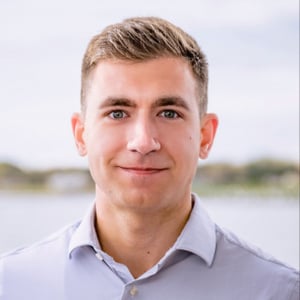
Policy Adviser, American Compass
Mark DiPlacido is a Policy Adviser at American Compass. Before that, he worked on Governor Ron DeSantis's campaign for President. He has also worked as the Deputy Assistant Trade Representative for Public Affairs at the Office of the U.S. Trade Representative, Heritage Action, and the U.S. Senate. He is a graduate of Yale University.
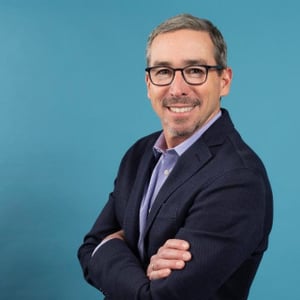
Peter Wertheim Professor in Urban Policy, Harvard Kennedy School
Gordon Hanson is the Peter Wertheim Professor in Urban Policy at Harvard Kennedy School (Remembrance for Peter Wertheim) and Academic Dean for Strategy and Engagement at Harvard Kennedy School. He is best known for his research on the labor market consequences of globalization, including pioneering work on the China trade shock. Hanson’s current research addresses the causes and consequences of regional job loss, the effectiveness of place-based policies in alleviating regional economic distress, and how the energy transition will affect local labor markets. This work is part of the Reimagining the Economy project at the Kennedy School, which Hanson co-directs with Dani Rodrik. Hanson’s related scholarship touches upon immigration, the globalization of production, and economic geography. He has published extensively in top economics journals, is widely cited for his research by scholars from across the social sciences and is frequently quoted in major media outlets. Hanson is a research associate at the National Bureau of Economic Research, a member of the Council on Foreign Relations, and past co-editor of the Journal of Economic Perspectives, the Review of Economics and Statistics, and the Journal of Development Economics. He received his PhD in economics from MIT in 1992 and his BA in economics from Occidental College in 1986. Prior to joining Harvard in 2020, he spent two decades at UC San Diego, where held the Pacific Economic Cooperation Chair in International Economic Relations at UC San Diego and was founding director of the Center on Global Transformation. Hanson previously served on the economics faculties of the University of Michigan and the University of Texas.
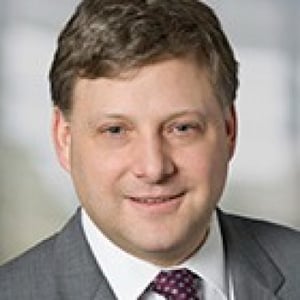
Partner, Sullivan & Cromwell LLP
Eric Kadel is engaged in a wide variety of corporate, transactional and regulatory matters. He is a member of the Firm’s Corporate and Finance, Financial Services, Investment Management, Alternative Investment Management, Cybersecurity, and Commodities, Futures and Derivatives Groups. With regard to financings, Mr. Kadel regularly represents participants in capital markets transactions, and dealers and end users in connection with structuring and documenting a wide variety of swaps and other derivatives, including equity, credit default and commodity swaps, options and forwards. Mr. Kadel’s work in the investment management area includes advising public and private investment companies and investment advisers on a wide variety of transactional, regulatory, compliance and other matters, including registration and regulation. Mr. Kadel also advises clients of the Firm regarding developments in the laws regulating the financial services industry and on cybersecurity issues. Mr. Kadel is currently an adjunct professor at George Washington University Law School.
In addition, Mr. Kadel is one of the principal partners in the Firm’s International Trade and Investment practice. He counsels and represents clients on questions about U.S. economic sanctions, including those administered by the Treasury Department’s Office of Foreign Assets Control (“OFAC”), United States antiboycott requirements under the Export Administration Regulations administered and enforced by the Commerce Department’s Office of Antiboycott Compliance within the Bureau of Industry and Security, Bank Secrecy Act/anti‐money laundering laws and the U.S. Foreign Corrupt Practices Act (“FCPA”). Mr. Kadel’s practice includes analysis of proposed transactions and business relationships; due diligence and design and review of compliance procedures and strategies; and internal investigations, voluntary disclosures and government enforcement actions. Mr. Kadel also regularly advises clients regarding questions arising under Exon-Florio and the transaction review process administered by the Committee on Foreign Investment in the United States (“CFIUS”), and has represented clients before CFIUS on many national security reviews.
Partner, Holtzman Vogel
Kellen is an experienced trial and appellate lawyer who litigates criminal, civil, and regulatory cases in a variety of areas, including cybersecurity & privacy, constitutional law, complex fraud, and national security. In criminal matters, he has obtained declinations, dismissals, misdemeanor pleas, and presidential pardons for prominent individuals and companies facing federal investigations. In civil matters, he has successfully defended Fortune 500 companies in multidistrict litigation and brought affirmative litigation to challenge government overreach. Kellen has a perfect record in both jury trials and appellate arguments: he has twice obtained reversals of jury verdicts on appeal and he won every trial and appeal during his six years as a federal prosecutor.
As an Assistant U.S. Attorney in the Eastern District of Virginia, Kellen obtained a hacking indictment against Julian Assange and represented the United States at Assange’s extradition hearings. He also received the Attorney General’s Award for leading the trial and arguing the appeal in a case charging a malware-testing company with aiding and abetting the 2013 cyberattack on Target Stores. The case is now the lead precedent governing when tech companies can be held liable for crimes committed by their users. Kellen won convictions in dozens of cases involving hacking, wiretapping, complex fraud, conspiracy/RICO, public corruption, national security, and intellectual property.
Kellen was later promoted to Deputy Assistant Attorney General of DOJ’s National Security Division (NSD), where he ran NSD’s Appellate Unit, which represents the DOJ in civil and criminal appeals affecting national security and advises on sensitive prosecutions involving export controls/sanctions, trade secrets, and the Foreign Agents Registration Act (FARA). In that role, Kellen oversaw the defense of President Trump’s TikTok and WeChat bans and successfully sought certiorari in civil cases interpreting the Foreign Intelligence Surveillance Act and the State Secrets doctrine.
Partner, Holtzman Vogel
Jonathan Fahey is partner with Holtzman Vogel and focuses his practice on investigations and white-collar criminal defense, representing individuals and corporations in high-stakes litigation in federal and state court.
A former federal and state prosecutor and seasoned trial lawyer, having tried dozens of criminal and civil cases to a jury in federal and state court, Jonathan has also successfully litigated significant constitutional issues. He also utilizes his years of leading grand jury investigations to assist clients with government and corporate investigations.
Jonathan began his career as a judicial law clerk for the Arlington County Circuit Court. He then worked as an Assistant Commonwealth’s Attorney in Fairfax County before transitioning to the United States Attorney’s Office in the Eastern District of Virginia, where he served as an Assistant United States Attorney and Special Assistant United States Attorney.
While with the United States Attorney’s Office, Jonathan led grand jury investigations in cases involving RICO, drug trafficking, human trafficking, public corruption, and white-collar offenses. For his work, he received multiple awards, including the Attorney General’s John Marshall Award, for the prosecution of a serial killer and sexual predator. He held several leadership positions within the office, including serving as the chief of the Special Assistant United States Attorney Section, where he trained and supervised attorneys in the prosecution of felony and misdemeanor cases. He also regularly conducted training for law enforcement agencies on legal and ethical issues.
In addition to his work as a criminal prosecutor, Jonathan has significant leadership experience within the executive branch. He served as the general counsel with the White House Office of National Drug Control Policy. He also served as Deputy Assistant Secretary at the Department of Homeland Security, Acting Principal Legal Advisor and then Acting Director for Immigration and Customs Enforcement.
Jonathan appears frequently on Fox News and Fox Business providing legal analysis as well as commentary on current events and political issues.
General Counsel and Chief Compliance Officer, SAP National Security Services
Joseph Moreno is SAP NS2’s General Counsel and Chief Compliance Officer. Joe manages legal risk, oversees compliance, and ensures the company operates within legal boundaries as we conduct business with the U.S. Government and highly regulated entities.
Prior to joining SAP NS2, Joe was a Global Litigation partner with Cadwalader, Wickersham & Taft LLP. Before private practice, Joe served as a federal prosecutor at the U.S. Department of Justice in the National Security Division’s Counterterrorism Section, where he investigated and prosecuted international money laundering, terrorist financing, and other financial crimes. A decorated combat veteran of Operations Enduring Freedom and Iraqi Freedom, Joe is a Lieutenant Colonel in the United States Army Reserve and has served on active duty in Europe, the Middle East and Africa.
Joe earned his undergraduate degree from Stony Brook University, his law degree from St. John’s University School of Law, and an M.B.A. from St. John’s University Peter J. Tobin College of Business.
Partner, Holtzman Vogel
Mark Pinkert is a litigation and appellate partner with Holtzman Vogel. He represents clients at every stage of litigation, in state and federal courts around the country. He has extensive experience in constitutional law, administrative law, political law, antitrust, white collar defense, and complex commercial disputes. Additionally, Mark maintains an active practice focused on religious freedom, First Amendment rights, and combatting antisemitism, especially on college campuses.
Mark is a formidable writer and advocate. He has drafted letters, white papers to government agencies, legal memoranda, regulatory comments, complaints, dispositive motions, motions in limine, appellate briefs, and several briefs in the U.S. Supreme Court. His incisive and persuasive writing style has helped him earn key victories for his clients. Mark has argued a Daubert motion in a multi-billion-dollar environmental dispute and was recently appointed lead counsel by the Eleventh Circuit Court of Appeals to represent an indigent petitioner in a habeas corpus appeal. Mark’s legal commentary has been published in The Wall Street Journal, National Review, Times of Israel, Daily Business Review, University of Miami Law Review, and many others.
Mark is also an adept legal strategist, advising some of the largest companies in the world on their most pressing issues. Rather than merely react to problems, he provides holistic thinking and anticipates issues before they arise. He helps clients develop proactive plans of action that mitigate risks, avoid conflict, and reduce costs.
Before joining Holtzman Vogel, Mark worked at a global law firm and clerked for the Honorable Adalberto Jordan (11th Cir.) and the Honorable Roy K. Altman (S.D. Fla.). Clerking at both the trial and appellate levels has given him rare insight into the federal court system and has sharpened his advocacy.
At Yale Law School, Mark was an Articles Editor for the Yale Law Journal and an editor for the Yale Journal of Law & Humanities. He was also a research assistant and taught constitutional law to high school students in New Haven.

Is Efficiency Desirable in Civil Rights Enforcement?
Lindsey Burke, Gail L. Heriot, Catherine E. Lhamon, R. Shep Melnick, William E. Trachman
The Trump Administration may bring significant changes to civil rights enforcement in the executive branch....
Is Efficiency Desirable in Civil Rights Enforcement?
Theories of Presidential Power Series
Criminal Justice Reform: State and Federal Perspectives
Los Angeles Lawyers Chapter
Los Angeles, CAIce to Meet You, Greenland? U.S. Acquisition Attempts
Romain Chuffart, Alexander Gray, Nitin R. Nainani
Discussions about the United States acquiring Greenland have re-emerged in public discourse, particularly during the...
Ice to Meet You, Greenland? U.S. Acquisition Attempts
Romain Chuffart, Alexander Gray, Nitin R. Nainani
Discussions about the United States acquiring Greenland have re-emerged in public discourse, particularly during the...
Ice to Meet You, Greenland? U.S. Acquisition Attempts
The Art of the Tariff: The Trump Administration and Trade
Topics
The Shot Heard Round The World
In May of 1773, to rescue the nearly bankrupt East India Company, the British Parliament...
IHC Update: Protecting Your Company from the Inside – Analyzing New Administration Policies, Opposing State AG Policies, and Internal Pressures
Kellen Dwyer, Jonathan L. Fahey, Joseph Moreno, Mark I. Pinkert
Immediately after being confirmed, Attorney General Pam Bondi issued a slate of memos to Justice...
IHC Update: Protecting Your Company from the Inside – Analyzing New Administration Policies, Opposing State AG Policies, and Internal Pressures