

Distinguished University Professor, Antonin Scalia Law School, George Mason University
University Professor Nelson Lund is the author of Rousseau’s Rejuvenation of Political Philosophy: A New Introduction. He has also written widely in the field of constitutional law, including articles on constitutional interpretation, federalism, separation of powers, the Second Amendment, the Commerce Clause, the Speech or Debate Clause, the Equal Protection Clause, and the Uniformity Clause. In addition, he has published articles in the fields of employment discrimination and civil rights, the legal regulation of medical ethics, and the application of economic analysis to legal institutions and legal ethics.
Professor Lund graduated from St. John's College in Annapolis, Maryland, after which he received an MA in philosophy from the Catholic University of America and a PhD in political science from Harvard University. He left the faculty of the University of Chicago to attend its law school, where he served as executive editor of the University of Chicago Law Review and chapter chairman of the Federalist Society for Law and Public Policy Studies. After law school, he held positions at the United States Department of Justice in the Office of the Solicitor General and the Office of Legal Counsel. He also served as a law clerk to the Honorable Patrick E. Higginbotham of the United States Court of Appeals for the Fifth Circuit and to the Honorable Sandra Day O'Connor of the United States Supreme Court. Following his clerkship with Justice O'Connor, Professor Lund served in the White House as associate counsel to the president from 1989 to 1992.
Since joining the faculty at George Mason University's Antonin Scalia Law School, Professor Lund has taught Constitutional Law, Legislation, Federal Election Law, Employment Discrimination, State and Local Government, and seminars on the Second Amendment and on a variety of topics in Jurisprudence.

Partner, Steptoe & Johnson LLP
Stewart Baker is a partner in the law firm of Steptoe & Johnson in Washington, D.C. From 2005 to 2009, he was the first Assistant Secretary for Policy at the Department of Homeland Security. His law practice covers cybersecurity, data protection, homeland security, and travel and foreign investment regulation; he has been awarded one patent.
Mr. Baker has been General Counsel of the National Security Agency and General Counsel of the commission that investigated WMD intelligence failures prior to the Iraq war. He is the author of Skating on Stilts, a book on terrorism, cybersecurity, and other technology issues; he also hosts the weekly Cyberlaw Podcast.
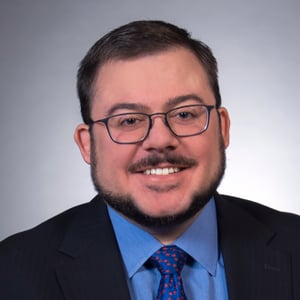
Research Fellow and Regulatory Counsel, Competitive Enterprise Institute
As Research Fellow and Regulatory Counsel, Ryan Radia focuses on adapting law and public policy to the unique challenges of the information age. His research areas at the Competitive Enterprise Institute include intellectual property, information privacy, telecommunications, cybersecurity, competition policy, media regulation, and Internet freedom.
Radia has published articles in major news outlets including The Seattle Times, Forbes, San Jose Mercury News, The Star-Ledger, Ad Age, Investor’s Business Daily, and Ars Technica. He has been quoted in publications including the Los Angeles Times, The New Republic, TIME, Fortune, Chicago Tribune, San Francisco Chronicle, The Boston Globe, POLITICO, The Baltimore Sun, and Bloomberg. He has appeared on dozens of television and radio programs, including “Marketplace” on National Public Radio, “Cavuto” on Fox Business Network, and the “Laura Ingraham Show” on Talk Radio Network.
Radia also blogs on the Technology Liberation Front, a group technology policy blog dedicated to advancing freedom and liberty in the digital age. His commentary has been referenced by blogs including The Atlantic’s Daily Dish, The Washington Post’s Faster Forward, and Techdirt. His research has been cited scholarly journals such as the Brooklyn Law Review, the University of Pennsylvania Journal of Business Law, and the Iowa Law Review Bulletin.
Radia earned his J.D. from The George Washington University Law School, where he served as Senior Articles Editor of the Federal Communications Law Journal. He also holds a B.A. in economics from Northwestern University. Before joining CEI in 2007, he worked in the alternative risk financing sector.
He is admitted to the District of Columbia Bar.

Executive Vice President, The Federalist Society
Dean Reuter is Executive Vice President at the Federalist Society for Law and Public Policy Studies. He has served in two federal government agency Offices of the Inspector General, as Counsel to the Inspector General and Deputy Inspector General, responsible for policing the use of federal funds granted and contracted through those agencies. As such, he helped conduct and oversee criminal investigations across the country. He is the principal author of the non-fiction book, The Hidden Nazi: The Untold Story of America's Deal with the Devil, and editor of Liberty’s Nemesis: The Unchecked Expansion of the State and Confronting Terror: 9/11 and the Future of American National Security. He was appointed by the President and served as Vice-Chairman of the Board of Directors of the Corporation for National and Community Service, and recently served as an appointee on the U.S. Commission on Presidential Scholars. He is a graduate of Hood College (BA with Honors) and the University of Maryland School of Law.

Senior Litigation Counsel, New Civil Liberties Alliance
Throughout his 40-year career in private law practice in Washington, D.C., Richard Samp has specialized in appellate litigation with a focus on constitutional law. He served as Chief Counsel of the Washington Legal Foundation for more than 30 years. He has participated directly in more than 200 cases before the U.S. Supreme Court. Mr. Samp is a graduate of Harvard College and the University of Michigan Law School and clerked for a federal judge in Detroit.
Of Counsel, Wimberly, Lawson, Steckel, Schneider & Stine P.C.
Elizabeth K. (Betsy) Dorminey is of counsel with the firm. She received a B.A. magna cum laude from the University of Georgia in 1976, a license ès lettres from the Sorbonne in 1978, a J.D. from UGA’s Law School in 1981, and an LL.M. from Columbia in 1984. She clerked for the Hon. Ed Carnes on the U.S. Court of Appeals for the Eleventh Circuit and worked for the U.S. Departments of Justice and Commerce prior to joining the firm. Ms. Dorminey is a member of the State Bars of Georgia, Connecticut, and New York, and is admitted to practice in Federal District and Appellate Courts throughout the Southeast. With Larry Stine and Mark Waschak, she is co-author of “Occupational Safety & Health Law: Compliance and Practice” (Thomson/West 2008). Her practice concentrates in all aspects of employer defense, including but not limited to litigation the Fair Labor Standards Act, Title VII employment discrimination, and occupational safety and health. She is a member of the Executive Committee of the Labor & Employment Practice Group of the Federalist Society, and serves on the Board of the Friends of the Georgia Museum of Art.

Professor of Law, Ohio Northern University Pettit College of Law
Scott Gerber clerked for U.S. District Judge Ernest C. Torres of the District of Rhode Island and practiced with the Boston-based law firm Bingham, Dana & Gould. He is a member of the Massachusetts, Colorado and Virginia bars as well as the U.S. Supreme Court bar. He is the 2002, 2009, 2011 and 2012 winner of the Fowler V. Harper Award for excellence in legal scholarship and the 2004, 2013 and 2016 recipient of the Daniel S. Guy Award for excellence in legal journalism. He held the Ella & Ernest Fisher chair in law at Ohio Northern University from 2008-10. He has served on the Ohio Advisory Committee of the U.S. Commission on Civil Rights since 2008 and was appointed to the Association of American Law Schools Committee to Review Scholarly Papers for the 2018 Annual Meeting. He is an associated scholar at Brown University's Political Theory Project. StateStats.org named him one of the top law professors in Ohio. He was on sabbatical as a visiting professor at Brown University's Political Theory Project during the 2018-19 academic year.
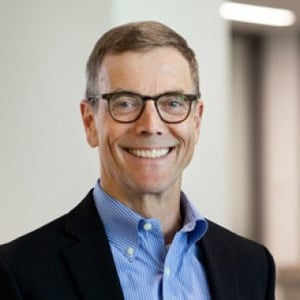
Owen L. Coon Professor of Law, Northwestern University Pritzker School of Law
James E. Pfander has focused his teaching and research on the role of the federal judiciary under Article III of the Constitution. His latest book, Constitutional Torts and the War on Terror (Oxford U. Press 2017), documents and evaluates the failure of the federal courts to address the merits of the claims of individuals who were subjected to extraordinary rendition, military detention, and torture during the Bush Administration’s war on terror. Other books include Civil Procedure: A Modern Approach (7th ed. 2018) (with Marcus, Redish & Sherman); Federal Courts: Cases, Comments, and Questions (8th ed. 2018) (with Redish & Sherry), Principles of Federal Jurisdiction (3d ed. 2017).
Pfander’s recent scholarship explores the role of non-contentious jurisdiction in a federal system otherwise largely devoted to the resolution of disputes between adverse parties; the forgotten distinction between “cases” and “controversies” in defining the work of the federal judiciary; the lessons available from Scotland’s civil-law-inflected approach to the problem of litigant standing; the origins and meaning of the anti-injunction act of 1793; and the possible influence of the Scottish judicial system on the structure of the federal court system.
A member of the American Law Institute, Pfander recently concluded his work as reporter/consultant to the Federal-State Jurisdiction Committee of the Judicial Conference of the United States. He has served as chair of both the federal courts and civil procedure sections of the Association of American Law Schools.
Joseph Kushner Distinguished Professor of Civil Liberties Law, Hofstra University School of Law
After graduation from Harvard Law School, Professor Friedman worked for the New York City law firm of Kaye Scholer, Fierman Hays & Handler. He left the firm when his play, The Trial of Lee Harvey Oswald , was produced on Broadway and was later made into a television movie. He became general counsel of a New York publishing firm, Chelsea House Publishers, and then was selected as associate director of the Committee on Courtroom Conduct for the Association of the Bar of the City of New York, where he and Norman Dorsen wrote Disorder in the Court , the leading work on the subject. Thereafter, he was the director of the Committee for Public Justice and staff attorney for the American Civil Liberties Union during the Watergate era, where he litigated numerous cases dealing with national security, misuse of government power, the legality of the Vietnam War and the draft, and the First Amendment. He continues to write amicus briefs on important Supreme Court cases for the ACLU, PEN American Center, the Association of the Bar of the City of New York, and other public interest groups. He has testified before Congress on numerous occasions.
Professor Friedman is the author of more than 100 law journal articles and newspaper columns in such publications as The New York Times, The Nation, The New Republic, and The American Scholar. His bookThe Justices of the United States Supreme Court, 1789-1969 , won the annual Scribes Award for the best book on a legal subject. Among his other books areThe Supreme Court Confronts Abortion, Unquestioning Obedience to the President, The Wise Minority and Southern Justice .He is a leading copyright lawyer and has represented such entertainers as Kathleen Turner and James Brown as well as many authors such as John McPhee, I.B. Singer, Stephen Spender, Hunter Thompson, Susan Sontag, Oscar Hijuelos and the Estates of T.S. Eliot and Edith Wharton. He has also represented Jean Harris in an important First Amendment case dealing with the "Son of Sam" law, and Rubin "Hurricane" Carter, for whom he obtained a writ of habeas corpus, freeing him from 19 years of imprisonment. His activities on behalf of Hurricane Carter were featured in the film "The Hurricane" starring Denzel Washington. He acts as general counsel to PEN American Center, a leading writers group fighting censorship.
He lectures regularly to federal judges around the country, under the auspices of the Federal Judicial Center, on civil rights and criminal procedure. He frequently lectures at continuing legal education gatherings, such as those sponsored by the Practising Law Institute, the National Association of Criminal Defense Lawyers and the American Bar Association/American Law Institute, on subjects such as civil rights, civil procedure, criminal procedure and the First Amendment.
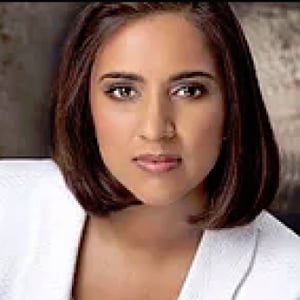
Founding Partner, Lally & Misir, LLP
Deborah Misir is a founding partner of Lally & Misir, LLP. She specializes in complex civil and white collar trial and appellate litigation before federal, state and administrative courts. In addition, she provides advice on regulatory compliance, and public policy issues. In addition to her practice with the firm, Ms. Misir is a professor at Touro Law School, where she has taught constitutional and administrative law, and directs the Veterans Clinic.
Ms. Misir’s clients have included employers, unions, trade associations, local governments, and companies in the finance, hospitality, technology and energy sectors. She has also represented many individuals, including other lawyers, in white collar criminal, ethics and employment matters.
A leading federal litigator and expert on constitutional and government regulatory law, Ms. Misir has over twenty years of experience in both government and private practice, including briefing over seventy federal Circuit Courts of Appeals cases up to and including writs of certiorari and amicus briefs before the U.S. Supreme Court, making numerous federal appellate oral arguments, and serving as lead counsel on many federal civil and criminal district court matters. She has won several cases with published decisions in the federal courts.
Before entering private practice, Ms. Misir served in the Administration of President George W. Bush as U.S. Deputy Assistant Secretary of Policy at the U.S. Department of Labor, ethics attorney at the White House Counsel’s Office, and Chief of Staff of the Occupational Safety and Health Administration. Ms. Misir started her career at the U.S. Department of Justice, serving in the Executive Office for Immigration Review, headquarters of the former U.S. Immigration and Naturalization Service (INS), and the Civil Division. At the Justice Department, among other things, she was specially assigned as counsel to the U.S. Foreign Terrorist Tracking Task Force, the counter-terrorism and intelligence task force created in the immediate wake of 9/11 to prevent future attacks, and as counsel to the U.S. delegation to the United Nation’s International Maritime Organization (IMO).
Ms. Misir graduated with a B.A. with honors in political science from the University of Chicago, and an M.A. from the University of Chicago’s Masters of Arts Program in the Social Sciences. She earned her law degree from the University of Minnesota Law School. After law school, Ms. Misir served honorably in the U.S. Marine Corps until an injury cut short her service.
Ms. Misir is President of the Indian American Bar Association of Long Island and Queens. She serves on the National Alumni Board of the University of Chicago’s Master of Arts Program in the Social Sciences (MAPSS), and previously served on the National Board of Governors of the Republican National Lawyers Association. She is a member of the American Bar Association, the Federal Bar Council, and the Nassau County Bar Association.
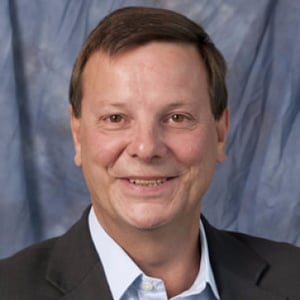
Professor of Law, Antonin Scalia Law School, George Mason University
Professor of Law Michael S. Greve joined the faculty of the Antonin Scalia Law School, George Mason University in fall 2012 after having served as John G. Searle Scholar at the American Enterprise Institute (AEI), where he specialized in constitutional law, courts, and business regulation and served as chairman of the Competitive Enterprise Institute. Prior to joining AEI, Greve was founder and co-director of the Center for Individual Rights, a public interest law firm specializing in constitutional litigation.
Greve has served previously as an adjunct professor at a number of universities, including Cornell and Johns Hopkins Universities, and has been a visiting professor at Boston College since 2004. He was awarded a PhD and an MA in government by Cornell University. Greve also earned a Diploma from the University of Hamburg in Germany.
A prolific writer, Greve is the author of nine books and a multitude of articles appearing in scholarly publications, as well as numerous editorials, short articles, and book reviews. He is a frequent speaker for professional and scholarly organizations and has made many appearances on radio and television.
In addition Greve has provided congressional and state legislative testimony, has lobbied and consulted in federal agency proceedings, and has provided litigation services and management in over 30 cases, including matters before the U.S. Supreme Court.
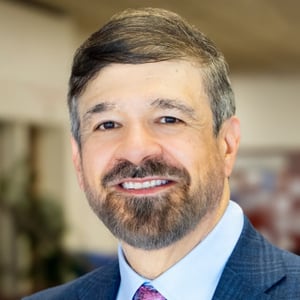
Hugh and Hazel Darling Foundation Professor of Law; Director, Center for the Study of Constitutional Originalism, University of San Diego School of Law
Joseph Kushner Distinguished Professor of Civil Liberties Law, Hofstra University School of Law
After graduation from Harvard Law School, Professor Friedman worked for the New York City law firm of Kaye Scholer, Fierman Hays & Handler. He left the firm when his play, The Trial of Lee Harvey Oswald , was produced on Broadway and was later made into a television movie. He became general counsel of a New York publishing firm, Chelsea House Publishers, and then was selected as associate director of the Committee on Courtroom Conduct for the Association of the Bar of the City of New York, where he and Norman Dorsen wrote Disorder in the Court , the leading work on the subject. Thereafter, he was the director of the Committee for Public Justice and staff attorney for the American Civil Liberties Union during the Watergate era, where he litigated numerous cases dealing with national security, misuse of government power, the legality of the Vietnam War and the draft, and the First Amendment. He continues to write amicus briefs on important Supreme Court cases for the ACLU, PEN American Center, the Association of the Bar of the City of New York, and other public interest groups. He has testified before Congress on numerous occasions.
Professor Friedman is the author of more than 100 law journal articles and newspaper columns in such publications as The New York Times, The Nation, The New Republic, and The American Scholar. His bookThe Justices of the United States Supreme Court, 1789-1969 , won the annual Scribes Award for the best book on a legal subject. Among his other books areThe Supreme Court Confronts Abortion, Unquestioning Obedience to the President, The Wise Minority and Southern Justice .He is a leading copyright lawyer and has represented such entertainers as Kathleen Turner and James Brown as well as many authors such as John McPhee, I.B. Singer, Stephen Spender, Hunter Thompson, Susan Sontag, Oscar Hijuelos and the Estates of T.S. Eliot and Edith Wharton. He has also represented Jean Harris in an important First Amendment case dealing with the "Son of Sam" law, and Rubin "Hurricane" Carter, for whom he obtained a writ of habeas corpus, freeing him from 19 years of imprisonment. His activities on behalf of Hurricane Carter were featured in the film "The Hurricane" starring Denzel Washington. He acts as general counsel to PEN American Center, a leading writers group fighting censorship.
He lectures regularly to federal judges around the country, under the auspices of the Federal Judicial Center, on civil rights and criminal procedure. He frequently lectures at continuing legal education gatherings, such as those sponsored by the Practising Law Institute, the National Association of Criminal Defense Lawyers and the American Bar Association/American Law Institute, on subjects such as civil rights, civil procedure, criminal procedure and the First Amendment.
Founding Partner, Lally & Misir, LLP
Deborah Misir is a founding partner of Lally & Misir, LLP. She specializes in complex civil and white collar trial and appellate litigation before federal, state and administrative courts. In addition, she provides advice on regulatory compliance, and public policy issues. In addition to her practice with the firm, Ms. Misir is a professor at Touro Law School, where she has taught constitutional and administrative law, and directs the Veterans Clinic.
Ms. Misir’s clients have included employers, unions, trade associations, local governments, and companies in the finance, hospitality, technology and energy sectors. She has also represented many individuals, including other lawyers, in white collar criminal, ethics and employment matters.
A leading federal litigator and expert on constitutional and government regulatory law, Ms. Misir has over twenty years of experience in both government and private practice, including briefing over seventy federal Circuit Courts of Appeals cases up to and including writs of certiorari and amicus briefs before the U.S. Supreme Court, making numerous federal appellate oral arguments, and serving as lead counsel on many federal civil and criminal district court matters. She has won several cases with published decisions in the federal courts.
Before entering private practice, Ms. Misir served in the Administration of President George W. Bush as U.S. Deputy Assistant Secretary of Policy at the U.S. Department of Labor, ethics attorney at the White House Counsel’s Office, and Chief of Staff of the Occupational Safety and Health Administration. Ms. Misir started her career at the U.S. Department of Justice, serving in the Executive Office for Immigration Review, headquarters of the former U.S. Immigration and Naturalization Service (INS), and the Civil Division. At the Justice Department, among other things, she was specially assigned as counsel to the U.S. Foreign Terrorist Tracking Task Force, the counter-terrorism and intelligence task force created in the immediate wake of 9/11 to prevent future attacks, and as counsel to the U.S. delegation to the United Nation’s International Maritime Organization (IMO).
Ms. Misir graduated with a B.A. with honors in political science from the University of Chicago, and an M.A. from the University of Chicago’s Masters of Arts Program in the Social Sciences. She earned her law degree from the University of Minnesota Law School. After law school, Ms. Misir served honorably in the U.S. Marine Corps until an injury cut short her service.
Ms. Misir is President of the Indian American Bar Association of Long Island and Queens. She serves on the National Alumni Board of the University of Chicago’s Master of Arts Program in the Social Sciences (MAPSS), and previously served on the National Board of Governors of the Republican National Lawyers Association. She is a member of the American Bar Association, the Federal Bar Council, and the Nassau County Bar Association.

No Conservative Consensus Yet: Douglas Ginsburg, Brett Kavanaugh, and Diane Sykes on the Second Amendment
Nelson Lund
Note from the Editor: This paper examines the largely unexplored subject of the different approaches...
The Upside-Down Constitution
Cyber Intelligence Sharing and Protection Act - Podcast
Stewart A. Baker, Ryan Radia, Dean Reuter
To listen, please right click on the audio file you wish to hear and then...
Touching on the Merits When Deciding Class Certification Motions: Ohio's Experience
Richard A. Samp
The Supreme Court’s Wal-Mart decision1 put to rest persistent arguments that federal courts, when deciding...
Losing Confidence in Confidentiality: Do Expanding Exceptions to the Attorney-Client Privilege Gut Its Purpose?
True or false: attorney-client communications, simply speaking, are privileged? False, both under law and—more importantly—in...
Veiled Meaning: Tolerance and Prohibition of the Hijab in the U.S. and France
Elizabeth K. Dorminey
Introduction France and the U.S. have much in common. Both nations share a commitment to...
A Distinct Judicial Power - Faculty Book Podcast
Scott D. Gerber, James E. Pfander
This Federalist Society Faculty Book Podcast features Professor Scott Gerber’s new book, A Distinct Judicial...
Was the Patient Protection and Affordable Care Act a Proper Exercise of Congressional Authority Under the U.S. Constitution's Commerce Clause?
R Cozzens, Leon Friedman, Deborah Misir
The Long Island Lawyers Chapter hosted this debate on May 22, 2012, at The Davenport...
Was the Patient Protection and Affordable Care Act a Proper Exercise of Congressional Authority Under the U.S. Constitution's Commerce Clause?
Long Island Lawyers Chapter
Mineola, NYLong Division: Redistricting in Pennsylvania