
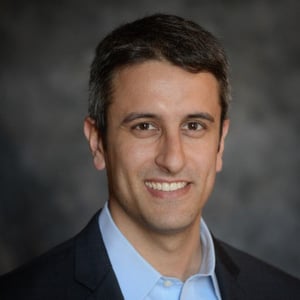
Senior Staff Attorney, Knight First Amendment Institute
Alex Abdo is a senior staff attorney at the Knight First Amendment Institute. Prior to joining the Institute, he was a senior staff attorney at the ACLU. He has been at the forefront of litigation relating to NSA surveillance, encryption, anonymous speech online, government transparency, and the post-9/11 abuse of detainees in U.S. custody. In 2015, he argued the closely watched appeal that resulted in the Second Circuit invalidating the NSA’s call-records program. He graduated from Yale College and Harvard Law School. After law school, Alex clerked for the Hon. Barbara M.G. Lynn, United States District Judge for the Northern District of Texas, and for the Hon. Rosemary Barkett, United States Circuit Judge for the Eleventh Circuit Court of Appeals.
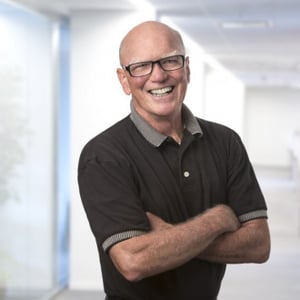
Partner, Steptoe & Johnson LLP
Stewart Baker is a partner in the law firm of Steptoe & Johnson in Washington, D.C. From 2005 to 2009, he was the first Assistant Secretary for Policy at the Department of Homeland Security. His law practice covers cybersecurity, data protection, homeland security, and travel and foreign investment regulation; he has been awarded one patent.
Mr. Baker has been General Counsel of the National Security Agency and General Counsel of the commission that investigated WMD intelligence failures prior to the Iraq war. He is the author of Skating on Stilts, a book on terrorism, cybersecurity, and other technology issues; he also hosts the weekly Cyberlaw Podcast.
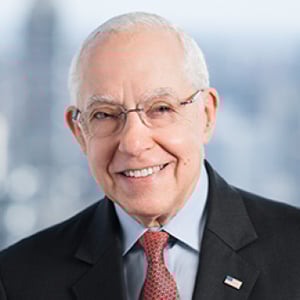
Former United States Attorney General
Michael B. Mukasey is the former Attorney General of the United States, the nation’s chief law enforcement officer. As Attorney General from November 2007 to January 2009, he oversaw the U.S. Department of Justice and advised on critical issues of domestic and international law.
From 1988 to 2006, Judge Mukasey served as a district judge in the United States District Court for the Southern District of New York, becoming Chief Judge in 2000.
From 1972 to 1976, Judge Mukasey served as an Assistant United States Attorney for the Southern District of New York, and as Chief of the Official Corruption Unit from 1975 to 1976. His practice consisted of criminal litigation on behalf of the government, including investigation and prosecution of narcotics, bank robbery, interstate theft, securities fraud, fraud on the government and bribery. From 1976 to 1987 and from 2006 to 2007 he was in private practice.
Judge Mukasey has received numerous honors, including the Federal Bar Council’s Learned Hand Medal for Excellence in Federal Jurisprudence. He served as Chairman of the Committee on Public Access to Information and Proceedings of the New York Bar Association from 1984 to 1987. He served on the Federal Courts Committee of the Association of the Bar of the City of New York from 1979 to 1982 and its Communications Law Committee from 1983 to 1986. Judge Mukasey was also a part-time lecturer at Columbia School of Law from January 1993 to May 2007, teaching trial advocacy.
He received his LL.B. from Yale Law School in 1967 and his B.A. from Columbia College in 1963.
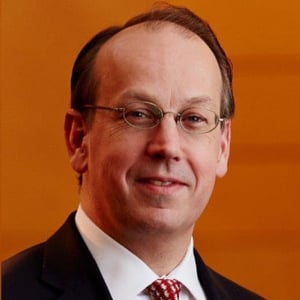
Partner, Clement & Murphy, PLLC
Paul served as the 43rd Solicitor General of the United States from June 2005 until June 2008. Before his confirmation as Solicitor General, he served as Acting Solicitor General for nearly a year and as Principal Deputy Solicitor General for over three years.
Paul has argued over 100 cases before the United States Supreme Court, including McConnell v. FEC, Tennessee v. Lane, United States v. Booker, MGM v. Grokster, Hobby Lobby v. Burwell, Epic Systems Corp. v. Lewis, Rucho v. Common Cause, Facebook v. Duguid, and TransUnion v. Ramirez. Paul has argued more Supreme Court cases since 2000 than any lawyer in or out of government. He has also argued many important cases in the lower courts, including Walker v. Cheney, United States v. Moussaoui and NFL v. Brady.
Paul’s practice focuses on appellate matters, constitutional litigation and strategic counseling. He represents a broad array of clients in the Supreme Court and in federal and state appellate courts. Last year, for example, he successfully argued Supreme Court cases involving significant issues of energy regulation, statutory interpretation, state sovereign immunity and Article III standing, and successfully argued a trademark appeal in the Fourth Circuit, and a constitutional appeal before the en banc Eleventh Circuit.
Paul focuses on high-stakes appeals. In recent years, he successfully defended a $1.2 billion jury verdict for clients in a Tenth Circuit case, while securing the reversal of an over $2 billion jury verdict for another client in the Seventh Circuit and the approval of a nearly $1 billion dollar class action settlement in the Third Circuit. He has initiated major administrative law challenges and constitutional litigation against the federal government, such as the successful challenge to the HHS drug-pricing rule and threatened challenges that led to the withdrawal of the Treasury Department’s proposed cryptocurrency regulations. He also counsels clients on a variety of strategic legal questions, whether arising from pending legislation, government inquiries or ongoing litigation.
Paul has undertaken substantial pro bono engagements in the Supreme Court, such as twice successfully representing the defendant in Bond v. United States and successfully representing the Omaha Tribe in Nebraska v. Parker, the guardian ad litem in Adoptive Couple v. Baby Girl, the defendant in Sekhar v. United States, a high school football coach in Kennedy v. Bremerton, and the Little Sisters of the Poor. Paul’s pro bono representation also precipitated the federal government’s confession of error in United States v. Rojas.
Following law school, Paul clerked for Judge Laurence H. Silberman of the U.S. Court of Appeals for the D.C. Circuit and for Associate Justice Antonin Scalia of the U.S. Supreme Court. After his clerkships, he went on to serve as Chief Counsel of the U.S. Senate Subcommittee on the Constitution, Federalism and Property Rights.
Paul is a Distinguished Lecturer in Law at the Georgetown University Law Center, where he has taught in various capacities since 1998. He also serves as a Senior Fellow of the Law Center’s Supreme Court Institute. He is the Justice Joseph Story Distinguished Practitioner in Residence at the Gray Center at Scalia Law School.
Shareholder, Jackson Lewis PC
Paul DeCamp is a Shareholder in the Washington, D.C. Region office of Jackson Lewis P.C. and leader of the firm’s Wage and Hour Practice Group. His practice focuses exclusively on management-side wage and hour law.
Mr. DeCamp devotes much of his practice to complex litigation, including class, collective, and hybrid actions. He has served as lead or co-counsel in scores of class and putative class cases around the country involving such industries as restaurants, pharmaceutical sales, financial services, retail, medical supplies, security, health care, information technology, and aerospace. Mr. DeCamp also defends federal and state agency investigations, conducts preventive compliance reviews, and provides day-to-day advice and counsel regarding such issues as exempt/non-exempt classification, permissible pay deductions, measuring working time, regular rate calculations for premium overtime pay, determining proper pay and duties for tipped employees, complying with state laws concerning meal and rest periods, and independent contractor status. He has provided extensive wage and hour guidance in a variety of industries including restaurants and hospitality, retail, wholesale distribution, health care, financial services, oil and gas, and government contracting.
Before joining Jackson Lewis, Mr. DeCamp served as Administrator of the U.S. Department of Labor’s Wage and Hour Division, the chief federal officer responsible for interpreting and enforcing the Nation’s wage and hour laws on behalf of roughly 135 million workers in 7.3 million workplaces around the country. Appointed by the President, he was in charge of a federal agency with close to 1,300 employees in more than 220 offices nationwide, operating on an annual budget of more than $170 million.
Mr. DeCamp has testified in Congress on a variety of wage and hour topics, most recently in 2014. He is a frequent speaker at seminars and conferences across the country, as well as an author of numerous articles and book chapters regarding wage and hour law and litigation. He is a member of the American Employment Law Council and the editorial advisory board for Thompson Publishing Group’s four Fair Labor Standards Act publications. Since 2011, Mr. DeCamp has been listed as one of the country's leading labor and employment lawyers in Chambers USA: America's Leading Lawyers for Business. He has also been selected for inclusion in Virginia Super Lawyers since 2013, after having been listed twice in Virginia Super Lawyers Rising Stars. OS Restaurant Partners (now Bloomin’ Brands), which operates Outback Steakhouse and Carrabba’s Italian Grill, among other restaurant concepts, has twice recognized Mr. DeCamp’s team at Jackson Lewis as “Purveyor of the Year.”
Mr. DeCamp received his A.B. in Government, magna cum laude, from Harvard College in 1992. In 1995, he earned his J.D. from the Columbia University School of Law, where he was a Notes Editor for the Columbia Law Review and the Director of the First-Year Moot Court Program. After law school, he clerked for the Honorable Alan E. Norris of the U.S. Court of Appeals for the Sixth Circuit.
Professor of Law, Antonin Scalia Law School, George Mason University
Eric R. Claeys is Professor of Law at the Antonin Scalia Law School, George Mason University. He has written widely in the fields of property, private law, and constitutional law. Professor Claeys’s current research interests focus on flourishing- and labor-based natural rights justifications for property—in American property theory, in intellectual property, and in contemporary regulation of shale gas exploration and hydraulic fracturing. He is a member of the American Law Institute, he serves on the ALI’s Members’ Consultative Group for the first Restatement of Copyright, and he also serves as an adviser to the Restatement (Fourth) of the Law of Property.
Professor Claeys received his JD from the University of Southern California Gould School of Law. He received his AB from Princeton University, and he is a former visiting fellow and current member of Princeton’s Politics Department’s James Madison Program in American Ideals and Institutions. After law school, Professor Claeys clerked for the Hon. Melvin Brunetti, U.S. Court of Appeals for the Ninth Circuit, and the Hon. William H. Rehnquist, Chief Justice of the United States.
Professor Claeys’s main teaching interests include Property, Torts, Jurisprudence, and Intellectual Property. In recent years, he has also taught Water Law, Remedies, Estates and Trusts, Trade Secrecy, Constitutional Law, Torts, and Oil and Gas law. Spring 2018, he is teaching Torts and Jurisprudence as a Visiting Professor at Harvard Law School.
Attorneys' Title Professor, Florida State University College of Law
Professor Hannah Wiseman’s research explores the role of regulation in protecting the character of living spaces and environmental quality, from the sublocal to the national level. As a law student, Professor Wiseman was a managing editor of the Yale Journal on Regulation and received the Israel H. Peres prize for the best student note or comment appearing in the Yale Law Journal in 2007. Professor Wiseman clerked for the Honorable Patrick E. Higginbotham of the U.S. Court of Appeals for the Fifth Circuit. She joined the Florida State University College of Law in 2012 and teaches Energy Law, Environmental Law and Land Use Regulation.
Managing Attorney of the Washington Office, Institute for Justice
William R. Maurer is the Managing Attorney of the Washington state office of the Institute for Justice, which engages in litigation in the areas of economic liberty, private property rights, educational choice, & freedom of speech.
Maurer is an advocate against the criminalization of poverty and the governmental use of the criminal and civil enforcement systems to raise revenue. He was lead counsel in a class action challenging the use of tickets to raise revenue in the city of Pagedale, Missouri. The suit resulted in a federal consent decree that reformed the city’s ticketing and municipal court system. He regularly speaks, teaches, and writes about the abuse of fines and fees in the criminal justice system. He was a participant in summits on taxation by citation put on by the White House and Department of Justice during the Obama Administration. His work on the issue includes serving as an advisory board member of the Fines and Fees Justice Center.
In addition to his work on criminal and civil justice reform, Maurer is a First Amendment litigator. In 2011, he successfully argued before the U.S. Supreme Court that Arizona’s punitive campaign financing regime was unconstitutional. Before the Washington Supreme Court, he successfully argued against efforts to classify radio commentary as a contribution under the state’s campaign finance law.
His cases and advocacy have been covered in the Washington Post, the New York Times, the Economist, the Wall Street Journal, and other major media outlets.
Maurer was named a “Washington Superlawyer” by Washington Law & Politics Magazine for several years. He is a chapter author in numerous legal reference works and has written several articles for law reviews and legal publications across the country.
Prior to joining IJ-WA, Maurer clerked for Washington Supreme Court Justice Richard Sanders and then practiced law at Perkins Coie LLP. Maurer received his law degree in 1994 from the University of Wisconsin – Madison, where he was an editor of the Wisconsin Law Review. He received his BA from Bard College in 1989.

National Security, Individual Liberty, and You
Milwaukee Lawyers Chapter
Milwaukee, WIState Sovereign Immunity in a Post-Scalia Court
Sacramento, CaliforniaTopics
Chalices, Jack-o'-Lanterns and Other State Court Tiebreakers
Justice Don Willett writes for the Wall Street Journal: Antonin Scalia’s untimely death in February...
WOTUS comes to SCOTUS: U.S. Army Corps of Engineers v. Hawkes Company Decided - Podcast
On Monday, May 31 the United States Supreme Court issued an 8-0 opinion in U.S. Army...
WOTUS comes to SCOTUS: U.S. Army Corps of Engineers v. Hawkes Company Decided
TeleforumTopics
How Your Smart Gun May be Used to Compel You to Incriminate Yourself
President Obama’s recent smart gun push has brought renewed attention to one of the only...
Topics
"Delegation Reconsidered" Paper Review
Ron Cass, former dean of Boston University School of Law and President of Cass &...
Who Needs Congress?: The Labor Department’s Rulemaking and Sub-Regulatory Efforts
Cincinnati, OhioBook Review: Dark Money and Plutocrats United
William R. Maurer
Note from the Editor: This book review takes a critical look at two recent books that...
Who Controls Fracking?: Two Critical Court Decisions
Teleforum