
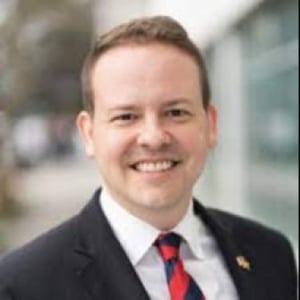
General Counsel, Department of Veterans Affairs
James Baehr was confirmed as General Counsel for the Department of Veterans Affairs in October, 2025.
Previously, Baehr was a Constitutional litigator and a founder of the Pelican Center for Justice. Before that, served as a Special Assistant to the President in the Domestic Policy Council in the White House. He coordinated and oversaw DPC’s policy portfolio across a number of agencies, including the Department of Veteran’s Affairs and the Department of Justice.
Baehr serves as a Major in the Marine Corps Reserves as the Reserve Regional Defense Counsel-East Coast. In 2018, he activated and deployed to the Middle East for Operation Inherent Resolve, where he worked on the Command Staff and earned the Defense Meritorious Service Medal.
In his civilian career, Baehr was a federal prosecutor at the U.S. Attorney’s Office in New Orleans, prosecuting over 100 defendants for felony-level violations in the Eastern District of Louisiana including narcotics, fraud, murder, and corruption. He previously clerked for Judge Edith Clement of the United States Fifth Circuit Court of Appeals.
Baehr’s first job after law school was as an active-duty Marine judge advocate defense counsel. He defended over 200 Marines in trials, presentencing trials, and administrative boards.
Baehr received his J.D. and a Masters in History from the University of Virginia in 2008. He graduated from Dartmouth College with honors in History and Government in 2005.

Special Agent, Federal Bureau of Investigation; Case Agent, Chasing the Dragon Project
SA Shane Dana is a Special Agent for the FBI. He is assigned to a Health Care Fraud Squad for the Washington Field Office where he has focused on prescription drug diversion for the past 12 years. SA Dana was the case agent for the production of the FBI/DEA documentary, Chasing the Dragon - Life of an Opiate Addict, which was released on February 4, 2016 (FBI.gov/Chasingthedragon). SA Dana has also supported the FBI as a SWAT operator for over 10 years. SA Dana holds a Masters in International Public Affairs from the University of Wisconsin - Madison; an MBA from Rollins College; and a BBA in Finance from the University of Wisconsin - Whitewater. Prior to joining the FBI, SA Dana worked for an institutional money management firm and he was a commissioned Army Infantry Officer, and served in the Wisconsin Army National Guard.
Legislative Counsel, United States Senate Judiciary Committee
Drew Hudson is a Legislative Counsel to Senator Jeff Sessions on the Senate Judiciary Committee, where he advises Senator Sessions on crime, drugs, and law enforcement issues. He holds a J.D. from the University of Alabama School of Law, where he was the Managing Editor of the Law & Psychology Review and a member of the moot court board. He also holds an M.A. in Government from Regent University, and a B.A. in History from Thomas Edison State College.
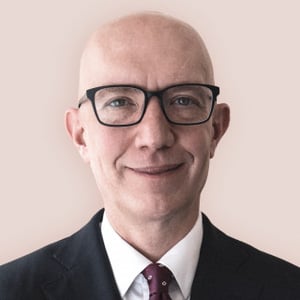
Executive Director, Society for the Rule of Law
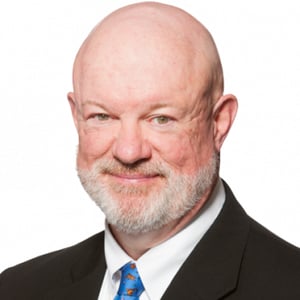
Senior Legal Fellow, the Meese Institute for the Rule of Law, Advancing American Freedom
Paul J. Larkin is a Senior Legal Fellow in the Meese Institute for the Rule of Law at Advancing American Freedom. Paul has held various positions in the federal and state governments throughout his career, such as being an attorney in the Organized Crime and Racketeering Section of the Criminal Division at the U.S. Department of Justice, an Assistant to the Solicitor General in the Office of the Solicitor General at the U.S. Department of Justice, Special Agent-in-Charge and Acting Director of the Criminal Investigation Division at the Environmental Protection Agency, and a member of the Parole Abolition and Sentencing Reform Commission and of the Juvenile Justice Reform Commission in the Office of Virginia Governor George Allen.
He has also worked at Verizon Communications and two law firms in Washington, D.C. His current research is principally in the fields of drug policy, criminal justice policy, and administrative law and policy. He has published numerous articles in law and public policy journals, both in print and online.

Assistant Professor of Law, University of California, Irvine School of Law
David Min is a nationally recognized expert on financial markets regulation, and his research interests focus on the law and policy of banking, real estate finance, and capital markets.
Before joining the faculty of UCI Law, Professor Min spent over a decade working in financial regulatory law and policy, including as a staff attorney at the Securities and Exchange Commission, as an associate in the Securities Litigation practice group of the Washington, DC, law firm WilmerHale, as Banking Committee counsel for Sen. Charles E. Schumer (D-NY), and as the senior policy advisor and counsel for the Joint Economic Committee of Congress. Professor Min was most recently the Associate Director for Financial Markets Policy at the Center for American Progress, a policy think tank, where he oversaw the efforts of the Mortgage Finance Working Group, a collection of leading mortgage market experts responsible for, among other things, one of the leading proposals on housing finance reform that was described by the Wall Street Journal as “influential” and “one of the most detailed road maps yet for the creation of a housing-finance structure to succeed mortgage giants Fannie Mae and Freddie Mac.”
Professor Min is regularly quoted on financial markets and housing finance issues, including in The New York Times, The Washington Post, The Boston Globe, Reuters, Associated Press and Bloomberg, and is a frequent contributor to radio and television programs, including NPR’s Marketplace, the Diane Rehm Show, CNBC and Fox News. Professor Min is often asked to speak at local and national events.
Professor Min holds a J.D. from Harvard Law School, and received his undergraduate degrees from the University of Pennsylvania's Wharton School of Business and School of Arts and Sciences, where he graduated magna cum laude and Phi Beta Kappa.
Senior Legal Fellow, the Meese Institute for the Rule of Law, Advancing American Freedom
Paul J. Larkin is a Senior Legal Fellow in the Meese Institute for the Rule of Law at Advancing American Freedom. Paul has held various positions in the federal and state governments throughout his career, such as being an attorney in the Organized Crime and Racketeering Section of the Criminal Division at the U.S. Department of Justice, an Assistant to the Solicitor General in the Office of the Solicitor General at the U.S. Department of Justice, Special Agent-in-Charge and Acting Director of the Criminal Investigation Division at the Environmental Protection Agency, and a member of the Parole Abolition and Sentencing Reform Commission and of the Juvenile Justice Reform Commission in the Office of Virginia Governor George Allen.
He has also worked at Verizon Communications and two law firms in Washington, D.C. His current research is principally in the fields of drug policy, criminal justice policy, and administrative law and policy. He has published numerous articles in law and public policy journals, both in print and online.
Assistant Professor of Law, University of California, Irvine School of Law
David Min is a nationally recognized expert on financial markets regulation, and his research interests focus on the law and policy of banking, real estate finance, and capital markets.
Before joining the faculty of UCI Law, Professor Min spent over a decade working in financial regulatory law and policy, including as a staff attorney at the Securities and Exchange Commission, as an associate in the Securities Litigation practice group of the Washington, DC, law firm WilmerHale, as Banking Committee counsel for Sen. Charles E. Schumer (D-NY), and as the senior policy advisor and counsel for the Joint Economic Committee of Congress. Professor Min was most recently the Associate Director for Financial Markets Policy at the Center for American Progress, a policy think tank, where he oversaw the efforts of the Mortgage Finance Working Group, a collection of leading mortgage market experts responsible for, among other things, one of the leading proposals on housing finance reform that was described by the Wall Street Journal as “influential” and “one of the most detailed road maps yet for the creation of a housing-finance structure to succeed mortgage giants Fannie Mae and Freddie Mac.”
Professor Min is regularly quoted on financial markets and housing finance issues, including in The New York Times, The Washington Post, The Boston Globe, Reuters, Associated Press and Bloomberg, and is a frequent contributor to radio and television programs, including NPR’s Marketplace, the Diane Rehm Show, CNBC and Fox News. Professor Min is often asked to speak at local and national events.
Professor Min holds a J.D. from Harvard Law School, and received his undergraduate degrees from the University of Pennsylvania's Wharton School of Business and School of Arts and Sciences, where he graduated magna cum laude and Phi Beta Kappa.
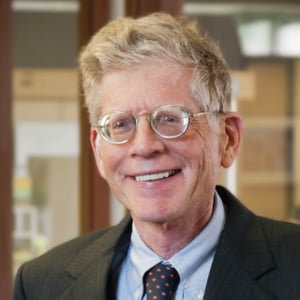
Professor of Law, University of Pittsburgh School of Law
Arthur D. Hellman, a professor of law (emeritus) at the University of Pittsburgh, is a nationally recognized scholar of the federal courts who has also written in the area of the First Amendment. His publications include numerous articles and several books, including casebooks in both areas, Federal Courts: Cases and Materials on Judicial Federalism and the Lawyering Process (5th edition 2022) (with David R. Stras, Ryan W. Scott, F. Andrew Hessick, and Derek T. Muller); and First Amendment Law: Freedom of Speech and Freedom of Religion (5th edition 2022) (with William D. Araiza, Thomas E. Baker, and Ashutosh A. Bhagwat).
In addition to his casebooks and academic writing, Processor Hellman has worked with the Judiciary Committees in the House and Senate in drafting federal courts legislation, including the most recent (2002) revision of the Judicial Conduct and Disability Act (Title 28, Chapter 16). The legislative histories of two major jurisdictional statutes – the Federal Courts Jurisdiction and Venue Clarification Act of 2011 and the “Holmes Group Fix” (enacted as part of the America Invents Act) – acknowledge his contributions.
Professor Hellman has testified as an invited witness at numerous hearings of both Judiciary Committees. His testimony has focused on a wide variety of legislative issues related to the federal courts, including the jurisdiction of the Supreme Court; proposals to divide the Ninth Circuit Court of Appeals; federal judicial discipline; unpublished appellate opinions; and the constitutionality of legislative restrictions on the powers of the federal courts.
In 2005 Professor Hellman was appointed as the inaugural holder of the Sally Ann Semenko Endowed Chair at the University. In 2002 he received the Chancellor’s Distinguished Research Award “as a faculty member who has an outstanding and continuing record of research and scholarly activity.”

The Opioid Epidemic: Problem and Prescription
TeleforumAdvise and Consent: The Past, Present, and Future of Supreme Court Nominations
Indianapolis, Indiana2016 Summer Cocktail Reception
Milwaukee, WisconsinLimits on Settlements - Podcast
Paul James Larkin, David Min
On June 10, U.S. Sens. Ted Cruz, John Cornyn, Orrin Hatch, James Lankford, and Mike...
Topics
Second Circuit Issues Landmark Decision Regarding Electronic Privacy And The Territorial Scope Of U.S. Law
On July 14, 2016, the U.S. Court of Appeals for the Second Circuit issued a...
The Fraudulent Joinder Prevention Act of 2016: A New Standard and a New Rationale for an Old Doctrine
Arthur D. Hellman
Note from the Editor: This article discusses the doctrine of fraudulent joinder and an ongoing attempt to...
Limits on Settlements
TeleforumTopics
Trump Trumps Ginsburg
In an astonishing editorial – astounding because of its source, not its content – entitled...
2016 U.S. Supreme Court Term Review
Des Moines, IowaDon't Thread on Me
A landmark decision against bureaucratic browbeating has advocates for limited government, free markets, and shapely...