

Partner, Clement & Murphy, PLLC
Paul served as the 43rd Solicitor General of the United States from June 2005 until June 2008. Before his confirmation as Solicitor General, he served as Acting Solicitor General for nearly a year and as Principal Deputy Solicitor General for over three years.
Paul has argued over 100 cases before the United States Supreme Court, including McConnell v. FEC, Tennessee v. Lane, United States v. Booker, MGM v. Grokster, Hobby Lobby v. Burwell, Epic Systems Corp. v. Lewis, Rucho v. Common Cause, Facebook v. Duguid, and TransUnion v. Ramirez. Paul has argued more Supreme Court cases since 2000 than any lawyer in or out of government. He has also argued many important cases in the lower courts, including Walker v. Cheney, United States v. Moussaoui and NFL v. Brady.
Paul’s practice focuses on appellate matters, constitutional litigation and strategic counseling. He represents a broad array of clients in the Supreme Court and in federal and state appellate courts. Last year, for example, he successfully argued Supreme Court cases involving significant issues of energy regulation, statutory interpretation, state sovereign immunity and Article III standing, and successfully argued a trademark appeal in the Fourth Circuit, and a constitutional appeal before the en banc Eleventh Circuit.
Paul focuses on high-stakes appeals. In recent years, he successfully defended a $1.2 billion jury verdict for clients in a Tenth Circuit case, while securing the reversal of an over $2 billion jury verdict for another client in the Seventh Circuit and the approval of a nearly $1 billion dollar class action settlement in the Third Circuit. He has initiated major administrative law challenges and constitutional litigation against the federal government, such as the successful challenge to the HHS drug-pricing rule and threatened challenges that led to the withdrawal of the Treasury Department’s proposed cryptocurrency regulations. He also counsels clients on a variety of strategic legal questions, whether arising from pending legislation, government inquiries or ongoing litigation.
Paul has undertaken substantial pro bono engagements in the Supreme Court, such as twice successfully representing the defendant in Bond v. United States and successfully representing the Omaha Tribe in Nebraska v. Parker, the guardian ad litem in Adoptive Couple v. Baby Girl, the defendant in Sekhar v. United States, a high school football coach in Kennedy v. Bremerton, and the Little Sisters of the Poor. Paul’s pro bono representation also precipitated the federal government’s confession of error in United States v. Rojas.
Following law school, Paul clerked for Judge Laurence H. Silberman of the U.S. Court of Appeals for the D.C. Circuit and for Associate Justice Antonin Scalia of the U.S. Supreme Court. After his clerkships, he went on to serve as Chief Counsel of the U.S. Senate Subcommittee on the Constitution, Federalism and Property Rights.
Paul is a Distinguished Lecturer in Law at the Georgetown University Law Center, where he has taught in various capacities since 1998. He also serves as a Senior Fellow of the Law Center’s Supreme Court Institute. He is the Justice Joseph Story Distinguished Practitioner in Residence at the Gray Center at Scalia Law School.
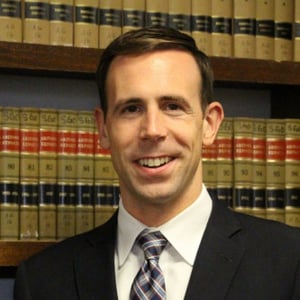
Shareholder, Greenberg Traurig, LLP
Dominic E. Draye has litigated at every level of the state and federal judiciary—from state trial court to the Supreme Court of the United States. His practice focuses on constitutional, regulatory, and environmental matters, and he has represented clients in both the public and private sectors. In the federal appellate courts, Mr. Draye has represented clients in the Second, Fifth, Seventh, Ninth, and D.C. Circuits.
Before joining Greenberg, Mr. Draye served as the Solicitor General of Arizona, where he briefed and argued the State’s highest-profile civil and criminal appeals and served as lead counsel for several multi-state coalitions litigating over agency rulemaking in the D.C. Circuit. Prior to government service, Mr. Draye was a litigator in the Washington, D.C., office of Kirkland & Ellis LLP, where his practice focused on legal issues and appeals.
Mr. Draye is a sought-after speaker on topics of administrative and constitutional law. He clerked for Hon. Edith H. Jones on the United States Court of Appeals for the Fifth Circuit and attended the University of Pennsylvania Law School.
Ohio House of Representatives, District 27
Representative Tom Brinkman is currently serving his second term as state representative, after serving as a member of the Ohio House for four 2-year terms from 2001 to 2008. He represents the 27th Ohio House District, which includes portions of eastern Hamilton County.
An experienced life insurance salesman and a life-long resident of Cincinnati, Representative Brinkman is a graduate of George Washington University in Washington, D.C. (1979), with a Bachelor of Arts degree in History and Political Science.
Rep. Brinkman has received various awards as a legislator, being recognized as Mt. Lookout Civic Club Man of the Year in 2008 and also as Most Principled Legislator twice. He has also received the Watchdog of the Treasury Award three times.
He lives in Mt. Lookout with his wife, Cathy, and six children.
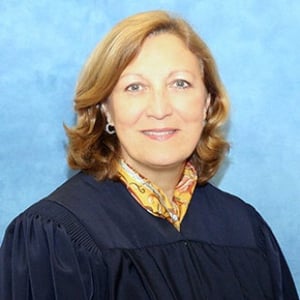
Justice, Ohio Supreme Court
On November 3, 2020 Judge Jennifer Brunner was elected Justice of the Ohio Supreme Court. Previously she served as a judge of the Tenth District Court of Appeals for 6 years and the Franklin County Common Pleas Court for nearly 5 years. As a trial court judge Brunner founded the county’s adult felony drug court, known as the TIES (Treatment is Essential to Success) Program, now in its seventeenth year of operation. She was elected Ohio’s first woman Secretary of State on November 7, 2006 and held the office for four years. While in that office, she became the first Ohioan to receive the John F. Kennedy Profile in Courage Award from the bipartisan board of the JFK Library and Museum in Boston. Justice Brunner has 17 years of private law practice experience and has provided rule of law technical expertise to the government of the Republic of Serbia, election observation in the Arab Republic of Egypt, and rule of law instruction at the bar association of Sri Lanka through the U.S. state department (USAID), as well as provided remote rule of law and civic participation training through the American Bar Association to the Republic of Kazakhstan. She has gained a deep understanding of the importance of a strong and well-functioning judiciary to preserving peace and growing democracy through the rule of law. A native of Springfield, Ohio, Justice Brunner has been married to Rick Brunner since 1978. They have 3 adult children and 6 grandchildren, 2 dogs and 2 cats and spend time at their home in Columbus and at their farm in Columbiana County in Northeast Ohio.
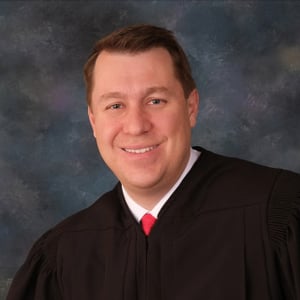
Judge, Ohio Twelfth District Court of Appeals
Judge Matthew R. Byrne was elected to the Ohio Court of Appeals for the Twelfth District in 2020, and his first term began on January 1, 2021. He is currently serving as the court's elected Administrative Judge. The Twelfth District Court of Appeals hears civil and criminal appeals from the trial courts in eight counties in southwest Ohio. Judge Byrne is active in the Ohio Judicial Conference and the Ohio Court of Appeals Judges Association. He also currently serves as a member and vice chair of the Ohio Supreme Court's Commission on the Rules of Practice and Procedure (where he previously chaired the Appellate Rules Committee). He previously served as a member of the Ohio Supreme Court's Commission on Character and Fitness.
From January 2010 to December 2020, Judge Byrne practiced law at the national law firm of Jackson Lewis P.C. He was a member of the firm's General Employment Litigation Practice Group and the Wage and Hour Practice Group. From 2007 to 2010 he practiced at Taft Stettinius & Hollister LLP. At both firms, Judge Byrne represented clients ranging from small businesses to international corporations in state and federal trial and appellate litigation, including multiple class and collective actions. He also represented clients in arbitration and before numerous administrative agencies, including the Equal Employment Opportunity Commission, the National Labor Relations Board, and the Ohio Civil Rights Commission.
Judge Byrne earned his law degree, cum laude, from The Ohio State University Moritz College of Law. During law school he was symposium editor of the Ohio State Law Journal and the winner of the Donald S. Teller Memorial Award for student writing contributing most significantly to the Ohio State Law Journal. During law school he clerked for the Acting General Counsel of the United States Department of the Treasury. Judge Byrne earned his bachelor's degree, magna cum laude, from Xavier University, where he majored in International Affairs (Business) and Political Science.
Prior to entering law school Judge Byrne served in President George W. Bush's Administration as a member of the White House staff in the Office of Presidential Personnel, the office responsible for selecting candidates to recommend to the President for appointment or nomination to high-level government positions, and for coordinating with the Offices of White House Counsel, Press Secretary, and Executive Clerk regarding candidate background clearances, press announcements, and the status of appointments/nominations.
Judge Byrne has been a member of the Federalist Society since law school and he served for five years as president of the Federalist Society's Cincinnati Lawyers Chapter. He is a member of a number of other community and civic organizations, including the Ohio State Bar Association and the bar associations of Butler, Clermont, and Warren Counties. Judge Byrne previously was a member of the Advisory Board of Pregnancy Center East and a board member and president of the St. Thomas More Lawyers Guild of Greater Cincinnati.
Judge Byrne is an active parishioner at his church, where he is a lector, a former member and president of the Education Commission, and a former member of the Finance and Administration Commission.
Judge Byrne resides in Deerfield Township, Warren County, Ohio with his wife Julie and their three children.
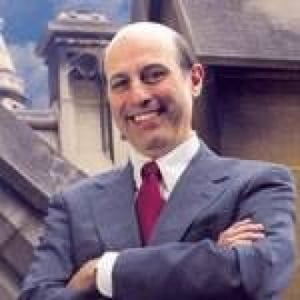
Garwood Visiting Professor and Visiting Fellow, James Madison Pr, Cleveland-Marshall College of Law
David F. Forte is Professor of Law at Cleveland State University, where he was the inaugural holder of the Charles R. Emrick, Jr.- Calfee Halter & Griswold Endowed Chair. This fall, Professor Forte will be the Garwood Visiting Professor at Princeton University in the Department of Politics, and Visiting Fellow at the James Madison Program in American Ideals and Institutions. He holds degrees from Harvard College, Manchester University, England, the University of Toronto and Columbia University.
During the Reagan administration, Professor Forte served as chief counsel to the United States delegation to the United Nations and alternate delegate to the Security Council. He has authored a number of briefs before the United States Supreme Court, and has frequently testified before the United States Congress and consulted with the Department of State on human rights and international affairs issues. His advice was specifically sought on the approval of the Genocide Convention, on world-wide religious persecution, and Islamic extremism. He has appeared and spoken frequently on radio and television, both nationally and internationally. In 2002, the Department of State sponsored a speaking tour for Professor Forte in Amman, Jordan, and he was also a featured speaker to the Meeting of Peoples in Rimini, Italy, a meeting which gathers over 500,000 people from all over Europe. He has also been called to testify before the state legislatures of Ohio, Kansas, and Idaho as well as the New York City Council. He has assisted in drafting a number of pieces of legislation for the Ohio General Assembly dealing with abortion, international trade, and federalism. He has sat as acting judge on the municipal court of Lakewood Ohio and was chairman of Professional Ethics Committee of the Cleveland Bar Association. He has received a number of awards for his public service, including the Cleveland Bar Association’s President’s Award, the Cleveland State University Award for Distinguished Service, the Cleveland State University Distinguished Teaching Award, and the Cleveland-Marshall College of Law Alumni Award for Faculty Excellence. He served as Consultor to the Pontifical Council for the Family under Pope St. John Paul II and Pope Benedict XVI. In 2003, Dr. Forte was a Distinguished Fulbright Chair at the University of Trento and returned there in 2004 as a Visiting Professor. For the academic year, 2008-2009, Professor Forte was Senior Visiting Scholar at the Center for the Study of Religion and the Constitution in at the Witherspoon Institute in Princeton, New Jersey. He was the Robert E. Henderson Constitution Day Lecturer at the Ashbrook Center at Ashland University, and he has given over 300 invited addresses and papers at more than 100 academic institutions. His work has been cited by the U.S. Supreme Court.
Professor Forte was a Bradley Scholar at the Heritage Foundation, and Visiting Scholar at the Liberty Fund. He has been President of the Ohio Association of Scholars, was on the Board of Directors of the Philadelphia Society, and is also adjunct Scholar at the Ashbrook Center. He has been appointed to the Ohio State Advisory Committee to the U.S. Commission on Civil Rights. He has also been a Civil War re-enactor and a Merit Badge Counselor for the Boy Scouts.
He writes and speaks nationally on topics such as constitutional law, religious liberty, Islamic law, the rights of families, and international affairs. He served as book review editor for the American Journal of Jurisprudence and has edited a volume entitled, Natural Law and Contemporary Public Policy, published by Georgetown University Press. His book, Islamic Law Studies: Classical and Contemporary Applications, has been published by Austin & Winfield. He is Senior Editor of The Heritage Guide to the Constitution (2006), 2d edition (2014), published by Regnery & Co, a clause by clause analysis of the Constitution of the United States.
His teaching competencies include Constitutional Law, the First Amendment, Islamic Law, Jurisprudence, Natural Law, International Law, International Human Rights, the Presidency, and Constitutional History.
Ohio State Senate, District 12
Senator Matt Huffman is currently serving his first term in the Ohio Senate, representing the 12th Senate district which includes all of Allen, Champaign, Mercer and Shelby counties, as well as portions of Auglaize, Darke and Logan counties. He previously served four terms in the Ohio House of Representatives, the last two in leadership positions, including being elected by his fellow legislators to serves as the second highest-ranking member, Speaker Pro Tempore.
Born and raised in Lima, Ohio, Senator Huffman has practiced law for the past 30 years in his family’s private practice law firm in downtown Lima. He has been admitted to practice in all of the state and federal courts in Ohio and is an “AV” rated attorney by the Martindale-Hubbell rating service, the highest rating an attorney can receive. He has represented dozens of small businesses in West Central Ohio.
Senator Huffman began his public service on Lima City Council in 1992, serving until 2006, including the final seven years as City Council President. In 2007, he began his service in the Ohio House of Representatives. During his time in the Ohio Legislature, Senator Huffman championed bills to reform the medical delivery system, protect life at all stages and repeal common core. He has always maintained a strong commitment to the preservation of gun rights.
Senator Huffman has been a tireless advocate of removing unnecessary government regulations and fees and lowering taxes for all Ohioans; he defeated an income tax increase while on Lima City Council and supported the reduction of state income taxes on small business owners and the elimination of the Ohio estate tax. While in the Ohio House, he was named a “Guardian of Small Business” and earned three “Watchdog of the Treasury” awards.
Senator Huffman is deeply concerned about our nation’s debt and was a primary sponsor of a resolution in the Ohio House to call for a convention of the states, as authorized by Article V of the U.S. Constitution, to propose a balanced budget amendment to the Constitution. He believes the states must take back the power they have relinquished to the federal government in order for our nation’s debt crisis to be solved.
Senator Huffman is the fifth of nine children born to Lawrence and Shirley Huffman. He graduated from Lima Central Catholic High School in 1978. He then went on to earn his degree in Government from the University of Notre Dame in 1982 and his law degree from the University of Cincinnati School of Law in 1985.
Married for 30 years, Senator Huffman and his wife Sheryl (nee Simoneau) have made their home in Lima, where they have raised four children: Clare, Matthew, Ellen and Sam. In addition to being members of St. Charles Church, he and Sheryl belong to several community organizations including Heartbeat of Lima and the Knights of Columbus. In his free time, he enjoys watching his youngest son, Sam, play collegiate football and referees CYO basketball.
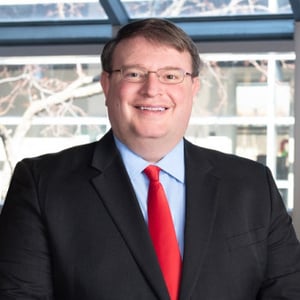
Partner, Shumaker, Loop & Kendrick, LLP
Larry builds on a wide range of experiences – including as an accomplished attorney, a former President of the Ohio Senate, and a legal academic – to help solve his clients’ most challenging legal problems. Larry focuses on complex litigation, including high-stakes appeals.
Larry is a Partner in the firm’s Litigation practice. He focuses his practice on litigation at both the trial and appellate levels and has experience in a variety of matters involving antitrust, fiduciary duties, torts, contracts, securities, and employment law. These range from standard contract disputes to constitutional challenges against federal statutes to defending against complex class actions.
In addition to his litigation practice, Larry served as a member of the Ohio Senate for nearly a decade. His colleagues unanimously elected him to serve as Senate President, the presiding officer of the 33-member chamber, from 2017-2020. During his time in the Senate, Larry successfully sponsored legislation on a wide range of topics, including education, tax law, elections administration, criminal law, and corporate law. These included a comprehensive update to Ohio’s corporate code and limited liability company law, including the sections setting out fiduciary duties for officers and shareholders. Larry also sponsored significant updates to Ohio’s Control Share Acquisition Act (which governs corporate takeovers). In 2018, he received the Ohio State Bar Association’s Lawyer-Legislator Distinguished Service Award.
Larry has also taught courses on Civil Procedure and Legislation as an adjunct law professor at Case Western Reserve University School of Law. He has published legal scholarship on a range of issues including constitutional law, education, law and economics, and securities. He has been cited in roughly 75 law journals throughout the country and by a member of the United States Supreme Court.
Larry began his legal career as a law clerk to Judge Alice M. Batchelder of the United States Court of Appeals for the Sixth Circuit. He has worked at some of the nation’s largest law firms and began his private practice by spending more than five years with Chicago-based Kirkland & Ellis LLP.
From 2018-2020, Larry was a Rodel Fellow at the Aspen Institute, a program designed to bring greater civility to public discourse. He is active in the Federalist Society and is a former board member of the Ohio Legal Assistance Foundation (now known as the Ohio Access to Justice Foundation), the statewide umbrella organization for legal aid.
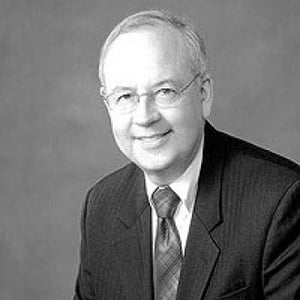
U.S. Court of Appeals, District of Columbia Circuit (1983-1989); U.S. Solicitor General (1989-1993)
Kenneth Starr is a former United States Federal Court of Appeals Judge, U.S. Solicitor General, and Independent Counsel. He is the former President and Chancellor of Baylor University where he held the Louise L. Morrison Chair of Constitutional Law at Baylor University Law School.
U.S. Court of Appeals, District of Columbia Circuit (1983-1989); U.S. Solicitor General (1989-1993)
Kenneth Starr is a former United States Federal Court of Appeals Judge, U.S. Solicitor General, and Independent Counsel. He is the former President and Chancellor of Baylor University where he held the Louise L. Morrison Chair of Constitutional Law at Baylor University Law School.

Professor of the Practice of Economics, Duke University
Michelle P. Connolly is Professor of the Practice in the Economics Department at Duke University. She was the Economics Director of Duke in New York: Financial Markets and Institutions Program for 2007-2009 and the Director of EcoTeach for several years. She currently serves as the Director of the Honors Program in Economics and a member of the Duke Alumni Association Board.
In 2011, Professor Connolly won the Howard D. Johnson Trinity College Teaching Prize and was named among the top five percent of Duke University Undergraduate Instructors in 2009, 2010 and 2011.
Professor Connolly previously served as Chief Economist of the Federal Communications Commission in 2006-2007 and 2008-2009, and as an Economist for the International Research Function for the Federal Reserve Bank of New York from 1996 to 1997. She graduated Phi Beta Kappa and Summa Cum Laude from Yale University in 1990, and went on to earn her M.A. and M.Phil in economics. Professor Connolly received her Ph.D. in economics from Yale University in 1996.
Professor Connolly’s research and teaching focus specifically on international trade, telecommunications policy, media policy, education, growth, and development. She has received funding for her research from the National Science Foundation, the Duke Arts and Sciences Research Council Grants, the Spencer Grant, and the Teagle Grant.
Professor Connolly has published in numerous journals, including the American Economic Review, the American Economic Journal: Macroeconomics, the Journal of Development Economics, the Journal of Economic History, the Journal of Economic Growth, the Review of Industrial Organization, and Current Issues in Economics and Finance.
In 2011, Professor Connolly testified before Congress and participated in a White House panel on Spectrum Issues. She has been presenting her work at university seminars and international conferences since 1996. Some of her appearances were at the ACLP Advanced Communications 2009 Summit, where she was a panelist and moderator, at the conference on “Wireless Technologies: Enabling Innovation and Economic Growth”, where she served as a keynote panelist, and at the Martin H. Crego Lecture in Economics, an all college Lecture at Vassar College. In 2013 Professor Connolly was awarded a National Science Foundation Secure and Trustworthy Cyberspace Grant, “Dollars for Hertz: Making Trustworthy Spectrum Sharing Technically and Economically Viable.”

Senior Vice President for Legal Studies, Cato Institute
Clark Neily is senior vice president for legal studies at the Cato Institute. His areas of interest include constitutional law, overcriminalization, civil forfeiture, police accountability, and gun rights. Neily is the author of Terms of Engagement: How Our Courts Should Enforce the Constitution’s Promise of Limited Government. His writing has appeared in the Wall Street Journal, Forbes, and National Review Online, as well as various law reviews, including the Harvard Journal of Law and Public Policy, George Mason Law Review, Georgetown Journal of Law and Public Policy, NYU Journal of Law and Liberty, and Texas Review of Law and Politics. Neily is a frequent guest speaker and lecturer for the Federalist Society, Institute for Humane Studies, and American Constitution Society.
Before joining Cato in 2017, Neily was a senior attorney and constitutional litigator at the Institute for Justice and director of the Institute’s Center for Judicial Engagement. He is also an adjunct professor at the University of Texas School of Law, where he teaches constitutional litigation and public-interest law.
Neily served as co-counsel in District of Columbia v. Heller, the historic case in which the Supreme Court held for the first time that the Second Amendment protects an individual right to own a gun for self-defense.
Neily began his legal career as a law clerk to Judge Royce Lamberth on the U.S. District Court for the District of Columbia. After that he spent four years in the trial department of the Dallas-based firm Thompson & Knight. Neily received his undergraduate and law degrees from the University of Texas, where he was Chief Articles Editor of the Texas Law Review.
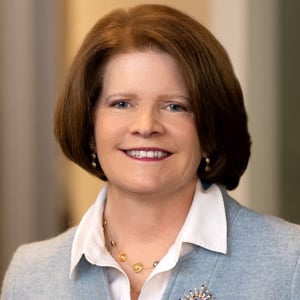
Partner, Antitrust and Competition, Wilson Sonsini Goodrich & Rosati
Maureen Ohlhausen is a partner in the Washington, D.C., office of Wilson Sonsini Goodrich & Rosati, where she advises industry-leading clients on complex antitrust and litigation matters, with a focus on high-profile cases. Sought after for her depth of experience on antitrust and Federal Trade Commission (FTC)-related issues, Maureen is known for her relationships with officials in the U.S. and abroad.
After finishing law school and clerking at the U.S. Court of Appeals for the D.C. Circuit, Maureen joined the FTC in 1997. She held a series of roles at the agency over the next 12 years, rising to the position of Director of the FTC Office of Policy Planning, where she led the agency’s work on e-commerce and headed the FTC’s Internet Access Task Force, which produced an influential report analyzing competition and consumer protection legal issues in the broadband and internet sectors. She then went into private practice at a leading telecommunications law firm, where she headed the FTC practice group.
In 2012, Maureen was confirmed by the Senate as a Commissioner of the FTC and was appointed Acting Chairman in January 2017, a role she held until May 2018. As Acting Chairman, Maureen directed all aspects of the agency’s antitrust work, including merger review, conduct enforcement, and all consumer protection enforcement, with an emphasis on privacy and technology issues. Under her leadership, the FTC won several influential merger challenges in court and reached a number of key digital privacy settlements.
To date, Maureen is the only FTC Commissioner to have received the Robert Pitofsky Lifetime Achievement Award in recognition of her contributions to the FTC.
Following the end of her term at the FTC, and immediately prior to joining Wilson Sonsini, Maureen was chair of the global antitrust and competition practice at Baker Botts, based in that firm’s Washington, D.C., office.
A recognized thought leader, Maureen is a frequent author and speaker, and is often quoted by leading print and broadcast media on antitrust, FTC, and privacy and data security matters. She has published dozens of articles on antitrust, privacy, intellectual property, regulation, FTC litigation, telecommunications, and international law issues in prestigious publications. During her tenure at the FTC and in private practice, she testified more than two dozen times before Congress, including before the Senate Commerce Committee and the House Energy and Commerce Antitrust Sub-Committee. She also testified before the Antitrust Modernization Commission.

Executive Vice President, The Federalist Society
Dean Reuter is Executive Vice President at the Federalist Society for Law and Public Policy Studies. He has served in two federal government agency Offices of the Inspector General, as Counsel to the Inspector General and Deputy Inspector General, responsible for policing the use of federal funds granted and contracted through those agencies. As such, he helped conduct and oversee criminal investigations across the country. He is the principal author of the non-fiction book, The Hidden Nazi: The Untold Story of America's Deal with the Devil, and editor of Liberty’s Nemesis: The Unchecked Expansion of the State and Confronting Terror: 9/11 and the Future of American National Security. He was appointed by the President and served as Vice-Chairman of the Board of Directors of the Corporation for National and Community Service, and recently served as an appointee on the U.S. Commission on Presidential Scholars. He is a graduate of Hood College (BA with Honors) and the University of Maryland School of Law.
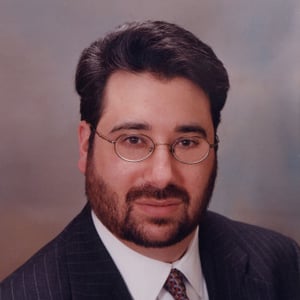
President, Phoenix Center for Advanced Legal and Economic Public Policy Studies
Lawrence J. Spiwak is President of the Phoenix Center for Advanced Legal & Economic Public Policy Studies, a non-profit 501(c)(3) organization that studies broad public-policy issues related to governance, social and economic conditions, with a particular emphasis on the law and economics of the digital age. Mr. Spiwak is a prolific scholar whose work is frequently cited by policymakers, major news media and academic journals around the world, and is in the top 1.3%of authors downloaded on the Social Science Research Network. Mr. Spiwak currently serves as the co-chair of the Federal Communications Bar Association’s (FCBA) committee responsible for overseeing the FEDERAL COMMUNICATIONS LAW JOURNAL and is a member of the program committee of the Telecommunications Policy Research Conference (“TPRC”). Mr. Spiwak is also the recipient of the FCBA’s Distinguished Service Award. Prior to joining the Phoenix Center, Mr. Spiwak was a Senior Attorney with the Competition Division in the FCC’s Office of General Counsel from 1994-1998. While in college, Mr. Spiwak was accepted into the Presidential Stay-In School program where he was responsible for delivering classified and confidential material among senior White House and Reagan Administration officials and received a full FBI security clearance. Mr. Spiwak received his B.A. with Special Honors from the George Washington University and his J.D. from the Benjamin N. Cardozo School of Law. Mr. Spiwak is a member in good standing of the bars of New York, Massachusetts, the District of Columbia, and the U.S. Court of Appeals for the D.C. Circuit.
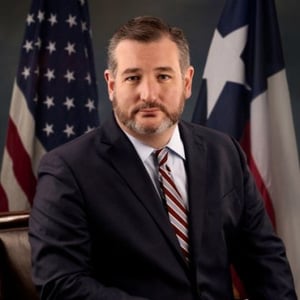
United States Senator, Texas
Ted Cruz represents 28 million Texans in the U.S. Senate as a passionate fighter for limited government and economic growth. He has authored 39 legislative measures signed into law. Recent victories include expanding 529 college savings accounts to allow parents to save for K–12 public, private, and religious education, leading the effort to repeal Obamacare’s individual mandate, imposing sanctions on terrorists who use civilians as human shields, designating North Korea as a state sponsor of terrorism, reauthorizing and reforming NASA, ensuring the availability of additional records to help solve civil rights cold cases, supporting thousands of Texas jobs, and leading the fight to confirm principled constitutionalists to our courts.
Senator Cruz is a graduate of Princeton University and Harvard Law School, a former law clerk to Chief Justice William Rehnquist, and former solicitor general of Texas. He has argued nine cases before the Supreme Court. In November of 2018, he was re-elected to the Senate by the people of Texas.
Executive Vice President, The Federalist Society
Dean Reuter is Executive Vice President at the Federalist Society for Law and Public Policy Studies. He has served in two federal government agency Offices of the Inspector General, as Counsel to the Inspector General and Deputy Inspector General, responsible for policing the use of federal funds granted and contracted through those agencies. As such, he helped conduct and oversee criminal investigations across the country. He is the principal author of the non-fiction book, The Hidden Nazi: The Untold Story of America's Deal with the Devil, and editor of Liberty’s Nemesis: The Unchecked Expansion of the State and Confronting Terror: 9/11 and the Future of American National Security. He was appointed by the President and served as Vice-Chairman of the Board of Directors of the Corporation for National and Community Service, and recently served as an appointee on the U.S. Commission on Presidential Scholars. He is a graduate of Hood College (BA with Honors) and the University of Maryland School of Law.
Professor of the Practice of Economics, Duke University
Michelle P. Connolly is Professor of the Practice in the Economics Department at Duke University. She was the Economics Director of Duke in New York: Financial Markets and Institutions Program for 2007-2009 and the Director of EcoTeach for several years. She currently serves as the Director of the Honors Program in Economics and a member of the Duke Alumni Association Board.
In 2011, Professor Connolly won the Howard D. Johnson Trinity College Teaching Prize and was named among the top five percent of Duke University Undergraduate Instructors in 2009, 2010 and 2011.
Professor Connolly previously served as Chief Economist of the Federal Communications Commission in 2006-2007 and 2008-2009, and as an Economist for the International Research Function for the Federal Reserve Bank of New York from 1996 to 1997. She graduated Phi Beta Kappa and Summa Cum Laude from Yale University in 1990, and went on to earn her M.A. and M.Phil in economics. Professor Connolly received her Ph.D. in economics from Yale University in 1996.
Professor Connolly’s research and teaching focus specifically on international trade, telecommunications policy, media policy, education, growth, and development. She has received funding for her research from the National Science Foundation, the Duke Arts and Sciences Research Council Grants, the Spencer Grant, and the Teagle Grant.
Professor Connolly has published in numerous journals, including the American Economic Review, the American Economic Journal: Macroeconomics, the Journal of Development Economics, the Journal of Economic History, the Journal of Economic Growth, the Review of Industrial Organization, and Current Issues in Economics and Finance.
In 2011, Professor Connolly testified before Congress and participated in a White House panel on Spectrum Issues. She has been presenting her work at university seminars and international conferences since 1996. Some of her appearances were at the ACLP Advanced Communications 2009 Summit, where she was a panelist and moderator, at the conference on “Wireless Technologies: Enabling Innovation and Economic Growth”, where she served as a keynote panelist, and at the Martin H. Crego Lecture in Economics, an all college Lecture at Vassar College. In 2013 Professor Connolly was awarded a National Science Foundation Secure and Trustworthy Cyberspace Grant, “Dollars for Hertz: Making Trustworthy Spectrum Sharing Technically and Economically Viable.”
Senior Vice President for Legal Studies, Cato Institute
Clark Neily is senior vice president for legal studies at the Cato Institute. His areas of interest include constitutional law, overcriminalization, civil forfeiture, police accountability, and gun rights. Neily is the author of Terms of Engagement: How Our Courts Should Enforce the Constitution’s Promise of Limited Government. His writing has appeared in the Wall Street Journal, Forbes, and National Review Online, as well as various law reviews, including the Harvard Journal of Law and Public Policy, George Mason Law Review, Georgetown Journal of Law and Public Policy, NYU Journal of Law and Liberty, and Texas Review of Law and Politics. Neily is a frequent guest speaker and lecturer for the Federalist Society, Institute for Humane Studies, and American Constitution Society.
Before joining Cato in 2017, Neily was a senior attorney and constitutional litigator at the Institute for Justice and director of the Institute’s Center for Judicial Engagement. He is also an adjunct professor at the University of Texas School of Law, where he teaches constitutional litigation and public-interest law.
Neily served as co-counsel in District of Columbia v. Heller, the historic case in which the Supreme Court held for the first time that the Second Amendment protects an individual right to own a gun for self-defense.
Neily began his legal career as a law clerk to Judge Royce Lamberth on the U.S. District Court for the District of Columbia. After that he spent four years in the trial department of the Dallas-based firm Thompson & Knight. Neily received his undergraduate and law degrees from the University of Texas, where he was Chief Articles Editor of the Texas Law Review.
Partner, Antitrust and Competition, Wilson Sonsini Goodrich & Rosati
Maureen Ohlhausen is a partner in the Washington, D.C., office of Wilson Sonsini Goodrich & Rosati, where she advises industry-leading clients on complex antitrust and litigation matters, with a focus on high-profile cases. Sought after for her depth of experience on antitrust and Federal Trade Commission (FTC)-related issues, Maureen is known for her relationships with officials in the U.S. and abroad.
After finishing law school and clerking at the U.S. Court of Appeals for the D.C. Circuit, Maureen joined the FTC in 1997. She held a series of roles at the agency over the next 12 years, rising to the position of Director of the FTC Office of Policy Planning, where she led the agency’s work on e-commerce and headed the FTC’s Internet Access Task Force, which produced an influential report analyzing competition and consumer protection legal issues in the broadband and internet sectors. She then went into private practice at a leading telecommunications law firm, where she headed the FTC practice group.
In 2012, Maureen was confirmed by the Senate as a Commissioner of the FTC and was appointed Acting Chairman in January 2017, a role she held until May 2018. As Acting Chairman, Maureen directed all aspects of the agency’s antitrust work, including merger review, conduct enforcement, and all consumer protection enforcement, with an emphasis on privacy and technology issues. Under her leadership, the FTC won several influential merger challenges in court and reached a number of key digital privacy settlements.
To date, Maureen is the only FTC Commissioner to have received the Robert Pitofsky Lifetime Achievement Award in recognition of her contributions to the FTC.
Following the end of her term at the FTC, and immediately prior to joining Wilson Sonsini, Maureen was chair of the global antitrust and competition practice at Baker Botts, based in that firm’s Washington, D.C., office.
A recognized thought leader, Maureen is a frequent author and speaker, and is often quoted by leading print and broadcast media on antitrust, FTC, and privacy and data security matters. She has published dozens of articles on antitrust, privacy, intellectual property, regulation, FTC litigation, telecommunications, and international law issues in prestigious publications. During her tenure at the FTC and in private practice, she testified more than two dozen times before Congress, including before the Senate Commerce Committee and the House Energy and Commerce Antitrust Sub-Committee. She also testified before the Antitrust Modernization Commission.
Executive Vice President, The Federalist Society
Dean Reuter is Executive Vice President at the Federalist Society for Law and Public Policy Studies. He has served in two federal government agency Offices of the Inspector General, as Counsel to the Inspector General and Deputy Inspector General, responsible for policing the use of federal funds granted and contracted through those agencies. As such, he helped conduct and oversee criminal investigations across the country. He is the principal author of the non-fiction book, The Hidden Nazi: The Untold Story of America's Deal with the Devil, and editor of Liberty’s Nemesis: The Unchecked Expansion of the State and Confronting Terror: 9/11 and the Future of American National Security. He was appointed by the President and served as Vice-Chairman of the Board of Directors of the Corporation for National and Community Service, and recently served as an appointee on the U.S. Commission on Presidential Scholars. He is a graduate of Hood College (BA with Honors) and the University of Maryland School of Law.
President, Phoenix Center for Advanced Legal and Economic Public Policy Studies
Lawrence J. Spiwak is President of the Phoenix Center for Advanced Legal & Economic Public Policy Studies, a non-profit 501(c)(3) organization that studies broad public-policy issues related to governance, social and economic conditions, with a particular emphasis on the law and economics of the digital age. Mr. Spiwak is a prolific scholar whose work is frequently cited by policymakers, major news media and academic journals around the world, and is in the top 1.3%of authors downloaded on the Social Science Research Network. Mr. Spiwak currently serves as the co-chair of the Federal Communications Bar Association’s (FCBA) committee responsible for overseeing the FEDERAL COMMUNICATIONS LAW JOURNAL and is a member of the program committee of the Telecommunications Policy Research Conference (“TPRC”). Mr. Spiwak is also the recipient of the FCBA’s Distinguished Service Award. Prior to joining the Phoenix Center, Mr. Spiwak was a Senior Attorney with the Competition Division in the FCC’s Office of General Counsel from 1994-1998. While in college, Mr. Spiwak was accepted into the Presidential Stay-In School program where he was responsible for delivering classified and confidential material among senior White House and Reagan Administration officials and received a full FBI security clearance. Mr. Spiwak received his B.A. with Special Honors from the George Washington University and his J.D. from the Benjamin N. Cardozo School of Law. Mr. Spiwak is a member in good standing of the bars of New York, Massachusetts, the District of Columbia, and the U.S. Court of Appeals for the D.C. Circuit.
Professor of the Practice of Economics, Duke University
Michelle P. Connolly is Professor of the Practice in the Economics Department at Duke University. She was the Economics Director of Duke in New York: Financial Markets and Institutions Program for 2007-2009 and the Director of EcoTeach for several years. She currently serves as the Director of the Honors Program in Economics and a member of the Duke Alumni Association Board.
In 2011, Professor Connolly won the Howard D. Johnson Trinity College Teaching Prize and was named among the top five percent of Duke University Undergraduate Instructors in 2009, 2010 and 2011.
Professor Connolly previously served as Chief Economist of the Federal Communications Commission in 2006-2007 and 2008-2009, and as an Economist for the International Research Function for the Federal Reserve Bank of New York from 1996 to 1997. She graduated Phi Beta Kappa and Summa Cum Laude from Yale University in 1990, and went on to earn her M.A. and M.Phil in economics. Professor Connolly received her Ph.D. in economics from Yale University in 1996.
Professor Connolly’s research and teaching focus specifically on international trade, telecommunications policy, media policy, education, growth, and development. She has received funding for her research from the National Science Foundation, the Duke Arts and Sciences Research Council Grants, the Spencer Grant, and the Teagle Grant.
Professor Connolly has published in numerous journals, including the American Economic Review, the American Economic Journal: Macroeconomics, the Journal of Development Economics, the Journal of Economic History, the Journal of Economic Growth, the Review of Industrial Organization, and Current Issues in Economics and Finance.
In 2011, Professor Connolly testified before Congress and participated in a White House panel on Spectrum Issues. She has been presenting her work at university seminars and international conferences since 1996. Some of her appearances were at the ACLP Advanced Communications 2009 Summit, where she was a panelist and moderator, at the conference on “Wireless Technologies: Enabling Innovation and Economic Growth”, where she served as a keynote panelist, and at the Martin H. Crego Lecture in Economics, an all college Lecture at Vassar College. In 2013 Professor Connolly was awarded a National Science Foundation Secure and Trustworthy Cyberspace Grant, “Dollars for Hertz: Making Trustworthy Spectrum Sharing Technically and Economically Viable.”
Senior Vice President for Legal Studies, Cato Institute
Clark Neily is senior vice president for legal studies at the Cato Institute. His areas of interest include constitutional law, overcriminalization, civil forfeiture, police accountability, and gun rights. Neily is the author of Terms of Engagement: How Our Courts Should Enforce the Constitution’s Promise of Limited Government. His writing has appeared in the Wall Street Journal, Forbes, and National Review Online, as well as various law reviews, including the Harvard Journal of Law and Public Policy, George Mason Law Review, Georgetown Journal of Law and Public Policy, NYU Journal of Law and Liberty, and Texas Review of Law and Politics. Neily is a frequent guest speaker and lecturer for the Federalist Society, Institute for Humane Studies, and American Constitution Society.
Before joining Cato in 2017, Neily was a senior attorney and constitutional litigator at the Institute for Justice and director of the Institute’s Center for Judicial Engagement. He is also an adjunct professor at the University of Texas School of Law, where he teaches constitutional litigation and public-interest law.
Neily served as co-counsel in District of Columbia v. Heller, the historic case in which the Supreme Court held for the first time that the Second Amendment protects an individual right to own a gun for self-defense.
Neily began his legal career as a law clerk to Judge Royce Lamberth on the U.S. District Court for the District of Columbia. After that he spent four years in the trial department of the Dallas-based firm Thompson & Knight. Neily received his undergraduate and law degrees from the University of Texas, where he was Chief Articles Editor of the Texas Law Review.
Partner, Antitrust and Competition, Wilson Sonsini Goodrich & Rosati
Maureen Ohlhausen is a partner in the Washington, D.C., office of Wilson Sonsini Goodrich & Rosati, where she advises industry-leading clients on complex antitrust and litigation matters, with a focus on high-profile cases. Sought after for her depth of experience on antitrust and Federal Trade Commission (FTC)-related issues, Maureen is known for her relationships with officials in the U.S. and abroad.
After finishing law school and clerking at the U.S. Court of Appeals for the D.C. Circuit, Maureen joined the FTC in 1997. She held a series of roles at the agency over the next 12 years, rising to the position of Director of the FTC Office of Policy Planning, where she led the agency’s work on e-commerce and headed the FTC’s Internet Access Task Force, which produced an influential report analyzing competition and consumer protection legal issues in the broadband and internet sectors. She then went into private practice at a leading telecommunications law firm, where she headed the FTC practice group.
In 2012, Maureen was confirmed by the Senate as a Commissioner of the FTC and was appointed Acting Chairman in January 2017, a role she held until May 2018. As Acting Chairman, Maureen directed all aspects of the agency’s antitrust work, including merger review, conduct enforcement, and all consumer protection enforcement, with an emphasis on privacy and technology issues. Under her leadership, the FTC won several influential merger challenges in court and reached a number of key digital privacy settlements.
To date, Maureen is the only FTC Commissioner to have received the Robert Pitofsky Lifetime Achievement Award in recognition of her contributions to the FTC.
Following the end of her term at the FTC, and immediately prior to joining Wilson Sonsini, Maureen was chair of the global antitrust and competition practice at Baker Botts, based in that firm’s Washington, D.C., office.
A recognized thought leader, Maureen is a frequent author and speaker, and is often quoted by leading print and broadcast media on antitrust, FTC, and privacy and data security matters. She has published dozens of articles on antitrust, privacy, intellectual property, regulation, FTC litigation, telecommunications, and international law issues in prestigious publications. During her tenure at the FTC and in private practice, she testified more than two dozen times before Congress, including before the Senate Commerce Committee and the House Energy and Commerce Antitrust Sub-Committee. She also testified before the Antitrust Modernization Commission.
Executive Vice President, The Federalist Society
Dean Reuter is Executive Vice President at the Federalist Society for Law and Public Policy Studies. He has served in two federal government agency Offices of the Inspector General, as Counsel to the Inspector General and Deputy Inspector General, responsible for policing the use of federal funds granted and contracted through those agencies. As such, he helped conduct and oversee criminal investigations across the country. He is the principal author of the non-fiction book, The Hidden Nazi: The Untold Story of America's Deal with the Devil, and editor of Liberty’s Nemesis: The Unchecked Expansion of the State and Confronting Terror: 9/11 and the Future of American National Security. He was appointed by the President and served as Vice-Chairman of the Board of Directors of the Corporation for National and Community Service, and recently served as an appointee on the U.S. Commission on Presidential Scholars. He is a graduate of Hood College (BA with Honors) and the University of Maryland School of Law.
President, Phoenix Center for Advanced Legal and Economic Public Policy Studies
Lawrence J. Spiwak is President of the Phoenix Center for Advanced Legal & Economic Public Policy Studies, a non-profit 501(c)(3) organization that studies broad public-policy issues related to governance, social and economic conditions, with a particular emphasis on the law and economics of the digital age. Mr. Spiwak is a prolific scholar whose work is frequently cited by policymakers, major news media and academic journals around the world, and is in the top 1.3%of authors downloaded on the Social Science Research Network. Mr. Spiwak currently serves as the co-chair of the Federal Communications Bar Association’s (FCBA) committee responsible for overseeing the FEDERAL COMMUNICATIONS LAW JOURNAL and is a member of the program committee of the Telecommunications Policy Research Conference (“TPRC”). Mr. Spiwak is also the recipient of the FCBA’s Distinguished Service Award. Prior to joining the Phoenix Center, Mr. Spiwak was a Senior Attorney with the Competition Division in the FCC’s Office of General Counsel from 1994-1998. While in college, Mr. Spiwak was accepted into the Presidential Stay-In School program where he was responsible for delivering classified and confidential material among senior White House and Reagan Administration officials and received a full FBI security clearance. Mr. Spiwak received his B.A. with Special Honors from the George Washington University and his J.D. from the Benjamin N. Cardozo School of Law. Mr. Spiwak is a member in good standing of the bars of New York, Massachusetts, the District of Columbia, and the U.S. Court of Appeals for the D.C. Circuit.

General Counsel, House Committee on Homeland Security
Steven Giaier is General Counsel for the Committee on Homeland Security in the U.S. House of Representative. In this role, he serves as the lead staff member on the Committee for all legal issues and legislation action. Over the past several years, he has written several of the most substantial pieces of legislation to move through the Committee and be enacted into law, including the Visa Waiver Program Improvement and Terrorist Travel Prevention Act and the U.S. Customs and Border Protection Authorization Act. Mr. Giaier formerly served as parliamentary advisor to Congressman Peter King during King’s tenure as chairman of the Homeland Security Committee from 2011-2013. He recently coauthored “Turf Wars: How a Jurisdictional Quagmire in Congress Compromises Homeland Security,” published by the New York University Journal of Legislation and Public Policy in the summer of 2015.

Lunch with Paul Clement
PhoenixConvention of the States
Inaugural Ohio Chapters Conference
Columbus, OHThe Role of Economic Liberty in the United States
Michelle P. Connolly, Clark Neily, Maureen K. Ohlhausen, Dean Reuter, Lawrence J. Spiwak
The Federalist Society hosted a lunch and discussion on the role of Economic Liberty in...
The Role of Economic Liberty in the United States
Michelle P. Connolly, Clark Neily, Maureen K. Ohlhausen, Dean Reuter, Lawrence J. Spiwak
The Federalist Society hosted a lunch and discussion on the role of Economic Liberty in...
Hernandez v. Mesa - Post-Argument SCOTUScast
Steven S. Giaier
On February 21, 2017, the Supreme Court heard oral argument in Hernandez v. Mesa. In...
The D.C. Circuit Decision On The "Net Worth Sweep" Was Not A Clean Sweep For The Government
Overlooked by much of the commentary on the D.C. Circuit’s recent decision on the Treasury...
A Court Like No Other: A Discussion of Supreme Court Appointments with Ken Starr
Reception with Special Guest Ken Starr
Des Moines, IowaThe Role of Economic Liberty in the United States
Administrative Law & Regulation and Telecommunications & Electronic Media Practice Groups
Washington, DCKeynote Address by Sen. Ted Cruz
The Role of Economic Liberty in the United States
Washington, DC