

Attorney General, State of Alaska
Attorney General Treg Taylor started with the Alaska Department of Law in 2018, serving as Deputy Attorney General in charge of the civil division. Prior to being appointed Deputy Attorney General, Treg was senior counsel for ASRC Energy Services, LLC, a subsidiary of Arctic Slope Regional Corporation, the largest locally-owned and operated business in Alaska. He also served as counsel for McKinley Capital Management, an investment manager serving a global client base from its headquarters in Anchorage, Alaska. Treg began his legal career in Anchorage working in a commercial litigation firm for four years. He holds a bachelor’s degree in political science and a law degree from Brigham Young University. He and his wife Jodi have six children and live in Anchorage, Alaska.

Editor at Large, POLITICO
Peter S. Canellos is managing editor for enterprise at POLITICO, overseeing the site’s magazine, investigative journalism and major projects. He has also been POLITICO’s executive editor, overseeing the newsroom during the 2016 presidential coverage, and the editorial page editor of The Boston Globe.
A native of Boston, Peter is a graduate of the University of Pennsylvania and Columbia Law School. He spent most of his career at the Globe, where at various points he oversaw the paper’s local news coverage and Washington, D.C., bureau. As the Globe’s editorial page editor, he authored numerous editorials urging Bostonians to overcome their parochial divisions and embrace their status as a world-class city.
He also edited the Globe’s book, “Last Lion: The Fall and Rise of Ted Kennedy,” which was a top-10 New York Times bestseller in 2009. The book also set the stage for much of the analysis of Kennedy’s career following his death from cancer, and supplied most of the anecdotes for President Barack Obama’s eulogy of Kennedy.
For the past 12 years, Peter has worked with the International Women’s Media Foundation overseeing the Elizabeth Neuffer fellowship, given to a woman journalist from around the world to study human rights at MIT and intern at the Globe and New York Times. He has also traveled overseas on human rights trips with the US Holocaust Museum, International Reporting Project, and Robert Bosch foundation, among other groups.
Peter considers the many young journalists he’s hired and mentored over the years to be his greatest accomplishment. As an editor, he has overseen two Pulitzer Prize-winning projects along with five others that were Pulitzer finalists, among many other awards. As a writer, he was recipient of the American Society of Newspaper Editors award in 2011 for excellence in editorial writing.
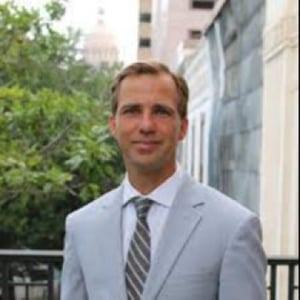
Director of Litigation, Texas Public Policy Foundation
Chance Weldon is a Senior Attorney and the Director of Litigation for the Center for the American Future at the Texas Public Policy Foundation.
Chance was one of the first attorneys hired by former litigation director Rob Henneke in 2015. Since joining the Foundation, Chance has worked on some of its most important cases. From protecting the rights of property owners along the Red River in North Texas (Aderholt v. BLM) to striking down the City of Austin’s onerous short-term rental regulations in Zaatari v. City of Austin, to defending peoples’ ability to maintain their property without suffering ruinous penalties in F.P. Development, LLC v. Canton, to reinvigorating the Commerce Clause in TPPF’s litigation against the Federal Government’s Eviction Moratorium and Vaccine Mandate, Chance has been at the forefront of protecting constitutional rights in Texas and across the country.
Before joining the Foundation, Chance served as a fellow at the Pacific Legal Foundation in Sacramento, California and the Institute for Justice in Austin, Texas. As a fellow, he worked on wide breadth of litigation involving economic liberty, free speech, school choice, and private property rights.
A Houston native, Chance earned his J.D. from the University of Houston, where he was awarded the Dean’s Merit Scholarship for all three years. Prior to law school, he received a B.A. in Philosophy and Political Science from the University of Houston. He is licensed to practice law in Texas, California (inactive status), the United States Supreme Court, and the United States Courts of Appeals for the Fifth, Sixth, and Seventh Circuits.
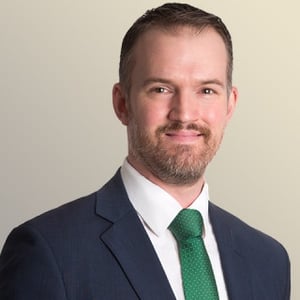
Partner, King & Spalding
Jamieson Greer is a partner in King & Spalding's International Trade practice group where he specializes in trade remedy litigation, export / import compliance, and international trade policy and negotiations. Prior to joining King & Spalding, he served as the Chief of Staff to the U.S. Trade Representative, Ambassador Robert Lighthizer. At USTR, he oversaw the development and implementation of U.S. trade policy for the executive branch. He also was deeply involved in the negotiations of the Phase One trade deal with China and the United-States-Mexico-Canada Agreement. Before working at USTR, Jamieson spent several years in private practice working on trade-related matters and served in the U.S. Air Force Judge Advocate General's Corps.
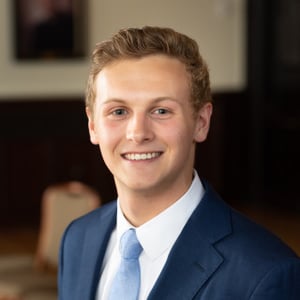
JD Candidate, Harvard Law School
Trevor is a second-year law student at Harvard Law School. Prior to starting law school, he lived in Taiwan as a Fulbright Scholar studying Taiwanese industrial policy, and he worked as a research assistant at a Washington think tank focused on strategic trade controls where he investigated companies involved in the Chinese defense industry.
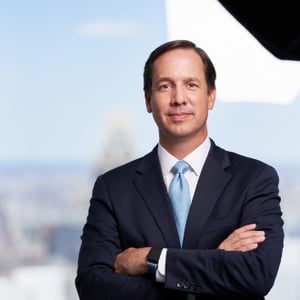
Counsel, Debevoise & Plimpton
Carter Burwell is a litigation counsel based in the Washington, D.C. office of Debevoise & Plimpton and a member of the firm’s White Collar & Regulatory Defense practice. His practice focuses on white collar criminal defense, government investigations and internal investigations, and national security matters.
Mr. Burwell joins Debevoise with more than 15 years of experience in senior roles across the federal government. Most recently, Mr. Burwell served as Counselor to the Secretary of the Treasury for Terrorism and Finance Intelligence, where he advised on matters involving financial sanctions and illicit finance, international corruption and human rights abuses and digital assets. At Treasury, Mr. Burwell worked directly with the National Security Council, other senior executive branch officials, foreign leaders and the private sector to develop and implement policies to protect domestic and international financial systems from national security threats. He also participated in the CFIUS review process and advanced anti-money laundering reforms under the Bank Secrecy Act.
Prior to his role at the Treasury Department, Mr. Burwell served as one of the top lawyers on the U.S. Senate Judiciary Committee, including as Chief Counsel to former Assistant Majority Leader and U.S. Senator John Cornyn and as Counsel to former Chairman and U.S. Senator Chuck Grassley. In the Senate, Mr. Burwell worked on bipartisan efforts to modernize national security and technology laws, reform the criminal justice system and conduct rigorous oversight of government officials and the private sector on matters of national consequence. Mr. Burwell also served as an Assistant U.S. Attorney in the Violent Crime and Terrorism Unit in the U.S. Attorney's Office in the Eastern District of New York (EDNY) and in the National Security and International Crimes Unit in the U.S. Attorney’s Office in the Eastern District of Virginia (EDVA). As a federal prosecutor at EDNY and EDVA, Mr. Burwell supervised and participated in a wide variety of investigations and prosecutions involving international and domestic terrorist groups, international cartels and racketeering organizations, as well as financial and cyber crimes. He successfully tried numerous cases to verdict and briefed and argued appeals in the U.S. Court of Appeals.
Earlier on in his career, Mr. Burwell served as a law clerk to U.S. District Court Judge Gleeson, now a Debevoise litigation partner, before going on to clerk on the U.S. Court of Appeals for the D.C. Circuit for the Hon. Judge Karen Henderson. Mr. Burwell was also a litigation associate at another international law firm.
He received his J.D. from the University Virginia School of Law in 2002, an M.Phil from the University of Cambridge in 1998, and his B.A. from Columbia College in 1996.
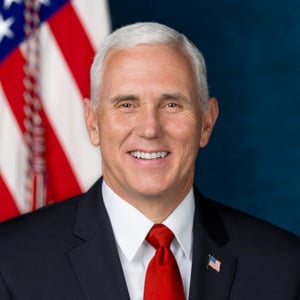
48th Vice President of the United States
Michael R. Pence was born in Columbus, Indiana, on June 7, 1959, one of six children born to Edward and Nancy Pence. As a young boy he had a front row seat to the American Dream. After his grandfather immigrated to the United States when he was 17, his family settled in the Midwest. The future Vice President watched his Mom and Dad build everything that matters—a family, a business, and a good name. Sitting at the feet of his mother and his father, who started a successful convenience store business in their small Indiana town, he was raised to believe in the importance of hard work, faith, and family.
Vice President Pence set off for Hanover College, earning his bachelor’s degree in history in 1981. While there, he renewed his Christian faith which remains the driving force in his life. He later attended Indiana University School of Law and met the love of his life, Second Lady Karen Pence.
After graduating, Vice President Pence practiced law, led the Indiana Policy Review Foundation, and began hosting The Mike Pence Show, a syndicated talk radio show and a weekly television public affairs program in Indiana. Along the way he became the proud father to three children, Michael, Charlotte, and Audrey.
Growing up in Indiana, surrounded by good, hardworking Hoosiers, Vice President Pence always knew that he needed to give back to the state and the country that had given him so much. In 2000, he launched a successful bid for his local congressional seat, entering the United States House of Representatives at the age of 40.
The people of East-Central Indiana elected Vice President Pence six times to represent them in Congress. On Capitol Hill he established himself as a champion of limited government, fiscal responsibility, economic development, educational opportunity, and the U.S. Constitution. His colleagues quickly recognized his leadership ability and unanimously elected him to serve as Chairman of the House Republican Study Committee and House Republican Conference Chairman. In this role, the Vice President helped make government smaller and more effective, reduce spending, and return power to state and local governments.
In 2013, Vice President Pence left the nation’s capital when Hoosiers elected him the 50th Governor of Indiana. He brought the same limited government and low tax philosophy to the Indiana Statehouse. As Governor, he enacted the largest income tax cut in Indiana history, lowering individual income tax rates, the business personal property tax, and the corporate income tax in order to strengthen the State’s competitive edge and attract new investment and good-paying jobs. Due to his relentless focus on jobs, the state’s unemployment rate fell by half during his four years in office, and at the end of his term, more Hoosiers were working than at any point in the state’s 200-year history.
As Governor of Indiana, Vice President Pence increased school funding, expanded school choice, and created the first state-funded Pre-K plan in Indiana history. He made career and technical education a priority in every high school. Under Vice President Pence’s leadership, Indiana, known as “The Crossroads of America,” invested more than $800 million in new money for roads and bridges across the state. Despite the record tax cuts and new investments in roads and schools, the state remained fiscally responsible, as the Vice President worked with members of the Indiana General Assembly to pass two honestly balanced budgets that left the state with strong reserves and AAA credit ratings that were the envy of the nation.
It was Indiana’s success story, Vice President Pence’s record of legislative and executive experience, and his strong family values that prompted President Donald Trump to select Mike Pence as his running mate in July 2016. The American people elected President Donald Trump and Vice President Pence on November 8, 2016. President Donald Trump and Vice President Pence entered office on January 20, 2017.
In February 2021, Vice President Mike Pence joined the Heritage Foundation as a distinguished visiting fellow. The Heritage Foundation helped shape Vice President Mike Pence’s conservative philosophy for decades and played a pivotal role advancing conservative policies throughout the Trump Administration. Vice President Pence also joined Young America’s Foundation as the Ronald Reagan Presidential Scholar. Long before Mike Pence became Vice President to President Donald Trump, the vision and leadership of Ronald Reagan inspired his youth.
Vice President Mike Pence remains grateful for the grace of God, the love and support of his family, and the blessings of liberty that are every American’s birthright.
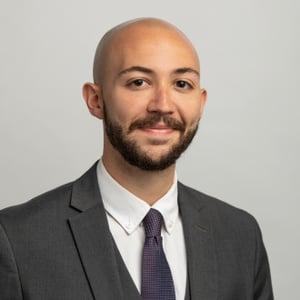
Attorney, Institute for Justice
John Wrench is a Constitutional Law Fellow at the Institute for Justice.
John grew up outside of Ithaca, New York, and received his law degree from the Case Western Reserve University School of Law in 2019. During law school, he served as editor in chief of the Case Western Reserve Journal of International Law and was a member of the Federalist Society. John interned in his law school’s First Amendment Litigation Clinic and was a judicial extern to the Honorable Paul E. Davison in the Southern District of New York. John graduated from Pace University in 2015 with a Bachelor of Arts in Philosophy and Religious Studies.

Topics
How Clear is Clear Enough: A Mix of Textualism, Tribal Sovereignty, and Bankruptcy at the Supreme Court
Indian Tribes are unique entities. They’re sui generis (one of a kind) in American law....
Luncheon with Alaska Attorney General Treg Taylor: ESG Investing vs. the Rule of Law and Economic Interests
Alaska Lawyers Chapter
Anchorage, AKTopics
Answering Threats to Taiwan
Last month, the Federalist Society’s International and National Security Law Practice Group hosted Part II...
Book Talk—The Great Dissenter: The Story of John Marshall Harlan
Austin Lawyers Chapter
Austin, TXTopics
Is a Ban on TikTok a Bill of Attainder?
The White House and a bipartisan group of congressional members have called for measures that...
American Trade Law in a Post-WTO Appellate Body World
TeleforumTopics
Abraham Accords: Promise-Potential; Risk-Reality
The Trump Administration brokered the signing of the Abraham Accords in 2020 with the purpose...
New Legal Tools to Combat Emerging Foreign Threats
Puget Sound Lawyers Chapter
Bellevue, WAIowa Supreme Court Upholds the Warrantless DNA Analysis of a Drinking Straw Collected from a Fast-Food Restaurant
John Wrench
In State v. Burns, the Iowa Supreme Court considered whether police violated the U.S. or...
Closing Reception
EBRXI
Washington, DC