
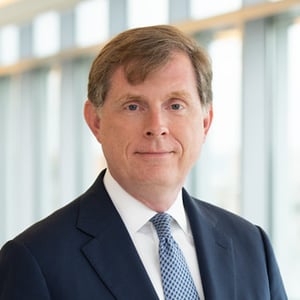
Partner, Arnold & Porter
John Elwood is the head of Arnold & Porter’s Appellate and Supreme Court practice. He has argued before the Supreme Court nine times, and appeared before most of the federal courts of appeals. He has successfully argued cases across a broad cross-section of subjects, with particular experience in environmental law, the False Claims Act, government contracting, and federal criminal law
Mr. Elwood’s work has earned him recognition as one of Washington’s top Supreme Court lawyers (Washingtonian, 2013), as one of “a small group of lawyers” with an “outsized influence at the U.S. Supreme Court” (Reuters, 2014), and as one of the country’s most innovative lawyers (Financial Times, 2014). Chambers USA reports that “[t]he much-admired John Elwood is praised for his advocacy skills” (2013), and describes Mr. Elwood as “phenomenal” (2014), “incredibly talented” (2012), and “a much-loved and widely respected lawyer who is quick on his feet” (2010).
Before joining the firm, Mr. Elwood served in senior-level positions in the U.S. Department of Justice. Beginning as an Assistant to the Solicitor General, and continuing with the firm, he has briefed more than 20 merits cases before the Supreme Court of the United States, and has briefed approximately 135 cases at the certiorari stage. As the senior Deputy in the Office of Legal Counsel, he advised the White House and federal agencies on a range of constitutional, statutory, and regulatory issues.
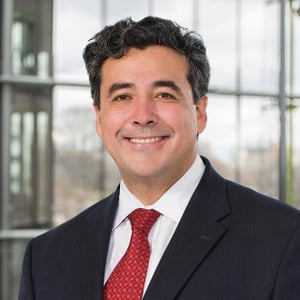
Partner-in-Charge Washington, Jones Day
Noel Francisco served as the 47th Solicitor General of the United States in the Trump Administration, from 2017 to 2020. He has argued some of the most important cases the Supreme Court has heard in recent years on a wide array of issues.
For example, as Solicitor General, he argued Trump v. Hawaii, where he successfully defended the president's orders restricting travel from countries deemed to present security risks; Janus v. AFSCME, which upheld the First Amendment rights of public employees who decline to join labor unions; Kisor v. Wilkie, which adopted his argument that the "Auer deference doctrine" should be significantly curtailed but retained in its core applications; Apple Inc. v. Pepper, which addressed whether Apple's App Store customers had standing to sue the company for antitrust violations; Knick v. Township of Scott, which held that property owners could sue state and local governments in federal court to vindicate Fifth Amendment takings claims; and Seila Law LLC v. CFPB, which invalidated restrictions on the president's authority to remove the director of the Consumer Financial Protection Bureau.
He also spearheaded the government's general strategy to seek emergency relief in the appellate courts and the Supreme Court when lower courts issued nationwide injunctions against important government programs.
Noel's service as Solicitor General built on his previous tenure at Jones Day, during which he argued McDonnell v. United States, which reversed the federal bribery conviction of the governor of Virginia; NLRB v. Noel Canning, which limited the president's constitutional recess appointments power; and Zubik v. Burwell, which challenged federal insurance coverage regulations that violated Catholic organizations' religious beliefs.
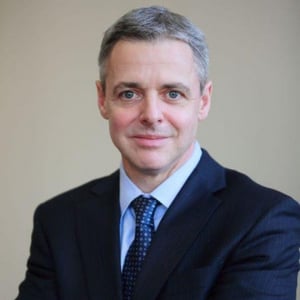
Judge, United States Court of Appeals, Sixth Circuit
Raymond M. Kethledge is a Circuit Judge on the United States Court of Appeals for the Sixth Circuit, to which he was appointed on July 8, 2008. He received his BA in history from the University of Michigan in 1989, and his JD from the University of Michigan Law School in 1993. He clerked for Justice Anthony Kennedy of the United States Supreme Court and Judge Ralph B. Guy, Jr. of the United States Court of Appeals for the Sixth Circuit. He also worked in the United States Senate and later, with two partners, founded a boutique litigation firm, now known as Bush Seyferth PLLC, in Troy, Michigan. His practice there included a broad mix of trial-court, appellate, and class-action litigation.
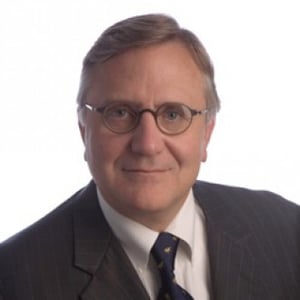
Reed Larson Professor of Labor Law, Ave Maria School of Law and, National Right To Work Legal Defense Foundation
John Raudabaugh is a labor lawyer and former Member of the U.S. National Labor Relations Board. He was a partner in law firms representing management concerning domestic and international labor law matters. Currently, he represents employees seeking relief from union and/or employer unfair labor practices. Mr. Raudabaugh has presented testimony to both Senate and House Committees regarding labor law reform. Professor Raudabaugh teaches Labor Law and a Labor Law Practicum at the Ave Maria School of Law. He is a graduate of the Wharton School of Finance and Commerce and New York State School of Industrial and Labor Relations with B.S. and M.S. degrees in labor economics and a J.D. degree from the University of Virginia Law School of Law.
President, Constitutional Accountability Center
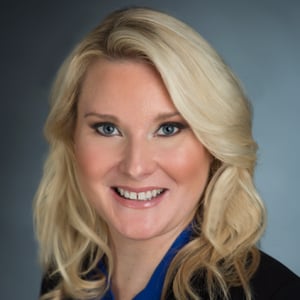
Elizabeth is Constitutional Accountability Center’s President. From 2008-2016, she served as CAC's Chief Counsel, representing the Center as well as clients including preeminent constitutional scholars and historians, state and local government organizations, and groups such as the League of Women Voters and the AARP. She frequently participates in Supreme Court litigation and her legal brief writing has been recognized as “exemplary” by the Green Bag Almanac & Reader. Elizabeth has also argued several important cases in the federal courts of appeals on a range of issues, including immigration law, habeas corpus, and sovereign immunity. She joined CAC from private practice at Quinn Emanuel Urquhart & Sullivan in San Francisco, where she was an attorney working with former Stanford Law School Dean Kathleen Sullivan in the firm’s Supreme Court/appellate practice. Previously, Elizabeth was a supervising attorney and teaching fellow at the Georgetown University Law Center appellate litigation clinic, a law clerk for Judge James R. Browning of the U.S. Court of Appeals for the Ninth Circuit, and a lawyer at Pillsbury Winthrop Shaw Pittman, a law firm in Washington. She has appeared as a legal expert for NBC, ABC, PBS, CNN, Fox News, the BBC, Current TV, and NPR, among other outlets. Elizabeth has been quoted extensively in the print media and is a regular contributor to the ABA’s Preview of United States Supreme Court Cases. Her writings have appeared in The New York Times, Reuters, USA Today, Politico, CNN.com, Slate, and on numerous political and legal blogs, such as Huffington Post, SCOTUSblog, and ACSblog. She has also published in the UCLA Journal of Environmental Law & Policy, Syracuse Law Review, The Cato Institute’s Supreme Court Review, and the Yale Journal of International Law. Elizabeth is a graduate of Yale Law School.
Partner, Arnold & Porter
John Elwood is the head of Arnold & Porter’s Appellate and Supreme Court practice. He has argued before the Supreme Court nine times, and appeared before most of the federal courts of appeals. He has successfully argued cases across a broad cross-section of subjects, with particular experience in environmental law, the False Claims Act, government contracting, and federal criminal law
Mr. Elwood’s work has earned him recognition as one of Washington’s top Supreme Court lawyers (Washingtonian, 2013), as one of “a small group of lawyers” with an “outsized influence at the U.S. Supreme Court” (Reuters, 2014), and as one of the country’s most innovative lawyers (Financial Times, 2014). Chambers USA reports that “[t]he much-admired John Elwood is praised for his advocacy skills” (2013), and describes Mr. Elwood as “phenomenal” (2014), “incredibly talented” (2012), and “a much-loved and widely respected lawyer who is quick on his feet” (2010).
Before joining the firm, Mr. Elwood served in senior-level positions in the U.S. Department of Justice. Beginning as an Assistant to the Solicitor General, and continuing with the firm, he has briefed more than 20 merits cases before the Supreme Court of the United States, and has briefed approximately 135 cases at the certiorari stage. As the senior Deputy in the Office of Legal Counsel, he advised the White House and federal agencies on a range of constitutional, statutory, and regulatory issues.
Partner-in-Charge Washington, Jones Day
Noel Francisco served as the 47th Solicitor General of the United States in the Trump Administration, from 2017 to 2020. He has argued some of the most important cases the Supreme Court has heard in recent years on a wide array of issues.
For example, as Solicitor General, he argued Trump v. Hawaii, where he successfully defended the president's orders restricting travel from countries deemed to present security risks; Janus v. AFSCME, which upheld the First Amendment rights of public employees who decline to join labor unions; Kisor v. Wilkie, which adopted his argument that the "Auer deference doctrine" should be significantly curtailed but retained in its core applications; Apple Inc. v. Pepper, which addressed whether Apple's App Store customers had standing to sue the company for antitrust violations; Knick v. Township of Scott, which held that property owners could sue state and local governments in federal court to vindicate Fifth Amendment takings claims; and Seila Law LLC v. CFPB, which invalidated restrictions on the president's authority to remove the director of the Consumer Financial Protection Bureau.
He also spearheaded the government's general strategy to seek emergency relief in the appellate courts and the Supreme Court when lower courts issued nationwide injunctions against important government programs.
Noel's service as Solicitor General built on his previous tenure at Jones Day, during which he argued McDonnell v. United States, which reversed the federal bribery conviction of the governor of Virginia; NLRB v. Noel Canning, which limited the president's constitutional recess appointments power; and Zubik v. Burwell, which challenged federal insurance coverage regulations that violated Catholic organizations' religious beliefs.
Judge, United States Court of Appeals, Sixth Circuit
Raymond M. Kethledge is a Circuit Judge on the United States Court of Appeals for the Sixth Circuit, to which he was appointed on July 8, 2008. He received his BA in history from the University of Michigan in 1989, and his JD from the University of Michigan Law School in 1993. He clerked for Justice Anthony Kennedy of the United States Supreme Court and Judge Ralph B. Guy, Jr. of the United States Court of Appeals for the Sixth Circuit. He also worked in the United States Senate and later, with two partners, founded a boutique litigation firm, now known as Bush Seyferth PLLC, in Troy, Michigan. His practice there included a broad mix of trial-court, appellate, and class-action litigation.
Reed Larson Professor of Labor Law, Ave Maria School of Law and, National Right To Work Legal Defense Foundation
John Raudabaugh is a labor lawyer and former Member of the U.S. National Labor Relations Board. He was a partner in law firms representing management concerning domestic and international labor law matters. Currently, he represents employees seeking relief from union and/or employer unfair labor practices. Mr. Raudabaugh has presented testimony to both Senate and House Committees regarding labor law reform. Professor Raudabaugh teaches Labor Law and a Labor Law Practicum at the Ave Maria School of Law. He is a graduate of the Wharton School of Finance and Commerce and New York State School of Industrial and Labor Relations with B.S. and M.S. degrees in labor economics and a J.D. degree from the University of Virginia Law School of Law.
President, Constitutional Accountability Center
Elizabeth is Constitutional Accountability Center’s President. From 2008-2016, she served as CAC's Chief Counsel, representing the Center as well as clients including preeminent constitutional scholars and historians, state and local government organizations, and groups such as the League of Women Voters and the AARP. She frequently participates in Supreme Court litigation and her legal brief writing has been recognized as “exemplary” by the Green Bag Almanac & Reader. Elizabeth has also argued several important cases in the federal courts of appeals on a range of issues, including immigration law, habeas corpus, and sovereign immunity. She joined CAC from private practice at Quinn Emanuel Urquhart & Sullivan in San Francisco, where she was an attorney working with former Stanford Law School Dean Kathleen Sullivan in the firm’s Supreme Court/appellate practice. Previously, Elizabeth was a supervising attorney and teaching fellow at the Georgetown University Law Center appellate litigation clinic, a law clerk for Judge James R. Browning of the U.S. Court of Appeals for the Ninth Circuit, and a lawyer at Pillsbury Winthrop Shaw Pittman, a law firm in Washington. She has appeared as a legal expert for NBC, ABC, PBS, CNN, Fox News, the BBC, Current TV, and NPR, among other outlets. Elizabeth has been quoted extensively in the print media and is a regular contributor to the ABA’s Preview of United States Supreme Court Cases. Her writings have appeared in The New York Times, Reuters, USA Today, Politico, CNN.com, Slate, and on numerous political and legal blogs, such as Huffington Post, SCOTUSblog, and ACSblog. She has also published in the UCLA Journal of Environmental Law & Policy, Syracuse Law Review, The Cato Institute’s Supreme Court Review, and the Yale Journal of International Law. Elizabeth is a graduate of Yale Law School.
Senior Policy Analyst, The George Washington University Regulatory Studies Center
Sofie Miller's regulatory research portfolio includes economic analysis of energy efficiency standards, analysis of regulatory benefits, use of cost benefit analysis by agencies, retrospective review of existing rules, regressive effects of regulations, and the efficacy of public participation within the rulemaking process. Sofie has submitted public comments on regulations establishing energy efficiency standards, airline passenger protections, consumer product safety, and standards to prevent foodborne illnesses. Sofie has published articles in Regulation Magazine and the journal Engage, and is the editor of the GW Regulatory Studies Center's weekly Regulation Digest, which tracks regulatory developments in federal agencies, think tanks, and the media.
Senior Fellow, National Security Institute, Antonin Scalia School of Law, George Mason University; Retired Professor, Distinguished Fellow and Co-Founder, Center for National Security Law, University of Virginia School of Law (1987-2020)
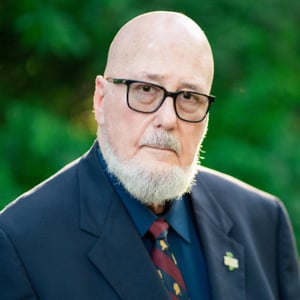
Robert F. Turner holds both professional and academic doctorates from the University of Virginia School of Law. He co-founded the Center for National Security Law with Professor John Norton Moore in April 1981 and served as its associate director for 39 years, except for two periods of government service in the 1980s and during 1994-95, when he occupied the Charles H. Stockton Chair of International Law at the U.S. Naval War College in Newport, Rhode Island. He retired from UVA in January 2020 and currently serves as a non-resident senior fellow at the GMU National Security Institute. He also served briefly in 2020 as President of the Crime Prevention Research Center—one of the most respected pro-Second Amendment groups in the country—while its founder, Dr. John Lott, was on leave of absence.
A former Army captain and veteran of two tours in Vietnam, Turner served as a research associate and public affairs fellow at Stanford's Hoover Institution on War, Revolution and Peace before spending five years in the mid-1970s as national security adviser to U.S. Senator Robert P. Griffin, a member of the Senate Foreign Relations Committee (where Turner anticipated by seven years the Supreme Court’s landmark INS v. Chadha decision, striking down legislative vetoes). He also served in the executive branch during the Reagan administration as a member of the Senior Executive Service, first in the Pentagon as special assistant to the undersecretary of defense for policy, then in the White House as counsel to the President's Intelligence Oversight Board, and at the State Department as principal deputy and then acting assistant secretary for legislative affairs. In 1986, he became the first president of the congressionally established United States Institute of Peace.
A former three-term chairman of the ABA Standing Committee on Law and National Security (and for many years editor of the ABA National Security Law Report), Turner also chaired the Executive-Congressional Relations Subcommittee of the ABA Section on International Law and Practice and chaired or co-chaired the National Security Law Subcommittee of the Federalist Society’s International and National Security Law Practice Group for several years.
Turner taught undergraduate courses at Virginia on international law, U.S. foreign policy, the Vietnam War and foreign policy and the law in what is now the Woodrow Wilson Department of Politics. In addition, he co-taught National Security Law and advanced national security law seminars on the Indochina War and on war and peace with Moore at the Law School.
The author or editor of 18 books and monographs (including co-editor of the Center's 1,600-page National Security Law & Policy casebook, National Security Law Documents, and Legal Issues in the Struggle Against Terror) and numerous articles in law reviews and other professional journals, Turner has also contributed articles to most of the major U.S. newspapers, including The New York Times and USA Today. In an op-ed published in The International Herald Tribune in September 1990, he and Moore were the first to call for a war-crimes trial for Iraqi dictator Saddam Hussein and for international controls over Iraq's weapons of mass destruction, and the following month he wrote the lead story in The Washington Post Sunday Outlook Section, “Killing Saddam: Would It Be a Crime?,” arguing that Hussein would be a lawful target during Operation Desert Storm. (His reasoning contributed to the modern legal justification for drone strikes targeting specific terrorist leaders.) Three years before the terrorist attacks of September 11, 2001, Turner published an op-ed in USA Today entitled: “In Self-defense, U.S. Has Right to Kill bin Laden.”
In July 2007, he co-authored an article in The Washington Post with former U.S. Marine Corps Commandant General P.X. Kelley, “War Crimes and the White House,” criticizing the use of unlawful “enhanced interrogation techniques” by the Central Intelligence Agency. On the 40th anniversary of the fall of Saigon he authored an article in The Wall Street Journal, “Saigon’s Fall Still Echoes Today,” noting that after the war ended, Hanoi admitted it had made a decision in 1959 to open the Ho Chi Minh Trail and start sending troops, weapons and supplies into South Vietnam to overthrow its government — just as the United States had charged. In 2010 Turner received the first “person of the year” award from SACEI, a major Vietnamese-American human rights organization.
A frequent lecturer and debater, Turner has spoken at more than 100 law schools around the nation and in other fora — taking on as many as four opponents at a time. His debate opponents have included former or future deans of Yale, Stanford, the University of Chicago and Berkeley law schools. Following a 1987 debate against Dean Harlan Cleveland (Rhodes Scholar, U.S. Ambassador to NATO, and Presidential Medal of Freedom recipient) in which Turner defended the legality of U.S. support for the Nicaraguan contras during the Reagan Administration, the host student debating societies awarded Turner the victory by an 85-to-15 percent margin.
Turner has also written and lectured widely on University of Virginia founder and America’s third president Thomas Jefferson. In 2000-2001 he chaired the Jefferson-Hemings Scholars Commission. In his 2012 book Master of the Mountain, Jefferson critic Henry Wiencek described Turner as “Jefferson’s chief scholarly defender."
A former distinguished lecturer at the U.S. Military Academy at West Point, Turner is a member of the Council on Foreign Relations, the Academy of Political Science, the Committee on the Present Danger, The Heterodox Academy, and other professional organizations. He maintained a 4.0 gpa as a graduate student at Stanford in History and Political Science and in the UVA Department of Government and Foreign Affairs and was the first person admitted directly to the UVA academic law doctorate (SJD) program without first being required to earn an LL.M. master’s degree. He was selected for inclusion in Who’s Who in American Law less than two years after graduating from law school and Who’s Who in the World before he reached the age of 40. Turner has testified before more than a dozen different congressional committees on issues of international or constitutional law and other topics.
Partner, Arnold & Porter
John Elwood is the head of Arnold & Porter’s Appellate and Supreme Court practice. He has argued before the Supreme Court nine times, and appeared before most of the federal courts of appeals. He has successfully argued cases across a broad cross-section of subjects, with particular experience in environmental law, the False Claims Act, government contracting, and federal criminal law
Mr. Elwood’s work has earned him recognition as one of Washington’s top Supreme Court lawyers (Washingtonian, 2013), as one of “a small group of lawyers” with an “outsized influence at the U.S. Supreme Court” (Reuters, 2014), and as one of the country’s most innovative lawyers (Financial Times, 2014). Chambers USA reports that “[t]he much-admired John Elwood is praised for his advocacy skills” (2013), and describes Mr. Elwood as “phenomenal” (2014), “incredibly talented” (2012), and “a much-loved and widely respected lawyer who is quick on his feet” (2010).
Before joining the firm, Mr. Elwood served in senior-level positions in the U.S. Department of Justice. Beginning as an Assistant to the Solicitor General, and continuing with the firm, he has briefed more than 20 merits cases before the Supreme Court of the United States, and has briefed approximately 135 cases at the certiorari stage. As the senior Deputy in the Office of Legal Counsel, he advised the White House and federal agencies on a range of constitutional, statutory, and regulatory issues.
Partner-in-Charge Washington, Jones Day
Noel Francisco served as the 47th Solicitor General of the United States in the Trump Administration, from 2017 to 2020. He has argued some of the most important cases the Supreme Court has heard in recent years on a wide array of issues.
For example, as Solicitor General, he argued Trump v. Hawaii, where he successfully defended the president's orders restricting travel from countries deemed to present security risks; Janus v. AFSCME, which upheld the First Amendment rights of public employees who decline to join labor unions; Kisor v. Wilkie, which adopted his argument that the "Auer deference doctrine" should be significantly curtailed but retained in its core applications; Apple Inc. v. Pepper, which addressed whether Apple's App Store customers had standing to sue the company for antitrust violations; Knick v. Township of Scott, which held that property owners could sue state and local governments in federal court to vindicate Fifth Amendment takings claims; and Seila Law LLC v. CFPB, which invalidated restrictions on the president's authority to remove the director of the Consumer Financial Protection Bureau.
He also spearheaded the government's general strategy to seek emergency relief in the appellate courts and the Supreme Court when lower courts issued nationwide injunctions against important government programs.
Noel's service as Solicitor General built on his previous tenure at Jones Day, during which he argued McDonnell v. United States, which reversed the federal bribery conviction of the governor of Virginia; NLRB v. Noel Canning, which limited the president's constitutional recess appointments power; and Zubik v. Burwell, which challenged federal insurance coverage regulations that violated Catholic organizations' religious beliefs.
Judge, United States Court of Appeals, Sixth Circuit
Raymond M. Kethledge is a Circuit Judge on the United States Court of Appeals for the Sixth Circuit, to which he was appointed on July 8, 2008. He received his BA in history from the University of Michigan in 1989, and his JD from the University of Michigan Law School in 1993. He clerked for Justice Anthony Kennedy of the United States Supreme Court and Judge Ralph B. Guy, Jr. of the United States Court of Appeals for the Sixth Circuit. He also worked in the United States Senate and later, with two partners, founded a boutique litigation firm, now known as Bush Seyferth PLLC, in Troy, Michigan. His practice there included a broad mix of trial-court, appellate, and class-action litigation.
Reed Larson Professor of Labor Law, Ave Maria School of Law and, National Right To Work Legal Defense Foundation
John Raudabaugh is a labor lawyer and former Member of the U.S. National Labor Relations Board. He was a partner in law firms representing management concerning domestic and international labor law matters. Currently, he represents employees seeking relief from union and/or employer unfair labor practices. Mr. Raudabaugh has presented testimony to both Senate and House Committees regarding labor law reform. Professor Raudabaugh teaches Labor Law and a Labor Law Practicum at the Ave Maria School of Law. He is a graduate of the Wharton School of Finance and Commerce and New York State School of Industrial and Labor Relations with B.S. and M.S. degrees in labor economics and a J.D. degree from the University of Virginia Law School of Law.
President, Constitutional Accountability Center
Elizabeth is Constitutional Accountability Center’s President. From 2008-2016, she served as CAC's Chief Counsel, representing the Center as well as clients including preeminent constitutional scholars and historians, state and local government organizations, and groups such as the League of Women Voters and the AARP. She frequently participates in Supreme Court litigation and her legal brief writing has been recognized as “exemplary” by the Green Bag Almanac & Reader. Elizabeth has also argued several important cases in the federal courts of appeals on a range of issues, including immigration law, habeas corpus, and sovereign immunity. She joined CAC from private practice at Quinn Emanuel Urquhart & Sullivan in San Francisco, where she was an attorney working with former Stanford Law School Dean Kathleen Sullivan in the firm’s Supreme Court/appellate practice. Previously, Elizabeth was a supervising attorney and teaching fellow at the Georgetown University Law Center appellate litigation clinic, a law clerk for Judge James R. Browning of the U.S. Court of Appeals for the Ninth Circuit, and a lawyer at Pillsbury Winthrop Shaw Pittman, a law firm in Washington. She has appeared as a legal expert for NBC, ABC, PBS, CNN, Fox News, the BBC, Current TV, and NPR, among other outlets. Elizabeth has been quoted extensively in the print media and is a regular contributor to the ABA’s Preview of United States Supreme Court Cases. Her writings have appeared in The New York Times, Reuters, USA Today, Politico, CNN.com, Slate, and on numerous political and legal blogs, such as Huffington Post, SCOTUSblog, and ACSblog. She has also published in the UCLA Journal of Environmental Law & Policy, Syracuse Law Review, The Cato Institute’s Supreme Court Review, and the Yale Journal of International Law. Elizabeth is a graduate of Yale Law School.
United States Senator, Texas
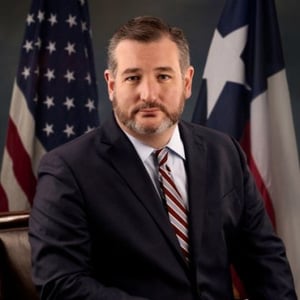
Ted Cruz represents 28 million Texans in the U.S. Senate as a passionate fighter for limited government and economic growth. He has authored 39 legislative measures signed into law. Recent victories include expanding 529 college savings accounts to allow parents to save for K–12 public, private, and religious education, leading the effort to repeal Obamacare’s individual mandate, imposing sanctions on terrorists who use civilians as human shields, designating North Korea as a state sponsor of terrorism, reauthorizing and reforming NASA, ensuring the availability of additional records to help solve civil rights cold cases, supporting thousands of Texas jobs, and leading the fight to confirm principled constitutionalists to our courts.
Senator Cruz is a graduate of Princeton University and Harvard Law School, a former law clerk to Chief Justice William Rehnquist, and former solicitor general of Texas. He has argued nine cases before the Supreme Court. In November of 2018, he was re-elected to the Senate by the people of Texas.

Co-Chairman, The Federalist Society for Law and Public Policy Studies
Leonard is Co-Chairman and former Executive Vice President of the Federalist Society, joining the organization over 25 years ago. Since that time he has been instrumental in helping the organization top 70,000, focusing on the growth of lawyers membership, operations and activities advancing limited, constitutional government. In addition to his work at the Society, Leonard has advised President Trump on judicial selection, assisted with the Gorsuch and Kavanaugh Supreme Court selection and confirmation process, and served as a member of the transition team. He also organized the outside coalition efforts in support of the Roberts and Alito U.S. Supreme Court confirmations. Leonard was appointed by President George W. Bush to three terms to the U.S. Commission on International Religious Freedom as chairman. He was also a U.S. Delegate to the UN Council and UN Commission on Human Rights during the Bush Administration. Leonard was the recipient of the 2009 Bradley Prize, along with the other founders and directors of the Federalist Society, for his work in advancing freedom and the rule of law. He is the coeditor of Presidential Leadership: Rating the Best and the Worst in the White House, as well as the author of opinion editorials in the New York Times,The Wall Street Journal, and Washington Post. Leonard holds degrees from Cornell University and Cornell Law School. He presently resides in Northern Virginia, where he and his wife Sally have raised their seven children.
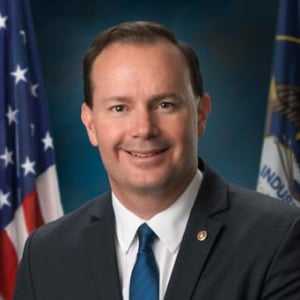
United States Senator, Utah
Elected in 2010 as Utah's 16th Senator, Mike Lee has spent his career defending the basic liberties of Americans and Utahns as a tireless advocate for our founding constitutional principles.
Senator Lee acquired a deep respect for the Constitution early on. His father, Rex Lee, who served as the Solicitor General under President Ronald Reagan, would often discuss varied aspects of judicial and constitutional doctrine around the kitchen table, from Due Process to the uses of Executive Plenary Power. He attended most of his father's arguments before the U.S. Supreme Court, giving him a unique, hands-on experience and understanding of government up close.
Lee graduated from Brigham Young University with a Bachelor of Science in Political Science, and served as BYU's Student Body President in his senior year. He graduated from BYU's Law School in 1997 and went on to serve as law clerk to Judge Dee Benson of the U.S. District Court for the District of Utah, and then with future Supreme Court Justice Judge Samuel A. Alito, Jr. on the U.S. Court of Appeals for the Third Circuit.
Lee spent several years as an attorney with the law firm Sidley & Austin specializing in appellate and Supreme Court litigation, and then served as an Assistant U.S. Attorney in Salt Lake City arguing cases before the U.S. Court of Appeals for the Tenth Circuit.
Lee served the state of Utah as Governor Jon Huntsman's General Counsel and was later honored to reunite with Justice Alito, now on the Supreme Court, for a one-year clerkship. He returned to private practice in 2007.
Throughout his career, Lee earned a reputation as an outstanding practitioner of the law based on his sound judgment, abilities in the courtroom, and thorough understanding of the Constitution.
Today, Lee fights to preserve America's proud founding document in the United States Senate. He advocates efforts to support constitutionally limited government, fiscal responsibility, individual liberty, and economic prosperity.
Lee is a member of the Judiciary Committee, and serves as Chairman of the Antitrust, Competition Policy and Consumer Rights Subcommittee protecting business competition and personal freedom.
He also oversees issues critical to Utah as the Chairman of the Water and Power Subcommittee of the Energy and Natural Resources Committee. He serves on the Commerce Committee and the Joint Economic Committee, as well.
In the 114th Congress, Lee also began his tenure as Chairman of the Senate Steering Committee, where he works with his Republican colleagues in the Senate to introduce bold and innovative solutions to issues facing the American people.
Lee and his wife Sharon live in Alpine, Utah, with their three children. He is a member of The Church of Jesus Christ of Latter-day Saints and served a two-year mission for the Church in the Texas Rio Grande Valley.
Co-Chairman, The Federalist Society for Law and Public Policy Studies
Leonard is Co-Chairman and former Executive Vice President of the Federalist Society, joining the organization over 25 years ago. Since that time he has been instrumental in helping the organization top 70,000, focusing on the growth of lawyers membership, operations and activities advancing limited, constitutional government. In addition to his work at the Society, Leonard has advised President Trump on judicial selection, assisted with the Gorsuch and Kavanaugh Supreme Court selection and confirmation process, and served as a member of the transition team. He also organized the outside coalition efforts in support of the Roberts and Alito U.S. Supreme Court confirmations. Leonard was appointed by President George W. Bush to three terms to the U.S. Commission on International Religious Freedom as chairman. He was also a U.S. Delegate to the UN Council and UN Commission on Human Rights during the Bush Administration. Leonard was the recipient of the 2009 Bradley Prize, along with the other founders and directors of the Federalist Society, for his work in advancing freedom and the rule of law. He is the coeditor of Presidential Leadership: Rating the Best and the Worst in the White House, as well as the author of opinion editorials in the New York Times,The Wall Street Journal, and Washington Post. Leonard holds degrees from Cornell University and Cornell Law School. He presently resides in Northern Virginia, where he and his wife Sally have raised their seven children.
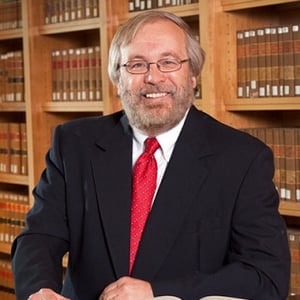
Welpton & Wise Professor of Law, University of Nebraska College of Law
Professor Rick Duncan is the Welpton & Wise Professor of Law at the University Of Nebraska College Of Law. He is a graduate of the Cornell Law School and served as an editor of the Cornell Law Review. He teaches Constitutional Law with a special emphasis on the law of religious freedom, free speech, and federalism. Duncan has written numerous books, articles, and commentaries on a wide variety of legal topics. His recent publications include an article on Justice Scalia’s legacy, another on Kermit Gosnell and Roe v. Wade, a piece on the Electoral College and Federalism, a 2019 piece on Masterpiece Cakeshop and the First Amendment, and three recent articles on the “no compelled speech” doctrine as a First Amendment defense against authoritarianism and tyranny. His most recent article, on School Choice and the First Amendment, will be published in 2023 in Case Western Law Review. He is also the co-author of a book on Secured Transactions under Article 9 of the UCC. He served as Chairman of the Nebraska Advisory Committee to the U.S. Commission on Civil Rights during the Reagan Administration. He also loves to speak at Federalist Society meetings around the country on life, liberty, and the pursuit of federalism.
Duncan has five children, five grandchildren, and a wonderful wife who help him pursue happiness. He loves lifting weights (particularly going heavy on the incline bench press), attending Broadway musicals and plays, including Hamilton: An American Musical which he has seen 12 times (possibly a Nebraska record). He regularly reads both the Bible and the New York Times because it is important to keep up with what both sides have to say. He loves following major league baseball, especially the San Diego Padres. And his favorite legal aphorism is “first come rights then comes government to secure those rights.”

Labor & Employment: Recess Appointments: Implications of Noel Canning
John P. Elwood, Noel J. Francisco, Raymond Kethledge, John N. Raudabaugh, Elizabeth B. Wydra
On January 4, 2012, President Barack Obama announced “recess appointments” of three members of the...
Labor & Employment: Recess Appointments: Implications of Noel Canning
John P. Elwood, Noel J. Francisco, Raymond Kethledge, John N. Raudabaugh, Elizabeth B. Wydra
On January 4, 2012, President Barack Obama announced “recess appointments” of three members of the...
Constitutional Reform: What the Founders Would Have Done If They Had Known Then What We Know Now
Fort Worth, TexasLabor & Employment: Recess Appointments: Implications of Noel Canning
2013 National Lawyers Convention
Washington, DCAddress by Ted Cruz
2013 National Lawyers Convention
Washington, DCWelcome & Opening Address by Mike Lee
2013 National Lawyers Convention
Washington, DC17 Going on 100: The United States Senate, Equal Representation, the Movement to Repeal the Seventeenth Amendment, and Federalism
The Constitutional Validity of President Obama's Recess Appointments to the NLRB
EPA’s Retrospective Review of Regulations: Will It Reduce Manufacturing Burdens?
Sofie E. Miller
Introduction Through a series of Executive Orders, President Obama has encouraged federal regulatory agencies to...
First Principles: Are Judicial and Legislative Oversight of NSA Constitutional?
Robert F. Turner
First Principles: Are Judicial and Legislative Oversight of NSA Constitutional? Robert F. Turner* This issue...