

Professor Emeritus, Paul M. Hebert Law Center, Louisiana State University
In memoriam
Dr. John Baker is Professor Emeritus of Law, and previously the Dale E. Bennett Professor of Law, at Louisiana State University Law School. He is currently Visiting Professor at Peking University School of Transnational Law (via Zoom) and has been Visiting Professor at The Center for the Constitution, Georgetown Law School (2013-2020). He has also been a Visiting Fellow at Oriel College, the University of Oxford (2012-2014) and taught at Blackfriars Hall, Oxford in 2014. Dr. Baker has also been an adjunct Fellow at the Heritage Foundation (Spring, 2008) and a Distinguished Scholar at the Catholic University of America Law School (2011-12). He has taught at Tulane Law School, George Mason Law School, Pepperdine Law School, New York Law School, Hong Kong University, and the University of Dallas, School of Management and also taught and/or lectured in 17 foreign countries. Notable among his foreign visits are the
following: Visiting Professor at the University of Lyon III (France) (1999-2011); Visiting Professor at the Universidad de los Andes, Chile (2012), as a Fulbright Specialist (2006); and a Fulbright Scholar at various universities in the Philippines. Dr. Baker received his J.D., with honors, from the University of Michigan Law School and his B.A., magna cum laude, from the University of Dallas. He also earned a Ph.D. in Political Thought from the University of London. Baker has taught over a dozen different subjects, mostly courses in public law. His main areas of interest are Constitutional Law (particularly federalism and separation of powers), Criminal Law, Anti-Terrorism Law, International Law, Health Care Law, Mediation, and Comparative Law.
In addition to law review articles and book chapters, Dr. Baker’s academic publications include Hall's Criminal Law: Cases and Materials (with Benson, Force and George; 5th ed. Michie, 1993); An Introduction to the Law of the United States (ed. with Levasseur; University Press of America, 1992). He has also published on Forbes.com, FoxNews.com, in The Washington Times, and a number of times in The Wall Street Journal. He argues in federal court, including two oral arguments in the U.S. Supreme Court. For many years, he co-taught courses for the Federalist Society on separation of powers with the late Supreme Court Justice Antonin Scalia. In September 2016, he co-taught a Supreme Court seminar in China with Justice Samuel Alito. Following law school, he served as a law clerk in federal district court and as an assistant district attorney in New Orleans before joining LSU in 1975. While a professor, he has been as a consultant to USAID, USIA (since rolled into the State Department), the Justice Department, the U.S. Senate Judiciary Subcommittee on Separation of Powers, and the Office of Planning in the White House. He served on an ABA Task Force which issued the report, The Federalization of Crime (1998) and later as a consultant to the “Bi-Partisan Task Force on the Over- federalization of Crime” (2012-2014) created by the U.S. House Judiciary Subcommittee on Crime. Dr. Baker was a co-founder of the first iteration (1995) of Stratfor Inc., a global intelligence agency. He co-authored its first book: The Intelligence Edge (with Friedman, Friedman and Chapman; Crown Books/Random House 1997). In 2022, he began a short, weekly video podcast available on YouTube and Rumble, The Baker Brief.
Judge, United States District Court for the Eastern District of New York
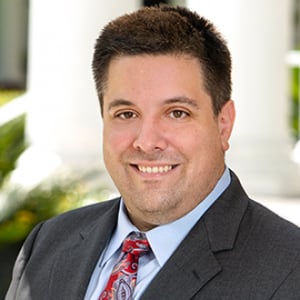
Sheila M. McDevitt Professor of Law and Faculty Director of the Election Law Center, Florida State University College of Law
Professor Morley joined FSU Law in 2018, and teaches and writes in the areas of election law, constitutional law, remedies, and the federal courts. He is best known for his work on election emergencies and post-election litigation, nationwide and other defendant-oriented injunctions, the jurisdiction of the federal courts and their equitable powers more generally. He has testified before congressional committees, made presentations to election officials for the U.S. Election Assistance Commission and participated in bipartisan blue-ribbon groups to develop election reforms. The governor of Florida also appointed Professor Morley to the Criminal Punishment Code Task Force, to propose potential revisions to the legislature.
The U.S. Supreme Court has cited several of his articles, and he was counsel of record for the successful Petitioner in a landmark campaign finance case. Professor Morley has appeared on C-SPAN, Court TV, Fox News and numerous local news programs, and has been quoted in the Washington Post, Los Angeles Times, Roll Call, Politico, U.S. News and World Report, and a wide range of other national publications. His work has been published in many of the nation’s top law reviews, including the Georgetown Law Journal, Northwestern University Law Review, Boston University Law Review and Emory Law Journal.
Before joining FSU Law, Professor Morley was a Climenko Fellow and Lecturer in Law at Harvard Law School. Prior to his experience in academia, he served in government as special assistant to the General Counsel of the Army at the Pentagon, as well as a law clerk for Judge Gerald B. Tjoflat of the U.S. Court of Appeals for the Eleventh Circuit. During his tenure with the Army General Counsel’s office, he was awarded the Meritorious Civilian Service Award and the Army Staff Lapel Pin. He also worked as an associate at Williams & Connolly LLP and the Supreme Court & Appellate group of Winston & Strawn, LLP, both in Washington, D.C.
Professor Morley earned his J.D. from Yale Law School in 2003, where he was a senior editor on the Yale Law Journal; served on the moot court board; and received the Thurman Arnold Prize for Best Oralist in the Morris Tyler Moot Court of Appeals.
Justice, Florida Supreme Court
Ricky Polston is a justice on the Florida Supreme Court. He was appointed to the court on October 2, 2008, by Governor Charlie Crist. Polston was retained by voters on November 2, 2010, and again on November 8, 2016. His current term expires in 2023.
From 2012 to 2014, Polston served as the chief justice of the court.

Chief Judge, United States Court of Appeals, Sixth Circuit
JEFFREY S. SUTTON is the Chief Judge of the United States Court of Appeals for the Sixth Circuit. He has served as Chair of the Federal Judicial Conference Committee on Rules of Practice and Procedure, Chair of the Advisory Committee on Appellate Rules, and Chair of the Supreme Court Fellows Commission. He currently serves as Chair of the Executive Committee of the Judicial Conference of the United States. Since 1993, Chief Judge Sutton has been an adjunct professor at The Ohio State University College of Law, where he teaches seminars on State Constitutional Law, the United States Supreme Court, and Appellate Advocacy. He also teaches a class on State Constitutional Law at Harvard Law School. Among other publications, he is the author of Who Decides? States as Laboratories of Constitutional Experimentation and 51 Imperfect Solutions: States and the Making of American Constitutional Law. He is the co-author of a casebook, State Constitutional Law: The Modern Experience, as well as The Law of Judicial Precedent. He is also the co-editor of The Essential Scalia: On the Constitution, the Courts, and the Rule of Law. In 2006, Chief Judge Sutton was elected to the American Law Institute, and in 2017 he was elected to its Council.

Former President & CEO, The Federalist Society for Law and Public Policy Studies
Eugene B. Meyer, former President and CEO of the Federalist Society, has served as Executive Director, CEO, and/or President of the organization for more than 40 years. He is responsible for shepherding the organization from a small group of law students to a community of 90,000 lawyers, law students, academics, judges, and others interested in the rule of law. The Society now includes a Student Chapter at nearly every ABA-accredited law school in the country and Lawyers Chapters in 220 major cities across the nation. Gene earned his B.A. in history at Yale in 1975 and his M.A. in political science from the London School of Economics in 1976. Gene currently serves on the boards of the U.S. Chess Center, the Holman Foundation, the Sarah Scaife Foundation, and the advisory board of the Adam Smith Society. He holds the title of International Chess Master.
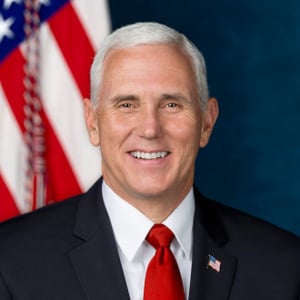
48th Vice President of the United States
Michael R. Pence was born in Columbus, Indiana, on June 7, 1959, one of six children born to Edward and Nancy Pence. As a young boy he had a front row seat to the American Dream. After his grandfather immigrated to the United States when he was 17, his family settled in the Midwest. The future Vice President watched his Mom and Dad build everything that matters—a family, a business, and a good name. Sitting at the feet of his mother and his father, who started a successful convenience store business in their small Indiana town, he was raised to believe in the importance of hard work, faith, and family.
Vice President Pence set off for Hanover College, earning his bachelor’s degree in history in 1981. While there, he renewed his Christian faith which remains the driving force in his life. He later attended Indiana University School of Law and met the love of his life, Second Lady Karen Pence.
After graduating, Vice President Pence practiced law, led the Indiana Policy Review Foundation, and began hosting The Mike Pence Show, a syndicated talk radio show and a weekly television public affairs program in Indiana. Along the way he became the proud father to three children, Michael, Charlotte, and Audrey.
Growing up in Indiana, surrounded by good, hardworking Hoosiers, Vice President Pence always knew that he needed to give back to the state and the country that had given him so much. In 2000, he launched a successful bid for his local congressional seat, entering the United States House of Representatives at the age of 40.
The people of East-Central Indiana elected Vice President Pence six times to represent them in Congress. On Capitol Hill he established himself as a champion of limited government, fiscal responsibility, economic development, educational opportunity, and the U.S. Constitution. His colleagues quickly recognized his leadership ability and unanimously elected him to serve as Chairman of the House Republican Study Committee and House Republican Conference Chairman. In this role, the Vice President helped make government smaller and more effective, reduce spending, and return power to state and local governments.
In 2013, Vice President Pence left the nation’s capital when Hoosiers elected him the 50th Governor of Indiana. He brought the same limited government and low tax philosophy to the Indiana Statehouse. As Governor, he enacted the largest income tax cut in Indiana history, lowering individual income tax rates, the business personal property tax, and the corporate income tax in order to strengthen the State’s competitive edge and attract new investment and good-paying jobs. Due to his relentless focus on jobs, the state’s unemployment rate fell by half during his four years in office, and at the end of his term, more Hoosiers were working than at any point in the state’s 200-year history.
As Governor of Indiana, Vice President Pence increased school funding, expanded school choice, and created the first state-funded Pre-K plan in Indiana history. He made career and technical education a priority in every high school. Under Vice President Pence’s leadership, Indiana, known as “The Crossroads of America,” invested more than $800 million in new money for roads and bridges across the state. Despite the record tax cuts and new investments in roads and schools, the state remained fiscally responsible, as the Vice President worked with members of the Indiana General Assembly to pass two honestly balanced budgets that left the state with strong reserves and AAA credit ratings that were the envy of the nation.
It was Indiana’s success story, Vice President Pence’s record of legislative and executive experience, and his strong family values that prompted President Donald Trump to select Mike Pence as his running mate in July 2016. The American people elected President Donald Trump and Vice President Pence on November 8, 2016. President Donald Trump and Vice President Pence entered office on January 20, 2017.
In February 2021, Vice President Mike Pence joined the Heritage Foundation as a distinguished visiting fellow. The Heritage Foundation helped shape Vice President Mike Pence’s conservative philosophy for decades and played a pivotal role advancing conservative policies throughout the Trump Administration. Vice President Pence also joined Young America’s Foundation as the Ronald Reagan Presidential Scholar. Long before Mike Pence became Vice President to President Donald Trump, the vision and leadership of Ronald Reagan inspired his youth.
Vice President Mike Pence remains grateful for the grace of God, the love and support of his family, and the blessings of liberty that are every American’s birthright.
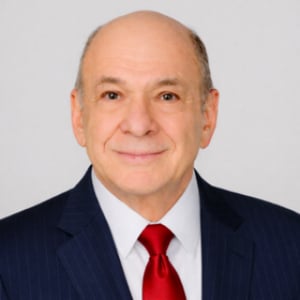
Executive Vice President & General Counsel, Atlantic Legal Foundation
Larry Ebner brings more than 50 years of litigation knowledge, experience, and skills to the Atlantic Legal Foundation, where he is Executive Vice President & General Counsel. He oversees ALF’s judicial advocacy activities, including its renowned, nationwide, amicus curiae (“friend of the court”) program. In addition to monitoring and analyzing cases for possible ALF amicus participation, Larry reviews requests for ALF amicus support and personally authors ALF’s amicus briefs on a wide variety of cutting-edge legal issues in the Supreme Court, federal courts of appeals, and state appellate courts. Since joining ALF in September 2020, Larry has authored or managed more than 100 Supreme Court and other amicus briefs on behalf of the foundation.
Larry began practicing law in 1972 following graduation from Dartmouth College and Harvard Law School. His first legal position was as an Honors Program attorney in the Civil Division of the U.S. Department of Justice. Larry then spent 42 years as a Washington, D.C.-based litigator and appellate practice leader at a now-global law firm, where he focused on federal constitutional, statutory, and regulatory issues . In 2016 Larry launched his own, independent, nationwide appellate litigation boutique, Capital Appellate Advocacy PLLC.
Larry devotes most of his professional time to ALF, where he joins the foundation’s officers, directors, advisors, and supporters in advocating for individual liberty, free enterprise, property rights, limited and responsible government, sound science in judicial and regulatory proceedings, and effective education, including parental rights and school choice.
Larry has been elected as one of approximately 350 Fellows of the American Academy of Appellate Lawyers, whose membership is reserved for highly skilled and experienced appellate advocates. His volunteer professional activities include serving as Chair of the Federation of Defense & Corporate Counsel’s Appellate Law Section. During 2023 & 2024 he was Chair of the DRI Center for Law and Public Policy.
In July 2025 FDCC awarded Larry its John Appleman Award, which “honors the Substantive Law Section Chair who has made the most outstanding contribution to the advancement of the FDCC’s educational goals through the work of his or her Section.”
In October 2024 DRI awarded Larry its Tom Segalla Excellence In Education Award. The Award is given to a “member of DRI whose contributions through legal scholarship exemplify the highest educational standards of the organization and further its mission of improvingthe skills of the defense practitioner.” DRI is the largest bar association of civil defense attorneys and in-house counsel.
Thomson Reuters has repeatedly selected Larry as one of only several Washington, D.C.-based, solo-practitioner Appellate “Super Lawyers.”
Larry is a prolific author and sought-after speaker on appellate practice-related subjects, such as strategic use and effective drafting of amicus briefs.
Barbara and Larry Ebner have been married for 53 years. They enjoy traveling throughout the United States and spending time with their daughters and grandchildren.

Partner, Gibson Dunn
Lucas C. Townsend is a litigation partner in the Washington, D.C. office of Gibson, Dunn & Crutcher. He is a member of the firm’s Appellate and Constitutional Law and Intellectual Property practice groups.
Mr. Townsend has litigated a wide range of appellate and trial matters in federal and state court. Mr. Townsend’s appellate practice includes representing corporate clients in high-stakes commercial disputes, litigating cutting-edge legal issues before the Supreme Court of the United States, and representing pro bono clients before the courts of appeals. Mr. Townsend’s intellectual property practice includes representing pharmaceutical, internet, and other technology companies in patent and trademark disputes. In addition, Mr. Townsend regularly represents clients in litigation under the Administrative Procedure Act and provides counseling on accounting regulation.
Representative matters include serving as appellate counsel for the world’s largest social networking website and drafting successful briefing in a significant noninfringement appeal; briefing appeals on behalf of pharmaceutical patent holders in Hatch-Waxman Act litigation; drafting successful briefing for a documentary filmmaker’s First Amendment challenge to Colorado’s campaign finance laws; briefing appeals from final judgments in a landmark securities-fraud class action; representing a national hospital network in appellate litigation resulting in a $60 million reduction in a punitive damages award; representing broadcasters in litigation against the Federal Communications Commission under the Administrative Procedure Act; representing a for-profit education company in an enforcement action brought by the Consumer Financial Protection Bureau; and briefing numerous matters in the Supreme Court of the United States involving class certification, antitrust, employment, and constitutional issues.
Before joining the firm, Mr. Townsend served as a law clerk to the Honorable Samuel A. Alito, Jr. of the Supreme Court of the United States, the Honorable Maryanne Trump Barry of the United States Court of Appeals for the Third Circuit, and the Honorable Harold A. Ackerman of the United States District Court for the District of New Jersey. Mr. Townsend also served as an Attorney Adviser in the United States Department of Justice, National Security Division, from 2007 to 2009.
Mr. Townsend graduated magna cum laude from the Seton Hall University School of Law, where he was Executive Editor of the Seton Hall Law Review. He received an undergraduate degree in biochemistry from Cornell University.
Mr. Townsend is admitted to practice in the District of Columbia, New York, and New Jersey.

Judge, United States Court of Appeals, Ninth Circuit
Judge Carlos Bea serves as a judge on the United States Court of Appeals for the Ninth Circuit. He received his Bachelor's Degree from Stanford University in 1956 and his J.D. from Stanford Law School in 1958. Judge Bea was born in San Sebastian, Spain, and immigrated with his family to Cuba in 1939. In 1952, he represented Cuba on the Cuban National basketball team in the Helsinki Olympics. Judge Bea became a naturalized citizen of the United States in 1958. He engaged in private practice in San Francisco, principally in the area of civil trials (jury and non-jury), from 1959-75 at Dunne, Phelps & Mills and from 1975-90 at Carlos Bea, A Law Corporation. He taught courses in civil litigation advocacy at Hastings College of Law and Stanford Law School. From 1990 to 2003, Judge Bea served as a judge of the San Francisco Superior Court. He was nominated by President George W. Bush to the United States Court of Appeals for the Ninth Circuit and was confirmed in 2003.
Judge Bea and his wife Louise reside in San Francisco, where they raised their four sons, Sebastian, Alexander, Nicholas, and Dominic.
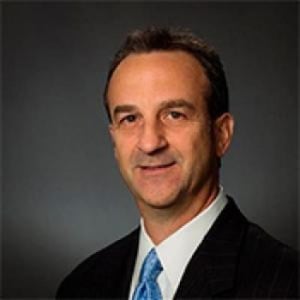
Senior Counsel and Vice President of U.S. Litigation, Alliance Defending Freedom
David A. Cortman, Esq., serves as senior counsel and vice president of U.S. litigation with Alliance Defending Freedom. He joined ADF in 2005 and currently supervises a team of nearly 40 attorneys and legal staff who specialize in constitutional law, focusing on religious freedom, sanctity of life, and marriage and family.
Cortman has successfully litigated over 200 constitutional law cases in both federal and state court at all levels. He has also litigated several U.S. Supreme Court cases, including arguing before the Court in Reed v. Town of Gilbert, which resulted in a 9-0 victory, with the Court holding that the government could not discriminate against religious speech while favoring political speech. He served as lead counsel in Trinity Lutheran Church of Columbia v. Pauley, which was decided in the Church's favor. He has also served as lead or co-counsel in victories at the high court in Conestoga Wood Specialties v. Burwell, successfully challenging the U.S. Department of Health and Human Services abortion pill mandate that forces employers to provide healthcare coverage that includes abortion-inducing drugs in violation of their religious convictions; Town of Greece v. Galloway, successfully defending the freedom of Americans to pray at public meetings.
Cortman earned his J.D. from Regent University School of Law in 1996, graduating magna cum laude. He is a member of the state bar in Georgia, Florida, Arizona, and the District of Columbia, and is admitted to practice in over two dozen federal courts, including the U.S. Supreme Court. He also teaches legal courses on the First Amendment and civil rights litigation.
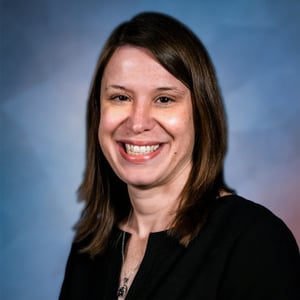
Senior Director of Strategic Partnerships, First Liberty Institute
Lisa Budzynski Ezell is the former Vice President and Director of the Federalist Society’s Lawyers Chapters. In this role, she managed a growing network of over 90 lawyers chapters nationwide, including oversight of leadership recruitment, chapter programming, state conferences, civics education outreach, and young lawyers activities. She holds a Bachelor of Arts degree from Saint Mary’s College in Political Science and History and a Master of Public Policy from George Mason University.

Fred H. Paulus Professor of Law, Director of the Center for Reli, Willamette University College of Law
Steven K. Green is the Fred H. Paulus Professor of Law and Affiliated Professor of History at Willamette University where he teaches courses in Constitutional Law, First Amendment, Legal History, Jurisprudence, and Criminal Law in the College of Law, and Legal History and American Religious History in the College of Liberal Arts. In addition, Professor Green directs the interdisciplinary Center for Religion, Law and Democracy, one of Willamette’s Centers of Excellence.
Professor Green joined the Willamette faculty in August 2001, after serving for 10 years as legal director and special counsel for Americans United for Separation of Church and State, a Washington, DC, public interest organization that concentrates on First Amendment issues. Professor Green has extensive litigation and appellate experience in First Amendment law involving issues such as school prayer, public funding of religious institutions, public religious displays, religious discrimination, religious free exercise and freedom of speech. He has participated in several cases before the U.S. Supreme Court, including Zelman v. Simmons-Harris (2002), the Cleveland school vouchers case; Mitchell v. Helms (2000), authorizing state-paid computers and educational equipment to religious schools; and Santa Fe Ind. Sch. Dist. v. Doe (2000), striking prayer at public school football games. He regularly submits amicus curiae (friend-of-the-court) briefs at the U.S. Supreme Court, most recently co-authoring two amicus briefs in the 2013-14 term.
In addition, Professor Green has significant legislative experience, having testified before Congress and several state legislatures. He helped draft federal and state laws affecting religious liberty interests, including the Religious Freedom Restoration Act (1993), the Religious Land-Use and Institutionalized Persons Protection Act (2000), and the Oregon Workplace Religious Freedom Act (2009).
Professor Green is a widely sought speaker at national conferences and a prolific author whose writings have been cited by the U.S. Supreme Court and lower courts. He is the author of Inventing a Christian America: The Myth of the Religious Founding (Oxford University Press, 2015), The Bible, the School, and the Constitution: The Clash that Shaped Modern Church-State Doctrine (Oxford, 2012); The Second Disestablishment: Church and State in Nineteenth Century America (Oxford, 2010), co-author of Religious Freedom and the Supreme Court (Baylor, 2008), and a contributor to the Encyclopedia of American Civil Liberties and the Yale Biographical Dictionary of American Law, among others. He is currently writing a new book on church and state in the middle of the twentieth century. Professor Green holds a PhD in American constitutional history and an MA in American religious history from the University of North Carolina, a JD from the University of Texas, and a BA in history and political science, Phi Beta Kappa, from Texas Christian University. He also took post-graduate study at Duke Law and Divinity Schools.
Professor Green serves on the public policy board of Ecumenical Ministries of Oregon. He also serves on the editorial council of the Journal of Church and State and the legal advisory committee of the National Center for Science Education. He previously served on the religious liberty committee of the National Council of Churches and as recorder for the Oregon Law Commission's study of the faith-based initiative in Oregon.
In 2014 and 2006, Professor Green received the Robert L. Misner Award for Excellence in Scholarship, which was established in memory of former College of Law Dean and Professor Robert L. Misner. Professor Green also received the 2003 Professor of the Year Award for Teaching.

Founding Partner, Boyden Gray & Associates
Ambassador C. Boyden Gray is the founding partner of Boyden Gray & Associates, a law and strategy firm in Washington, D.C., focused on constitutional and regulatory issues.
Mr. Gray worked in the White House for twelve years, first as counsel to the Vice President during the Reagan administration and then as White House Counsel to President George H.W. Bush. In the Reagan administration, he was Counsel to the Presidential Task Force on Regulatory Relief, for which he wrote the original Executive Order 12291 requiring cost-benefit analysis and White House review of regulations (later renumbered as current EO 12866). In the George H.W. Bush Administration, Mr. Gray was in charge of judicial selection and was also instrumental in the enactment of the Clean Air Act Amendments of 1990, the Energy Policy Act of 1992, and a cap-and-trade system for acid rain emissions. In 1993, he received the Presidential Citizens Medal. Under President George W. Bush, Mr. Gray was U.S. Ambassador to the European Union and U.S. Special Envoy to Europe for Eurasian Energy.
Mr. Gray practiced law for 25 years at the law firm of Wilmer, Cutler & Pickering and was chairman of the Administrative Law and Regulatory Practice Section of the American Bar Association from 2000 to 2002. Early in his career, Mr. Gray helped to develop the Business Roundtable and served as its first counsel. He is an adjunct professor at Antonin Scalia Law School and a former adjunct professor at NYU Law School (teaching energy and environmental law). Mr. Gray is on the Board of Directors of the Atlantic Council, the Federalist Society, Reason Foundation, and the Trust for the National Mall.
Mr. Gray earned his A.B. magna cum laude from Harvard, where he was an editor of the Crimson, and his J.D. with high honors from the University of North Carolina at Chapel Hill, where he was editor-in-chief of the Law Review. Mr. Gray served in the United States Marine Corps, and after law school, he clerked for Earl Warren, Chief Justice of the United States Supreme Court.
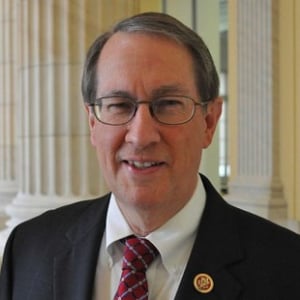
Former Congressman, United States House of Representatives
Bob Goodlatte served in the United States House of Representatives representing Virginia's 6th congressional district for 13 terms.
Goodlatte’s service to the people of the Sixth District began in 1977 when he became District Director for former Congressman Caldwell Butler. He served in this position for two years until 1979, and was responsible for helping folks across the District seeking assistance with or encountering problems from various federal agencies. In 1979, he founded his own private law practice in Roanoke. Later, he was a partner in the law firm of Bird, Kinder and Huffman, working there from 1981 until taking office.
Rep. Goodlatte was first elected to serve as Chairman of the House Judiciary Committee in the 113th Congress. He was the first Judiciary Committee Chairman from Virginia in the last 125 years. Rep. Goodlatte was an active Member of the Judiciary Committee since arriving in Congress, serving in a variety of leadership positions on the Committee including taking the lead on many intellectual property issues. During his time in Congress, Rep. Goodlatte made a name for himself as a leader on Internet and technology issues. He was Co-Chair of the Congressional Internet Caucus and the International Creativity and Theft-Prevention Caucus.
Rep. Goodlatte is a graduate of Washington and Lee University School of Law, and his undergraduate degree in Government was earned at Bates College in Lewiston, Maine.

Wayne A. Abernathy, Wild Bells
Wayne A. Abernathy is a former U.S. Treasury Assistant Secretary for Financial Institutions under President George W. Bush, receiving the Alexander Hamilton Award in recognition of his service. In that office he was also a member of the Board of Directors of the Securities Investor Protection Corporation. Prior to his work at the Treasury, Mr. Abernathy served as Staff Director of the Senate Banking Committee, under Chairman Phil Gramm.
Following his service at the Treasury, Mr. Abernathy worked for 15 years on the staff of the American Bankers Association, as Executive Vice President for Financial Institutions Policy and Regulatory Affairs.
Previous experience with the Senate Banking Committee includes serving as Staff Director of the Subcommittee on Securities during 1995-1998. From 1989 until 1994, Mr. Abernathy was a Republican economist for the committee. He previously worked as a senior legislative assistant for Senator Gramm during 1987-1989 and as an economist for the Banking Committee’s Subcommittee on International Finance and Monetary Policy during 1981-1986, under Chairman Jake Garn.
Mr. Abernathy earned his bachelor’s degree in International Studies from The Johns Hopkins University in 1978. In 1980, he received a master’s degree in International Studies from the School of Advanced International Studies of The Johns Hopkins University.
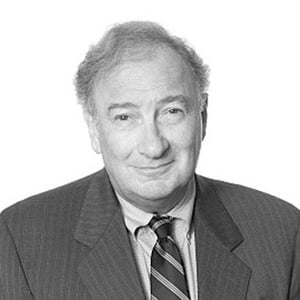
Retired, Winston & Strawn LLP
Jerry Loeser is of counsel in the Chicago office of Winston & Strawn, and his practice focuses on banking regulation. He has extensive experience in counseling financial services clients on, among other things, bank acquisitions, privacy, financial modernization, the USA PATRIOT Act, Basel II and III, lending limits, capital, trust, affiliate transactions, and Federal Reserve, OCC, FDIC, and CFPB regulations.
Prior to working at large corporate law firms, Jerry was chief regulatory and compliance counsel for Comerica Bank, where he also served as senior vice president and deputy general counsel and as general counsel of its retail bank division. Before that, he served as chief regulatory in-house counsel at Wells Fargo & Co. Jerry began his legal career advising the Board of Governors of the Federal Reserve System in Washington, D.C.

Partner, Arnold & Porter LLP
John Bellinger heads the firm's Global Law and Public Policy practice. He joined the firm in 2009, after holding several senior Presidential appointments in the US government, including as the Senate-confirmed Legal Adviser to the Department of State and Senior Associate Counsel to the President and Legal Adviser to the National Security Council (NSC) at the White House in the George W. Bush Administration.
Mr. Bellinger represents individuals, corporations, and sovereign governments in litigation in US courts and before international institutions. He has extensive experience in US foreign relations litigation involving the Alien Tort Statute, the Foreign Sovereign Immunities Act, the Anti-Terrorism Act, and the diplomatic and official immunities of foreign governments and government officials. He advises clients on other public international law matters, including treaties and international agreements as well as international humanitarian law and human rights law. He also counsels US and foreign clients on national security legal and policy issues, including US and multilateral financial sanctions and asset controls, the extraterritorial application of US criminal and civil laws, and transactions reviewed by the Committee on Foreign Investment in the United States (CFIUS).
Chambers Global ranks Mr. Bellinger among the best international lawyers in the world, reporting that he has "second-to-none experience in public international law, international litigation and foreign sovereign immunity" and that his "experience at the highest levels of the Executive branch...gives him a distinct and important vantage point on legal issues." Chambers adds: "For any cross border work he's just extraordinary, he knows the area inside-out."
Mr. Bellinger was the State Department Legal Adviser–the most senior international lawyer in the US Government–from 2005 to 2009, serving under Secretary of State Condoleezza Rice. He directed more than 170 lawyers on domestic and international law matters affecting US foreign relations. Before joining the State Department, Mr. Bellinger managed Secretary Rice's Senate confirmation process and co-directed her State Department transition team. In 2009, Mr. Bellinger received the Secretary of State's Distinguished Service Award.
Mr. Bellinger has argued cases before the International Court of Justice (Mexico v. United States–(Medellin)) and the Iran-United States Claims Tribunal in The Hague. He has appeared on numerous briefs in US federal courts, including the Supreme Court, in litigation involving international law issues.
As Legal Adviser to the NSC from 2001 to 2005, Mr. Bellinger advised President Bush, Cabinet officials, National Security Advisor Rice, and NSC staff on a wide range of national security and international law issues, including counterterrorism issues after the 9-11 attacks. He was one of the principal drafters of the legislation that created the Director of National Intelligence.
Prior to his service in the Bush Administration, Mr. Bellinger served as Counsel for National Security Matters in the Criminal Division at the US Department of Justice (1997-2001); Of Counsel to the Senate Select Committee on Intelligence (1996); General Counsel of the Commission on the Roles and Capabilities of the US Intelligence Community (1995-1996); and Special Assistant to Director of Central Intelligence William Webster (1988-1991). Mr. Bellinger is an Adjunct Senior Fellow in International and National Security Law at the Council on Foreign Relations. He has testified before Congress on numerous occasions, is quoted regularly in the media on international and national security law matters, and has lectured at numerous US and foreign universities and law schools. He is the author of many law review articles and op-eds on international law, including op-eds in The Washington Post, The New York Times, and The Wall Street Journal. Mr. Bellinger is a senior contributor to the Lawfare blog.
Mr. Bellinger is a member of the Secretary of State's Advisory Committee on International Law. He served from 2005-2019 as one of four US Members of the Permanent Court of Arbitration in The Hague and a member of the US "National Group", which nominates judges to the International Court of Justice. He is also a member of the Council on Foreign Relations and the American Society of International Law. He is a member of the Council of the American Law Institute; the boards of directors of the American Ditchley Foundation, the Salzburg Global Seminar, and the Stimson Center; and the advisory committee of Foreign Affairs magazine.
Mr. Bellinger is a graduate of Princeton University's Woodrow Wilson School of Public and International Affairs, and he holds an MA in Foreign Affairs from the University of Virginia and a JD from Harvard Law School, where he was an editor of the Harvard International Law Journal.
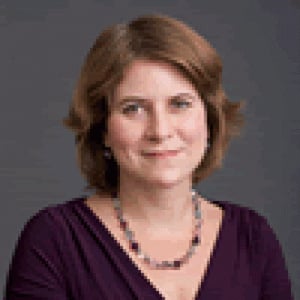
Associate Dean, Graduate Programs & Professor of Law, Georgetown University Law Center
Rosa Brooks teaches courses on international law, national security, constitutional law, and other subjects. She also writes a weekly column for Foreign Policy, and serves as a Senior Fellow at New America.
From 2009-2011, Prof. Brooks served as Counselor to Under Secretary of Defense for Policy Michele Flournoy. During her time at the Defense Department, Brooks also founded the Office for Rule of Law and International Humanitarian Policy, and also led a major overhaul of the Defense Department's strategic communication and information operations efforts. In July 2011, she received the Secretary of Defense Medal for Outstanding Public Service.
From 2005-2009, Prof. Brooks was a weekly op-ed columnist for the Los Angeles Times, and served as faculty director of GULC's Human Rights Institute. In 2006-2007, Prof. Brooks served as Special Counsel to the President at the Open Society Institute in New York. From 2001-2006, she was an associate professor at the University of Virginia School of Law, where she taught human rights law, constitutional law, and criminal law.
Prof. Brooks has also served as a senior advisor at the US Department of State, a consultant for Human Rights Watch, a fellow at the Carr Center at Harvard's Kennedy School of Government, a board member of Amnesty International USA, a Term Member of the Council on Foreign Relations, a lecturer at Yale Law School, a member of the Executive Council of the American Society of International Law, a member of the World Economic Forum's Global Agenda Council on Fragile States, the board of the National Security Network and the Steering Committee of the White Oak Foreign Policy Leaders Project.
In addition to her popular writing, Prof. Brooks has written numerous scholarly articles on international law, failed states, post-conflict reconstruction and the rule of law, human rights, terrorism and the law of war.
Her most recent book, How Everything Became War and the Military Became Everything, was published in 2016 by Simon and Schuster. She is also the author of Can Might Make Rights? The Rule of Law After Military Interventions (with Jane Stromseth and David Wippman), published in 2006 by Cambridge University Press. Her government and NGO work has involved field research in Iraq, Afghanistan, Indonesia, Israel, Palestine, Kosovo, China, Russia, Ghana, Kenya, Uganda, South Africa, and Sierra Leone, among other places.
Brooks received her A.B. from Harvard in 1991 (history and literature), followed by a master's degree from Oxford in 1993 (social anthropology) and a law degree from Yale in 1996.
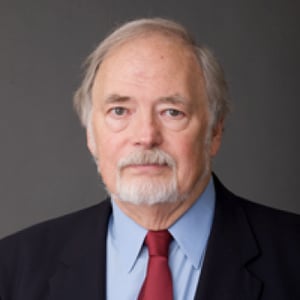
Co-Director, Global Law Scholars Program; Co-Director, Center on, Georgetown University Law Center
Professor Stewart joined the faculty as Visiting Professor of Law following his retirement from the U. S. Department of State, where he served as Assistant Legal Adviser for Private International Law. Previously he had been Assistant Legal Adviser for Diplomatic Law and Litigation, for African Affairs, for Human Rights and Refugees, for Law Enforcement and Intelligence, and for International Claims and Investment Disputes, as well as Special Assistant to the Legal Adviser. Before joining the government, he was in private practice with Donovan Leisure Newton &Irvine in commercial and antitrust litigation. He was Adjunct Professor for over 25 years and received Georgetown's Charles Fahy award for distinguished adjunct faculty teaching in 2003-2004.
Prof. Stewart is President of the American Branch of the International Law Association and a member of the Board of Editors of the American Journal of International Law and the Secretary of State's Advisory Committee on Private International Law. The American Law Institute has selected him to serve as one of the reporters working on the Restatement (Fourth), Foreign Relations Law of the United States. He previously served on the Executive Council of the ABA's Section of International Law and the Executive Council of the American Society of International Law. In 2012 he was re-elected to the Inter-American Juridical Committee, which advises the Organization of American States on juridical matters of an international nature and promotes the progressive development and codification of international law.
Professor Stewart co-directs the Global Law Scholars Program, directs the Center on Transnational Business and the Law, and teaches courses in public and private international law, foreign relations law, international immunities, international criminal law and civil litigation. He co-edited the multi-volume Digest of U.S. Practice in International Law for the years 1990-2003.With Professors Luban and O'Sullivan, he co-authored International and Transnational Criminal Law (Aspen 2nd ed., 2014).
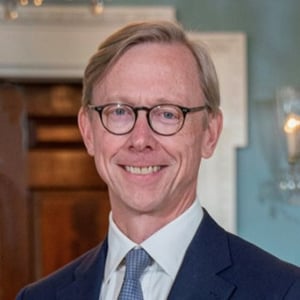
Founder, Latitude, LLC
Brian Hook is the founder of Latitude, LLC, an international strategic consulting firm based in Washington, DC.
Mr. Hook worked on the Romney campaign as senior advisor on foreign policy. He chaired the foreign policy and national security task forces of the Romney Readiness Project. From 2010-2011, he was the foreign policy director of Governor Tim Pawlenty’s presidential campaign.
Mr. Hook served in a number of positions during the Bush Administration, including Assistant Secretary of State for International Organizations; Senior Advisor to the U.S. Ambassador to the United Nations; Special Assistant to the President for Policy, Office of the Chief of Staff; and Counsel, Office of Legal Policy, at the Justice Department.
From 1999-2003, he practiced corporate law at Hogan & Hartson in Washington, D.C.
Before practicing law, he served as a policy advisor to Iowa Governor Terry Branstad and to U.S. Congressman James Leach.

Founder and Executive Director, National Security Institute; Assistant Professor of Law, Antonin Scalia Law School, George Mason University
Jamil N. Jaffer is the Founder and Executive Director of the National Security Institute at the Antonin Scalia Law School at George Mason University where he also serves as an Assistant Professor of Law, Director of the National Security Law and Policy Program, and Director of the Cyber, Intelligence, and National Security LLM Program. Jamil also teaches classes on counterterrorism, intelligence, surveillance, cybersecurity, and other national security matters, as well as a summer course held abroad with U.S. Supreme Court Justice Neil M. Gorsuch. Jamil is also affiliated with Stanford University’s Center for International Security and Cooperation and previously served as a Visiting Fellow at the Hoover Institution from 2016 to 2019.
Jamil is also a Venture Partner with Paladin Capital Group, where he assists the firm with investments across the full range of its themes and theses, including a focus on dual-use national security technologies. Jamil also serves on the board of directors of RangeForce, a cybersecurity training and readiness platform startup and Tozny, a digital identity startup, and on the advisory boards of U.S. Strategic Metals, North America’s largest primary producer of cobalt, a critical mineral used in EV batteries, aerospace, and other national security applications; and Constella Intelligence, a deep and dark web intelligence startup. Jamil also serves as an advisor to Beacon Global Strategies, a strategic advisory firm and Duco, a technology platform startup that connects corporations with geopolitical and international business experts. Jamil is also the managing director of Trigraph Caveat Capital, a private investment vehicle.
Among other things, Jamil currently serves on the Board of Directors for the Greater Washington Board of Trade, the Board of Advisors for the Global Cyber Alliance, and the Advisory Board of the Foundation for the Defense of Democracies’ Center on Cyber and Tech Innovation, the Executive Committee of the Reagan Institute Strategy Group. Jamil is also a Fellow at the Academy for Judaic, Christian, and Islamic Studies, an advisor to the Concordia Summit, and is a member of the Board of Directors for the Center for Intelligence Policy, the Board of Directors of Speech First, and the Executive Committee of the International Law and National Security Practice Group of the Federalist Society.
Immediately prior to his current positions, from 2015-2021, Jamil served as a senior business leader at IronNet Cybersecurity, helping take the company from a bootstrapped first-year technology products startup through two rounds of venture capital fundraising, growing from 40 employees to over 300, and through its listing on New York Stock Exchange. In his role as IronNet's Senior Vice President for Strategy, Partnerships & Corporate Development, Jamil worked directly for the co-CEOs of the company, Gen (ret.) Keith B. Alexander, the former Director of the National Security Agency and Founding Commander of U.S. Cyber Command, and Bill Welch, the former COO of Zscaler and Duo; in that role, Jamil led all of the company’s strategic and technology partnership efforts, including developing go-to-market and technology integration plans with some of the largest cloud platforms and cybersecurity companies in the market, evaluating potential acquisition targets, and developing overall corporate strategy and thought leadership around collective security and collaborative defense in the cyber arena.
Prior to his time at IronNet, Jamil served on the leadership team of the Senate Foreign Relations Committee as Chief Counsel and Senior Advisor under Chairman Bob Corker (R-TN), where he worked on key national security and foreign policy issues, including leading the drafting of the proposed Authorization for the Use of Military Force against ISIS in 2014 and 2015, the AUMF against Syria in 2013, and revisions to the 9/11 AUMF against al Qaeda. Jamil was also the lead architect of the Iran Nuclear Agreement Review Act and two sanctions laws against Russia for its first intervention in Ukraine.
Prior to joining SFRC, Jamil served as Senior Counsel to the House Permanent Select Committee on Intelligence under Chairman Mike Rogers (R-MI) where he led the committee’s oversight of NSA surveillance, NRO intelligence issues, and NGA analytic and collection matters, as well as intelligence community-wide counterterrorism issues. Jamil was also the lead architect of the Cyber Intelligence Sharing and Protection Act, the nation’s first cyber threat intelligence sharing legislation that was signed into law in 2015.
In the Bush Administration, Jamil served in the White House as an Associate Counsel to the President, handling Defense Department, State Department, and intelligence community matters, and serving as one of the White House Counsel’s primary representatives to the National Security Council Deputies Committee.
Prior to the White House, Jamil served on the leadership team of the Justice Department’s National Security Division as Counsel to the Assistant Attorney General for National Security, where he focused on counterterrorism and intelligence matters. At NSD, Jamil helped lead the division’s work on In re: Directives, the first ever two-party litigated matter in the FISA Court and the second case before the FISA Court of Review in its 30-year history. Jamil also led NSD’s efforts on the President’s Comprehensive National Cybersecurity Initiative (CNCI), including the drafting of NSPD-54/HSPD-23, and related classified matters, and advised the National Security Agency (NSA) and U.S. Cyber Command’s predecessor organization, the Joint Function Component Command for Network Warfare (JFCC-NW), on matters related to cyber intelligence collection and offensive cyber activities. For his work on these matters, Jamil was awarded the Assistant Attorney General’s Award for Special Initiative and was among the group of lawyers awarded the Director of National Intelligence’s 2008 Legal Award (Team of the Year – Cyber Legal).
Jamil also served in other positions in the Justice Department, including in the Office of Legal Policy, where he worked on the confirmations of Chief Justice John G. Roberts, Jr. and Justice Samuel A. Alito, Jr. to the United States Supreme Court.
Jamil also served as a lawyer in private practice at Kellogg Huber, a Washington, DC-based litigation boutique, as a policy advisor to Congressman Bob Goodlatte (R-VA), and as a staff member or senior advisor on a number of political campaigns, including two presidential campaigns and a presidential transition team. While in law school, Jamil was a member of the University of Chicago Law Review, managing editor of the Chicago Journal of International Law, and National Symposium Editor of the Harvard Journal of Law & Public Policy. Following law school, Jamil served as a law clerk to Judge Edith H. Jones of the United States Court of Appeals for the Fifth Circuit and, later in his career, as a law clerk to then-Judge Neil M. Gorsuch when he first joined the United States Court of Appeals for the Tenth Circuit as well as a law clerk to Justice Neil Gorsuch when he joined the U.S. Supreme Court.
Jamil has published multiple op-eds and academic articles on national security, foreign policy, cybersecurity, counterterrorism, encryption, and intelligence matters, and is the co-author of a book chapter with former NSA Director Gen. (Ret.) Keith B. Alexander on national security and the press in National Security, Leaks, and the Freedom of the Press: The Pentagon Papers Fifty Years On (2021) and a book chapter with former CIA Director Gen. (ret.) Mike Hayden on ISIS, al Qaeda, and other international terrorist groups in Choosing to Lead: American Foreign Policy for a Disordered World (2015). Jamil has also written book chapters on cybersecurity and surveillance, as well as op-eds and policy papers with former Attorney General Michael B. Mukasey, former National Counterterrorism Center Director Matt Olsen, and Congressman Mike Waltz (R-FL), among others.
Jamil has previously taught graduate-level courses in intelligence law and policy at George Washington University’s Elliott School of International Affairs and the National Intelligence University, served an outside advisor to the Cyberspace Solarium Commission, and has recently testified before committees of the U.S. Senate and House of Representatives on China, cybersecurity, counterterrorism, and other national security matters. Jamil has also recently appeared on a range of national television and radio outlets including CNN, Fox News, Fox Business, MSNBC, Bloomberg, PBS, Voice of America, and National Public Radio, and in various print and online publications, including the Wall Street Journal, New York Times, and the Washington Post on a range of national security matters including cybersecurity, counterterrorism, surveillance, encryption, privacy, and foreign policy issues.
Jamil holds degrees from UCLA (BA, cum laude), the University of Chicago Law School (JD, with honors), and the United States Naval War College (MA, with distinction).
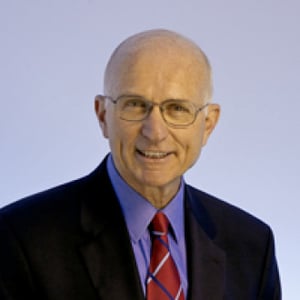
Senior Fellow, Center for American Progress
Lawrence J. Korb is a Senior Fellow at American Progress. He is also a senior advisor to the Center for Defense Information and an adjunct professor at Georgetown University. Prior to joining American Progress, he was a senior fellow and director of national security studies at the Council on Foreign Relations. From July 1998 to October 2002 he was council vice president, director of studies, and holder of the Maurice Greenberg Chair.
Prior to joining the council, Dr. Korb served as director of the Center for Public Policy Education and senior fellow in the Foreign Policy Studies Program at the Brookings Institution; dean of the Graduate School of Public and International Affairs at the University of Pittsburgh; vice president of corporate operations at the Raytheon Company; and director of defense studies at the American Enterprise Institute.
Dr. Korb served as assistant secretary of defense (manpower, reserve affairs, installations, and logistics) from 1981 through 1985. In that position, he administered about 70 percent of the defense budget. For his service in that position, he was awarded the Department of Defense’s medal for Distinguished Public Service. Dr. Korb served on active duty for four years as Naval Flight Officer, and retired from the Naval Reserve with the rank of captain. He received his Ph.D. in political science from the State University of New York at Albany and has held full-time teaching positions at the University of Dayton, the Coast Guard Academy, and the Naval War College.
Dr. Korb has authored, co-authored, edited, or contributed to more than 20 books and written more than 100 articles on national security issues. His books include The Joint Chiefs of Staff: The First Twenty-five Years; The Fall and Rise of the Pentagon; American National Security: Policy and Process, Future Visions for U.S. Defense Policy; Reshaping America’s Military; A New National Security Strategy in an Age of Terrorists, Tyrants, and Weapons of Mass Destruction; Serving America’s Veterans; and Military Reform.
His articles have appeared in such journals as Foreign Affairs, Public Administration Review, The New York Times Sunday Magazine, Naval Institute Proceedings, and International Security. Over the past decade Mr. Korb has made over 2,000 appearances as a commentator on such shows as “The Today Show,” “The Early Show,” “Good Morning America,” “Face the Nation,” “This Week,” “The News Hour,” “Nightline,” “60 Minutes,” “Larry King Live,” “The O’Reilly Factor,” and “Hannity and Colmes.” His more than 100 op-ed pieces have appeared in such major newspapers as The Washington Post, The New York Times, The Wall Street Journal, The Washington Times, Los Angeles Times, The Boston Globe, The Baltimore Sun, The Philadelphia Inquirer, and The Christian Science Monitor.
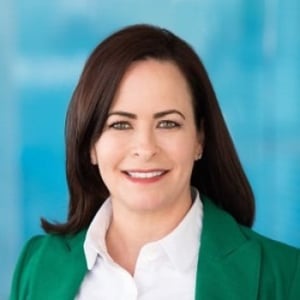
Executive Vice President, Policy, Business Roundtable
Ambassador Kristen Silverberg is Executive Vice President, Policy at Business Roundtable, where she leads the Policy team. She previously served as a Managing Director at the Institute of International Finance. She served in the George W. Bush Administration as U.S. Ambassador to the European Union from 2008 to 2009 and as Assistant Secretary of State for International Organization Affairs from 2005 to 2008. Prior to her time at the State Department, she held a number of senior positions at the White House including Deputy Domestic Policy Advisor.
Ambassador Silverberg served in 2003 in Baghdad, Iraq for which she received the Secretary of Defense Medal for Outstanding Public Service. She formerly practiced law at Williams and Connolly, LLP in Washington, DC and served as a law clerk to Supreme Court Justice Clarence Thomas and Judge David Sentelle of the U.S. Court of Appeals. She attended Harvard College and the University of Texas School of Law, where she graduated with High Honors.
Ambassador Silverberg serves on the Board of Directors of the CDC Foundation, the Board of Directors of the International Republican Institute, the Board of Directors of Vorbeck Materials, the Advisory Board of the Texas National Security Review, the National Advisory Council of the Aspen Institute Future of Work Initiative, and was recognized by the World Economic Forum as a Young Global Leader.

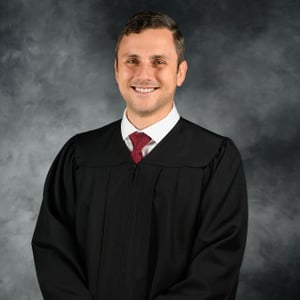
The Legacy of Justice Scalia
John S. Baker, Rachel Kovner, Michael T. Morley, Ricky Polston, Jordan E. Pratt, Jeffrey S. Sutton
This panel, The Legacy of Justice Scalia, was held on February 3, 2017, at the...
Remarks by Vice President Michael R. Pence
Eugene B. Meyer, Mike Pence
These remarks were given by the Honorable Michael R. Pence, Vice President of the United...
State Farm Fire and Casualty Co. v. U.S. ex rel. Rigsby - Post-Decision SCOTUScast
Lawrence S. Ebner
On December 6, 2016, the Supreme Court decided State Farm Fire and Casualty Co. v....
What Are We Learning About For-Profit Education? - Podcast
Lucas Townsend
During the Obama administration, the Department of Education promulgated a host of rules aimed specifically...
Debate—State Blaine Amendments
Carlos T. Bea, David A. Cortman, Lisa Ezell, Steven Green
The Supreme Court has agreed to hear oral arguments in Trinity Lutheran Church of Columbia, Inc. v....
House Judiciary Committee Agenda
C. Boyden Gray, Bob Goodlatte
Congressman Goodlatte discusses the House Judiciary Committee's agenda for the 115th Congress. He delivered these...
Topics
Friedrichs Redux
Of the many cases affected by the untimely passing of Justice Antonin Scalia, no case...
Consumer Financial Protection Bureau Update - January 2017 - Podcast
Wayne A. Abernathy, Julius L. Loeser
Members of the Federalist Society’s Financial Services & E-Commerce Practice Group Executive Committee will provide...
Will International Law Matter to the Trump Administration?
John B. Bellinger, Rosa Brooks, David Stewart
The Federalist Society's Practice Group and Student Divisions and the American Branch of the International Law...
Alliances and Interventions
Brian H. Hook, Jamil N. Jaffer, Lawrence Korb, Kristen Silverberg
The Federalist Society's Practice Group and Student Divisions and the American Branch of the International Law...