
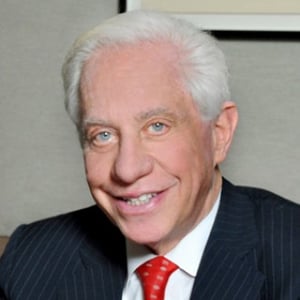
Partner, Shook, Hardy & Bacon LLP
Victor Schwartz chairs the firm's Public Policy Practice Group, which focuses on integrating litigation, government affairs and public relations. The group seeks to be the vanguard of developing public policy issues that will help improve our civil justice system. Mr. Schwartz also has an active appellate practice and advises product manufacturers on liability prevention, litigation and public relations issues.
Sought by print and broadcast media, Mr. Schwartz is frequently quoted in The Wall Street Journal, The Washington Post and The New York Times. He has appeared on Oprah, 60 Minutes and leading news programs. The Legal Times of Washington has named Mr. Schwartz one of Washington’s Top 30 “Visionary” lawyers, and The National Law Journal named Mr. Schwartz one of the 100 most influential lawyers in the United States in March 2013.
Mr. Schwartz is on the Board of Directors of the Searle Civil Justice Institute at George Mason University School of Law. He is a frequent participant in judicial education programs. Mr. Schwartz serves as General Counsel to the American Tort Reform Association.
Prior to entering the full time practice of law, Mr. Schwartz was a professor and dean at the University of Cincinnati College of Law. He currently serves on the College’s Board of Visitors. In 2012, the College established the Professor Victor E. Schwartz Chair in Tort Law.
Mr. Schwartz, while at the U.S. Department of Commerce, served as chair of the Federal Inter-Agency Task Force on Product Liability, and the Federal Inter-Agency Council on Insurance. He was the principal author of the Uniform Product Liability Act and the Federal Risk Retention Act. He received the Secretary of Commerce’s Award for Professional Excellence.
Mr. Schwartz is co-author of the most widely used torts casebook in the United States, Prosser, Wade and Schwartz’s Torts (12th ed. 2010). He is author of the leading text Comparative Negligence (5th ed. 2010).
Mr. Schwartz has been an advisor for each of the American Law Institute’s (ALI) Restatement (Third) of Torts projects; Products Liability, Apportionment of Liability, and Liability for Physical Injury and Emotional Harm. He is a life member of the ALI.
Mr. Schwartz’s law review articles have analyzed almost every major subject of modern tort and civil justice public policy issues. His articles are frequently cited by both state and federal courts.
Regent Law School

Senior Fellow and Director of Constitutional Studies, Manhattan Institute
Ilya Shapiro is a senior fellow and director of constitutional studies at the Manhattan Institute and a contributing editor of City Journal. Previously he was executive director and senior lecturer at the Georgetown Center for the Constitution, and before that a vice president of the Cato Institute.
Shapiro is the author of Lawless: The Miseducation of America’s Elites (2025) and Supreme Disorder: Judicial Nominations and the Politics of America’s Highest Court (2020), coauthor of Religious Liberties for Corporations? (2014), and editor of 11 volumes of the Cato Supreme Court Review (2008-18). He has contributed to a variety of academic, popular, and professional publications, including the Wall Street Journal, Harvard Journal of Law & Public Policy, Washington Post, Los Angeles Times, USA Today, National Review, and Newsweek. He also regularly provides commentary for various media outlets, writes the Shapiro’s Gavel newsletter on Substack, and once appeared on the Colbert Report.
Shapiro has testified many times before Congress and state legislatures and has filed more than 500 amicus curiae “friend of the court” briefs in the Supreme Court. He lectures regularly on behalf of the Federalist Society, is a member of the board of fellows of the Jewish Policy Center, was an inaugural Washington Fellow at the National Review Institute, and has been an adjunct law professor at the George Washington University and University of Mississippi. He is also the chairman of the board of advisers of the Mississippi Justice Institute, a barrister in the Edward Coke Appellate Inn of Court, and a former member of the Virginia Advisory Committee to the U.S. Commission on Civil Rights.
Earlier in his career, Shapiro was a special assistant/adviser to the Multi-National Force in Iraq on rule-of-law issues and practiced at Patton Boggs and Cleary Gottlieb. Before entering private practice, he clerked for Judge E. Grady Jolly of the U.S. Court of Appeals for the Fifth Circuit. He holds an AB from Princeton University, an MSc from the London School of Economics, and a JD from the University of Chicago Law School.
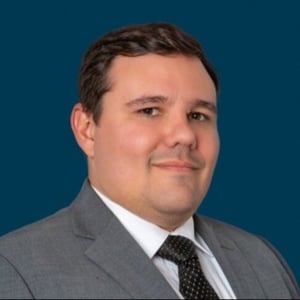
Attorney, Pacific Legal Foundation
A lifelong lover of liberty, David McDonald joined Pacific Legal Foundation’s property rights team in 2023.
As the son of two former gold miners who spent his childhood visiting ghost towns and old mines in the Mojave Desert, he has always been fascinated by the frontier spirit that built this nation and sees the defense of private property rights as absolutely vital to keeping that spirit alive. After reading about eminent domain abuse for the first time in college (and Justice Clarence Thomas’ amazing dissent in Kelo), he realized he needed to become a lawyer so he could put a stop to the government’s flagrant violation of private property rights.
Prior to joining PLF, David was an attorney with Mountain States Legal Foundation in Colorado, where his practice primarily focused on the bureaucratic overreach and intransigence of federal land use agencies like the Bureau of Land Management. While at Mountain States, David represented individuals and small businesses whose rights had been violated by the government before both state and federal courts and administrative tribunals. Before that, he worked as a legal associate with the Cato Institute’s Center for Constitutional Studies, where he authored Supreme Court amicus briefs and scholarly articles on a number of constitutional topics.
David grew up in Southern California and received his undergraduate degree from the University of California, Los Angeles before attending Columbia University for law school.
When not trying to ruin government employees’ days, David can usually be found doing something nerdy like playing board games, arguing about the finer points of Tolkien lore, and taking pub trivia way too seriously.
David is a member of the bar only in the states of New York and Colorado.
Timothy Flanigan Chief Legal and Compliance Officer, Corporate S, Cancer Treatment Centers of America
Timothy E. Flanigan is the Chief Legal for Cancer Treatment Centers of America (CTCA). With a rich background as a leader and senior legal advisor, he has more than 35 years of experience in public companies, the private practice of law, and in senior levels of government service.
Prior to joining CTCA, Mr. Flanigan served as Senior Vice President and Principal Deputy General Counsel at BlackBerry, Limited where he was responsible for the legal, business affairs and corporate security functions, as well as the company’s global government relations efforts. Previously, he was a senior partner with the international law firm McGuireWoods, LLC, and Senior Vice President and General Counsel at Tyco International, where he helped successfully revitalize that $40 billion enterprise.
Mr. Flanigan served the United States in multiple roles throughout his career, including Senior Law Clerk to the Honorable Warren E. Burger, Chief Justice of the United States. He also served as Deputy Counsel to President George W. Bush, where he coordinated legal strategy throughout the executive branch on anti-terrorism and other issues. He was nominated by President George H.W. Bush and confirmed by the Senate as Assistant Attorney General for the Office of Legal Counsel.
Mr. Flanigan earned his law degree and his MBA from the University of Virginia, and a bachelor’s degree in history from Brigham Young University.

Founding Partner, Boyden Gray & Associates
Ambassador C. Boyden Gray is the founding partner of Boyden Gray & Associates, a law and strategy firm in Washington, D.C., focused on constitutional and regulatory issues.
Mr. Gray worked in the White House for twelve years, first as counsel to the Vice President during the Reagan administration and then as White House Counsel to President George H.W. Bush. In the Reagan administration, he was Counsel to the Presidential Task Force on Regulatory Relief, for which he wrote the original Executive Order 12291 requiring cost-benefit analysis and White House review of regulations (later renumbered as current EO 12866). In the George H.W. Bush Administration, Mr. Gray was in charge of judicial selection and was also instrumental in the enactment of the Clean Air Act Amendments of 1990, the Energy Policy Act of 1992, and a cap-and-trade system for acid rain emissions. In 1993, he received the Presidential Citizens Medal. Under President George W. Bush, Mr. Gray was U.S. Ambassador to the European Union and U.S. Special Envoy to Europe for Eurasian Energy.
Mr. Gray practiced law for 25 years at the law firm of Wilmer, Cutler & Pickering and was chairman of the Administrative Law and Regulatory Practice Section of the American Bar Association from 2000 to 2002. Early in his career, Mr. Gray helped to develop the Business Roundtable and served as its first counsel. He is an adjunct professor at Antonin Scalia Law School and a former adjunct professor at NYU Law School (teaching energy and environmental law). Mr. Gray is on the Board of Directors of the Atlantic Council, the Federalist Society, Reason Foundation, and the Trust for the National Mall.
Mr. Gray earned his A.B. magna cum laude from Harvard, where he was an editor of the Crimson, and his J.D. with high honors from the University of North Carolina at Chapel Hill, where he was editor-in-chief of the Law Review. Mr. Gray served in the United States Marine Corps, and after law school, he clerked for Earl Warren, Chief Justice of the United States Supreme Court.

George C. Dix Professor in Constitutional Law, Northwestern University Pritzker School of Law
John O. McGinnis is a graduate of Harvard College and Harvard Law School where he was an editor of the Harvard Law Review. He also has an MA degree from Balliol College, Oxford, in philosophy and theology. Professor McGinnis clerked on the U.S. Court of Appeals for the District of Columbia. From 1987 to 1991, he was deputy assistant attorney general in the Office of Legal Counsel at the Department of Justice. He is the author of Accelerating Democracy: Transforming Government Through Technology (Princeton 2013) and Originalism and the Good Constitution (Harvard 2013) (with M. Rappaport). He is a past winner of the Paul Bator award given by the Federalist Society to an outstanding academic under 40. He has been listed by the United States on the roster of panelists who may be called upon to decide World Trade Organization Disputes.

Sudler Family Professor of Constitutional Law, New York University School of Law
Richard H. Pildes is one of the nation’s leading scholars of constitutional law and a specialist in legal issues affecting democracy. He is a Member of the American Academy of Arts and Sciences and the American Law Institute, and has received recognition as a Guggenheim Fellow and a Carnegie Scholar. His acclaimed casebook, The Law of Democracy: Legal Structure of the Political Process (now in its fourth edition), helped create an entirely new field of study in the law schools. The Law of Democracy systematically explores legal and policy issues concerning the structure of democratic elections and institutions, such as the role of money in politics, the design of election districts, the regulation of political parties, the design of voting systems, the representation of minority interests in democratic institutions, and similar issues. He has written extensively on the rise of political polarization in the United States, the Voting Rights Act, the dysfunction of America’s political processes, the role of the Supreme Court in overseeing American democracy, the powers of the American President and Congress, and he has criticized excessively “romantic” understandings of democracy. In addition to his scholarship on these issues, he has written on national-security law, the design of the regulatory state, and American constitutional history and theory.
Respect for his expertise in these areas is reflected in frequent citations of his work in U.S. Supreme Court opinions, the translation of his work into many languages, and his frequent public lectures and appearances around the world, including his nomination with the NBC News Team for an Emmy Award for coverage of the 2000 Presidential election litigation.
His work has been translated and published in Chinese, French, Spanish, and Portuguese. In addition to his scholarship, Professor Pildes plays an active role litigating in these areas. He has won two cases before the United States Supreme Court, including a 2015 victory in Alabama Democratic Conference v. Alabama, a case involving race and redistricting. He served as counsel to a group of former chairmen of the Securities and Exchange Commission in litigation defending the constitutionality of the Sarbanes-Oxley Act; as counsel in election litigation to the Puerto Rico Electoral Commission; as counsel to the government of Puerto Rico; as a federal court-appointed independent expert on voting rights litigation; and as counsel in successful Supreme Court litigation that challenged the way the United States Tax Court operated. He was also a senior legal advisor to the 2008 and 2012 campaigns of President Obama.
Pildes received his A.B. in physical chemistry summa cum laude from Princeton, and his J.D. magna cum laude from Harvard, where he served as Supreme Court Note Editor on the Harvard Law Review. He clerked for Judge Abner J. Mikva of the U.S. Court of Appeals for the District of Columbia Circuit and for Justice Thurgood Marshall of the U.S. Supreme Court. After practicing law in Boston, he began his academic career at the University of Michigan Law School, before joining the NYU School of Law in 2001.

Chairman and Founder, Institute for Free Speech; Josiah H. Blackmore II/Shirley M. Nault Designated Professor of Law, Capital University Law School
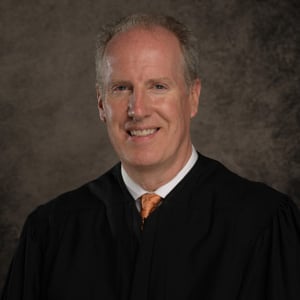
U.S. Court of Appeals, Second Circuit
|
Richard J. Sullivan was sworn in as a United States Circuit Court Judge for the Second Circuit in October 2018. Before that, Judge Sullivan served for eleven years as a United States District Judge for the Southern District of New York. Prior to becoming a judge, he served as the General Counsel and Managing Director of Marsh Inc., the world's leading risk management and insurance brokerage firm. From 1994 to 2005, he served as an Assistant United States Attorney in the Southern District of New York, where he was Chief of the International Narcotics Trafficking Unit and Director of the New York/New Jersey Organized Crime Drug Enforcement Task Force. In 2003, he was awarded the Henry L. Stimson Medal from the Association of the Bar of the City of New York. In 1998, he was named the Federal Law Enforcement Association's Prosecutor of the Year. Prior to joining the U.S. Attorney's Office, he was a litigation associate at Wachtell, Lipton, Rosen & Katz in New York and a law clerk to the Honorable David M. Ebel of the United States Court of Appeals for the 10th Circuit. He is a graduate of Yale Law School, the College of William & Mary, and Chaminade High School on Long Island. From 1986 to 1987, he served as a New York City Urban Fellow under New York City Police Commissioner Benjamin Ward. Judge Sullivan is on the executive board of the New York American Inn of Court and the Center for Law and Religion at St. John’s University School of Law. He is an adjunct professor at Columbia Law School, where he teaches courses on sentencing and jurisprudence, and he previously served as an adjunct professor at Fordham Law School, where he taught courses on white collar crime and trial advocacy and was named Adjunct Professor of the Year.
|
Fellow, Brennan Center for Justice; Associate Professor of Law, Stetson University College of Law
Ciara Torres-Spelliscy is an associate professor, teaching courses in Election Law, Corporate Governance, Business Entities, and Constitutional Law. Prior to joining Stetson's faculty, Professor Torres-Spelliscy was counsel in the Democracy Program of the Brennan Center for Justice at NYU School of Law where she provided guidance on the issues of money in politics and the judiciary to state and federal lawmakers. She was an associate at Arnold & Porter LLP and a staffer for Senator Richard Durbin.
Professor Torres-Spelliscy has testified before Congress, and state and local legislative bodies as an expert on campaign finance reform. She has also helped draft legislation and Supreme Court briefs. She is the editor of the 2010 edition of the Brennan Center's campaign finance treatise, "Writing Reform: A Guide to Drafting State and Local Campaign Finance Laws."
She researches and speaks publicly on campaign finance law as well as judicial selection. She has spoken at symposia at 26 universities around the nation. She presented at the 2013 and the 2015 Annual Conventions of the Association of American Law Schools (AALS) and at the 2014 Annual Convention of the American Constitution Society, and the 2011, the 2014, and the 2016 Annual Conventions of the Council on Governmental Ethics Laws (COGEL). In 2016 she spoke at the Federal Election Commission (FEC) at a forum on dark money and foreign money in U.S. elections.
She is the author of the book Corporate Citizen? An Argument for the Separation of Corporation and State (Carolina Academic Press, 2016).
As well as publishing in law reviews, such as the NYU Law Review, the University ofPennsylvania Law Review, the Duke Journal of Constitutional Law & Public Policy, and the Montana Law Review, Professor Torres-Spelliscy has been published in the New York Times, New York Law Journal, Slate, L.A. Times, U.S. News and World Report, Boston Review, Roll Call, Business Week, Forbes, The Atlantic, USA Today, Business Ethics Magazine, San Francisco Chronicle, The Hill, Huffington Post, The Root.com, Judicature, The Nation, Salon.com, Tampa Bay Times, The Progressive, CNN.com, Medium, and the ABA Judges Journal. She has also been quoted by the media in The Wall Street Journal, The Economist, The New York Times, Time,Bloomberg, Mother Jones, Newsweek on Air, SCOTUS Blog, Politico, Slate, The National Journal, USA Today, L.A. Times, Boston Globe, NBC.com, WMNF, Sirius Radio, National Public Radio, Fox, Voice America, CSPAN, DNA TV, and NY1.
In 2014, Stetson University College of Law awarded Professor Torres-Spelliscy the Dickerson-Brown award for Excellence in Faculty Scholarship. In 2013, Professor Torres-Spelliscy was named as a member of the Lawyers of Color's "50 Under 50" list of minority law professors making an impact in legal education. In 2012, Professor Torres-Spelliscy was named as a Top Wonk by the website TopWonks.org. She was awarded tenure in 2016. In 2017, she was elected to be Chair of the AALS Section on Election Law for a term that starts in 2018.
Professor Torres-Spelliscy is a Brennan Center Fellow, a member of the Scholars Strategy Network, a member of the Board of Directors of the Mertz Gilmore Foundation, a former member of the Board of Directors of the National Institute on Money in State Politics, which was awarded the 2015 MacArthur Award for Creative and Effective Institutions.
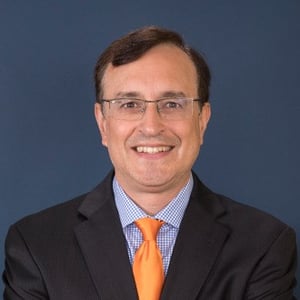
President, Center for Individual Rights
Todd Gaziano is the President of the Center for Individual Rights. Mr. Gaziano received his J.D. in 1988 from the University of Chicago Law School, where he was a John M. Olin Fellow in Law and Economics. He received his B.A. from West Virginia University, summa cum laude in 1985. He was selected as a Truman Scholar from West Virginia while an undergraduate.
Mr. Gaziano’s previous legal work includes service as a law clerk for U.S. Court of Appeals for the Fifth Circuit Judge Edith Jones, as an attorney in the U.S. Department of Justice Office of Legal Counsel, as a chief subcommittee counsel in the U.S. House of Representatives, as a Houston trial attorney, and as a chief corporate legal officer. He also served a six-year term as commissioner on the U.S. Commission on Civil Rights (2008-2013), where he helped conduct oversight and investigations of civil rights agencies.
For most of the last 25 years, Mr. Gaziano was a legal scholar and public interest law leader, promoting individual liberty in the Supreme Court and Congress. From 1997 to 2013, he was the founding director of the Edwin Meese Center for Legal and Judicial Studies at The Heritage Foundation. From 2014 until he joined CIR, he was the Chief of Legal Policy and Strategic Research, and Director of the Center for the Separation of Powers, at Pacific Legal Foundation.

David McIntosh is a leader for the principles of limited constitutional government and individual freedom. He is president of the Club for Growth, the leading advocate for economic liberty.
Former Congressman David McIntosh represented Indiana's 2nd Congressional District in the United States Congress from 1995-2001. As a Freshman, David chaired the Subcommittee on Regulatory Relief. He passed the Congressional Review Act and held extensive oversight and field hearings to build a record of public support for regulatory relief initiatives in energy, biotechnology, pharmaceutical, healthcare, transportation and technology sectors. Another issue that he championed was the elimination of the marriage penalty in the Federal Tax Code.
David served during the Reagan administration as special assistant to Attorney General Edwin Meese III, and as special assistant to President Reagan for Domestic Affairs. During the first Bush administration, he served as executive director of the President's Council on Competitiveness and assistant to the Vice President. The Competitiveness Council coordinated the cost/benefit review of major regulations and promoted legal reform measures.
David is a co-founder of the Federalist Society for Law and Public Policy and serves on the Board of Directors. He remains active with several free market and conservative think tanks and grassroots organizations. David has also had stints at the Hudson Institute and as a Professor of Economics at Ball State School of Business.
Prior to the Club for Growth, David was a partner at Mayer Brown, LLP in Washington, DC.
David graduated from the University of Chicago Law School in 1983, and Yale University, BA, cum laude, in 1980. He and his wife, Ruthie, are the proud parents of Ellie age 17 and Davey age 13.

Vice President, Edwin Meese III Institute for the Rule of Law, Advancing American Freedom
John G. Malcolm oversees Advancing American Freedom’s work to increase understanding of the Constitution and the rule of law as Vice President of the organization’s Edwin Meese III Institute for the Rule of Law. Malcolm brings to the challenge a wealth of legal expertise and experience in both the public and private sectors.
Prior to joining Advancing American Freedom in 2025, Malcolm was the Vice President of the Institute for Constitutional Government and the Director of the Meese Center for Legal and Judicial Studies at the Heritage Foundation. Prior to joining Heritage in 2012, Malcolm was general counsel at the U.S. Commission on International Religious Freedom, as well as a distinguished practitioner in residence at Pepperdine Law School. From 2004 to 2009, Malcolm was executive vice president and director of worldwide anti-piracy operations for the Motion Picture Association.
Malcolm served as a deputy assistant attorney general in the Department of Justice’s Criminal Division from 2001 to 2004, where he oversaw sections on computer crime and intellectual property, domestic security, child exploitation and obscenity, and special investigations. Immediately prior to that, he was a founding partner in the Atlanta law firm of Malcolm & Schroeder, LLP.
From 1990 to 1997, Malcolm was an assistant U.S. attorney in Atlanta, assigned to the fraud and public corruption section, and also an associate independent counsel, investigating fraud and abuse in the Department of Housing and Urban Development. He was honored with the Director’s Award for Superior Performance for his work in connection with the successful prosecution of Walter Leroy Moody Jr., who assassinated an 11th Circuit judge and the head of the Savannah chapter of the NAACP.
A graduate of Harvard Law School and Columbia College, Malcolm began his career as a law clerk to a federal district court judge and a federal appellate court judge, and as an associate at the Atlanta-based law firm of Sutherland, Asbill & Brennan (new Eversheds Sutherland).
Malcolm, who resides in Washington, D.C., serves on the Board of Trustees of the Washington National Opera and is a Senate-confirmed member of the Board of Directors of the Legal Services Corporation, the largest funder of civil legal aid in the United States.
Senior Fellow, Administrative Conference of the United States
Paul D. Kamenar is a Washington, D.C. public policy and appellate attorney who counsels clients on legal, regulatory, and public policy matters. He is also a Senior Fellow of the Administrative Conference of the United States and guest lectures at the U.S. Naval Academy on National Security Law. He has been a speaker at several conferences across the country on overcriminalization and regulatory enforcement, including those sponsored by the American Bar Association, George Mason University Law School, S.J. Quinney College of Law-University of Utah, American University Washington College of Law, Northwestern University School of Law, and the Cleveland Chapter of the Federalist Society. He also has briefed Members of Congress and their staff on overcriminalization issues along with representatives from the National Association of Criminal Defense Lawyers and the Heritage Foundation. He and his clients have also testified before congressional committees on these issues. He was Senior Executive Counsel of the Washington Legal Foundation, Clinical Professor of Law at George Mason University Law School from 1999-2005, and adjunct professor at Georgetown University Law Center teaching a separation of powers/appellate advocacy seminar. He is a graduate of Georgetown Law and received his undergraduate degree from Rutgers College.
Partner, MoloLamken
Jeff Lamken, founder of MoloLamken, is a nationally recognized appellate practitioner, has argued 22 cases before the U.S. Supreme Court and briefed dozens more on a wide range of topics, including administrative law, the First Amendment, antitrust, bankruptcy, civil rights, criminal procedure, energy law, intellectual property, search and seizure law, separation of powers, and telecommunications law. He has also handled matters in virtually all the federal courts of appeals and many state appellate courts. Mr. Lamken also develops, briefs, and argues critical motions in significant trial matters.
Before founding MoloLamken, Mr. Lamken headed Baker Botts' Supreme Court and Appellate Practice in Washington, D.C. Mr. Lamken has served as an Assistant to the Solicitor General in the United States Department of Justice, and was a partner in the Washington D.C. litigation boutique Kellogg Huber & Hansen.
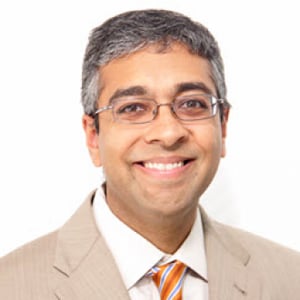
Solicitor General, State of Florida
Amit Agarwal was appointed as Florida's solicitor general in June 2016. The position, first established in February 1999, is patterned in part after the U.S. Office of the Solicitor General, which conducts litigation on behalf of the United States in the Supreme Court and supervises the handling of litigation in federal appellate courts. The Solicitor General in Florida serves three primary roles: overseeing civil appeals involving the state's interests in all state and federal appellate courts; teaching at the Florida State University College of Law where he holds the Richard W. Ervin Eminent Scholar Chair; and serving as a policy advisor to the Attorney General.
Agarwal served as deputy chief to the Appellate Division of the United States Attorney's Office for the Southern District of Florida before being named solicitor general. Previously, he clerked at the U.S. Supreme Court for Justice Samuel Alito and served as an attorney advisor in the Office of Legal Counsel of the United States Department of Justice. Additionally, he served as a law clerk for the Honorable Brett Kavanaugh, of the United States Court of Appeals for the District of Columbia Circuit, and the Honorable Edward Becker, of the United States Court of Appeals for the Third Circuit in Philadelphia, PA.
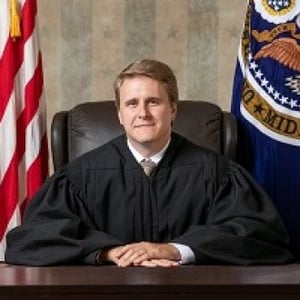
Judge, United States Court of Appeals for the Eleventh Circuit
Andrew Brasher served as a United States District Judge for the Middle District of Alabama. Before taking the bench in May 2019, Judge Brasher was the Solicitor General of the State of Alabama, where he argued cases before the United States Supreme Court, the United States Court of Appeals for the Eleventh Circuit, and the Alabama Supreme Court. He previously served for several years as the Deputy Solicitor General and practiced in the litigation and white-collar criminal defense practice groups in the Birmingham, Alabama office of Bradley Arant Boult Cummings LLP. Upon graduation from law school, Judge Brasher served as a law clerk to Judge William H. Pryor Jr. of the United States Court of Appeals for the Eleventh Circuit. Judge Brasher earned his B.A., summa cum laude, from Samford University and his J.D., cum laude, from Harvard Law School, where he was a member of the Harvard Law Review.
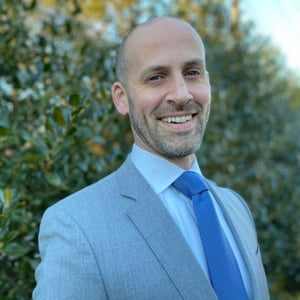
Partner, Lehotsky Keller LLP
The New York Times recognized Scott A. Keller as a “legal heavyweight,” who “is praised by opponents as a formidable advocate.”
Mr. Keller has argued 12 cases before the U.S. Supreme Court and 12 cases before the Texas Supreme Court. He is the only practicing lawyer to have argued at least 10 cases in both courts. Mr. Keller frequently represents parties in high stakes appeals, and he has argued many cases in federal courts of appeals throughout the nation. He has earned individual accolades from Lawdragon 500 Leading Litigators in America, Chambers, Legal 500, The American Lawyer, The National Law Journal, Law360, Super Lawyers, The Best Lawyers in America, and other publications.
Before founding Lehotsky Keller Cohn LLP, Mr. Keller headed Baker Botts LLP’s Supreme Court Practice. He also has significant experience at the highest levels in all three branches of government. Mr. Keller served as the Solicitor General of Texas, the State’s chief appellate litigator. He was U.S. Senator Ted Cruz’s chief counsel on the Senate Judiciary Committee. Mr. Keller was a law clerk for Justice Anthony Kennedy of the Supreme Court of the United States and Chief Judge Alex Kozinski of the U.S. Court of Appeals for the Ninth Circuit. He was also a Bristow Fellow in the U.S. Department of Justice’s Office of the Solicitor General.
Mr. Keller represents clients in cases where public communications strategy is crucial, and he has made numerous media appearances in major outlets such as The New York Times, The Wall Street Journal, BBC, Fox News, NPR, and Politico. As a sought after speaker and writer, Mr. Keller’s articles have appeared in the Stanford Law Review, Virginia Law Review, and Texas Law Review. He has also served as an adjunct professor of constitutional litigation, Supreme Court practice, and federal courts at the University of Texas School of Law.
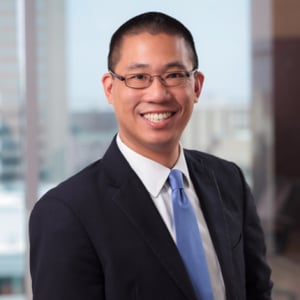
Chair, Issues & Appeals, Hunton Andrews Kurth LLP
The former Solicitor General of West Virginia, Mr. Lin has been on the front lines of many precedent-setting cases in appellate courts across the country, including in a US Supreme Court victory that George Will called “the court’s most severe rebuke of a president” since the Truman administration. Having argued more than 60 appeals, he brings to clients a well-honed ability to identify the most persuasive issues for appeal and a practiced understanding of how best to frame complex legal questions in appellate courts.
With experience in the private sector and multiple branches of government, Mr. Lin’s practice has spanned a wide range of issues, including major questions of constitutional and administrative law at the federal and state levels. On behalf of more than two dozen states, he won a stay from the US Supreme Court of the EPA’s Clean Power Plan. Described by the New York Times as an “unprecedented” order, the stay was the first time the Supreme Court had ever put a regulation on hold before review by a federal appeals court. In that same case, Elbert argued before the en banc DC Circuit in an historic proceeding that one commenter quoted in E&E News compared to “the NBA All-Star Game.” At the state level, Elbert led the effort that persuaded the West Virginia Supreme Court of Appeals to overturn an injunction of the state’s right-to-work law.
In 2013, Mr. Lin was appointed the Solicitor General of West Virginia. During his four-and-a-half year tenure, he served as a member of the Attorney General’s senior management team, oversaw all civil and criminal appeals, and argued nearly two dozen cases in federal and state appellate courts. He authored more than twenty-five briefs in the US Supreme Court and more than forty-five formal Opinions of the Attorney General.
Earlier in his career, Mr. Lin served as a trial attorney in the Federal Programs Branch of the US Department of Justice’s Civil Division, where he received a Special Service Award. He has also been a law clerk at all three levels of the federal judiciary: for Justice Clarence Thomas on the US Supreme Court; for Judge William H. Pryor Jr. on the US Court of Appeals for the Eleventh Circuit; and for Senior Judge Robert E. Keeton on the US District Court for the District of Massachusetts.
Mr. Lin speaks regularly on a wide variety of topics, including constitutional law, administrative law, environmental law, state and federal relations, the US Supreme Court, and appellate practice. He has testified before Congress, and has spoken at the national conventions of the American Bar Association, the Association of Corporate Counsel, the National Asian Pacific American Bar Association, the Federalist Society, Americans for Prosperity, and the American Legislative Exchange Council. He is an elected member of the American Law Institute, a public member of the Administrative Conference of the United States, and a fellow of the American Academy of Appellate Lawyers.
Mr. Lin is admitted to practice in the following federal courts: the Supreme Court of the United States; the First, Second, Third, Fourth, Fifth, Sixth, Seventh, Eighth, Ninth, Eleventh, D.C., and Federal Circuits; the District of Massachusetts; the Northern and Southern Districts of West Virginia; and the Eastern and Western Districts of Virginia.
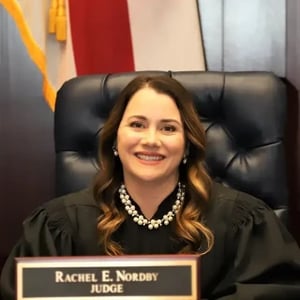
Judge, Florida First District Court of Appeal
Rachel Nordby was appointed to the First District Court of Appeal on October 16, 2019 by Governor Ron DeSantis; she took office on October 23, 2019.
Before her appointment to the bench, Judge Nordby was a partner in the Tallahassee office of Shutts & Bowen LLP and served as Vice-Chair of the firm’s Appellate Practice Group. Before joining Shutts & Bowen, Judge Nordby served as the Senior Deputy Solicitor General for Florida Attorney General Pam Bondi. In this role, she represented the State, its agencies, and public officials in cases involving constitutional challenges and issues of statewide impact.
Before joining the Office of the Attorney General, Judge Nordby clerked for Judge Bradford L. Thomas on Florida’s First District Court of Appeal. Judge Nordby is a 2008 graduate of the Florida State University College of Law, where she served as Editor-in-Chief of The Florida State University Law Review and interned in the chambers of Florida Supreme Court Justice Harry Lee Anstead. She earned her undergraduate degree in Classical Studies, summa cum laude, from the University of Florida.
Florida First District Court of Appeal
Allen Winsor is a judge on the Florida First District Court of Appeal. He was appointed to the court in February 2016 by Gov. Rick Scott.
Winsor was formerly solicitor general for the state of Florida. He was appointed by Attorney General Pam Bondi in June 2013. As solicitor general, he argued before the United States Supreme Court in October 2015.
Judge Winsor's initial appointment term expires in January 2019. He must stand for retention by voters in 2018 in order to remain on the bench.
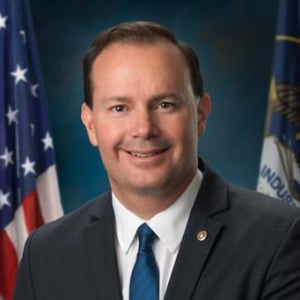
United States Senator, Utah
Elected in 2010 as Utah's 16th Senator, Mike Lee has spent his career defending the basic liberties of Americans and Utahns as a tireless advocate for our founding constitutional principles.
Senator Lee acquired a deep respect for the Constitution early on. His father, Rex Lee, who served as the Solicitor General under President Ronald Reagan, would often discuss varied aspects of judicial and constitutional doctrine around the kitchen table, from Due Process to the uses of Executive Plenary Power. He attended most of his father's arguments before the U.S. Supreme Court, giving him a unique, hands-on experience and understanding of government up close.
Lee graduated from Brigham Young University with a Bachelor of Science in Political Science, and served as BYU's Student Body President in his senior year. He graduated from BYU's Law School in 1997 and went on to serve as law clerk to Judge Dee Benson of the U.S. District Court for the District of Utah, and then with future Supreme Court Justice Judge Samuel A. Alito, Jr. on the U.S. Court of Appeals for the Third Circuit.
Lee spent several years as an attorney with the law firm Sidley & Austin specializing in appellate and Supreme Court litigation, and then served as an Assistant U.S. Attorney in Salt Lake City arguing cases before the U.S. Court of Appeals for the Tenth Circuit.
Lee served the state of Utah as Governor Jon Huntsman's General Counsel and was later honored to reunite with Justice Alito, now on the Supreme Court, for a one-year clerkship. He returned to private practice in 2007.
Throughout his career, Lee earned a reputation as an outstanding practitioner of the law based on his sound judgment, abilities in the courtroom, and thorough understanding of the Constitution.
Today, Lee fights to preserve America's proud founding document in the United States Senate. He advocates efforts to support constitutionally limited government, fiscal responsibility, individual liberty, and economic prosperity.
Lee is a member of the Judiciary Committee, and serves as Chairman of the Antitrust, Competition Policy and Consumer Rights Subcommittee protecting business competition and personal freedom.
He also oversees issues critical to Utah as the Chairman of the Water and Power Subcommittee of the Energy and Natural Resources Committee. He serves on the Commerce Committee and the Joint Economic Committee, as well.
In the 114th Congress, Lee also began his tenure as Chairman of the Senate Steering Committee, where he works with his Republican colleagues in the Senate to introduce bold and innovative solutions to issues facing the American people.
Lee and his wife Sharon live in Alpine, Utah, with their three children. He is a member of The Church of Jesus Christ of Latter-day Saints and served a two-year mission for the Church in the Texas Rio Grande Valley.
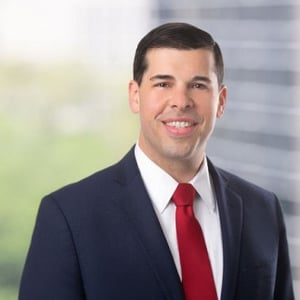
Partner, Boies Schiller Flexner LLP
Jesse, the former third-ranking official at the U.S. Department of Justice, helps clients with their most difficult litigation and regulatory issues─whether that means defending against an enforcement action, pursuing high-stakes litigation and appeals, navigating regulatory thickets at federal and state agencies, or crafting a comprehensive strategy to manage a crisis. He approaches these problems with the knowledge gained both from his broad private-practice experience and from having served at the highest levels of federal and state government.
Jesse has experience across a range of substantive and regulatory areas. He has sued the federal government and has also been one of its top law-enforcement officials; he has represented states and has also navigated their regulatory agencies on behalf of clients; and he has represented companies in business disputes, both as defendants and plaintiffs.
Before joining the firm, Jesse was the Acting Associate Attorney General at the United States Department of Justice. In that role, he oversaw the civil and criminal work of the Antitrust, Civil, Civil Rights, Environment and Natural Resources, and Tax Divisions. During Jesse’s tenure, the Associate’s office closely managed the Department’s most significant litigation, including matters involving large financial institutions, healthcare companies, automakers, energy companies, and state and local governments. In addition, Jesse served as Chair of DOJ’s Regulatory Reform Task Force and Vice Chair of DOJ’s Task Force on Market Integrity and Consumer Fraud. Jesse regularly provided legal and strategic advice to the highest-level decision makers in the federal government, including the Attorney General and Deputy Attorney General, general counsels across the spectrum of federal agencies, and White House officials.
Jesse served for three years as the secretary of Florida’s labor, economic-development, and land-use agency, the Florida Department of Economic Opportunity. Before that, he served as Governor (now Senator) Rick Scott’s general counsel.
Jesse maintains offices in both Washington D.C. and Florida. From Washington, he focuses on federal litigation and crisis management. In Florida, in addition to federal litigation, Jesse employs his knowledge of state government and regulation to help clients in courts across the state, from trial through the Florida Supreme Court.
Jesse currently serves on the Florida Supreme Court Judicial Nominating Commission, the body that provides the governor with nominees for appointment to the Florida Supreme Court. Jesse is also a fellow at the Center for the Study of the Administrative State at the Scalia Law School at George Mason University, where he writes and speaks about administrative law.
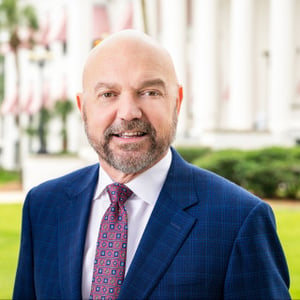
President, Florida Justice Reform Institute
William W. Large is the president of the Florida Justice Reform Institute (FJRI), an organization dedicated to restoring fairness and personal responsibility to Florida's civil justice system.
Under his leadership, FJRI has delivered notable successes on numerous and complex legislative, regulatory, and judicial issues. These have included repealing Florida’s one-way attorney fee statute and reforming the contingency risk fee multiplier, strengthening the rules of evidence for medical damages, providing COVID liability protections for health care workers, and adopting the Federal summary judgment standard, among many others.
Prior to serving as president, Mr. Large served as Governor Bush's deputy chief of staff responsible for a portfolio of health and human service agencies.
Before that, Mr. Large served as general counsel for the Florida Department of Health, and during that time served as director of the Governor's Task Force on Professional Liability Insurance. Prior to working for the state, Mr. Large was a partner practicing in professional malpractice litigation defense.
Mr. Large is admitted to practice before all Florida courts and U.S. District Courts in Florida, and the U.S. Supreme Court. Mr. Large is "AV" rated by Martindale-Hubbell and a member of the Federalist Society, the Florida Defense Lawyers Association and the Defense Research Institute.
Mr. Large holds B.S. and J.D. degrees from the University of Florida, and an M.B.A, an M.S in Political Science, and an M.S. in Risk Management and Insurance from The Florida State University.
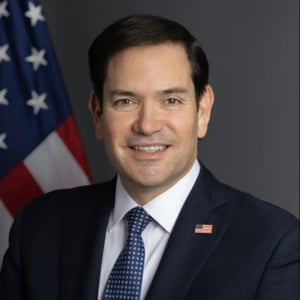
United States Secretary of State
Secretary of State Marco Rubio was born in Miami, Florida in 1971. He is the son of Cuban immigrants who left Cuba in pursuit of the American Dream. His father worked as a banquet bartender, while his mother split time as a stay-at-home mom and hotel maid. From an early age, Rubio learned the importance of faith, family, community, and dignified work.
Rubio is passionate about the American Dream because he’s lived it himself. He was drawn to public service in large part because of conversations with his grandfather, who witnesses how communism destroyed his homeland. After meeting and marrying his wife Jeanette, he served as a City Commissioner in West Miami and as Speaker of the Florida House of Representatives. In 2010, he won a seat in the U.S. Senate. He served as U.S. Senator until 2025.
During his tenure in the U.S. Senate, Rubio was committed to serving the people of Florida and ensuring America remained a strong, resilient nation for generations to come. He was a Senior Member of the Senate Foreign Relations Committee, Vice Chair of the Senate Select Committee on Intelligence, a member of the powerful Senate Appropriations Committee, as well as the Senate Committee on Small Business and Entrepreneurship.
Rubio wrote and passed the Uyghur Forced Labor Prevention Act, which represents the greatest turning point in U.S.-China relations in decades. He also co-led the Hong Kong Relations Act, and the VERDAD Act. During the first Trump Administration, he worked with the President to hold members of the Cuban regime accountable, including the dictatorship’s military holding company. He also created the Paycheck Protection Program, which helped save millions of small businesses in America when the COVID pandemic hit.
In November 2024, President Trump nominated Rubio to serve as America’s Secretary of State. Secretary Rubio was the first cabinet member who was confirmed in the second Trump Administration. He received a historic unanimous vote of 99-0 in the U.S. Senate.
Rubio was sworn in as the 72nd Secretary of State on January 21, 2025. The Secretary’s main priority is to have a Department of State that puts America First.

"Deep Pocket Jurisprudence™" and Meaningful Civil Justice Reform
TeleforumGloucester County School Board v. G.G.: Judicial Overdeference Is Still a Massive Problem
Ilya Shapiro, David C. McDonald
Note from the Editor: This article discusses Auer deference, a central issue in Gloucester County...
The Role of White House Counsel - Podcast
Timothy E. Flanigan, C. Boyden Gray
In recent weeks, there has been a flurry of editorials on the proper role of...
Panel 2: Campaign Finance and Free Speech
John O. McGinnis, Richard H. Pildes, Bradley A. Smith, Richard Sullivan, Ciara Torres-Spelliscy
Congress' passage of the Bipartisan Campaign Reform Act of 2002 did not end the debate...
The Congressional Review Act’s “Rediscovery” and Hidden Uses - Podcast
Todd F. Gaziano, David M. McIntosh
In 1996, Congress passed the Congressional Review Act (CRA). Before an executive agency rule—broadly defined...
Hampton Roads Federalist Society Supper Club: SCOTUS Confirmation Process
Virginia Beach, VirginiaCriminal Regulatory Statutes: Is “Deliberate Indifference” Sufficient Mens Rea For A “Knowing" Violation? Case Update: Todd Farha v. United States - Podcast
John G. Malcolm, Paul D. Kamenar, Jeff Lamken
Todd Farha v. United States, currently pending on a petition for writ of certiorari to the...
Combating Federal Overreach
Amit Agarwal, Andrew Brasher, Scott Allen Keller, Elbert Lin, Rachel E. Nordby, Allen Winsor
This panel, Combating Federal Overreach, was held on February 4, 2017, at the 2017 Florida...
Luncheon Address by Senator Mike Lee
Mike S. Lee, Jesse Panuccio
This address by the Honorable Mike Lee (U.S. Senator, Utah) was given on February 4,...
Address by Senator Marco Rubio
William Large, Marco Rubio
This address by the Honorable Marco Rubio (U.S. Senator, Florida) was given on February 3,...