

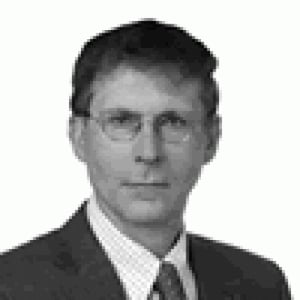
Partner, Baker Hostetler LLP
David Rivkin is a member of the firm's litigation, international and environmental teams and is co-leader of the firm's national appellate practice. He has extensive experience in constitutional, administrative and international law litigation and has been involved in numerous high-profile cases. With his prior experience in the government sector, David draws on a wealth of knowledge when providing compliance advice to companies and handling enforcement proceedings before government agencies on issues arising out of multilateral and unilateral sanctions, the Foreign Corrupt Practices Act (FCPA), anti-boycott issues, bankruptcy and financial fraud matters, and environmental and energy issues.
David has developed and implemented legislative, regulatory and litigation initiatives for two presidential administrations. Over the years, he has published hundreds of articles, op-eds, book reviews and book chapters on a variety of international, legal, constitutional, defense, arms control, foreign policy, environmental and energy issues for various newspapers and magazines, including The Wall Street Journal, The Washington Post, The New York Times, USA Today and The Los Angeles Times, and has been a frequent commentator and guest on TV and radio shows including ABC, CBS, NBC, CNN, Fox News, NPR and PBS.
Partner, Baker & Hostetler LLP
Lee A. Casey focuses on federal environmental, constitutional and international law and Alien Tort Statute issues. He also advises clients on compliance issues under the Foreign Corrupt Practices Act (FCPA), U.S. trade sanctions regimes, and federal ethics requirements. Mr. Casey’s practice includes federal, district and appellate court litigation, as well as matters before federal agencies. Prior to joining BakerHostetler, Mr. Casey was an associate with Hunton & Williams, practicing in international, environmental and constitutional law. From 2004 through 2007 he served as an member of the United Nations Subcommission on the Promotion and Protection of Human Rights.
From 1986 to 1993, Mr. Casey served in various capacities in the federal government, including the Office of Legal Policy (1986-90) and the Office of Legal Counsel (1992-93) at the U.S. Department of Justice and served as Deputy Associate General Counsel at the U.S. Department of Energy (1990-92). The Office of Legal Counsel is responsible for advising the Attorney General and the White House on issues of constitutional law and statutory interpretation. The Office of Legal Policy served as a strategic “think tank” for the Reagan Justice Department and was responsible for reviewing candidates for appointments to the federal bench.
Before joining the government in 1986, Mr. Casey was an associate in the Los Angeles firm of Mitchell, Silberberg & Knupp, practicing in the litigation section, with an emphasis on copyright, contract and First Amendment issues. From 1984 to 1985, Mr. Casey served as Law Clerk to the Honorable Alex Kozinski, then Chief Judge of the United States Claims Court. From 1982 to 1984, he practiced at the Detroit firm of Dykema Gossett, focusing on corporate, securities, commercial and intellectual property litigation, and from 1990 through 1994, he served as an Adjunct Professor of Law at George Mason University School of Law in Arlington, Virginia.
Among the chapters, articles and papers that Mr. Casey has authored or co-authored are: “International Law and the Nation-State at the U.N.,” Reclaiming the Language of Freedom at the United Nations: A Guide for U.S. Policymakers, The Heritage Foundation (2006) (with David B. Rivkin, Jr.); “The Dangerous Myth of Universal Jurisdiction,” A Country I Do Not Recognize (ed. Robert H. Bork) (2005) (with David B. Rivkin, Jr.); “Leashing the Dogs of War,” The National Interest (Fall 2003) (with David B. Rivkin, Jr.); “The Limits of Legitimacy: The Rome Statute’s Unlawful Application to Non-State Parties,” 44 Va.J.Int’l L. 63 (Fall 2003) (with David B. Rivkin, Jr.); “Devil’s Advocates: The Danger of Judging Lawyers By Their Clients,” Policy Review (Feb. and Mar. 2002) (with David B. Rivkin, Jr.); “The Case Against the International Criminal Court,” 25 Fordham Int’l L.J. 840 (2002); “Europe in the Balance: The Alarmingly Undemocratic Drift of the European Union,” Policy Review (June and July 2001) (with David B. Rivkin Jr.); “Against an International Criminal Court,” Commentary, May 1998 (with David B. Rivkin, Jr.); “Federalism (Cont’d.),” Commentary, December 1996 (with David B. Rivkin, Jr.); “Presidents and War Powers: Another View,” Common Sense, Winter 1996 (with David B. Rivkin, Jr.); “How Binding Are Contracts?” The American Enterprise, Nov./Dec. 1993 (with David B. Rivkin, Jr.); and “Pirate Constitutionalism: An Essay in Self-Government,” 8 J. of L. & Politics 477 (1992).
Mr. Casey is a member of the California, Michigan and District of Columbia Bar Associations.
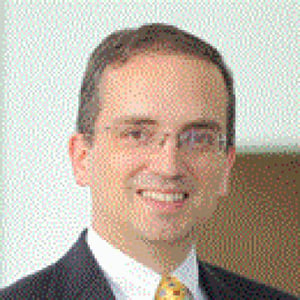
Partner, Baker & Hostetler LLP
Darin Bartram focuses his practice in the areas of constitutional litigation and appellate work, with particular experience in environmental law.
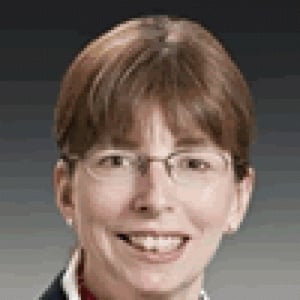
Counsel to the Firm, Cascadia Cross-Border Law
Margaret Stock focuses her practice on immigration and citizenship law. She is a nationally known expert on immigration and national security laws, and has testified regularly before Congressional committees on immigration, homeland security, and military matters. As a retired Lieutenant Colonel in the Military Police, U.S. Army Reserve, Margaret has extensive experience with U.S. military issues. She has also worked as a professor at the United States Military Academy at West Point, and she has served as an adjunct instructor at the University of Alaska. Margaret served as a member of the American Bar Association Commission on Immigration from 2008-2012. She regularly authors articles on military-related immigration issues, and is well-versed on “parole in place” for military family members and the Military Accessions Vital to the National Interest (“MAVNI”) Program. Margaret authored the book Immigration Law & the Military, which was published by the American Immigration Lawyers Association in 2012.
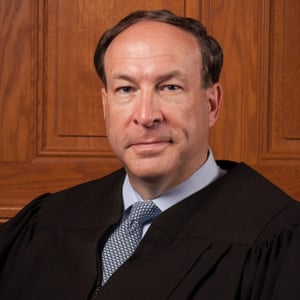
Judge, United States Court of Appeals, Seventh Circuit
Michael B. Brennan was confirmed and sworn in as a Circuit Judge for the U.S. Court of Appeals for the Seventh Circuit in May 2018.
He previously worked as a partner in the Milwaukee law firm of Gass Weber Mullins LLC, where he tried cases and handled appeals in federal and state courts, as a judge on the Milwaukee County Circuit, where he presided over a variety of criminal and civil calendars, and as an assistant district attorney in the Milwaukee County District Attorney’s office.
Brennan’s undergraduate degree is from the University of Notre Dame, and his law degree from Northwestern University School of Law, where he was an editor on the law review and the moot court champion. He served as a law clerk on the U.S. District Court for the Eastern District of Wisconsin and the U.S. Court of Appeals for the Seventh Circuit.
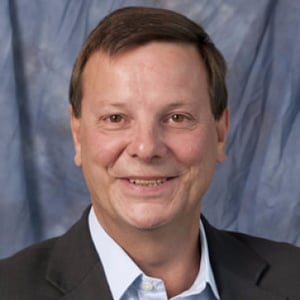
Professor of Law, Antonin Scalia Law School, George Mason University
Professor of Law Michael S. Greve joined the faculty of the Antonin Scalia Law School, George Mason University in fall 2012 after having served as John G. Searle Scholar at the American Enterprise Institute (AEI), where he specialized in constitutional law, courts, and business regulation and served as chairman of the Competitive Enterprise Institute. Prior to joining AEI, Greve was founder and co-director of the Center for Individual Rights, a public interest law firm specializing in constitutional litigation.
Greve has served previously as an adjunct professor at a number of universities, including Cornell and Johns Hopkins Universities, and has been a visiting professor at Boston College since 2004. He was awarded a PhD and an MA in government by Cornell University. Greve also earned a Diploma from the University of Hamburg in Germany.
A prolific writer, Greve is the author of nine books and a multitude of articles appearing in scholarly publications, as well as numerous editorials, short articles, and book reviews. He is a frequent speaker for professional and scholarly organizations and has made many appearances on radio and television.
In addition Greve has provided congressional and state legislative testimony, has lobbied and consulted in federal agency proceedings, and has provided litigation services and management in over 30 cases, including matters before the U.S. Supreme Court.
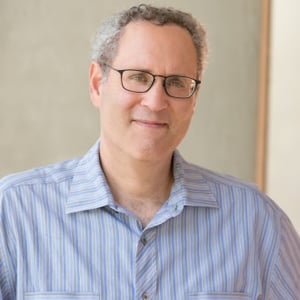
Burton Craige Distinguished Professor of Jurisprudence, UNC School of Law
Michael Gerhardt joined the Carolina Law faculty in 2005 and serves as the Burton Craige Distinguished Professor of Jurisprudence. His teaching and research focuses on constitutional conflicts between presidents and Congress. Gerhardt is the author of six books, including leading treatises on impeachment, appointments, presidential power, Supreme Court precedent, and separation of powers. He has written more than a hundred law review articles and dozens of op eds in the nation’s leading news publications, including SCOTUSblog, The New York Times, and Washington Post. His book, The Forgotten Presidents (Oxford University Press 2013), was named by The Financial Times as one of the best non-fiction books of 2013. He was inducted into the American Law Institute in 2016. Gerhardt attended the University of Chicago Law School, where he graduated order of the coif and served as a research assistant to both Phil Kurland and Cass Sunstein and as one of the two student editors of The Supreme Court Review. After law school, he clerked for Chief District Judge Robert McRae of the U.S. District Court of the Western District of Tennessee and Judge Gilbert Merritt of the U.S. Court of Appeals for the Sixth Circuit. He served as Deputy Media Director of Al Gore’s first Senate campaign, practiced law for three years for two boutique litigation firms in Washington and Atlanta, and taught for more than a decade at William & Mary Law School before joining Carolina Law.
Gerhardt’s extensive public service has included his testifying more than a dozen times before Congress, including as the only joint witness in the Clinton impeachment proceedings in the House; speaking behind closed doors to the entire House of Representatives about the history of impeachment in 1998; and serving as special counsel to the Senate Judiciary Committee for seven of the nine sitting Supreme Court justices. In 2015, he became the first legal scholar to be asked by the Library of Congress to serve as its principal adviser in revising the official United States Constitution Annotated. In 2019, the Order of the Coif named Gerhardt as its Distinguished Visitor for 2020, an award given to only one law professor each year for outstanding legal scholarship.
Professor of Constitutional Law, Pepperdine University School of Law
One of America's best known scholars and popular commentators on the law, Professor Douglas W. Kmiec holds the endowed chair in constitutional law at Pepperdine Law School. He came to this position after serving several years as dean and St. Thomas More Professor of Law at The Catholic University of America in Washington, D.C., and for nearly two decades, on the law faculty at the University of Notre Dame. As dean at Catholic University, Professor Kmiec did what many said would be impossible; he greatly increased academic quality and student selectivity at the same time he deepened the school's religious commitment. During his tenure, the law school moved into the upper tier of the U.S. News ranking from tier three. At Notre Dame, he was director of Notre Dame's Center on Law & Government, and the founder of its Journal of Law, Ethics & Public Policy. Beyond the university setting, Kmiec served Presidents Ronald Reagan and George Bush during 1985-89 as constitutional legal counsel (Assistant Attorney General, Office of Legal Counsel, U.S. Department of Justice).
A wide-ranging writer and engaging speaker, Professor Kmiec writes a syndicated column for the Catholic News Service, and for several years wrote a regular column in the Chicago Tribune. He is also a frequent contributor to the pages of the Los Angeles Times, Wall Street Journal, and other periodicals. He is the co-author (with legal historian Stephen Presser of Northwestern) of three books on the Constitution -- The American Constitutional Order; Individual Rights and the American Constitution and The History, Structure and Philosophy of the American Constitution. Another recent book, Cease-Fire on the Family (Crisis Books/Notre Dame) attracted scholarly and popular acclaim for proposing realistic ways for families to "end the culture war" by renewing personal virtue and civic responsibility within itself. He has also written The Attorney General's Lawyer (Praeger 1992), and several respected legal treatises.
Professor Kmiec's scholarly research spans legal and non-legal subjects, from the Constitution and the federal system, to land use and the organization of America society. He is a frequent guest on national news programs, such as Nightline, the Newshour, and NPR's Talk of the Nation, analyzing constitutional questions.
A White House Fellow (1982-83), Professor Kmiec is one of a few individuals who has received the Distinguished Service Award from two cabinet departments —the Department of Justice in 1987 and Housing and Urban Development in 1983. In 1988, he was awarded the Edmund J. Randolph Award by the attorney general. He has lectured on the U.S. Constitution in Asia as a Fulbright Distinguished Scholar.
An honors graduate of Northwestern, Professor Kmiec received his law degree from the University of Southern California, where he served on the Law Review and received the Legion Lex Commencement Prize for Legal Writing. He is a member of the bar of the U.S. Supreme Court and the state bars of Illinois and California.
B.A., with honors, Northwestern University, 1973
J.D., University of Southern California, 1976
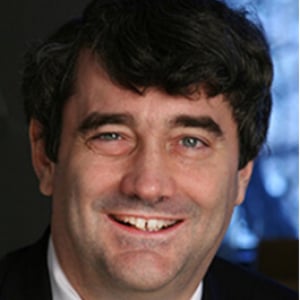
Clayton J. and Henry R. Barber Professor of Law, Northwestern University Pritzker School of Law and Co-Chairman, Board of Directors, The Federalist Society
STEVEN GOW CALABRESI is the Clayton J. & Henry R. Barber Professor at Northwestern Pritzker School of Law. He has also co-taught in the Fall semester at Yale Law School from 2013 to the present. Calabresi clerked for Justice Antonin Scalia and Judges Robert H. Bork and Ralph K. Winter. He was a Special Assistant to Attorney General Meese from 1985 to 1987 and worked with Ken Cribb as his deputy in 1987 on the second floor of the West Wing of the Reagan White House. Calabresi has written books on presidential power and comparative constitutional law and the origins of judicial review. He and Gary Lawson are the co-editors of a casebook on U.S. Constitutional Law, and Calabresi is also the co-editor of a casebook on comparative constitutional law. He has written over seventy law review articles since 1990.

Dr. John Eastman is the former Henry Salvatori Professor of Law & Community Service and former Dean at Chapman University's Dale E. Fowler School of Law, where he had been a member of the faculty since 1999, specializing in Constitutional Law, Legal History, and Property. He is a founding director of the Center for Constitutional Jurisprudence, a public interest law firm affiliated with the Claremont Institute that he founded in 1999. He has a Ph.D. in Government from the Claremont Graduate School and a J.D. from the University of Chicago Law School, and a B.A. in Politics and Economics from the University of Dallas. He serves as the Chairman of the Board of the National Organization for Marriage.
Prior to joining the Chapman law faculty, Dr. Eastman served as a law clerk to the Honorable Clarence Thomas, Associate Justice, Supreme Court of the United States, and to the Honorable J. Michael Luttig, Judge, United States Court of Appeals for the Fourth Circuit and practiced law with the national law firm of Kirkland & Ellis. Dr. Eastman has also represented numerous clients in important constitutional law matters and has argued before the Supreme Court. On behalf of the Claremont Institute Center for Constitutional Jurisprudence, he has participated as amicus curiae before the Supreme Court of the United States, U.S. Courts of Appeals, and State Supreme Courts in more than one hundred cases of constitutional significance, including Boy Scouts of America v. Dale, Zelman v. Simmons-Harris (the school vouchers case), Kelo v. New London, Ct. (eminent domain), and Van Orden v. Perry (the 10 Commandments case). He has also appeared as an expert legal commentator on numerous television and radio programs, including C-SPAN, Fox News, PBS, NewsHour, and The O'Reilly Factor.
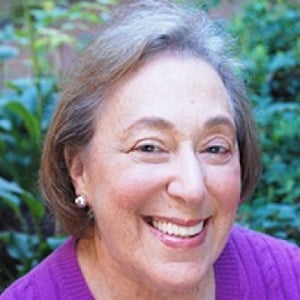
Founder and Co-President Emerita, National Women's Law Center
Described as "guiding the battles of the women's rights movement" by the New York Times, Marcia Greenberger is the founder and Co-President of the National Women's Law Center. The creation of the Center forty years ago established her as the first full-time women's rights legal advocate in Washington, D.C.
A recognized expert on women and the law, particularly in the areas of education and employment, health and reproductive rights, and family economic security, Ms. Greenberger has been a leader in securing the passage of major legislation, counsel in landmark litigation establishing new legal protections for women, and the author of numerous published articles. Examples include the Lilly Ledbetter Fair Pay Act, the Pregnancy Discrimination Act, the Civil Rights Act of 1991 providing critical protections against sexual harassment on the job, and Supreme Court victories strengthening protections for students and teachers against sex discrimination in schools.
Her leadership and contributions are reflected in the professional honors she has received and the numerous boards on which she has served. She has been given the James Wilson Award and the Alumni Award of Merit from the University of Pennsylvania Law School and the Trustees’ Council of Penn Women "Beacon" Leadership Award, the American Bar Association Margaret Brent Award for 2012, the National Association of Women Lawyers' Arabella Babb Mansfield Award, and an honorary Doctor of Laws degree from Lafayette College as well as the Woman Lawyer of the Year Award by the D.C. Women's Bar Association and the William J. Brennan, Jr. Award by the District of Columbia Bar. Additionally, she has been recognized by Working Woman Magazine as one of the 25 heroines whose activities over 25 years have helped women in the workplace, by Washingtonian Magazine as one of Washington, D.C.'s most powerful women, by Legal Times as a "Top Lawyer" and one of its "30 Champions", and by Legal Times and The National Law Journal as one of "Washington's Most Influential Women Lawyers." She has received the Dr. Jane Evans Pursuit of Justice Award from Women of Reform Judaism, A Woman of Genius Award from Trinity College, the "21 Leaders of the 21st Century" Award from Womens eNews, and the Woman of Distinction Award from Soroptimist International of the Americas. She was elected to the Court of Honor of the Philadelphia High School for Girls, received the Hope Award from Calvary Women's Shelter and awards from the National Family Planning and Reproductive Health Association and the Center for Law and Social Policy. She received a Presidential appointment to the National Skill Standards Board, and currently serves as a member of the Executive Committee of the Leadership Conference on Civil Rights.
Ms. Greenberger received her B.A. with honors and J.D. cum laude from the University of Pennsylvania. She practiced law with the Washington, D.C., firm of Caplin and Drysdale before she started and became Director of the Women's Rights Project of the Center for Law and Social Policy, which became the National Women's Law Center in 1981.
Partner, Wise Carter Child & Caraway -- Jackson, Miss.
Professor, Cumberland School of Law, Samford University
Michael DeBow joined the Cumberland faculty in 1988. He regularly teaches courses in Property, Business Organizations, Administrative Law, Legislation, and Local Government.
Professor DeBow is a native of Tupelo, Mississippi. He received his bachelor's and master's degrees in economics from the University of Alabama (1976, 1978). He graduated from the Yale Law School in 1980, and is a member of the District of Columbia Bar.
DeBow's career included a stint in private practice in Washington, D.C., followed by a judicial clerkship with Judge Kenneth W. Starr of the U.S. Court of Appeals for the D.C. Circuit in 1983-84. DeBow then served as an attorney-advisor to Federal Trade Commission chairman James C. Miller III (1984-85), and a special assistant to Assistant Attorney General Douglas Ginsburg, in the Antitrust Division of the U.S. Department of Justice (1985-86). He began his teaching career at the University of Georgia business school, where he taught for two years prior to coming to Samford.
From 2000 to 2004, DeBow also acted in a part-time capacity as special assistant for legal policy to Alabama attorney general Bill Pryor. He was a visiting professor of law at George Mason University in 1999. He was a (nonresident) Salvatori Fellow of The Heritage Foundation during 1993-95, and a member of the executive committee of the Association of Private Enterprise Education during 1995-99. DeBow attended summer institutes in quantitative methods for law professors (George Mason Law & Economics Center, 1990), Austrian economics (NYU Department of Economics, 1997), and the study of freedom (Templeton Foundation Freedom Project, 2000). In 2008 he was named an Adjunct Fellow of the Alabama Policy Institute.
Professor DeBow has taught several undergraduate courses at Samford, including one which received a supporting grant from the John Templeton Foundation. Most recently, he taught an undergraduate course in law and economics for the Samford's Brock School of Business. He has also taught public health law for the UAB School of Public Health on several occasions.
DeBow's articles have appeared in such journals as the Texas Law Review, Harvard Journal of Law & Public Policy, Regulation, Policy Review, The Freeman, and the Journal of Law & Politics. He co-edits the Federalist Society's Pre-Law Reading List and its annotated bibliography of conservative and libertarian legal scholarship.

Bar Watch Bulletin September 2006
WALLACE NOMINATION UPDATE On September 26, the Senate Judiciary Committee held hearings on the nomination of...
Engage Volume 6, Issue 2, October 2005
ADMINISTRATIVE LAW & REGULATION What Will the Government Do With Your Confidential Pricing Information Once...
Bar Watch Bulletin August 2005
The American Bar Association Annual Meetings take place from Thursday, August 4 through Tuesday, August...
Unlawful Belligerency and its Implications Under International Law
David B. Rivkin, Lee A. Casey, Darin R. Bartram
By: Lee A. Casey, David B. Rivkin, Jr. & Darin R. Bartram* President Bush's Military...
Bar Watch Bulletin June 2004
--ABA President Dennis Archer, in remarks to the Sixth Circuit Court of Appeals Open Judicial...
Bar Watch Bulletin March 2004
--Dennis Archer submitted a statement to the Senate Judiciary Committee's Subcommittee on the Constitution, Civil...
United States Immigration Law in a World of Terror
Margaret D. Stock
By Margaret D. Stock*I. Introduction The terrorist attacks of September 11, 2001 have spurred a...
Hot Topics: Judicial Activism
Michael B. Brennan, Michael S. Greve
When President George W. Bush announced his first nominations for the federal bench, he declared,...
Hearing before the Senate Committee on the Judiciary Subcommittee on the Constitution, Civil Rights and Property Rights on “Judicial Nominations, Filibusters, and the Constitution: When a Majority Is Denied Its Right to Consent.”
Bruce Fein, Michael J. Gerhardt, Douglas W. Kmiec, Steven G. Calabresi, John C. Eastman, Marcia D. Greenberger
Transcript of May 6, 2003, Senate Judiciary Committee
The Case for Partisan Judicial Elections
Diane Brey, Erick Kaardal, John J. Soroko, Frank B. Strickland, Michael B. Wallace, Michael DeBow
Views expressed in this paper are those of the authors only, and do not necessarily represent...