
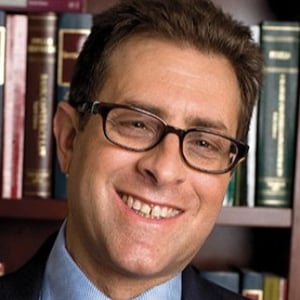
Jacob D. Fuchsberg Professor of Law, New York University School of Law
Professor Friedman is one of the country’s leading authorities on constitutional law and the federal courts. He is a prolific scholar, working at the intersections of law, politics and history. Friedman teaches a wide variety of courses including Constitutional Law, Federal Courts, and Criminal Procedure. He writes extensively about judicial review, constitutional law and theory, federal jurisdiction and judicial behavior. His scholarship appears regularly in the nation’s top law and peer-edited reviews. He is the author of widely-recognized The Will of the People: How Public Opinion Has Influenced the Supreme Court and Shaped the Meaning of the Constitution (Farrar, Strauss & Giroux, 2009), which examines the history of the relationship between popular opinion and the Supreme Court, from 1776 to the present. Along with his co-author Stephen Burbank, Friedman co-edited and contributed to Judicial Independence at the Crossroads: An Interdisciplinary Approach, which questions common assumptions about the nature of judicial independence and how it can be protected. The book has been cited and relied upon countless times by scholars and policymakers alike. Professor Friedman is a frequent contributor to the nation's leading journals, both on-line and print. His work has appeared in The New York Times, Salon, The Los Angeles Times, Politico andThe New Republic, among others.
Professor Friedman is a frequent speaker at events of all sorts. Given the interdisciplinary nature of his work, Professor Friedman regularly appears at conferences in law, political science and history. He is a founder and co-convener of the “roughly biennial” Constitutional Theory Conference. He organizes many multi-disciplinary conferences, including one on Modeling Law, and another – done under the auspices of the American Constitution Society – on Reconstruction: America’s Second Founding. He presents papers regularly at home and abroad. He has been a visiting scholar and lecturer at the Rockefeller Foundation Study and Conference Center in Bellagio, Italy, the Groupe d’Etudes et de Recherches sur law Justice Constitutionnelle Aix-en-Provence, Sciences-Po in Aix-en-Provence, and Hong Kong University.
Professor Friedman regularly serves as a litigator or litigation consultant in a variety of matters in the federal and state courts. He has represented a wide range of clients, both public and private. Notably, he represents both civil liberties claimants and state and local governments. He has been active in the areas of reproductive rights, the jurisdictional allocation of cases between the federal and state courts, and the proper scope of the federal government’s commerce power. He has filed a number of amicus briefs with the U.S. Supreme Court.
Actively engaged in a range of important service activities, at NYU Professor Friedman created the Academic Careers Program and founded and is now co-director of the Furman Academic Program. Both programs are dedicated to preparing young scholars for academic careers. In the past he was extensively involved with the American Judicature Society, was President of the Tennessee Civil Liberties Union, served on the Board of the State and Local Legal Center, and on the steering committee of New York University’s Institute for Law and Society. He recently completed a term as Vice Dean of New York University School of Law.
Professor Friedman graduated from the University of Chicago and received his law degree magna cum laude from Georgetown University Law Center. He clerked for the Honorable Phyllis A. Kravitch of the U.S. Court of Appeals for the 11th Circuit and also worked as a litigation associate at Davis, Polk & Wardwell in Washington D.C. He was a professor at Vanderbilt Law School before joining the NYU faculty in 2000. In 1995 he won the Clarence Darrow Award from the ACLU of Tennessee for his work in defense of civil liberties.
J.D., Georgetown University Law Center, 1982
B.A., University of Chicago, 1978
Adjunct Professor, Fordham University School of Law
Ms. McAvoy is an attorney, a former federal prosecutor and former in-house counsel for financial institutions. She specializes in Anti-Money Laundering and Terrorist Financing issues. She is an adjunct professor at Fordham Law School and heads Fordham’s Adjunct Faculty Committee. Ms. McAvoy has been politically active as well, including having run for the position of Comptroller of the City of New York as Rudy Giuliani’s running mate. She also was on John McCain’s NY Steering Committee and was Co-Chair of NY Women for McCain during his most recent presidential bid.
She obtained a Bachelor of Arts degree from St. John’s University in 1984, where she graduated summa cum laude as valedictorian and was NYS debate champion. Ms. McAvoy received a Juris Doctor degree from Fordham Law School in 1987 where she participated as a member of its National Moot Court team.
Ms. McAvoy began practicing law as a litigation associate at Mudge Rose Guthrie & Ferdon. After that she became an Assistant U.S. Attorney in the EDNY’s Civil and Criminal Divisions, where she received awards from both the U.S. Customs Service and the U.S. Department of Agriculture. She practiced in US District Court, the US Court of Appeals for the 2d Circuit, Surrogate’s Court and US Bankruptcy Court. Civil cases she handled included employment discrimination, forfeitures, medical malpractice, suits brought against government employees, Social Security disability, personal injury and tax cases. The criminal matters she handled included money laundering, bank robbery, mail fraud, illegal weapons sales, insurance fraud, credit card fraud, Food Stamp fraud, counterfeiting and narcotics violations.
After leaving the US Attorney’s Office, Ms. McAvoy became Senior Attorney at Morgan Stanley, where she was in charge of anti-money laundering prevention efforts and the reporting of suspicious activity. She also handled insider trading matters, fraud issues, general securities litigation and criminal matters. She received an award from the U.S. Secret Service for her work and as a member of the Securities Industry Ad Hoc Bank Secrecy Act Group she assisted the U.S. Treasury Department and the Federal Reserve Board in drafting suspicious activity regulations relating to the securities industry.
Ms. McAvoy thereafter joined Citigroup, where she was Senior Legal Counsel for Citigroup Corporate Security and Investigative Services, providing legal advice on fraud issues, corporate security, investigations and anti-money laundering compliance for Citigroup’s businesses, including Citibank, Travelers Insurance, Salomon Smith Barney and Primerica Financial Services.
Since 2000 Ms. McAvoy has been doing private consulting work for the financial industry. She has conducted extensive training for banks, securities firms, the NASD and law enforcement. She has also participated in internal corporate investigations and look-backs at financial institutions, has helped institutions develop appropriate policies and procedures and has acted as an expert consulting witness for law firms. She also continues to teach at Fordham Law School as an adjunct professor and remains active in politics.
Ms. McAvoy has provided legal, political and business commentary on a variety of television networks and on radio. She is a regular commentator on foxnews.com’s Strategy Room and has appeared on various programs on the Fox Cable News Channel including The O’Reilly Factor. She is a legal contributor for the Grinder Show on NY 970 The Apple, a nationally broadcast radio show which also streams live on the internet.
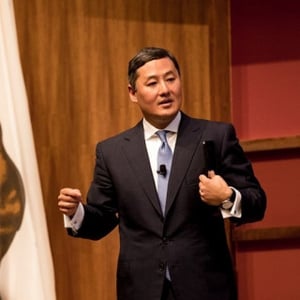
Emanuel S. Heller Professor of Law, University of California at Berkeley; Thomas Smith Senior Research Fellow, Civitas Institute, University of Texas at Austin
John Yoo is the Emanuel Heller Professor of Law at the University of California at Berkeley. He is also the Thomas Smith Senior Research Fellow, Civitas Institute, at the University of Texas at Austin. He is also a Nonresident Senior Fellow at the American Enterprise Institute.
His most recent book, The Politically Incorrect Guide to the Supreme Court, co-authored with Robert Delahunty, was published in 2023. Professor Yoo’s other books include Defender-in-Chief: Trump’s Fight for Presidential Power; Striking Power: How Cyber, Robots, and Space Weapons Change the Rules for War; Point of Attack: Preventive War, International Law, and Global Welfare; and Crisis and Command: A History of Executive Power from George Washington to George Bush.
He is a co-author of volumes 1 and 2 of R. Rossum, G. Tarr, V. Munoz & J. Yoo American Constitution Law (Routledge, 2026), and a co-editor of the eight-volume series on the 250th anniversary of the American Revolution, We Hold These Truths, with Yuval Levin and Adam White of the American Enterprise Institute.
Professor Yoo has published more than 100 articles in academic journals on subjects including national security, constitutional law, international law, and the Supreme Court. He also regularly contributes to the editorial pages of the Wall Street Journal, New York Times, Washington Post, Los Angeles Times, and National Review, among others.
Professor Yoo has served in all three branches of government. He was an official in the U.S. Department of Justice, where he worked on national security and terrorism issues after the 9/11 attacks. He served as general counsel of the U.S. Senate Judiciary Committee. He has been a law clerk for Supreme Court Justice Clarence Thomas and federal appeals Judge Laurence Silberman. He has been a visiting professor at the University of Texas at Austin’s School of Civic Leadership, Seoul National University, the Interdisciplinary Center Herzliya, Keio University, Trento University, the University of Chicago, and the Free University of Amsterdam.
Professor Yoo supervises the Public Law and Policy Program and the California Constitution Center. He also serves on the boards of Founding Forward, the Washington Legal Foundation, the Pacific Legal Foundation, the Ulysses Grant Institute, the Federalist Society’s Separation of Powers and Federalism Division, the Universidad Cientifica del Sur Law School, and the Asia-Pacific Law Institute at Seoul National University. He is a winner of the Federalist Society’s Paul Bator award and the Heritage Foundation’s Edwin Meese III Originalism Lectureship.
Professor Yoo graduated from Yale Law School and summa cum laude from Harvard College.
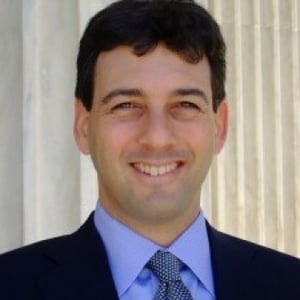
Vice President for Litigation, Institute for Free Speech
Alan joined the Institute for Free Speech as Vice President for Litigation in February 2021. In this role, Alan directs the Institute’s litigation and legal advocacy, leads our in-house legal team, and manages and works to expand our network of volunteer attorneys.
Prior to joining the Institute, Alan litigated complex federal matters for twenty years, in his own practice and as a partner in various Washington-area firms. He argued and won landmark constitutional cases in the United States Supreme Court and has appeared before numerous appellate and district courts throughout the country. Alan often speaks at law schools and continuing legal education seminars. He also teaches strategic/public interest litigation as an adjunct professor at the Georgetown University Law Center.
Alan began his career clerking for the Hon. Terrence W. Boyle, United States District Judge for the Eastern District of North Carolina. He has also served as a Deputy Attorney General for the State of California, a litigation associate at the Washington office of Sidley Austin, and as counsel to the United States Senate Judiciary Committee.
Alan earned his J.D. at Georgetown (1995) and his B.A. at Cornell University (1992). He is an active member in good standing of the Virginia, District of Columbia, and California bars, the Bar of the United States Supreme Court, and various federal appellate and district court bars.
Vice President for Litigation, Institute for Free Speech
Alan joined the Institute for Free Speech as Vice President for Litigation in February 2021. In this role, Alan directs the Institute’s litigation and legal advocacy, leads our in-house legal team, and manages and works to expand our network of volunteer attorneys.
Prior to joining the Institute, Alan litigated complex federal matters for twenty years, in his own practice and as a partner in various Washington-area firms. He argued and won landmark constitutional cases in the United States Supreme Court and has appeared before numerous appellate and district courts throughout the country. Alan often speaks at law schools and continuing legal education seminars. He also teaches strategic/public interest litigation as an adjunct professor at the Georgetown University Law Center.
Alan began his career clerking for the Hon. Terrence W. Boyle, United States District Judge for the Eastern District of North Carolina. He has also served as a Deputy Attorney General for the State of California, a litigation associate at the Washington office of Sidley Austin, and as counsel to the United States Senate Judiciary Committee.
Alan earned his J.D. at Georgetown (1995) and his B.A. at Cornell University (1992). He is an active member in good standing of the Virginia, District of Columbia, and California bars, the Bar of the United States Supreme Court, and various federal appellate and district court bars.
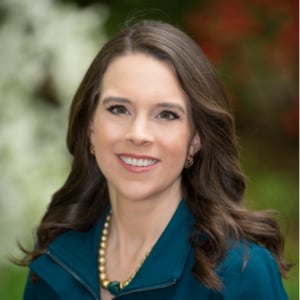
President, JCN
Carrie Campbell Severino is the president of the JCN, and co-author with Mollie Hemingway of the bestselling book Justice on Trial: The Kavanaugh Confirmation and the Future of the Court. As a go-to expert on the confirmation process, Mrs. Severino has been extensively quoted in the media. She regularly appears on television, including FOX, CNN, MSNBC, C-SPAN, and ABC’s This Week.
Severino writes and speaks on a wide range of judicial issues, including the constitutional limits on government, the federal nomination process, and state judicial selection. She has testified before Congress on constitutional questions and briefed Senators on judicial nominations, and regularly files briefs in high-profile Supreme Court cases. She was a law clerk to Supreme Court Justice Clarence Thomas and to Judge David B. Sentelle of the U.S. Court of Appeals for the D.C. Circuit, and is a graduate of Harvard Law School (J.D.), Duke University (B.A., Biology), and Michigan State University (M.A., Linguistics).
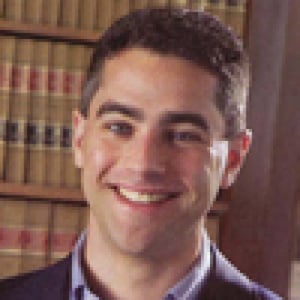
Associate Professor of Law, University of Colorado Law School
Scott Moss joined CU Law School in 2007 after six years as an attorney in New York City and three years as a professor at Marquette Law School, where he was the 2007 recipient of the James D. Ghiardi Faculty Award for Outstanding Teaching, Student Body Support, and Scholarship. In New York, Professor Moss was a law clerk to U.S. District Judge Constance Baker Motley and then a plaintiff's employment lawyer at Outten & Golden LLP, the largest plaintiff-side employment law practice in the country, where he litigated individual and class action cases of discrimination, harassment, and minimum/overtime wage violations. He also has argued and briefed appeals of employment cases and has undertaken pro bono projects such as First Amendment right-to-protest litigation with the New York Civil Liberties Union, low-income worker clinics in lower Manhattan, and court-sponsored mediations for pro se litigants. Professor Moss received his J.D. (magna cum laude) in 1998 from Harvard Law School, where he was a Senior Editor of the Harvard Civil Rights-Civil Liberties Law Review; his B.A. (Economics) and M.A. (Media Studies) are from Stanford University. Professor Moss's research interests have included employment law, discrimination, constitutional law, various civil procedure rules, and economic analysis of all of the preceding topics.
B.A., Stanford
M.A., Stanford
J.D., Harvard
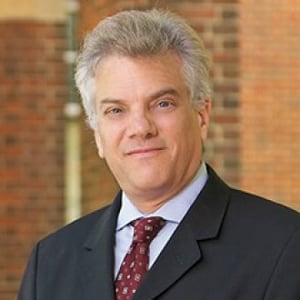
Sudler Family Professor of Constitutional Law, New York University School of Law
Richard H. Pildes is one of the nation’s leading scholars of constitutional law and a specialist in legal issues affecting democracy. He is a Member of the American Academy of Arts and Sciences and the American Law Institute, and has received recognition as a Guggenheim Fellow and a Carnegie Scholar. His acclaimed casebook, The Law of Democracy: Legal Structure of the Political Process (now in its fourth edition), helped create an entirely new field of study in the law schools. The Law of Democracy systematically explores legal and policy issues concerning the structure of democratic elections and institutions, such as the role of money in politics, the design of election districts, the regulation of political parties, the design of voting systems, the representation of minority interests in democratic institutions, and similar issues. He has written extensively on the rise of political polarization in the United States, the Voting Rights Act, the dysfunction of America’s political processes, the role of the Supreme Court in overseeing American democracy, the powers of the American President and Congress, and he has criticized excessively “romantic” understandings of democracy. In addition to his scholarship on these issues, he has written on national-security law, the design of the regulatory state, and American constitutional history and theory.
Respect for his expertise in these areas is reflected in frequent citations of his work in U.S. Supreme Court opinions, the translation of his work into many languages, and his frequent public lectures and appearances around the world, including his nomination with the NBC News Team for an Emmy Award for coverage of the 2000 Presidential election litigation.
His work has been translated and published in Chinese, French, Spanish, and Portuguese. In addition to his scholarship, Professor Pildes plays an active role litigating in these areas. He has won two cases before the United States Supreme Court, including a 2015 victory in Alabama Democratic Conference v. Alabama, a case involving race and redistricting. He served as counsel to a group of former chairmen of the Securities and Exchange Commission in litigation defending the constitutionality of the Sarbanes-Oxley Act; as counsel in election litigation to the Puerto Rico Electoral Commission; as counsel to the government of Puerto Rico; as a federal court-appointed independent expert on voting rights litigation; and as counsel in successful Supreme Court litigation that challenged the way the United States Tax Court operated. He was also a senior legal advisor to the 2008 and 2012 campaigns of President Obama.
Pildes received his A.B. in physical chemistry summa cum laude from Princeton, and his J.D. magna cum laude from Harvard, where he served as Supreme Court Note Editor on the Harvard Law Review. He clerked for Judge Abner J. Mikva of the U.S. Court of Appeals for the District of Columbia Circuit and for Justice Thurgood Marshall of the U.S. Supreme Court. After practicing law in Boston, he began his academic career at the University of Michigan Law School, before joining the NYU School of Law in 2001.

Judge, United States Court of Appeals, Eighth Circuit
David Stras became a judge on the United States Court of Appeals for the Eighth Circuit on January 31, 2018. Before serving on the Eighth Circuit, Judge Stras was an Associate Justice of the Minnesota Supreme Court, a position he occupied from July 1, 2010 until his appointment to the Eighth Circuit.
Prior to becoming a judge, Stras was a member of the faculty of the University of Minnesota Law School from 2004 through 2010. He taught and wrote in the areas of federal courts and jurisdiction, constitutional law, criminal law, and law and politics.
Judge Stras received his Bachelor of Arts degree, with highest distinction, in 1995 and his Master of Business Administration in 1999, both from the University of Kansas. He also received his law degree from the University of Kansas School of Law in 1999, where he served as Editor-in-Chief of the Criminal Procedure Edition of the Kansas Law Review.
Following law school, Stras clerked for The Honorable Melvin Brunetti of the United States Court of Appeals for the Ninth Circuit and then for The Honorable J. Michael Luttig of the United States Court of Appeals for the Fourth Circuit.
From 2001 to 2002, he practiced white-collar criminal and appellate litigation with the Washington, D.C., office of Sidley Austin Brown & Wood. Following his year in practice, he clerked for The Honorable Clarence Thomas of the Supreme Court of the United States.
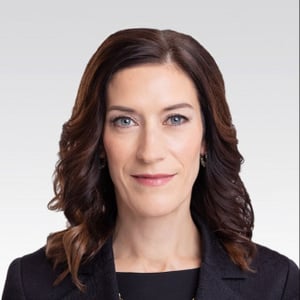
Executive Vice President of Global Governance, Chief Legal Officer and Corporate Secretary, Walmart Inc.
Rachel Brand is Walmart’s executive vice president of global governance, chief legal officer, and corporate secretary. She oversees the company’s global legal, compliance, ethics, corporate governance, digital citizenship, aviation, investigative, and corporate security functions, including Walmart’s Emergency Operations Center.
Immediately before joining Walmart, Rachel served as the United States Associate Attorney General and holds the distinction of being the first woman to serve in this role. She had previously served in the U.S. Department of Justice as the Assistant Attorney General for the Office of Legal Policy during President George W. Bush’s administration. Her other government service includes an appointment by President Obama to serve as a Member of the U.S. Privacy and Civil Liberties Oversight Board, service as an Associate Counsel to the President at the White House, and judicial clerkships with Justice Charles Fried of the Supreme Judicial Court of Massachusetts and Justice Anthony Kennedy at the Supreme Court of the United States. In the private sector, Rachel was a lawyer in private practice at two law firms in Washington, D.C. and served as the Vice President and Chief Counsel for Regulatory Litigation at the U.S. Chamber of Commerce Litigation Center.
Rachel serves on the board of directors for the Walmart Foundation and is the executive sponsor for Walmart’s Tribal Voices Associate Resource Group. Outside of Walmart, she serves on the board of directors for the International Justice Mission and is a member of The American Law Institute.
Rachel earned her Bachelor of Arts degree from the University of Minnesota-Morris and her J.D. from Harvard Law School.
Professor of Law, William S. Richardson School of Law, University of Hawai`i
He has engaged in important litigation on constitutional rights in the state and federal courts of Hawai`i as well as the U.S. Court of Appeals for the Ninth Circuit, the Supreme Courts of the Federated States of Micronesia, the Marshall Islands, and Palau, and the Administrative Tribunal of the Asian Development Bank. He has served as a consultant for the South Pacific Regional Environmental Programme, the Permanent South Pacific Commission, the Association of Pacific Island Legislatures, the governments of Turkey, Vanuatu, and Nauru, the Office of Hawaiian Affairs, the State Council of Hawaiian Homestead Associations, the City and County of Honolulu, the County Council and Charter Commission of Maui, and the Planning Departments or Commissions of the Counties of Kaua`i, Maui, and Hawai`i. He is a member of the editorial boards of Marine Policy and The International Journal of Marine and Coastal Law, and is on the advisory board of the Center for International Environmental Law and the Law of the Sea Institute. In 1987, he received the University of Hawai`i Presidential Citation for Excellence in Teaching; and in 1984, 1993, 1996, and 2002 he was selected as the Outstanding Professor at the Law School.
Counsel to Senator Jeff Sessions, Senate Judiciary Committee
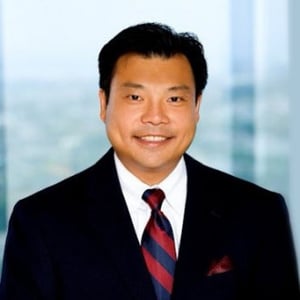
Attorney and Legal Commentator
John Shu is an attorney and legal commentator. His focus areas include constitutional law, securities & corporate law, antitrust law, administrative law, politics, and international affairs. Mr. Shu has lectured and published on a wide variety of issues.
Mr. Shu served President George H.W. Bush and President George W. Bush. He also served Judge Stanley Sporkin, U.S. District Court for the District of Columbia, who was Director of Enforcement at the U.S. Securities & Exchange Commission and General Counsel at the Central Intelligence Agency, and Judge Paul Roney, U.S. Court of Appeals for the Eleventh Circuit, who was Presiding Judge of the Foreign Intelligence Surveillance Court of Review.
Mr. Shu is a member of the National Committee on U.S. - China Relations, the Pacific Council on International Policy, and the Foreign Policy Association.

The Senate’s Role in the Nomination and Confirmation Process: Whose Burden?
Orlando, FloridaIs There a Constitutional Right to Same-Sex Marriage?
St. Louis, MissouriWhat’s Right (and Wrong) with the Confirmation Process . . . And Elena Kagan
New York, New YorkJustice Stevens’ Retirement & Filling the Vacancy
Carrie Campbell Severino, Scott Moss, Richard H. Pildes, David R. Stras
Updated: 9 AM, May 5, 2010 On Friday, April 9, 2010, Justice John Paul Stevens...
Executive Power
McDonald v. Chicago: Does the Second Amendment Second Amendment Apply to State and Local Governments Through the 14th Amendment?
Orlando, FloridaReauthorization of the USA PATRIOT Act
Rachel L. Brand
Brought to you by the International & National Security Law Practice GroupEDITOR'S NOTE: The final paragraph below, appearing...
The Right to Bear Arms: From Heller to Recent NC Developments
The Akaka Bill
Jon M. Van Dyke, Joseph Matal, John Shu
The Native Hawaiian Government Reorganization Act of 2009, or the Akaka Bill, would authorize a...
Reflections on the Sotomayor Nomination
Pittsburgh, Pennsylvania