

Editor-in-Chief, Harvard Journal of Law & Public Policy
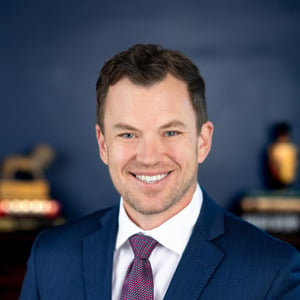
President and Co-Founder, America First Legal Foundation
Gene Hamilton is the President of America First Legal, which he co-founded, and where he was previously the Executive Director, Executive Vice President, and General Counsel. He most recently served as Deputy White House Counsel to President Donald Trump. Earlier in his career, Gene served as Counselor to Attorney General at the U.S. Department of Justice and as Senior Counselor to the Secretary of Homeland Security. He also served as General Counsel on the Senate Judiciary Committee and held several roles at the Department of Homeland Security, including with U.S. Immigration Enforcement, U.S. Customs and Border Protection and the Office of the General Counsel. He holds a B.A. from the University of Georgia and a J.D. from Washington and Lee University School of Law.

Judge, United States Court of Appeals, Second Circuit
Judge Menashi was appointed to the U.S. Court of Appeals for the Second Circuit on November 14, 2019. Previously, he served as special assistant and associate counsel to the President in the White House and as acting general counsel at the U.S. Department of Education. He was assistant professor of law at Scalia Law School, George Mason University, where he taught administrative law and civil procedure, and a research fellow at New York University School of Law and Georgetown University Law Center. He was also a partner at Kirkland & Ellis LLP in New York, where he practiced appellate and commercial litigation, and served as a law clerk to Justice Samuel Alito on the Supreme Court of the United States and to Judge Douglas Ginsburg on the U.S. Court of Appeals for the District of Columbia Circuit. He graduated from Stanford Law School, where he was elected to Order of the Coif and served as senior articles editor of the Stanford Law Review, and from Dartmouth College, where he was elected to Phi Beta Kappa.
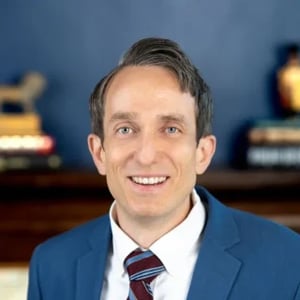
Senior Counsel, America First Legal Foundation
James Rogers is Senior Counsel at America First Legal Foundation, where he litigates in a number of areas, including border security, election integrity, parental rights, and administrative and constitutional law. Before joining America First Legal, from 2021 to 2022, he was Senior Litigation Counsel at the Solicitor General’s Office of the Arizona Attorney General’s Office. While there, he spearheaded lawsuits against the Biden Administration’s destructive open borders policies and its COVID19 vaccine mandates. From 2015 to 2021, James was a Foreign Service Officer at the U.S. Department of State, where he worked in the Office of the Assistant Legal Advisor for Consular Affairs, at the U.S. Consulate in Porto Alegre, Brazil, and at the U.S. Embassy in Windhoek, Namibia.
Prior to joining the Department of State, he was a commercial litigation partner at Osborn Maledon, a Phoenix-based firm with a #1 litigation ranking from Chambers and Partners. James earned a J.D. from Harvard Law School in 2009, an L.L.M. in International Law from the University of Cambridge in 2008, and a B.A., with honors, in International Studies from Brigham Young University in 2005. He is a sixth-generation Arizonan and lives in Mesa, Arizona, with his four children.
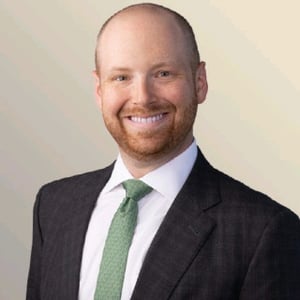
Solicitor General, Iowa Office of the Attorney General
Eric Wessan serves as Iowa’s Solicitor General in the Iowa Attorney General’s Office. In that role, Wessan leads Iowa’s litigation before State and federal appellate courts, including the Iowa and U.S. Supreme Courts. Before that role, Wessan worked on complex commercial litigation at two large law firms in Chicago. Wessan also served as a law clerk for the Honorable James C. Ho on the U.S. Court of Appeals for the Fifth Circuit and for the Honorable John F. Kness on the U.S. District Court for the Northern District of Illinois. Wessan is a graduate of the University of Chicago Law School, with honors, and of the University of Chicago.

Director, Robert A. Levy Center for Constitutional Studies, Cato Institute
Thomas Berry is the director in the Cato Institute’s Robert A. Levy Center for Constitutional Studies and editor in chief of the Cato Supreme Court Review. Before joining Cato, he was an attorney at Pacific Legal Foundation and clerked for Judge E. Grady Jolly of the U.S. Court of Appeals for the Fifth Circuit. His academic work has appeared in NYU Journal of Law and Liberty, Washington and Lee Law Review Online, and Federalist Society Review. His popular writing has appeared in The Wall Street Journal, National Law Journal, Investor’s Business Daily, National Review Online, and The Hill Online. He has testified before the U.S. Senate, and his work has been cited by the U.S. District Court for the District of Columbia.
Berry holds a J.D. from Stanford Law School, where he was a senior editor on the Stanford Law and Policy Review and a Bradley Student Fellow in the Stanford Constitutional Law Center. He graduated with a B.A. in Liberal Arts from St. John’s College, Santa Fe.
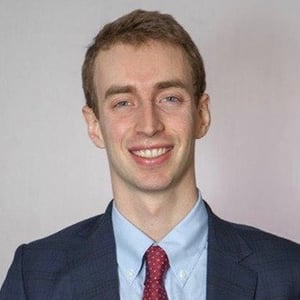
Partner, Boyden Gray PLLC
Jimmy Conde is partner at Boyden Gray PLLC, specializing in energy, environmental, and administrative law, with particular expertise in the Clean Air Act. He has protected clients against agency overreach in cutting-edge and complex legal proceedings, including challenges to EPA, DOE, DOT, and California rules seeking to compel electrification of motor vehicles, the FCC’s universal service fund, Department of Labor Wage & Hour Division rules, and HHS rules interfering with the practice of medicine and sound insurance practices. His written commentary has been published and referenced in the Wall Street Journal, the Washington Examiner, Concurrences (an antitrust publication), and Newsweek, among others.
Mr. Conde began his legal career as an associate with Boyden Gray PLLC. He clerked for Judge Douglas H. Ginsburg in the U.S. Court of Appeals for the D.C. Circuit and Judge David J. Porter in the U.S. Court of Appeals for the Third Circuit.
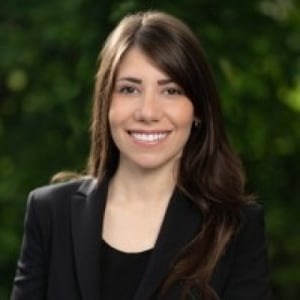
Associate Chief Counsel, U.S. Chamber Litigation Center, U.S. Chamber of Commerce
Maria C. Monaghan is associate chief counsel at the U.S. Chamber Litigation Center, the litigation arm of the U.S. Chamber of Commerce. In this capacity, she handles a variety of litigation matters for the Chamber.
Before joining the Litigation Center, Monaghan practiced as an associate in the D.C. office of Gibson, Dunn & Crutcher LLP. She represented clients in the telecommunications, energy, transportation, and e-commerce sectors, with a focus on appellate litigation and regulatory matters.
Monaghan served as a law clerk to the Honorable Samuel A. Alito of the United States Supreme Court, the Honorable Ed Carnes of the U.S. Court of Appeals for the Eleventh Circuit, and the Honorable Amul R. Thapar of the U.S. Court of Appeals for the Sixth Circuit. She graduated Order of the Coif from the University of Virginia School of Law, where she served as Articles Development Editor for the Virginia Law Review and participated in the Supreme Court Litigation Clinic. She received her undergraduate degree in Human Resource Management and Labor Studies from Rutgers University.
Senior Counsel, America First Legal Foundation
James Rogers is Senior Counsel at America First Legal Foundation, where he litigates in a number of areas, including border security, election integrity, parental rights, and administrative and constitutional law. Before joining America First Legal, from 2021 to 2022, he was Senior Litigation Counsel at the Solicitor General’s Office of the Arizona Attorney General’s Office. While there, he spearheaded lawsuits against the Biden Administration’s destructive open borders policies and its COVID19 vaccine mandates. From 2015 to 2021, James was a Foreign Service Officer at the U.S. Department of State, where he worked in the Office of the Assistant Legal Advisor for Consular Affairs, at the U.S. Consulate in Porto Alegre, Brazil, and at the U.S. Embassy in Windhoek, Namibia.
Prior to joining the Department of State, he was a commercial litigation partner at Osborn Maledon, a Phoenix-based firm with a #1 litigation ranking from Chambers and Partners. James earned a J.D. from Harvard Law School in 2009, an L.L.M. in International Law from the University of Cambridge in 2008, and a B.A., with honors, in International Studies from Brigham Young University in 2005. He is a sixth-generation Arizonan and lives in Mesa, Arizona, with his four children.
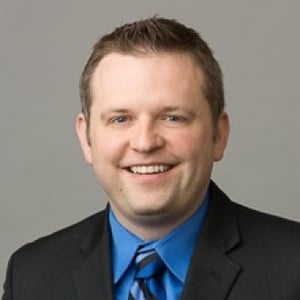
Partner, Marshall, Gerstein & Borun LLP
Ryan Schermerhorn is a registered patent attorney in the firm's Industrial & Mechanical Technologies Practice Group. His engineering background provides him with an understanding of clients’ technologies and enables him to effectively and efficiently provide a range of patent procurement services. He also leverages his experience to assist on intellectual property litigation as well as develop strategies for acquiring and protecting intellectual property.
Since 2017, Ryan has been listed as an "Emerging Lawyer" by Emerging Lawyers Magazine and has been selected for inclusion in the Illinois Rising Stars® lists. Ryan was recognized in Chicago Daily Law Bulletin's 2023 40 Under Forty list. Since 2024, Ryan has been selected for inclusion in The Best Lawyers in America© list in the practice areas of Litigation - Patent and Patent Law. In 2025, Ryan was selected by the Law Bulletin Publishing Company’s Leading Lawyer Network as a “Leading Lawyer.”

General Counsel, xAI and X
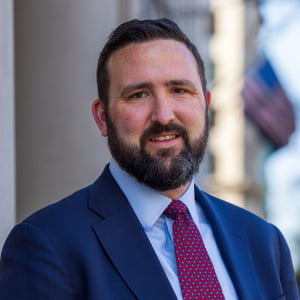
Partner, First & Fourteenth PLLC
Michael Francisco is a public and commercial litigator with extensive appellate experience who often serves as a strategic advisor to clients facing acute legal challenges. He has represented clients nationally for public impact litigation, bet-the-company lawsuits, and in defense of constitutional rights. Michael served as a law clerk to Supreme Court Justice Neil Gorsuch and Judge Timothy Tymkovich of the United States Court of Appeals for the Tenth Circuit.
Michael regularly takes on challenging matters where citizens must rely on the judiciary to vindicate their rights. His experience runs the gambit from successfully seeking injunctive relief, winning critical legal motions, defending judgments on appeal, overturning multi-million-dollar judgments, and obtaining discretionary high court review. He relishes the opportunity to develop a well-crafted legal strategy to solve the most novel and complex problems that may arise.
Michael has deep experience with political litigation representing candidates, voters, political parties, and advocacy organizations for ballot access, election administration, campaign finance, and for the unfortunate trend of criminalization of political activity.
After deciding to pursue a legal career to defend religious liberty, Michael has regularly engaged in constitutional litigation under the religion clauses and the free speech clause. He has been involved in many recent U.S. Supreme Court cases involving these core freedoms, including Groff v. DeJoy, 303 Creative v. Elenis, Masterpiece Cakeshop v. Colorado Civil Rights Commission, National Institute of Family & Life Advocates v. Becerra, Trinity Lutheran Church v. Pauley, and similar cases in lower courts on topics ranging from the ministerial exception, church property disputes, to religious land use disputes.
As an appellate advocate Michael frequently handles matters before the U.S. Supreme Court, federal courts of appeals, and Colorado appellate courts. He has argued four times before the Colorado Supreme Court and briefed 19 cases before the U.S. Supreme Court.
Michael also frequently advises clients on strategic public matters challenging federal government authority and overreach. He has regularly litigated business disputes, employment matters, as well as represented clients before state and federal administrative agencies or arbitration panels.
Prior to joining First & Fourteenth, Michael was a partner at McGuireWoods, LLP in Washington D.C., representing litigation, white collar, and government investigation clients.
At home Michael is married with four children and he enjoys many outdoor activities, ranging from competitive shooting to fixing his jeep.
President and Co-Founder, America First Legal Foundation
Gene Hamilton is the President of America First Legal, which he co-founded, and where he was previously the Executive Director, Executive Vice President, and General Counsel. He most recently served as Deputy White House Counsel to President Donald Trump. Earlier in his career, Gene served as Counselor to Attorney General at the U.S. Department of Justice and as Senior Counselor to the Secretary of Homeland Security. He also served as General Counsel on the Senate Judiciary Committee and held several roles at the Department of Homeland Security, including with U.S. Immigration Enforcement, U.S. Customs and Border Protection and the Office of the General Counsel. He holds a B.A. from the University of Georgia and a J.D. from Washington and Lee University School of Law.
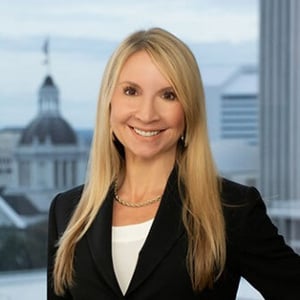
Clinical Professor and Director of the First Amendment Clinic, Florida State University College of Law
Denise Mayo Harle is a clinical professor and director of the First Amendment Clinic at FSU College of Law, where she leads student advocacy and litigation on free speech, religious liberty, and press freedom issues. Her teaching and scholarship focus on constitutional law, appellate practice, and First Amendment rights. Before entering academia, Professor Harle was a partner at Shutts & Bowen LLP in Tallahassee, where she was a member of the firm’s Appellate Practice Group and Constitutional Law Practice Area. Prior to that, she served as Deputy Solicitor General in the Office of the Florida Attorney General. Professor Harle has briefed and argued high-profile cases involving significant constitutional issues and questions of statutory interpretation in both state and federal courts, including the U.S. Supreme Court.
Professor Harle’s early career includes clerking for Justice Ricky L. Polston on the Florida Supreme Court and practicing appellate law in California. In 2022, she was selected as a finalist for a seat on the Florida Supreme Court. She was appointed by Governor Ron DeSantis to Florida’s Faith and Community Advisory Council and currently serves on the Judicial Nominating Commission for Florida’s Second Circuit. She was also selected for the prestigious U.S. Supreme Court Fellowship through the National Association of Attorneys General in 2017. She earned her J.D. cum laude from Duke University Law School and her B.A. and B.S. summa cum laude from Florida State University.
Professor Harle is active in the legal and academic communities. She is a member of the American Enterprise Institute’s Leadership Network and the Federalist Society’s Speakers Bureau. She has served on the board of Tallahassee Women Lawyers, the Florida Bar’s Client Security Fund Committee, and the First District Appellate American Inn of Court.
Before practicing law, Professor Harle completed doctoral coursework in Political Science at Stanford University as a Stanford Graduate Fellow, where she taught undergraduate courses on public policy, law, and American politics, and earned a Master’s degree. She continues to serve as a dissertation faculty advisor for Concordia University–St. Paul mentors doctoral students in research and writing.
A frequent speaker and media commentator on constitutional law, Professor Harle has been quoted in The Wall Street Journal, The Washington Post, and The New York Times, and has appeared on national outlets including C-SPAN and Fox News. She has also testified before the U.S. Senate on matters of constitutional significance.
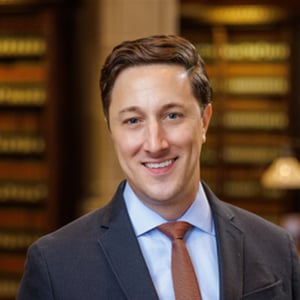
Professor of Law, Notre Dame Law School
Professor Derek Muller is a nationally-recognized scholar in the field of election law. His research focuses on the role of states in the administration of federal elections, the constitutional contours of voting rights and election administration, the limits of judicial power in the domain of elections, and the Electoral College.
He has published more than two dozen academic works, and his op-eds have appeared in the New York Times, the Los Angeles Times, and the Wall Street Journal. He has testified before Congress, and he is a contributor at the Election Law Blog. He is a co-author on a Federal Courts casebook published by Carolina Academic Press. He is also the co-reporter on a new Restatement of the Law, Election Litigation, an effort led by the American Law Institute.
Professor Muller teaches Election Law, Civil Procedure, and Evidence.
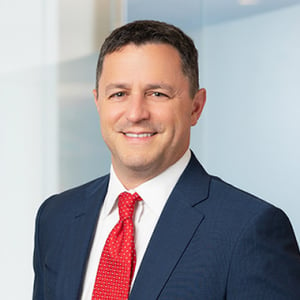
Partner, Dechert LLP
In a career spanning both private and public practice, Steven A. Engel is a leading litigator and counselor, acting as an advocate in high-profile trial and appellate matters and advising clients on their most sensitive and complex legal issues. Mr. Engel is the Chair of Dechert’s Appellate and Regulatory Litigation Group and has appeared in courts across the country, handling a wide range of civil litigation matters, including administrative law, commercial litigation, constitutional law and securities cases. He regularly counsels clients on challenges to agency regulations and in connection with government, congressional and internal investigations.
Until January 2021, Mr. Engel served as the Assistant Attorney General for the Department of Justice’s Office of Legal Counsel. As the head of the office, Mr. Engel served as the chief counsel to the Attorney General and the principal legal adviser to the Executive Branch, providing legal advice to the President and cabinet secretaries on the most critical constitutional and statutory questions, including matters pertaining to national security, administrative law, criminal law, congressional oversight, and executive orders. In December 2020, Mr. Engel was awarded the Department of Justice’s highest honor, the Edmund J. Randolph Award, for outstanding service to the Department.
Before his appointment as Assistant Attorney General in 2017, Mr. Engel had been a partner at Dechert since 2009 and previously served as Deputy Assistant Attorney General for the Department of Justice’s Office of Legal Counsel. Mr. Engel clerked on the U.S. Supreme Court for Associate Justice Anthony M. Kennedy and on the U.S. Court of Appeals for the Ninth Circuit for Judge Alex Kozinski.
Mr. Engel is a member of the Advisory Committee on Rules for the U.S. Court of Appeals for the District of Columbia Circuit and the Administrative Conference of the United States. He has been an Adjunct Professor at the Antonin Scalia School of Law at George Mason University and the Columbus School of Law at the Catholic University of America and was formerly the Chief Justice William H. Rehnquist Distinguished Practitioner in Residence at the C. Boyden Gray Center for the Study of the Administrative State. He has been nationally ranked as a leading lawyer in The Legal 500 USA and Benchmark Litigation. Mr. Engel has frequently commented on legal subjects in numerous publications, including The New York Times, The Washington Post, The Wall Street Journal and USA Today, and has appeared on national news programs as a legal analyst, including on MSNBC, CNN, Fox News Channel and the Fox Business Network. Mr. Engel has testified on several occasions before committees of the U.S. House of Representatives and the Senate.
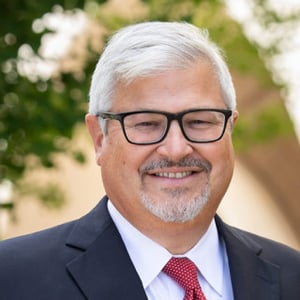
Learned Hand Professor of Law, Harvard Law School
Jack Goldsmith is the Learned Hand Professor of Law at Harvard Law School, a non-resident Senior Fellow at the American Enterprise Institute, and co-founder of Lawfare. He teaches and writes about presidential power, national security law, federal courts, conflict of laws, international law, and internet law. Before coming to Harvard, Professor Goldsmith served as Assistant Attorney General, Office of Legal Counsel from 2003-2004, and Special Counsel to the Department of Defense from 2002-2003. He was a Professor at the University of Chicago Law School from 1997-2002, and at the University of Virginia School of Law from 1994-1997. Before entering the academy, Professor Goldsmith was an associate at Covington & Burling in Washington, D.C., from 1992-1994. He clerked for Supreme Court Justice Anthony M. Kennedy from 1990-1991, for Court of Appeals Judge J. Harvie Wilkinson from 1989-1990, and for Judge George Aldrich on the Iran-U.S. Claims Tribunal from 1991-1992. Professor Goldsmith received a B.A. from Washington and Lee University, a B.A. and M.A. from Oxford University, and a J.D. from Yale Law School.
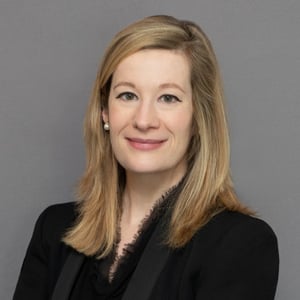
Partner, Williams & Connolly
Sarah Harris is a partner in Williams & Connolly’s Supreme Court and Appellate practice, where she represents clients in high-stakes appeals in the U.S. Supreme Court and federal and state appellate courts across the country. She has argued five cases before the U.S. Supreme Court, and she has presented many arguments in federal courts of appeals and state appellate courts. Her cases have run the gamut of substantive areas, including constitutional law—especially First Amendment and separation-of-powers issues—as well as administrative law, arbitration, class actions, antitrust, False Claims Act litigation, commercial litigation, and federal civil procedure.
Sarah is widely recognized for her appellate advocacy. Chambers USA has recognized her as “Up and Coming” in Appellate Law. She has been named to Bloomberg Law’s 40 Under 40 list of top lawyers nationwide and to Benchmark Litigation’s “40 & Under Hot List,” as well as a an appellate “Rising Star” by The National Law Journal and Law360, a “Next Generation Lawyer” by The Legal 500, and as one of Bloomberg Law’s “Five Fresh Faces to Know in Appellate.”
Sarah clerked for Justice Clarence Thomas on the Supreme Court of the United States, Judge Laurence Silberman on the United States Court of Appeals for the D.C. Circuit, and Judge Sandra Lynch on the United States Court of Appeals for the First Circuit. Before joining Williams & Connolly, she served as a Deputy Assistant Attorney General in the Department of Justice’s Office of Legal Counsel.
Sarah received her undergraduate degree summa cum laude from Princeton University, and her J.D. magna cum laude from Harvard Law School. She also holds a Ph.D. and M. Phil. from the University of Cambridge.

Judge, United States Court of Appeals, Sixth Circuit
Judge Readler earned his undergraduate and law degrees from the University of Michigan. After graduating, he served as a law clerk to Judge Alan Norris of the United States Court of Appeals for the Sixth Circuit. Judge Readler then began practicing law in the Columbus office of the international law firm Jones Day, eventually spending ten years as a partner in the firm’s Issues and Appeals Practice Group. While at Jones Day, Judge Readler appeared in state and federal trial and appellate courts around the country, most frequently the Supreme Court of Ohio and the Sixth Circuit. Judge Readler also successfully argued before the United States Supreme Court in McQuiggin v. Perkins on behalf of an inmate claiming actual innocence. His other pro bono representations include representing capital defendants before the Tenth Circuit and the Supreme Court of Ohio, as well as representing defendants sentenced to life in prison before the Sixth Circuit. While at Jones Day, Judge Readler traveled to Nairobi with Lawyers Without Borders to train Kenyan lawyers in prosecuting domestic violence cases, and he was also a recipient of the American Marshall Memorial Fellowship awarded by the German Marshall Fund of the United States. Following his career in private practice, Judge Readler served as Acting Assistant Attorney General for the Civil Division of the United States Department of Justice from 2017 to 2019. In that role, Judge Readler led and supervised over 1,000 lawyers in the Department’s largest litigating division, briefing and arguing several cases on behalf of the United States in federal courts across the country, including high-profile cases significant to the Administration and the Department. In March 2019, Judge Readler was confirmed to serve as a Circuit Judge on the Sixth Circuit. He resides in Columbus.
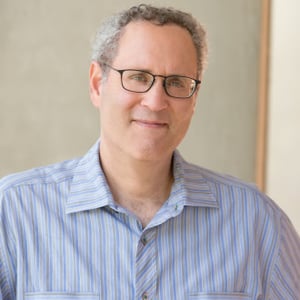
Burton Craige Distinguished Professor of Jurisprudence, UNC School of Law
Michael Gerhardt joined the Carolina Law faculty in 2005 and serves as the Burton Craige Distinguished Professor of Jurisprudence. His teaching and research focuses on constitutional conflicts between presidents and Congress. Gerhardt is the author of six books, including leading treatises on impeachment, appointments, presidential power, Supreme Court precedent, and separation of powers. He has written more than a hundred law review articles and dozens of op eds in the nation’s leading news publications, including SCOTUSblog, The New York Times, and Washington Post. His book, The Forgotten Presidents (Oxford University Press 2013), was named by The Financial Times as one of the best non-fiction books of 2013. He was inducted into the American Law Institute in 2016. Gerhardt attended the University of Chicago Law School, where he graduated order of the coif and served as a research assistant to both Phil Kurland and Cass Sunstein and as one of the two student editors of The Supreme Court Review. After law school, he clerked for Chief District Judge Robert McRae of the U.S. District Court of the Western District of Tennessee and Judge Gilbert Merritt of the U.S. Court of Appeals for the Sixth Circuit. He served as Deputy Media Director of Al Gore’s first Senate campaign, practiced law for three years for two boutique litigation firms in Washington and Atlanta, and taught for more than a decade at William & Mary Law School before joining Carolina Law.
Gerhardt’s extensive public service has included his testifying more than a dozen times before Congress, including as the only joint witness in the Clinton impeachment proceedings in the House; speaking behind closed doors to the entire House of Representatives about the history of impeachment in 1998; and serving as special counsel to the Senate Judiciary Committee for seven of the nine sitting Supreme Court justices. In 2015, he became the first legal scholar to be asked by the Library of Congress to serve as its principal adviser in revising the official United States Constitution Annotated. In 2019, the Order of the Coif named Gerhardt as its Distinguished Visitor for 2020, an award given to only one law professor each year for outstanding legal scholarship.

Professor of Law, Antonin Scalia Law School, George Mason University
ILYA SOMIN is Professor of Law at George Mason University and the B. Kenneth Simon Chair in Constitutional Studies at the Cato Institute. His research focuses on constitutional law, property law, democratic theory, federalism, and migration rights. He is the author of Free to Move: Foot Voting, Migration, and Political Freedom (Oxford University Press, revised and expanded edition, 2022), Democracy and Political Ignorance: Why Smaller Government is Smarter (Stanford University Press, revised and expanded second edition, 2016), and The Grasping Hand: Kelo v. City of New London and the Limits of Eminent Domain (University of Chicago Press, 2015, rev. paperback ed., 2016), coauthor of A Conspiracy Against Obamacare: The Volokh Conspiracy and the Health Care Case (Palgrave Macmillan, 2013), and co-editor of Eminent Domain: A Comparative Perspective (Cambridge University Press, 2017). Democracy and Political Ignorance has been translated into Italian and Japanese.
Somin’s work has appeared in numerous scholarly journals, including the Yale Law Journal, Stanford Law Review, Northwestern University Law Review, Georgetown Law Journal, Critical Review, and others. Somin has also published articles in a variety of popular press outlets, including the New York Times, Washington Post, Wall Street Journal, Los Angeles Times, CNN, NBC, The Atlantic, USA Today, Boston Globe, US News and World Report, South China Morning Post, National Law Journal and Reason. He has been quoted or interviewed by the New York Times, Washington Post, Wall Street Journal, Time, Newsweek, The Economist, the Christian Science Monitor, the Financial Times, The Guardian, the Associated Press, CBS, MSNBC, NPR, BBC, Reuters, the Canadian Broadcasting Corporation, the Australian Broadcasting Corporation, Radio Free Europe/Radio Liberty, Al Jazeera, and the Voice of America, among other media.
Somin’s writings have been cited in decisions by the United States Supreme Court, multiple state supreme courts and lower federal courts, and the Supreme Court of Israel. He is co-counsel for the plaintiffs in VOS Selections, Inc. v. Trump, a case challenging the constitutionality of President Trump’s “Liberation Day” tariffs. Somin has testified on the use of drones for targeted killing in the War on Terror before the US Senate Judiciary Subcommittee on the Constitution, Civil Rights, and Human Rights. In 2009, he testified on property rights issues at the United States Senate Judiciary Committee confirmation hearings for Supreme Court Justice Sonia Sotomayor. Somin writes regularly for the popular Volokh Conspiracy law and politics blog, now affiliated with Reason magazine (previously affiliated with the Washington Post from 2014 to 2017). From 2006 to 2013, he served as Co-Editor of the Supreme Court Economic Review, one of the country’s top-rated law and economics journals.
Somin has served as a visiting professor at the University of Pennsylvania Law School. He has also been a visiting professor or scholar at the Georgetown University Law Center, the University of Hamburg, Germany, the University of Torcuato Di Tella in Buenos Aires, Argentina, Uriel Reichman University in Israel, and Zhengzhou University in China. He is a University Affiliate of the Schar School of Policy and Government at George Mason University, and an affiliated faculty member of the George Mason University Institute for Immigration Research. Before joining the faculty at George Mason, Somin was the John M. Olin Fellow in Law at Northwestern University Law School in 2002-2003. In 2001-2002, he clerked for the Hon. Judge Jerry E. Smith of the U.S. Court of Appeals for the Fifth Circuit. Professor Somin earned his B.A., Summa Cum Laude, at Amherst College, M.A. in Political Science from Harvard University, and J.D. from Yale Law School.
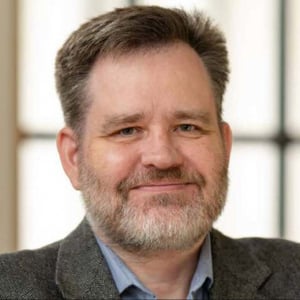
David Boies Professor of Law, Yale Law School
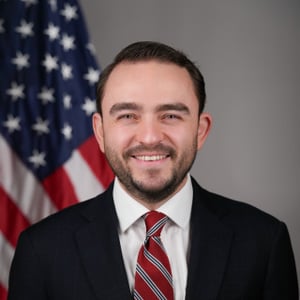
Associate Counsel to the President, White House Counsel's Office
Samuel Adkisson serves as Associate Counsel to the President in the White House Counsel’s Office.
Mr. Adkisson previously practiced law at Cooper & Kirk PLLC, where he focused on high-stakes civil-rights, political, and constitutional disputes. His matters included class actions challenging the FAA’s race-based air traffic controller hiring practices and the University of Oklahoma’s financial aid policies; appellate work on behalf of X Corp.; and the successful defense of Florida’s actions during a 2024 abortion referendum. Before joining Cooper & Kirk, he worked on the landmark case challenging Harvard’s affirmative action policies and helped launch a successful challenge to the State Bar of Texas’s membership policies.
Mr. Adkisson clerked for Chief Justice of the United States John G. Roberts, Jr., Judge Amul R. Thapar of the U.S. Court of Appeals for the Sixth Circuit, and Judge Gregory G. Katsas of the U.S. Court of Appeals for the D.C. Circuit. During Justice Kavanaugh’s confirmation hearings, he worked for Chairman of the Senate Judiciary Committee Charles E. Grassley.
Mr. Adkisson received his J.D. from Yale Law School, where he was President of the Yale Law School Federalist Society and an editor of the Yale Law Journal. He graduated summa cum laude from Vanderbilt University. Prior to joining the Trump Administration in January 2025, he lived on Signal Mountain, TN, with his wife and three children.

Partner, BakerHostetler, Adjunct Fellow, The Manhattan Institute
Andrew Grossman leads BakerHostetler’s Appellate and Major Motion team. He has appeared before the U.S. Supreme Court, nearly all the federal courts of appeals, as well as some state appellate courts, litigating high-profile and complex commercial, administrative and constitutional issues.
Andrew works with practice groups across BakerHostetler to identify and tackle complex issues, advise on administrative law and strategy, tee up issues for appeal and tackle appeals. He has developed and implemented litigation and administrative strategies for clients in several fields and industries.
In addition to his practice, Andrew advises members of Congress on matters of constitutional and administrative law, having testified more than a dozen times before the House and Senate Judiciary Committees. He has been a frequent legal commentator on radio and television, having appeared on Fox News, CNN, MSNBC, CNBC, NPR and its affiliates, CBN and elsewhere. His legal commentary has also appeared in dozens of magazines and newspapers, including The Wall Street Journal, USA Today, The Washington Post, The Washington Times and many others.
Andrew is a Senior Legal Fellow at the Buckeye Institute, an Adjunct Fellow the Manhattan Institute and a member of the leadership of the Federalist Society. He previously served as an adjunct scholar at the Cato Institute’s Robert A. Levy Center for Constitutional Studies and a legal fellow at the Heritage Foundation’s Meese Center for Legal and Judicial Studies. He clerked for Judge Edith H. Jones on the U.S. Court of Appeals for the Fifth Circuit.

Vice President for Legal Strategy, Stand Together
Casey Mattox is Vice President for Legal Strategy at Stand Together and Senior Advisor at
Americans for Prosperity. In these roles he advocates for and creates strategies and
partnerships to ensure a constitutionally limited government that protects the civil liberties of all
Americans. Prior to joining Stand Together and AFP Casey’s legal career focused on defending
the First Amendment rights of students, faculty, healthcare workers and religious organizations.
Casey has a J.D. from Boston College School of Law and an undergraduate degree from the
University of Virginia. You can find him on Twitter at @CaseyMattox_ and on LinkedIn at
@Casey-Mattox-ST.
Professor of Law, Antonin Scalia Law School, George Mason University
ILYA SOMIN is Professor of Law at George Mason University and the B. Kenneth Simon Chair in Constitutional Studies at the Cato Institute. His research focuses on constitutional law, property law, democratic theory, federalism, and migration rights. He is the author of Free to Move: Foot Voting, Migration, and Political Freedom (Oxford University Press, revised and expanded edition, 2022), Democracy and Political Ignorance: Why Smaller Government is Smarter (Stanford University Press, revised and expanded second edition, 2016), and The Grasping Hand: Kelo v. City of New London and the Limits of Eminent Domain (University of Chicago Press, 2015, rev. paperback ed., 2016), coauthor of A Conspiracy Against Obamacare: The Volokh Conspiracy and the Health Care Case (Palgrave Macmillan, 2013), and co-editor of Eminent Domain: A Comparative Perspective (Cambridge University Press, 2017). Democracy and Political Ignorance has been translated into Italian and Japanese.
Somin’s work has appeared in numerous scholarly journals, including the Yale Law Journal, Stanford Law Review, Northwestern University Law Review, Georgetown Law Journal, Critical Review, and others. Somin has also published articles in a variety of popular press outlets, including the New York Times, Washington Post, Wall Street Journal, Los Angeles Times, CNN, NBC, The Atlantic, USA Today, Boston Globe, US News and World Report, South China Morning Post, National Law Journal and Reason. He has been quoted or interviewed by the New York Times, Washington Post, Wall Street Journal, Time, Newsweek, The Economist, the Christian Science Monitor, the Financial Times, The Guardian, the Associated Press, CBS, MSNBC, NPR, BBC, Reuters, the Canadian Broadcasting Corporation, the Australian Broadcasting Corporation, Radio Free Europe/Radio Liberty, Al Jazeera, and the Voice of America, among other media.
Somin’s writings have been cited in decisions by the United States Supreme Court, multiple state supreme courts and lower federal courts, and the Supreme Court of Israel. He is co-counsel for the plaintiffs in VOS Selections, Inc. v. Trump, a case challenging the constitutionality of President Trump’s “Liberation Day” tariffs. Somin has testified on the use of drones for targeted killing in the War on Terror before the US Senate Judiciary Subcommittee on the Constitution, Civil Rights, and Human Rights. In 2009, he testified on property rights issues at the United States Senate Judiciary Committee confirmation hearings for Supreme Court Justice Sonia Sotomayor. Somin writes regularly for the popular Volokh Conspiracy law and politics blog, now affiliated with Reason magazine (previously affiliated with the Washington Post from 2014 to 2017). From 2006 to 2013, he served as Co-Editor of the Supreme Court Economic Review, one of the country’s top-rated law and economics journals.
Somin has served as a visiting professor at the University of Pennsylvania Law School. He has also been a visiting professor or scholar at the Georgetown University Law Center, the University of Hamburg, Germany, the University of Torcuato Di Tella in Buenos Aires, Argentina, Uriel Reichman University in Israel, and Zhengzhou University in China. He is a University Affiliate of the Schar School of Policy and Government at George Mason University, and an affiliated faculty member of the George Mason University Institute for Immigration Research. Before joining the faculty at George Mason, Somin was the John M. Olin Fellow in Law at Northwestern University Law School in 2002-2003. In 2001-2002, he clerked for the Hon. Judge Jerry E. Smith of the U.S. Court of Appeals for the Fifth Circuit. Professor Somin earned his B.A., Summa Cum Laude, at Amherst College, M.A. in Political Science from Harvard University, and J.D. from Yale Law School.

The Future of Birthright Citizenship: What’s Next After Trump v. Barbara (Part One)
Tiago de Almeida Graff, Gene P. Hamilton, Steven J. Menashi
On June 30, the Supreme Court held in Trump v. Barbara that nearly all children...
From the Courthouse Steps: Mullin v. Doe
James Rogers, Eric Wessan
In Mullin v. Doe, the Supreme Court ruled 6-3 in favor of the Trump administration,...
A Seat at the Sitting - April 2026
Thomas Berry, James Conde, Maria Monaghan, James Rogers, Ryan Schermerhorn
Each month, a panel of constitutional experts convenes to discuss the Court’s upcoming docket sitting...
Ethics or Ideology? Bar Associations and the Boundaries of Professional Discipline
James M. Burnham, Michael Francisco, Gene P. Hamilton, Denise M. Harle, Derek T. Muller
Across the country, bar associations are increasingly at the center of legal and political controversy....
Panel 3: The Future of Executive Power
Steven A. Engel, Jack L. Goldsmith, Sarah M. Harris, Chad A. Readler
In recent years the Supreme Court has decided critically important executive power and administrative law...
Topics
Do Ethics Rules Require DOJ Lawyers to Buck President Trump’s Executive Orders?
Shortly after his inauguration, President Trump issued several executive orders directing the Attorney General to...
Current & Future Uses of the Impeachment Power
Michael J. Gerhardt, Ilya Somin, Keith E. Whittington
Congress’s impeachment power has been used dozens of times since the republic’s founding, mostly for...
Topics
Is It Legal for the President to Send Troops to the Southern Border?
As America enters a presidential election year, the crisis at our southern border is an...
A Seat at the Sitting - December 2022
Samuel D. Adkisson, Andrew Grossman, Casey Mattox, Ilya Somin
Each month, a panel of constitutional experts convenes to discuss the Court’s upcoming docket sitting...
Topics
The Biden Administration’s Post-Dobbs, Post-Roe Response
On June 24, 2022, in a landmark decision in Dobbs v. Jackson Women’s Health Organization,...