
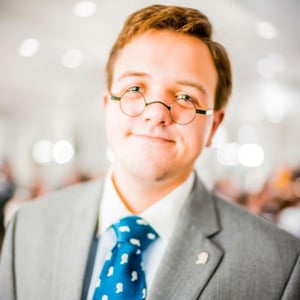
Adam Griffin is a graduate of the University of North Carolina School of Law. During law school, he served as a research assistant to Professor Stephen E. Sachs and UNC Law Dean Martin Brinkley. After law school, Adam spent two years litigating for liberty at the Institute for Justice as an inaugural Law and Liberty Fellow. He then served as a law clerk to Chief Judge Richard E. Myers in the United States District Court for the Eastern District of North Carolina, and previously worked at Pacific Legal Foundation and the Civil Rights Division of the Department of Justice.
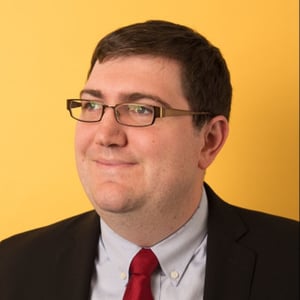
Attorney, Pacific Legal Foundation
Jeff McCoy is an attorney at Pacific Legal Foundation. Jeff joined PLF in 2017. Since then, he has focused his litigation on separation of powers and private property rights. Jeff also leads PLF’s coastal land rights initiative, which seeks to strengthen and defend statutory and constitutional protections for coastal property owners across the country.
Throughout his career, Jeff has worked for various organizations that promote individual liberty and limited government. Prior to joining PLF, Jeff was a staff attorney at Mountain States Legal Foundation in Lakewood, Colorado, for five years. His work at Mountain States included helping secure victory for a Wyoming private property owner in U.S. Supreme Court case Marvin M. Brandt Revocable Trust v. United States. Besides Mountain States, Jeff worked as an intern for the Cato Institute during the spring of 2008, and after his first year of law school, he worked as a Charles G. Koch Summer Fellow at the Institute for Justice’s Seattle office.
Jeff received his B.A. degree in political science and philosophy from the University of Colorado in 2007 and his law degree, also from the University of Colorado, in 2011. During his time at law school, Jeff had the honor of working as a judicial extern for then-Judge Neil Gorsuch at the U.S. Court of Appeals for the Tenth Circuit.
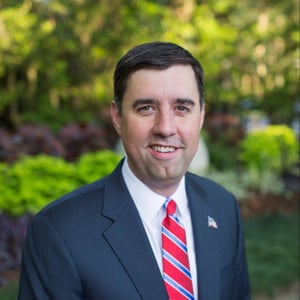
Associate Justice, Alabama Supreme Court
James L. “Jay” Mitchell was elected to the Alabama Supreme Court in 2018.
Prior to serving on the Supreme Court, Justice Mitchell was an accomplished litigation attorney with Maynard, Cooper & Gale, P.C. During his time in private practice, he tried a number of complex cases to verdict, successfully handled appeals, and obtained favorable settlements for clients. He was rated as one of the top litigators in the United States and Alabama, and received the highest possible rating for professional ethics. He also served on Maynard, Cooper & Gale’s executive committee, helping to lead strategic and growth initiatives for the firm.
Justice Mitchell was born in Mobile and grew up in South Alabama and in Homewood. He is a graduate of Homewood High School and received his Bachelor of Arts with honors from Birmingham-Southern College, where he graduated Phi Beta Kappa, served as president of the student body, and played forward on the school’s 1995 national championship basketball team. He holds a Master of Arts from University College in Dublin, Ireland, and received his law degree from the University of Virginia School of Law.
Justice Mitchell has long been active in organizations that benefit the community and enhance the legal profession. In addition to his service with other organizations, he is a member of the Rotary Club of Birmingham and serves on the board of directors at Cornerstone School, an inner city Christian school. He is also a member of the Federalist Society.
Justice Mitchell and his wife, Elizabeth, have been married for 20 years and have four children. They reside in Homewood and are longtime members of Church of the Highlands.
Adam Griffin is a graduate of the University of North Carolina School of Law. During law school, he served as a research assistant to Professor Stephen E. Sachs and UNC Law Dean Martin Brinkley. After law school, Adam spent two years litigating for liberty at the Institute for Justice as an inaugural Law and Liberty Fellow. He then served as a law clerk to Chief Judge Richard E. Myers in the United States District Court for the Eastern District of North Carolina, and previously worked at Pacific Legal Foundation and the Civil Rights Division of the Department of Justice.
Attorney, Pacific Legal Foundation
Jeff McCoy is an attorney at Pacific Legal Foundation. Jeff joined PLF in 2017. Since then, he has focused his litigation on separation of powers and private property rights. Jeff also leads PLF’s coastal land rights initiative, which seeks to strengthen and defend statutory and constitutional protections for coastal property owners across the country.
Throughout his career, Jeff has worked for various organizations that promote individual liberty and limited government. Prior to joining PLF, Jeff was a staff attorney at Mountain States Legal Foundation in Lakewood, Colorado, for five years. His work at Mountain States included helping secure victory for a Wyoming private property owner in U.S. Supreme Court case Marvin M. Brandt Revocable Trust v. United States. Besides Mountain States, Jeff worked as an intern for the Cato Institute during the spring of 2008, and after his first year of law school, he worked as a Charles G. Koch Summer Fellow at the Institute for Justice’s Seattle office.
Jeff received his B.A. degree in political science and philosophy from the University of Colorado in 2007 and his law degree, also from the University of Colorado, in 2011. During his time at law school, Jeff had the honor of working as a judicial extern for then-Judge Neil Gorsuch at the U.S. Court of Appeals for the Tenth Circuit.
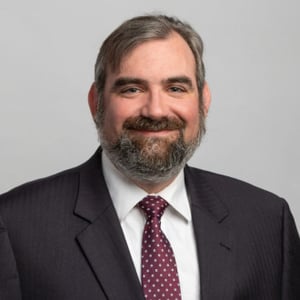
Senior Attorney, Institute for Justice
Robert Frommer serves as a senior attorney with the Institute for Justice. He joined the Institute in August 2008 and is currently litigating on behalf of SpeechNow.org, a group challenging the federal campaign finance laws regarding free speech.
Before joining IJ, Robert was an attorney with the Washington, D.C., office of Gibson, Dunn & Crutcher LLP, where he litigated both complex litigation and public-interest matters. He is a former law clerk to Judge Morris Sheppard Arnold of the U.S. Court of Appeals for the Eighth Circuit.
Robert received his law degree magna cum laude from the University of Michigan Law School in 2004, where he was elected to the Order of the Coif and served as both a book review editor for the Michigan Law Review and president of the Federalist Society student chapter. Before going to law school, Robert earned a master's degree in economics from George Mason University.
Adam Griffin is a graduate of the University of North Carolina School of Law. During law school, he served as a research assistant to Professor Stephen E. Sachs and UNC Law Dean Martin Brinkley. After law school, Adam spent two years litigating for liberty at the Institute for Justice as an inaugural Law and Liberty Fellow. He then served as a law clerk to Chief Judge Richard E. Myers in the United States District Court for the Eastern District of North Carolina, and previously worked at Pacific Legal Foundation and the Civil Rights Division of the Department of Justice.
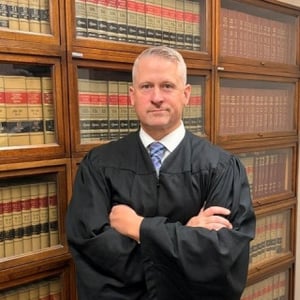
Judge, United States District Court, Northern District of Texas
Matthew J. Kacsmaryk serves as United States District Judge for the Northern District of Texas.
He previously served as (1) an Associate in the Dallas office of Baker Botts LLP, (2) an Assistant United States Attorney, and (3) Deputy General Counsel to FLI.
He is an Honors graduate of the University of Texas Law School.
In 2013, he earned the Attorney General’s Award for Excellence in Furthering the Interest of U.S. National Security.
In 2026, he was named Jurist of the Year by the Texas Review of Law & Politics, the conservative law review at the University of Texas.
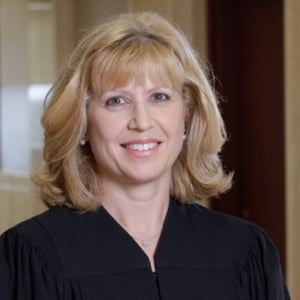
Chief Judge, United States District Court, New Jersey
Renée Marie Bumb is the Chief United States district judge of the United States District Court for the District of New Jersey.
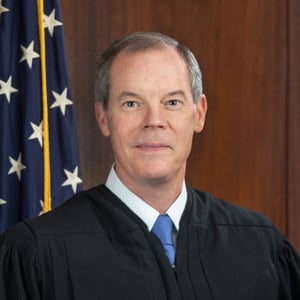
Chief Judge, United States District Court for the District of Delaware
Colm F. Connolly has served as a United States District Judge since August 3, 2018. He was a partner at Morgan Lewis & Bockius LLP from 2009 until he took the bench in 2018. He served as the United States Attorney for the District of Delaware from 2001 to 2009 and was an Assistant United States Attorney from 1993 to 1999. He was a partner with the firm of Morris, Nichols, Arsht & Tunnell from 1999 to 2001.
Judge Connolly was a law clerk for the Honorable Walter K. Stapleton of the United States Court of Appeals for the Third Circuit from 1991 to 1992. He hold degrees from the Duke University School of Law, the London School of Economics, and the University of Notre Dame.
Judge Connolly is a fellow of the American College of Trial Lawyers and a member of the American Law Institute.
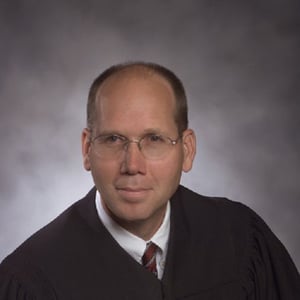
United States Circuit Judge, United States Circuit Court, Third Circuit
Kent A. Jordan was appointed in 2006 to serve as a United States Circuit Judge for the Third Circuit. Before that, Judge Jordan was a United States District Judge for the District of Delaware from 2002 to 2006. He received a B.A. in Economics in 1981 from Brigham Young University and a J.D. in 1984 from Georgetown University. He was an Assistant United States Attorney and head of the Civil Division in the U.S. Attorney’s Office for the District of Delaware. Later, he served as an officer and as a member of the boards of directors of privately held businesses and was a partner in a Wilmington, Delaware law firm. He is an Adjunct Professor of Law at the University of Pennsylvania and Vanderbilt University and currently serves as President of the Board of Trustees of the American Inns of Court Foundation, as well as on the boards of other non-profit organizations.
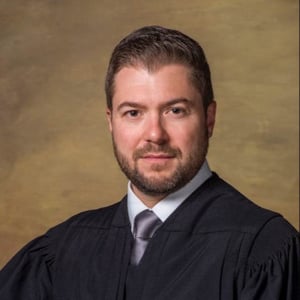
United States District Judge, United States District Court for the Western District of Pennsylvania
William Shaw Stickman IV was born in Pittsburgh, Pennsylvania in 1979 and grew up in the Mount Washington neighborhood of the city. Judge Stickman graduated as valedictorian from Our Lady of the Sacred Heart High School. He attended Duquesne University where he majored in the classics/ancient languages. Judge Stickman received his Bachelor of the Arts degree in 2002, summa cum laude, and was awarded the McAnulty College of Liberal Arts’ General Excellence Award (valedictorian).
Judge Stickman attended Duquesne University School of Law where he was a member of the Law Review. He graduated in 2005.
Judge Stickman began his legal career as a litigation associate in the Pittsburgh offices of Reed Smith LLP. He next served as a judicial law clerk to Chief Justice Ralph J. Cappy, of the Pennsylvania Supreme Court. Judge Stickman returned to the practice of law as an associate, and later a partner, of the Pittsburgh litigation boutique firm of Del Sole Cavanaugh Stroyd LLC. In practice, Judge Stickman represented a diverse array of clients in state and federal trial and appellate courts throughout the United States.
In 2011 Judge Stickman was appointed by the Pennsylvania Supreme Court to serve on the Pennsylvania Civil Procedural Rules Committee—a panel of lawyers and judges charged with aiding the Court in reviewing and revising Pennsylvania’s unique Rules of Civil Procedure. The Court appointed Judge Stickman to be Chair of the Committee in 2015.
Judge Stickman is active in legal scholarship. He is the author of a peer-reviewed publication on the ancient King’s Bench Jurisdiction of the Pennsylvania Supreme Court. He has served as a frequent guest lecturer on topics relating to legal procedure and history.
Judge Stickman was nominated to serve as a Judge of the Western District of Pennsylvania on May 13, 2019. He was confirmed by the Senate on July 31, 2019, and received his commission on August 5, 2019.
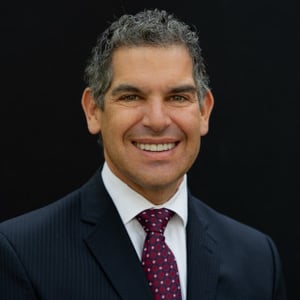
United States District Judge, Eastern District of Pennsylvania
Judge Wolson was nominated to the United States District Court for the Eastern District of Pennsylvania in May 2018 and was confirmed in May 2019. Judge Wolson earned his J.D., cum laude, from Harvard Law School, B.A., magna cum laude, from the University of Pennsylvania. After graduating from law school, he served as a law clerk for Hon. Jan E. DuBois of the U.S. District Court for the Eastern District of Pennsylvania. He then maintained a complex commercial litigation practice, first as an associate with Covington & Burling in Washington, D.C., and then as a partner with Dilworth Paxson in Philadelphia.
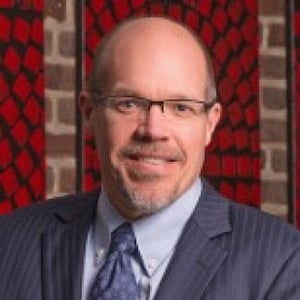
United States District Judge, Southern District of Ohio
Douglas R. Cole was nominated for the position in May 2019 by President Donald J. Trump and confirmed by the Senate in December 2019. Immediately before joining the bench, Judge Cole was a founding partner at Organ Cole, a litigation boutique in Columbus, Ohio.
Judge Cole received his J.D. from the University of Chicago Law School, where he graduated with High Honors and Order of the Coif, was an Olin Fellow in Law & Economics, and was a member of the editorial board of the University of Chicago Law Review. He clerked for Judge Frank H. Easterbrook on the United States Court of Appeals for the Seventh Circuit before joining Kirkland & Ellis in its Chicago office. He has served as a professor at the University of Oklahoma College of Law and at the Michael E. Moritz College of Law at The Ohio State University, where he taught in the fields of business law, law & economics, and intellectual property. From 2003-2006, he was the State Solicitor for the State of Ohio. In that capacity, he argued five cases at the United States Supreme Court, and multiple cases in the United States Court of Appeals for the Sixth Circuit and the Ohio Supreme Court. Before joining Organ Cole, Judge Cole was a litigation partner at the Columbus office of Jones Day, where he practiced in the Issues & Appeals group and the Intellectual Property group.
Judge Cole has undergraduate degrees in electrical engineering, mathematics, and physics, and worked as an electrical engineer before attending law school.
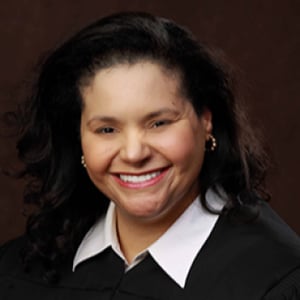
Judge, U.S. District Court, Northern District of Texas
Before joining the federal bench, Judge Brown served as a Judge on the Fifth Court of Appeals and on the Dallas County Criminal District Court in Dallas. Before joining the state bench, Judge Brown also served as an Assistant District Attorney for Dallas County, where she was a felony prosecutor for the Internet Crimes Against Children Unit. Judge Brown also practiced at McKool Smith in Dallas and was an adjunct professor of trial advocacy at SMU Dedman School of Law. She earned her BA, magna cum laude, from Spelman College, and her JD from Emory University School of Law.
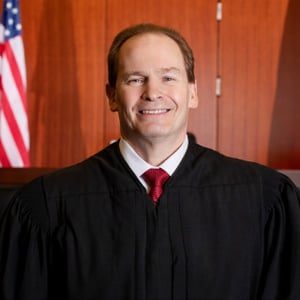
Judge, United States District Court for the Eastern District of Texas
Judge Sean Jordan is a federal district judge for the Eastern District of Texas, Sherman
Division. Prior to taking the bench, Judge Jordan worked on complex civil litigation and
appellate cases for twenty-five years in both government service and private practice.
He has managed the appellate sections of two large law firms and previously served as
Principal Deputy Solicitor General in the Office of the Solicitor General of Texas.
Judge Jordan received his B.A., summa cum laude, from the University of Texas at
Austin and his J.D., with honors, from the University of Texas School of Law. Prior to
attending UT Austin, he served in the U.S. Army as an infantryman and paratrooper in
the 82nd Airborne Division.
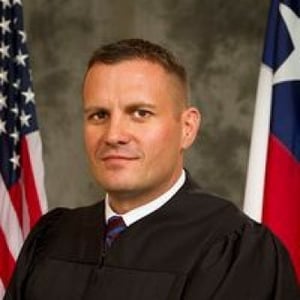
Judge, United States District Court for the Northern District of Texas
Immediately preceding his appointment to the federal bench, Judge Pittman was an Associate Justice on the Court of Appeals for the Second District of Texas since 2017. Prior to his appointment to the Court of Appeals, he served for two years on the trial bench of the 352nd Judicial District Court in Tarrant County.
Judge Pittman is also an experienced litigator, having served as an Enforcement Attorney at the U.S. Securities and Exchange Commission, where he also spent a year on special assignment prosecuting economic crimes as a Special Assistant U.S. Attorney. Prior to that, he was a Senior Attorney for the Federal Deposit Insurance Corporation, an Assistant U.S. Attorney for the Northern District of Texas, and a Trial Attorney in the Civil Division of the U.S. Department of Justice in Washington, D.C. He has also worked in private practice as a civil litigation attorney with Kelly, Hart and Hallman, LLP and served as a law clerk to United States District Judge Eldon B. Mahon in the Northern District of Texas, Fort Worth Division.
Judge Pittman received a Bachelor of Arts degree magna cum laude from Texas A&M University in 1996, and a Doctor of Jurisprudence degree from the University of Texas School of Law in 1999. While studying law, he clerked in the General Counsel’s Office of the Governor of Texas under Governor George W. Bush and was a founding member of the Texas Review of Law & Politics.
Judge Pittman is a former vice-president and founding member of the Fort Worth Chapter of the Federalist Society and a master of the Eldon B. Mahon Inn of Court. He serves on the Board of Ballet Concerto of Fort Worth and the Tarrant County Volunteer Attorney Services Committee and coaches youth sports at the YMCA. Judge Pittman, a history buff, is a member of the Fort Worth Civil War Roundtable and the A.M. Pate Book Award in Civil War History selection committee. A sixth generation Texan, he was born in Big Spring and raised in Cooper. He and his wife, Katrina, have been married fifteen years and are the parents of four children.
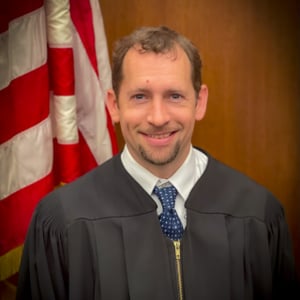
District Judge, United States District Court for the Northern District of Texas
Judge Brantley Starr was appointed to United States District Court for the Northern District of Texas in August 2019. Before his appointment, Judge Starr was the Deputy First Assistant Attorney General of Texas. Prior to that appointment, he served as Deputy Attorney General for Legal Counsel. From 2011 to 2015, Judge Starr served as career staff attorney to Texas Supreme Court Justice Eva Guzman. From 2008 to 2011, he practiced at King & Spalding, LLP. He served in the Office of the Solicitor General from 2006 to 2008. Prior to that, Judge Starr clerked for then-Justice Don Willett on the Texas Supreme Court after serving at the Office of the Attorney General. Judge Starr received his law degree from the University of Texas School of Law and his bachelor of arts degree from Abilene Christian University in 2001. Judge Starr has taught the Origins of the Constitution Class at the University of Texas law, Texas A&M law, and SMU law.

Courthouse Steps Decision: Wilkins v. United States
Adam F. Griffin, Jeffrey McCoy
On March 28, 2023, the Supreme Court handed down its decision in Wilkins v. United States....
Courthouse Steps Decision: Wilkins v. United States
TeleforumTextualism in Alabama
Jay Mitchell
Textualism is alive and well in Alabama. This interpretive doctrine teaches that legal texts have...
Topics
California’s Reparations Plan Founders on the Shoals of Law
No state has more aggressively advanced identitarian essentialism than California. In 2018, California passed a...
Litigation Update: United States v. Moore-Bush
Is long-term police use of a surveillance camera targeted at a person’s home and curtilage a Fourth Amendment search?
TeleforumTopics
Is a Ban on TikTok a Bill of Attainder?
The White House and a bipartisan group of congressional members have called for measures that...
Luncheon & Keynote Address
2023 Wisconsin Chapters Conference
Pewaukee, WIPanel 1: The Gatekeepers: Judicial Decision Making at the Federal District Courts
2023 Third Circuit Chapters Conference
Philadelphia, PAClosing Remarks
Columbus, OHViews from the Bench
Dallas Lawyers Chapters
Dallas, TX