
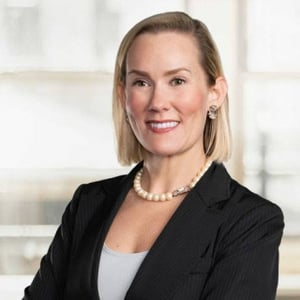
Senior Advisor, Burke Law Group
Anne Idsal Austin is an environmental health and safety attorney. Founder of Austin Legal & Public Affairs. Anne served in the highest ranks of state and federal government, where she shaped environmental and energy policy at the highest levels of government. She provides strategic counseling and policy guidance in the complex arenas of environmental and natural resources law. She handles complex environmental and natural resources litigation. Her experience includes air, water and waste governmental enforcement actions; citizen suits under RCRA, CERCLA, the Clean Water Act and the Clean Air Act; climate change litigation; toxic tort lawsuits involving chemical exposures, dust exposures and industrial accidents and toxic tort claims;.
Anne served as the principal deputy assistant administrator for the U.S. Environmental Protection Agency’s Office of Air & Radiation (OAR). In this role, she had a significant impact on U.S. clean air policy and regulation. Additionally, she served as the EPA Regional Administrator for Region 6, responsible for the implementation of federal environmental statutes and programs across Texas, Louisiana, Oklahoma, Arkansas, and New Mexico. Before serving in the federal government, Anne was the Chief Clerk and Deputy Land Commissioner for the Texas General Land Office and served as the general counsel for the Texas Commission on Environmental Quality.
Prior to joining Burke Law Group and founding Austin Legal & Public Affairs, Anne was environmental partner with an AMLAW100 firm, where she represented regulated clients to position them for success before state and federal regulatory agencies.
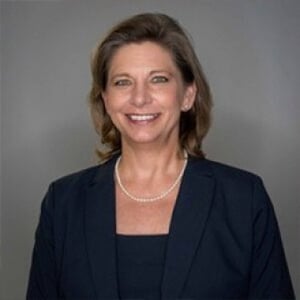
General Counsel, Senior Litigation Counsel, New Civil Liberties Alliance
Zhonette brings a quarter-century of litigation experience to NCLA. After a federal clerkship, she spent many years litigating at large law firms in Washington, D.C., and Denver, Colorado, before beginning public interest litigation in 2018.
Zhonette has litigated in state, federal, and international venues and in matters ranging from pro bono custody issues to multi-district and class action cases for Fortune 100 companies. Zhonette spent the first part of her career focused on high-stakes complex commercial litigation and white-collar defense. Since changing her legal practice to taming the Administrative State, Zhonette has focused on the Administrative Procedure Act, natural resources, takings issues and other constitutional claims.
Zhonette is a graduate of Georgetown University Law Center and is admitted to practice in the District of Columbia, the State of Colorado, the Commonwealth of Virginia, and various federal courts.
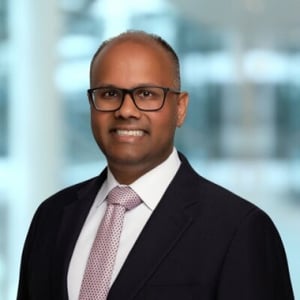
Partner, Holtzman Vogel Baran Torchinsky & Josefiak PLLC
Abhishek (Abhi) Kambli is a partner at Holtzman Vogel who represents clients in high-stakes appellate and complex litigation, constitutional challenges, and matters involving state attorneys general and federal agencies. He is one of a handful of lawyers nationally who has both led federal litigation from inside the Department of Justice and multi-state coalition work from a State Attorney General’s office—giving clients a 360-degree perspective on government enforcement, regulatory challenges, and constitutional advocacy.
Prior to joining Holtzman Vogel, Abhi served as Deputy Associate Attorney General at the United States Department of Justice, where he acted as lead counsel in high-priority matters for the Trump Administration, oversaw the Department’s civil components on behalf of the Associate Attorney General, advised the White House Counsel’s Office and federal agencies on litigation risk and strategy, and developed the Department’s national affirmative civil litigation strategy.
Earlier, he served as Deputy Attorney General and Division Chief of the Special Litigation and Constitutional Issues Division at the Kansas Attorney General’s Office, where he launched the division and led multi-state coalitions in trial and appellate courts nationwide, including the United States Supreme Court. He began his career as an Assistant United States Attorney in the Southern District of Indiana, prosecuting more than 100 federal cases from investigation through appeal.
Abhi is also a Lieutenant Colonel in the United States Air Force Judge Advocate General's Corps, having served on active duty and in the reserves since 2013. His military service includes criminal trials as both prosecutor and defense attorney, appellate representation before the Court of Appeals for the Armed Forces, and representation of a high-profile detainee before the Military Commissions at Guantánamo Bay.
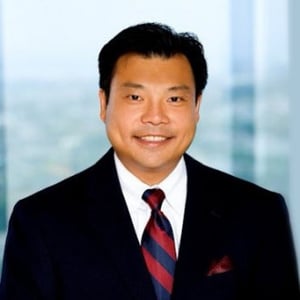
Attorney and Legal Commentator
John Shu is an attorney and legal commentator. His focus areas include constitutional law, securities & corporate law, antitrust law, administrative law, politics, and international affairs. Mr. Shu has lectured and published on a wide variety of issues.
Mr. Shu served President George H.W. Bush and President George W. Bush. He also served Judge Stanley Sporkin, U.S. District Court for the District of Columbia, who was Director of Enforcement at the U.S. Securities & Exchange Commission and General Counsel at the Central Intelligence Agency, and Judge Paul Roney, U.S. Court of Appeals for the Eleventh Circuit, who was Presiding Judge of the Foreign Intelligence Surveillance Court of Review.
Mr. Shu is a member of the National Committee on U.S. - China Relations, the Pacific Council on International Policy, and the Foreign Policy Association.
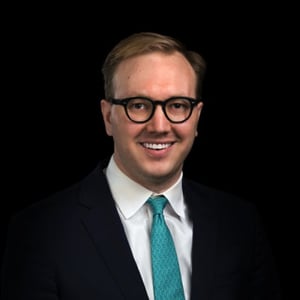
Partner, Cooper & Kirk
William V. Bergstrom joined Cooper & Kirk in 2021. Before joining the firm, he clerked for Judge Jonathan A. Kobes of the U.S. Court of Appeals for the Eighth Circuit and was an associate in the Washington, D.C. office of Sullivan & Cromwell, LLP. Mr. Bergstrom received his J.D. cum laude from Harvard Law School in 2017. He earned his undergraduate degree magna cum laude from Harvard College in 2013, where he was chairman of the editorial board of The Harvard Crimson. Between college and law school, Mr. Bergstrom was the Annenberg Fellow at Eton College in Windsor, U.K.
Mr. Bergstrom is admitted to the bars of the State of Nebraska and the District of Columbia.
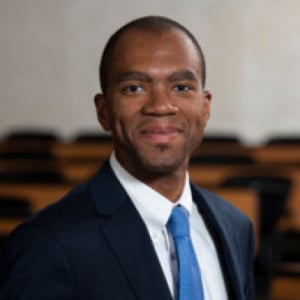
Associate Professor, Widener Law Commonwealth
Partner, Cooper & Kirk
William V. Bergstrom joined Cooper & Kirk in 2021. Before joining the firm, he clerked for Judge Jonathan A. Kobes of the U.S. Court of Appeals for the Eighth Circuit and was an associate in the Washington, D.C. office of Sullivan & Cromwell, LLP. Mr. Bergstrom received his J.D. cum laude from Harvard Law School in 2017. He earned his undergraduate degree magna cum laude from Harvard College in 2013, where he was chairman of the editorial board of The Harvard Crimson. Between college and law school, Mr. Bergstrom was the Annenberg Fellow at Eton College in Windsor, U.K.
Mr. Bergstrom is admitted to the bars of the State of Nebraska and the District of Columbia.
Associate Professor, Widener Law Commonwealth
Senior Advisor, Burke Law Group
Anne Idsal Austin is an environmental health and safety attorney. Founder of Austin Legal & Public Affairs. Anne served in the highest ranks of state and federal government, where she shaped environmental and energy policy at the highest levels of government. She provides strategic counseling and policy guidance in the complex arenas of environmental and natural resources law. She handles complex environmental and natural resources litigation. Her experience includes air, water and waste governmental enforcement actions; citizen suits under RCRA, CERCLA, the Clean Water Act and the Clean Air Act; climate change litigation; toxic tort lawsuits involving chemical exposures, dust exposures and industrial accidents and toxic tort claims;.
Anne served as the principal deputy assistant administrator for the U.S. Environmental Protection Agency’s Office of Air & Radiation (OAR). In this role, she had a significant impact on U.S. clean air policy and regulation. Additionally, she served as the EPA Regional Administrator for Region 6, responsible for the implementation of federal environmental statutes and programs across Texas, Louisiana, Oklahoma, Arkansas, and New Mexico. Before serving in the federal government, Anne was the Chief Clerk and Deputy Land Commissioner for the Texas General Land Office and served as the general counsel for the Texas Commission on Environmental Quality.
Prior to joining Burke Law Group and founding Austin Legal & Public Affairs, Anne was environmental partner with an AMLAW100 firm, where she represented regulated clients to position them for success before state and federal regulatory agencies.
General Counsel, Senior Litigation Counsel, New Civil Liberties Alliance
Zhonette brings a quarter-century of litigation experience to NCLA. After a federal clerkship, she spent many years litigating at large law firms in Washington, D.C., and Denver, Colorado, before beginning public interest litigation in 2018.
Zhonette has litigated in state, federal, and international venues and in matters ranging from pro bono custody issues to multi-district and class action cases for Fortune 100 companies. Zhonette spent the first part of her career focused on high-stakes complex commercial litigation and white-collar defense. Since changing her legal practice to taming the Administrative State, Zhonette has focused on the Administrative Procedure Act, natural resources, takings issues and other constitutional claims.
Zhonette is a graduate of Georgetown University Law Center and is admitted to practice in the District of Columbia, the State of Colorado, the Commonwealth of Virginia, and various federal courts.
Partner, Holtzman Vogel Baran Torchinsky & Josefiak PLLC
Abhishek (Abhi) Kambli is a partner at Holtzman Vogel who represents clients in high-stakes appellate and complex litigation, constitutional challenges, and matters involving state attorneys general and federal agencies. He is one of a handful of lawyers nationally who has both led federal litigation from inside the Department of Justice and multi-state coalition work from a State Attorney General’s office—giving clients a 360-degree perspective on government enforcement, regulatory challenges, and constitutional advocacy.
Prior to joining Holtzman Vogel, Abhi served as Deputy Associate Attorney General at the United States Department of Justice, where he acted as lead counsel in high-priority matters for the Trump Administration, oversaw the Department’s civil components on behalf of the Associate Attorney General, advised the White House Counsel’s Office and federal agencies on litigation risk and strategy, and developed the Department’s national affirmative civil litigation strategy.
Earlier, he served as Deputy Attorney General and Division Chief of the Special Litigation and Constitutional Issues Division at the Kansas Attorney General’s Office, where he launched the division and led multi-state coalitions in trial and appellate courts nationwide, including the United States Supreme Court. He began his career as an Assistant United States Attorney in the Southern District of Indiana, prosecuting more than 100 federal cases from investigation through appeal.
Abhi is also a Lieutenant Colonel in the United States Air Force Judge Advocate General's Corps, having served on active duty and in the reserves since 2013. His military service includes criminal trials as both prosecutor and defense attorney, appellate representation before the Court of Appeals for the Armed Forces, and representation of a high-profile detainee before the Military Commissions at Guantánamo Bay.
Attorney and Legal Commentator
John Shu is an attorney and legal commentator. His focus areas include constitutional law, securities & corporate law, antitrust law, administrative law, politics, and international affairs. Mr. Shu has lectured and published on a wide variety of issues.
Mr. Shu served President George H.W. Bush and President George W. Bush. He also served Judge Stanley Sporkin, U.S. District Court for the District of Columbia, who was Director of Enforcement at the U.S. Securities & Exchange Commission and General Counsel at the Central Intelligence Agency, and Judge Paul Roney, U.S. Court of Appeals for the Eleventh Circuit, who was Presiding Judge of the Foreign Intelligence Surveillance Court of Review.
Mr. Shu is a member of the National Committee on U.S. - China Relations, the Pacific Council on International Policy, and the Foreign Policy Association.
Partner, Holtzman Vogel Baran Torchinsky & Josefiak PLLC
Abhishek (Abhi) Kambli is a partner at Holtzman Vogel who represents clients in high-stakes appellate and complex litigation, constitutional challenges, and matters involving state attorneys general and federal agencies. He is one of a handful of lawyers nationally who has both led federal litigation from inside the Department of Justice and multi-state coalition work from a State Attorney General’s office—giving clients a 360-degree perspective on government enforcement, regulatory challenges, and constitutional advocacy.
Prior to joining Holtzman Vogel, Abhi served as Deputy Associate Attorney General at the United States Department of Justice, where he acted as lead counsel in high-priority matters for the Trump Administration, oversaw the Department’s civil components on behalf of the Associate Attorney General, advised the White House Counsel’s Office and federal agencies on litigation risk and strategy, and developed the Department’s national affirmative civil litigation strategy.
Earlier, he served as Deputy Attorney General and Division Chief of the Special Litigation and Constitutional Issues Division at the Kansas Attorney General’s Office, where he launched the division and led multi-state coalitions in trial and appellate courts nationwide, including the United States Supreme Court. He began his career as an Assistant United States Attorney in the Southern District of Indiana, prosecuting more than 100 federal cases from investigation through appeal.
Abhi is also a Lieutenant Colonel in the United States Air Force Judge Advocate General's Corps, having served on active duty and in the reserves since 2013. His military service includes criminal trials as both prosecutor and defense attorney, appellate representation before the Court of Appeals for the Armed Forces, and representation of a high-profile detainee before the Military Commissions at Guantánamo Bay.
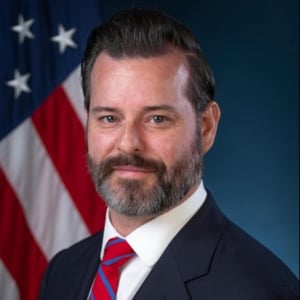
United States Attorney, Southern District of Florida
Jason A. Reding Quiñones was sworn in on August 13, 2025, as the United States Attorney for the Southern District of Florida, following his nomination by President Donald J. Trump and confirmation by the United States Senate. He is the first U.S. Attorney confirmed during President Trump’s second administration and was administered the oath of office by Attorney General Pamela Bondi.
Prior to his appointment, U.S. Attorney Reding Quiñones served as a trial judge in the Eleventh Judicial Circuit of Florida, where he presided over both civil and criminal domestic violence cases. His previous federal service includes work as a national security official in the Department of Justice’s National Security Division, where he focused on counterterrorism matters and intelligence operations, and as a federal prosecutor in both the Eastern District of Virginia and the Southern District of Florida, where he tried both civil and criminal cases on behalf of the United States.
A decorated veteran of more than 22 years of military service, U.S. Attorney Reding Quiñones has served in both the United States Army and the United States Air Force as a cavalry scout, infantry officer, logistics officer, and judge advocate. He continues to serve as a reserve lieutenant colonel, providing legal counsel on national security and counterterrorism matters to the Commander, U.S. Central Command.
U.S. Attorney Reding Quiñones earned a Bachelor of Arts in Anthropology, with a minor in Military Sciences, from the University of Florida, and a Juris Doctor from Florida International University College of Law.
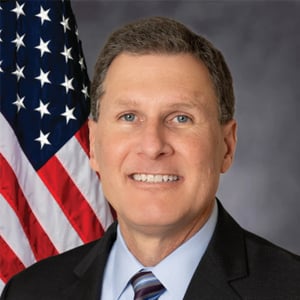
United States Attorney, Eastern District of California
Mr. Grant was appointed by Attorney General Pam Bondi to serve as the United States Attorney for the Eastern District of California beginning on August 11, 2025. Pursuant to 28 U.S.C. § 546(d), he was further appointed by the district court effective December 9, 2025.
Mr. Grant is a veteran of the Department of Justice, having served twice in Washington, D.C.: from 1991 to 1993 as an Attorney-Adviser in the Office of Legal Counsel, and from 2017 to 2021 as a Deputy Assistant Attorney General in the Environment and Natural Resources Division (ENRD). During his tenure at ENRD, he supervised more than a hundred Department litigators advancing the interests of the United States and its agencies in both enforcement and defensive matters, both civil and criminal.
In addition to his service in the Department, Mr. Grant has decades of experience in private practice in Washington, D.C. and Sacramento. That experience includes arguments in the U.S. Supreme Court, the California Supreme Court, and numerous other federal and state courts.
Mr. Grant served as a law clerk to Chief Justice Warren E. Burger (retired) and Associate Justice Clarence Thomas during the Supreme Court’s October 1994 Term. Earlier he served as a law clerk to Judge Edith H. Jones of the U.S. Court of Appeals for the Fifth Circuit in Houston, Texas.
Mr. Grant grew up in Modesto, California and raised his family in Sacramento County. He attended the University of California, Berkeley, from which he earned a bachelor’s degree in economics (1986) and a law degree (1990).
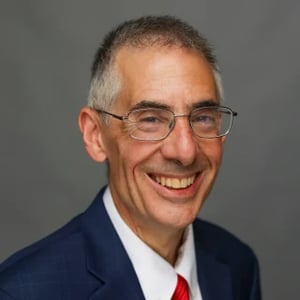
Wendell H. Ford Professor of Law, University of Kentucky J. David Rosenberg College of Law
Paul E. Salamanca graduated from Dartmouth College in 1983 and Boston College Law School in 1989, where he was a note editor for the Boston College Law Review and a member of the Order of the Coif.
Professor Salamanca served as a law clerk to Judge David H. Souter of the U.S. Court of Appeals for the First Circuit, and subsequently clerked for Justice Souter on the U.S. Supreme Court. He practiced law with the firm of Debevoise & Plimpton in New York from 1991 to 1994 and was a visiting assistant professor of law at Loyola University School of Law in New Orleans before joining the faculty at the University of Kentucky College of Law in June 1995.
Professor Salamanca writes in the areas of separation of powers, freedom of speech, freedom of religion, and privacy. He has published articles on these subjects in the University of Cincinnati Law Review, the Missouri Law Review, the Georgia Law Review and the Kentucky Law Journal, among other places.
From 2019 until 2021, Professor Salamanca served as a Senior Counsel and then as a Deputy Assistant Attorney General in the Environment and Natural Resources Division (ENRD) of the United States Department of Justice. His duties included supervision of the Natural Resources and Land Acquisition Sections of ENRD.
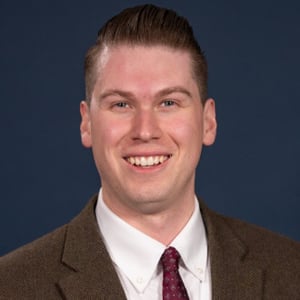
Charles Yates is an attorney in Pacific Legal Foundation’s environmental practice group, where he litigates to defend private property rights and uphold the structural protections guaranteed by the Constitution’s separation of powers.
His inspiration to focus on environmental law comes from the special case of government overreach it presents, where individual rights too often give way to collectivist notions and where misguided government policies create a cure worse than the disease. Charles has a particularly strong belief in the important role that the productive use of natural resources plays for human flourishing. To these ends, his practice at PLF focuses primarily on the Endangered Species Act, the Clean Water Act, and related regulatory issues.
Charles credits his strong belief in the principles of individual liberty and limited, constitutional government to his family. His personal philosophy developed further while studying the works of Adam Smith, John Locke, James Madison, and other classical liberals. Born and raised in Australia, Charles has always admired the U.S. Constitution as the purest and most enduring application of the ideals of individual liberty and limited government. It was these influences that impressed upon him the desire to pursue a career in public interest litigation.
After obtaining a B.A. in political science and international relations from the University of Western Australia, Charles moved to the U.S., where he earned his J.D. magna cum laude from the University of Baltimore School of Law. During law school, he served as president of his school’s chapter of The Federalist Society and was an editor of the University of Baltimore Law Review. Other highlights from his law school days include an internship at the Cato Institute and a clerkship at the Institute for Justice.
Charles lives in Sacramento with his wife Maxine. In his spare time, he enjoys reading and playing the bass guitar.
Partner, Cooper & Kirk
William V. Bergstrom joined Cooper & Kirk in 2021. Before joining the firm, he clerked for Judge Jonathan A. Kobes of the U.S. Court of Appeals for the Eighth Circuit and was an associate in the Washington, D.C. office of Sullivan & Cromwell, LLP. Mr. Bergstrom received his J.D. cum laude from Harvard Law School in 2017. He earned his undergraduate degree magna cum laude from Harvard College in 2013, where he was chairman of the editorial board of The Harvard Crimson. Between college and law school, Mr. Bergstrom was the Annenberg Fellow at Eton College in Windsor, U.K.
Mr. Bergstrom is admitted to the bars of the State of Nebraska and the District of Columbia.
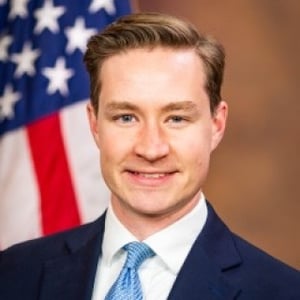
Assistant Attorney General, Office of Legal Counsel, U.S. Department of Justice
T. Elliot Gaiser is the Office of Legal Counsel’s 27th Assistant Attorney General. He was nominated by President Donald Trump on April 29, 2025, confirmed by the United States Senate on July 30, 2025, and sworn in as AAG by Attorney General Pam Bondi on August 4, 2025.
Prior to joining the Office of Legal Counsel, Mr. Gaiser served as the 11th Solicitor General of Ohio. In that role, he represented his home state and its agencies before the Supreme Court of the United States, the United States Court of Appeals for the Sixth Circuit, the Supreme Court of Ohio, and other state and federal courts. He also advised Ohio Attorney General Dave Yost on significant legal and constitutional matters important to the people of Ohio.
Mr. Gaiser clerked for Justice Samuel A. Alito, Jr. of the Supreme Court of the United States, Judge Neomi Rao of the United States Court of Appeals for the D.C. Circuit, and Judge Edith H. Jones of the United States Court of Appeals for the Fifth Circuit. In the private sector, Mr. Gaiser worked at the law firms Jones Day, Boyden Gray, and Gibson Dunn. He graduated from the University of Chicago Law School and Hillsdale College. He is also a husband and father.
Partner, Holtzman Vogel Baran Torchinsky & Josefiak PLLC
Abhishek (Abhi) Kambli is a partner at Holtzman Vogel who represents clients in high-stakes appellate and complex litigation, constitutional challenges, and matters involving state attorneys general and federal agencies. He is one of a handful of lawyers nationally who has both led federal litigation from inside the Department of Justice and multi-state coalition work from a State Attorney General’s office—giving clients a 360-degree perspective on government enforcement, regulatory challenges, and constitutional advocacy.
Prior to joining Holtzman Vogel, Abhi served as Deputy Associate Attorney General at the United States Department of Justice, where he acted as lead counsel in high-priority matters for the Trump Administration, oversaw the Department’s civil components on behalf of the Associate Attorney General, advised the White House Counsel’s Office and federal agencies on litigation risk and strategy, and developed the Department’s national affirmative civil litigation strategy.
Earlier, he served as Deputy Attorney General and Division Chief of the Special Litigation and Constitutional Issues Division at the Kansas Attorney General’s Office, where he launched the division and led multi-state coalitions in trial and appellate courts nationwide, including the United States Supreme Court. He began his career as an Assistant United States Attorney in the Southern District of Indiana, prosecuting more than 100 federal cases from investigation through appeal.
Abhi is also a Lieutenant Colonel in the United States Air Force Judge Advocate General's Corps, having served on active duty and in the reserves since 2013. His military service includes criminal trials as both prosecutor and defense attorney, appellate representation before the Court of Appeals for the Armed Forces, and representation of a high-profile detainee before the Military Commissions at Guantánamo Bay.
Attorney and Legal Commentator
John Shu is an attorney and legal commentator. His focus areas include constitutional law, securities & corporate law, antitrust law, administrative law, politics, and international affairs. Mr. Shu has lectured and published on a wide variety of issues.
Mr. Shu served President George H.W. Bush and President George W. Bush. He also served Judge Stanley Sporkin, U.S. District Court for the District of Columbia, who was Director of Enforcement at the U.S. Securities & Exchange Commission and General Counsel at the Central Intelligence Agency, and Judge Paul Roney, U.S. Court of Appeals for the Eleventh Circuit, who was Presiding Judge of the Foreign Intelligence Surveillance Court of Review.
Mr. Shu is a member of the National Committee on U.S. - China Relations, the Pacific Council on International Policy, and the Foreign Policy Association.

Friendly Fire: Cy Pres, Consent Decrees, and Trump v. IRS
Anne Austin, Zhonette M. Brown, Abhishek Kambli, John Shu
Controversy has swirled for years over litigation in which a plaintiff sues a friendly government...
Friendly Fire: Cy Pres, Consent Decrees, and Trump v. IRS
Life at DOJ Under Trump 2.0
Tampa Bay Lawyer Chapter
Tampa, FLClosing Remarks
2026 Florida Young Lawyers Summit
Coral Gables, FLFrom the Courthouse Steps: United States v. Hemani
William V. Bergstrom, F. Lee Francis
In United States v. Hemani, the Supreme Court unanimously affirmed the dismissal of an indictment...
From the Courthouse Steps: United States v. Hemani
William V. Bergstrom, F. Lee Francis
In United States v. Hemani, the Supreme Court unanimously affirmed the dismissal of an indictment...
America 250: The Constitutional Dimensions of Environmental Law
Sacramento Lawyer Chapter
From the Courthouse Steps: United States v. Hemani
Separation of Powers in Action
Columbus Lawyer Chapter
Columbus, OHFireside Chat on the BigLaw EOs with Abhishek Kambli and John Shu
Orange County Lawyer Chapter
Irvine, CA