

Professor Emeritus, Paul M. Hebert Law Center, Louisiana State University
In memoriam
Dr. John Baker is Professor Emeritus of Law, and previously the Dale E. Bennett Professor of Law, at Louisiana State University Law School. He is currently Visiting Professor at Peking University School of Transnational Law (via Zoom) and has been Visiting Professor at The Center for the Constitution, Georgetown Law School (2013-2020). He has also been a Visiting Fellow at Oriel College, the University of Oxford (2012-2014) and taught at Blackfriars Hall, Oxford in 2014. Dr. Baker has also been an adjunct Fellow at the Heritage Foundation (Spring, 2008) and a Distinguished Scholar at the Catholic University of America Law School (2011-12). He has taught at Tulane Law School, George Mason Law School, Pepperdine Law School, New York Law School, Hong Kong University, and the University of Dallas, School of Management and also taught and/or lectured in 17 foreign countries. Notable among his foreign visits are the
following: Visiting Professor at the University of Lyon III (France) (1999-2011); Visiting Professor at the Universidad de los Andes, Chile (2012), as a Fulbright Specialist (2006); and a Fulbright Scholar at various universities in the Philippines. Dr. Baker received his J.D., with honors, from the University of Michigan Law School and his B.A., magna cum laude, from the University of Dallas. He also earned a Ph.D. in Political Thought from the University of London. Baker has taught over a dozen different subjects, mostly courses in public law. His main areas of interest are Constitutional Law (particularly federalism and separation of powers), Criminal Law, Anti-Terrorism Law, International Law, Health Care Law, Mediation, and Comparative Law.
In addition to law review articles and book chapters, Dr. Baker’s academic publications include Hall's Criminal Law: Cases and Materials (with Benson, Force and George; 5th ed. Michie, 1993); An Introduction to the Law of the United States (ed. with Levasseur; University Press of America, 1992). He has also published on Forbes.com, FoxNews.com, in The Washington Times, and a number of times in The Wall Street Journal. He argues in federal court, including two oral arguments in the U.S. Supreme Court. For many years, he co-taught courses for the Federalist Society on separation of powers with the late Supreme Court Justice Antonin Scalia. In September 2016, he co-taught a Supreme Court seminar in China with Justice Samuel Alito. Following law school, he served as a law clerk in federal district court and as an assistant district attorney in New Orleans before joining LSU in 1975. While a professor, he has been as a consultant to USAID, USIA (since rolled into the State Department), the Justice Department, the U.S. Senate Judiciary Subcommittee on Separation of Powers, and the Office of Planning in the White House. He served on an ABA Task Force which issued the report, The Federalization of Crime (1998) and later as a consultant to the “Bi-Partisan Task Force on the Over- federalization of Crime” (2012-2014) created by the U.S. House Judiciary Subcommittee on Crime. Dr. Baker was a co-founder of the first iteration (1995) of Stratfor Inc., a global intelligence agency. He co-authored its first book: The Intelligence Edge (with Friedman, Friedman and Chapman; Crown Books/Random House 1997). In 2022, he began a short, weekly video podcast available on YouTube and Rumble, The Baker Brief.
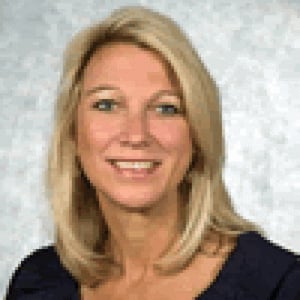
Partner, Latham & Watkins LLP
Alice Fisher is a partner in Latham & Watkins' Washington, D.C. office and is a member of the firm's Executive Committee. She focuses her practice on white collar criminal investigations, internal investigations and advises clients on a range of criminal matters.
From 2005-2008, Ms. Fisher served as Assistant Attorney General in charge of the Criminal Division of the US DOJ. As Assistant Attorney General, Ms. Fisher led more than 750 attorneys and staff responsible for federal criminal enforcement policy as well as handling criminal matters in federal courts across the country in all areas of federal criminal law enforcement. Under her leadership, the Criminal Division pursued a broad array of federal criminal investigations and prosecutions, with particular focus on corporate fraud matters, including securities fraud, procurement fraud, financial institution fraud, anti-money laundering, healthcare fraud, computer hacking and cyber security, national security, as well as US-domestic and international corruption.
Ms. Fisher also chaired the National Procurement Fraud Task Force, supervised the Medicare Fraud Strike Force, and served as a member of the President's Corporate Fraud Task Force. She handled various transnational and multi-national law enforcement operations and policies, including bilateral agreements and treaties involving information sharing and global criminal enforcement initiatives. Representing the DOJ in front of Congress, Ms. Fisher testified on criminal enforcement policies and served on the Federal Criminal Rules Committee.
As a litigation partner at Latham from 2003-2005 and prior to 2001, Ms. Fisher represented both individual and corporate clients in grand jury, agency and congressional inquiries involving allegations of securities and bank fraud, healthcare fraud, the FCPA, criminal antitrust matters, OFAC sanctions and procurement fraud. She has also represented clients in a number of complex civil and regulatory litigations. Ms. Fisher previously held other positions in government, including Deputy Special Counsel to a US Senate Special Committee.
Ms. Fisher has published articles and spoken on criminal law topics such as the criminalization of corporate conduct, the FCPA, healthcare and procurement fraud, the False Claims Act, the US criminal enforcement environment, public corruption and the honest services statute, financial crime in the financial services industry, securities fraud, identity theft, cybercrime and national security.
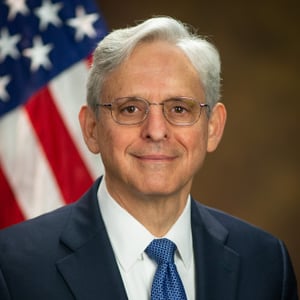
United States Attorney General
Attorney General Merrick B. Garland was sworn in as the 86th Attorney General of the United States on March 11, 2021. As the nation’s chief law enforcement officer, Attorney General Garland leads the Justice Department’s 115,000 employees, who work across the United States and in more than 50 countries worldwide. Under his leadership, the Department of Justice is dedicated to upholding the rule of law, keeping our country safe, and protecting the civil rights of all Americans.
Immediately preceding his confirmation as Attorney General, Attorney General Garland was a judge of the United States Court of Appeals for the District of Columbia Circuit. He was appointed to that position in 1997, served as Chief Judge of the Circuit from 2013-20, and served as Chair of the Executive Committee of the Judicial Conference of the United States from 2017-20. In 2016, President Obama nominated him for the position of Associate Justice of the United States Supreme Court.
Before becoming a federal judge, Attorney General Garland spent a substantial part of his professional life at the Department of Justice. He served in both career and non-career positions under five Attorneys General, including as Special Assistant to the Attorney General, Assistant United States Attorney, Deputy Assistant Attorney General in the Criminal Division, and Principal Associate Deputy Attorney General. In those roles, his responsibilities spanned the work of the Department, including criminal, civil, and national security matters. They also included direct supervision of investigations and prosecutions of national importance, including the Oklahoma City bombing, Unabomber, and Montana Freemen cases.
Earlier in his career, Attorney General Garland was a partner in the law firm of Arnold & Porter, where his practice involved civil and criminal litigation, antitrust, and administrative law. He also taught antitrust at Harvard Law School and published law review articles on both antitrust and administrative law.
Attorney General Garland graduated summa cum laude from Harvard College and magna cum laude from Harvard Law School. Following law school, he clerked for Judge Henry J. Friendly of the United States Court of Appeals for the Second Circuit, and for Justice William J. Brennan, Jr., of the United States Supreme Court.
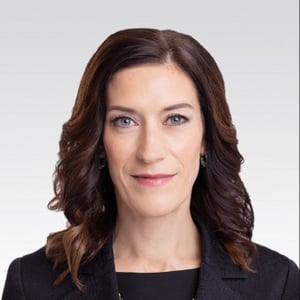
Executive Vice President of Global Governance, Chief Legal Officer and Corporate Secretary, Walmart Inc.
Rachel Brand is Walmart’s executive vice president of global governance, chief legal officer, and corporate secretary. She oversees the company’s global legal, compliance, ethics, corporate governance, digital citizenship, aviation, investigative, and corporate security functions, including Walmart’s Emergency Operations Center.
Immediately before joining Walmart, Rachel served as the United States Associate Attorney General and holds the distinction of being the first woman to serve in this role. She had previously served in the U.S. Department of Justice as the Assistant Attorney General for the Office of Legal Policy during President George W. Bush’s administration. Her other government service includes an appointment by President Obama to serve as a Member of the U.S. Privacy and Civil Liberties Oversight Board, service as an Associate Counsel to the President at the White House, and judicial clerkships with Justice Charles Fried of the Supreme Judicial Court of Massachusetts and Justice Anthony Kennedy at the Supreme Court of the United States. In the private sector, Rachel was a lawyer in private practice at two law firms in Washington, D.C. and served as the Vice President and Chief Counsel for Regulatory Litigation at the U.S. Chamber of Commerce Litigation Center.
Rachel serves on the board of directors for the Walmart Foundation and is the executive sponsor for Walmart’s Tribal Voices Associate Resource Group. Outside of Walmart, she serves on the board of directors for the International Justice Mission and is a member of The American Law Institute.
Rachel earned her Bachelor of Arts degree from the University of Minnesota-Morris and her J.D. from Harvard Law School.
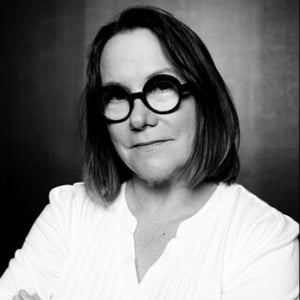
Independent Analyst, None
Allison Hayward most recently served as the Head of Case Selection at the Oversight Board. Previously, she was a Commissioner at the California Fair Political Practices Commission, a Board Member at the Office of Congressional Ethics, and an Assistant Professor of Law at George Mason University School of Law. She also previously worked as Chief of Staff and Counsel in the office of Federal Election Commission Commissioner Bradley A. Smith and practiced election law in California and in Washington DC.
In 1994-1995, Professor Hayward was a judicial clerk for the Honorable Danny J. Boggs, United States Court of Appeal for the Sixth Circuit.
She is a member of the State Bar of California and the District of Columbia Bar.
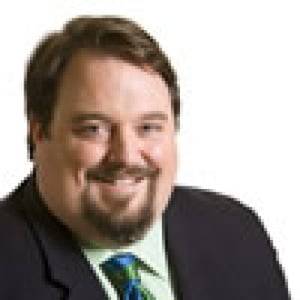
Research Fellow in Empirical Policy Analysis, Center for Data A, The Heritage Foundation
David B. Muhlhausen is a leading expert on the need for evaluating the effectiveness of federal social programs in The Heritage Foundation’s Center for Data Analysis. A Research Fellow in Empirical Policy Analysis at the think tank, Muhlhausen has testified frequently before Congress on the efficiency and effectiveness of federal programs, including testimonies before the U.S. Senate Committee on the Budget and the House Committee on Ways and Means.
In 2013, Praeger published his book, Do Federal Social Programs Work? The book presents an extensive review of scientifically rigorous national studies that almost unanimously find that the federal government fails to solve social problems.
Muhlhausen rose to national prominence in 2001 with publication of his analysis showing the highly touted Community Oriented Policing Services (COPS) program to be a waste of taxpayer dollars. His research illustrated that COPS neither had put 100,000 new police officers on the street nor reduced violent crime.
His work prompted Vice President Joseph Biden, at the time a U.S. senator from Delaware and chairman of the Senate Subcommittee on Crime and Drugs, to call a hearing specifically to investigate Muhlhausen’s findings. “I want to have a hearing on what has been, from The Heritage Foundation and other places, criticism that the COPS program does not work,” Biden said in opening the hearing.
Muhlhausen joined Heritage in 1999 after serving on the staff for the Senate Judiciary Committee, where he specialized in crime and juvenile justice policies. Prior to that, he was a manager at a juvenile correctional facility in Baltimore.
He holds a doctorate in public policy from the University of Maryland-Baltimore County and a bachelor’s degree in political science and justice studies from Frostburg State University.
In addition to his work at Heritage, Muhlhausen is an adjunct professor at George Mason University, teaching program evaluation and statistical methods to graduate students.
A native of Colorado, Muhlhausen grew up in Maryland. He currently resides in Falls Church, Va.

Senior Legal Fellow, Edwin Meese III Institute for the Rule of Law, Advancing American Freedom
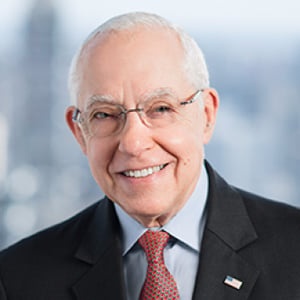
Former United States Attorney General
Michael B. Mukasey is the former Attorney General of the United States, the nation’s chief law enforcement officer. As Attorney General from November 2007 to January 2009, he oversaw the U.S. Department of Justice and advised on critical issues of domestic and international law.
From 1988 to 2006, Judge Mukasey served as a district judge in the United States District Court for the Southern District of New York, becoming Chief Judge in 2000.
From 1972 to 1976, Judge Mukasey served as an Assistant United States Attorney for the Southern District of New York, and as Chief of the Official Corruption Unit from 1975 to 1976. His practice consisted of criminal litigation on behalf of the government, including investigation and prosecution of narcotics, bank robbery, interstate theft, securities fraud, fraud on the government and bribery. From 1976 to 1987 and from 2006 to 2007 he was in private practice.
Judge Mukasey has received numerous honors, including the Federal Bar Council’s Learned Hand Medal for Excellence in Federal Jurisprudence. He served as Chairman of the Committee on Public Access to Information and Proceedings of the New York Bar Association from 1984 to 1987. He served on the Federal Courts Committee of the Association of the Bar of the City of New York from 1979 to 1982 and its Communications Law Committee from 1983 to 1986. Judge Mukasey was also a part-time lecturer at Columbia School of Law from January 1993 to May 2007, teaching trial advocacy.
He received his LL.B. from Yale Law School in 1967 and his B.A. from Columbia College in 1963.
A. W. Walker Centennial Chair in Law, University of Texas at Austin School of Law
Professor Graglia has written widely in constitutional law--especially on judicial review, constitutional interpretation, race discrimination, and affirmative action--and also teaches and writes in the area of antitrust. He is the author of Disaster by Decree: The Supreme Court Decisions on Race and the Schools (Cornell, 1976) and many articles, including recently "Church of the Lukumi Babalu Aye: Of Animal Sacrifice and Religious Persecution" (Georgetown Law Journal, 1996). He has been a Visiting Professor at the University of Virginia School of Law.
Independent Analyst, None
Allison Hayward most recently served as the Head of Case Selection at the Oversight Board. Previously, she was a Commissioner at the California Fair Political Practices Commission, a Board Member at the Office of Congressional Ethics, and an Assistant Professor of Law at George Mason University School of Law. She also previously worked as Chief of Staff and Counsel in the office of Federal Election Commission Commissioner Bradley A. Smith and practiced election law in California and in Washington DC.
In 1994-1995, Professor Hayward was a judicial clerk for the Honorable Danny J. Boggs, United States Court of Appeal for the Sixth Circuit.
She is a member of the State Bar of California and the District of Columbia Bar.
Research Fellow in Empirical Policy Analysis, Center for Data A, The Heritage Foundation
David B. Muhlhausen is a leading expert on the need for evaluating the effectiveness of federal social programs in The Heritage Foundation’s Center for Data Analysis. A Research Fellow in Empirical Policy Analysis at the think tank, Muhlhausen has testified frequently before Congress on the efficiency and effectiveness of federal programs, including testimonies before the U.S. Senate Committee on the Budget and the House Committee on Ways and Means.
In 2013, Praeger published his book, Do Federal Social Programs Work? The book presents an extensive review of scientifically rigorous national studies that almost unanimously find that the federal government fails to solve social problems.
Muhlhausen rose to national prominence in 2001 with publication of his analysis showing the highly touted Community Oriented Policing Services (COPS) program to be a waste of taxpayer dollars. His research illustrated that COPS neither had put 100,000 new police officers on the street nor reduced violent crime.
His work prompted Vice President Joseph Biden, at the time a U.S. senator from Delaware and chairman of the Senate Subcommittee on Crime and Drugs, to call a hearing specifically to investigate Muhlhausen’s findings. “I want to have a hearing on what has been, from The Heritage Foundation and other places, criticism that the COPS program does not work,” Biden said in opening the hearing.
Muhlhausen joined Heritage in 1999 after serving on the staff for the Senate Judiciary Committee, where he specialized in crime and juvenile justice policies. Prior to that, he was a manager at a juvenile correctional facility in Baltimore.
He holds a doctorate in public policy from the University of Maryland-Baltimore County and a bachelor’s degree in political science and justice studies from Frostburg State University.
In addition to his work at Heritage, Muhlhausen is an adjunct professor at George Mason University, teaching program evaluation and statistical methods to graduate students.
A native of Colorado, Muhlhausen grew up in Maryland. He currently resides in Falls Church, Va.
Senior Legal Fellow, Edwin Meese III Institute for the Rule of Law, Advancing American Freedom

Criminal Law: The Prosecution of Public Corruption
2008 National Lawyers Convention
Washington, DCKeynote Address by U.S. Attorney General Michael B. Mukasey - Prepared Remarks
Michael B. Mukasey
Thank you for that introduction and for the opportunity to address this group. I have...
Federal Judicial Confirmations in the New Administration
Anatomy of a Lawsuit: District of Columbia v. Heller
It took nearly 5-1/2 years of litigation, a feckless 32-year handgun ban in the nation’s...
The Antitrust Revolution
Lino A. Graglia
The history of antitrust law over the past four decades has been one of drastic,...
The 2008 Presidential Election and the Future of the United States Supreme Court
The 2008 Election And The Future Of the Supreme Court
LAS VEGAS, NevadaThe Scope of the Franchise, 2008
Allison R. Hayward, Douglas Kellner, David B. Muhlhausen, Hans A. Von Spakovsky, Wendy R. Weiser
On October 7, 2008, the Federalist Society held presented the 2008 Election Law Conference. This panel...
The Scope of the Franchise, 2008
Allison R. Hayward, Douglas Kellner, David B. Muhlhausen, Hans A. Von Spakovsky, Wendy R. Weiser
On October 7, 2008, the Federalist Society held presented the 2008 Election Law Conference. This panel...
The Scope of the Franchise, 2008
2008 Election Law Conference
Washington, DC