
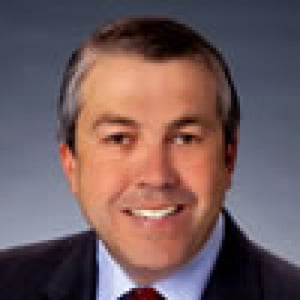
Denver Managing Partner, Wilkinson Barker Knauer LLP
Raymond L. Gifford counsels communications, electric and gas utilities, and information technology companies on state and federal aspects of regulation, administrative law, and competition policy. He is an expert in public utilities law, and the law and economics of regulation of network industries. Mr. Gifford’s law and policy work focuses on the convergence of broadband communications and energy, as well as environmental policy as it applies to the electric industry. He represents clients in state and federal courts and agencies, and serves as an expert witness on utility regulation and its history. He is also a Senior Adjunct Fellow at the Silicon Flatirons Center for Law, Technology and Entrepreneurship, and Co-Directs the Institute for Regulatory Law & Economics at University of Colorado Law School.
Mr. Gifford served as Chairman of the Colorado Public Utilities Commission from 1999-2003. Following that, he served as President of The Progress & Freedom Foundation, a Washington DC-based think-tank that studied the digital revolution as it relates to regulation of network industries. He entered the regulatory law world as First Assistant Attorney General in the Colorado Attorney General’s Office. He clerked for the Honorable Richard P. Matsch of the United States District Court for the District of Colorado. Mr. Gifford has authored a number of articles on communications law, public utility regulation and competition policy in network industries. He is a graduate of University of Chicago Law School and St. John’s College in Annapolis, Maryland. He is an elected member of the American Law Institute
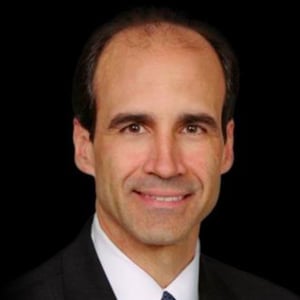
Under Secretary of Energy, United States Department of Energy
The Honorable Mark Wesley Menezes, Under Secretary of Energy serves as the Department’s principal advisor on energy policy and on a wide array of existing and emerging energy technologies. The Under Secretary is responsible for driving transformative energy policy, and technology solutions through coordinated planning, management and performance of the Department’s energy programs.
Prior to being confirmed as Under Secretary of Energy, Mr. Menezes was an executive with Berkshire Hathaway Energy in its Washington, D.C. office. Before joining BHE, Mr. Menezes was a partner at Hunton & Williams LLP, where he headed the Regulated Markets and Energy Infrastructure practice group. Prior to Hunton, he served as Chief Counsel, Energy and Environment, U.S. House of Representatives Committee on Energy and Commerce, serving as chief negotiator for the House Majority in the enactment of the Energy Policy Act of 2005. Before his service with House Energy & Commerce, he was Vice President with Central and South West, and upon its merger with American Electric Power, served as Vice President and Associate General Counsel for federal and state legislative and regulatory affairs.
Mr. Menezes has been named in National Journal’s “Hill 100”—top Congressional staff for his work on both energy and environmental matters. He has been frequent guest speaker and lecturer before numerous associations and civic groups, including legal education seminars where he has been called on to address the nation’s energy and environmental policies, utility restructuring, telecommunications, ethics, merger and acquisition practices, and regulatory and legislative processes. He has co-authored numerous articles, a practice manual, and been quoted in the New York Times, Law360, Oil and Gas Journal, Politico as well as interviewed by E&ETV. He’s been listed Best Lawyers in America 2013–2016, Corporate Counsel’s Top Lawyers 2006–2011, Washington Post’s Top Lawyers 2008–2016, and DC Super Lawyers 2012–2016.
Mr. Menezes is a graduate of Louisiana State University receiving both his undergraduate and juris doctor degree. Until joining the government he was a charter member of the Advisory Council, Louisiana State University Law John P. Laborde Energy Law Center, and served on the Board of Directors of the Congressional Chorus & American Youth Chorus.
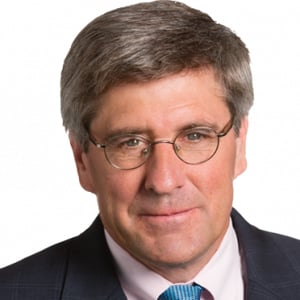
Distinguished Visiting Fellow, Project for Economic Growth, Institute for Economic Freedom and Opportunity
Stephen Moore, who formerly wrote on the economy and public policy for The Wall Street Journal, is the Distinguished Visiting Fellow, Project for Economic Growth, at The Heritage Foundation. Mr. Moore, who also was a member of The Journal’s editorial board, returned to Heritage in January 2014 -- about 25 years after his tenure as the leading conservative think tank’s Grover M. Hermann Fellow in Budgetary Affairs from 1984 to 1987.
As Distinguished Visiting Fellow at Heritage, Mr. Moore focuses on advancing public policies that increase the rate of economic growth to help the United States retain its position as the global economic superpower. He also works on budget, fiscal and monetary policy and showcases states that get fiscal houses in order.
"One of the projects I’m going to be working on is how President Obama has discredited liberal ideas more than anyone,” Mr. Moore said in an interview with The Foundry upon his return to Heritage. “Everything he’s done has been such a massive failure — from the [economic] stimulus to health-care reform to bailouts to green energy.
Mr. Moore’s early career was shaped by three people who had a profound influence on him: Julian Simon, the late Cato Institute scholar; Edwin J. Feulner, a co-founder of Heritage; and Art Laffer, the economist best known for the Laffer curve.
“What makes them so great is they were willing to take on the conventional wisdom. They were subject to a lot of criticism for doing that,” Mr. Moore told The Foundry. “Those are the real change-makers.”
Mr. Moore calls his creation of the Club for Growth the defining moment of his career. The organization, which he left in 2004, helps elect conservative members of Congress (including Heritage President Jim DeMint when he first ran for Senate).
Mr. Moore next founded the Free Enterprise Fund before joining The Wall Street Journal. As senior economics writer for the newspaper’s editorial board, he covered Washington policy debates and state issues.
“Because I’ve been a consumer of think tank material and policy research, I think I have a pretty good sense of what reporters want and how to get it to them in the way they want it,” Mr. Moore said. “Being timely — and not just offering opinion but giving them the facts and data is really critical.”
Mr. Moore, who grew up in New Trier Township, Ill., received a bachelor of arts degree from University of Illinois at Urbana-Champaign. He holds a master’s of arts in economics from George Mason University.
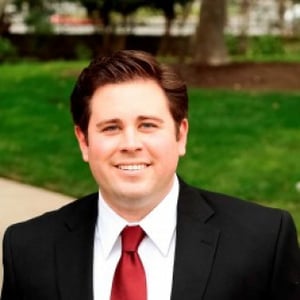
Managing Partner, Bigley Ranish, LLP
Sean M. Bigley is a national security attorney and managing partner of Bigley Ranish, LLP. Mr. Bigley’s practice primarily encompasses defending federal employees and contractors in security clearance denial cases. He also provides personnel security consulting to major international defense and aerospace corporations, and prosecutes intelligence community whistle-blower retaliation cases.
Since first opening his firm in 2013, Mr. Bigley has grown it from a solo practice to a five-attorney partnership with employees in three states. Bigley Ranish, LLP attorneys regularly appear before administrative tribunals at agencies ranging from the CIA to the Department of State, representing in excess of 200 American intelligence officers, diplomats, armed forces personnel, and other security clearance holders each year around the world. In 2016 alone, Mr. Bigley and his colleagues represented clients in roughly forty states and a dozen countries.
The idea for this unique practice was borne out of Mr. Bigley’s prior service as a federal background investigator. Prior to and during law school, Mr. Bigley was an investigator for the U.S. Office of Personnel Management, where he conducted some of that agency’s most sensitive security investigations in the Los Angeles metropolitan area. Mr. Bigley has also served on the faculty of Chapman University, teaching national security and criminal justice courses with an emphasis in U.S.-European security cooperation. Earlier in his career, Mr. Bigley worked for several years in the White House and Department of Homeland Security under President George W. Bush.
A recognized expert in national security law, Mr. Bigley’s commentary on the topic is frequently sought by major media outlets such as Fox News, The New York Times, and CNN. He is a contributing writer for Clearancejobs.com and GovExec.com.
Mr. Bigley earned his Juris Doctorate from Chapman University School of Law. He holds a Bachelor’s Degree from Washington D.C.’s American University and a Master’s Degree from Boston University.
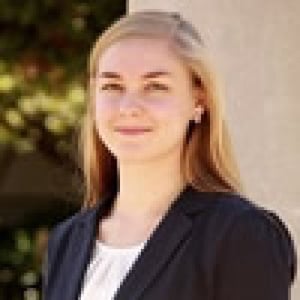
Senior Policy Analyst, The George Washington University Regulatory Studies Center
Sofie Miller's regulatory research portfolio includes economic analysis of energy efficiency standards, analysis of regulatory benefits, use of cost benefit analysis by agencies, retrospective review of existing rules, regressive effects of regulations, and the efficacy of public participation within the rulemaking process. Sofie has submitted public comments on regulations establishing energy efficiency standards, airline passenger protections, consumer product safety, and standards to prevent foodborne illnesses. Sofie has published articles in Regulation Magazine and the journal Engage, and is the editor of the GW Regulatory Studies Center's weekly Regulation Digest, which tracks regulatory developments in federal agencies, think tanks, and the media.
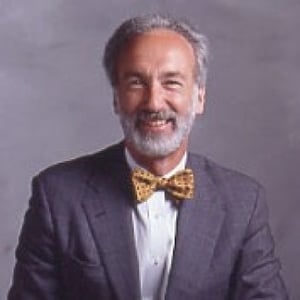
Emeritus Dean and Professor of Law, Lewis & Clark Law School
Professor Huffman joined the law school faculty in 1973, was appointed Acting Dean in 1993 and Dean in 1994, and returned to full time teaching in 2006. Born in Fort Benton, Montana, Jim graduated from Montana State University, the Fletcher School of Law and Diplomacy at Tufts University, and the University of Chicago Law School. He has been a visiting professor at Auckland University in New Zealand, the University of Oregon, the University of Athens in Greece and Universidad Francisco Marroquin in Guatemala. He was also a fellow at the Humane Studies Institute and a Distinguished Bradley Scholar at the Heritage Foundation. Jim serves on the boards of the National Crime Victims Law Institute, the Foundation for Research on Economics and the Environment, the Classroom Law Project, and the Rocky Mountain Mineral Law Foundation. He is a member and former Chair of the Executive Committee of the Environment and Property Rights Practice Group of the Federalist Society. He is a member of the Montana Bar Association and is admitted to practice before the United States Court of Appeals for the Federal Circuit and the United States Supreme Court. He is the author of more than 100 articles and chapters on a wide array of legal topics.
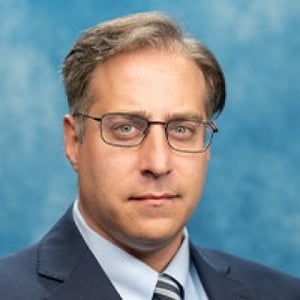
Interim Dean, Florida International University College of Law
Dan Epstein was Vice President at America First Legal and an Associate Professor of Law at St. Thomas University in Miami, Florida. He also advises individuals and small businesses in affirmative and defensive actions against government overreach. Previously, he advised startups on regulatory matters as Director at a venture capital firm. His federal service includes being a Special Assistant to and Senior Associate Counsel to the President and a counsel for the House of Representatives Committee on Oversight and Government Reform. Earlier in his career, Mr. Epstein founded and ran Cause of Action, where he represented clients in government investigations and litigated regulatory, constitutional, political, and public law matters.
He holds a Ph.D. from George Washington University in Political Economy, a J.D. from Emory University School of Law, and a B.A. from Kenyon College. He is active in the Palm Beach community as a member of the Fourth Court of Appeals Judicial Nominating Commission in Florida, a transition team member to Florida Attorney General James Uthmeier, and the Chairman and Trustee of Palm Beach State College.

Laurence H. Silberman Chair in Constitutional Governance, American Enterprise Institute; Executive Director, Antonin Scalia Law School’s C. Boyden Gray Center for the Study of the Administrative State
Adam J. White is the Laurence H. Silberman Chair in Constitutional Governance and senior fellow at the American Enterprise Institute, where he focuses on the Supreme Court and the administrative state. He also directs the Antonin Scalia Law School’s C. Boyden Gray Center for the Study of the Administrative State.
He writes on regulation and constitutional government for a variety of publications. He practiced law in Washington, D.C., after clerking for the D.C. Circuit's Judge David Sentelle. He also has been chairman of the ABA's Administrative Law Section.
In 2021, he served on the Presidential Commission on the Supreme Court of the United States, where he criticized “Court packing” and other efforts to restructure the Supreme Court.

Executive Vice President, The Federalist Society
Dean Reuter is Executive Vice President at the Federalist Society for Law and Public Policy Studies. He has served in two federal government agency Offices of the Inspector General, as Counsel to the Inspector General and Deputy Inspector General, responsible for policing the use of federal funds granted and contracted through those agencies. As such, he helped conduct and oversee criminal investigations across the country. He is the principal author of the non-fiction book, The Hidden Nazi: The Untold Story of America's Deal with the Devil, and editor of Liberty’s Nemesis: The Unchecked Expansion of the State and Confronting Terror: 9/11 and the Future of American National Security. He was appointed by the President and served as Vice-Chairman of the Board of Directors of the Corporation for National and Community Service, and recently served as an appointee on the U.S. Commission on Presidential Scholars. He is a graduate of Hood College (BA with Honors) and the University of Maryland School of Law.
Denver Managing Partner, Wilkinson Barker Knauer LLP
Raymond L. Gifford counsels communications, electric and gas utilities, and information technology companies on state and federal aspects of regulation, administrative law, and competition policy. He is an expert in public utilities law, and the law and economics of regulation of network industries. Mr. Gifford’s law and policy work focuses on the convergence of broadband communications and energy, as well as environmental policy as it applies to the electric industry. He represents clients in state and federal courts and agencies, and serves as an expert witness on utility regulation and its history. He is also a Senior Adjunct Fellow at the Silicon Flatirons Center for Law, Technology and Entrepreneurship, and Co-Directs the Institute for Regulatory Law & Economics at University of Colorado Law School.
Mr. Gifford served as Chairman of the Colorado Public Utilities Commission from 1999-2003. Following that, he served as President of The Progress & Freedom Foundation, a Washington DC-based think-tank that studied the digital revolution as it relates to regulation of network industries. He entered the regulatory law world as First Assistant Attorney General in the Colorado Attorney General’s Office. He clerked for the Honorable Richard P. Matsch of the United States District Court for the District of Colorado. Mr. Gifford has authored a number of articles on communications law, public utility regulation and competition policy in network industries. He is a graduate of University of Chicago Law School and St. John’s College in Annapolis, Maryland. He is an elected member of the American Law Institute
Under Secretary of Energy, United States Department of Energy
The Honorable Mark Wesley Menezes, Under Secretary of Energy serves as the Department’s principal advisor on energy policy and on a wide array of existing and emerging energy technologies. The Under Secretary is responsible for driving transformative energy policy, and technology solutions through coordinated planning, management and performance of the Department’s energy programs.
Prior to being confirmed as Under Secretary of Energy, Mr. Menezes was an executive with Berkshire Hathaway Energy in its Washington, D.C. office. Before joining BHE, Mr. Menezes was a partner at Hunton & Williams LLP, where he headed the Regulated Markets and Energy Infrastructure practice group. Prior to Hunton, he served as Chief Counsel, Energy and Environment, U.S. House of Representatives Committee on Energy and Commerce, serving as chief negotiator for the House Majority in the enactment of the Energy Policy Act of 2005. Before his service with House Energy & Commerce, he was Vice President with Central and South West, and upon its merger with American Electric Power, served as Vice President and Associate General Counsel for federal and state legislative and regulatory affairs.
Mr. Menezes has been named in National Journal’s “Hill 100”—top Congressional staff for his work on both energy and environmental matters. He has been frequent guest speaker and lecturer before numerous associations and civic groups, including legal education seminars where he has been called on to address the nation’s energy and environmental policies, utility restructuring, telecommunications, ethics, merger and acquisition practices, and regulatory and legislative processes. He has co-authored numerous articles, a practice manual, and been quoted in the New York Times, Law360, Oil and Gas Journal, Politico as well as interviewed by E&ETV. He’s been listed Best Lawyers in America 2013–2016, Corporate Counsel’s Top Lawyers 2006–2011, Washington Post’s Top Lawyers 2008–2016, and DC Super Lawyers 2012–2016.
Mr. Menezes is a graduate of Louisiana State University receiving both his undergraduate and juris doctor degree. Until joining the government he was a charter member of the Advisory Council, Louisiana State University Law John P. Laborde Energy Law Center, and served on the Board of Directors of the Congressional Chorus & American Youth Chorus.
Distinguished Visiting Fellow, Project for Economic Growth, Institute for Economic Freedom and Opportunity
Stephen Moore, who formerly wrote on the economy and public policy for The Wall Street Journal, is the Distinguished Visiting Fellow, Project for Economic Growth, at The Heritage Foundation. Mr. Moore, who also was a member of The Journal’s editorial board, returned to Heritage in January 2014 -- about 25 years after his tenure as the leading conservative think tank’s Grover M. Hermann Fellow in Budgetary Affairs from 1984 to 1987.
As Distinguished Visiting Fellow at Heritage, Mr. Moore focuses on advancing public policies that increase the rate of economic growth to help the United States retain its position as the global economic superpower. He also works on budget, fiscal and monetary policy and showcases states that get fiscal houses in order.
"One of the projects I’m going to be working on is how President Obama has discredited liberal ideas more than anyone,” Mr. Moore said in an interview with The Foundry upon his return to Heritage. “Everything he’s done has been such a massive failure — from the [economic] stimulus to health-care reform to bailouts to green energy.
Mr. Moore’s early career was shaped by three people who had a profound influence on him: Julian Simon, the late Cato Institute scholar; Edwin J. Feulner, a co-founder of Heritage; and Art Laffer, the economist best known for the Laffer curve.
“What makes them so great is they were willing to take on the conventional wisdom. They were subject to a lot of criticism for doing that,” Mr. Moore told The Foundry. “Those are the real change-makers.”
Mr. Moore calls his creation of the Club for Growth the defining moment of his career. The organization, which he left in 2004, helps elect conservative members of Congress (including Heritage President Jim DeMint when he first ran for Senate).
Mr. Moore next founded the Free Enterprise Fund before joining The Wall Street Journal. As senior economics writer for the newspaper’s editorial board, he covered Washington policy debates and state issues.
“Because I’ve been a consumer of think tank material and policy research, I think I have a pretty good sense of what reporters want and how to get it to them in the way they want it,” Mr. Moore said. “Being timely — and not just offering opinion but giving them the facts and data is really critical.”
Mr. Moore, who grew up in New Trier Township, Ill., received a bachelor of arts degree from University of Illinois at Urbana-Champaign. He holds a master’s of arts in economics from George Mason University.
Laurence H. Silberman Chair in Constitutional Governance, American Enterprise Institute; Executive Director, Antonin Scalia Law School’s C. Boyden Gray Center for the Study of the Administrative State
Adam J. White is the Laurence H. Silberman Chair in Constitutional Governance and senior fellow at the American Enterprise Institute, where he focuses on the Supreme Court and the administrative state. He also directs the Antonin Scalia Law School’s C. Boyden Gray Center for the Study of the Administrative State.
He writes on regulation and constitutional government for a variety of publications. He practiced law in Washington, D.C., after clerking for the D.C. Circuit's Judge David Sentelle. He also has been chairman of the ABA's Administrative Law Section.
In 2021, he served on the Presidential Commission on the Supreme Court of the United States, where he criticized “Court packing” and other efforts to restructure the Supreme Court.

The Department of Energy’s Actions to Save Nuclear and Coal
Raymond L. Gifford, Mark W. Menezes, Stephen Moore
Last month, Bloomberg News revealed a leaked memorandum from the Department of Energy purporting to...
The Department of Energy’s Actions to Save Nuclear and Coal
Environmental Law & Property Rights Practice Group Teleforum
TeleforumTopics
The President's Power to Keep Congress at Work
Nearly a year and a half in to his first term as president, the Senate...
Presidential Nominees and Foreign Influence: Mitigating National Security Risks
Sean M. Bigley
Note from the Editor: This article describes the procedures involved in determining whether to grant...
The Risks of Regulating in the Dark
Sofie E. Miller
Note from the Editor: This article argues that regulations passed in the final weeks of...
Chevron Deference in the Circuit Courts: An Empirical Study
Recent opinions from the Supreme Court and policy debates within the halls of Washington have...
Environmental Regulation and Natural Resource Management
James L. Huffman
Although opinion polling generally indicates that the environment is low on the list of public...
Redressing Politicized Spending
Daniel Z. Epstein
Note from the Editor: This article is about politicized spending in the federal discretionary budget. ...
Energy and the Executive: Yucca Mountain and the Separation of Powers - Podcast
Adam White, Dean Reuter
The effort to build the Yucca Mountain Nuclear Waste Repository has been a decades-long political...
Energy and the Executive: Yucca Mountain and the Separation of Powers
Teleforum