

Partner, Gibson Dunn
Lucas C. Townsend is a litigation partner in the Washington, D.C. office of Gibson, Dunn & Crutcher. He is a member of the firm’s Appellate and Constitutional Law and Intellectual Property practice groups.
Mr. Townsend has litigated a wide range of appellate and trial matters in federal and state court. Mr. Townsend’s appellate practice includes representing corporate clients in high-stakes commercial disputes, litigating cutting-edge legal issues before the Supreme Court of the United States, and representing pro bono clients before the courts of appeals. Mr. Townsend’s intellectual property practice includes representing pharmaceutical, internet, and other technology companies in patent and trademark disputes. In addition, Mr. Townsend regularly represents clients in litigation under the Administrative Procedure Act and provides counseling on accounting regulation.
Representative matters include serving as appellate counsel for the world’s largest social networking website and drafting successful briefing in a significant noninfringement appeal; briefing appeals on behalf of pharmaceutical patent holders in Hatch-Waxman Act litigation; drafting successful briefing for a documentary filmmaker’s First Amendment challenge to Colorado’s campaign finance laws; briefing appeals from final judgments in a landmark securities-fraud class action; representing a national hospital network in appellate litigation resulting in a $60 million reduction in a punitive damages award; representing broadcasters in litigation against the Federal Communications Commission under the Administrative Procedure Act; representing a for-profit education company in an enforcement action brought by the Consumer Financial Protection Bureau; and briefing numerous matters in the Supreme Court of the United States involving class certification, antitrust, employment, and constitutional issues.
Before joining the firm, Mr. Townsend served as a law clerk to the Honorable Samuel A. Alito, Jr. of the Supreme Court of the United States, the Honorable Maryanne Trump Barry of the United States Court of Appeals for the Third Circuit, and the Honorable Harold A. Ackerman of the United States District Court for the District of New Jersey. Mr. Townsend also served as an Attorney Adviser in the United States Department of Justice, National Security Division, from 2007 to 2009.
Mr. Townsend graduated magna cum laude from the Seton Hall University School of Law, where he was Executive Editor of the Seton Hall Law Review. He received an undergraduate degree in biochemistry from Cornell University.
Mr. Townsend is admitted to practice in the District of Columbia, New York, and New Jersey.
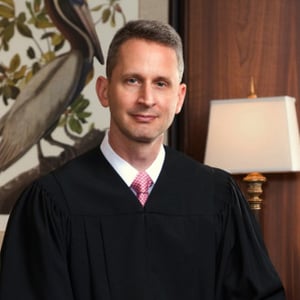
Judge, United States Court of Appeals, Fifth Circuit
Judge Duncan received his B.A. from Louisiana State University in 1994, his J.D. from the Paul M. Hebert Law Center at Louisiana State University in 1997, and his LL.M. from Columbia Law School in 2004.
After graduating from law school, he clerked for Louisiana-based Circuit Judge John Malcolm Duhé Jr. of the United States Court of Appeals for the Fifth Circuit.
From 2008–2012, Duncan served as Appellate Chief for Louisiana's Attorney General's office. From 2012–2014, he served as general counsel of the Becket Fund for Religious Liberty. From 2004-2008, he was an assistant professor of law at the University of Mississippi School of Law.
Before becoming a judge, Duncan practiced at the Washington, D.C. firm of Schaerr Duncan LLP, where he was a founding partner. He was appointed by President Trump to the United States Court of Appeals for the Fifth Circuit on May 1, 2018.
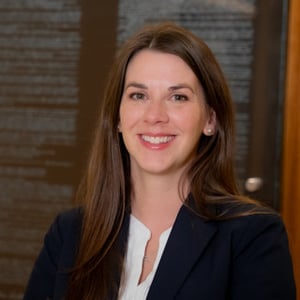
Vice President, Practice Groups, The Federalist Society
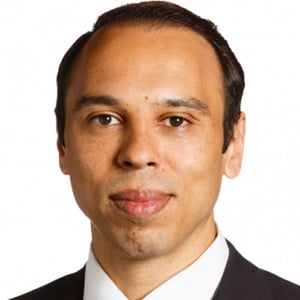
Vice President of Domestic and Economic Policy, The Heritage Foundation
Roger Severino is Vice President of Economic and Domestic Policy, and the Joseph C. and Elizabeth A. Anderlik Fellow at The Heritage Foundation.
Severino is a national authority on civil rights, conscience and religious freedom, the administrative state, and information privacy, particularly as applied to health care law and policy. Find his tweets at @RogerSeverino_.
Severino spearheaded the HHS Accountability Project while a Senior Fellow at EPPC from 2021 to 2023. Previously, Severino was Director of HHS’ Office for Civil Rights, where he led a team of over 250 staff enforcing our nation’s civil rights, conscience and religious freedom, and health information privacy laws. He served from 2017 to 2021 and was the longest-serving OCR director of the past three decades.
Prior to joining HHS, Severino served for two years as Director of the DeVos Center for Religion and Civil Society at Heritage, advocating for life, family, and religious-freedom policies. Before that, he was a trial attorney for seven years at the U.S. Department of Justice’s Civil Rights Division where he enforced the Fair Housing Act and the Civil Rights Act of 1964. Severino started his legal career at the Becket Fund for Religious Liberty, where he was Legal Counsel and Chief Operations Officer and defended the rights of people of all faiths under federal and international law.
Severino has been profiled in The New York Times, The Atlantic, The Wall Street Journal, and The Hill and has appeared on Fox News, CNN, MSNBC, NPR, and PBS, among others. In 2020, The New York Times dubbed him and his wife Carrie, “a conservative power couple” to be reckoned with.
Severino holds a JD from Harvard Law School, a master’s degree in public policy, with highest distinction, from Carnegie Mellon University, and a bachelor’s degree in business from the University of Southern California. He was appointed by President Trump to the Administrative Conference of the United States and is a member of the District of Columbia and the Commonwealth of Virginia bars.
As OCR director, Severino founded the federal government’s first division dedicated exclusively to conscience and religious freedom compliance and enforcement. He enforced the Weldon Amendment for the first time against a state (California) after it coerced families and religious organizations into paying for abortion insurance coverage, leading to a $200 million federal funding disallowance. He also enforced laws protecting pro-life pregnancy resource centers from discrimination by states hostile to their message and enforced laws prohibiting forced participation in abortions by medical professionals.
With respect to civil rights, Severino protected older persons and people with disabilities from being denied life-saving care due to discriminatory “quality of life” judgments, especially during the COVID-19 pandemic. He also achieved a landmark sexual harassment resolution with Michigan State University in the wake of the Larry Nassar sexual assault scandal and protected the rights of non-English speakers to have equal access to health and human services.
In the area of health privacy, he secured the largest HIPAA monetary settlement in history and achieved the largest number of enforcement resolutions both in a single year and across four years. He also facilitated the transformational use of Skype, Zoom, and Facetime for delivery of telehealth during the COVID-19 pandemic and beyond.
His regulatory reform activities resulted in a comprehensive conscience protection regulation and proposed a life-affirming disability rights regulation. He achieved regulatory savings of $3.6 billion in health care industry costs over five years and identified and proposed an additional $3.2 billion in cost savings from the repeal of ineffective and unnecessary regulatory burdens.
Severino is a Spanish speaker who teaches salsa and west coast swing in his spare time.
Partner, Gibson Dunn
Lucas C. Townsend is a litigation partner in the Washington, D.C. office of Gibson, Dunn & Crutcher. He is a member of the firm’s Appellate and Constitutional Law and Intellectual Property practice groups.
Mr. Townsend has litigated a wide range of appellate and trial matters in federal and state court. Mr. Townsend’s appellate practice includes representing corporate clients in high-stakes commercial disputes, litigating cutting-edge legal issues before the Supreme Court of the United States, and representing pro bono clients before the courts of appeals. Mr. Townsend’s intellectual property practice includes representing pharmaceutical, internet, and other technology companies in patent and trademark disputes. In addition, Mr. Townsend regularly represents clients in litigation under the Administrative Procedure Act and provides counseling on accounting regulation.
Representative matters include serving as appellate counsel for the world’s largest social networking website and drafting successful briefing in a significant noninfringement appeal; briefing appeals on behalf of pharmaceutical patent holders in Hatch-Waxman Act litigation; drafting successful briefing for a documentary filmmaker’s First Amendment challenge to Colorado’s campaign finance laws; briefing appeals from final judgments in a landmark securities-fraud class action; representing a national hospital network in appellate litigation resulting in a $60 million reduction in a punitive damages award; representing broadcasters in litigation against the Federal Communications Commission under the Administrative Procedure Act; representing a for-profit education company in an enforcement action brought by the Consumer Financial Protection Bureau; and briefing numerous matters in the Supreme Court of the United States involving class certification, antitrust, employment, and constitutional issues.
Before joining the firm, Mr. Townsend served as a law clerk to the Honorable Samuel A. Alito, Jr. of the Supreme Court of the United States, the Honorable Maryanne Trump Barry of the United States Court of Appeals for the Third Circuit, and the Honorable Harold A. Ackerman of the United States District Court for the District of New Jersey. Mr. Townsend also served as an Attorney Adviser in the United States Department of Justice, National Security Division, from 2007 to 2009.
Mr. Townsend graduated magna cum laude from the Seton Hall University School of Law, where he was Executive Editor of the Seton Hall Law Review. He received an undergraduate degree in biochemistry from Cornell University.
Mr. Townsend is admitted to practice in the District of Columbia, New York, and New Jersey.
Judge, United States Court of Appeals, Fifth Circuit
Judge Duncan received his B.A. from Louisiana State University in 1994, his J.D. from the Paul M. Hebert Law Center at Louisiana State University in 1997, and his LL.M. from Columbia Law School in 2004.
After graduating from law school, he clerked for Louisiana-based Circuit Judge John Malcolm Duhé Jr. of the United States Court of Appeals for the Fifth Circuit.
From 2008–2012, Duncan served as Appellate Chief for Louisiana's Attorney General's office. From 2012–2014, he served as general counsel of the Becket Fund for Religious Liberty. From 2004-2008, he was an assistant professor of law at the University of Mississippi School of Law.
Before becoming a judge, Duncan practiced at the Washington, D.C. firm of Schaerr Duncan LLP, where he was a founding partner. He was appointed by President Trump to the United States Court of Appeals for the Fifth Circuit on May 1, 2018.

What Are We Learning About For-Profit Education? - Podcast
Lucas Townsend
During the Obama administration, the Department of Education promulgated a host of rules aimed specifically...
What Are We Learning About For-Profit Education?
TeleforumCourthouse Steps: Gloucester County School Board v. G.G. - Podcast
Stuart Kyle Duncan
In late October the Supreme Court accepted a petition from the School Board of Gloucester County,...
Courthouse Steps: Gloucester County School Board v. G.G.
TeleforumHow Republicans Feed the Beast of Political Correctness
John Fund has an excellent column up at National Review Online on "How Republicans Feed...
Fisher v. UT–Austin and the Future of Racial Preferences in College Admissions
Elizabeth Slattery
Note from the Editor: This article discusses the Supreme Court’s recent decision in Fisher v. University...
Title IX & Transgender Bathrooms in Public Schools
Roger Severino
Roger Severino oversees the DeVos Center for Religion and Civil Society at the Heritage Foundation,...
Topics
The Department of Education's Misguided Consumer Protection Initiative
Inside Higher Ed is reporting that the National Advisory Committee on Institutional Quality and Integrity...
MCLE Lunch: Common Core, Commode Core, and the Growing Need for Decentralization in Education
Irvine, CaliforniaTopics
New California Bill Threatens Religious Colleges
“Your funding or your faith: choose one only.” That is message the California Senate sent...