
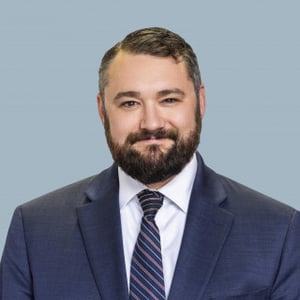
Partner, Ashbrook Byrne Kresge Flowers LLC
Ben Flowers, a partner at Ashbrook Byrne Kresge Flowers LLC, is an accomplished litigator with experience briefing, arguing, and winning high-stakes cases in courts throughout the country.
Before joining the law firm, Ben served as Ohio's 10th Solicitor General. In that role he regularly represented the State of Ohio before the Supreme Court of the United States, the United States Court of Appeals for the Sixth Circuit, and the Supreme Court of Ohio. Most prominently, in National Federation of Independent Business v. Department of Labor, Ben led a multi-state challenge to OSHA's vaccine mandate, ultimately prevailing before the Supreme Court.
Ben is a graduate of The Ohio State University and the University of Chicago Law School. Following law school, Ben clerked for Judge Sandra Ikuta of the U.S. Court of Appeals for the Ninth Circuit and for Justice Antonin Scalia of the Supreme Court of this United States. Ben lives in Upper Arlington, Ohio with his wife Denise and their three very active children.

Partner and Co-Chair, Constitutional and Appellate Law Practice Group, Gibson, Dunn & Crutcher LLP
Allyson N. Ho is a partner in the Dallas office of Gibson, Dunn & Crutcher LLP and co‐chair of the Firm’s nationwide Appellate and Constitutional Law practice group.
Mrs. Ho is “undoubtedly one of the premier appellate lawyers in the United States” (Chambers). She has presented over 100 oral arguments in federal and state courts nationwide, including multiple high‐stakes cases on behalf of business before the U.S. Supreme Court.
Her most significant winning arguments include a U.S. Supreme Court reversal worth billions of dollars for unionized employers in the Sixth Circuit; a U.S. Supreme Court reversal limiting the power of federal regulators; a multi‐billion dollar environmental win in the Fifth Circuit; a multi‐billion dollar commercial victory for the founder of a technology company in the Appellate Division of the New York Supreme Court; a billion dollar environmental win in the Houston Court of Appeals; a nine‐figure commercial victory in the Corpus Christi Court of Appeals; and a nine‐figure arbitration win in the Fifth Circuit.
Among her numerous accolades, Mrs. Ho is one of only a small group of appellate lawyers nationwide, and the only one in Texas, to be nationally ranked by Chambers every year for the past ten years (2012‐21). She is also one of the few appellate lawyers nationwide to be named to the BTI Client Service All‐Stars List, an honor bestowed by the corporate counsel community for lawyers “who stand above all the others in delivering the absolute best in client service.” She is also routinely named as a leading appellate lawyer by Benchmark, The Best Lawyers in America®, The Legal 500, Texas Super Lawyers, and D Magazine.
Mrs. Ho has received the Gregory S. Coleman Outstanding Appellate Lawyer Award (Texas Bar Foundation, June 22, 2018), been named a “Distinguished Leader” (Texas Lawyer, Sep. 1, 2017) and “Appellate MVP” (Law360, Nov. 23, 2015), and been recognized on the “Appellate Hot List” (National Law Journal, Nov. 16, 2015). In addition, she has been profiled in “Texas Powerhouse” (Law360, Aug. 2, 2021), “Texas Appellate Power Couple” (Texas Lawbook, January 7, 2021), “Litigators of the Week” (The American Lawyer, May 8, 2020), “Litigation Powerhouse” (Law360, Aug. 10, 2016), “Supreme Court Insider” (National Law Journal, July 21, 2016), “Supreme Court Specialists, Mostly Male, Dominated Arguments This Term” (National Law Journal, May 11, 2016), “Attorney of the Year Finalist” (Texas Lawyer, Nov. 2, 2015), “Litigation Department of the Year” (Texas Lawyer, June 1, 2015), “Employment Group of the Year” (Law360, Jan. 13, 2015), “A Supreme Month: Lawyer Credits Preparedness in Ability to Argue Two U.S. High Court Cases in Three Weeks” (Texas Lawyer, Dec. 8, 2014), “High Court Debuts for Two Lawyers” (National Law Journal, Nov. 3, 2014), “Women in Business Awards” (Dallas Business Journal, Aug 29, 2014), “Litigation Departments of the Year” (Texas Lawyer, June 2, 2014), “Winning Women” (Texas Lawyer, Aug. 22, 2011), and “High court practitioners: increasingly diverse” (National Law Journal, June 6, 2011).
Federal and State Appellate Practice
Mrs. Ho has argued a series of high stakes, landmark cases on behalf of the business community before the U.S. Supreme Court. National Law Journal called her a “Veteran SCOTUS Advocate” in the “upper echelons of Supreme Court practice.” Law360 named her a “Supreme Court Star” and “one of the nation’s preeminent appellate lawyers.” And EmpiricalSCOTUS.com ranked her among “the most successful attorneys that currently practice before the Court.” Mrs. Ho once argued two significant business cases before the Court within the span of 21 days—including a “significant ruling for employers” that “paved a new path for companies paying millions of dollars in retiree health care benefits” (Law360), as well as a landmark administrative law dispute in which “several justices agreed with Ho’s contention that SCOTUS should revisit and overrule its own precedent” (Law360). She also prevailed against the EEOC in a case that the employment defense bar called “good news for employers across the country.” And in “the most important patent case in modern history” according to patent law experts, her argument before the Court was credited for “pick[ing] up two votes that pundits thought unreachable.”
She has appeared before every federal court of appeals in the country, including en banc arguments before the Fourth and Sixth Circuits. She has successfully represented business clients in every circuit, including the First (Pruco Life Insurance Company), Second (Swiss Federation; Rite Aid), Third (Johnson & Johnson), Fourth (Genex Services), Fifth (United Space Alliance LLC; Elliott Co.; MERSCORP; 24 Hour Fitness USA, Inc.; Stream Energy; Health Management Systems), Sixth (Deutsche Bank; American Airlines; M&G Polymers), Seventh (Expedia), Eighth (Cotter), Ninth (Boeing; JP Morgan Chase Bank), Tenth (Mitchell International), Eleventh (AstraZeneca), D.C. (FedEx), and Federal (Repros Therapeutics) Circuits.
In addition, Mrs. Ho regularly appears in state appellate courts across the country. She has argued numerous cases in the Texas Supreme Court, Texas appellate courts in Dallas, Houston, San Antonio, Corpus Christi, and Eastland, and state appellate courts in Arizona, Michigan, New York, Ohio, Oklahoma, and West Virginia, prevailing on behalf of Ford Motor Company, PepsiCo, International Paper, Tenet, GameStop, Deutsche Bank, and Unit.
Government and Public Service Experience
Mrs. Ho has a distinguished record of experience at the highest levels of the federal government. She served as Special Assistant to President George W. Bush, Counselor to Attorney General John Ashcroft, and law clerk to Justice Sandra Day O’Connor of the U.S. Supreme Court and Judge Jacques L. Wiener Jr. of the U.S. Court of Appeals for the Fifth Circuit.
Her record of public service also includes appointments to various boards and commissions. Among the most notable are her election as a member of the Administrative Conference of the United States, a trustee of the United States Supreme Court Historical Society, and a trustee of the Texas Supreme Court Historical Society. She is also vice chair of the Federal Judicial Evaluation Committee, appointed by U.S. Senators John Cornyn and Ted Cruz to evaluate potential appointments of all federal judges and U.S. Attorneys in Texas, and has previously served on the U.S. Magistrate Judge Merit Selection Panel for the Northern District of Texas.
Other Background Information
An active pro bono litigator, Mrs. Ho works most frequently with the First Liberty Institute and as amicus counsel for the State and Local Legal Center, the National Organization for Victim Assistance, and the National Crime Victim Law Institute. She is a frequent public speaker and active member of the Federalist Society, the American Law Institute, and the Washington Legal Foundation’s Legal Policy Advisory Board.
Mrs. Ho graduated from Duke University magna cum laude with a B.A. in English, Rice University with an M.A. and Ph.D. in English Literature, and the University of Chicago Law School with high honors. She was a member of the Law Review and Order of the Coif. She and her husband Jim, a federal judge, have a twin daughter and son.

General Counsel, Strive Asset Management
When she was unanimously confirmed by the United States
Senate to serve as United States Attorney for the District of
Minnesota in 2006, Rachel Kunjummen Paulose became
the first Indian American woman in American history to be
nominated by the President and confirmed by the Senate
for any federal appointment.
Under Paulose’s leadership, the U.S. Attorney’s Office for
the District of Minnesota recorded the highest number of prosecutions in its history, reflecting the collaborative hard work of law enforcement partners, attorneys, staff, and civic leaders. Paulose also oversaw landmark prosecutions of white collar
crime (including securities, health care, and public corruption cases), narcotics and firearms trafficking cartels, and civil commitment of sexual predators. Paulose tripled child pornography prosecutions, doubled gun prosecutions, and initiated the
first ever prosecutions of human trafficking and aggravated identity theft. Paulose has first chaired jury and bench trials in federal court, briefed and argued cases before the federal appellate courts, and investigated multinational companies in complex parallel criminal and civil international proceedings.
Among other positions in public service, Paulose served as a law clerk to Eighth Circuit Court of Appeals Judge James B. Loken; Trial Attorney for the Voting Section, Civil Rights Division of the U.S. Department of Justice through the Attorney General’s Honors Program; Assistant U.S. Attorney; Senior Counsel to the Deputy
Attorney General; Special Counsel for Health Care Fraud to the Deputy Attorney General; and Special Assistant to the Attorney General of the United States. Paulose also served as Senior Trial Counsel at the U.S. Securities & Exchange Commission. Paulose previously worked as a partner at DLA Piper LLP, then the
largest law firm in the world, and an associate at Williams & Connolly LLP in Washington, D.C.
Paulose has been active in community leadership by serving as a Director of the Yale Law School Fund, Scholarship Judge for the Harry S. Truman Scholarship Foundation, Eighth Circuit Vice President of the Federal Bar Association, Co-Founder of the Federal Bar Association’s Diversity Committee, Director of the National Asian Pacific American Bar Association, American Bar Association
Standing Committee on Public Education, American Bar Association Standing Committee Member on Silver Gavel Awards, Girls State Governor Advisor (after election as the 1990 Ohio Girls State Governor of the largest such program in the nation), Director of the League of Women Voters, Chair of the Committee regarding
the reappointment of the Federal Public Defender of the District of Minnesota (by appointment of the judges of the U.S. Court of Appeals for the Eighth Circuit),
Director of the YMCA Board, guest columnist for the Asian American Press, and frequent contributing author to the American Bar Association Preview of Supreme
Court Cases.
Paulose is a frequently sought commentator. She has provided legal analysis for the BBC, The Wall Street Journal, The Washington Post, USA Today, MSNBC, The Spectator, LBC, Sky News, FOX MN, ABC MN, CBS MN, NBC MN, MPR, and the St. Paul Pioneer Press, among other media representatives. Her live commentary on the Jacob Wetterling plea deal helped KSTP-TV win an Emmy for the day’s
breaking coverage. She has given the keynote addresses at the North American South Asian Bar Association Annual Convention, the North American South Asian Law Students Association Annual Conference, and the National Asian Pacific American Bar Association Annual Meeting (Minnesota). She also presented at the
Nobel Peace Prize Forum, American Bar Association Annual Convention, International Business Law Institute, Jewish Community Relations Council, Yale Law School, and Harvard Law School, among other institutions.
In February 2015, Paulose was honored as one of the thirty leading Minnesota women history makers by the Chief Judge of the District and the Federal Bar Association in what is now a traveling court exhibit. In April 2016, Paulose’s biography was added to the Smithsonian Institution’s collection and featured in the
Smithsonian’s collection, “Beyond Bollywood: Indian Americans Shape the Nation” to honor the stories of groundbreaking Indian Americans.
Paulose taught criminal law, criminal procedure, investigations, and human exploitation (human trafficking and child pornography) at the University of St. Thomas School of Law. She served as the faculty advisor to the Black Law Students Association (BLSA) and the Federalist Society. She also served as a faculty mentor
to graduates and current students, particularly women and students of color.
Paulose received her J.D. from the Yale Law School, where she was a Coker Fellow, Editor of the Yale Journal of Law and Feminism, and Commencement Standard Bearer. She graduated summa cum laude with a B.A. from the University of Minnesota, which she attended on full merit scholarships and where she was the Commencement Speaker, Chair of the Student Representatives to the Board of
Regents, and Phi Beta Kappa. Paulose is a 1991 Harry S. Truman Scholar.

Judge, United States Court of Appeals, Sixth Circuit
Judge Readler earned his undergraduate and law degrees from the University of Michigan. After graduating, he served as a law clerk to Judge Alan Norris of the United States Court of Appeals for the Sixth Circuit. Judge Readler then began practicing law in the Columbus office of the international law firm Jones Day, eventually spending ten years as a partner in the firm’s Issues and Appeals Practice Group. While at Jones Day, Judge Readler appeared in state and federal trial and appellate courts around the country, most frequently the Supreme Court of Ohio and the Sixth Circuit. Judge Readler also successfully argued before the United States Supreme Court in McQuiggin v. Perkins on behalf of an inmate claiming actual innocence. His other pro bono representations include representing capital defendants before the Tenth Circuit and the Supreme Court of Ohio, as well as representing defendants sentenced to life in prison before the Sixth Circuit. While at Jones Day, Judge Readler traveled to Nairobi with Lawyers Without Borders to train Kenyan lawyers in prosecuting domestic violence cases, and he was also a recipient of the American Marshall Memorial Fellowship awarded by the German Marshall Fund of the United States. Following his career in private practice, Judge Readler served as Acting Assistant Attorney General for the Civil Division of the United States Department of Justice from 2017 to 2019. In that role, Judge Readler led and supervised over 1,000 lawyers in the Department’s largest litigating division, briefing and arguing several cases on behalf of the United States in federal courts across the country, including high-profile cases significant to the Administration and the Department. In March 2019, Judge Readler was confirmed to serve as a Circuit Judge on the Sixth Circuit. He resides in Columbus.
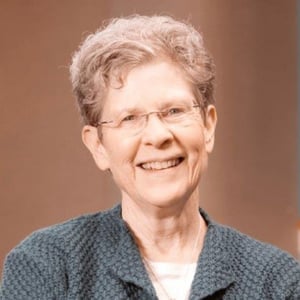
Senior Judge, U.S. Court of Appeals, Sixth Circuit
Alice M. Batchelder obtained her first judicial post as a judge on the U.S. Bankruptcy Court for the Northern District of Ohio in 1983. After two years, she was appointed by President Ronald Reagan to the U.S. District Court for the Northern District of Ohio. In 1991 President George H.W. Bush appointed her to her position on the U.S. Court of Appeals for the Sixth Circuit. From August 2009 to August 2014, Judge Batchelder served as Chief Judge of the Sixth Circuit. In March 2019, she took Senior Status and continues to work nearly full time.
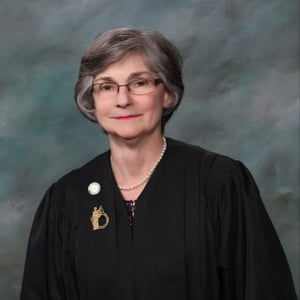
Judge, United States Court of Appeals, Fifth Circuit
Edith Jones graduated from Alamo Heights High School, where she was a National Merit Scholar. In 1971, she received her B.A. in Economics from Cornell University, graduating with honors. In 1974, she was awarded her J.D. at the University of Texas Law School, where she was a law review editor and received the Order of the Coif.
Judge Jones was the first female partner at Andrews, Kurth, Campbell & Jones (now Hunton Andrews Kurth) where she practiced various types of litigation and bankruptcy cases. Judge Jones went on the federal bench on June 1, 1985.
Judge Jones served as a former member of the National Bankruptcy Review Commission, and as a member of the Judicial Conference Commission on Bankruptcy Rules. Judge Jones served on the White House Fellows Commission. Judge Jones served on the board of the Sam Houston Area Council of the Boy Scouts of America. She has been a member of the Garland Walker Inn of Court in Houston for more than 20 years and its President for at least ten years. Judge Jones is also on the Board of the Calvin Coolidge Presidential Foundation.
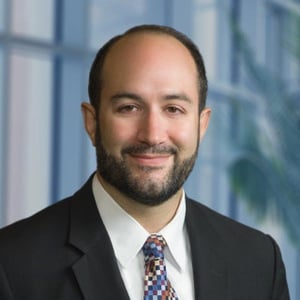
Judge, United States District Court, Northern District of Ohio
Judge J. Philip Calabrese was confirmed to serve on the U.S. District Court for the Northern District of Ohio in December 2020. Previously, he served on the State trial court in the Cuyahoga County Court of Common Pleas. Before taking the bench, he had a complex litigation practice for nearly two decades and was a partner at what is now Squire Patton Boggs and at Porter, Wright, Morris & Arthur, LLP, where he co-chaired the firm’s class action practice. After graduating from Harvard Law School, Judge Calabrese began his legal career as a law clerk to Judge Alice M. Batchelder of the United States Court of Appeals for the Sixth Circuit. He also serves as an adjunct professor at Case Western Reserve University School of Law, where he teaches an advanced course on expert evidence and at the University of Akron School of Law where he teaches the First Amendment’s Speech Clause.
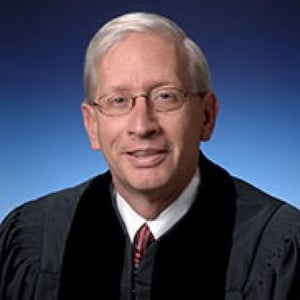
Justice, Ohio Supreme Court
Justice Patrick F. Fischer began his six-year term on the Supreme Court of Ohio on Jan. 1, 2017, following his election in November 2016. Previously, he was elected to serve as a judge on the Ohio First District Court of Appeals in 2010, and was re-elected in 2012.
Justice Fischer has dedicated himself to the practice of law for more than 30 years. An honors graduate of Harvard Law School and Harvard College, as a practicing lawyer he tried cases throughout the country, and was named to Best Lawyers in America, one of the Top 50 Lawyers in Cincinnati, and one of the Top 100 Lawyers in Ohio. He was routinely named to Ohio Super Lawyers.
A respected member of the legal community, from 2012 to 2013 then-Judge Fischer served as president of the Ohio State Bar Association. He previously had served on the Ohio State Bar Association’s Board of Governors, chaired its budget and headquarters committee, and served on numerous other Ohio State Bar Association committees and task forces, and in its House of Delegates. Justice Fischer recently completed his second tenure on the board of the Ohio Lawyers Assistance Program. He also was elected by his peers to serve as president of the Cincinnati Bar Association for 2006 through 2007.
Justice Fischer has an abiding interest in ethics and professionalism. As an attorney he served two terms on the Ohio Supreme Court's Commission on Professionalism, including serving as vice chair. He also chaired the Cincinnati Bar Association's ethics and professional responsibility, as well as its professionalism, committees.
Having represented plaintiffs and defendants while an attorney, Justice Fischer knows the importance of being able to see and listen to both sides of an issue. Knowing and understanding the law as he does, Justice Fischer is keenly aware of how important it is that the law be applied properly to the facts in each case. The late chief justice of the Supreme Court of Ohio, Thomas J. Moyer, named him to co-chair a task force to make the Ohio judicial system more efficient and just. Justice Fischer served on the Ohio Constitutional Modernization Commission, and was vice chair of its committee on the judicial branch.
Justice Fischer began his legal career with a clerkship for U.S. District Court Judge William Bertelsman, and in 1987, he began working for the law firm of Keating Muething & Klekamp. Just four years later, he became a partner in the trial department. Although on inactive status, he also is a licensed attorney in Texas.
In his free time, Justice Fischer is a dedicated public servant. He served on numerous local boards such as the Hamilton County Mental Health & Recovery Services Board, Visions Community Services Board, St. Ursula Villa, and the Pleasant Ridge Community Council. He was a founding member of the Cincinnati Children’s Museum and served on its board.
Justice Fischer, his wife Jane, and their dog live in Cincinnati. He has one married daughter who is a practicing attorney in Ohio, and two grandsons. A graduate of St. Xavier High School, Justice Fischer also is an active, long-time member of St. Xavier Catholic Church in downtown Cincinnati, serving as both a lector and Eucharistic minister.
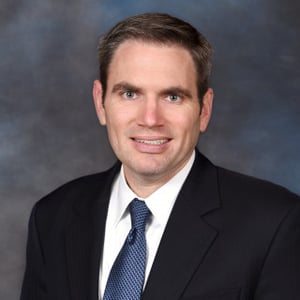
Judge, United States Court of Appeals, Sixth Circuit
Eric Murphy has been a Judge on the United States Court of Appeals for the Sixth Circuit since March 2019. He previously served as the ninth State Solicitor of Ohio. In that role, Eric briefed and argued appellate cases on behalf of Ohio and its state agencies and officers in the U.S. Supreme Court, the U.S. Court of Appeals for the Sixth Circuit, and the Ohio Supreme Court. Before his appointment as State Solicitor, Eric practiced appellate litigation at Jones Day. After graduation from law school, he served as a law clerk for Justice Anthony M. Kennedy of the Supreme Court of the United States, and Judge J. Harvie Wilkinson III of the United States Court of Appeals for the Fourth Circuit. He received his law degree from the University of Chicago and his undergraduate degree from Miami University.
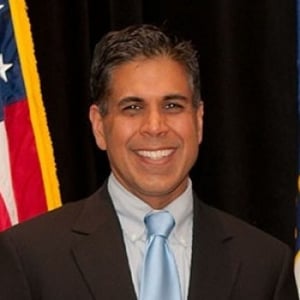
Judge, United States Court of Appeals, Sixth Circuit
Amul R. Thapar serves as a judge on the United States Court of Appeals for the Sixth Circuit. His judicial career began in 2007 when President George W. Bush nominated him to serve on the Eastern District of Kentucky, making him the first South Asian Article III judge in American history. In 2017, he became President Donald J. Trump’s first appellate court nominee.
Before joining the bench, Judge Thapar served as the United States Attorney for the Eastern District of Kentucky. While United States Attorney, Judge Thapar worked on the Attorney General’s Advisory Committee (“AGAC”) and chaired the AGAC’s Controlled Substances and Asset Forfeiture subcommittee. He also served on the Terrorism and National Security subcommittee, the Violent Crime subcommittee, and the Child Exploitation working group.
Judge Thapar has worked in private practice, at Williams & Connolly in Washington, D.C., and Squire, Sanders & Dempsey in Cincinnati, Ohio. He also served as an Assistant United States Attorney in both the Southern District of Ohio and the District of Columbia.
Judge Thapar received his undergraduate degree from Boston College and his law degree from the University of California, Berkeley. After graduating, Judge Thapar worked as a law clerk to the Honorable S. Arthur Spiegel of the United States District Court for the Southern District of Ohio, and the Honorable Nathaniel R. Jones of the United States Court of Appeals for the Sixth Circuit.
Judge Thapar has also published in the Yale Law Journal, Michigan Law Review, and Catholic University Law Review. He teaches courses on originalism, the Federalists and Anti-Federalists, and legal writing at Notre Dame Law School, the University of Virginia School of Law, and Vanderbilt Law School.
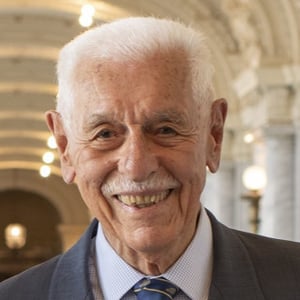
Judge, United States Court of Appeals, Ninth Circuit
Judge Carlos Bea serves as a judge on the United States Court of Appeals for the Ninth Circuit. He received his Bachelor's Degree from Stanford University in 1956 and his J.D. from Stanford Law School in 1958. Judge Bea was born in San Sebastian, Spain, and immigrated with his family to Cuba in 1939. In 1952, he represented Cuba on the Cuban National basketball team in the Helsinki Olympics. Judge Bea became a naturalized citizen of the United States in 1958. He engaged in private practice in San Francisco, principally in the area of civil trials (jury and non-jury), from 1959-75 at Dunne, Phelps & Mills and from 1975-90 at Carlos Bea, A Law Corporation. He taught courses in civil litigation advocacy at Hastings College of Law and Stanford Law School. From 1990 to 2003, Judge Bea served as a judge of the San Francisco Superior Court. He was nominated by President George W. Bush to the United States Court of Appeals for the Ninth Circuit and was confirmed in 2003.
Judge Bea and his wife Louise reside in San Francisco, where they raised their four sons, Sebastian, Alexander, Nicholas, and Dominic.
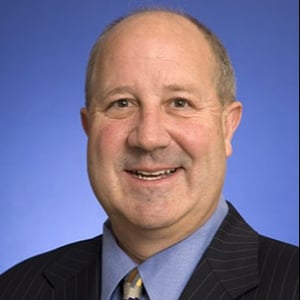
Senior Resident Scholar, Institute of Government Studies, UC Berkeley
Steven Hayward is currently senior resident scholar at the Institute of Governmental Studies at UC Berkeley, and a visiting lecturer at Berkeley Law School. He was previously the Ronald Reagan Distinguished Visiting Professor at Pepperdine University’s Graduate School of Public Policy, and was the inaugural visiting scholar in conservative thought and policy at the University of Colorado at Boulder in 2013-14. From 2002 to 2012 he was the F.K Weyerhaeuser Fellow in Law and Economics at the American Enterprise Institute in Washington DC, and has been senior fellow at the Pacific Research Institute in San Francisco since 1991.
He writes frequently for the New York Times, Washington Post, Wall Street Journal, National Review, the Weekly Standard, the Claremont Review of Books, and other publications. The author of six books including a two-volume chronicle of Reagan and his times entitled The Age of Reagan: The Fall of the Old Liberal Order, 1964-1980, and The Age of Reagan: The Conservative Counter-Revolution, 1980-1989, and the Almanac of Environmental Trends. His most recent book is Patriotism is Not Enough: Harry Jaffa, Walter Berns, and the Arguments That Redefined American Conservatism.

Justice, Texas Fourteenth District Court of Appeals
Katy Boatman was elected to the Fourteenth Court of Appeals, Place 6, in November 2024. She is board certified in civil appellate law and a member of the Texas Association of Civil Trial and Appellate Specialists.
Prior to becoming a judge, Katy practiced appellate law at a large law firm, handling a wide variety of state and federal appeals. She clerked for the Supreme Court of Texas Justice Dale Wainwright and for the United States Fifth Circuit Court of Appeals Chief Judge Jennifer Elrod. She received her bachelor's degree from Texas A&M University and her law degree from Baylor University School of Law, where she served as a senior executive editor of the Baylor Law Review and was a member of the National Order of the Barristers. Katy has been recognized as a Rising Star in appellate law, was honored as a 40 Under 40 recipient by the Houston Business Journal, and was the sole recipient of the American Bar Association's National Outstanding Young Lawyers Award, Outstanding Young Lawyer of Houston Award, and the Outstanding Young Lawyer of Texas.
Katy has been married to her husband since 2005. They have three children and are involved in several non-profit organizations.
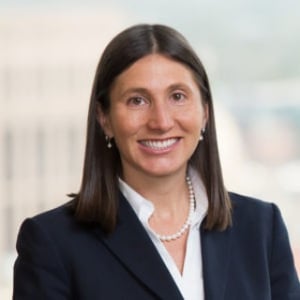
Justice, Texas First Court of Appeals
Jennifer Caughey is your Justice on the First Court of Appeals, Place 2. She was elected to a six year term on the Court, commencing on January 1, 2025. Before serving, Justice Caughey was most recently the Chair of Jackson Walker LLP’s Appellate Section, and she previously served as a Justice on Texas’s First Court of Appeals.
Justice Caughey spent six years as the Chair of Jackson Walker LLP’s Appellate Section, where she handled high-stakes commercial appeals. She appeared regularly at the Texas Supreme Court and in Texas Courts of Appeals, as well as in various federal appellate courts. Before that, she served as a Justice on this Court, where she issued 125 opinions and contributed to 450 appeals.
Beyond judicial service and private practice, Justice Caughey has served Texans in several ways. She serves on the Texas Judicial Council, the policy-making body for the State judiciary. She also served on the State’s Board of Disciplinary Appeals, which hears attorney disciplinary appeals. She serves on the Nominating Committee for the Texas Bar Foundation, and for several years, she chaired the Law School Liaison Committee for the Texas Appellate Bar Association.
Justice Caughey earned her degrees from Princeton University and Harvard Law School. After law school, she clerked for the Honorable Timothy M. Tymkovich, Chief Judge of the U.S. Court of Appeals for the Tenth Circuit, and Justice Robert J. Cordy of the Massachusetts Supreme Judicial Court. She then spent years developing a sophisticated appellate and trial practice.
Judge, United States Court of Appeals, Sixth Circuit
Amul R. Thapar serves as a judge on the United States Court of Appeals for the Sixth Circuit. His judicial career began in 2007 when President George W. Bush nominated him to serve on the Eastern District of Kentucky, making him the first South Asian Article III judge in American history. In 2017, he became President Donald J. Trump’s first appellate court nominee.
Before joining the bench, Judge Thapar served as the United States Attorney for the Eastern District of Kentucky. While United States Attorney, Judge Thapar worked on the Attorney General’s Advisory Committee (“AGAC”) and chaired the AGAC’s Controlled Substances and Asset Forfeiture subcommittee. He also served on the Terrorism and National Security subcommittee, the Violent Crime subcommittee, and the Child Exploitation working group.
Judge Thapar has worked in private practice, at Williams & Connolly in Washington, D.C., and Squire, Sanders & Dempsey in Cincinnati, Ohio. He also served as an Assistant United States Attorney in both the Southern District of Ohio and the District of Columbia.
Judge Thapar received his undergraduate degree from Boston College and his law degree from the University of California, Berkeley. After graduating, Judge Thapar worked as a law clerk to the Honorable S. Arthur Spiegel of the United States District Court for the Southern District of Ohio, and the Honorable Nathaniel R. Jones of the United States Court of Appeals for the Sixth Circuit.
Judge Thapar has also published in the Yale Law Journal, Michigan Law Review, and Catholic University Law Review. He teaches courses on originalism, the Federalists and Anti-Federalists, and legal writing at Notre Dame Law School, the University of Virginia School of Law, and Vanderbilt Law School.

Judge, United States Court of Appeals, Eighth Circuit
David Stras became a judge on the United States Court of Appeals for the Eighth Circuit on January 31, 2018. Before serving on the Eighth Circuit, Judge Stras was an Associate Justice of the Minnesota Supreme Court, a position he occupied from July 1, 2010 until his appointment to the Eighth Circuit.
Prior to becoming a judge, Stras was a member of the faculty of the University of Minnesota Law School from 2004 through 2010. He taught and wrote in the areas of federal courts and jurisdiction, constitutional law, criminal law, and law and politics.
Judge Stras received his Bachelor of Arts degree, with highest distinction, in 1995 and his Master of Business Administration in 1999, both from the University of Kansas. He also received his law degree from the University of Kansas School of Law in 1999, where he served as Editor-in-Chief of the Criminal Procedure Edition of the Kansas Law Review.
Following law school, Stras clerked for The Honorable Melvin Brunetti of the United States Court of Appeals for the Ninth Circuit and then for The Honorable J. Michael Luttig of the United States Court of Appeals for the Fourth Circuit.
From 2001 to 2002, he practiced white-collar criminal and appellate litigation with the Washington, D.C., office of Sidley Austin Brown & Wood. Following his year in practice, he clerked for The Honorable Clarence Thomas of the Supreme Court of the United States.
Partner, Ashbrook Byrne Kresge Flowers LLC
Ben Flowers, a partner at Ashbrook Byrne Kresge Flowers LLC, is an accomplished litigator with experience briefing, arguing, and winning high-stakes cases in courts throughout the country.
Before joining the law firm, Ben served as Ohio's 10th Solicitor General. In that role he regularly represented the State of Ohio before the Supreme Court of the United States, the United States Court of Appeals for the Sixth Circuit, and the Supreme Court of Ohio. Most prominently, in National Federation of Independent Business v. Department of Labor, Ben led a multi-state challenge to OSHA's vaccine mandate, ultimately prevailing before the Supreme Court.
Ben is a graduate of The Ohio State University and the University of Chicago Law School. Following law school, Ben clerked for Judge Sandra Ikuta of the U.S. Court of Appeals for the Ninth Circuit and for Justice Antonin Scalia of the Supreme Court of this United States. Ben lives in Upper Arlington, Ohio with his wife Denise and their three very active children.
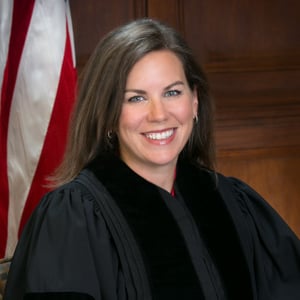
Judge, United States Court of Appeals, Eleventh Circuit
Britt C. Grant is a judge on the U.S. Court of Appeals for the Eleventh Circuit. Judge Grant was appointed to the federal bench in August 2018 after serving as a Justice on the Supreme Court of Georgia. Prior to her judicial appointment, she served as the Solicitor General of Georgia and practiced in the Washington, D.C. office of Kirkland & Ellis. Upon graduation from law school, Judge Grant served as a law clerk to then-Judge Brett M. Kavanaugh of the U.S. Court of Appeals for the District of Columbia Circuit. She earned her J.D., with distinction, from Stanford Law School, where she was the Co-Founder of the Stanford National Security and the Law Society, and the President of the Stanford Law chapter of the Federalist Society. Before enrolling in law school, Judge Grant served in The White House in a variety of domestic policy roles as well as on the staff of Congressman Nathan Deal. Judge Grant earned her B.A., summa cum laude, from Wake Forest University, where she was inducted into Phi Beta Kappa. She now lives in Atlanta, Georgia with her husband and three children.
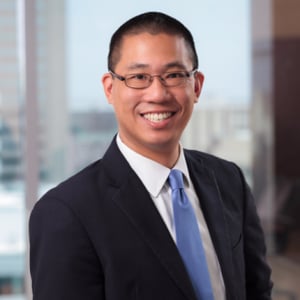
Chair, Issues & Appeals, Hunton Andrews Kurth LLP
The former Solicitor General of West Virginia, Mr. Lin has been on the front lines of many precedent-setting cases in appellate courts across the country, including in a US Supreme Court victory that George Will called “the court’s most severe rebuke of a president” since the Truman administration. Having argued more than 60 appeals, he brings to clients a well-honed ability to identify the most persuasive issues for appeal and a practiced understanding of how best to frame complex legal questions in appellate courts.
With experience in the private sector and multiple branches of government, Mr. Lin’s practice has spanned a wide range of issues, including major questions of constitutional and administrative law at the federal and state levels. On behalf of more than two dozen states, he won a stay from the US Supreme Court of the EPA’s Clean Power Plan. Described by the New York Times as an “unprecedented” order, the stay was the first time the Supreme Court had ever put a regulation on hold before review by a federal appeals court. In that same case, Elbert argued before the en banc DC Circuit in an historic proceeding that one commenter quoted in E&E News compared to “the NBA All-Star Game.” At the state level, Elbert led the effort that persuaded the West Virginia Supreme Court of Appeals to overturn an injunction of the state’s right-to-work law.
In 2013, Mr. Lin was appointed the Solicitor General of West Virginia. During his four-and-a-half year tenure, he served as a member of the Attorney General’s senior management team, oversaw all civil and criminal appeals, and argued nearly two dozen cases in federal and state appellate courts. He authored more than twenty-five briefs in the US Supreme Court and more than forty-five formal Opinions of the Attorney General.
Earlier in his career, Mr. Lin served as a trial attorney in the Federal Programs Branch of the US Department of Justice’s Civil Division, where he received a Special Service Award. He has also been a law clerk at all three levels of the federal judiciary: for Justice Clarence Thomas on the US Supreme Court; for Judge William H. Pryor Jr. on the US Court of Appeals for the Eleventh Circuit; and for Senior Judge Robert E. Keeton on the US District Court for the District of Massachusetts.
Mr. Lin speaks regularly on a wide variety of topics, including constitutional law, administrative law, environmental law, state and federal relations, the US Supreme Court, and appellate practice. He has testified before Congress, and has spoken at the national conventions of the American Bar Association, the Association of Corporate Counsel, the National Asian Pacific American Bar Association, the Federalist Society, Americans for Prosperity, and the American Legislative Exchange Council. He is an elected member of the American Law Institute, a public member of the Administrative Conference of the United States, and a fellow of the American Academy of Appellate Lawyers.
Mr. Lin is admitted to practice in the following federal courts: the Supreme Court of the United States; the First, Second, Third, Fourth, Fifth, Sixth, Seventh, Eighth, Ninth, Eleventh, D.C., and Federal Circuits; the District of Massachusetts; the Northern and Southern Districts of West Virginia; and the Eastern and Western Districts of Virginia.
Solicitor General, North Carolina
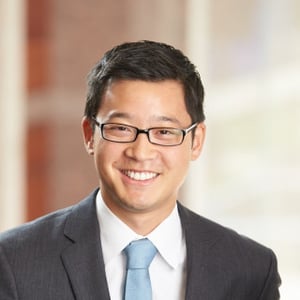
Ryan Park is the Solicitor General of North Carolina, where he oversees the State's civil appellate litigation and advises Attorney General Josh Stein on legal policy and constitutional issues. He has previously practiced at a national law firm, worked as an attorney-adviser at the U.S. Department of State, and clerked for Supreme Court Justices Ruth Bader Ginsburg and David Souter, Judge Robert A. Katzmann on the Second Circuit and Judge Jed S. Rakoff on the Southern District of New York. He graduated summa cum laude from Harvard Law School and with distinction from Amherst College, and has worked in South Korea on a Fulbright Fellowship. He has written on law and society for popular publications, including the Atlantic, the New York Times, and the Washington Post, and also teaches North Carolina Constitutional Law at UNC Law School.
Partner, Ashbrook Byrne Kresge Flowers LLC
Ben Flowers, a partner at Ashbrook Byrne Kresge Flowers LLC, is an accomplished litigator with experience briefing, arguing, and winning high-stakes cases in courts throughout the country.
Before joining the law firm, Ben served as Ohio's 10th Solicitor General. In that role he regularly represented the State of Ohio before the Supreme Court of the United States, the United States Court of Appeals for the Sixth Circuit, and the Supreme Court of Ohio. Most prominently, in National Federation of Independent Business v. Department of Labor, Ben led a multi-state challenge to OSHA's vaccine mandate, ultimately prevailing before the Supreme Court.
Ben is a graduate of The Ohio State University and the University of Chicago Law School. Following law school, Ben clerked for Judge Sandra Ikuta of the U.S. Court of Appeals for the Ninth Circuit and for Justice Antonin Scalia of the Supreme Court of this United States. Ben lives in Upper Arlington, Ohio with his wife Denise and their three very active children.
Judge, United States Court of Appeals, Eleventh Circuit
Britt C. Grant is a judge on the U.S. Court of Appeals for the Eleventh Circuit. Judge Grant was appointed to the federal bench in August 2018 after serving as a Justice on the Supreme Court of Georgia. Prior to her judicial appointment, she served as the Solicitor General of Georgia and practiced in the Washington, D.C. office of Kirkland & Ellis. Upon graduation from law school, Judge Grant served as a law clerk to then-Judge Brett M. Kavanaugh of the U.S. Court of Appeals for the District of Columbia Circuit. She earned her J.D., with distinction, from Stanford Law School, where she was the Co-Founder of the Stanford National Security and the Law Society, and the President of the Stanford Law chapter of the Federalist Society. Before enrolling in law school, Judge Grant served in The White House in a variety of domestic policy roles as well as on the staff of Congressman Nathan Deal. Judge Grant earned her B.A., summa cum laude, from Wake Forest University, where she was inducted into Phi Beta Kappa. She now lives in Atlanta, Georgia with her husband and three children.
Chair, Issues & Appeals, Hunton Andrews Kurth LLP
The former Solicitor General of West Virginia, Mr. Lin has been on the front lines of many precedent-setting cases in appellate courts across the country, including in a US Supreme Court victory that George Will called “the court’s most severe rebuke of a president” since the Truman administration. Having argued more than 60 appeals, he brings to clients a well-honed ability to identify the most persuasive issues for appeal and a practiced understanding of how best to frame complex legal questions in appellate courts.
With experience in the private sector and multiple branches of government, Mr. Lin’s practice has spanned a wide range of issues, including major questions of constitutional and administrative law at the federal and state levels. On behalf of more than two dozen states, he won a stay from the US Supreme Court of the EPA’s Clean Power Plan. Described by the New York Times as an “unprecedented” order, the stay was the first time the Supreme Court had ever put a regulation on hold before review by a federal appeals court. In that same case, Elbert argued before the en banc DC Circuit in an historic proceeding that one commenter quoted in E&E News compared to “the NBA All-Star Game.” At the state level, Elbert led the effort that persuaded the West Virginia Supreme Court of Appeals to overturn an injunction of the state’s right-to-work law.
In 2013, Mr. Lin was appointed the Solicitor General of West Virginia. During his four-and-a-half year tenure, he served as a member of the Attorney General’s senior management team, oversaw all civil and criminal appeals, and argued nearly two dozen cases in federal and state appellate courts. He authored more than twenty-five briefs in the US Supreme Court and more than forty-five formal Opinions of the Attorney General.
Earlier in his career, Mr. Lin served as a trial attorney in the Federal Programs Branch of the US Department of Justice’s Civil Division, where he received a Special Service Award. He has also been a law clerk at all three levels of the federal judiciary: for Justice Clarence Thomas on the US Supreme Court; for Judge William H. Pryor Jr. on the US Court of Appeals for the Eleventh Circuit; and for Senior Judge Robert E. Keeton on the US District Court for the District of Massachusetts.
Mr. Lin speaks regularly on a wide variety of topics, including constitutional law, administrative law, environmental law, state and federal relations, the US Supreme Court, and appellate practice. He has testified before Congress, and has spoken at the national conventions of the American Bar Association, the Association of Corporate Counsel, the National Asian Pacific American Bar Association, the Federalist Society, Americans for Prosperity, and the American Legislative Exchange Council. He is an elected member of the American Law Institute, a public member of the Administrative Conference of the United States, and a fellow of the American Academy of Appellate Lawyers.
Mr. Lin is admitted to practice in the following federal courts: the Supreme Court of the United States; the First, Second, Third, Fourth, Fifth, Sixth, Seventh, Eighth, Ninth, Eleventh, D.C., and Federal Circuits; the District of Massachusetts; the Northern and Southern Districts of West Virginia; and the Eastern and Western Districts of Virginia.
Solicitor General, North Carolina
Ryan Park is the Solicitor General of North Carolina, where he oversees the State's civil appellate litigation and advises Attorney General Josh Stein on legal policy and constitutional issues. He has previously practiced at a national law firm, worked as an attorney-adviser at the U.S. Department of State, and clerked for Supreme Court Justices Ruth Bader Ginsburg and David Souter, Judge Robert A. Katzmann on the Second Circuit and Judge Jed S. Rakoff on the Southern District of New York. He graduated summa cum laude from Harvard Law School and with distinction from Amherst College, and has worked in South Korea on a Fulbright Fellowship. He has written on law and society for popular publications, including the Atlantic, the New York Times, and the Washington Post, and also teaches North Carolina Constitutional Law at UNC Law School.
Partner, Ashbrook Byrne Kresge Flowers LLC
Ben Flowers, a partner at Ashbrook Byrne Kresge Flowers LLC, is an accomplished litigator with experience briefing, arguing, and winning high-stakes cases in courts throughout the country.
Before joining the law firm, Ben served as Ohio's 10th Solicitor General. In that role he regularly represented the State of Ohio before the Supreme Court of the United States, the United States Court of Appeals for the Sixth Circuit, and the Supreme Court of Ohio. Most prominently, in National Federation of Independent Business v. Department of Labor, Ben led a multi-state challenge to OSHA's vaccine mandate, ultimately prevailing before the Supreme Court.
Ben is a graduate of The Ohio State University and the University of Chicago Law School. Following law school, Ben clerked for Judge Sandra Ikuta of the U.S. Court of Appeals for the Ninth Circuit and for Justice Antonin Scalia of the Supreme Court of this United States. Ben lives in Upper Arlington, Ohio with his wife Denise and their three very active children.
Judge, United States Court of Appeals, Eleventh Circuit
Britt C. Grant is a judge on the U.S. Court of Appeals for the Eleventh Circuit. Judge Grant was appointed to the federal bench in August 2018 after serving as a Justice on the Supreme Court of Georgia. Prior to her judicial appointment, she served as the Solicitor General of Georgia and practiced in the Washington, D.C. office of Kirkland & Ellis. Upon graduation from law school, Judge Grant served as a law clerk to then-Judge Brett M. Kavanaugh of the U.S. Court of Appeals for the District of Columbia Circuit. She earned her J.D., with distinction, from Stanford Law School, where she was the Co-Founder of the Stanford National Security and the Law Society, and the President of the Stanford Law chapter of the Federalist Society. Before enrolling in law school, Judge Grant served in The White House in a variety of domestic policy roles as well as on the staff of Congressman Nathan Deal. Judge Grant earned her B.A., summa cum laude, from Wake Forest University, where she was inducted into Phi Beta Kappa. She now lives in Atlanta, Georgia with her husband and three children.
Chair, Issues & Appeals, Hunton Andrews Kurth LLP
The former Solicitor General of West Virginia, Mr. Lin has been on the front lines of many precedent-setting cases in appellate courts across the country, including in a US Supreme Court victory that George Will called “the court’s most severe rebuke of a president” since the Truman administration. Having argued more than 60 appeals, he brings to clients a well-honed ability to identify the most persuasive issues for appeal and a practiced understanding of how best to frame complex legal questions in appellate courts.
With experience in the private sector and multiple branches of government, Mr. Lin’s practice has spanned a wide range of issues, including major questions of constitutional and administrative law at the federal and state levels. On behalf of more than two dozen states, he won a stay from the US Supreme Court of the EPA’s Clean Power Plan. Described by the New York Times as an “unprecedented” order, the stay was the first time the Supreme Court had ever put a regulation on hold before review by a federal appeals court. In that same case, Elbert argued before the en banc DC Circuit in an historic proceeding that one commenter quoted in E&E News compared to “the NBA All-Star Game.” At the state level, Elbert led the effort that persuaded the West Virginia Supreme Court of Appeals to overturn an injunction of the state’s right-to-work law.
In 2013, Mr. Lin was appointed the Solicitor General of West Virginia. During his four-and-a-half year tenure, he served as a member of the Attorney General’s senior management team, oversaw all civil and criminal appeals, and argued nearly two dozen cases in federal and state appellate courts. He authored more than twenty-five briefs in the US Supreme Court and more than forty-five formal Opinions of the Attorney General.
Earlier in his career, Mr. Lin served as a trial attorney in the Federal Programs Branch of the US Department of Justice’s Civil Division, where he received a Special Service Award. He has also been a law clerk at all three levels of the federal judiciary: for Justice Clarence Thomas on the US Supreme Court; for Judge William H. Pryor Jr. on the US Court of Appeals for the Eleventh Circuit; and for Senior Judge Robert E. Keeton on the US District Court for the District of Massachusetts.
Mr. Lin speaks regularly on a wide variety of topics, including constitutional law, administrative law, environmental law, state and federal relations, the US Supreme Court, and appellate practice. He has testified before Congress, and has spoken at the national conventions of the American Bar Association, the Association of Corporate Counsel, the National Asian Pacific American Bar Association, the Federalist Society, Americans for Prosperity, and the American Legislative Exchange Council. He is an elected member of the American Law Institute, a public member of the Administrative Conference of the United States, and a fellow of the American Academy of Appellate Lawyers.
Mr. Lin is admitted to practice in the following federal courts: the Supreme Court of the United States; the First, Second, Third, Fourth, Fifth, Sixth, Seventh, Eighth, Ninth, Eleventh, D.C., and Federal Circuits; the District of Massachusetts; the Northern and Southern Districts of West Virginia; and the Eastern and Western Districts of Virginia.
Solicitor General, North Carolina
Ryan Park is the Solicitor General of North Carolina, where he oversees the State's civil appellate litigation and advises Attorney General Josh Stein on legal policy and constitutional issues. He has previously practiced at a national law firm, worked as an attorney-adviser at the U.S. Department of State, and clerked for Supreme Court Justices Ruth Bader Ginsburg and David Souter, Judge Robert A. Katzmann on the Second Circuit and Judge Jed S. Rakoff on the Southern District of New York. He graduated summa cum laude from Harvard Law School and with distinction from Amherst College, and has worked in South Korea on a Fulbright Fellowship. He has written on law and society for popular publications, including the Atlantic, the New York Times, and the Washington Post, and also teaches North Carolina Constitutional Law at UNC Law School.

Topics
The Supreme Court Hears Oral Argument in Groff v. DeJoy
Background On April 18, 2023, the Supreme Court heard oral argument in the case of...
Panel 3: Courage in the Legal Profession
Columbus, OHLuncheon & Keynote Address
Columbus, OHPanel 1: What is Judicial Courage?
Columbus, OHA Conversation with Judge Carlos Bea
San Francisco Lawyers Chapter, Berkley Student Chapter,
San Francsico, CAA Discussion on Courage, Careers, and Originalism
Houston Lawyers Chapter
Houston, TXSmall Group Dinner with Judge Stras
DC Young Lawyers Chapter
Alexandria, VAThe Role of the Modern State Solicitor General: Current and Former SGs Weigh In
Benjamin M. Flowers, Britt C. Grant, Elbert Lin, Ryan Park
This virtual event featured a panel of current and former state solicitors general exploring and...
The Role of the Modern State Solicitor General: Current and Former SGs Weigh In
Benjamin M. Flowers, Britt C. Grant, Elbert Lin, Ryan Park
This virtual event featured a panel of current and former state solicitors general exploring and...
The Role of the Modern State Solicitor General: Current and Former SGs Weigh In
Teleforum