
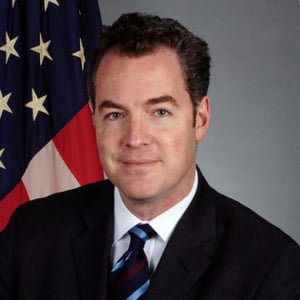
President and Founder, JKC Consulting LLC
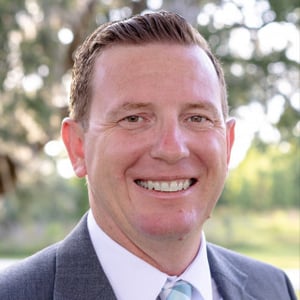
John Kneuer is the President and Founder of JKC Consulting LLC. He sits on multiple public and private company boards.
Prior to starting Kneuer LLC, Mr. Kneuer served as the Assistant Secretary of Commerce for Communications and Information. In this capacity Mr. Kneuer was the principal advisor to the President of the United States on telecommunications policy and the Administrator of the National Telecommunications and Information Administration ("NTIA").In addition to representing the Executive Branch in domestic and international telecommunications and information policy activities, NTIA also manages the federal use of spectrum; performs cutting edge telecommunications research and engineering, including resolving technical telecommunications issues for the federal government and private sector; and administers infrastructure and public telecommunications facilities grants.
Prior to his service at NTIA, Mr. Kneuer served as a Senior Associate at the law firm of Piper Rudnick in Washington, D.C., providing regulatory and legislative representation to corporate clients in the telecommunications, defense, and transportation industries. Earlier in his career, Mr. Kneuer served as the Executive Director for Government Relations at the Industrial Telecommunications Association, and prior to that served as an Attorney-Advisor in the Commercial Wireless Division of the Federal Communications Commission's Wireless Bureau. Mr. Kneuer received B.A. and J.D. degrees from the Catholic University of America.
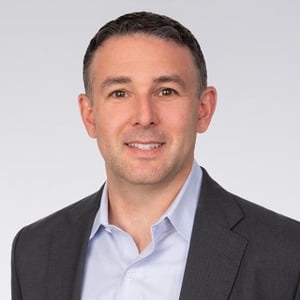
Partner, Wiley Rein, LLP
Ari draws upon his experience in the areas of regulatory policy and compliance, transactions, and litigation, to provide clients with a holistic approach to their legal needs. He represents clients on some of their most important strategic matters, including mergers and acquisitions, significant rulemaking proceedings, and government investigations.
Ari works with clients to maximize the business potential of digital distribution technologies. He advises clients on spectrum monetization and policy, satellite, and cable distribution (including retransmission consent agreements and market definitions), and advertising matters.
Ari frequently represents regulated parties in matters before the Federal Communications Commission’s (FCC) Enforcement Bureau, the Federal Trade Commission (FTC), and other adjudicatory bodies, where he provides strategic guidance, leads internal investigations, and drafts responses to letters of inquiry (LOIs) and subpoenas. He works to achieve favorable results for clients, whether through negotiation, formal responses, or litigation.
Additionally, Ari represents plaintiffs and defendants in federal and state trial and appellate proceedings throughout the United States, including cases relating to trademark and copyright, contractual disputes, and administrative procedure. He regularly works with domestic and international clients on issues related to the distribution of content over the Internet, including helping them to protect and defend their trademark rights and to advise them on copyright matters, including under the Uniform Domain Name Dispute Resolution Policy (UDRP), the Anticybersquatting Consumer Protection Act (ACPA), and the Digital Millennium Copyright Act (DMCA).
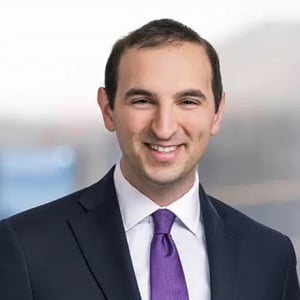
Associate, Covington & Burling LLP
Eli Nachmany is an associate at Covington & Burling LLP in the Washington, DC, office. He clerked for Judge Steven J. Menashi of the U.S. Court of Appeals for the Second Circuit. Eli graduated magna cum laude from Harvard Law School, where he was Editor-in-Chief of the Harvard Journal of Law & Public Policy. Prior to law school, Eli served as the speechwriter to the U.S. Secretary of the Interior and as a domestic policy aide in the White House Office of American Innovation. He graduated summa cum laude from New York University with a B.S. in Sports Management. Eli’s scholarship on administrative law and executive power has appeared in the BYU Law Review, George Mason Law Review, Wake Forest Law Review, and Yale Law Journal Forum.
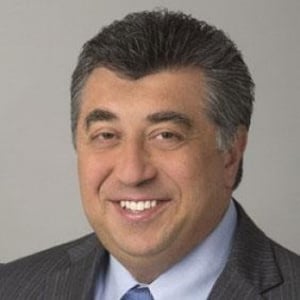
Counsel, Cadwalader, Wickersham & Taft LLP; Senior Competition Counsel, TechFreedom
Bilal Sayyed represents clients before the Federal Trade Commission (FTC) and Department of Justice (DOJ) in significant merger, civil and criminal antitrust matters. A significant portion of his practice involves representing investment funds on antitrust and Hart-Scott-Rodino (HSR) Act compliance matters; he has also provided expert witness services related to HSR compliance. Bilal also counsels clients before the FTC in consumer protection and privacy investigations. He maintains an active amicus and appellate brief writing practice in antitrust litigation and antitrust merger matters.
Prior to joining Cadwalader, Bilal was the Director of the FTC’s Office of Policy Planning (OPP) (2018-2021). In that role, he provided legal and policy advice to the Chairman and Commissioners on antitrust and consumer protection matters and worked closely with the senior and career leadership of the FTC’s Bureaus of Competition, Consumer Protection, and Economics. Bilal previously served as an Attorney Advisor to FTC Chairman Timothy J. Muris from 2001 to 2004. In that role, Bilal advised the Chairman on matters involving a wide spectrum of industries, including chemical and mining, petroleum and natural gas, health care and pharmaceutical, defense and transportation, gaming, various consumer products and retail operations, and professional associations and standard-setting organizations.
Bilal has taught antitrust and competition law at the George Mason University School of Law since 2011.
Bilal received his B.A. from Case Western Reserve University, and a J.D. from George Mason University School of Law. He is admitted to practice in the District of Columbia and the State of New York, as well as before the U.S. District Courts for the District of Colorado and the District of Columbia, the U.S. Court of Appeals for the District of Columbia Circuit, the Fifth Circuit, the Ninth Circuit, and the U.S. Supreme Court.
Bilal is the host of Rethinking Antitrust, a podcast published by TechFreedom that examines the economics, institutions, law, legislation, and policy goals of antitrust enforcement.
Associate Attorney, Gibson Dunn
David Casazza is an associate in the Washington, D.C. office of Gibson, Dunn & Crutcher. He practices in the firm’s Appellate and Constitutional Law, and Administrative Law and Regulatory Practice groups.
Mr. Casazza has represented clients in appellate and regulatory litigation before the Supreme Court of the United States, federal appellate courts, and federal district courts. These cases have involved a wide range of subjects including separation of powers, federal rulemaking challenges, data privacy protections, anti-terrorism claims and foreign sovereign immunity, energy infrastructure permitting, and a variety of First Amendment speech and religious liberty claims. He has also represented clients in complex litigation, obtaining dismissal with prejudice of consumer class actions attacking major brand names. He has been named by Best Lawyers as a 2021 and 2022 “One to Watch” in Appellate Practice.
He graduated magna cum laude from Harvard Law School, where he served as a Managing Editor for the Harvard Journal of Law and Public Policy and as Executive Vice President of the Harvard Federalist Society. Mr. Casazza received an A.B. magna cum laude in history from Princeton and an M.A. in history from the Johns Hopkins University.
Mr. Casazza served as a law clerk to Justice Samuel Alito on the Supreme Court of the United States and for Judge Jennifer Walker Elrod on the United States Court of Appeals for the Fifth Circuit.
He is a member of the bars of New York and the District of Columbia and is admitted to practice in the United States Courts of Appeals for the Third, Fourth, Fifth, and Ninth Circuits and in the United States District Court for the District of Columbia.
Associate, Wiley Rein LLP
Boyd litigates and provides regulatory advice for a wide variety of telecommunications and technology clients.

Litigation Associate, Weil, Gotshal & Manges LLP
Jill Jacobson is an Appeals and Strategic Counseling and Complex Commercial Litigation associate at Weil, Gotshal & Manges LLP. She is a former law clerk to Judge Aileen M. Cannon on the District Court for the Southern District of Florida and a future law clerk to Judge Elizabeth L. Branch on the Court of Appeals for the Eleventh Circuit.
Jill a fellow emeritus at the Independent Women's Law Center and a Senior Contributor at Young Voices. She has also been a Litigation Contractor at the Institute for Justice. She holds a J.D. from Boston College Law School and a Masters from Northeastern University.
Litigation Director, Center for Individual Rights
Caleb Kruckenberg is CIR’s Litigation Director.
Caleb previously worked as a prosecutor, a public defender, a lobbyist for a national advocacy organization and, most recently, an impact litigator protecting the separation of powers at both the Pacific Legal Foundation and the New Civil Liberties Alliance. He has won major victories against numerous federal agencies, including the U.S. Department of Justice, Department of Labor, Bureau of Alcohol Tobacco and Firearms, and the Securities and Exchange Commission. He is also proud to have sued every U.S. attorney general, eight so far, since he has been litigating against the government on behalf of liberty-minded clients. Caleb has also argued more than 20 times in the U.S. Courts of Appeals, winning cases in 8 of the 12 regional circuit courts.
He graduated cum laude from Temple University Beasley School of Law in Philadelphia, where he was the lead articles editor for the Temple Law Review. Caleb also attended the Pennsylvania Academy of the Fine Arts, where he studied figurative painting.
Sheila M. McDevitt Professor of Law and Faculty Director of the Election Law Center, Florida State University College of Law
Professor Morley joined FSU Law in 2018, and teaches and writes in the areas of election law, constitutional law, remedies, and the federal courts. He is best known for his work on election emergencies and post-election litigation, nationwide and other defendant-oriented injunctions, the jurisdiction of the federal courts and their equitable powers more generally. He has testified before congressional committees, made presentations to election officials for the U.S. Election Assistance Commission and participated in bipartisan blue-ribbon groups to develop election reforms. The governor of Florida also appointed Professor Morley to the Criminal Punishment Code Task Force, to propose potential revisions to the legislature.
The U.S. Supreme Court has cited several of his articles, and he was counsel of record for the successful Petitioner in a landmark campaign finance case. Professor Morley has appeared on C-SPAN, Court TV, Fox News and numerous local news programs, and has been quoted in the Washington Post, Los Angeles Times, Roll Call, Politico, U.S. News and World Report, and a wide range of other national publications. His work has been published in many of the nation’s top law reviews, including the Georgetown Law Journal, Northwestern University Law Review, Boston University Law Review and Emory Law Journal.
Before joining FSU Law, Professor Morley was a Climenko Fellow and Lecturer in Law at Harvard Law School. Prior to his experience in academia, he served in government as special assistant to the General Counsel of the Army at the Pentagon, as well as a law clerk for Judge Gerald B. Tjoflat of the U.S. Court of Appeals for the Eleventh Circuit. During his tenure with the Army General Counsel’s office, he was awarded the Meritorious Civilian Service Award and the Army Staff Lapel Pin. He also worked as an associate at Williams & Connolly LLP and the Supreme Court & Appellate group of Winston & Strawn, LLP, both in Washington, D.C.
Professor Morley earned his J.D. from Yale Law School in 2003, where he was a senior editor on the Yale Law Journal; served on the moot court board; and received the Thurman Arnold Prize for Best Oralist in the Morris Tyler Moot Court of Appeals.

Associate, Wiley Rein LLP
Joel S. Nolette is an associate at Wiley Rein LLP, where he advocates on behalf of corporate and individual clients in a broad spectrum of complex litigation matters. In 2017, Joel graduated cum laude from the Georgetown University Law Center, where he served as the Editor in Chief of Volume 15 of the Georgetown Journal of Law and Public Policy. From 2019 to 2021, Joel clerked for the Honorable Raymond W. Gruender of the U.S. Court of Appeals for the Eighth Circuit; and from 2021 to 2022, he clerked for the Honorable Timothy J. Kelly of the U.S. District Court for the District of Columbia. Before attending law school, Joel graduated summa cum laude from Gordon College in Wenham, MA, with his Bachelor of Arts in Biblical Studies and worked as a letter carrier with the U.S. Postal Service.
Associate Professor, UNH Franklin Pierce School of Law
Zvi S. Rosen is an Associate Professor at UNH Franklin Pierce School of Law and the Faculty Director of the Franklin Pierce Society for Intellectual Property. He has served as a Assistant Professor at the Southern Illinois University School of Law, as a Visiting Assistant Professor at the Maurice A. Deane School of Law at Hofstra University, and as a Visiting Scholar and Professorial Lecturer in Law at George Washington University School of Law.
In 2015-2016, he was the Abraham L. Kaminstein Scholar in Residence at the U.S. Copyright Office. Mr. Rosen received his J.D. from Northwestern University School of Law in 2005 and LLM in Intellectual Property in 2006 from the George Washington University Law School. He has practiced at Fried, Frank, Harris, Shriver & Jacobson LLP as well as smaller firms and his own practice, and clerked for the Hon. Thomas B. Bennett of the U.S. Bankruptcy Court for the Northern District of Alabama. He has written extensively on the development of modern copyright and trademark law, as well as on bankruptcy law.

Tazewell Taylor Professor of Law and William H. Cabell Research Professor, William & Mary Law School
Jonathan H. Adler joined the William & Mary law faculty as the Tazwell Taylor Professor of Law and William H. Cabell Research Professor in 2025. Prior to joining the faculty, he was the inaugural Johan Verheij Memorial Professor of Law and the founding Director of the Coleman P. Burke Center for Environmental Law at the Case Western Reserve University School of Law.
Professor Adler is the author or editor of seven books, including Climate Liberalism: Perspectives on Liberty, Property and Pollution (Palgrave, 2023), Marijuana Federalism: Uncle Sam and Mary Jane (Brookings Institution Press, 2020), Business and the Roberts Court (Oxford University Press, 2016) and Rebuilding the Ark: New Perspectives on Endangered Species Act Reform (AEI Press, 2011).
His articles have appeared in publications ranging from the Harvard Environmental Law Review and Yale Journal on Regulation to the Wall Street Journal, New York Times, and Washington Post. He has testified before Congress a dozen times, and his work has been cited in the U.S. Supreme Court. A 2024 study identified Professor Adler as the seventh most cited legal academic in administrative and environmental law from 2019 to 2023.
Professor Adler is a contributing editor to Civitas Outlook and a regular contributor to the popular legal blog, The Volokh Conspiracy. A regular commentator on constitutional and regulatory issues, he has appeared on numerous radio and television programs, ranging from the PBS Newshour and National Public Radio to the Fox News Channel and Entertainment Tonight.
Professor Adler is a senior fellow at the Property & Environment Research Center in Bozeman, Montana. In 2018, Professor Adler was elected to membership in the American Law Institute and helped co-found the organization Checks and Balances. In 2024, Professor Adler was appointed a public member of the Administrative Conference of the United States.
Professor Adler clerked for the Honorable David B. Sentelle on the U.S. Court of Appeals for the District of Columbia Circuit.
Interim Dean, Florida International University College of Law
Dan Epstein was Vice President at America First Legal and an Associate Professor of Law at St. Thomas University in Miami, Florida. He also advises individuals and small businesses in affirmative and defensive actions against government overreach. Previously, he advised startups on regulatory matters as Director at a venture capital firm. His federal service includes being a Special Assistant to and Senior Associate Counsel to the President and a counsel for the House of Representatives Committee on Oversight and Government Reform. Earlier in his career, Mr. Epstein founded and ran Cause of Action, where he represented clients in government investigations and litigated regulatory, constitutional, political, and public law matters.
He holds a Ph.D. from George Washington University in Political Economy, a J.D. from Emory University School of Law, and a B.A. from Kenyon College. He is active in the Palm Beach community as a member of the Fourth Court of Appeals Judicial Nominating Commission in Florida, a transition team member to Florida Attorney General James Uthmeier, and the Chairman and Trustee of Palm Beach State College.
Ralph V. Whitworth Professor in Law, Georgetown University Law Center
Professor Nourse is one of the nation’s leading scholars of Congress, the separation of powers, and statutory interpretation. In addition to her scholarship, she has practiced as an attorney in the White House, the Department of Justice, the Senate, and in private practice. The story of her pioneering work on gender equality is told in Equal: Women Reshape American Law.
Her most recent book is “The Impeachments of Donald Trump: An Introduction to Constitutional Argument” (West 2021). In 2016, Harvard Press published her Misreading Law, Misreading Democracy, on the limits of textualism. She is one of the most-cited scholars on interpretation in the country and has recently co-authored Yale’s revised leading casebook, Statutes, Regulation & Interpretation (West 2024).
Professor Nourse has published widely on the power of the President and the separation of powers, Reclaiming the Constitutional Text from Originalism: The Case of Executive Power, 106 Calif. L. Rev. 1 (2018), and constitutional rights, In Reckless Hands (Norton 2008), the story of Skinner v. Oklahoma and American eugenics.
President Biden appointed Professor Nourse to serve as Vice-Chair of the United States Commission on Civil Rights in 2023, with her term expiring in 2029.
Professor Nourse previously served as Chief Counsel to then Vice President Biden under the Obama Administration. Prior to that role, she practiced as an appellate litigator in the Department of Justice and as Special Counsel to the Senate Judiciary Committee.
Professor Nourse has held chairs at Emory University and the University of Wisconsin. She has been a visiting professor at Yale, NYU, University of Maryland, and Northwestern.
She began her legal career in New York, clerking for legendary trial judge of the Southern District of New York, Edward Weinfeld, and practicing at Paul, Weiss, Rifkind Wharton & Garrison. She left private practice to serve as junior counsel to the Senate-Iran Contra Committee. After serving on the appellate staff of the Civil Division, she was hired as a legal expert for then Senator Joseph Biden.
Professor Nourse is the co-Founder of the Supreme Court Interpretation Lab, which uses big data to analyze trends in Supreme Court analyses. She formerly served as Executive Director of the Georgetown Law Center on Congressional Studies.
Vice President, Practice Groups, The Federalist Society
Deputy Director, Regulatory Studies Center, George Washington University
Will Yeatman is deputy director of the GW Regulatory Studies Center. A lawyer, he has spent almost two decades working on federal regulatory policy, with an emphasis on administrative law.
Yeatman has testified many times before Congress and state legislatures, and his scholarly work has appeared in such academic journals as Georgetown Law Journal, Administrative Law Review, and the (forthcoming) Catholic University Law Review. His popular writing has appeared in The Wall Street Journal, Foreign Policy, and Bloomberg.
Yeatman came to the RSC from the Pacific Legal Foundation. Previously, he had been at the Cato Institute’s Center for Constitutional Studies and the Competitive Enterprise Institute. From 2004 to 2006, he served as a Peace Corps volunteer in the Kyrgyz Republic.
Yeatman holds a BA in environmental sciences from the University of Virginia, an MA in international studies from the Denver University Graduate School of International Studies, and a JD from the Georgetown University Law Center. He is a member of the Washington, DC Bar.
Founder and Partner, Dowd Scheffel PLLC
Matthew Dowd focuses his skills on complex appellate and trial litigation, with an emphasis on patent and intellectual property issues. Through his years of practice, Mr. Dowd has successfully worked on numerous high-stakes and eclectic legal matters, focusing primarily on all stages of complex patent matters (AIA proceedings, litigation, prosecution, and counseling). Mr. Dowd's expertise and leadership are regularly consulted, as he is frequently asked to comment in the press on leading intellectual property issues.
Mr. Dowd has substantial experience with Hatch-Waxman litigation, including all stages of opinion analysis, litigation, and appeals. His technical background in medicinal chemistry is ideally suited for litigating pharmaceutical patents. He has represented clients in a range of trial forums for patent disputes, such as the Eastern District of Texas and the District of Delaware, as well as the Patent Trial and Appeal Board at the USPTO.
He has argued and briefed numerous appeals before the U.S. Court of Appeals for the Federal Circuit and other courts involving issues such as patent law, Hatch-Waxman, administrative law, Fifth Amendment takings, contract claims, government employment issues, and criminal law. In 2018, Mr. Dowd is co-counsel with the Hon. Richard Posner (ret.) of U.S. Court of Appeals for the Seventh Circuit in an appeal before the U.S. Court of Appeals for the Fourth Circuit.
In 2013, Mr. Dowd represented Nobel Laureate James Watson, co-discoverer of the DNA double helix, as amicus curiae in the groundbreaking 2013 Supreme Court gene patent case. Mr. Dowd has over 15 years of experience representing clients before the U.S. Patent and Trademark Office.
Mr. Dowd is also well-known for his successful pro bono representation in the "free-range kids" case. The case was widely reported in the national, local, and international news.
Mr. Dowd attended The George Washington University Law School, graduating with high honors and being awarded Order of the Coif. While attending law school and before, Mr. Dowd worked full-time as a registered patent agent at the renowned IP boutique Sterne, Kessler, Goldstein & Fox.
After law school, Mr. Dowd clerked for the Honorable Paul R. Michel, Chief Judge (ret.) of the U.S. Court of Appeals for the Federal Circuit. While a law clerk, Mr. Dowd gained an insider's perspective on the appellate process. Understanding the appellate process is critical to maximizing success at the earlier stages of a case.
Mr. Dowd is currently appointed as a Professorial Lecturer in Law at The George Washington University Law School. He teaches appellate advocacy and is the coach for the student moot court team for the AIPLA Giles Sutherland Rich Moot Court Competition.
Prior to his legal career, Mr. Dowd spent four years in a Ph.D. program in medical chemistry, studying organic chemistry, pharmacology, and pharmaceutical drug design. During his Ph.D. program, Mr. Dowd's research discovered a novel structure-activity relationship for nicotinic ligands with potential utility in treating Alzheimer's and Parkinson's diseases. Mr. Dowd attended The College of William and Mary, in Williamsburg, VA, and Regis High School in New York City.
Principal, Knowles Intellectual Property Strategies
Sherry M. Knowles is an intellectual property attorney with 30 years of experience in global corporate and private practice, and is a member of the inaugural class of the IPWatchdog Masters™ Hall of Fame.
Currently the Principal of Knowles Intellectual Property Strategies, Ms. Knowles was the Senior Vice President and Chief Patent Counsel at GlaxoSmithKline from 2006-2010, where she served as the worldwide head of patents for all litigation and transactional matters, and managed a global department of over 200 people in 12 offices. At GSK, Ms. Knowles was a member of the Scientific Advisory Board, the Technology Investment Board, the Product Management Board, the Legal Management Team and she led the Global Patents Executive Team.
Ms. Knowles played a key role in the case of GlaxoSmithKline and Tafas v. Dudas, 541 F. Supp. 2d 805 (E.D. Va. 2008). On October 9, 2007, GSK became the first and only company in the US to file a lawsuit to challenge the Final Rules published by the US Patent and Trademark Office on August 7, 2007. During the course of litigation, 20 amicus briefs were filed by parties in support of GSK and Dr. Tafas, including from the AIPLA, PhRMA, BIO, IPO, Washington Legal Foundation and CropLife America. The litigation concluded in October 2009, when David Kappos made the decision to withdraw the contested regulations and GSK agreed to join with the PTO in a motion to dismiss all litigation.
In 2008, Managing IP Magazine named Ms. Knowles one of the top 10 most influential people in Intellectual Property, referring to her as a “Patent Owner’s Advocate.” In 2010, the New Jersey Intellectual Property Lawyers Association awarded GSK, with Ms. Knowles as the representative, the Jefferson Medal for exceptional contribution to Intellectual Property. In 2010, Managing IP Magazine named the GSK Global Patent Team the “In-House IP Team of the Year” for 2009 for the constructive approach to IP in the developing world, the engagement with public policy in Europe and the successful resolution of the USPTO rules matter in the US.
In November 2011, Intellectual Asset Management Magazine listed Ms. Knowles among the top fifty key individuals, companies and institutions that have shaped the IP marketplace in the last eight years. Ms. Knowles is also listed in the IAM 250 “World’s Leading IP Strategists,” published by IAM Magazine in 2011, the IAM 300 “World’s Leading IP Strategists,” published by IAM Magazine in 2012, 2013, 2014, 2015, 2016 and 2017 as well as the IAM 1000 “World’s Leading Patent Professionals” in 2015, 2016 and 2017. She was also included in the list of Top 250 Women in IP by Managing IP Magazine in 2014, Managing IP’s 2016 and 2017 list of “IP Stars”.
Ms. Knowles was Chair of the IP Subcommittee of PhRMA in 2008, and Chair Emeritus of the PhRMA IP Subcommittees in 2009 and 2010. From 2006-2010, she was a member of InterPat, which is the association of Chief Patent Counsels of the major pharmaceutical companies, and from 2008-2010 was a member of the Executive Committee of InterPat. She was the Chair of the work stream on data exclusivity for InterPat from 2006-2010.
President & CEO, IPWatchdog, Inc.
Gene Quinn is a patent attorney and a leading commentator on patent law and innovation policy. Mr. Quinn has twice been named one of the top 50 most influential people in IP by Managing IP Magazine, in both 2014 and 2019. From 2017-2023, Mr. Quinn has also been recognized by IAM Magazine as one of the top 300 IP strategists in the world, and in 2021 he was recognized by IAM in their inaugural Strategy 300 Global Leaders list.
Mr. Quinn founded IPWatchdog.com in 1999, and he is currently President & CEO of IPWatchdog, Inc. According to IAM Magazine, Mr. Quinn “has reshaped the IP debate in the United States in a way that has forced policy makers to carefully consider the macroeconomic effects of IP law and its potential to drive innovation and economic activity.”
Regarded as an expert on software patentability and U.S. patent procedure, Mr. Quinn has advised inventors, entrepreneurs and start-up businesses throughout the U.S. and around the world. He consults with attorneys facing peculiar procedural issues at the Patent Office, advises investors and executives on patent law changes and pending litigation matters, and has represented patent practitioners before the Office of Enrollment & Discipline.
Mr. Quinn began his career as a litigator handling a variety of civil litigation matters, and he has been a patent attorney for nearly two decades. He has previously taught a variety of intellectual property courses at the law school level, teaching courses such as patent law, patent claim drafting, patent prosecution, copyright law, trademark law and introduction to intellectual property at Syracuse University College of Law, Temple University School of Law, The University of Toledo College of Law, the University of New Hampshire School of Law, the John Marshall Law School (Chicago) and Whittier Law School. Since 2000 Mr. Quinn has also taught the leading patent bar review course in the nation.
Mr. Quinn is admitted to practice law in New Hampshire, is a Registered Patent Attorney licensed to practice before the United States Patent Office and is also admitted to practice before the United States Court of Appeals for the Federal Circuit.
Managing Attorney, Rogitz & Associates
John M. Rogitz is an IAM 300 World-Leading IP Strategist and second-generation patent attorney that currently serves as Managing Attorney at Rogitz & Associates. He is also a member of the IPWatchdog Advisory Committee and an adjunct professor at Trinity Law School. In addition, John recently served on the Executive Committee of the IP Section of the California Lawyers Association (2023-2025) and co-founded CLA’s AI Interest Group.
As Managing Attorney at Rogitz & Associates, John manages the firm’s day-to-day operations and many of the firm’s clients. He is a registered patent attorney specializing in patent preparation and prosecution in a range of technologies including artificial intelligence, robotics, autonomous vehicles, extended reality, video games, Internet of things (IoT), blockchain, fintech, rules-based software, computer hardware, medical devices, and other electrical and mechanical inventions. His clients range from startups and independent inventors to Fortune 500 companies. Before joining Rogitz & Associates, John was engaged in civil litigation at the Watkins Firm, a San Diego-based law firm.
John teaches all types of IP at Trinity Law School and has also taught IP at the undergraduate level. He writes for IPWatchdog, America’s leading patent law publication, and has also been published by IP Today, IP Magazine, and others. John regularly speaks to trade groups like the National Association of Patent Practitioners and Licensing Executives Society. Prior to practicing law, John worked in industry as a web developer.
John received his J.D. in 2009 from California Western School of Law, where he was selected for the Dean’s List and served as President of the Student Intellectual Property Law Association. John studied physics at Loyola Marymount University where, among other activities, he wrote for the school newspaper and participated in various philanthropic endeavors.
Professor of Law, DePaul University College of Law
Joshua D. Sarnoff is a professor of law at DePaul University and a faculty member in and former director of the Center for Intellectual Property Law & Information Technology (CIPLIT®). He teaches patent law, advanced patent law, administrative law, law and climate change, and other intellectual property law courses. He was previously a professor at the Washington College of Law, American University, in the Glushko-Samuelson Intellectual Property Law Clinic, and at the University of Arizona College of Law. In academic year 2014-2015, Professor Sarnoff was a Thomas A. Edison Distinguished Scholar at the United States Patent and Trademark Office. He is a registered patent attorney and a member of the bars of Washington D.C. and California, a former member of the board of governors of the Federal Circuit Bar Association, and a member of the boards of directors and advisory boards of various nonprofit organizations. He has written numerous articles and book chapters on patent law and climate change and has been involved in a wide range of intellectual property legal and policy disputes. He has submitted testimony on domestic patent law reform bills, has filed numerous amicus briefs in the United States Supreme Court and in the U.S. Court of Appeals for the Federal Circuit on important patent law issues, has been a pro bono mediator for the Federal Circuit, and has been a consultant to the United Nations Conference on Trade and Development on international intellectual property, trade and environmental issues. Professor Sarnoff was formerly in the private practice of intellectual property, environmental, and food and drug law in Washington, D.C. He received his BS from MIT and JD from Stanford.

Laurence A. Tisch Professor of Law and Director, Classical Liberal Institute, New York University School of Law; Senior Fellow, The Civitas Institute, University of Texas at Austin
Richard A. Epstein is the inaugural Laurence A. Tisch Professor of Law at NYU School of Law. Prior to his joining the faculty, he was a visiting law professor at NYU from 2007 through 2009. He served as the Peter and Kirstin Bedford Senior Fellow at the Hoover Institution from 2000 to 2024. Since 2024 to the present he is a senior lecturer at the Civitas Institute at the University of Texas—Austin. Epstein is also the James Parker Hall Distinguished Service Professor of Law Emeritus and a senior lecturer at the University of Chicago. His initial law school appointment was at the University of Southern California from 1968 to 1972. Epstein received an LL.D., h.c. from the University of Ghent, 2003. He has been a member of the American Academy of Arts and Sciences since 1985 and was a Senior Fellow of the Center for Clinical Medical Ethics at the University of Chicago Division of Biological Sciences, also from 1983. to 2022 He served as editor of the Journal of Legal Studies from 1981 to 1991, and of the Journal of Law and Economics from 1991-2001. From 2001 to 2010 he was a director of the John M. Olin Program in Law and Economics at the University of Chicago.
His newest book, The Myth of Birthright Citizenship: What the Fourteenth Amendment Really Says was published in 2026 (Encounter Books). Prior to that he has published many books including, The Dubious Morality of the Modern Administrative State (Roman & Littlefield 2020).Earlier he published th Classical Liberal Constitution: The Uncertain Quest for Limited Government (Harvard 2014) iHis previous books include Design for Liberty: Private Property, Public Administration and the Rule of Law (Harvard 2011); The Case Against the Employee Free Choice Act (Hoover 2009); Supreme Neglect: How to Revive the Constitutional Protection of Property Rights (Oxford 2008); Antitrust Decrees in Theory and Practice: Why Less is More (AEI 2007); Overdose: How Excessive Government Regulation Stifles Pharmaceutical Innovation (Yale University Press. 2006); How Progressives Rewrote the Constitution (Cato 2006); Cases and Materials on Torts (Aspen Law & Business; 8th ed. 2004); Skepticism and Freedom: A Modern Case for Classical Liberalism (University of Chicago, 2003); Torts (Aspen Law & Business 1999); Principles for a Free Society: Reconciling Individual Liberty with the Common Good (Perseus Books, 1998): Mortal Peril: Our Inalienable Rights to Health Care (Addison-Wesley, 1997); Simple Rules for a Complex World (Harvard, 1995); Bargaining With the State (Princeton, 1993); Forbidden Grounds: The Case Against Employment Discrimination Laws (Harvard , 1992); Takings: Private Property and the Power of Eminent Domain (Harvard, 1985); and Modern Products Liability Law (Greenwood Press, 1980). He has also edited(with Catherine M. Sharkey) Cases and Materials on the Law of Torts (10th edition 2012).
Professor Epstein has written numerous articles on a wide range of legal and interdisciplinary subjects. He has taught courses in administrative law, antitrust law, civil procedure, communications, constitutional law, contracts, corporations, criminal law, employment discrimination law, environmental law, food and drug law health law and policy, legal history, labor law, property, real estate development and finance, jurisprudence, labor law; land use planning, patents, individual, estate and corporate taxation, Roman Law; torts, and workers' compensation.
Professor Epstein also writes a regular column for Civitas Institute, which also sponsors his podcast, The Libertarian with Charles C.W. Cooke, and Law Talk, with Cooke and John Yoo. He also does a podcast with John Batchelor. And appears regularly on the Freedom File with Judge Andrew Napolitano.

Julius E. Davis Professor of Law, University of Minnesota Law School
Ilan Wurman is the Julius E. Davis Professor of Law at the University of Minnesota, where he teaches administrative law and constitutional law. He previously taught at Arizona State University. He writes primarily on the Fourteenth Amendment, administrative law, separation of powers, and constitutionalism. His academic writing has appeared in the Yale Law Journal, the Stanford Law Review, the University of Chicago Law Review, the University of Pennsylvania Law Review, the Virginia Law Review, the Duke Law Journal, the Minnesota Law Review, the Notre Dame Law Review, and the Texas Law Review among other journals.
Professor Wurman is the author of the new book The Constitution of 1789: A New Introduction (Cambridge 2026). His previous books include A Debt Against the Living: An Introduction to Originalism (Cambridge 2017), and The Second Founding: An Introduction to the Fourteenth Amendment (Cambridge 2020). He is also the author of the casebook, Administrative Law Theory and Fundamentals: An Integrated Approach (Foundation Press 3d ed. 2025).
Professor Wurman practices law with the firm Tully Bailey. He has litigated a variety of administrative law and constitutional law cases, including cases involving COVID-19 restrictions, transmission lines, and Appointments Clause challenges. He also devised winning public nuisance theories to force city governments to address the increasingly challenging public camping crises throughout the country.
Associate Professor of Law, Notre Dame Law School
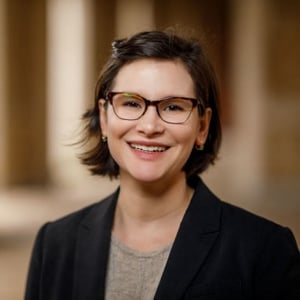
Sadie Blanchard teaches and writes about contracts and international business law. Her research examines how legal institutions interact with social forces to shape behavior, especially in markets. Before coming to Notre Dame 2018, she was the Fellow in Private Law at Yale Law School, a research fellow at the Max Planck Institute on International Procedural Law in Luxembourg, and a law clerk to The Hon. Charles N. Brower of the Iran-United States Claims Tribunal, in his capacity as an independent arbitrator in foreign direct investment disputes. She also practiced law in Paris in the international arbitration group of King & Spalding.
Blanchard earned a B.A. in economics summa cum laude from Louisiana State University and a J.D. from Yale Law School.
Professor of Law & Helen L. Crocker Faculty Scholar, Stanford Law School
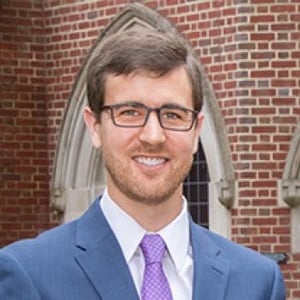
Jud Campbell joined the faculty of Stanford Law School in 2023. He previously served as a professor of law at the University of Richmond School of Law and as a visiting professor of law at the University of Chicago Law School and at Harvard Law School. His academic focus is constitutional history and First Amendment law. His publications include articles in the Stanford Law Review, Yale Law Journal, Harvard Law Review, Texas Law Review, Constitutional Commentary, and Law and History Review. After completing his J.D. at Stanford Law School, he clerked for Judge Diane S. Sykes on the U.S. Court of Appeals for the Seventh Circuit, and for Judge José A. Cabranes on the U.S. Court of Appeals for the Second Circuit. He then served as the Executive Director of the Stanford Constitutional Law Center. He holds a bachelor’s degree from the University of North Carolina at Chapel Hill and two master’s degrees from the London School of Economics, where he studied as a Marshall Scholar.
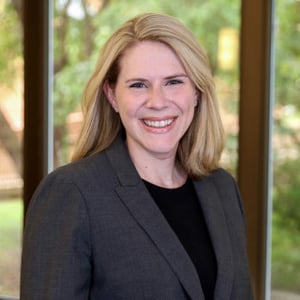
Professor of Law, Co-Director of the Center on the Structural Constitution, Texas A&M University School of Law
Katherine Mims Crocker is a Professor of Law and Faculty Co-Director of the Center on the Structural Constitution at Texas A&M University School of Law. She is also an affiliate of the Stanford Constitutional Law Center. Her scholarship focuses on federal courts, civil-rights litigation, constitutional law, and state and local-government law. She has also taught courses in civil procedure, property, and judicial decision making. Professor Crocker has published papers (or has work forthcoming) in leading journals including the Duke Law Journal, Harvard Law Review, Michigan Law Review, Minnesota Law Review, Notre Dame Law Review, Virginia Law Review, and Washington University Law Review.
Before joining Texas A&M, Professor Crocker was on the faculty at William & Mary Law School and completed a fellowship at Duke Law School. She also practiced at McGuireWoods LLP in Richmond, Virginia, where she concentrated on appellate litigation. Professor Crocker clerked for Justice Antonin Scalia of the Supreme Court of the United States and Judge J. Harvie Wilkinson III of the U.S. Court of Appeals for the Fourth Circuit. She received her law degree from the University of Virginia, where she graduated first in her class and was an Articles Development Editor on the Virginia Law Review. She earned her undergraduate degree from Harvard University cum laude.
Laurence A. Tisch Professor of Law and Director, Classical Liberal Institute, New York University School of Law; Senior Fellow, The Civitas Institute, University of Texas at Austin
Richard A. Epstein is the inaugural Laurence A. Tisch Professor of Law at NYU School of Law. Prior to his joining the faculty, he was a visiting law professor at NYU from 2007 through 2009. He served as the Peter and Kirstin Bedford Senior Fellow at the Hoover Institution from 2000 to 2024. Since 2024 to the present he is a senior lecturer at the Civitas Institute at the University of Texas—Austin. Epstein is also the James Parker Hall Distinguished Service Professor of Law Emeritus and a senior lecturer at the University of Chicago. His initial law school appointment was at the University of Southern California from 1968 to 1972. Epstein received an LL.D., h.c. from the University of Ghent, 2003. He has been a member of the American Academy of Arts and Sciences since 1985 and was a Senior Fellow of the Center for Clinical Medical Ethics at the University of Chicago Division of Biological Sciences, also from 1983. to 2022 He served as editor of the Journal of Legal Studies from 1981 to 1991, and of the Journal of Law and Economics from 1991-2001. From 2001 to 2010 he was a director of the John M. Olin Program in Law and Economics at the University of Chicago.
His newest book, The Myth of Birthright Citizenship: What the Fourteenth Amendment Really Says was published in 2026 (Encounter Books). Prior to that he has published many books including, The Dubious Morality of the Modern Administrative State (Roman & Littlefield 2020).Earlier he published th Classical Liberal Constitution: The Uncertain Quest for Limited Government (Harvard 2014) iHis previous books include Design for Liberty: Private Property, Public Administration and the Rule of Law (Harvard 2011); The Case Against the Employee Free Choice Act (Hoover 2009); Supreme Neglect: How to Revive the Constitutional Protection of Property Rights (Oxford 2008); Antitrust Decrees in Theory and Practice: Why Less is More (AEI 2007); Overdose: How Excessive Government Regulation Stifles Pharmaceutical Innovation (Yale University Press. 2006); How Progressives Rewrote the Constitution (Cato 2006); Cases and Materials on Torts (Aspen Law & Business; 8th ed. 2004); Skepticism and Freedom: A Modern Case for Classical Liberalism (University of Chicago, 2003); Torts (Aspen Law & Business 1999); Principles for a Free Society: Reconciling Individual Liberty with the Common Good (Perseus Books, 1998): Mortal Peril: Our Inalienable Rights to Health Care (Addison-Wesley, 1997); Simple Rules for a Complex World (Harvard, 1995); Bargaining With the State (Princeton, 1993); Forbidden Grounds: The Case Against Employment Discrimination Laws (Harvard , 1992); Takings: Private Property and the Power of Eminent Domain (Harvard, 1985); and Modern Products Liability Law (Greenwood Press, 1980). He has also edited(with Catherine M. Sharkey) Cases and Materials on the Law of Torts (10th edition 2012).
Professor Epstein has written numerous articles on a wide range of legal and interdisciplinary subjects. He has taught courses in administrative law, antitrust law, civil procedure, communications, constitutional law, contracts, corporations, criminal law, employment discrimination law, environmental law, food and drug law health law and policy, legal history, labor law, property, real estate development and finance, jurisprudence, labor law; land use planning, patents, individual, estate and corporate taxation, Roman Law; torts, and workers' compensation.
Professor Epstein also writes a regular column for Civitas Institute, which also sponsors his podcast, The Libertarian with Charles C.W. Cooke, and Law Talk, with Cooke and John Yoo. He also does a podcast with John Batchelor. And appears regularly on the Freedom File with Judge Andrew Napolitano.
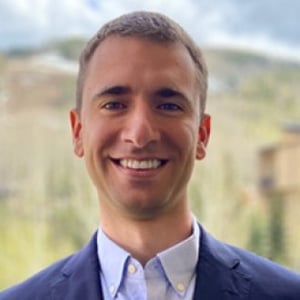
Law Clerk to the Hon. Kevin Newsom
Jeff Hetzel is a law clerk for Judge Kevin Newsom of the U.S. Court of Appeals for the Eleventh Circuit. He attended Stanford Law School, where he was president of the Federalist Society, a Bradley Fellow at the Constitutional Law Center, and a Hoover Institution Rising Fellow. He also served as a research assistant for Professors Michael McConnell and William Baude. He was a summer associate at Latham & Watkins LLP, Gibbs & Bruns LLP, and the New Hampshire Public Defender. Before law school, he worked in criminal defense for three years. He holds a B.A. from Middlebury College.

Antonin Scalia Professor of Law, Harvard Law School
Stephen E. Sachs is the Antonin Scalia Professor of Law at Harvard Law School, where he teaches civil procedure, conflict of laws, and seminars on constitutional law. His research focuses on the law and theory of constitutional interpretation, the jurisdiction of state and federal courts, the history of procedure and private law, and the role of the general common law in the U.S. legal system.
Sachs has authored numerous articles, essays, and book chapters. He is an elected member of the American Law Institute, an adviser to the ALI’s project on the Restatement of the Law (Third), Conflict of Laws, a former member of the Judicial Conference’s Advisory Committee on Appellate Rules, and a founding member of the Academic Freedom Alliance.
In 2020, Sachs received the Federalist Society’s Joseph Story Award, which recognizes a young academic who has demonstrated excellence in legal scholarship, a commitment to teaching, a concern for students, and who has made a significant public impact in a manner that advances the rule of law in a free society.
Sachs previously taught at Duke University School of Law and as a visiting professor at the University of Chicago Law School. Before entering academia, he practiced in the Washington, D.C., litigation group of Mayer Brown LLP, and he clerked for Chief Justice John G. Roberts Jr. as well as for Judge Stephen F. Williams of the U.S. Court of Appeals for the D.C. Circuit.
Sachs received his J.D. from Yale Law School, where he was executive editor of the Yale Law Journal and served both as executive editor and articles editor of the Yale Law & Policy Review. A Rhodes Scholar, he graduated from Oxford University with a first-class BA (Hons) degree in philosophy, politics, and economics. He received his A.B. degree summa cum laude in history from Harvard University, earning the Sophia Freund Prize.
Sachs is a licensed attorney in Massachusetts and the District of Columbia, and he is authorized to practice before the D.C. Circuit, the Second Circuit, the Seventh Circuit, and the Supreme Court of the United States.
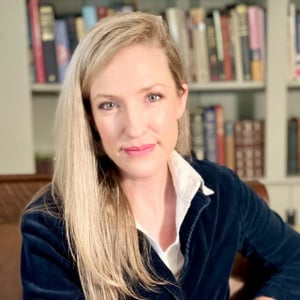
Resident Fellow, Yale Law School
Lorianne Updike Toler is a constitutional legal historian and president of Libertas Constitutional Consulting, where she specializes in constitution-writing best practices, having worked and lived in Libya and the MENA region. She was the “midwife” to The Quill Project at Oxford and the founding president of The Constitutional Sources Project (www.ConSource.org) in Washington, DC. A graduate of Brigham Young University’s School of Communications and Law School (magna cum laude) and Oxford (MSt), she has published, spoken, and taught on US constitutional history, comparative constitutional history, intellectual property, Christianity, and religious freedom.
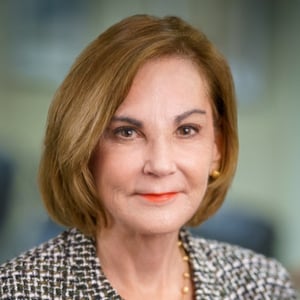
Partner, Marzulla Law
Ms. Marzulla served as an Attorney-Advisor and as a trial lawyer prosecuting employment violations in the Civil Rights Division at the U.S. Department of Justice. Later, Nancie joined the law firm of Verner, Liipfert (now DLA Piper), where she litigated complex airline and other civil matters. In 1991, She founded Defenders of Property Rights, where she was involved in high profile takings cases in the Supreme Court, federal courts of appeal, and trial courts. Ms. Marzulla also worked at the International Labor Organization in Geneva, Switzerland doing comparative legal research.
Nancie G. Marzulla is a founding partner of Marzulla Law, ranked as one of the nation’s “Best Law Firms,” and a “Tier One” environmental litigation firm by the U.S. News and World Report. Nancie’s litigation practice concentrates on water rights, takings, and contract claims in the U.S. Court of Federal Claims. She also has extensive experience in handling matters involving property, water, environmental law, Indian tribal claims, development, and natural resources in trial courts, courts of appeal, the Supreme Court, and in international tribunals. Nancie also represents corporate clients in enforcement or permitting disputes with federal regulatory agencies.
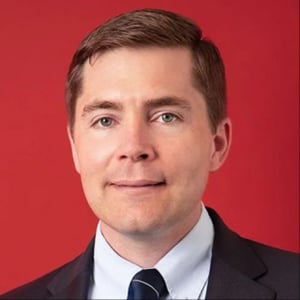
Senior Attorney, Pacific Legal Foundation
Damien Schiff is a senior attorney at Pacific Legal Foundation. He leads its environmental practice group, a unique initiative that draws broadly from PLF’s expertise and success in property rights and separation of powers litigation. Over the years, Damien has represented hundreds of landowners and property rights advocates to defend their liberties against heavy-handed and unwarranted environmental and land-use regulation. His litigation experience includes Sackett v. U.S. Environmental Protection Agency, a groundbreaking decision in which the U.S. Supreme Court upheld the right of landowners to challenge Clean Water Act compliance orders issued by EPA, and Contoski v. Norton, PLF’s successful effort to force the federal government to make good on its promise to delist the bald eagle from the Endangered Species Act.
Besides litigation, Damien has written academic articles on a variety of subjects, including the Endangered Species Act, the Clean Water Act, greenhouse gas torts, the duty to rescue, and international water law. He has appeared on a variety of television and radio programs and has been quoted in The New York Times, The Wall Street Journal, Harper’s Magazine, and The Economist, among other publications.
He obtained his law degree magna cum laude from the University of San Diego School of Law, and his undergraduate degree magna cum laude from Georgetown University. While at USD, he was a research assistant for Professor Bernard Siegan, a leading constitutional theorist and advocate for property rights and economic liberty. Immediately prior to joining PLF, Damien clerked for Judge (and former PLF attorney) Victor Wolski of the United States Court of Federal Claims. Damien credits the mentoring and examples of Professor Siegan and Judge Wolski for his decision to pursue a career in liberty-based public interest litigation.
Damien lives in Sacramento with his wife, two young sons, four chickens, and a cat named Princess. In his off hours he enjoys stamp collecting, Gregorian chant, and martinis—preferably at the same time.
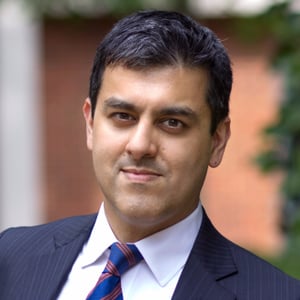
Professor of Law, University of Virginia School of Law
Aditya Bamzai is a professor of law at the University of Virginia. He teaches administrative law, civil procedure, computer crime and conflicts of law, and he has written about these and related subjects. He has argued cases relating to the separation of powers and national security in the U.S. Supreme Court, Foreign Intelligence Surveillance Court of Review, D.C. Circuit and other federal courts of appeals. From 2019 to 2021, he served as a Member of the Privacy and Civil Liberties Oversight Board, a federal agency charged with ensuring that the government’s national security efforts are balanced with the need to protect privacy and civil liberties. Before entering the academy, Bamzai was an attorney-adviser in the Office of Legal Counsel of the U.S. Department of Justice, and an appellate attorney in both private practice and for the National Security Division of the Department of Justice. Earlier in his career, he was a law clerk to Justice Antonin Scalia of the Supreme Court of the United States and to Judge Jeffrey Sutton of the Sixth Circuit Court of Appeals.
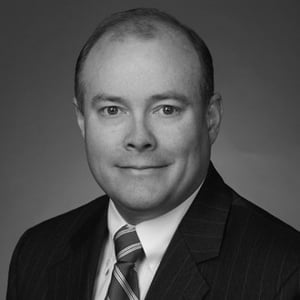
Partner, Kirkland and Ellis, LLP
John O'Quinn is a Partner in Kirkland's Washington, D.C. office. His practice focuses on litigation, including intellectual property disputes, commercial litigation, regulatory issues arising from or likely to lead to litigation, and other complex litigation matters at both the trial and appellate levels. He has extensive argument experience before both trial and appellate courts, and has argued in most of the U.S. Courts of Appeals, including the D.C. Circuit and the Federal Circuit. Mr. O'Quinn has been to trial multiple times, where he has examined expert and fact witnesses. Representative clients include Apple, Boeing, B. Braun Medical, Charter Communications, C.R. Bard, POET LLC, Siemens, and Teva Pharmaceuticals.
From 2006 to 2009, Mr. O'Quinn served in the United States Department of Justice. As Deputy Associate Attorney General, he was responsible for helping to oversee much of the government's civil litigation and reviewing proposed settlements of multi-million dollar civil cases brought by or against the government. As the Deputy Assistant Attorney General for the Federal Programs Branch of the Civil Division, Mr. O'Quinn supervised over 100 attorneys charged with defending the constitutionality of federal statutes and regulations, representing the diplomatic and national security interests of the United States in court, and conducting significant Title VII, personnel, social security, Medicare and Medicaid-related litigation. Mr. O'Quinn worked with counsel from virtually every federal agency on complex civil litigation matters and personally directed significant cases defending the government's interests, arguing more than 20 cases in federal court. In February of 2009, Mr. O'Quinn was awarded the Office of the Secretary of Defense Medal for Exceptional Public Service for his leadership in defending the Department of Defense in lawsuits challenging the detention and trial of enemy combatants captured abroad by United States Armed Forces.
Mr. O'Quinn was previously an associate with Kirkland from 2003 to 2006. While on leave from the Firm, he served as special counsel to the United States Senate Committee on the Judiciary for the nomination of Chief Justice Roberts. Prior to joining the Firm, Mr. O'Quinn was a law clerk for Justice Antonin Scalia of the U.S. Supreme Court and Judge David Sentelle of the U.S. Court of Appeals for the D.C. Circuit.
While at Kirkland, Mr. O'Quinn has also provided legal counseling and representation for individuals and organizations on a pro bono basis, including arguing a habeas petition on behalf of a defendant convicted of capital murder, and submitting FOIA requests on behalf of a civil rights organization.
President and Founder, JKC Consulting LLC
John Kneuer is the President and Founder of JKC Consulting LLC. He sits on multiple public and private company boards.
Prior to starting Kneuer LLC, Mr. Kneuer served as the Assistant Secretary of Commerce for Communications and Information. In this capacity Mr. Kneuer was the principal advisor to the President of the United States on telecommunications policy and the Administrator of the National Telecommunications and Information Administration ("NTIA").In addition to representing the Executive Branch in domestic and international telecommunications and information policy activities, NTIA also manages the federal use of spectrum; performs cutting edge telecommunications research and engineering, including resolving technical telecommunications issues for the federal government and private sector; and administers infrastructure and public telecommunications facilities grants.
Prior to his service at NTIA, Mr. Kneuer served as a Senior Associate at the law firm of Piper Rudnick in Washington, D.C., providing regulatory and legislative representation to corporate clients in the telecommunications, defense, and transportation industries. Earlier in his career, Mr. Kneuer served as the Executive Director for Government Relations at the Industrial Telecommunications Association, and prior to that served as an Attorney-Advisor in the Commercial Wireless Division of the Federal Communications Commission's Wireless Bureau. Mr. Kneuer received B.A. and J.D. degrees from the Catholic University of America.
Partner, Wiley Rein, LLP
Ari draws upon his experience in the areas of regulatory policy and compliance, transactions, and litigation, to provide clients with a holistic approach to their legal needs. He represents clients on some of their most important strategic matters, including mergers and acquisitions, significant rulemaking proceedings, and government investigations.
Ari works with clients to maximize the business potential of digital distribution technologies. He advises clients on spectrum monetization and policy, satellite, and cable distribution (including retransmission consent agreements and market definitions), and advertising matters.
Ari frequently represents regulated parties in matters before the Federal Communications Commission’s (FCC) Enforcement Bureau, the Federal Trade Commission (FTC), and other adjudicatory bodies, where he provides strategic guidance, leads internal investigations, and drafts responses to letters of inquiry (LOIs) and subpoenas. He works to achieve favorable results for clients, whether through negotiation, formal responses, or litigation.
Additionally, Ari represents plaintiffs and defendants in federal and state trial and appellate proceedings throughout the United States, including cases relating to trademark and copyright, contractual disputes, and administrative procedure. He regularly works with domestic and international clients on issues related to the distribution of content over the Internet, including helping them to protect and defend their trademark rights and to advise them on copyright matters, including under the Uniform Domain Name Dispute Resolution Policy (UDRP), the Anticybersquatting Consumer Protection Act (ACPA), and the Digital Millennium Copyright Act (DMCA).

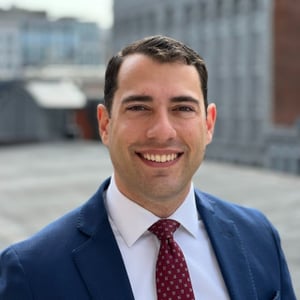
Litigation Update: Property Rights in Spectrum and Ligado
John Kneuer, Andrew Lock, Ari Meltzer
What property rights, if any, does an FCC spectrum license confer? Long thought to be...
Litigation Update: Property Rights in Spectrum and Ligado
What Does the Decision Mean and What is Next?
Courthouse Steps Oral Argument: Trump v. Slaughter
Eli Nachmany, Bilal Sayyed
Humphrey's Executor v. United States, decided in 1935, upheld the Federal Trade Commission Act, declaring...
A Seat at the Sitting - December 2025
David W. Casazza, Boyd Garriott, Jill Jacobson, Caleb Kruckenberg, Michael T. Morley, Joel S. Nolette, Zvi Rosen
Each month, a panel of constitutional experts convenes to discuss the Court’s upcoming docket sitting...
You’re Fired! Trump, Tenure Protection, and the Future of Humphrey’s Executor
Jonathan H. Adler, Daniel Z. Epstein, Victoria Nourse, Elizabeth Slattery, Will Yeatman
The recent flurry of firings in the federal government has sparked new questions surrounding the...
Textualism and Patent Statutory Law – Patent Eligibility, ODP, and Upcoming Patent Reform in Congress
Matthew J. Dowd, Sherry Knowles, Gene Quinn, John M. Rogitz, Joshua Sarnoff
When it comes to patent eligibility and statutory construction, does “any” really mean “any?” In...
Talks with Authors: Administrative Law Theory and Fundamentals: An Integrated Approach
Richard A. Epstein, Ilan Wurman
Few fields are more in need of fresh thinking than administrative law. The author of Administrative Law...
Young Legal Scholars Paper Presentations
Sadie Rose Blanchard, Jud Campbell, Katherine Mims Crocker, Richard A. Epstein, Jeffrey Hetzel, Stephen E. Sachs, Lorianne Updike Toler
Young Legal Scholars Paper Presentations3:00pm - 5:00pm Featuring: Sadie Blanchard, Notre Dame Law School: “Contracts...
Courthouse Steps Oral Argument Teleforum: U.S. Fish and Wildlife Service v. Sierra Club
Nancie G. Marzulla, Damien Michael Schiff
Under the Clean Water Act, the Environmental Protection Agency (EPA) must approve clean water intakes,...
Appointments Clause Back in the Supreme Court: Patent Office Judges as Principal or Inferior Officers
Aditya Bamzai, John C. O'Quinn
Eleven months ago the Federal Circuit held that the Administrative Patent Judges who serve on...