
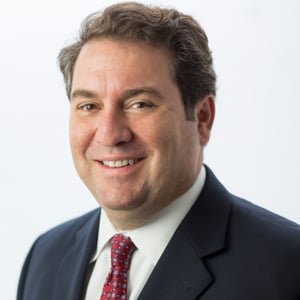
Former Attorney General, State of Arizona
Mark Brnovich served as Arizona's 26th Attorney General from 2015 to 2023. He was first inaugurated in 2015, and again in 2019 after winning re-election. Mark has spent most of his professional life serving as a prosecutor at the local, state, and federal levels. Mark met his wife Susan while they both worked as prosecutors for the Maricopa County Attorney's office. Mark worked in the Gang/Repeat Offender Unit and prosecuted many difficult and high profile cases from 1992 to 1998. He then went on to work as an Assistant Attorney General with the Arizona Attorney General's Office from 1998 to 2003, where he developed an expertise in gambling law. Brnovich later went on to serve as an Assistant United States Attorney for the District of Arizona where he prosecuted public integrity crimes, as well as crimes occurring in Indian Country.
Brnovich has also been a Judge Pro Tem of Maricopa County Superior Court, a Command Staff Judge Advocate in the U.S. Army National Guard, the Director for Constitutional Government at the Goldwater Institute, and the Director of the Arizona Department of Gaming, a law enforcement agency that investigates illegal gambling activity, as well as working with tribal regulators to ensure the integrity of tribal gaming.
Brnovich is known for restoring public confidence in the office of "Arizona's Top Cop" and for assembling some of the nation's most talented public servants for his administration. Mark argued at the United States Supreme Court in defense of the "one-person, one-vote" principle, was featured on 60 Minutes in defense of capital punishment, and has initiated national public education efforts to combat human sex trafficking.
Brnovich has been recognized by the National Federation of Independent Business as a "Champion of Small Business." and was elected by his bi-partisan colleagues to serve as the Chairman of the Conference of Western Attorneys General.
Mark's wife Susan was recently appointed by the United States Senate to serve as a U.S. District Judge for the District of Arizona. He has two teenage daughters and lives in Phoenix.
Senior Director and Global Relations Lead, Uber Technologies Inc.
Mark Floyd is the Sr. Director and Global Labor Relations lead for Uber Technologies. Mr. Floyd has more than 30 years of legal experience devoted to the area of labor and employment global matters; experience that includes private practice as well as senior in-house positions for U.S as well as International companies. Mr. Floyd is a frequent speaker, trainer, and author on matters concerning today’s labor and employee relations environment.

Judge, United States Court of Appeals, Third Circuit
Judge Hardiman was appointed to the United States Court of Appeals for the Third Circuit on January 9, 2007 and was confirmed by the Senate (95-0) on March 15, 2007. Prior to becoming an appellate judge, Judge Hardiman served as a trial judge on the United States District Court for the Western District of Pennsylvania as of November 1, 2003. In 2008, Chief Justice John Roberts appointed Judge Hardiman to the Information Technology Committee of the Judicial Conference of the United States. Judge Hardiman was appointed Chairman of the IT Committee in 2013 and served in that capacity until September 2021. In 2021 he was appointed by the Director of the Administrative Office of the United States Courts to serve as Chair of the Judiciary IT Security Task Force, which completed its work in fall 2023. Chief Justice Roberts appointed Judge Hardiman to the Board of the Federal Judicial Center to serve from March 2020 until March 2024. As part of his work with the Center, Judge Hardiman now serves as Editor in Chief for the Manual for Complex Civil Litigation, Fifth.
Before entering judicial service, Judge Hardiman handled a wide variety of litigation matters in state and federal trial and appellate courts as a partner at Reed Smith LLP (1999-2003), a partner at Titus & McConomy LLP (1996-1999), and as an associate with its predecessor firm, Cindrich & Titus (1992-1996). Judge Hardiman began his legal career as an associate in the Washington, D.C. office of Skadden, Arps, Slate, Meagher & Flom (1990-1992).
A 1987 honors graduate of the University of Notre Dame, Judge Hardiman received his law degree in 1990 from the Georgetown University Law Center, where he served as a Notes and Comments Editor on the Georgetown Law Journal. In 2012, Judge Hardiman was elected as a member of the American Law Institute and was elected to its Council in 2019 and its Executive Committee in 2025. Judge Hardiman regularly teaches a seminar on Advanced Constitutional Law at Duquesne University School of Law and a one-week course entitled “Constitutional Law: the First and Second Amendments” at Georgetown University Law Center.
A native of Waltham, Massachusetts, Judge Hardiman has chambers in Pittsburgh, Pennsylvania. He and his wife Lori married in 1992 and have three children.
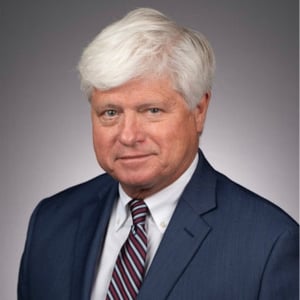
Immigration Law and Policy Fellow, Cornell Law School
Randel Johnson has worked on employment and immigration law and policy issues for over twenty-five years, bringing a broad perspective from working in the executive agencies, on Capitol Hill, and in the private sector. Deeply involved in past efforts on comprehensive immigration reform, including testifying in both the U.S. House of Representatives and the U.S. Senate, his experience includes working as the senior vice president at the U.S. Chamber of Commerce, labor counsel to the House Education and Labor Committee, and special assistant to the solicitor of labor at the U.S. Department of Labor. He was also a partner at the law firm of Seyfarth Shaw and most recently a judge on the Administrative Review Board at the Labor Department.
Director of Government Affairs, AFL-CIO
Bill Samuel is the Director of Government Affairs at the AFL-CIO. In addition to serving as the chief lobbyist for the 10 million-member labor federation, Bill chairs the AFL-CIO’s Legislative Committee, which is made up of legislative representatives from the federation’s 54 affiliated unions.
Bill returned to the labor movement in January 2001 after a five-year stint in the Clinton Administration, serving first as Associate Deputy Secretary of Labor under Robert Reich and then Alexis Herman. In 2000, Bill joined the White House staff as senior policy advisor to Vice President Al Gore, serving as the Vice President’s principal advisor on labor policy issues and liaison to organized labor.
From 1984 to 1995, Bill was the chief lobbyist at the United Mine Workers of America. While at the UMWA, Bill lead the successful campaign to win passage of federal legislation guaranteeing lifetime health benefits to over 200,000 retired miners and their dependents. Prior to joining the UMWA, Bill was a legislative representative for the National Treasury Employees Union and the American Federation of Government Employees.
He is a graduate of Oberlin College and the George Washington University Law Center.
Joel A. Katz Distinguished Professor of Law, University of Tennessee College of Law
Professor Plank joined the UT faculty in 1994 and became the Joel A. Katz Distinguished Professor of Law in 2004. His scholarly interests include the nature of property, the relationship between bankruptcy and non-bankruptcy law, and the historical development and comparison of commercial law and property law systems. He is a nationally recognized expert on mortgage backed and asset backed securities. Before joining the UT faculty, he was a partner with Kutak Rock LLP specializing in real estate finance, commercial finance, bankruptcy, and securities, in particular serving as issuer’s counsel and bankruptcy counsel in securitization transactions. Since joining the UT faculty he has served as an expert witness on securitization and other bankruptcy and commercial law matters, and as a consultant for securitization law firms, providing advice on bankruptcy, commercial law, and real estate issues in connection with securitizations and other transactions. During the 2002-2003 academic year, Professor Plank was a visiting Professor of Law at the Notre Dame Law School.
Professor Plank graduated with honors from Princeton University with a degree in history and a Certificate of Proficiency in Russian Area Studies and then served three years in the United States Marine Corps, including eight months in Vietnam as an infantry platoon commander. He graduated 5th in his class from the University of Maryland School of Law, where he was Editor-in-Chief of the Maryland Law Review. He was a law clerk for the Chief Judge of the Maryland Court of Appeals, an associate with Piper & Marbury in Baltimore, MD, and an assistant attorney general for the State of Maryland. Initially, his practice included a wide variety of transactions and litigation, including a four month trial on the constitutionality of the Maryland public school finance system and oral arguments in the United States Supreme Court and federal and state appellate courts. He then concentrated his practice in real estate, commercial finance, public finance and securities transactions.
Former Attorney General, State of Arizona
Mark Brnovich served as Arizona's 26th Attorney General from 2015 to 2023. He was first inaugurated in 2015, and again in 2019 after winning re-election. Mark has spent most of his professional life serving as a prosecutor at the local, state, and federal levels. Mark met his wife Susan while they both worked as prosecutors for the Maricopa County Attorney's office. Mark worked in the Gang/Repeat Offender Unit and prosecuted many difficult and high profile cases from 1992 to 1998. He then went on to work as an Assistant Attorney General with the Arizona Attorney General's Office from 1998 to 2003, where he developed an expertise in gambling law. Brnovich later went on to serve as an Assistant United States Attorney for the District of Arizona where he prosecuted public integrity crimes, as well as crimes occurring in Indian Country.
Brnovich has also been a Judge Pro Tem of Maricopa County Superior Court, a Command Staff Judge Advocate in the U.S. Army National Guard, the Director for Constitutional Government at the Goldwater Institute, and the Director of the Arizona Department of Gaming, a law enforcement agency that investigates illegal gambling activity, as well as working with tribal regulators to ensure the integrity of tribal gaming.
Brnovich is known for restoring public confidence in the office of "Arizona's Top Cop" and for assembling some of the nation's most talented public servants for his administration. Mark argued at the United States Supreme Court in defense of the "one-person, one-vote" principle, was featured on 60 Minutes in defense of capital punishment, and has initiated national public education efforts to combat human sex trafficking.
Brnovich has been recognized by the National Federation of Independent Business as a "Champion of Small Business." and was elected by his bi-partisan colleagues to serve as the Chairman of the Conference of Western Attorneys General.
Mark's wife Susan was recently appointed by the United States Senate to serve as a U.S. District Judge for the District of Arizona. He has two teenage daughters and lives in Phoenix.
Senior Director and Global Relations Lead, Uber Technologies Inc.
Mark Floyd is the Sr. Director and Global Labor Relations lead for Uber Technologies. Mr. Floyd has more than 30 years of legal experience devoted to the area of labor and employment global matters; experience that includes private practice as well as senior in-house positions for U.S as well as International companies. Mr. Floyd is a frequent speaker, trainer, and author on matters concerning today’s labor and employee relations environment.
Judge, United States Court of Appeals, Third Circuit
Judge Hardiman was appointed to the United States Court of Appeals for the Third Circuit on January 9, 2007 and was confirmed by the Senate (95-0) on March 15, 2007. Prior to becoming an appellate judge, Judge Hardiman served as a trial judge on the United States District Court for the Western District of Pennsylvania as of November 1, 2003. In 2008, Chief Justice John Roberts appointed Judge Hardiman to the Information Technology Committee of the Judicial Conference of the United States. Judge Hardiman was appointed Chairman of the IT Committee in 2013 and served in that capacity until September 2021. In 2021 he was appointed by the Director of the Administrative Office of the United States Courts to serve as Chair of the Judiciary IT Security Task Force, which completed its work in fall 2023. Chief Justice Roberts appointed Judge Hardiman to the Board of the Federal Judicial Center to serve from March 2020 until March 2024. As part of his work with the Center, Judge Hardiman now serves as Editor in Chief for the Manual for Complex Civil Litigation, Fifth.
Before entering judicial service, Judge Hardiman handled a wide variety of litigation matters in state and federal trial and appellate courts as a partner at Reed Smith LLP (1999-2003), a partner at Titus & McConomy LLP (1996-1999), and as an associate with its predecessor firm, Cindrich & Titus (1992-1996). Judge Hardiman began his legal career as an associate in the Washington, D.C. office of Skadden, Arps, Slate, Meagher & Flom (1990-1992).
A 1987 honors graduate of the University of Notre Dame, Judge Hardiman received his law degree in 1990 from the Georgetown University Law Center, where he served as a Notes and Comments Editor on the Georgetown Law Journal. In 2012, Judge Hardiman was elected as a member of the American Law Institute and was elected to its Council in 2019 and its Executive Committee in 2025. Judge Hardiman regularly teaches a seminar on Advanced Constitutional Law at Duquesne University School of Law and a one-week course entitled “Constitutional Law: the First and Second Amendments” at Georgetown University Law Center.
A native of Waltham, Massachusetts, Judge Hardiman has chambers in Pittsburgh, Pennsylvania. He and his wife Lori married in 1992 and have three children.
Immigration Law and Policy Fellow, Cornell Law School
Randel Johnson has worked on employment and immigration law and policy issues for over twenty-five years, bringing a broad perspective from working in the executive agencies, on Capitol Hill, and in the private sector. Deeply involved in past efforts on comprehensive immigration reform, including testifying in both the U.S. House of Representatives and the U.S. Senate, his experience includes working as the senior vice president at the U.S. Chamber of Commerce, labor counsel to the House Education and Labor Committee, and special assistant to the solicitor of labor at the U.S. Department of Labor. He was also a partner at the law firm of Seyfarth Shaw and most recently a judge on the Administrative Review Board at the Labor Department.
Director of Government Affairs, AFL-CIO
Bill Samuel is the Director of Government Affairs at the AFL-CIO. In addition to serving as the chief lobbyist for the 10 million-member labor federation, Bill chairs the AFL-CIO’s Legislative Committee, which is made up of legislative representatives from the federation’s 54 affiliated unions.
Bill returned to the labor movement in January 2001 after a five-year stint in the Clinton Administration, serving first as Associate Deputy Secretary of Labor under Robert Reich and then Alexis Herman. In 2000, Bill joined the White House staff as senior policy advisor to Vice President Al Gore, serving as the Vice President’s principal advisor on labor policy issues and liaison to organized labor.
From 1984 to 1995, Bill was the chief lobbyist at the United Mine Workers of America. While at the UMWA, Bill lead the successful campaign to win passage of federal legislation guaranteeing lifetime health benefits to over 200,000 retired miners and their dependents. Prior to joining the UMWA, Bill was a legislative representative for the National Treasury Employees Union and the American Federation of Government Employees.
He is a graduate of Oberlin College and the George Washington University Law Center.
Former Attorney General, State of Arizona
Mark Brnovich served as Arizona's 26th Attorney General from 2015 to 2023. He was first inaugurated in 2015, and again in 2019 after winning re-election. Mark has spent most of his professional life serving as a prosecutor at the local, state, and federal levels. Mark met his wife Susan while they both worked as prosecutors for the Maricopa County Attorney's office. Mark worked in the Gang/Repeat Offender Unit and prosecuted many difficult and high profile cases from 1992 to 1998. He then went on to work as an Assistant Attorney General with the Arizona Attorney General's Office from 1998 to 2003, where he developed an expertise in gambling law. Brnovich later went on to serve as an Assistant United States Attorney for the District of Arizona where he prosecuted public integrity crimes, as well as crimes occurring in Indian Country.
Brnovich has also been a Judge Pro Tem of Maricopa County Superior Court, a Command Staff Judge Advocate in the U.S. Army National Guard, the Director for Constitutional Government at the Goldwater Institute, and the Director of the Arizona Department of Gaming, a law enforcement agency that investigates illegal gambling activity, as well as working with tribal regulators to ensure the integrity of tribal gaming.
Brnovich is known for restoring public confidence in the office of "Arizona's Top Cop" and for assembling some of the nation's most talented public servants for his administration. Mark argued at the United States Supreme Court in defense of the "one-person, one-vote" principle, was featured on 60 Minutes in defense of capital punishment, and has initiated national public education efforts to combat human sex trafficking.
Brnovich has been recognized by the National Federation of Independent Business as a "Champion of Small Business." and was elected by his bi-partisan colleagues to serve as the Chairman of the Conference of Western Attorneys General.
Mark's wife Susan was recently appointed by the United States Senate to serve as a U.S. District Judge for the District of Arizona. He has two teenage daughters and lives in Phoenix.
Senior Director and Global Relations Lead, Uber Technologies Inc.
Mark Floyd is the Sr. Director and Global Labor Relations lead for Uber Technologies. Mr. Floyd has more than 30 years of legal experience devoted to the area of labor and employment global matters; experience that includes private practice as well as senior in-house positions for U.S as well as International companies. Mr. Floyd is a frequent speaker, trainer, and author on matters concerning today’s labor and employee relations environment.
Judge, United States Court of Appeals, Third Circuit
Judge Hardiman was appointed to the United States Court of Appeals for the Third Circuit on January 9, 2007 and was confirmed by the Senate (95-0) on March 15, 2007. Prior to becoming an appellate judge, Judge Hardiman served as a trial judge on the United States District Court for the Western District of Pennsylvania as of November 1, 2003. In 2008, Chief Justice John Roberts appointed Judge Hardiman to the Information Technology Committee of the Judicial Conference of the United States. Judge Hardiman was appointed Chairman of the IT Committee in 2013 and served in that capacity until September 2021. In 2021 he was appointed by the Director of the Administrative Office of the United States Courts to serve as Chair of the Judiciary IT Security Task Force, which completed its work in fall 2023. Chief Justice Roberts appointed Judge Hardiman to the Board of the Federal Judicial Center to serve from March 2020 until March 2024. As part of his work with the Center, Judge Hardiman now serves as Editor in Chief for the Manual for Complex Civil Litigation, Fifth.
Before entering judicial service, Judge Hardiman handled a wide variety of litigation matters in state and federal trial and appellate courts as a partner at Reed Smith LLP (1999-2003), a partner at Titus & McConomy LLP (1996-1999), and as an associate with its predecessor firm, Cindrich & Titus (1992-1996). Judge Hardiman began his legal career as an associate in the Washington, D.C. office of Skadden, Arps, Slate, Meagher & Flom (1990-1992).
A 1987 honors graduate of the University of Notre Dame, Judge Hardiman received his law degree in 1990 from the Georgetown University Law Center, where he served as a Notes and Comments Editor on the Georgetown Law Journal. In 2012, Judge Hardiman was elected as a member of the American Law Institute and was elected to its Council in 2019 and its Executive Committee in 2025. Judge Hardiman regularly teaches a seminar on Advanced Constitutional Law at Duquesne University School of Law and a one-week course entitled “Constitutional Law: the First and Second Amendments” at Georgetown University Law Center.
A native of Waltham, Massachusetts, Judge Hardiman has chambers in Pittsburgh, Pennsylvania. He and his wife Lori married in 1992 and have three children.
Immigration Law and Policy Fellow, Cornell Law School
Randel Johnson has worked on employment and immigration law and policy issues for over twenty-five years, bringing a broad perspective from working in the executive agencies, on Capitol Hill, and in the private sector. Deeply involved in past efforts on comprehensive immigration reform, including testifying in both the U.S. House of Representatives and the U.S. Senate, his experience includes working as the senior vice president at the U.S. Chamber of Commerce, labor counsel to the House Education and Labor Committee, and special assistant to the solicitor of labor at the U.S. Department of Labor. He was also a partner at the law firm of Seyfarth Shaw and most recently a judge on the Administrative Review Board at the Labor Department.
Director of Government Affairs, AFL-CIO
Bill Samuel is the Director of Government Affairs at the AFL-CIO. In addition to serving as the chief lobbyist for the 10 million-member labor federation, Bill chairs the AFL-CIO’s Legislative Committee, which is made up of legislative representatives from the federation’s 54 affiliated unions.
Bill returned to the labor movement in January 2001 after a five-year stint in the Clinton Administration, serving first as Associate Deputy Secretary of Labor under Robert Reich and then Alexis Herman. In 2000, Bill joined the White House staff as senior policy advisor to Vice President Al Gore, serving as the Vice President’s principal advisor on labor policy issues and liaison to organized labor.
From 1984 to 1995, Bill was the chief lobbyist at the United Mine Workers of America. While at the UMWA, Bill lead the successful campaign to win passage of federal legislation guaranteeing lifetime health benefits to over 200,000 retired miners and their dependents. Prior to joining the UMWA, Bill was a legislative representative for the National Treasury Employees Union and the American Federation of Government Employees.
He is a graduate of Oberlin College and the George Washington University Law Center.
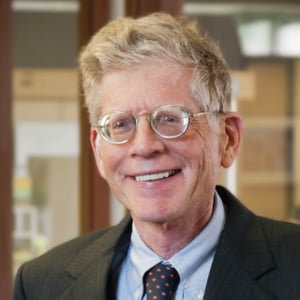
Professor of Law, University of Pittsburgh School of Law
Arthur D. Hellman, a professor of law (emeritus) at the University of Pittsburgh, is a nationally recognized scholar of the federal courts who has also written in the area of the First Amendment. His publications include numerous articles and several books, including casebooks in both areas, Federal Courts: Cases and Materials on Judicial Federalism and the Lawyering Process (5th edition 2022) (with David R. Stras, Ryan W. Scott, F. Andrew Hessick, and Derek T. Muller); and First Amendment Law: Freedom of Speech and Freedom of Religion (5th edition 2022) (with William D. Araiza, Thomas E. Baker, and Ashutosh A. Bhagwat).
In addition to his casebooks and academic writing, Processor Hellman has worked with the Judiciary Committees in the House and Senate in drafting federal courts legislation, including the most recent (2002) revision of the Judicial Conduct and Disability Act (Title 28, Chapter 16). The legislative histories of two major jurisdictional statutes – the Federal Courts Jurisdiction and Venue Clarification Act of 2011 and the “Holmes Group Fix” (enacted as part of the America Invents Act) – acknowledge his contributions.
Professor Hellman has testified as an invited witness at numerous hearings of both Judiciary Committees. His testimony has focused on a wide variety of legislative issues related to the federal courts, including the jurisdiction of the Supreme Court; proposals to divide the Ninth Circuit Court of Appeals; federal judicial discipline; unpublished appellate opinions; and the constitutionality of legislative restrictions on the powers of the federal courts.
In 2005 Professor Hellman was appointed as the inaugural holder of the Sally Ann Semenko Endowed Chair at the University. In 2002 he received the Chancellor’s Distinguished Research Award “as a faculty member who has an outstanding and continuing record of research and scholarly activity.”
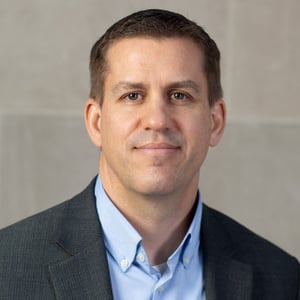
Clinical Professor, University of Texas at Austin School of Law
Steven T. Collis researches and teaches on religion and law and other First Amendment topics. He is the founding faculty director of the Bech-Loughlin First Amendment Center and of Texas's Law & Religion Clinic. On the topic of religious freedom law, he is a sought-after speaker to academic and lay audiences across the United States, including foreign diplomats from countries in Europe, the Middle East, Asia, and South America on behalf of the United States State Department. He has been interviewed by and quoted in various news and media outlets, including The Deseret News, Bloomberg, The Washington Times, Law360, The Salt Lake Tribune, PBS, The Denver Business Journal, Law Week Colorado, CBN News, and numerous podcasts and television shows. His scholarly work has appeared in The Michigan Law Review, The Nebraska Law Review, The University of Denver Law Review Online, and in his book Deep Conviction, which brings to life the history of free exercise law in the United States for lay audiences.
Prior to joining Texas, Steven was the Olin-Darling Research Fellow in the Constitutional Law Center at Stanford Law School.
Earlier in his career, he was an equity partner at Holland & Hart LLP, where he chaired the firm’s nationwide religious institutions and First Amendment practice group and was a member of the firm's complex civil litigation and employment practice groups. He also taught religious liberty law at the University of Denver Sturm College of Law and clerked for Chief Judge Timothy M. Tymkovich of the United States Court of Appeals for the Tenth Circuit.
Steven graduated magna cum laude from the University of Michigan Law School, where he was elected to the Order of the Coif and served as an editor on The Michigan Law Review and The Michigan Journal of Race and Law. He also holds an M.F.A. in creative writing from Virginia Commonwealth University, where he served as the associate editor of the literary journal Blackbird. He completed his undergraduate studies, with university honors, at Brigham Young University.
Adjunct Professor, George Washington University
Howard W. Cox is a former federal prosecutor, criminal investigator and Senior Intelligence Service officer. After almost 40 years of federal service, he retired as the Assistant Inspector General for Investigations of the Central Intelligence Agency. In this capacity, Mr. Cox supervised criminal, civil and administrative investigations conducted by the Office of Inspector General (OIG). Prior to his employment with the CIA, Mr. Cox was the Assistant Deputy Chief of the Computer Crime and Intellectual Property Section of the Department of Justice, where he was responsible for supervising criminal prosecutions of federal hacking and identity theft cases. While at the Department of Justice, Mr. Cox received the Attorney General’s Distinguished Service Award.
Prior to his service with the Department of Justice, Mr. Cox served as a manager, attorney and criminal investigator at OIG offices at the US Postal Service, the Department of Defense, and the General Services Administration. He also served as Staff Counsel for the US Senate Permanent Subcommittee on Investigations. Prior to his federal civilian service, Mr. Cox was also a Captain and trial attorney in the US Army’s Judge Advocate General’s Corps. Mr. Cox also served as Law Secretary to the Hon. Sherwin D. Lester, NJ Superior Court.
Mr. Cox is an adjunct professor at George Washington University, where he teaches graduate level courses in computer forensics. He is also an instructor with the Graduate School USA, and the Federal Law Enforcement Training Center, where he teaches courses related to procurement fraud and electronic search and seizure. Mr. Cox received his AB degree from Seton Hall University, South Orange, NJ. He received his law degree from Georgetown University Law Center, Washington, DC.

Social Mixer - Pittsburgh Lawyers and Student Chapters
Pittsburgh, PennsylvaniaCzyzewski v. Jevic Holding Corporation - Post-Argument SCOTUScast
Thomas Eldridge Plank
On December 7, 2016, the Supreme Court heard oral argument in Czyzewski v. Jevic Holding...
Labor & Employment Law: The Battle for the Gig Economy
Mark Brnovich, Mark Floyd, Thomas M. Hardiman, Randel K. Johnson, Bill Samuel
The “gig" or “on demand" economy may be the fastest growing segment of our economy,...
Labor & Employment Law: The Battle for the Gig Economy
Mark Brnovich, Mark Floyd, Thomas M. Hardiman, Randel K. Johnson, Bill Samuel
The “gig" or “on demand" economy may be the fastest growing segment of our economy,...
Labor & Employment Law: The Battle for the Gig Economy
2016 National Lawyers Convention
Washington, DCAn Evening with Judge D. Michael Fisher
Philadelphia, PennsylvaniaThe Fraudulent Joinder Prevention Act of 2016: A New Standard and a New Rationale for an Old Doctrine
Arthur D. Hellman
Note from the Editor: This article discusses the doctrine of fraudulent joinder and an ongoing attempt to...
Heffernan v. City of Paterson - Post-Decision SCOTUScast
On April 26, 2016, the Supreme Court decided Heffernan v. City of Paterson. Jeffrey Heffernan...
Stormans v. Wiesman: Paths to Strict Scrutiny in Religious Free Exercise Cases
Steven T. Collis
Note from the Editor: This article is about Stormans v. Wiesman, a case from the 9th...
StingRay Technology and Reasonable Expectations of Privacy in the Internet of Everything
Howard W. Cox
Note from the Editor: This article discusses cell site simulators, also known as StingRays, and...