
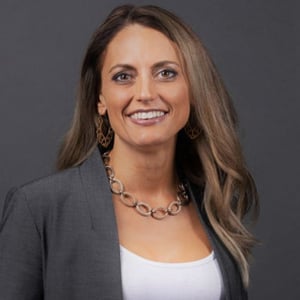
Judge, U.S. Court of Appeals for the Third Circuit
Hon. Jennifer Mascott served as Associate Professor of Law and Director of the Separation of Powers Institute at The Catholic University of America’s Columbus School of Law before her appointment to the federal bench. On July 16, 2025, President Donald J. Trump nominated her to the U.S. Court of Appeals for the Third Circuit (Delaware), and she was confirmed on October 9, 2025.
Prior to her confirmation, Judge Mascott wrote extensively in administrative and constitutional law, statutory interpretation, and the separation of powers. Her scholarship—published in leading journals including the Stanford Law Review, Notre Dame Law Review, and Supreme Court Review—was cited by the U.S. Supreme Court and multiple federal courts. She also contributed Supreme Court commentary for NBC Universal.
Before joining Catholic Law, she was an Assistant Professor and Co-Director of The C. Boyden Gray Center at George Mason University’s Antonin Scalia Law School. In 2022 she became co-author of Beermann, Cass & Diver’s Administrative Law: Cases and Materials (9th ed.). In 2023 she received the Justice Joseph Story Award for excellence in scholarship, teaching, and advancing the rule of law.
Judge Mascott also served as a Council Member of the ABA’s Administrative Law Section and as a Public Member of the Administrative Conference of the United States. She frequently testified before Congress on executive power, regulatory reform, and judicial jurisdiction, and participated in multiple Supreme Court confirmation hearings.
From 2019 to 2021, she took leave from academia to serve as Deputy Assistant Attorney General in the Department of Justice’s Office of Legal Counsel and later as Associate Deputy Attorney General, where she argued federal cases and assisted with Justice Amy Coney Barrett’s confirmation. Earlier in her career, she clerked for Justice Clarence Thomas and for then-Judge Brett M. Kavanaugh on the D.C. Circuit.
Judge Mascott earned her J.D. summa cum laude from the George Washington University Law School and her B.A. from the same institution.
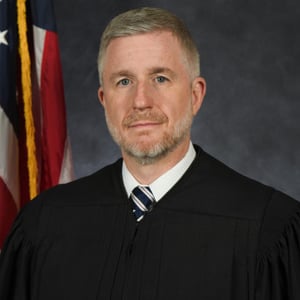
Judge, United States Court of Appeals, Third Circuit
Judge Paul Matey was appointed to the United States Court of Appeals for the Third Circuit in 2019 by President Trump.
Before his judicial service, Judge Matey was a partner at Lowenstein Sandler in New Jersey where he practiced complex commercial litigation and criminal defense. Earlier, Judge Matey was the Senior Vice President, General Counsel and Secretary for University Hospital Newark, an academic medical center and teaching hospital.
He also served as the Deputy Chief Counsel to Governor Chris Christie, and as an Assistant United States Attorney in the District of New Jersey, where he was awarded the Justice Department’s Director’s Award for Superior Performance. He also practiced at the Washington D.C. firm of Kellogg, Hansen, Todd, Figel & Frederick, and served as a law clerk to judges on the United States Court of Appeals for the Third Circuit and the United States District Court for the District of New Jersey.
He earned his bachelor’s degree from the University of Scranton, a Jesuit University, in 1993, and his juris doctorate, summa cum laude, from Seton Hall University School of Law in 2001, where he served as Editor-in-Chief of the Seton Hall Law Review.
In 2019, Judge Matey was elected to membership in the American Law Institute and, since 2020, has lectured on administrative law and the American legal history at Seton Hall.
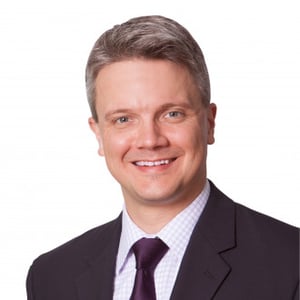
James G. Phillipp Professor of Law, University of Michigan Law School
Julian Davis Mortenson writes on constitutional and international law. His current book project—The Founders' President (under contract, Harvard University Press)—develops a comprehensive account of presidential power at the American Founding. He is also co-authoring a new constitutional law casebook, scheduled for publication by Foundation Press in 2020.
Professor Mortenson is an award-winning teacher and an active litigator. Representative constitutional matters include his work as lead counsel in a pre-Obergefell suit that required Michigan to recognize the marriages of more than 300 same-sex couples; his representation of discharged military service members challenging the "Don't Ask, Don't Tell" law; and his work as one of the principal drafters of the merits briefs in the landmark case Boumediene v. Bush, which secured the right of Guantanamo detainees to challenge their incarceration. He regularly litigates complex transnational matters in the U.S. courts, and has served as arbitrator, counsel, and expert witness in a wide variety of commercial and investor-state disputes.
Before joining the faculty, Professor Mortenson worked at the law firm WilmerHale, in the President's Office of the International Criminal Tribunal for the former Yugoslavia, and as a law clerk for both Justice David H. Souter and The Hon. J. Harvie Wilkinson III. Prior to law school, he was a management consultant with a client portfolio spanning the finance, manufacturing, oil and gas, and information technology industries. Professor Mortenson was salutatorian of his class at Stanford Law School and received an AB in history, summa cum laude, from Harvard College.
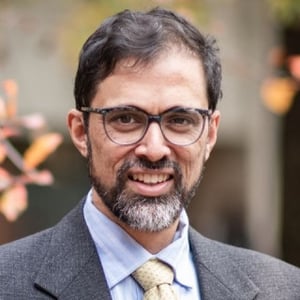
James Monroe Distinguished Professor of Law and Albert Clark Tate, Jr., Professor of Law, University of Virginia School of Law
Professor Saikrishna Prakash’s scholarship focuses on separation of powers, particularly executive powers. He teaches Constitutional Law, Foreign Relations Law and Presidential Powers at the Law School.
Prakash’s most recent book, “The Living Presidency: An Originalist Argument Against Its Ever-Expanding Powers,” was published by Harvard Belknap Press in 2020. He also authored “Imperial from the Beginning: The Constitution of the Original Executive” (Yale University Press, 2015). The former book focuses on the modern presidency while the latter considers the presidency of the Founders.
Prakash has authored over 75 law review articles. Among them are “Of Synchronicity and Supreme Law” in the Harvard Law Review, “The Indefensible Duty to Defend” in the Columbia Law Review, and “50 States, 50 Attorneys General and 50 Approaches to the Duty to Defend” and “The Executive Power Over Foreign Affairs” in the Yale Law Journal.
Prakash has published op-eds in The New York Times, The Wall Street Journal and the Los Angeles Times. At the request of Democrats and Republicans, he has testified before Congress on matters of presidential removal, the Mueller Report and how Congress might better check the presidency. He is currently a Miller Center Senior Fellow. In 2015, he received the Roger Traynor award for faculty scholarship. In the same year, he received an honorable mention from the American Society of Legal Writers for his book “Imperial from the Beginning.” He has given named lectures at William & Mary Law School, Princeton University and Toledo Law School, and keynote addresses at several conferences.
Prakash majored in economics and political science at Stanford University. At Yale Law School, he served as senior editor of the Yale Law Journal and received the John M. Olin Fellowship in Law, Economics and Public Policy. He subsequently clerked for Judge Laurence H. Silberman of the U.S. Court of Appeals for the District of Columbia Circuit and for Justice Clarence Thomas of the U.S. Supreme Court. After practicing in New York for two years, he served as a visiting professor at the University of Illinois College of Law and as an associate professor at Boston University School of Law. He then spent several years at the University of San Diego School of Law as the Herzog Research Professor of Law. Prakash has been a visiting professor at Northwestern University and the University of Chicago. He also has served as a James Madison Fellow at Princeton University and Visiting Research Fellow at the Hoover Institution of War & Peace at Stanford University.
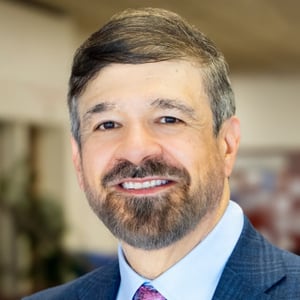
Hugh and Hazel Darling Foundation Professor of Law; Director, Center for the Study of Constitutional Originalism, University of San Diego School of Law
Judge, U.S. Court of Appeals for the Third Circuit
Hon. Jennifer Mascott served as Associate Professor of Law and Director of the Separation of Powers Institute at The Catholic University of America’s Columbus School of Law before her appointment to the federal bench. On July 16, 2025, President Donald J. Trump nominated her to the U.S. Court of Appeals for the Third Circuit (Delaware), and she was confirmed on October 9, 2025.
Prior to her confirmation, Judge Mascott wrote extensively in administrative and constitutional law, statutory interpretation, and the separation of powers. Her scholarship—published in leading journals including the Stanford Law Review, Notre Dame Law Review, and Supreme Court Review—was cited by the U.S. Supreme Court and multiple federal courts. She also contributed Supreme Court commentary for NBC Universal.
Before joining Catholic Law, she was an Assistant Professor and Co-Director of The C. Boyden Gray Center at George Mason University’s Antonin Scalia Law School. In 2022 she became co-author of Beermann, Cass & Diver’s Administrative Law: Cases and Materials (9th ed.). In 2023 she received the Justice Joseph Story Award for excellence in scholarship, teaching, and advancing the rule of law.
Judge Mascott also served as a Council Member of the ABA’s Administrative Law Section and as a Public Member of the Administrative Conference of the United States. She frequently testified before Congress on executive power, regulatory reform, and judicial jurisdiction, and participated in multiple Supreme Court confirmation hearings.
From 2019 to 2021, she took leave from academia to serve as Deputy Assistant Attorney General in the Department of Justice’s Office of Legal Counsel and later as Associate Deputy Attorney General, where she argued federal cases and assisted with Justice Amy Coney Barrett’s confirmation. Earlier in her career, she clerked for Justice Clarence Thomas and for then-Judge Brett M. Kavanaugh on the D.C. Circuit.
Judge Mascott earned her J.D. summa cum laude from the George Washington University Law School and her B.A. from the same institution.
Judge, United States Court of Appeals, Third Circuit
Judge Paul Matey was appointed to the United States Court of Appeals for the Third Circuit in 2019 by President Trump.
Before his judicial service, Judge Matey was a partner at Lowenstein Sandler in New Jersey where he practiced complex commercial litigation and criminal defense. Earlier, Judge Matey was the Senior Vice President, General Counsel and Secretary for University Hospital Newark, an academic medical center and teaching hospital.
He also served as the Deputy Chief Counsel to Governor Chris Christie, and as an Assistant United States Attorney in the District of New Jersey, where he was awarded the Justice Department’s Director’s Award for Superior Performance. He also practiced at the Washington D.C. firm of Kellogg, Hansen, Todd, Figel & Frederick, and served as a law clerk to judges on the United States Court of Appeals for the Third Circuit and the United States District Court for the District of New Jersey.
He earned his bachelor’s degree from the University of Scranton, a Jesuit University, in 1993, and his juris doctorate, summa cum laude, from Seton Hall University School of Law in 2001, where he served as Editor-in-Chief of the Seton Hall Law Review.
In 2019, Judge Matey was elected to membership in the American Law Institute and, since 2020, has lectured on administrative law and the American legal history at Seton Hall.
James G. Phillipp Professor of Law, University of Michigan Law School
Julian Davis Mortenson writes on constitutional and international law. His current book project—The Founders' President (under contract, Harvard University Press)—develops a comprehensive account of presidential power at the American Founding. He is also co-authoring a new constitutional law casebook, scheduled for publication by Foundation Press in 2020.
Professor Mortenson is an award-winning teacher and an active litigator. Representative constitutional matters include his work as lead counsel in a pre-Obergefell suit that required Michigan to recognize the marriages of more than 300 same-sex couples; his representation of discharged military service members challenging the "Don't Ask, Don't Tell" law; and his work as one of the principal drafters of the merits briefs in the landmark case Boumediene v. Bush, which secured the right of Guantanamo detainees to challenge their incarceration. He regularly litigates complex transnational matters in the U.S. courts, and has served as arbitrator, counsel, and expert witness in a wide variety of commercial and investor-state disputes.
Before joining the faculty, Professor Mortenson worked at the law firm WilmerHale, in the President's Office of the International Criminal Tribunal for the former Yugoslavia, and as a law clerk for both Justice David H. Souter and The Hon. J. Harvie Wilkinson III. Prior to law school, he was a management consultant with a client portfolio spanning the finance, manufacturing, oil and gas, and information technology industries. Professor Mortenson was salutatorian of his class at Stanford Law School and received an AB in history, summa cum laude, from Harvard College.
James Monroe Distinguished Professor of Law and Albert Clark Tate, Jr., Professor of Law, University of Virginia School of Law
Professor Saikrishna Prakash’s scholarship focuses on separation of powers, particularly executive powers. He teaches Constitutional Law, Foreign Relations Law and Presidential Powers at the Law School.
Prakash’s most recent book, “The Living Presidency: An Originalist Argument Against Its Ever-Expanding Powers,” was published by Harvard Belknap Press in 2020. He also authored “Imperial from the Beginning: The Constitution of the Original Executive” (Yale University Press, 2015). The former book focuses on the modern presidency while the latter considers the presidency of the Founders.
Prakash has authored over 75 law review articles. Among them are “Of Synchronicity and Supreme Law” in the Harvard Law Review, “The Indefensible Duty to Defend” in the Columbia Law Review, and “50 States, 50 Attorneys General and 50 Approaches to the Duty to Defend” and “The Executive Power Over Foreign Affairs” in the Yale Law Journal.
Prakash has published op-eds in The New York Times, The Wall Street Journal and the Los Angeles Times. At the request of Democrats and Republicans, he has testified before Congress on matters of presidential removal, the Mueller Report and how Congress might better check the presidency. He is currently a Miller Center Senior Fellow. In 2015, he received the Roger Traynor award for faculty scholarship. In the same year, he received an honorable mention from the American Society of Legal Writers for his book “Imperial from the Beginning.” He has given named lectures at William & Mary Law School, Princeton University and Toledo Law School, and keynote addresses at several conferences.
Prakash majored in economics and political science at Stanford University. At Yale Law School, he served as senior editor of the Yale Law Journal and received the John M. Olin Fellowship in Law, Economics and Public Policy. He subsequently clerked for Judge Laurence H. Silberman of the U.S. Court of Appeals for the District of Columbia Circuit and for Justice Clarence Thomas of the U.S. Supreme Court. After practicing in New York for two years, he served as a visiting professor at the University of Illinois College of Law and as an associate professor at Boston University School of Law. He then spent several years at the University of San Diego School of Law as the Herzog Research Professor of Law. Prakash has been a visiting professor at Northwestern University and the University of Chicago. He also has served as a James Madison Fellow at Princeton University and Visiting Research Fellow at the Hoover Institution of War & Peace at Stanford University.
Hugh and Hazel Darling Foundation Professor of Law; Director, Center for the Study of Constitutional Originalism, University of San Diego School of Law

Judge, United States Court of Appeals, Third Circuit
Judge Hardiman was appointed to the United States Court of Appeals for the Third Circuit on January 9, 2007 and was confirmed by the Senate (95-0) on March 15, 2007. Prior to becoming an appellate judge, Judge Hardiman served as a trial judge on the United States District Court for the Western District of Pennsylvania as of November 1, 2003. In 2008, Chief Justice John Roberts appointed Judge Hardiman to the Information Technology Committee of the Judicial Conference of the United States. Judge Hardiman was appointed Chairman of the IT Committee in 2013 and served in that capacity until September 2021. In 2021 he was appointed by the Director of the Administrative Office of the United States Courts to serve as Chair of the Judiciary IT Security Task Force, which completed its work in fall 2023. Chief Justice Roberts appointed Judge Hardiman to the Board of the Federal Judicial Center to serve from March 2020 until March 2024. As part of his work with the Center, Judge Hardiman now serves as Editor in Chief for the Manual for Complex Civil Litigation, Fifth.
Before entering judicial service, Judge Hardiman handled a wide variety of litigation matters in state and federal trial and appellate courts as a partner at Reed Smith LLP (1999-2003), a partner at Titus & McConomy LLP (1996-1999), and as an associate with its predecessor firm, Cindrich & Titus (1992-1996). Judge Hardiman began his legal career as an associate in the Washington, D.C. office of Skadden, Arps, Slate, Meagher & Flom (1990-1992).
A 1987 honors graduate of the University of Notre Dame, Judge Hardiman received his law degree in 1990 from the Georgetown University Law Center, where he served as a Notes and Comments Editor on the Georgetown Law Journal. In 2012, Judge Hardiman was elected as a member of the American Law Institute and was elected to its Council in 2019 and its Executive Committee in 2025. Judge Hardiman regularly teaches a seminar on Advanced Constitutional Law at Duquesne University School of Law and a one-week course entitled “Constitutional Law: the First and Second Amendments” at Georgetown University Law Center.
A native of Waltham, Massachusetts, Judge Hardiman has chambers in Pittsburgh, Pennsylvania. He and his wife Lori married in 1992 and have three children.
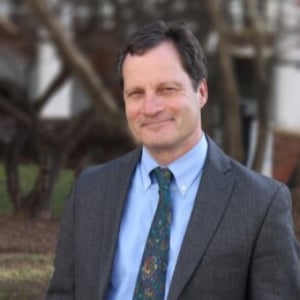
Vice President, Legal & Chief Counsel, Legal, Brady
Jonathan E. Lowy is the Vice President, Legal and Chief Counsel at Brady. Since 1997 Jon has argued in courts across the country to reduce gun violence, providing pro bono legal representation to victims of gun violence in lawsuits to reform dangerous gun industry practices, and assisting governments and public officials in defense of reasonable gun laws. Jon has litigated in over 40 states, successfully arguing several precedent-setting cases in appellate and trial courts establishing gun industry liability and Second Amendment law, obtaining several multi-million dollar settlements, and reforming gun industry practices. Jon has been named one of the 500 Leading Lawyers in America by Lawdragon magazine for the past 10 years, and has published numerous articles on gun litigation and policy including, The Right Not To Be Shot: Public Safety, Private Guns, and the Constellation of Constitutional Liberties in the Georgetown Journal of Law and Policy. He graduated from Harvard College and the University of Virginia School of Law.
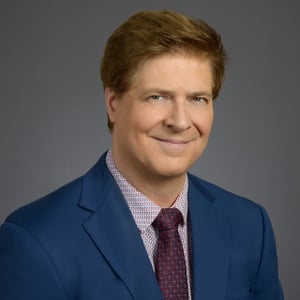
Senior Fellow, Ave Maria School of Law and Host of the Four Boxes Diner Second Amendment Channel
Mark W. Smith is Visiting Fellow in Pharmaceutical Public Policy and Law in the Department of Pharmacology at the University of Oxford; Presidential Scholar and a Senior Fellow in Law and Public Policy at The King’s College; and Distinguished Scholar and Senior Fellow of Law and Public Policy at the Ave Maria School of Law.
He is a constitutional attorney and Host of the Four Boxes Diner YouTube channel—which provides scholarly and historical analyses of the Second Amendment. Mark is also a New York Times bestselling author.
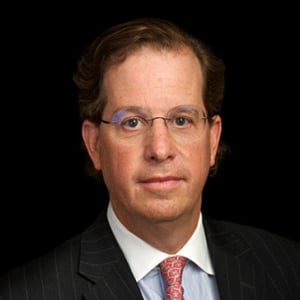
Managing Partner, Cooper & Kirk PLLC
David Thompson is the Managing Partner of Cooper & Kirk and joined the firm at its founding. Mr. Thompson has extensive trial and appellate experience in a wide range of matters and has secured victories worth billions of dollars. He has successfully challenged numerous laws on Second Amendment grounds. He has also litigated cases in over 30 federal district courts, argued in each of the 13 federal circuit courts of appeal, and argued before the U.S. Supreme Court, as well as many state courts. Mr. Thompson was awarded an A.B. degree, magna cum laude, from Harvard University in 1991, where he was elected to Phi Beta Kappa. In 1994, Mr. Thompson received a J.D. degree, cum laude, from Harvard Law School.
Judge, United States Court of Appeals, Third Circuit
Judge Hardiman was appointed to the United States Court of Appeals for the Third Circuit on January 9, 2007 and was confirmed by the Senate (95-0) on March 15, 2007. Prior to becoming an appellate judge, Judge Hardiman served as a trial judge on the United States District Court for the Western District of Pennsylvania as of November 1, 2003. In 2008, Chief Justice John Roberts appointed Judge Hardiman to the Information Technology Committee of the Judicial Conference of the United States. Judge Hardiman was appointed Chairman of the IT Committee in 2013 and served in that capacity until September 2021. In 2021 he was appointed by the Director of the Administrative Office of the United States Courts to serve as Chair of the Judiciary IT Security Task Force, which completed its work in fall 2023. Chief Justice Roberts appointed Judge Hardiman to the Board of the Federal Judicial Center to serve from March 2020 until March 2024. As part of his work with the Center, Judge Hardiman now serves as Editor in Chief for the Manual for Complex Civil Litigation, Fifth.
Before entering judicial service, Judge Hardiman handled a wide variety of litigation matters in state and federal trial and appellate courts as a partner at Reed Smith LLP (1999-2003), a partner at Titus & McConomy LLP (1996-1999), and as an associate with its predecessor firm, Cindrich & Titus (1992-1996). Judge Hardiman began his legal career as an associate in the Washington, D.C. office of Skadden, Arps, Slate, Meagher & Flom (1990-1992).
A 1987 honors graduate of the University of Notre Dame, Judge Hardiman received his law degree in 1990 from the Georgetown University Law Center, where he served as a Notes and Comments Editor on the Georgetown Law Journal. In 2012, Judge Hardiman was elected as a member of the American Law Institute and was elected to its Council in 2019 and its Executive Committee in 2025. Judge Hardiman regularly teaches a seminar on Advanced Constitutional Law at Duquesne University School of Law and a one-week course entitled “Constitutional Law: the First and Second Amendments” at Georgetown University Law Center.
A native of Waltham, Massachusetts, Judge Hardiman has chambers in Pittsburgh, Pennsylvania. He and his wife Lori married in 1992 and have three children.
Vice President, Legal & Chief Counsel, Legal, Brady
Jonathan E. Lowy is the Vice President, Legal and Chief Counsel at Brady. Since 1997 Jon has argued in courts across the country to reduce gun violence, providing pro bono legal representation to victims of gun violence in lawsuits to reform dangerous gun industry practices, and assisting governments and public officials in defense of reasonable gun laws. Jon has litigated in over 40 states, successfully arguing several precedent-setting cases in appellate and trial courts establishing gun industry liability and Second Amendment law, obtaining several multi-million dollar settlements, and reforming gun industry practices. Jon has been named one of the 500 Leading Lawyers in America by Lawdragon magazine for the past 10 years, and has published numerous articles on gun litigation and policy including, The Right Not To Be Shot: Public Safety, Private Guns, and the Constellation of Constitutional Liberties in the Georgetown Journal of Law and Policy. He graduated from Harvard College and the University of Virginia School of Law.
Senior Fellow, Ave Maria School of Law and Host of the Four Boxes Diner Second Amendment Channel
Mark W. Smith is Visiting Fellow in Pharmaceutical Public Policy and Law in the Department of Pharmacology at the University of Oxford; Presidential Scholar and a Senior Fellow in Law and Public Policy at The King’s College; and Distinguished Scholar and Senior Fellow of Law and Public Policy at the Ave Maria School of Law.
He is a constitutional attorney and Host of the Four Boxes Diner YouTube channel—which provides scholarly and historical analyses of the Second Amendment. Mark is also a New York Times bestselling author.
Managing Partner, Cooper & Kirk PLLC
David Thompson is the Managing Partner of Cooper & Kirk and joined the firm at its founding. Mr. Thompson has extensive trial and appellate experience in a wide range of matters and has secured victories worth billions of dollars. He has successfully challenged numerous laws on Second Amendment grounds. He has also litigated cases in over 30 federal district courts, argued in each of the 13 federal circuit courts of appeal, and argued before the U.S. Supreme Court, as well as many state courts. Mr. Thompson was awarded an A.B. degree, magna cum laude, from Harvard University in 1991, where he was elected to Phi Beta Kappa. In 1994, Mr. Thompson received a J.D. degree, cum laude, from Harvard Law School.
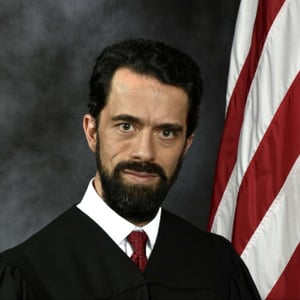
Judge, United States Court of Appeals, Third Circuit
Stephanos Bibas is a judge on the U.S. Court of Appeals for the Third Circuit. Judge Bibas was previously a professor of law and criminology at the University of Pennsylvania Law School. As director of the Penn Law Supreme Court Clinic, he argued six cases before the Supreme Court of the United States and filed briefs in dozens of others. He graduated summa cum laude and Phi Beta Kappa from Columbia University in 1989 with a B.A. in political theory and from Oxford University in 1991 with a B.A. in jurisprudence. He then earned his J.D. from Yale Law School in 1994.
After graduating from Yale Law, Judge Bibas clerked for Judge Patrick Higginbotham of the U.S. Court of Appeals for the Fifth Circuit and Justice Anthony Kennedy on the Supreme Court and was a litigation associate at Covington & Burling LLP in Washington, D.C. Thereafter, Judge Bibas served as an Assistant U.S. Attorney in the Southern District of New York, where he successfully prosecuted the world’s leading expert in Tiffany stained glass for hiring a grave robber to steal priceless Tiffany windows from cemeteries. Before his tenure at Penn Law, Judge Bibas taught at the University of Chicago Law School and the University of Iowa College of Law and was a research fellow at Yale Law School. He has published two books and seventy scholarly articles.
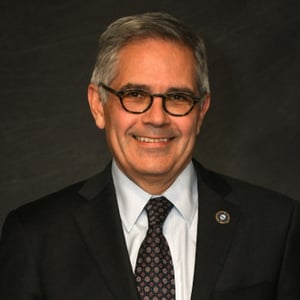
District Attorney, City of Philadelphia
Lawrence S. Krasner was officially sworn in on January 2, 2018, as the City of Philadelphia’s 26th District Attorney. Before being elected District Attorney, Mr. Krasner served of-counsel at Greenblatt, Pierce, Funt, and Flores, LLC. Larry was born in 1961 in St. Louis, the son of a World War II veteran and author father and evangelist mother. After attending public schools in St. Louis and the Philadelphia area, Larry earned degrees from the University of Chicago and Stanford Law School with the help of student loans and scholarships.
Mr. Krasner attended public school in the St. Louis and Philadelphia areas. He received his undergraduate degree at the University of Chicago in 1983 and his law degree from Stanford Law School in 1987, where he was selected to the Stanford Law Review. After multiple offers of employment in prosecutors’ and public defenders’ offices throughout the country, he worked as a public defender in Philadelphia from ’87 – ’91 and was then promoted to the Federal Public Defender’s Office in Philadelphia (’91- ’93). In 1993 he started his own private practice, specializing in criminal defense and police misconduct matters. He has remained in private practice ever since. During that time, Mr. Krasner has tried thousands of bench and jury trials in criminal and civil court in the Philadelphia area as well as other counties and states.
Throughout his 30 year career, Mr. Krasner has also proudly demonstrated a steadfast commitment to social justice, having defended protesters pro bono who were involved with movements including ACT UP, Black Lives Matter, progressive clergy with POWER, Casino-Free Philadelphia, DACA Dreamers, Decarcerate PA, anti-gun clergy with Heeding God’s Call, anti-poverty and homelessness advocates with Kensington Welfare Rights Union, Occupy Philly and Reclaim Philadelphia, and Grannies for Peace, among many others.
He has resided in Philadelphia for over 30 years with his wife of 28 years. His wife has been a judge of the Court of Common Pleas for 17 years. They have two adult sons.
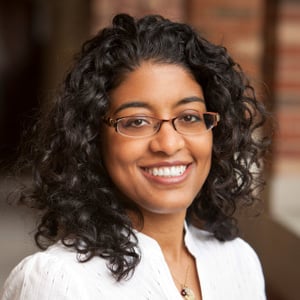
Walton Hale Hamilton Professor of Law, Yale Law School
Tracey Meares is the Walton Hale Hamilton Professor and a Founding Director of the Justice Collaboratory at Yale Law School. Before joining Yale, she was a professor at the University of Chicago Law School from 1995 to 2007. She was the first African American woman granted tenure at both law schools. Meares is a nationally recognized expert on policing in urban communities, who has worked extensively with the federal government, including being a member of President Barack Obama’s Task Force on 21st Century Policing. In 2019, Meares was elected a member of the American Academy of Arts and Sciences.
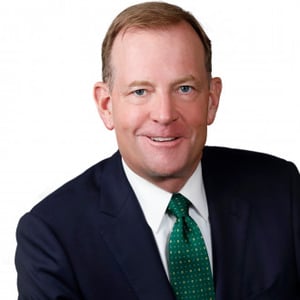
Partner, King & Spalding LLP
Former U.S. Attorney for the Eastern District of California, a 34-county district with an area that stretches from the Oregon border to Bakersfield, Greg Scott is an experienced trial lawyer who represents major companies facing government investigations and litigation, with a focus in the healthcare, retail, and construction industries. He has extensive knowledge on matters involving consumer protection, construction disputes, the Foreign Corrupt Practices Act (FCPA) and the False Claims Act (FCA).
Greg represents corporations under investigation by state district attorneys concerning potential violations of consumer protection laws, as well as corporations operating senior assisted livingfacilities under investigation by the state attorney general regarding potential violations of elder abuse laws. In addition, he represents construction companies under investigation by state district attorneys when employees are involved in serious accidents at worksites.
A retired Lieutenant Colonel after serving more than 20 years in the California Army National Guard & United States Army Reserve, Greg went on to become a deputy district attorney in Contra Costa County and twice-elected District Attorney of Shasta County. He also served as an Adjunct Professor of National Security Law at the University of the Pacific, McGeorge School of Law following his first term as U.S. Attorney for the E.D. of California. Between his two terms as U.S. Attorney for the E.D. of California, Greg was the vice chair of the white-collar defense and corporate investigations practice at an AmLaw 50 firm.
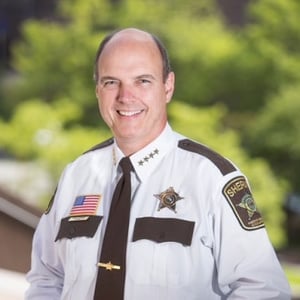
Sheriff (Ret.); Co-Founder and Principal Consultant, Public Safety Strategies Group LLC
Rich Stanek is co-founder and Principal Consultant with Public Safety Strategies Group, LLC., bringing his wealth of knowledge from 36 years of public safety experience to clients across the country, including organizational leadership, agency management, national law enforcement best practices, crime reduction strategies, public policy advocacy, corporate security, and expert testimony.
Rich served as the 27th Sheriff of Hennepin County, Minnesota for 12 years, with responsibility for the safety and security of 1.2 million residents. He managed over 1100 employees and volunteers, a budget of $125 million, and provided care and custody for inmates in the largest Jail and Sheriff’s Office in the Upper Midwest.
He is the author of numerous publications providing education for residents regarding emerging public safety and justice issues: Mental Illness among Jail inmates, Opioid Abuse and Addiction, the nexus between Mass Shootings and Mental Illness, the Collapse of the 35W Bridge, Intelligence-led Policing, and FirstNet, the dedicated National Public Safety Broadband Network for First Responders.
Rich served two terms on the Board of Directors for FirstNet: its mission is to develop, build and operate the Nationwide Public Safety Broadband Network that equips first responders. FirstNet operates within the U.S. Department of Commerce with a nonpartisan Congressional authorization and $7 billion appropriation. Rich was first appointed in 2014 and in his second term, Rich served as FirstNet’s Chair of Outreach and Advocacy efforts nationwide.
Rich started his policing career in 1983, with the Cottage Grove Police Department and joined the Minneapolis Police Department in 1986; he rose through the ranks to Captain and led the Criminal Investigations Division (Homicide, Burglary, Robbery, Rape, Gangs & Narcotics). During those years, Rich developed strong relationships with residents, pastors, business owners, community groups and local elected leaders; they developed strategies to fight and lower violent crime in Minneapolis. They worked to elect Rich as Hennepin County Sheriff and he re-prioritized Agency personnel and resources for three proven crime fighting initiatives: a Violent Offender Task Force, Criminal Information Sharing & Analysis Unit (CISA) to serve the Sheriff’s Office and 36 local Police Departments in Hennepin County and 7 Counties regionally; and new Crime Lab technology (DNA testing, firearms testing, and Property Crime initiatives). As a result of his leadership, these efforts, and new partnerships, violent crime in Hennepin County dropped by 38% from 2006-2018.
Prior to serving as Sheriff, Rich was appointed by Governor Tim Pawlenty as the State’s Commissioner of Public Safety, and Director of Homeland Security, overseeing nine State Agencies with over 2200 employees; including the Minnesota State Patrol, Bureau of Criminal Apprehension, Emergency Management, Office of Justice Programs and State Fire Marshal.
Rich came to the forefront of State leadership when he was appointed Chairman of the State Peace Officer Standards & Training Board (POST) and then elected as a State Legislator; he served for 5 terms while also working as a Minneapolis Police Officer. He chaired the House of Representatives Public Safety Policy & Finance Committees and authored numerous key legislative initiatives, including Minnesota’s entry into the Nation’s Emergency Management Assistance Compact (“EMAC”), and post-9/11 information sharing and communications initiatives to better equip First Responders.
At both the state and national level, Rich has become well-known for his strong and visible advocacy for advancements in law enforcement public policy, technology, education, and best practices, through his elected and appointed leadership roles. As a result, Rich is a much sought-after media spokesperson, faculty presenter and keynote speaker.
During his service as Sheriff, Rich served as President of the Major County Sheriffs of America (MCSA), Vice President of the National Sheriffs Associations (NSA); and President of the Minnesota Sheriff’s Association (MSA). He served as a Law Enforcement Senior Advisor to the Director of National Intelligence (DNI), Secretary of Department of Homeland Security (DHS), and the Director of the Federal Bureau of Investigation (FBI); He is the Past President of the Leaders in National Counterterrorism (LinCT); and served on the Criminal Intelligence Coordinating Council (CICC) and FBI’s Joint Terrorism Task Force (JTTF), where he held a top-secret national security clearance. Rich has testified numerous times before Congress regarding community policing strategies, 21st century Policing, countering violent extremism and community engagement.
Rich’s educational background includes an M.A. in Public Administration from Hamline University and a B.A. in Criminal Justice from the University of Minnesota. Additional professional training includes; the Southern Police Institute in Louisville, PERF’s Senior Management Institute for Police at Cambridge University, the U.S. Army War College in Pennsylvania, FBI National Executive Institute in Virginia and the Leaders in National Counterterrorism Training in Australia and the Jewish Institute for National Security Affairs (JINSA) in Israel.
Rich lives in Maple Grove, Minnesota, and has been married to his wife, Sally for 36 years; they have 2 adult children and a dog named Teddy. Rich is an avid Northwoods outdoorsman; where he enjoys time at his northern Minnesota cabin; hunting, fishing, boating, hiking and snowmobiling.
Judge, United States Court of Appeals, Third Circuit
Stephanos Bibas is a judge on the U.S. Court of Appeals for the Third Circuit. Judge Bibas was previously a professor of law and criminology at the University of Pennsylvania Law School. As director of the Penn Law Supreme Court Clinic, he argued six cases before the Supreme Court of the United States and filed briefs in dozens of others. He graduated summa cum laude and Phi Beta Kappa from Columbia University in 1989 with a B.A. in political theory and from Oxford University in 1991 with a B.A. in jurisprudence. He then earned his J.D. from Yale Law School in 1994.
After graduating from Yale Law, Judge Bibas clerked for Judge Patrick Higginbotham of the U.S. Court of Appeals for the Fifth Circuit and Justice Anthony Kennedy on the Supreme Court and was a litigation associate at Covington & Burling LLP in Washington, D.C. Thereafter, Judge Bibas served as an Assistant U.S. Attorney in the Southern District of New York, where he successfully prosecuted the world’s leading expert in Tiffany stained glass for hiring a grave robber to steal priceless Tiffany windows from cemeteries. Before his tenure at Penn Law, Judge Bibas taught at the University of Chicago Law School and the University of Iowa College of Law and was a research fellow at Yale Law School. He has published two books and seventy scholarly articles.
District Attorney, City of Philadelphia
Lawrence S. Krasner was officially sworn in on January 2, 2018, as the City of Philadelphia’s 26th District Attorney. Before being elected District Attorney, Mr. Krasner served of-counsel at Greenblatt, Pierce, Funt, and Flores, LLC. Larry was born in 1961 in St. Louis, the son of a World War II veteran and author father and evangelist mother. After attending public schools in St. Louis and the Philadelphia area, Larry earned degrees from the University of Chicago and Stanford Law School with the help of student loans and scholarships.
Mr. Krasner attended public school in the St. Louis and Philadelphia areas. He received his undergraduate degree at the University of Chicago in 1983 and his law degree from Stanford Law School in 1987, where he was selected to the Stanford Law Review. After multiple offers of employment in prosecutors’ and public defenders’ offices throughout the country, he worked as a public defender in Philadelphia from ’87 – ’91 and was then promoted to the Federal Public Defender’s Office in Philadelphia (’91- ’93). In 1993 he started his own private practice, specializing in criminal defense and police misconduct matters. He has remained in private practice ever since. During that time, Mr. Krasner has tried thousands of bench and jury trials in criminal and civil court in the Philadelphia area as well as other counties and states.
Throughout his 30 year career, Mr. Krasner has also proudly demonstrated a steadfast commitment to social justice, having defended protesters pro bono who were involved with movements including ACT UP, Black Lives Matter, progressive clergy with POWER, Casino-Free Philadelphia, DACA Dreamers, Decarcerate PA, anti-gun clergy with Heeding God’s Call, anti-poverty and homelessness advocates with Kensington Welfare Rights Union, Occupy Philly and Reclaim Philadelphia, and Grannies for Peace, among many others.
He has resided in Philadelphia for over 30 years with his wife of 28 years. His wife has been a judge of the Court of Common Pleas for 17 years. They have two adult sons.
Walton Hale Hamilton Professor of Law, Yale Law School
Tracey Meares is the Walton Hale Hamilton Professor and a Founding Director of the Justice Collaboratory at Yale Law School. Before joining Yale, she was a professor at the University of Chicago Law School from 1995 to 2007. She was the first African American woman granted tenure at both law schools. Meares is a nationally recognized expert on policing in urban communities, who has worked extensively with the federal government, including being a member of President Barack Obama’s Task Force on 21st Century Policing. In 2019, Meares was elected a member of the American Academy of Arts and Sciences.
Partner, King & Spalding LLP
Former U.S. Attorney for the Eastern District of California, a 34-county district with an area that stretches from the Oregon border to Bakersfield, Greg Scott is an experienced trial lawyer who represents major companies facing government investigations and litigation, with a focus in the healthcare, retail, and construction industries. He has extensive knowledge on matters involving consumer protection, construction disputes, the Foreign Corrupt Practices Act (FCPA) and the False Claims Act (FCA).
Greg represents corporations under investigation by state district attorneys concerning potential violations of consumer protection laws, as well as corporations operating senior assisted livingfacilities under investigation by the state attorney general regarding potential violations of elder abuse laws. In addition, he represents construction companies under investigation by state district attorneys when employees are involved in serious accidents at worksites.
A retired Lieutenant Colonel after serving more than 20 years in the California Army National Guard & United States Army Reserve, Greg went on to become a deputy district attorney in Contra Costa County and twice-elected District Attorney of Shasta County. He also served as an Adjunct Professor of National Security Law at the University of the Pacific, McGeorge School of Law following his first term as U.S. Attorney for the E.D. of California. Between his two terms as U.S. Attorney for the E.D. of California, Greg was the vice chair of the white-collar defense and corporate investigations practice at an AmLaw 50 firm.
Sheriff (Ret.); Co-Founder and Principal Consultant, Public Safety Strategies Group LLC
Rich Stanek is co-founder and Principal Consultant with Public Safety Strategies Group, LLC., bringing his wealth of knowledge from 36 years of public safety experience to clients across the country, including organizational leadership, agency management, national law enforcement best practices, crime reduction strategies, public policy advocacy, corporate security, and expert testimony.
Rich served as the 27th Sheriff of Hennepin County, Minnesota for 12 years, with responsibility for the safety and security of 1.2 million residents. He managed over 1100 employees and volunteers, a budget of $125 million, and provided care and custody for inmates in the largest Jail and Sheriff’s Office in the Upper Midwest.
He is the author of numerous publications providing education for residents regarding emerging public safety and justice issues: Mental Illness among Jail inmates, Opioid Abuse and Addiction, the nexus between Mass Shootings and Mental Illness, the Collapse of the 35W Bridge, Intelligence-led Policing, and FirstNet, the dedicated National Public Safety Broadband Network for First Responders.
Rich served two terms on the Board of Directors for FirstNet: its mission is to develop, build and operate the Nationwide Public Safety Broadband Network that equips first responders. FirstNet operates within the U.S. Department of Commerce with a nonpartisan Congressional authorization and $7 billion appropriation. Rich was first appointed in 2014 and in his second term, Rich served as FirstNet’s Chair of Outreach and Advocacy efforts nationwide.
Rich started his policing career in 1983, with the Cottage Grove Police Department and joined the Minneapolis Police Department in 1986; he rose through the ranks to Captain and led the Criminal Investigations Division (Homicide, Burglary, Robbery, Rape, Gangs & Narcotics). During those years, Rich developed strong relationships with residents, pastors, business owners, community groups and local elected leaders; they developed strategies to fight and lower violent crime in Minneapolis. They worked to elect Rich as Hennepin County Sheriff and he re-prioritized Agency personnel and resources for three proven crime fighting initiatives: a Violent Offender Task Force, Criminal Information Sharing & Analysis Unit (CISA) to serve the Sheriff’s Office and 36 local Police Departments in Hennepin County and 7 Counties regionally; and new Crime Lab technology (DNA testing, firearms testing, and Property Crime initiatives). As a result of his leadership, these efforts, and new partnerships, violent crime in Hennepin County dropped by 38% from 2006-2018.
Prior to serving as Sheriff, Rich was appointed by Governor Tim Pawlenty as the State’s Commissioner of Public Safety, and Director of Homeland Security, overseeing nine State Agencies with over 2200 employees; including the Minnesota State Patrol, Bureau of Criminal Apprehension, Emergency Management, Office of Justice Programs and State Fire Marshal.
Rich came to the forefront of State leadership when he was appointed Chairman of the State Peace Officer Standards & Training Board (POST) and then elected as a State Legislator; he served for 5 terms while also working as a Minneapolis Police Officer. He chaired the House of Representatives Public Safety Policy & Finance Committees and authored numerous key legislative initiatives, including Minnesota’s entry into the Nation’s Emergency Management Assistance Compact (“EMAC”), and post-9/11 information sharing and communications initiatives to better equip First Responders.
At both the state and national level, Rich has become well-known for his strong and visible advocacy for advancements in law enforcement public policy, technology, education, and best practices, through his elected and appointed leadership roles. As a result, Rich is a much sought-after media spokesperson, faculty presenter and keynote speaker.
During his service as Sheriff, Rich served as President of the Major County Sheriffs of America (MCSA), Vice President of the National Sheriffs Associations (NSA); and President of the Minnesota Sheriff’s Association (MSA). He served as a Law Enforcement Senior Advisor to the Director of National Intelligence (DNI), Secretary of Department of Homeland Security (DHS), and the Director of the Federal Bureau of Investigation (FBI); He is the Past President of the Leaders in National Counterterrorism (LinCT); and served on the Criminal Intelligence Coordinating Council (CICC) and FBI’s Joint Terrorism Task Force (JTTF), where he held a top-secret national security clearance. Rich has testified numerous times before Congress regarding community policing strategies, 21st century Policing, countering violent extremism and community engagement.
Rich’s educational background includes an M.A. in Public Administration from Hamline University and a B.A. in Criminal Justice from the University of Minnesota. Additional professional training includes; the Southern Police Institute in Louisville, PERF’s Senior Management Institute for Police at Cambridge University, the U.S. Army War College in Pennsylvania, FBI National Executive Institute in Virginia and the Leaders in National Counterterrorism Training in Australia and the Jewish Institute for National Security Affairs (JINSA) in Israel.
Rich lives in Maple Grove, Minnesota, and has been married to his wife, Sally for 36 years; they have 2 adult children and a dog named Teddy. Rich is an avid Northwoods outdoorsman; where he enjoys time at his northern Minnesota cabin; hunting, fishing, boating, hiking and snowmobiling.
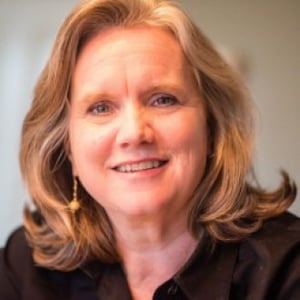
Principal, Sharon Fast Gustafson, Attorney at Law, PLC
SHARON FAST GUSTAFSON is the immediate past General Counsel of the U.S. Equal Employment Opportunity Commission (EEOC), where she enforced Title VII of the Civil Rights Act of 1964, the Americans with Disabilities Act, and the Age Discrimination in Employment Act.
Ms. Gustafson graduated with honors from Georgetown Law Center in 1991 and has concentrated her practice in employment law. She worked for four years in the labor and employment law group at Jones, Day in Washington, D.C. Since that time, she has had a broad-based solo practice advising and representing employers and employees in handling all aspects of the employment relationship, in compliance with federal and state workplace laws, and in designing and implementing sound employment policies and practices.
Ms. Gustafson is an experienced litigator in federal and state courts; before administrative agencies, including the EEOC, state and local civil rights offices, and the Department of Labor (DOL) Wage and Hour Division; and in mediation and arbitration. She is admitted to practice in state and federal courts in Virginia, Maryland, and the District of Columbia, and in the United States Supreme Court.
Ms. Gustafson successfully litigated a pregnancy discrimination case, Young v. UPS, 575 U.S. 206 (2015), from EEOC intake to a successful outcome at the U.S. Supreme Court. In 2016, she received the Metropolitan Washington Employment Lawyers Association’s “Lawyer of the Year” award “in recognition of outstanding dedication to Civil Rights, Equality, and Justice.”
Ms. Gustafson represents both employers and employees in matters relating to employment law.
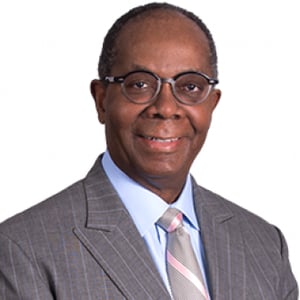
Managing Partner, Crabbe Brown & James LLP
Larry James has been at the heart of the Columbus business, legal, civic, and political scene for the last thirty years. He is a respected litigator, as well as an advisor to local and national leaders. In recognition of his many achievements, the law firm changed its name from Crabbe, Brown, Jones, Potts & Schmidt to Crabbe, Brown & James in January 2001.
In 2011, The Ohio State University selected Mr. James as lead counsel to represent its student athletes in NCAA investigations. In 2013, Armen Keteyian published his book The System: The Glory and Scandal of Big-Time College Football, a chapter of which is dedicated to Larry’s work in representing the OSU football players.
In 2012, Mr. James and his wife, Donna, were awarded the American Red Cross of Greater Columbus’ Humanitarians of the Year Award. In 2015, noted journalist Wil Haygood published his award-winning book Showdown: Thurgood Marshall and the Supreme Court Nomination That Changed America, which he dedicated to Mr. James.
Mr. James is a life member of the Sixth Circuit Judicial Conference, and he has served as General Counsel of the National Fraternal Order of Police since 2001.
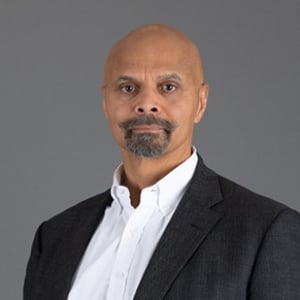
Partner, Benesch, Friedlander, Coplan & Aronoff LLP
Peter focuses his legal practice on representing management in employment-related litigation and in contract negotiations, NLRB proceedings, EEO matters and arbitration.
Peter Kirsanow is a partner with Benesch’s Labor & Employment Practice Group. He returned to Benesch in January 2008 after serving as a presidential appointee to the National Labor Relations Board (NLRB) in Washington D.C. for two years. While serving on the NLRB, he was involved with significant decisions including Oakwood Healthcare, Inc., Dana/Metaldyne and Oil Capital Sheet Metal, Inc. In addition, Peter testified before the Senate Judiciary Committee on the nominations of John Roberts, Samuel Alito, Sonia Sotomayor, Elena Kagan and Neil Gorsuch to the Supreme Court. He also continues to testify before and advise members of the U.S. Congress on employment law matters, most recently on November 18 before the House Subcommittee on Investigations and Oversight regarding disparate impact theory.
Peter was recently reappointed by the Majority Leader of the House of Representatives to his fourth consecutive six-year term on the U.S. Commission on Civil Rights. This is a part-time position which will expire in December 2025.
Recently, Peter and a team of Benesch attorneys served as lead counsel to the National Association of Manufacturers in litigation before the U.S. Circuit Court for the District of Columbia against the NLRB, challenging the Board’s Notice of Employer Rights Posting Rule. The court ruled in favor of Benesch’s client, striking down the NLRB’s Rule in its entirety. This ruling impacts over 6,000,000 employers nationwide which would have been subject to the posting requirement.
Additionally, Peter is past chair of the board of directors of the Center for New Black Leadership and is a member of Benesch’s Diversity & Inclusion Committee. This committee helps ensure that the firm promotes an environment in which differences are respected, employees are treated fairly, and individual skills and talents are valued.
Judge, United States Court of Appeals, Third Circuit
Judge Paul Matey was appointed to the United States Court of Appeals for the Third Circuit in 2019 by President Trump.
Before his judicial service, Judge Matey was a partner at Lowenstein Sandler in New Jersey where he practiced complex commercial litigation and criminal defense. Earlier, Judge Matey was the Senior Vice President, General Counsel and Secretary for University Hospital Newark, an academic medical center and teaching hospital.
He also served as the Deputy Chief Counsel to Governor Chris Christie, and as an Assistant United States Attorney in the District of New Jersey, where he was awarded the Justice Department’s Director’s Award for Superior Performance. He also practiced at the Washington D.C. firm of Kellogg, Hansen, Todd, Figel & Frederick, and served as a law clerk to judges on the United States Court of Appeals for the Third Circuit and the United States District Court for the District of New Jersey.
He earned his bachelor’s degree from the University of Scranton, a Jesuit University, in 1993, and his juris doctorate, summa cum laude, from Seton Hall University School of Law in 2001, where he served as Editor-in-Chief of the Seton Hall Law Review.
In 2019, Judge Matey was elected to membership in the American Law Institute and, since 2020, has lectured on administrative law and the American legal history at Seton Hall.
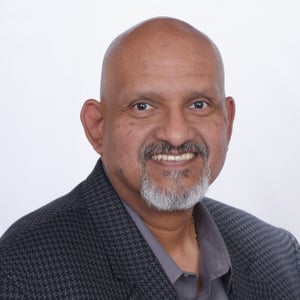
CEO, Intelligent Partnerships
Daniel Villao is Chief Executive Officer at Intelligent Partnerships, Inc. and the Immediate Past Chair of the National Board of Directors for the Association of Latino Professionals for America (ALPFA). He is also the former Deputy Administrator in the Office of Apprenticeship for the U.S. Department of Labor under both Republican and Democratic Administrations.
With decades of experience in policy development, Daniel has had proven success in innovative supplier-access design and training. As Deputy Administrator, Daniel was successful in helping major employers such as Microsoft, Lufthansa, Zurich, and AON adopt apprenticeship to create workforce development systems that benefit America's workers and employers.
Daniel specializes in implementing an innovative and accessible workforce design that transforms businesses and adds value to all aspects of organizations. Daniel has dedicated his career to analyzing the ever-changing landscape of the workplace and helping organizations navigate the world of work and creating jobs that make sense in emerging models.
Daniel Villao is the author of the acclaimed Beyond Green Jobs, which addresses a systems approach to diversity and inclusion in the construction sector in a future world defined by climate change.
Principal, Sharon Fast Gustafson, Attorney at Law, PLC
SHARON FAST GUSTAFSON is the immediate past General Counsel of the U.S. Equal Employment Opportunity Commission (EEOC), where she enforced Title VII of the Civil Rights Act of 1964, the Americans with Disabilities Act, and the Age Discrimination in Employment Act.
Ms. Gustafson graduated with honors from Georgetown Law Center in 1991 and has concentrated her practice in employment law. She worked for four years in the labor and employment law group at Jones, Day in Washington, D.C. Since that time, she has had a broad-based solo practice advising and representing employers and employees in handling all aspects of the employment relationship, in compliance with federal and state workplace laws, and in designing and implementing sound employment policies and practices.
Ms. Gustafson is an experienced litigator in federal and state courts; before administrative agencies, including the EEOC, state and local civil rights offices, and the Department of Labor (DOL) Wage and Hour Division; and in mediation and arbitration. She is admitted to practice in state and federal courts in Virginia, Maryland, and the District of Columbia, and in the United States Supreme Court.
Ms. Gustafson successfully litigated a pregnancy discrimination case, Young v. UPS, 575 U.S. 206 (2015), from EEOC intake to a successful outcome at the U.S. Supreme Court. In 2016, she received the Metropolitan Washington Employment Lawyers Association’s “Lawyer of the Year” award “in recognition of outstanding dedication to Civil Rights, Equality, and Justice.”
Ms. Gustafson represents both employers and employees in matters relating to employment law.
Managing Partner, Crabbe Brown & James LLP
Larry James has been at the heart of the Columbus business, legal, civic, and political scene for the last thirty years. He is a respected litigator, as well as an advisor to local and national leaders. In recognition of his many achievements, the law firm changed its name from Crabbe, Brown, Jones, Potts & Schmidt to Crabbe, Brown & James in January 2001.
In 2011, The Ohio State University selected Mr. James as lead counsel to represent its student athletes in NCAA investigations. In 2013, Armen Keteyian published his book The System: The Glory and Scandal of Big-Time College Football, a chapter of which is dedicated to Larry’s work in representing the OSU football players.
In 2012, Mr. James and his wife, Donna, were awarded the American Red Cross of Greater Columbus’ Humanitarians of the Year Award. In 2015, noted journalist Wil Haygood published his award-winning book Showdown: Thurgood Marshall and the Supreme Court Nomination That Changed America, which he dedicated to Mr. James.
Mr. James is a life member of the Sixth Circuit Judicial Conference, and he has served as General Counsel of the National Fraternal Order of Police since 2001.
Partner, Benesch, Friedlander, Coplan & Aronoff LLP
Peter focuses his legal practice on representing management in employment-related litigation and in contract negotiations, NLRB proceedings, EEO matters and arbitration.
Peter Kirsanow is a partner with Benesch’s Labor & Employment Practice Group. He returned to Benesch in January 2008 after serving as a presidential appointee to the National Labor Relations Board (NLRB) in Washington D.C. for two years. While serving on the NLRB, he was involved with significant decisions including Oakwood Healthcare, Inc., Dana/Metaldyne and Oil Capital Sheet Metal, Inc. In addition, Peter testified before the Senate Judiciary Committee on the nominations of John Roberts, Samuel Alito, Sonia Sotomayor, Elena Kagan and Neil Gorsuch to the Supreme Court. He also continues to testify before and advise members of the U.S. Congress on employment law matters, most recently on November 18 before the House Subcommittee on Investigations and Oversight regarding disparate impact theory.
Peter was recently reappointed by the Majority Leader of the House of Representatives to his fourth consecutive six-year term on the U.S. Commission on Civil Rights. This is a part-time position which will expire in December 2025.
Recently, Peter and a team of Benesch attorneys served as lead counsel to the National Association of Manufacturers in litigation before the U.S. Circuit Court for the District of Columbia against the NLRB, challenging the Board’s Notice of Employer Rights Posting Rule. The court ruled in favor of Benesch’s client, striking down the NLRB’s Rule in its entirety. This ruling impacts over 6,000,000 employers nationwide which would have been subject to the posting requirement.
Additionally, Peter is past chair of the board of directors of the Center for New Black Leadership and is a member of Benesch’s Diversity & Inclusion Committee. This committee helps ensure that the firm promotes an environment in which differences are respected, employees are treated fairly, and individual skills and talents are valued.
Judge, United States Court of Appeals, Third Circuit
Judge Paul Matey was appointed to the United States Court of Appeals for the Third Circuit in 2019 by President Trump.
Before his judicial service, Judge Matey was a partner at Lowenstein Sandler in New Jersey where he practiced complex commercial litigation and criminal defense. Earlier, Judge Matey was the Senior Vice President, General Counsel and Secretary for University Hospital Newark, an academic medical center and teaching hospital.
He also served as the Deputy Chief Counsel to Governor Chris Christie, and as an Assistant United States Attorney in the District of New Jersey, where he was awarded the Justice Department’s Director’s Award for Superior Performance. He also practiced at the Washington D.C. firm of Kellogg, Hansen, Todd, Figel & Frederick, and served as a law clerk to judges on the United States Court of Appeals for the Third Circuit and the United States District Court for the District of New Jersey.
He earned his bachelor’s degree from the University of Scranton, a Jesuit University, in 1993, and his juris doctorate, summa cum laude, from Seton Hall University School of Law in 2001, where he served as Editor-in-Chief of the Seton Hall Law Review.
In 2019, Judge Matey was elected to membership in the American Law Institute and, since 2020, has lectured on administrative law and the American legal history at Seton Hall.
CEO, Intelligent Partnerships
Daniel Villao is Chief Executive Officer at Intelligent Partnerships, Inc. and the Immediate Past Chair of the National Board of Directors for the Association of Latino Professionals for America (ALPFA). He is also the former Deputy Administrator in the Office of Apprenticeship for the U.S. Department of Labor under both Republican and Democratic Administrations.
With decades of experience in policy development, Daniel has had proven success in innovative supplier-access design and training. As Deputy Administrator, Daniel was successful in helping major employers such as Microsoft, Lufthansa, Zurich, and AON adopt apprenticeship to create workforce development systems that benefit America's workers and employers.
Daniel specializes in implementing an innovative and accessible workforce design that transforms businesses and adds value to all aspects of organizations. Daniel has dedicated his career to analyzing the ever-changing landscape of the workplace and helping organizations navigate the world of work and creating jobs that make sense in emerging models.
Daniel Villao is the author of the acclaimed Beyond Green Jobs, which addresses a systems approach to diversity and inclusion in the construction sector in a future world defined by climate change.
Judge, U.S. Court of Appeals for the Third Circuit
Hon. Jennifer Mascott served as Associate Professor of Law and Director of the Separation of Powers Institute at The Catholic University of America’s Columbus School of Law before her appointment to the federal bench. On July 16, 2025, President Donald J. Trump nominated her to the U.S. Court of Appeals for the Third Circuit (Delaware), and she was confirmed on October 9, 2025.
Prior to her confirmation, Judge Mascott wrote extensively in administrative and constitutional law, statutory interpretation, and the separation of powers. Her scholarship—published in leading journals including the Stanford Law Review, Notre Dame Law Review, and Supreme Court Review—was cited by the U.S. Supreme Court and multiple federal courts. She also contributed Supreme Court commentary for NBC Universal.
Before joining Catholic Law, she was an Assistant Professor and Co-Director of The C. Boyden Gray Center at George Mason University’s Antonin Scalia Law School. In 2022 she became co-author of Beermann, Cass & Diver’s Administrative Law: Cases and Materials (9th ed.). In 2023 she received the Justice Joseph Story Award for excellence in scholarship, teaching, and advancing the rule of law.
Judge Mascott also served as a Council Member of the ABA’s Administrative Law Section and as a Public Member of the Administrative Conference of the United States. She frequently testified before Congress on executive power, regulatory reform, and judicial jurisdiction, and participated in multiple Supreme Court confirmation hearings.
From 2019 to 2021, she took leave from academia to serve as Deputy Assistant Attorney General in the Department of Justice’s Office of Legal Counsel and later as Associate Deputy Attorney General, where she argued federal cases and assisted with Justice Amy Coney Barrett’s confirmation. Earlier in her career, she clerked for Justice Clarence Thomas and for then-Judge Brett M. Kavanaugh on the D.C. Circuit.
Judge Mascott earned her J.D. summa cum laude from the George Washington University Law School and her B.A. from the same institution.
Judge, United States Court of Appeals, Third Circuit
Judge Paul Matey was appointed to the United States Court of Appeals for the Third Circuit in 2019 by President Trump.
Before his judicial service, Judge Matey was a partner at Lowenstein Sandler in New Jersey where he practiced complex commercial litigation and criminal defense. Earlier, Judge Matey was the Senior Vice President, General Counsel and Secretary for University Hospital Newark, an academic medical center and teaching hospital.
He also served as the Deputy Chief Counsel to Governor Chris Christie, and as an Assistant United States Attorney in the District of New Jersey, where he was awarded the Justice Department’s Director’s Award for Superior Performance. He also practiced at the Washington D.C. firm of Kellogg, Hansen, Todd, Figel & Frederick, and served as a law clerk to judges on the United States Court of Appeals for the Third Circuit and the United States District Court for the District of New Jersey.
He earned his bachelor’s degree from the University of Scranton, a Jesuit University, in 1993, and his juris doctorate, summa cum laude, from Seton Hall University School of Law in 2001, where he served as Editor-in-Chief of the Seton Hall Law Review.
In 2019, Judge Matey was elected to membership in the American Law Institute and, since 2020, has lectured on administrative law and the American legal history at Seton Hall.
James G. Phillipp Professor of Law, University of Michigan Law School
Julian Davis Mortenson writes on constitutional and international law. His current book project—The Founders' President (under contract, Harvard University Press)—develops a comprehensive account of presidential power at the American Founding. He is also co-authoring a new constitutional law casebook, scheduled for publication by Foundation Press in 2020.
Professor Mortenson is an award-winning teacher and an active litigator. Representative constitutional matters include his work as lead counsel in a pre-Obergefell suit that required Michigan to recognize the marriages of more than 300 same-sex couples; his representation of discharged military service members challenging the "Don't Ask, Don't Tell" law; and his work as one of the principal drafters of the merits briefs in the landmark case Boumediene v. Bush, which secured the right of Guantanamo detainees to challenge their incarceration. He regularly litigates complex transnational matters in the U.S. courts, and has served as arbitrator, counsel, and expert witness in a wide variety of commercial and investor-state disputes.
Before joining the faculty, Professor Mortenson worked at the law firm WilmerHale, in the President's Office of the International Criminal Tribunal for the former Yugoslavia, and as a law clerk for both Justice David H. Souter and The Hon. J. Harvie Wilkinson III. Prior to law school, he was a management consultant with a client portfolio spanning the finance, manufacturing, oil and gas, and information technology industries. Professor Mortenson was salutatorian of his class at Stanford Law School and received an AB in history, summa cum laude, from Harvard College.
James Monroe Distinguished Professor of Law and Albert Clark Tate, Jr., Professor of Law, University of Virginia School of Law
Professor Saikrishna Prakash’s scholarship focuses on separation of powers, particularly executive powers. He teaches Constitutional Law, Foreign Relations Law and Presidential Powers at the Law School.
Prakash’s most recent book, “The Living Presidency: An Originalist Argument Against Its Ever-Expanding Powers,” was published by Harvard Belknap Press in 2020. He also authored “Imperial from the Beginning: The Constitution of the Original Executive” (Yale University Press, 2015). The former book focuses on the modern presidency while the latter considers the presidency of the Founders.
Prakash has authored over 75 law review articles. Among them are “Of Synchronicity and Supreme Law” in the Harvard Law Review, “The Indefensible Duty to Defend” in the Columbia Law Review, and “50 States, 50 Attorneys General and 50 Approaches to the Duty to Defend” and “The Executive Power Over Foreign Affairs” in the Yale Law Journal.
Prakash has published op-eds in The New York Times, The Wall Street Journal and the Los Angeles Times. At the request of Democrats and Republicans, he has testified before Congress on matters of presidential removal, the Mueller Report and how Congress might better check the presidency. He is currently a Miller Center Senior Fellow. In 2015, he received the Roger Traynor award for faculty scholarship. In the same year, he received an honorable mention from the American Society of Legal Writers for his book “Imperial from the Beginning.” He has given named lectures at William & Mary Law School, Princeton University and Toledo Law School, and keynote addresses at several conferences.
Prakash majored in economics and political science at Stanford University. At Yale Law School, he served as senior editor of the Yale Law Journal and received the John M. Olin Fellowship in Law, Economics and Public Policy. He subsequently clerked for Judge Laurence H. Silberman of the U.S. Court of Appeals for the District of Columbia Circuit and for Justice Clarence Thomas of the U.S. Supreme Court. After practicing in New York for two years, he served as a visiting professor at the University of Illinois College of Law and as an associate professor at Boston University School of Law. He then spent several years at the University of San Diego School of Law as the Herzog Research Professor of Law. Prakash has been a visiting professor at Northwestern University and the University of Chicago. He also has served as a James Madison Fellow at Princeton University and Visiting Research Fellow at the Hoover Institution of War & Peace at Stanford University.
Hugh and Hazel Darling Foundation Professor of Law; Director, Center for the Study of Constitutional Originalism, University of San Diego School of Law

Topics
Tweet at Your Own Peril: The Third Circuit Holds that Anyone—Literally Anyone—Can File an Unfair Labor Practice Charge
We’ve all been there: It’s late in the afternoon, and you’ve spent the last few...
V: Modern Debates, Old Insights: The Federalists, Anti-Federalists, and Executive Power (Panel)
Jenn L. Mascott, Paul B. Matey, Julian Davis Mortenson, Saikrishna Prakash, Michael B. Rappaport
In the contemporary debates over the nature of executive power, two ideas are perennially prominent...
V: Modern Debates, Old Insights: The Federalists, Anti-Federalists, and Executive Power (Panel)
Jenn L. Mascott, Paul B. Matey, Julian Davis Mortenson, Saikrishna Prakash, Michael B. Rappaport
In the contemporary debates over the nature of executive power, two ideas are perennially prominent...
V: Modern Debates, Old Insights: The Federalists, Anti-Federalists, and Executive Power (Panel)
2022 National Student Symposium
Charlottesville, VASecond Amendment: Next Steps in the Unfolding Litigation Battle
Thomas M. Hardiman, Jonathan Lowy, Mark W. Smith, David H. Thompson
The 2021 National Lawyers Convention took place November 11-13, 2021 at the Mayflower Hotel in...
Second Amendment: Next Steps in the Unfolding Litigation Battle
Thomas M. Hardiman, Jonathan Lowy, Mark W. Smith, David H. Thompson
The 2021 National Lawyers Convention took place November 11-13, 2021 at the Mayflower Hotel in...
Criminal Justice 2021 and The Rule of Law
Stephanos Bibas, Lawrence S. Krasner, Tracey Meares, McGregor W. Scott, Rich Stanek
The 2021 National Lawyers Convention took place November 11-13, 2021 at the Mayflower Hotel in...
Criminal Justice 2021 and The Rule of Law
Stephanos Bibas, Lawrence S. Krasner, Tracey Meares, McGregor W. Scott, Rich Stanek
The 2021 National Lawyers Convention took place November 11-13, 2021 at the Mayflower Hotel in...
"Progressive" HR in 2021: The Solution or the Problem?
Sharon Fast Gustafson, Larry H. James, Peter Kirsanow, Paul B. Matey, Daniel Villao
The 2021 National Lawyers Convention took place November 11-13, 2021 at the Mayflower Hotel in...
"Progressive" HR in 2021: The Solution or the Problem?
Sharon Fast Gustafson, Larry H. James, Peter Kirsanow, Paul B. Matey, Daniel Villao
The 2021 National Lawyers Convention took place November 11-13, 2021 at the Mayflower Hotel in...