
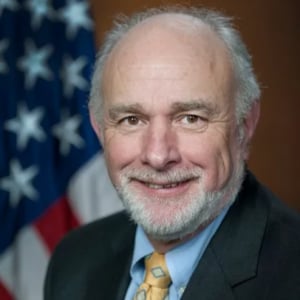
Visiting Fellow in Governance Studies, Brookings Institution
Bill Baer is a visiting fellow in Governance Studies. He is one of the world’s best known and respected antitrust/competition enforcers. Baer is the only person to have led antitrust enforcement at both U.S. antitrust agencies, serving as assistant attorney general in charge of the Antitrust Division of the U.S. Department of Justice from 2013 to 2016, and as director of the Bureau of Competition at the Federal Trade Commission from 1995 to 1999. During his tenure as assistant attorney general, the Antitrust Division achieved unprecedented success in civil and criminal enforcement, bringing and winning more cases than at any point in its history. He also developed close working relationships with his competition enforcement colleagues around the world. In 2016 and early 2017, Baer also served as acting associate attorney general, the third highest official in the Department of Justice. He oversaw the work of the Antitrust, Civil, Civil Rights, Tax, and Environment and Natural Resources Divisions and successfully led the effort to hold financial institutions accountable in the residential mortgage-backed securities crisis, securing record penalties and consumer redress. Baer worked at the Federal Trade Commission on two different occasions: from 1995 to 1999, as director of the Bureau of Competition; and from 1975 to 1980 as attorney advisor to the chairman and assistant general counsel for Legislation and Congressional Relations. While not in public service, he headed the highly regarded antitrust practice at Arnold & Porter, representing a broad range of companies in U.S. and international cartel investigations, antitrust litigation, and merger and acquisition reviews by antitrust enforcers, including the Department of Justice, the Federal Trade Commission, state attorneys general, and the European Commission.
Baer was twice named by Global Competition Review as the best competition lawyer in the world; honored, in 2010 and 2012, by Best Lawyers as the best antitrust lawyer in Washington; and named by The National Law Journal as one of “The Decade’s Most Influential Lawyers.” In 2015 the Federal Trade Commission honored him with the Miles W. Kirkpatrick Lifetime Achievement Award. In 2017, the American Antitrust Institute presented him with the Alfred E. Kahn Award for Antitrust Achievement. In 2024 the American Economic Liberties Project honored him with its first Achievements in Antitrust Award. Most recently, Baer was awarded the John Sherman Award for his substantive contributions to the development of antitrust law. It is the highest honor granted by the Justice Department’s Antitrust Division.
Baer received his J.D. in 1975 from Stanford Law School, where he served as senior article editor of The Stanford Law Review, and his B.A. in 1972 from Lawrence University. Outside of Brookings, he is a trustee and board officer of his alma mater, Lawrence University. He previously served on the Biden transition team for the Federal Trade Commission. In addition, he occasionally serves as a consulting expert on antitrust matters.
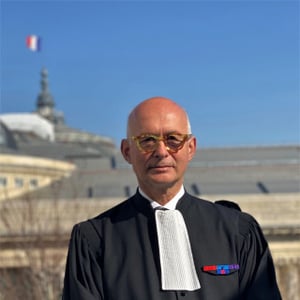
Partner, Supreme Court Attorney, Cabinet Briard LLP
François-Henri Briard is a Knight of the Legion of Honor, an Officer of the National Order of Merit and a Knight of the Palmes Académiques.
He was a member of the Governing Board of the Bar of the French Supreme Courts (2003-2005).
François-Henri Briard was a trustee of Sarah Lawrence College in New York for eight years. He is President of the Institut Vergennes, a member of the U.S. Supreme Court Historical Society and an honorary member of the Society of the Cincinnati and of the Sons of the American Revolution. He is also an expert with the Federalist Society, a U.S. think tank that focuses on constitutional and judicial issues.
He is a member of the Institute of Consulting Tax Attorneys (IACF) and an associate member of the Academy of Moral Sciences, Letters and Arts of Versailles and Ile de France.
He is a member of the French Navy civilian reserve with the rank of frigate captain and has been awarded a medal by the voluntary military services. On behalf of the Firm, he received the Military Reserve Prize (2011).
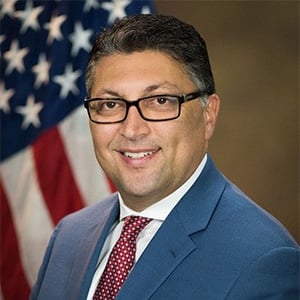
Adjunct Professor of Law, University of Pennsylvania
Makan Delrahim is currently an Adjunct Professor of Law at the University of Pennsylvania.
Previously he served as Assistant Attorney General for the Antitrust Division, Deputy Assistant to the President, and Deputy White House Counsel. Mr. Delrahim’s rich antitrust background covers the full range of industries, issues, and institutions touched upon by the work of the Antitrust Division. He is a former partner in the Los Angeles office of a national law firm. He served in the Antitrust Division from 2003 to 2005 as a Deputy Assistant Attorney General, overseeing the Appellate, Foreign Commerce, and Legal Policy sections. During that time, he played an integral role in building the Antitrust Division’s engagement with its international counterparts and was involved in civil and criminal matters. He has served on the Attorney General’s Task Force on Intellectual Property and as Chairman of the Merger Working Group of the International Competition Network. Mr. Delrahim was also a Commissioner on the Antitrust Modernization Commission from 2004 to 2007. Earlier in his career, Mr. Delrahim served as antitrust counsel, and later as the Staff Director and Chief Counsel of the U.S. Senate Judiciary Committee.
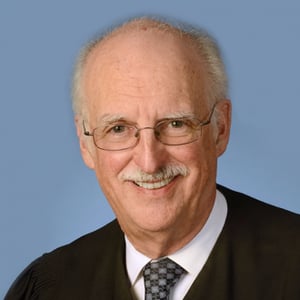
Senior Judge, United States Court of Appeals, District of Columbia Circuit
Circuit Judge Douglas H. Ginsburg was appointed to the United States Court of Appeals for the District of Columbia in 1986. After receiving his B.S. from Cornell University in 1970, and his J.D. from the University of Chicago Law School in 1973, he clerked on the D.C. Circuit and for Justice Thurgood Marshall on the United States Supreme Court. Thereafter, Judge Ginsburg was a professor at the Harvard Law School, the Deputy Assistant and then Assistant Attorney General for the Antitrust Division of the Department of Justice, as well as the Administrator of the Office of Information and Regulatory Affairs in the Office of Management and Budget. Concurrent with his service as a federal judge, Judge Ginsburg has taught at the University of Chicago Law School and the New York University School of Law. Judge Ginsburg is currently a Professor of Law at the George Mason University and a visiting professor at University College London, Faculty of Laws.
Judge Ginsburg is the Chairman of the International Advisory Board of the Global Antitrust Institute at the Law and Economics Center of the George Mason University School of Law. He also serves on the Advisory Boards of: Competition Policy International; the Harvard Journal of Law and Public Policy; the Journal of Competition Law and Economics; the Journal of Law, Economics & Policy; the Supreme Court Economic Review; the University of Chicago Law Review; the New York University Journal of Law and Liberty; and, at University College London, both the Centre for Law, Economics and Society and the Jevons Institute for Competition Law and Economics.
In 2020, Judge Ginsburg was the 11th recipient of the John Sherman Award, presented by the Antitrust Division of the Department of Justice in recognition of the awardee’s Lifetime Contributions to Antitrust Law and Policy.
In 2014, Judge Ginsburg received the Lifetime Achievement Award given annually by the Global Competition Review.
He is the author or co-author of several books and more than 100 articles on competition and regulation, including, most recently, Growing Convergence: The Limited Role of Antitrust in Standard Essential Patent Disputes, in CPI Antitrust Chronicle, Summer 2021, Vol. 1, No. 2.

Vice President and Director of Competition Policy, Progressive Policy Institute
Diana Moss joined the Progressive Policy Institute in 2023. She was previously President of the American Antitrust Institute from 2015-2023. An economist, Dr. Moss has developed and expanded competition enforcement and policy advocacy channels and strategies, and strengthened communications with enforcers, Congress, other advocacy groups, and the media. Her work spans both antitrust and regulation, with industry expertise in digital technology, electricity, petroleum, food and agriculture, airlines, telecommunications, and healthcare. Dr. Moss was previously at the Federal Energy Regulatory Commission, where she coordinated the agency’s competition analysis for electricity mergers. In the early 1990s, she consulted in private practice in the areas of regulation and antitrust. Dr. Moss has spoken widely on various topics involving competition policy and enforcement, testified before Congress, appeared before state and federal regulatory commissions, and made numerous radio and television appearances. She has published articles in a number of economic and legal academic journals, including: American Economic Review, Journal of Industrial Organization, the Energy Law Journal, and the Antitrust Bulletin. She is editor of Network Access, Regulation and Antitrust (2005). Dr. Moss is Adjunct Faculty in the Department of Economics at the University of Colorado at Boulder. She holds a M.A. degree from the University of Denver and a Ph.D. from the Colorado School of Mines.

Judge, United States Court of Appeals, Sixth Circuit
Judge Readler earned his undergraduate and law degrees from the University of Michigan. After graduating, he served as a law clerk to Judge Alan Norris of the United States Court of Appeals for the Sixth Circuit. Judge Readler then began practicing law in the Columbus office of the international law firm Jones Day, eventually spending ten years as a partner in the firm’s Issues and Appeals Practice Group. While at Jones Day, Judge Readler appeared in state and federal trial and appellate courts around the country, most frequently the Supreme Court of Ohio and the Sixth Circuit. Judge Readler also successfully argued before the United States Supreme Court in McQuiggin v. Perkins on behalf of an inmate claiming actual innocence. His other pro bono representations include representing capital defendants before the Tenth Circuit and the Supreme Court of Ohio, as well as representing defendants sentenced to life in prison before the Sixth Circuit. While at Jones Day, Judge Readler traveled to Nairobi with Lawyers Without Borders to train Kenyan lawyers in prosecuting domestic violence cases, and he was also a recipient of the American Marshall Memorial Fellowship awarded by the German Marshall Fund of the United States. Following his career in private practice, Judge Readler served as Acting Assistant Attorney General for the Civil Division of the United States Department of Justice from 2017 to 2019. In that role, Judge Readler led and supervised over 1,000 lawyers in the Department’s largest litigating division, briefing and arguing several cases on behalf of the United States in federal courts across the country, including high-profile cases significant to the Administration and the Department. In March 2019, Judge Readler was confirmed to serve as a Circuit Judge on the Sixth Circuit. He resides in Columbus.
Visiting Fellow in Governance Studies, Brookings Institution
Bill Baer is a visiting fellow in Governance Studies. He is one of the world’s best known and respected antitrust/competition enforcers. Baer is the only person to have led antitrust enforcement at both U.S. antitrust agencies, serving as assistant attorney general in charge of the Antitrust Division of the U.S. Department of Justice from 2013 to 2016, and as director of the Bureau of Competition at the Federal Trade Commission from 1995 to 1999. During his tenure as assistant attorney general, the Antitrust Division achieved unprecedented success in civil and criminal enforcement, bringing and winning more cases than at any point in its history. He also developed close working relationships with his competition enforcement colleagues around the world. In 2016 and early 2017, Baer also served as acting associate attorney general, the third highest official in the Department of Justice. He oversaw the work of the Antitrust, Civil, Civil Rights, Tax, and Environment and Natural Resources Divisions and successfully led the effort to hold financial institutions accountable in the residential mortgage-backed securities crisis, securing record penalties and consumer redress. Baer worked at the Federal Trade Commission on two different occasions: from 1995 to 1999, as director of the Bureau of Competition; and from 1975 to 1980 as attorney advisor to the chairman and assistant general counsel for Legislation and Congressional Relations. While not in public service, he headed the highly regarded antitrust practice at Arnold & Porter, representing a broad range of companies in U.S. and international cartel investigations, antitrust litigation, and merger and acquisition reviews by antitrust enforcers, including the Department of Justice, the Federal Trade Commission, state attorneys general, and the European Commission.
Baer was twice named by Global Competition Review as the best competition lawyer in the world; honored, in 2010 and 2012, by Best Lawyers as the best antitrust lawyer in Washington; and named by The National Law Journal as one of “The Decade’s Most Influential Lawyers.” In 2015 the Federal Trade Commission honored him with the Miles W. Kirkpatrick Lifetime Achievement Award. In 2017, the American Antitrust Institute presented him with the Alfred E. Kahn Award for Antitrust Achievement. In 2024 the American Economic Liberties Project honored him with its first Achievements in Antitrust Award. Most recently, Baer was awarded the John Sherman Award for his substantive contributions to the development of antitrust law. It is the highest honor granted by the Justice Department’s Antitrust Division.
Baer received his J.D. in 1975 from Stanford Law School, where he served as senior article editor of The Stanford Law Review, and his B.A. in 1972 from Lawrence University. Outside of Brookings, he is a trustee and board officer of his alma mater, Lawrence University. He previously served on the Biden transition team for the Federal Trade Commission. In addition, he occasionally serves as a consulting expert on antitrust matters.
Partner, Supreme Court Attorney, Cabinet Briard LLP
François-Henri Briard is a Knight of the Legion of Honor, an Officer of the National Order of Merit and a Knight of the Palmes Académiques.
He was a member of the Governing Board of the Bar of the French Supreme Courts (2003-2005).
François-Henri Briard was a trustee of Sarah Lawrence College in New York for eight years. He is President of the Institut Vergennes, a member of the U.S. Supreme Court Historical Society and an honorary member of the Society of the Cincinnati and of the Sons of the American Revolution. He is also an expert with the Federalist Society, a U.S. think tank that focuses on constitutional and judicial issues.
He is a member of the Institute of Consulting Tax Attorneys (IACF) and an associate member of the Academy of Moral Sciences, Letters and Arts of Versailles and Ile de France.
He is a member of the French Navy civilian reserve with the rank of frigate captain and has been awarded a medal by the voluntary military services. On behalf of the Firm, he received the Military Reserve Prize (2011).
Adjunct Professor of Law, University of Pennsylvania
Makan Delrahim is currently an Adjunct Professor of Law at the University of Pennsylvania.
Previously he served as Assistant Attorney General for the Antitrust Division, Deputy Assistant to the President, and Deputy White House Counsel. Mr. Delrahim’s rich antitrust background covers the full range of industries, issues, and institutions touched upon by the work of the Antitrust Division. He is a former partner in the Los Angeles office of a national law firm. He served in the Antitrust Division from 2003 to 2005 as a Deputy Assistant Attorney General, overseeing the Appellate, Foreign Commerce, and Legal Policy sections. During that time, he played an integral role in building the Antitrust Division’s engagement with its international counterparts and was involved in civil and criminal matters. He has served on the Attorney General’s Task Force on Intellectual Property and as Chairman of the Merger Working Group of the International Competition Network. Mr. Delrahim was also a Commissioner on the Antitrust Modernization Commission from 2004 to 2007. Earlier in his career, Mr. Delrahim served as antitrust counsel, and later as the Staff Director and Chief Counsel of the U.S. Senate Judiciary Committee.
Senior Judge, United States Court of Appeals, District of Columbia Circuit
Circuit Judge Douglas H. Ginsburg was appointed to the United States Court of Appeals for the District of Columbia in 1986. After receiving his B.S. from Cornell University in 1970, and his J.D. from the University of Chicago Law School in 1973, he clerked on the D.C. Circuit and for Justice Thurgood Marshall on the United States Supreme Court. Thereafter, Judge Ginsburg was a professor at the Harvard Law School, the Deputy Assistant and then Assistant Attorney General for the Antitrust Division of the Department of Justice, as well as the Administrator of the Office of Information and Regulatory Affairs in the Office of Management and Budget. Concurrent with his service as a federal judge, Judge Ginsburg has taught at the University of Chicago Law School and the New York University School of Law. Judge Ginsburg is currently a Professor of Law at the George Mason University and a visiting professor at University College London, Faculty of Laws.
Judge Ginsburg is the Chairman of the International Advisory Board of the Global Antitrust Institute at the Law and Economics Center of the George Mason University School of Law. He also serves on the Advisory Boards of: Competition Policy International; the Harvard Journal of Law and Public Policy; the Journal of Competition Law and Economics; the Journal of Law, Economics & Policy; the Supreme Court Economic Review; the University of Chicago Law Review; the New York University Journal of Law and Liberty; and, at University College London, both the Centre for Law, Economics and Society and the Jevons Institute for Competition Law and Economics.
In 2020, Judge Ginsburg was the 11th recipient of the John Sherman Award, presented by the Antitrust Division of the Department of Justice in recognition of the awardee’s Lifetime Contributions to Antitrust Law and Policy.
In 2014, Judge Ginsburg received the Lifetime Achievement Award given annually by the Global Competition Review.
He is the author or co-author of several books and more than 100 articles on competition and regulation, including, most recently, Growing Convergence: The Limited Role of Antitrust in Standard Essential Patent Disputes, in CPI Antitrust Chronicle, Summer 2021, Vol. 1, No. 2.
Vice President and Director of Competition Policy, Progressive Policy Institute
Diana Moss joined the Progressive Policy Institute in 2023. She was previously President of the American Antitrust Institute from 2015-2023. An economist, Dr. Moss has developed and expanded competition enforcement and policy advocacy channels and strategies, and strengthened communications with enforcers, Congress, other advocacy groups, and the media. Her work spans both antitrust and regulation, with industry expertise in digital technology, electricity, petroleum, food and agriculture, airlines, telecommunications, and healthcare. Dr. Moss was previously at the Federal Energy Regulatory Commission, where she coordinated the agency’s competition analysis for electricity mergers. In the early 1990s, she consulted in private practice in the areas of regulation and antitrust. Dr. Moss has spoken widely on various topics involving competition policy and enforcement, testified before Congress, appeared before state and federal regulatory commissions, and made numerous radio and television appearances. She has published articles in a number of economic and legal academic journals, including: American Economic Review, Journal of Industrial Organization, the Energy Law Journal, and the Antitrust Bulletin. She is editor of Network Access, Regulation and Antitrust (2005). Dr. Moss is Adjunct Faculty in the Department of Economics at the University of Colorado at Boulder. She holds a M.A. degree from the University of Denver and a Ph.D. from the Colorado School of Mines.
Judge, United States Court of Appeals, Sixth Circuit
Judge Readler earned his undergraduate and law degrees from the University of Michigan. After graduating, he served as a law clerk to Judge Alan Norris of the United States Court of Appeals for the Sixth Circuit. Judge Readler then began practicing law in the Columbus office of the international law firm Jones Day, eventually spending ten years as a partner in the firm’s Issues and Appeals Practice Group. While at Jones Day, Judge Readler appeared in state and federal trial and appellate courts around the country, most frequently the Supreme Court of Ohio and the Sixth Circuit. Judge Readler also successfully argued before the United States Supreme Court in McQuiggin v. Perkins on behalf of an inmate claiming actual innocence. His other pro bono representations include representing capital defendants before the Tenth Circuit and the Supreme Court of Ohio, as well as representing defendants sentenced to life in prison before the Sixth Circuit. While at Jones Day, Judge Readler traveled to Nairobi with Lawyers Without Borders to train Kenyan lawyers in prosecuting domestic violence cases, and he was also a recipient of the American Marshall Memorial Fellowship awarded by the German Marshall Fund of the United States. Following his career in private practice, Judge Readler served as Acting Assistant Attorney General for the Civil Division of the United States Department of Justice from 2017 to 2019. In that role, Judge Readler led and supervised over 1,000 lawyers in the Department’s largest litigating division, briefing and arguing several cases on behalf of the United States in federal courts across the country, including high-profile cases significant to the Administration and the Department. In March 2019, Judge Readler was confirmed to serve as a Circuit Judge on the Sixth Circuit. He resides in Columbus.
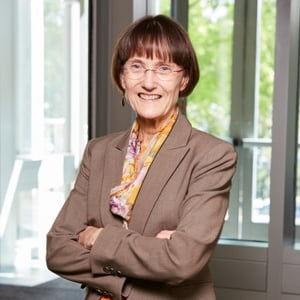
Professor of Law, Emerita & Milton R. Underwood Chair in Free Enterprise, Emerita, Vanderbilt Law School
Margaret Blair is an economist who focuses on corporate law and finance. Her current research focuses on five areas: team production and the role of corporate boards of directors, the legal concept of "personhood," the historical treatment of corporations by the Supreme Court, the role of private-sector governance arrangements in contract enforcement, and the problem of excessive leverage in financial markets. Professor Blair joined Vanderbilt's law faculty in 2004 as part of the team supporting the Law and Business Program and was appointed to the Milton R. Underwood Chair in Free Enterprise in 2010. She had previously taught at Georgetown University Law Center, where she became a visiting professor in 1996 and served as a Sloan Visiting Professor and as research director for the Sloan-GULC Project on Business Institutions, from 2000 through June 2004. She has also been a senior fellow in the Economic Studies Program at the Brookings Institution, where she directed research and wrote about corporate governance and the role of human capital in corporations. She served on the board of directors of Sonic Corporation from 2001 to 2006 and currently serves on the board of WRAP (Worldwide Responsible Accredited Production).
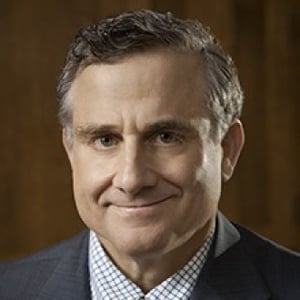
Sam Harris Professor of Corporate Law, Corporate Finance, and Securities Law, Yale Law School
Jonathan R. Macey is Sam Harris Professor of Corporate Law, Corporate Finance, and Securities Law at Yale University, and Professor in the Yale School of Management. From 1991 – 2004, Professor Macey was J. DuPratt White Professor of Law, Director of the John M. Olin Program in Law and Economics at Cornell Law School, and Professor of Law and Business at the Cornell University Johnson Graduate School of Business. Professor Macey earned his B.A. cum laude from Harvard in 1977, and his J.D. from Yale Law School in 1982, where he was Article and Book Review editor of The Yale Law Journal. In 1996, Professor Macey received a Ph.D. honoris causa from the Stockholm School of Economics. Following law school, Professor Macey was law clerk to Judge Henry J. Friendly on the U.S. Court of Appeals for the Second Circuit.
Professor Macey is the author of several books including the two-volume treatise, Macey on Corporation Laws, published in 1998 (Aspen Law & Business), and co-author of two leading casebooks, Corporations: Including Partnerships and Limited Liability Companies (2003 Thomson West), which is in its eighth edition, and Banking Law and Regulation (2002 Aspen Law & Business), which is now in its third edition. He also is the author of over 100 scholarly articles. His recent articles have appeared in the Banking Law Journal, the University of Chicago Law Review, the Stanford Law Review, The Yale Law Journal, the Cornell Law Review, the Journal of Law and Economics, and the Brookings Wharton Papers on Financial Institutions. He has published numerous editorials in such publications as The Wall Street Journal, Forbes, The Los Angeles Times, and The National Law Journal.
Professor Macey has taught at major universities throughout the world, including Bocconi University (Milan), the University of Tokyo; the University of Toronto; the University of Turin, the University of Amsterdam Department of Finance, and the Stockholm School of Economics, Department of Law. He also has been Professor of Law at the University of Chicago (1990) and Visiting Professor of Law at Harvard Law School (1999). Professor Macey is a Senior Research Fellow at the International Centre for Economic Research (ICER) in Turin, Italy. Professor Macey also serves on the Academic Advisory Board (Comitato Scientifico) of the Associazione Disiano Preite for the study of corporate law (per lo studio del diritto dell’impresa). In 1995, Professor Macey was awarded the Paul M. Bator prize for excellence in Teaching, Scholarship and Public Service by the Federalist Society for Law and Public Policy. In 1996, he received a Ph.D., honoris causa from the Stockholm School of Economics. And in 1998, he received the D.P. Jacobs prize for the most significant paper in volume 6 of the Journal of Financial Intermediation for his paper (co-authored with Maureen O’Hara), “The Law & Economics of Best Execution.”
In 1999 Professor Macey was made an honorary Fellow of the Society For Advanced Legal Studies. In 2000, Professor Macey became a member of the Legal Advisory Committee to the Board of Directors of the New York Stock Exchange. In 2001 Professor Macey was appointed a Bertil Daniellson Distinguished Visiting Professor in Banking and Finance at the Stockholm School of Economics. In 2002 Professor Macey was appointed to the Economic Advisory Board of the National Association of Securities Dealers (NASD). In 2004 Professor Macey was awarded a Teaching Award by the Yale Law Women in recognition of his “commitment to excellence in teaching, mentoring and inspiring.” In 2005 Professor Macey became a member of the Board of Editors of Thomson West Publishing Company.
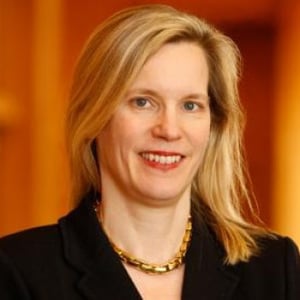
John S. Battle Professor of Law, University of Virginia School of Law
Julia D. Mahoney teaches courses in property, government finance, constitutional law and nonprofit organizations. A graduate of Yale Law School, she joined the University of Virginia faculty as an associate professor in 1999 and is now John S. Battle Professor of Law. She has also taught at the University of Southern California Law School and the University of Chicago Law School, and before entering the legal academy, practiced law at the New York firm Wachtell, Lipton, Rosen & Katz. Her scholarly articles include works on land preservation, eminent domain, health care reform and property rights in human biological materials.
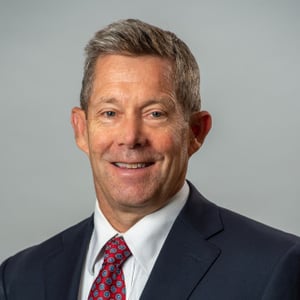
Chief Judge, United States Court of Appeals, Sixth Circuit
JEFFREY S. SUTTON is the Chief Judge of the United States Court of Appeals for the Sixth Circuit. He has served as Chair of the Federal Judicial Conference Committee on Rules of Practice and Procedure, Chair of the Advisory Committee on Appellate Rules, and Chair of the Supreme Court Fellows Commission. He currently serves as Chair of the Executive Committee of the Judicial Conference of the United States. Since 1993, Chief Judge Sutton has been an adjunct professor at The Ohio State University College of Law, where he teaches seminars on State Constitutional Law, the United States Supreme Court, and Appellate Advocacy. He also teaches a class on State Constitutional Law at Harvard Law School. Among other publications, he is the author of Who Decides? States as Laboratories of Constitutional Experimentation and 51 Imperfect Solutions: States and the Making of American Constitutional Law. He is the co-author of a casebook, State Constitutional Law: The Modern Experience, as well as The Law of Judicial Precedent. He is also the co-editor of The Essential Scalia: On the Constitution, the Courts, and the Rule of Law. In 2006, Chief Judge Sutton was elected to the American Law Institute, and in 2017 he was elected to its Council.
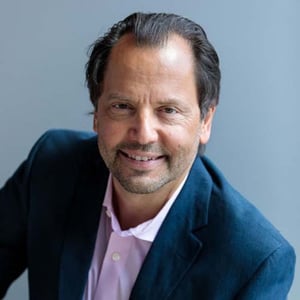
Robert C. McCormack Distinguished Service Professor of Entrepreneurship and Finance and George G. Rinder Faculty Fellow, University of Chicago Booth School of Business
Luigi Zingales' research interests span from corporate governance to financial development, from political economy to the economic effects of culture. He co-developed the Financial Trust Index, which is designed to monitor the level of trust that Americans have toward their financial system. In addition to holding his position at Chicago Booth, Zingales is currently a faculty research fellow for the National Bureau of Economic Research, a research fellow for the Center for Economic Policy Research, and a fellow of the European Governance Institute. He is also the director of the Stigler Center for the Study of the Economy and the State. Zingales also serves on the board of ProMarket and is the co-host of the podcast Capitalisn't. In 2014 he was the President of the American Finance Association.
His research has earned him the 2003 Bernácer Prize for the best young European financial economist. His work has been published in the major economic and finance journals, but he has publications also in Science and the Proceedings of the National Academy of Science. His book, Saving Capitalism from Capitalists, coauthored with Raghuram G. Rajan, has been acclaimed as "one of the most powerful defenses of the free market ever written" by Bruce Bartlett of National Review Online. Of his latest book, A Capitalism for the People: Recapturing the Lost Genius of American Prosperity, the Financial Times has written “Zingales’ fundamental diagnosis is right."
Born in Italy, Zingales carries with him a civic passion and the belief that economists should not just interpret the world, they should change it for the better. Commenting on his method of teaching on a few very important lessons rather than a myriad of details, Zingales says, "Twenty years from now they might have forgotten all the details of my course, but hopefully they will not have forgotten the way of thinking." Zingales received a bachelor's degree in economics summa cum laude from Università Bocconi in Italy in 1987 and a PhD in economics from the Massachusetts Institute of Technology in 1992. He joined the Chicago Booth faculty in 1992.
Professor of Law, Emerita & Milton R. Underwood Chair in Free Enterprise, Emerita, Vanderbilt Law School
Margaret Blair is an economist who focuses on corporate law and finance. Her current research focuses on five areas: team production and the role of corporate boards of directors, the legal concept of "personhood," the historical treatment of corporations by the Supreme Court, the role of private-sector governance arrangements in contract enforcement, and the problem of excessive leverage in financial markets. Professor Blair joined Vanderbilt's law faculty in 2004 as part of the team supporting the Law and Business Program and was appointed to the Milton R. Underwood Chair in Free Enterprise in 2010. She had previously taught at Georgetown University Law Center, where she became a visiting professor in 1996 and served as a Sloan Visiting Professor and as research director for the Sloan-GULC Project on Business Institutions, from 2000 through June 2004. She has also been a senior fellow in the Economic Studies Program at the Brookings Institution, where she directed research and wrote about corporate governance and the role of human capital in corporations. She served on the board of directors of Sonic Corporation from 2001 to 2006 and currently serves on the board of WRAP (Worldwide Responsible Accredited Production).
Sam Harris Professor of Corporate Law, Corporate Finance, and Securities Law, Yale Law School
Jonathan R. Macey is Sam Harris Professor of Corporate Law, Corporate Finance, and Securities Law at Yale University, and Professor in the Yale School of Management. From 1991 – 2004, Professor Macey was J. DuPratt White Professor of Law, Director of the John M. Olin Program in Law and Economics at Cornell Law School, and Professor of Law and Business at the Cornell University Johnson Graduate School of Business. Professor Macey earned his B.A. cum laude from Harvard in 1977, and his J.D. from Yale Law School in 1982, where he was Article and Book Review editor of The Yale Law Journal. In 1996, Professor Macey received a Ph.D. honoris causa from the Stockholm School of Economics. Following law school, Professor Macey was law clerk to Judge Henry J. Friendly on the U.S. Court of Appeals for the Second Circuit.
Professor Macey is the author of several books including the two-volume treatise, Macey on Corporation Laws, published in 1998 (Aspen Law & Business), and co-author of two leading casebooks, Corporations: Including Partnerships and Limited Liability Companies (2003 Thomson West), which is in its eighth edition, and Banking Law and Regulation (2002 Aspen Law & Business), which is now in its third edition. He also is the author of over 100 scholarly articles. His recent articles have appeared in the Banking Law Journal, the University of Chicago Law Review, the Stanford Law Review, The Yale Law Journal, the Cornell Law Review, the Journal of Law and Economics, and the Brookings Wharton Papers on Financial Institutions. He has published numerous editorials in such publications as The Wall Street Journal, Forbes, The Los Angeles Times, and The National Law Journal.
Professor Macey has taught at major universities throughout the world, including Bocconi University (Milan), the University of Tokyo; the University of Toronto; the University of Turin, the University of Amsterdam Department of Finance, and the Stockholm School of Economics, Department of Law. He also has been Professor of Law at the University of Chicago (1990) and Visiting Professor of Law at Harvard Law School (1999). Professor Macey is a Senior Research Fellow at the International Centre for Economic Research (ICER) in Turin, Italy. Professor Macey also serves on the Academic Advisory Board (Comitato Scientifico) of the Associazione Disiano Preite for the study of corporate law (per lo studio del diritto dell’impresa). In 1995, Professor Macey was awarded the Paul M. Bator prize for excellence in Teaching, Scholarship and Public Service by the Federalist Society for Law and Public Policy. In 1996, he received a Ph.D., honoris causa from the Stockholm School of Economics. And in 1998, he received the D.P. Jacobs prize for the most significant paper in volume 6 of the Journal of Financial Intermediation for his paper (co-authored with Maureen O’Hara), “The Law & Economics of Best Execution.”
In 1999 Professor Macey was made an honorary Fellow of the Society For Advanced Legal Studies. In 2000, Professor Macey became a member of the Legal Advisory Committee to the Board of Directors of the New York Stock Exchange. In 2001 Professor Macey was appointed a Bertil Daniellson Distinguished Visiting Professor in Banking and Finance at the Stockholm School of Economics. In 2002 Professor Macey was appointed to the Economic Advisory Board of the National Association of Securities Dealers (NASD). In 2004 Professor Macey was awarded a Teaching Award by the Yale Law Women in recognition of his “commitment to excellence in teaching, mentoring and inspiring.” In 2005 Professor Macey became a member of the Board of Editors of Thomson West Publishing Company.
John S. Battle Professor of Law, University of Virginia School of Law
Julia D. Mahoney teaches courses in property, government finance, constitutional law and nonprofit organizations. A graduate of Yale Law School, she joined the University of Virginia faculty as an associate professor in 1999 and is now John S. Battle Professor of Law. She has also taught at the University of Southern California Law School and the University of Chicago Law School, and before entering the legal academy, practiced law at the New York firm Wachtell, Lipton, Rosen & Katz. Her scholarly articles include works on land preservation, eminent domain, health care reform and property rights in human biological materials.
Chief Judge, United States Court of Appeals, Sixth Circuit
JEFFREY S. SUTTON is the Chief Judge of the United States Court of Appeals for the Sixth Circuit. He has served as Chair of the Federal Judicial Conference Committee on Rules of Practice and Procedure, Chair of the Advisory Committee on Appellate Rules, and Chair of the Supreme Court Fellows Commission. He currently serves as Chair of the Executive Committee of the Judicial Conference of the United States. Since 1993, Chief Judge Sutton has been an adjunct professor at The Ohio State University College of Law, where he teaches seminars on State Constitutional Law, the United States Supreme Court, and Appellate Advocacy. He also teaches a class on State Constitutional Law at Harvard Law School. Among other publications, he is the author of Who Decides? States as Laboratories of Constitutional Experimentation and 51 Imperfect Solutions: States and the Making of American Constitutional Law. He is the co-author of a casebook, State Constitutional Law: The Modern Experience, as well as The Law of Judicial Precedent. He is also the co-editor of The Essential Scalia: On the Constitution, the Courts, and the Rule of Law. In 2006, Chief Judge Sutton was elected to the American Law Institute, and in 2017 he was elected to its Council.
Robert C. McCormack Distinguished Service Professor of Entrepreneurship and Finance and George G. Rinder Faculty Fellow, University of Chicago Booth School of Business
Luigi Zingales' research interests span from corporate governance to financial development, from political economy to the economic effects of culture. He co-developed the Financial Trust Index, which is designed to monitor the level of trust that Americans have toward their financial system. In addition to holding his position at Chicago Booth, Zingales is currently a faculty research fellow for the National Bureau of Economic Research, a research fellow for the Center for Economic Policy Research, and a fellow of the European Governance Institute. He is also the director of the Stigler Center for the Study of the Economy and the State. Zingales also serves on the board of ProMarket and is the co-host of the podcast Capitalisn't. In 2014 he was the President of the American Finance Association.
His research has earned him the 2003 Bernácer Prize for the best young European financial economist. His work has been published in the major economic and finance journals, but he has publications also in Science and the Proceedings of the National Academy of Science. His book, Saving Capitalism from Capitalists, coauthored with Raghuram G. Rajan, has been acclaimed as "one of the most powerful defenses of the free market ever written" by Bruce Bartlett of National Review Online. Of his latest book, A Capitalism for the People: Recapturing the Lost Genius of American Prosperity, the Financial Times has written “Zingales’ fundamental diagnosis is right."
Born in Italy, Zingales carries with him a civic passion and the belief that economists should not just interpret the world, they should change it for the better. Commenting on his method of teaching on a few very important lessons rather than a myriad of details, Zingales says, "Twenty years from now they might have forgotten all the details of my course, but hopefully they will not have forgotten the way of thinking." Zingales received a bachelor's degree in economics summa cum laude from Università Bocconi in Italy in 1987 and a PhD in economics from the Massachusetts Institute of Technology in 1992. He joined the Chicago Booth faculty in 1992.
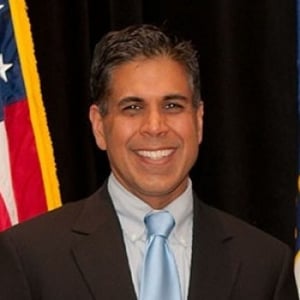
Judge, United States Court of Appeals, Sixth Circuit
Amul R. Thapar serves as a judge on the United States Court of Appeals for the Sixth Circuit. His judicial career began in 2007 when President George W. Bush nominated him to serve on the Eastern District of Kentucky, making him the first South Asian Article III judge in American history. In 2017, he became President Donald J. Trump’s first appellate court nominee.
Before joining the bench, Judge Thapar served as the United States Attorney for the Eastern District of Kentucky. While United States Attorney, Judge Thapar worked on the Attorney General’s Advisory Committee (“AGAC”) and chaired the AGAC’s Controlled Substances and Asset Forfeiture subcommittee. He also served on the Terrorism and National Security subcommittee, the Violent Crime subcommittee, and the Child Exploitation working group.
Judge Thapar has worked in private practice, at Williams & Connolly in Washington, D.C., and Squire, Sanders & Dempsey in Cincinnati, Ohio. He also served as an Assistant United States Attorney in both the Southern District of Ohio and the District of Columbia.
Judge Thapar received his undergraduate degree from Boston College and his law degree from the University of California, Berkeley. After graduating, Judge Thapar worked as a law clerk to the Honorable S. Arthur Spiegel of the United States District Court for the Southern District of Ohio, and the Honorable Nathaniel R. Jones of the United States Court of Appeals for the Sixth Circuit.
Judge Thapar has also published in the Yale Law Journal, Michigan Law Review, and Catholic University Law Review. He teaches courses on originalism, the Federalists and Anti-Federalists, and legal writing at Notre Dame Law School, the University of Virginia School of Law, and Vanderbilt Law School.
Judge, United States Court of Appeals, Sixth Circuit
Amul R. Thapar serves as a judge on the United States Court of Appeals for the Sixth Circuit. His judicial career began in 2007 when President George W. Bush nominated him to serve on the Eastern District of Kentucky, making him the first South Asian Article III judge in American history. In 2017, he became President Donald J. Trump’s first appellate court nominee.
Before joining the bench, Judge Thapar served as the United States Attorney for the Eastern District of Kentucky. While United States Attorney, Judge Thapar worked on the Attorney General’s Advisory Committee (“AGAC”) and chaired the AGAC’s Controlled Substances and Asset Forfeiture subcommittee. He also served on the Terrorism and National Security subcommittee, the Violent Crime subcommittee, and the Child Exploitation working group.
Judge Thapar has worked in private practice, at Williams & Connolly in Washington, D.C., and Squire, Sanders & Dempsey in Cincinnati, Ohio. He also served as an Assistant United States Attorney in both the Southern District of Ohio and the District of Columbia.
Judge Thapar received his undergraduate degree from Boston College and his law degree from the University of California, Berkeley. After graduating, Judge Thapar worked as a law clerk to the Honorable S. Arthur Spiegel of the United States District Court for the Southern District of Ohio, and the Honorable Nathaniel R. Jones of the United States Court of Appeals for the Sixth Circuit.
Judge Thapar has also published in the Yale Law Journal, Michigan Law Review, and Catholic University Law Review. He teaches courses on originalism, the Federalists and Anti-Federalists, and legal writing at Notre Dame Law School, the University of Virginia School of Law, and Vanderbilt Law School.
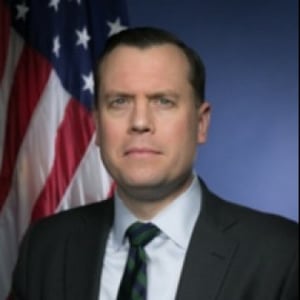
Attorney General of Kentucky
On November 7, 2023, Russell Coleman was elected the 52nd Attorney General of Kentucky, winning 117 out of 120 counties.
Prior to that, Coleman spent most of the past two decades in public service. In 2017, he was nominated by President Trump and unanimously confirmed by the Senate to be the United States Attorney for the Western District of Kentucky. In that capacity, he was the chief federal law enforcement officer for Kentucky's 53 western counties ranging from Louisville to the Jackson Purchase Region.
Coleman previously served as a Partner in the law firm of Frost, Brown, Todd; as a prosecutor in the Oldham Commonwealth's Attorney's Office; and as Legal Counsel to U.S. Senator Mitch McConnell.
A former FBI Special Agent, he was assigned to multiple field offices and served a temporary assignment in Iraq in support of the Global War on Terror. A significant spinal cord injury cut short his career with the FBI. After substantial therapy at Louisville’s Frazier Rehab Institute, Coleman learned to walk again.
Coleman was raised in Graves, Daviess, and Logan Counties, graduating from Logan County High School. He received both his undergraduate and law degrees from the University of Kentucky.
Russell lives in Oldham County with his wife, Ashley, and their three children.
Judge, United States Court of Appeals, Sixth Circuit
Judge Readler earned his undergraduate and law degrees from the University of Michigan. After graduating, he served as a law clerk to Judge Alan Norris of the United States Court of Appeals for the Sixth Circuit. Judge Readler then began practicing law in the Columbus office of the international law firm Jones Day, eventually spending ten years as a partner in the firm’s Issues and Appeals Practice Group. While at Jones Day, Judge Readler appeared in state and federal trial and appellate courts around the country, most frequently the Supreme Court of Ohio and the Sixth Circuit. Judge Readler also successfully argued before the United States Supreme Court in McQuiggin v. Perkins on behalf of an inmate claiming actual innocence. His other pro bono representations include representing capital defendants before the Tenth Circuit and the Supreme Court of Ohio, as well as representing defendants sentenced to life in prison before the Sixth Circuit. While at Jones Day, Judge Readler traveled to Nairobi with Lawyers Without Borders to train Kenyan lawyers in prosecuting domestic violence cases, and he was also a recipient of the American Marshall Memorial Fellowship awarded by the German Marshall Fund of the United States. Following his career in private practice, Judge Readler served as Acting Assistant Attorney General for the Civil Division of the United States Department of Justice from 2017 to 2019. In that role, Judge Readler led and supervised over 1,000 lawyers in the Department’s largest litigating division, briefing and arguing several cases on behalf of the United States in federal courts across the country, including high-profile cases significant to the Administration and the Department. In March 2019, Judge Readler was confirmed to serve as a Circuit Judge on the Sixth Circuit. He resides in Columbus.
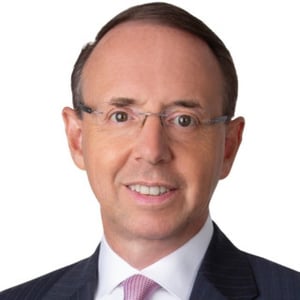
Partner, King & Spalding LLP
Rod J. Rosenstein is a partner in King & Spalding’s Special Matters & Government Investigations practice. Drawing upon three decades of experience as a federal prosecutor and a senior government official, Rod helps clients resolve complex regulatory and litigation challenges, including government investigations, crisis management, internal investigations, national security, compliance and monitoring.
Rod served in senior leadership positions at the U.S. Department of Justice during the administrations of Presidents George W. Bush, Barack Obama and Donald Trump, including as Deputy Attorney General (2017 to 2019) and United States Attorney for Maryland (2005 to 2017).
As the second-highest ranking official at the Department of Justice, Rod was responsible for overseeing 115,000 employees in the Department’s litigating divisions, law enforcement agencies and United States Attorney’s Offices, and for formulating and implementing federal enforcement policies. He led the revision of policies concerning corporate criminal prosecutions and parallel domestic and foreign investigations, Foreign Corrupt Practices Act matters, and health care fraud cases. He also reviewed significant proposed criminal and civil enforcement actions, proposed False Claims Act settlements and related matters, and proposals to appoint corporate monitors. Rod also acted on national security matters subject to review by the Committee on Foreign Investment in the United States (CFIUS). Additionally, Rod led the interagency Task Force on Market Integrity and Consumer Fraud and developed a strategy to combat cybercrime as head of the Department’s Cyber-Digital Task Force.
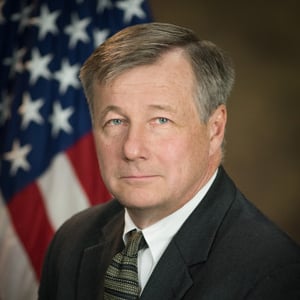
United States Attorney, Northern District of Texas
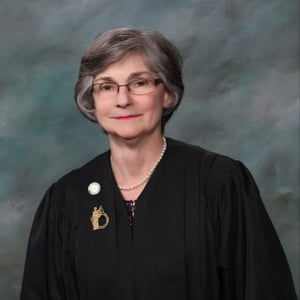
Judge, United States Court of Appeals, Fifth Circuit
Edith Jones graduated from Alamo Heights High School, where she was a National Merit Scholar. In 1971, she received her B.A. in Economics from Cornell University, graduating with honors. In 1974, she was awarded her J.D. at the University of Texas Law School, where she was a law review editor and received the Order of the Coif.
Judge Jones was the first female partner at Andrews, Kurth, Campbell & Jones (now Hunton Andrews Kurth) where she practiced various types of litigation and bankruptcy cases. Judge Jones went on the federal bench on June 1, 1985.
Judge Jones served as a former member of the National Bankruptcy Review Commission, and as a member of the Judicial Conference Commission on Bankruptcy Rules. Judge Jones served on the White House Fellows Commission. Judge Jones served on the board of the Sam Houston Area Council of the Boy Scouts of America. She has been a member of the Garland Walker Inn of Court in Houston for more than 20 years and its President for at least ten years. Judge Jones is also on the Board of the Calvin Coolidge Presidential Foundation.
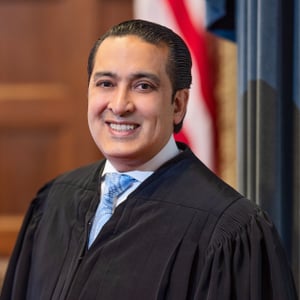
Judge, United States Court of Appeals, Sixth Circuit
John B. Nalbandian serves as a United States Circuit Judge from Kentucky on the U.S. Court of Appeals for the Sixth Circuit. He was nominated and confirmed to that position in 2018. Prior to that, Judge Nalbandian was a partner in the litigation practice group of Taft Stettinius & Hollister LLP in Cincinnati, where he served as the firm’s lead appellate lawyer and also practiced complex litigation in state and federal courts. Judge Nalbandian was board certified by the Ohio State Bar Association as a specialist in appellate law. Prior to joining Taft, Judge Nalbandian practiced for five years in the appellate section of Jones Day in Washington, DC. Upon graduation from law school, Judge Nalbandian clerked for the Honorable Jerry E. Smith of the U.S. Court of Appeals for the Fifth Circuit in Houston. While in private practice, he also served as a board member of the State Justice Institute, a nonprofit organization established by the federal government to improve the administration of justice in state courts. He served as President of the Cincinnati Lawyers Chapter of the Federalist Society. He has also been involved in his community as a board member of the Greater Cincinnati Minority Counsel Program, and as a board member of the Asian Pacific Bar Association of Southwest Ohio. Judge Nalbandian earned his B.S., magna cum laude, from the Wharton School at the University of Pennsylvania and his J.D. from the University of Virginia School of Law, where he was inducted into the Order of the Coif and served as managing editor of the Virginia Law Review.
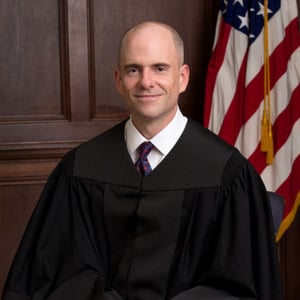
Judge, United States Court of Appeals, Eleventh Circuit
Judge Kevin C. Newsom is a member of the United States Court of Appeals for the Eleventh Circuit. He sits in Birmingham, Alabama.
Before his appointment to the bench, Judge Newsom was the head of the appellate practice group at Bradley Arant Boult Cummings LLP and, before that, the Solicitor General of Alabama. As a practicing lawyer, Judge Newsom argued four cases in the Supreme Court of the United States, and nearly 40 more in the United States Courts of Appeals and state supreme and appellate courts.
Judge Newsom graduated summa cum laude from Samford University and magna cum laude from Harvard Law School, where he was an articles editor on the Harvard Law Review. Following law school, Judge Newsom clerked for Judge Diarmuid F. O’Scannlain of the United States Court of Appeals for the Ninth Circuit and Justice David H. Souter of the Supreme Court of the United States.
Judge Newsom teaches at Harvard Law School, Yale Law School, Stanford Law School, and the University of Chicago Law School. His published work has appeared in the Yale Law Journal and the Harvard Law Review.
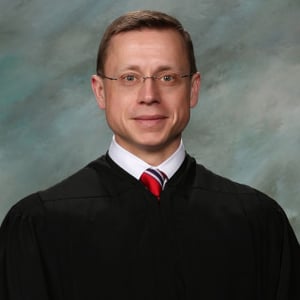
Judge, United States Court of Appeals, Fifth Circuit
Andrew Oldham is a Circuit Judge on the United States Court of Appeals for the Fifth Circuit. Before ascending to the bench, Judge Oldham served as General Counsel to Texas Governor Greg Abbott, where he advised the Governor on a range of issues under federal and state law and managed litigation in which the Governor was an interested party. Before that he served as Deputy Solicitor General for the State of Texas, where he represented Texas in federal courts across the country, including twice before the United States Supreme Court. Before moving to Texas, Judge Oldham was an attorney at Kellogg Hansen Todd Figel & Frederick in Washington, D.C. His practice focused on appellate litigation in federal courts of appeals throughout the country. Before entering private practice, Judge Oldham served as a law clerk to Justice Samuel A. Alito, Jr., at the Supreme Court of the United States and to Judge David B. Sentelle of the U.S. Court of Appeals for the District of Columbia Circuit. He also worked as an attorney-adviser in the Office of Legal Counsel at the U.S. Department of Justice from 2006 to 2008. Judge Oldham earned a B.A. from the University of Virginia with highest honors, a Truman Scholarship for graduate school, an M. Phil., first class (with distinction), from Cambridge University, and a J.D., magna cum laude, from Harvard Law School.
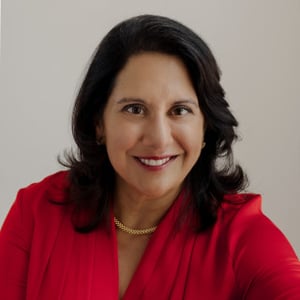
Judge, United States Court of Appeals, District of Columbia Circuit
Judge Rao was appointed to the United States Court of Appeals for the District of Columbia Circuit in March 2019. She graduated from Yale College in 1995 and the University of Chicago Law School in 1999. Following graduation, she served as a law clerk to Judge J. Harvie Wilkinson III of the U.S. Court of Appeals for the Fourth Circuit and, in the 2001 October Term, as law clerk to Justice Clarence Thomas of the U.S. Supreme Court. Between her clerkships, Judge Rao served as counsel for nominations and constitutional law to the U.S. Senate Committee on the Judiciary. In 2002, she joined the international arbitration group of Clifford Chance LLP in London, England. From 2005-2006, she served as Special Assistant and Associate White House Counsel to President George W. Bush. From 2006 to 2017, Judge Rao was a professor at the Antonin Scalia Law School at George Mason University, where she taught constitutional law, legislation and statutory interpretation, and the history and foundations of the administrative state. In 2014, she founded the Center for the Study of the Administrative State, a non-profit Center that promotes academic scholarship and public policy debates about administrative law. In July 2017, she was appointed to serve as the Administrator of the Office of Information and Regulatory Affairs in the Office of Management Budget. She served in this position until her appointment to the D.C. Circuit.
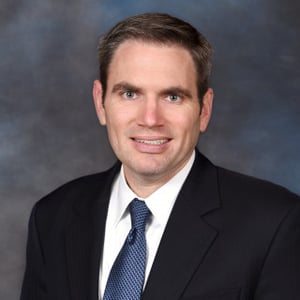
Judge, United States Court of Appeals, Sixth Circuit
Eric Murphy has been a Judge on the United States Court of Appeals for the Sixth Circuit since March 2019. He previously served as the ninth State Solicitor of Ohio. In that role, Eric briefed and argued appellate cases on behalf of Ohio and its state agencies and officers in the U.S. Supreme Court, the U.S. Court of Appeals for the Sixth Circuit, and the Ohio Supreme Court. Before his appointment as State Solicitor, Eric practiced appellate litigation at Jones Day. After graduation from law school, he served as a law clerk for Justice Anthony M. Kennedy of the Supreme Court of the United States, and Judge J. Harvie Wilkinson III of the United States Court of Appeals for the Fourth Circuit. He received his law degree from the University of Chicago and his undergraduate degree from Miami University.
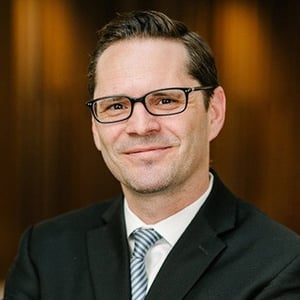
John J. Flynn Endowed Professor of Law, University of Utah S.J. Quinney College of Law
Christopher Peterson is the John J. Flynn Endowed Professor of Law at the University of Utah's S.J. Quinney College of Law. He previously served as a Special Advisor in the Office of the Director at the United States Consumer Financial Protection Bureau, as a Special Advisor in the Office of Legal Policy for Personnel and Readiness in the United States Department of Defense, and as Senior Counsel for Enforcement Policy and Strategy in the Consumer Financial Protection Bureau's Office of Enforcement. Professor Peterson has written dozens of scholarly articles and published three books on consumer finance. He has frequently testified in Congressional hearings and has presented his research to the Federal Deposit Insurance Corporation, the Federal Reserve Board of Governors, and at the White House in both Democratic and Republican administrations. He is a fellow of the American College of Consumer Financial Services Lawyers, the American Bar Association's Consumer Financial Services Committee, and serves on the community advisory board of the American Fintech Council. Professor Peterson is a recipient of the National Association of Consumer Agency Administrators’ Consumer Advocate of the Year award and the Pentagon’s Office of the Secretary of Defense Award for Excellence.
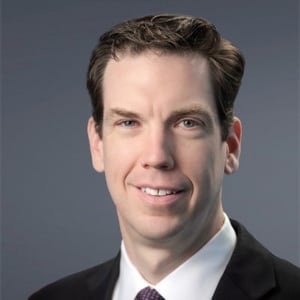
Partner, Fusion Law, PLLC
Paul is the founding partner of Fusion Law, PLLC. He has extensive experience with state, federal, and global regulators building coalitions and implementing policies to promote innovation in financial services. He is responsible for designing and implementing the first state (Arizona) and federal (CFPB) FinTech sandboxes in the United States. He also designed the CFPB no-action letter and trial disclosure policies. He helped found the first global regulatory innovation coalition (Global Financial Innovation Network) and led the founding of the first U.S. regulatory innovation coalition (American Consumer Financial Innovation Network). He served on the Financial Stability Oversight Council subcommittee on digital assets. He also has drafted state-level laws on blockchain and utility tokens.
Paul also has significant enforcement and litigation experience. He led many multi-state consumer protection enforcement matters as Civil Litigation Division Chief at the Arizona Attorney General’s Office.
Prior to his government service, Paul practiced law in the areas of securities litigation and transactional work for approximately six years at two well-known law firms. He also clerked on the U.S. Court of Appeals for the Fourth Circuit.
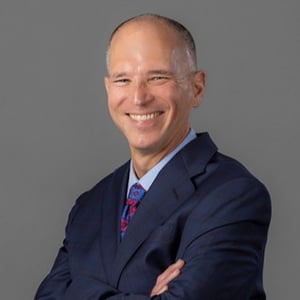
George Mason University Foundation Professor of Law, Antonin Scalia Law School, George Mason University
TODD J. ZYWICKI is George Mason University Foundation Professor of Law at Antonin Scalia Law School at George Mason University and Research Fellow of the George Mason Law and Economics Center. During the Fall 2023 semester he served as the Visiting Scholar in Conservative Thought and Policy for the Bruce Benson Center for the Study of Western Civilization at the University of Colorado-Boulder. From 2020-2021 he was Chair of the Consumer Financial Protection Bureau Taskforce on Federal Consumer Financial Law. In 2021 he was inducted to the American College of Consumer Financial Services Lawyers. He is also a Senior Fellow of the F.A. Hayek Program for the Advanced Study of Politics, Philosophy, and Economics at George Mason University and a former Senior Fellow of the Cato Institute. From 2015-2017 he was Executive Director of the George Mason Law and Economics Center. He served as Co-Editor of the Supreme Court Economic Review from 2006-2017. From 2003-2004, Professor Zywicki served as the Director of the Office of Policy Planning at the Federal Trade Commission. He has also taught at Vanderbilt University Law School, Georgetown University Law Center, Boston College Law School, Mississippi College School of Law, and China University of Political Science and Law.
Professor Zywicki clerked for Judge Jerry E. Smith of the U.S. Court of Appeals for the Fifth Circuit and worked as an associate at Alston & Bird in Atlanta, Georgia, where he practiced bankruptcy and commercial law. He received his J.D. from the University of Virginia, where he was executive editor of the Virginia Tax Review and John M. Olin Scholar in Law and Economics. Professor Zywicki also received an M.A. in Economics from Clemson University and an A.B. cum Laude with high honors in his major from Dartmouth College.
Professor Zywicki is also a Lone Mountain Fellow of the Property and Environment Research Center, a Fellow of the International Centre for Economic Research in Turin, Italy, and a former Senior Fellow of the Goldwater Institute. During the Fall 2008 Semester Professor Zywicki was the Searle Fellow of the George Mason University School of Law and was a 2008-09 W. Glenn Campbell and Rita Ricardo-Campbell National Fellow and the Arch W. Shaw National Fellow at the Hoover Institution on War, Revolution and Peace. He has lectured and consulted with government officials around the world, including Iceland, Italy, Japan, and Guatemala. In 2006 Professor Zywicki served as a Member of the United States Department of Justice Study Group on “Identifying Fraud, Abuse and Errors in the United States Bankruptcy System.”
Professor Zywicki is the author of more than 130 articles in leading law reviews and peer-reviewed economics journals. He is one of the Top 10 most-cited law professors in the field of Commercial Law and one of the Top 25 law professors on Twitter as measured by engagement levels. He is one of the Top 50 Most Downloaded Law Authors at the Social Science Research Network. He has testified multiple times before Congress on issues of consumer bankruptcy law and consumer credit and is a frequent commentator on legal issues in the print and broadcast media, including the Wall Street Journal, New York Times, The Washington Post, The Washington Times, Nightline, The Newshour with Jim Lehrer, Neil Cavuto Show, Fox & Friends, Smerconish, Fox News @ Night with Shannon Bream, Fox Business, CNN, CNBC, Bloomberg News, BBC, The Diane Rehm Show, Lou Dobbs Show, Jerry Doyle Show, and The Laura Ingraham Show.
Professor Zywicki is former Chairman and a current member of the Board of Directors of the Competitive Enterprise Institute, and is a member of the Board of Directors of the Institute for Humane Studies, Bill of Rights Institute, the Executive Committee for the Federalist Society's Financial Institutions and E-Commerce Practice Group, the Board of Trustees of the Foundation for Research on Economics and the Environment. He formerly served on the Governing Board and the Advisory Council for the Financial Services Research Program at George Washington University School of Business. He is currently the Chair of the Academic Advisory Council for the following organizations: The Bill of Rights Institute, the film “We the People in IMAX,” and the McCormick-Tribune Foundation “Freedom Museum” in Chicago, Illinois. He is a member of the Board of Visitors of Ralston College and was a member of the Board of Trustees of Yorktown University. From 2005-2009 he served as an elected Alumni Trustee of the Dartmouth College Board of Trustees.

The Antitrust Revolution?
Bill Baer, François-Henri Briard, Makan Delrahim, Douglas H. Ginsburg, Diana L. Moss, Chad A. Readler
The 2021 National Lawyers Convention took place November 11-13, 2021 at the Mayflower Hotel in...
The Antitrust Revolution?
Bill Baer, François-Henri Briard, Makan Delrahim, Douglas H. Ginsburg, Diana L. Moss, Chad A. Readler
The 2021 National Lawyers Convention took place November 11-13, 2021 at the Mayflower Hotel in...
Showcase Panel I: Social Activism and Corporate Leadership
Margaret Mendenhall Blair, Jonathan R. Macey, Julia D. Mahoney, Jeffrey S. Sutton, Luigi Zingales
What role should publicly traded corporations play in democratic politics? The 2021 National Lawyers Convention...
Showcase Panel I: Social Activism and Corporate Leadership
Margaret Mendenhall Blair, Jonathan R. Macey, Julia D. Mahoney, Jeffrey S. Sutton, Luigi Zingales
What role should publicly traded corporations play in democratic politics? The 2021 National Lawyers Convention...
Opening Address by Amul Thapar
Amul R. Thapar
The 2021 National Lawyers Convention took place November 11-13, 2021 at the Mayflower Hotel in...
Opening Address by Amul Thapar
Amul R. Thapar
The 2021 National Lawyers Convention took place November 11-13, 2021 at the Mayflower Hotel in...
An Inside Look at the Department of Justice
Louisville Lawyers Chapter
Louisville, KYTopics
Book Review: Who Decides?
Sixth Circuit Chief Judge Jeffrey Sutton is erudite, insightful, and oh so prolific. His 51...
Originalism: Perspectives from the Bench
2021 National Lawyers Convention
Washington, DC"Cancel Culture" Comes to Financial Services
2021 National Lawyers Convention
Washington, DC